IGCSE vs GCSE: Choosing the Right Qualification Path
By Muntasir Minhaz • Published May 16, 2026 • Education Planning
Both IGCSE and GCSE are equivalent Level 2 qualifications — all 24 Russell Group universities treat them identically in admissions, so your choice should depend on where you study and how you learn best.
- Pick IGCSE if you're at an international school, want 70+ subject options, or need multiple exam windows per year.
- Pick GCSE if you're in the UK following standard A-Level progression or prefer distributed coursework.
- Grades and extracurricular depth matter far more than which qualification you hold.
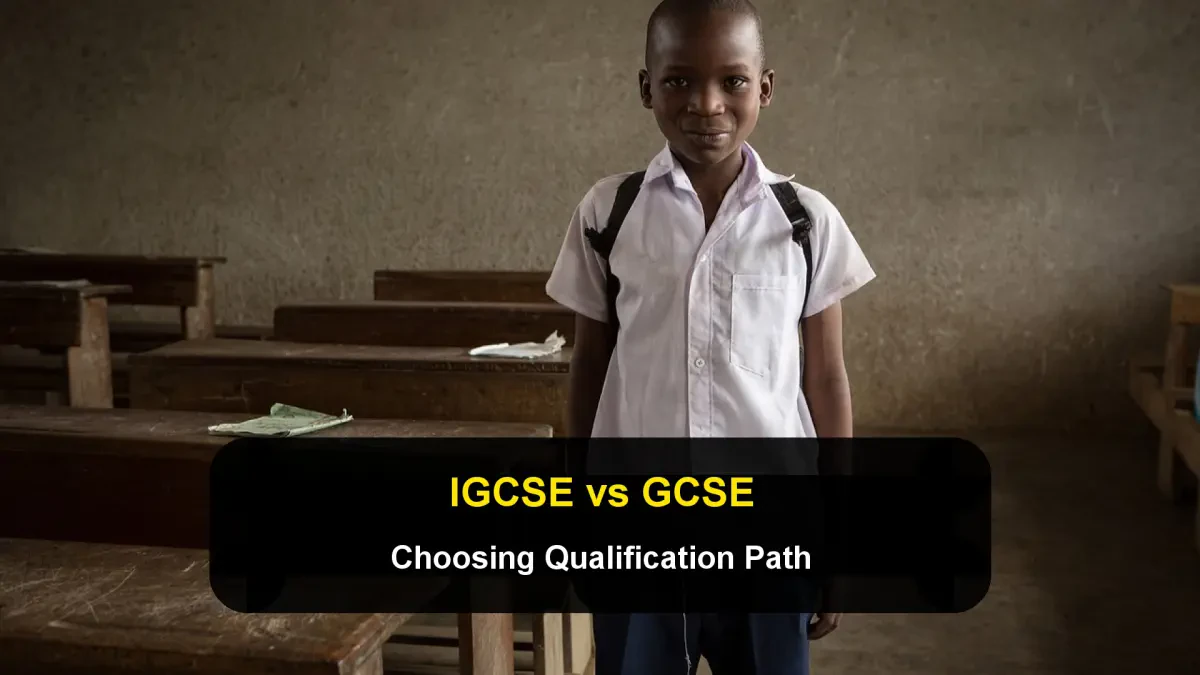
Both IGCSE and GCSE are Level 2 qualifications for ages 14-16, but IGCSE offers global flexibility with 70+ subjects while GCSE follows the UK national curriculum. When applying to UK universities, use our UCAS Tariff Point Calculator to total your tariff points. Russell Group universities including Oxford, Cambridge, and London School of Economics treat both qualifications equally in admissions. This guide compares structure, cost, recognition, and real pathways to help you choose.
IGCSE vs GCSE Structure and Assessment
| Feature | IGCSE | GCSE |
|---|---|---|
| Duration | 2 years (ages 14-16) | 2 years (Years 10-11) |
| Exam Sessions | May/June, October/November, February/March | May/June only (November resit available) |
| Number of Subjects | 70+ subjects available | ~60 subjects (limited by national curriculum) |
| Typical Student Load | 5-14 subjects | 8-10 subjects (schools cap at ~12) |
| Assessment Type | Mostly exam-based (written, oral, practical) | Mix of exams + coursework in some subjects |
| Grading | A* to G (U = Ungraded) | A* to G (U = Ungraded) |
| Results Timeline | May/August/January | August 20, 2026 |
Cambridge IGCSE provides "written, oral, coursework and practical assessment" depending on subject, while most GCSE grades come from end-of-year exams, though students benefit from formula sheets in mathematics, physics, and combined science through 2027.
Key Structural Differences
IGCSE aligns assessment with "the world's most popular international qualification" framework created over 30 years ago and now offered globally. GCSE remains rooted in the UK education system, with all students following the same core subjects (English, Mathematics, Sciences) plus optional choices. IGCSE allows complete flexibility in subject selection globally, making it ideal for international schools.
GCSE students in Years 10 and 11 take exams during the May-June session with results arriving August 20, 2026. IGCSE students can sit exams in three windows annually, enabling resits or accelerated progression. From 2026, some exam boards are trialling digital GCSEs in English and mathematics for computer-based testing.
University Recognition and Admission Requirements

Leading universities across the UK, US, Canada, and Australia recognize both qualifications equally.
United Kingdom Universities
Russell Group Standard: Grade 4 in English and Mathematics is the baseline for most courses. However, competitive universities like Imperial College London expect mostly grades 7-9 across GCSEs, while Cambridge explicitly states "no set requirement" but still considers results in holistic review.
Medicine and dentistry require higher standards.
Queen Mary University of London requires six GCSEs at grades 777666 for medical applicants. Nottingham University medicine requires a minimum of six GCSEs at grade 7.
University Recognition: Leading UK universities treat GCSE and IGCSE as equivalent Level 2 qualifications. Each institution evaluates candidates holistically, with GCSE/IGCSE grades as one component rather than a disqualifying factor.
International University Recognition
United States: IGCSE is accepted especially when followed by A-Levels or the International Baccalaureate Diploma. Universities view it as context for overall academic ability alongside standardized tests like the SAT or ACT.
Canada: University of Toronto requires English IGCSE or equivalent for all courses. IGCSEs are widely accepted across Canadian universities as part of the overall academic record.
Australia and New Zealand: Universities accept IGCSEs at grade C or 4 alongside A-Levels, the International Baccalaureate, or the Australian ATAR (Australian Tertiary Admission Rank).
Europe: Over 160 countries recognize Cambridge IGCSE as evidence of academic ability for progression to higher education globally.
Costs and Exam Fees
IGCSE exam fees vary significantly by country and examination centre.
IGCSE Exam Fees 2025-2026
IGCSE exam fees vary by region and examination centre. In the UK, per-subject costs typically range from £50-£120 depending on subject complexity and practical components. Multi-component subjects with laboratory work cost more than single-paper subjects.
Fees also vary by exam board (Cambridge, Edexcel, Pearson). Contact your specific examination centre for current 2025-2026 pricing.
Private candidates must contact their examination centre for current fee schedules, as fees vary by location and exam board. Late entries typically incur 25-50% surcharges.
IGCSE vs IB and A-Levels Comparison
Annual Workload: IB students spend 27-45 hours weekly across subjects plus 3-5 hours on core components, while IGCSE students average 25-30 hours weekly. A-Levels fall between these ranges.
Annual Cost Range:
- IGCSE: £4,000-£5,000 annual exam and registration fees
- A-Levels: £3,000-£7,000 (more variable by centre)
- IB Diploma: £15,000+ annually in tuition and exam fees
Assessment Method: IGCSE relies primarily on end-of-course exams (1-2 hours each). IB combines written exams (2-3 hours each) with ongoing coursework and internal assessments. A-Levels use written exams primarily (2-3 hours each) with some practical work.
Finding Accredited Schools and Registration
IGCSE Examination Centres
Cambridge International accredits schools and centres globally. To find an accredited centre:
- Visit Cambridge International's official centre finder at cambridgeinternational.org
- Check if your school is registered as a Cambridge Centre
- Private candidates contact British Council offices or approved exam centres
Accredited centres charge registration fees annually plus per-exam-entry fees. School candidates pay through their institution. Private candidates pay directly to the centre.
GCSE Entry Requirements in the UK
GCSE entry requires enrollment in a UK secondary school (Year 10) or approval from a centre as a private candidate. Private candidate entry is possible but more restrictive than IGCSE.
Contact your local examination board (Pearson, AQA, Edexcel) for private candidate registration. Related: what is a Foundation Year and UK foundation programs guide.
Real-World Example: SK's University Admission
SK, a student from Singapore attending United World College South East Asia, successfully gained admission to Emory University (a selective US institution) after following an international curriculum. His profile included:
Academic Credentials:
- IB Predicted Grade: 41/45 (equivalent to exceptional IGCSE performance)
- ACT Score: 34
- Intended Major: Political Science and Economics
Extracurricular Profile:
- Leadership in Model UN across four years (trained 60 students, awarded Most Diplomatic Delegate)
- Research internships in economics and policy at NITI Aayog, DBS Bank, and Bond Blox
- Community service with Magic Bus Singapore and ItsRainingRaincoats
- Economics writing for school newspaper with published contributions on monetary policy and trade
Admission Strategy: Rather than relying solely on test scores (which were not exceptional), SK demonstrated consistent passion for economics through interconnected experiences spanning academics, research, and community impact. His application narrative showed depth through sustained engagement in his chosen field across four years.
Lesson for IGCSE/GCSE Students: Universities value coherent profiles combining strong grades with genuine extracurricular depth in relevant areas. SK's grades were competitive but not exceptional. His acceptance came from demonstrating clear intellectual commitment through sustained, relevant activities.
Workload Comparison: IGCSE, GCSE, and IB

IGCSE Workload Profile: Exam-focused, with assessment concentrated in final months of the two-year course. No extensive coursework deadlines during the year.
Less demanding for students balancing extracurriculars or work. Subject flexibility allows strategic subject choice to match strengths.
GCSE Workload Profile: Coursework in some subjects (English Literature, Separate Sciences) creates ongoing deadlines across Years 10-11. Final exam intensity similar to IGCSE.
UK students often find UK-based contexts familiar, reducing study barrier. Limited subject flexibility due to national curriculum constraints.
IB Workload Profile: Heaviest workload with ongoing internal assessments, extended essay, theory of knowledge component, and creativity/activity/service requirements. Written exams are secondary to continuous evaluation. Requires strong time management and self-direction.
Best For Each:
- IGCSE: Students who excel under exam pressure, prefer flexibility, study internationally, or want resit opportunities
- GCSE: UK-based students following standard progression to A-Levels, or those who benefit from distributed coursework
- IB: Academically strong students seeking broad curriculum, global perspective, and university-style independent work
2025-2026 University Admission Updates
As of May 2026, no structural changes affect IGCSE or GCSE recognition at major universities. Key points for 2025-2026 entry: See also our complete A-Levels guide.
Oxford and Cambridge: Deadline for September 2026 entry is October 15, 2025.
GCSEs (or IGCSEs) are one component reviewed; successful applicants average eight 8/9 grade GCSEs, but the qualification itself is not a barrier. Both universities emphasize that "higher grades at GCSE can help make your application more competitive."
Russell Group Consistency: All 24 Russell Group universities confirm no distinction between GCSE and IGCSE in admissions. Both are treated as Level 2 qualifications with equivalent academic standing.
Medical School Changes: Some UK medical schools (notably Queen Mary, Nottingham) have raised GCSE grade requirements to grade 7+ in sciences, reflecting increased competitiveness. IGCSE students applying to medicine should aim for grades 7-9 in relevant sciences.
International Recognition: No major policy shifts for 2025-2026. US, Canada, Australia, and European universities continue accepting IGCSE without modification to requirements.
Making Your Choice
Choose IGCSE if:
- You study at an international school or in a non-UK country
- You want subject flexibility (70+ options vs. ~60)
- You prefer exam-based assessment over coursework
- You need multiple exam windows (May/June, October/November, February/March)
- You plan to apply to universities outside the UK
Choose GCSE if:
- You study in the UK and attend a standard secondary school
- You benefit from distributed coursework deadlines
- You prefer UK-based exam contexts and teaching materials
- You plan to progress directly to A-Levels in the UK
- You're taking core subjects (English, Mathematics, Sciences)
Both Paths Lead to Top Universities: The qualification type matters far less than grades, subject choices, and what you do beyond academics. University admission committees look at holistic profiles. SK's successful Emory admission demonstrates that international students using IGCSE or equivalent qualifications compete equally with students from any background.
Sources
- Cambridge IGCSE Official Programme Page
- Cambridge IGCSE Qualification Structure
- IGCSE vs GCSE: Difficulty Comparison Guide
- Cambridge IGCSE Exam Fees 2025-2026
- TutorChase: IB vs IGCSE Comparison
- University of Oxford: UK Qualifications Admission Requirements
- Russell Group Universities GCSE Requirements 2025
- IGCSE University Recognition Worldwide
- GCSE 2025-2026 Subject Guide
- The Red Pen: Case Study Building Authenticity for Emory University Admission
- Crimson Global Academy: IGCSEs vs GCSEs