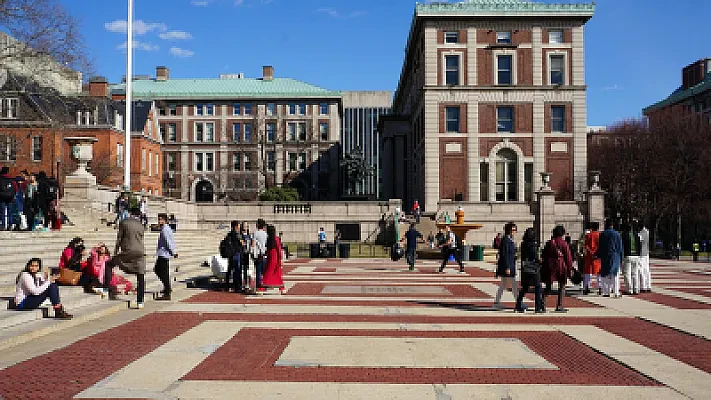
Al-Qasemi Academic College of Education
Israel • Founded 1989
Updated May 2026
Overview
A public college based in Baqa-El-Gharbia, Israel, Al-Qasemi Academic College of Education was founded in 1989 and operates as a higher-education provider. Its institutional context places it within Israel's wider academic ecosystem.
The institution offers programmes across bachelor's and master's programmes. Al-Qasemi Academic College of Education's academic structure spans multiple faculties, supporting a catalogue of active programmes.
Approximately 1,700 students study at Al-Qasemi Academic College of Education across its programmes. The institution's daily rhythm unfolds within its campus environment, supported by academic and administrative staff.
Location & Contact
Al-Qasemi Academic College of Education's street address and primary contact methods. Social channels often differentiate by purpose — admissions on one, alumni on another, events on a third.
Academic Details
The numbers below cover the academic side of Al-Qasemi Academic College of Education. Academic calendar conventions vary — semester, trimester, or quarter systems each carry different teaching rhythms.
Degrees
Below: Al-Qasemi Academic College of Education's degree portfolio by level. Honours versus general degrees differ in academic depth and graduate-school recognition — read entry requirements carefully.
Bachelor's 12 programs
Bachelor's programmes build foundational expertise, preparing graduates for entry-level professional roles and further postgraduate study.
- Arabic
- Education
- Foreign Languages Education
- Hebrew
- Islamic Studies
- Literature
- Mathematics Education
- Natural Sciences
- Preschool Education
- Primary Education
- Special Education
- Teacher Training
Master's 5 programs
Master's programmes develop advanced specialised expertise, suited to senior industry positions and applied research.
- Education
- Islamic Studies
- Mathematics Education
- Special Education
- Teacher Training
Faculties & Divisions
Below is how Al-Qasemi Academic College of Education divides teaching by faculty and subject. Dual-major pathways spanning two faculties exist at some universities but require coordination between departments.
Education (Faculty) 3 subjects offered
Specialisations & Subjects
- Education
- Preschool Education
- Special Education
Common Career Paths
- Teacher
- Educational Administrator
- Curriculum Specialist
Illustrative career directions for this field; specific outcomes depend on programme and student choices.
Graduate Studies (Faculty) 5 subjects offered
Specialisations & Subjects
- Education
- Islamic Studies
- Mathematics Education
- Special Education
- Teacher Training
Humanities (Faculty) 5 subjects offered
Specialisations & Subjects
- Arabic
- Foreign Languages Education
- Hebrew
- Islamic Studies
- Literature
Common Career Paths
- Researcher
- Editor
- Cultural Analyst
Illustrative career directions for this field; specific outcomes depend on programme and student choices.
Science (Faculty) 3 subjects offered
Specialisations & Subjects
- Computer Science
- Mathematics
- Natural Sciences
Common Career Paths
- Research Scientist
- Lab Technician
- Analyst
Illustrative career directions for this field; specific outcomes depend on programme and student choices.
Programs Offered
Al-Qasemi Academic College of Education's catalogue, with name search and level grouping. Capstone or dissertation requirements vary across programmes — confirm what you'll be assessed on before applying.
17 programmes on record. Each level below shows a sample. Compare these on the programs page All programs in Israel
Bachelor's Degree 12 programmes
Showing 10 of 12.
Master's Degree 5 programmes
How to apply to Al-Qasemi Academic College of Education
Application guidance for Al-Qasemi Academic College of Education, structured as five practical steps with attention to documents and admissions communication.
-
1
Research programmes at Al-Qasemi Academic College of Education
Use the programme finder to browse Al-Qasemi Academic College of Education's 17 active programmes. Filter by keyword or scan by degree level. Read curriculum details on each programme's dedicated page if available.
-
2
Review admissions criteria
Programme-level requirements at Al-Qasemi Academic College of Education typically include academic transcripts, language proficiency proof, identity documents, and a personal statement or interview. Confirm specific requirements with the admissions office.
-
3
Gather supporting documents
Prepare academic transcripts, ID/passport copies, language proficiency proof, a personal statement, and reference letters. International candidates may need apostilled or notarised translations — start early to avoid deadline pressure.
-
4
Lodge your application
Al-Qasemi Academic College of Education processes applications through www.qsm.ac.il. Create an account, fill out the application form, and submit your documents. Note application deadlines, which vary by intake and programme.
-
5
Confirm receipt and track progress
Confirm receipt of your application with the admissions office and keep an eye on your portal for status changes. Quick responses to any follow-up requests keep your application moving smoothly through the review process.
Frequently Asked Questions about Al-Qasemi Academic College of Education
Short Q&A on the institutional facts that matter most when shortlisting Al-Qasemi Academic College of Education as a study destination.
In what year was Al-Qasemi Academic College of Education established?
Al-Qasemi Academic College of Education was founded in 1989 (approximately 37 years ago).
What city is Al-Qasemi Academic College of Education in?
Al-Qasemi Academic College of Education operates from Baqa-El-Gharbia, Israel.
Is Al-Qasemi Academic College of Education public or private?
Al-Qasemi Academic College of Education is a public institution.
How big is Al-Qasemi Academic College of Education's student body?
Al-Qasemi Academic College of Education serves approximately 1,700 students.
What qualification levels does Al-Qasemi Academic College of Education offer?
Al-Qasemi Academic College of Education delivers bachelor's and master's programmes across its academic units.
Is Al-Qasemi Academic College of Education officially recognised?
The institution holds recognition from Council for Higher Education (CHE).
What is Al-Qasemi Academic College of Education's official website?
The institution's website is www.qsm.ac.il.
Top-Ranked Universities in Israel
These are the most highly ranked universities in Israel. Putting Al-Qasemi Academic College of Education alongside them gives a clearer picture of where it sits in the national academic landscape, especially when reputation matters for credential portability.





Where Else to Study Education & Teaching
Capstone projects versus dissertation requirements differ across Education & Teaching programmes. The output type (project, thesis, portfolio) affects what you can show graduate schools or employers afterward.


Universities Compared with Al-Qasemi Academic College of Education
Peer cohort diversity — gender, nationality, socioeconomic background — varies more than rankings might suggest. Diversity affects classroom dynamics and post-grad networks.


Studying in Israel: guides and resources




Spotted something outdated or missing?
Help us keep this page accurate — it takes about 30 seconds.