National Textile University
Faisalabad, Pakistan • Founded 1976 • World Rank #2355
Updated May 2026
Overview
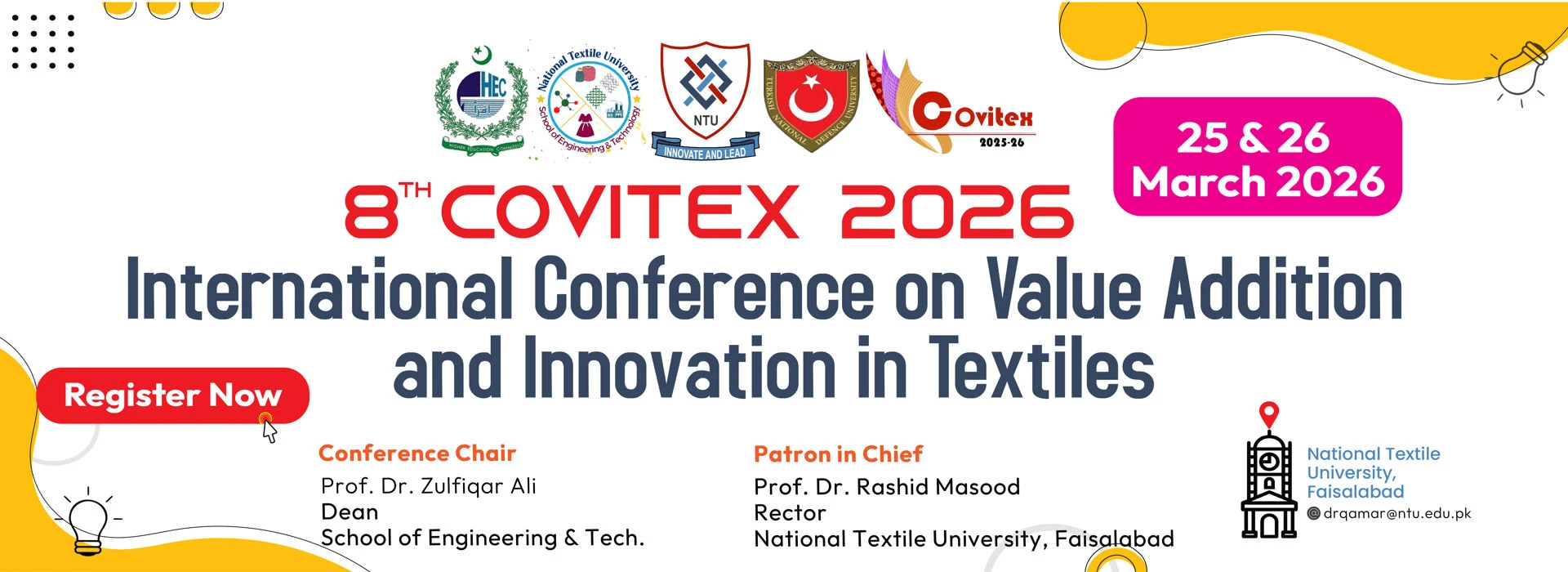


National Textile University traces its founding to 1976 and has since operated as a private university in Faisalabad, Pakistan. The institution maintains a higher-education provider status.
Programmes at National Textile University cover bachelor's through doctoral programmes, structured through multiple faculties. The institution administers a catalogue of active programmes across its academic units.
National Textile University's standing — captured by #2355 globally and #40 within Pakistan — places it within Pakistan's academic hierarchy. The institution participates in Pakistan's academic ecosystem alongside other higher-education providers.
Location & Contact
National Textile University's street address and primary contact methods. Social channels often differentiate by purpose — admissions on one, alumni on another, events on a third.
Academic Details
Scale, staffing, and recognition figures for National Textile University are summarised below. These numbers help you size the institution against your shortlist and weigh academic depth alongside programme fit.
Degrees
National Textile University's qualification tiers and the degrees within each. Foundation years for international students often run separately and feed into year-one of a bachelor's programme.
Bachelor's 10 programs
Bachelor's programmes build foundational expertise, preparing graduates for entry-level professional roles and further postgraduate study.
- Business Administration
- Computer Science
- Fashion Design
- Information Technology
- Materials Engineering
- Polymer and Plastics Technology
- Software Engineering
- Textile Design
- Textile Technology
- Visual Arts
Master's 5 programs
Master's programmes develop advanced specialised expertise, suited to senior industry positions and applied research.
- Business Administration
- Computer Science
- Mathematics
- Textile Design
- Textile Technology
Doctoral 3 programs
Doctoral programmes train independent researchers, leading to academic, scientific, and senior advisory careers.
- Computer Science
- Organic Chemistry
- Textile Technology
Faculties & Divisions
National Textile University's academic divisions and the subject areas each houses are mapped below. Knowing where your subject lives helps navigate department websites and identify the right contact points.
Engineering & Technology (Faculty) 4 subjects offered
Specialisations & Subjects
- Materials Engineering
- Polymer and Plastics Technology
- Textile Technology
- Weaving
Common Career Paths
- Engineer
- Project Manager
- Technical Consultant
Illustrative career directions for this field; specific outcomes depend on programme and student choices.
Humanities and Social Sciences (Faculty) 2 subjects offered
Specialisations & Subjects
- Fashion Design
- Textile Design
Common Career Paths
- Researcher
- Policy Analyst
- Social Worker
Illustrative career directions for this field; specific outcomes depend on programme and student choices.
Management Sciences (Faculty) 2 subjects offered
Specialisations & Subjects
- Business Administration
- Management
Common Career Paths
- Operations Manager
- Project Manager
- HR Manager
Illustrative career directions for this field; specific outcomes depend on programme and student choices.
Science (Faculty) 2 subjects offered
Specialisations & Subjects
- Computer Science
- Organic Chemistry
Common Career Paths
- Research Scientist
- Lab Technician
- Analyst
Illustrative career directions for this field; specific outcomes depend on programme and student choices.
Programs Offered
Below: National Textile University's programme list by level. Programme intakes vary — some offer multiple entry points per year (Sep, Jan, May), others a single annual intake.
41 programmes on record. Each level below shows a sample. Compare these on the programs page All programs in Pakistan
Bachelor's Degree 17 programmes
Showing 10 of 17.
Master of Business Administration 2 programmes
Master of Philosophy 1 programme
Master's Degree 13 programmes
Showing 10 of 13.
Doctorate 8 programmes
How to apply to National Textile University
How to apply to National Textile University — a five-step structure with notes on documents, channels, and timing for each phase.
-
1
Identify the right programme
Use the programme finder to browse National Textile University's 41 active programmes. Filter by keyword or scan by degree level. Read curriculum details on each programme's dedicated page if available.
-
2
Check entry requirements
Programme-level requirements at National Textile University typically include academic transcripts, language proficiency proof, identity documents, and a personal statement or interview. Confirm specific requirements with the admissions office.
-
3
Prepare your application documents
Prepare academic transcripts, ID/passport copies, language proficiency proof, a personal statement, and reference letters. International candidates may need apostilled or notarised translations — start early to avoid deadline pressure.
-
4
Submit via the institution
National Textile University processes applications through ntu.edu.pk. Create an account, fill out the application form, and submit your documents. Note application deadlines, which vary by intake and programme.
-
5
Get in touch with admissions
Confirm receipt of your application with the admissions office and keep an eye on your portal for status changes. Quick responses to any follow-up requests keep your application moving smoothly through the review process.
Frequently Asked Questions about National Textile University
Below are the key facts most prospective students ask about National Textile University, drawn directly from institutional records.
In what year was National Textile University established?
National Textile University was founded in 1976 (approximately 50 years ago).
Where can I find National Textile University?
The institution is located in Faisalabad, Pakistan.
Is National Textile University a public or private institution?
National Textile University is a private institution.
Where does National Textile University stand in university rankings?
National Textile University is ranked #2355 globally and #40 in Pakistan.
What degrees does National Textile University offer?
Programmes at National Textile University cover bachelor's, master's and doctoral programmes.
Who recognises National Textile University?
The institution holds recognition from Higher Education Commission, Pakistan.
How do I find National Textile University online?
You can find National Textile University online at ntu.edu.pk.
Top-Ranked Universities in Pakistan
Industry partnerships of Pakistan's top universities signal employer engagement at the apex of the system. Lower-ranked institutions including National Textile University may still partner with strong employers locally.


Faculties at nearby universities
Universities geographically close to National Textile University are listed below — useful if commute, campus visits, or regional culture factor into your shortlist. Many students compare nearby options before committing to a final choice.


Where Else to Study General Engineering
Programme-led research opportunities for General Engineering students differ. Research-active programmes give undergraduates access to active labs; teaching-only programmes do not.
Universities Compared with National Textile University
Peer cohort diversity — gender, nationality, socioeconomic background — varies more than rankings might suggest. Diversity affects classroom dynamics and post-grad networks.


Studying in Pakistan: guides and resources





Spotted something outdated or missing?
Help us keep this page accurate — it takes about 30 seconds.