How to Find Student Housing in Dublin and Cork: Survival Tactics for the 2024–2025 Crisis
By Muntasir Minhaz • Published May 16, 2026 • Student Life
Dublin faces a shortage of 38,900 student beds with rents averaging €2,186/month, while Cork averages €1,629/month, both critically undersupplied relative to enrollment growth. Start searching 4-6 months early using verified platforms like Daft.ie and CollegeCribs.ie, verify landlord RTB registration, avoid upfront cash payments, and inspect properties in person. Protect yourself against the 22% rise in housing fraud by checking for grammar errors in listings, refusing to pay deposits before viewing, and never sending money via Revolut or cash.
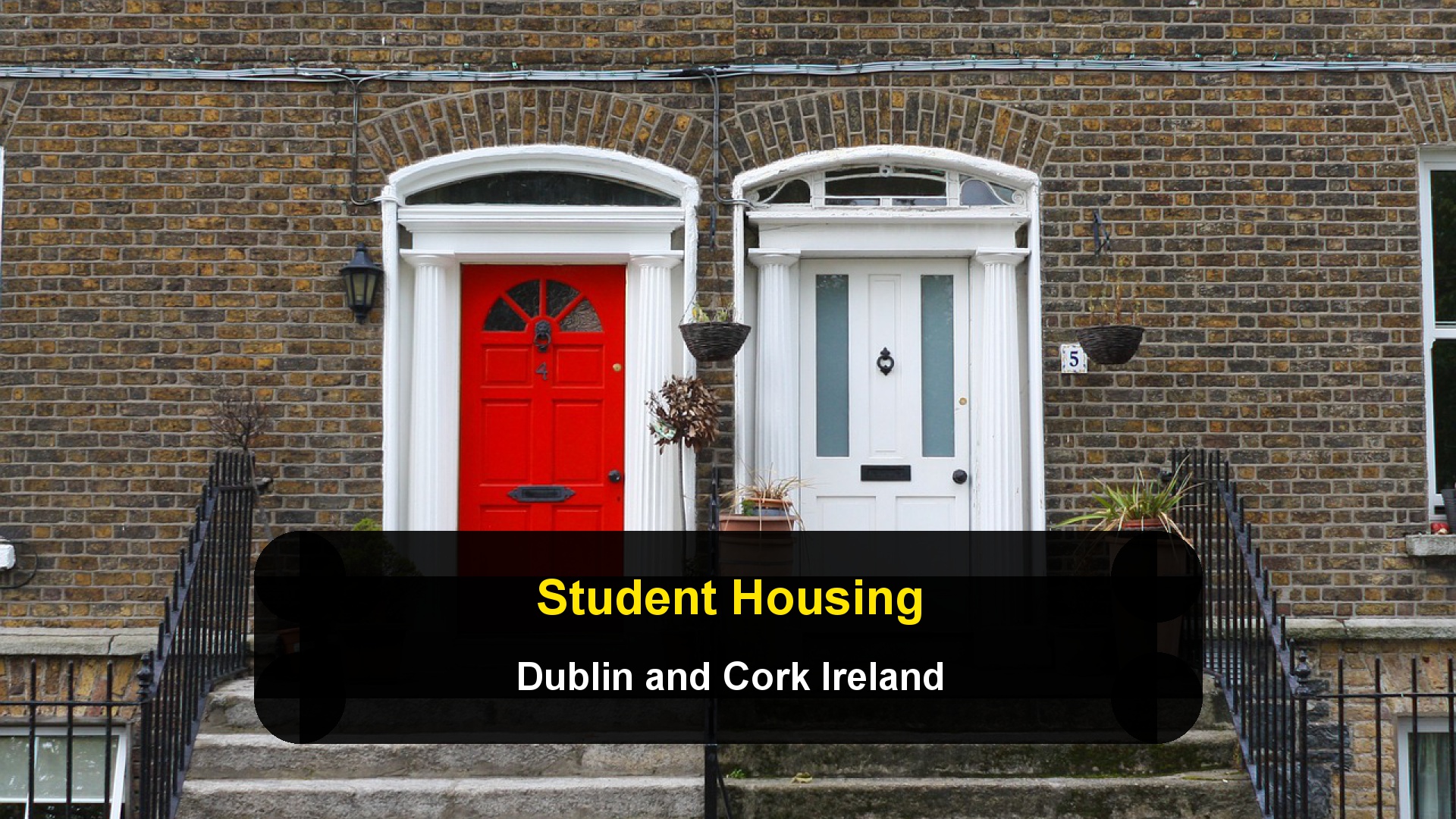
The Shortage Is Real and Worsening
Ireland's student housing crisis has become acute. Once graduated, check how long you can remain on Stamp 1G using our Stamp 1G Duration Tool. According to Sherry FitzGerald's 2025 analysis , there are at least 38,900 bed spaces short across Dublin, Cork, Limerick, and Galway. The shortage grows to 53,000 when including commutable distance counties for Dublin students.
The scale reveals the mismatch: 47,600 purpose-built student beds exist against 215,585 full-time students enrolled in higher education institutions. Only 1,300 new beds came online in 2024. Enrollment has grown by more than 28,000 students over six years (since 2018-2019), yet housing supply has stagnated.
Dublin faces the most severe crunch, with a 2.7 student-to-bed ratio, the highest of any major Irish city.
Rental Costs by City

Private rental rates vary significantly by location:
| Location | Average Monthly Rent |
|---|---|
| Dublin | €2,186 |
| Cork | €1,629 |
| Limerick | €1,587 |
| National average | €1,696 |
These are median rates for new tenancies. On-campus options are typically €800–€1,350 per month, with shared rooms at the lower end and premium ensuite rooms at the higher end.
Utilities and Additional Costs Beyond Rent
Your total housing cost extends beyond rent. Budget for:
- Electricity and gas: €100–€150 monthly combined
- Internet: Typically €30–€50 monthly
- Renters' insurance: €30–€100 annually (highly recommended)
Electricity is expensive in Ireland, averaging 36.34c per kilowatt-hour. The PSO (Public Service Obligation) Levy for 2025–2026 was reduced to €1.46 per month as of December 2025, a 38% reduction from the previous year's rate.
Unlike the UK, Ireland does not have council tax. Renters do not pay the Local Property Tax (LPT) that property owners must pay. You are responsible for utilities on your lease, but not property taxes.
Where to Search: Platforms and Timelines
Start your search 4–6 months before your move-in date, particularly for August intake.
Verified platforms to use:
- Daft.ie — Ireland's largest property portal with hundreds of student house shares and rentals
- CollegeCribs.ie — Specialist student housing site with listings across Ireland
- HousingAnywhere — Peer-to-peer verified listings
- Amber Student — Purpose-built student accommodation operator
- UniAcco — Curated verified student housing with expert support
- University accommodation portals — Trinity College Dublin, University College Dublin (UCD), Dublin City University (DCU), and University College Cork (UCC) all maintain dedicated accommodation pages
- Facebook groups - "Dublin Student Accommodation" groups (search carefully and verify group admins before joining)
For Cork specifically, start your search in January for an August arrival. Cork offers three housing categories: UCC Campus Accommodation, private student apartment complexes, and private rentals. Popular areas include College Road, Magazine Road, Glasheen, Barrack Street, Wilton, and outer suburbs like Ballincollig and Douglas served by frequent buses.
For Dublin, specialized student housing platforms offer thousands of listings, with many focusing on international student placements.
The Application Process: What Landlords Need
Landlords typically request:
- Proof of identity: Passport or national ID
- Proof of enrollment: Letter from your university or student ID card
- Proof of financial capacity: Recent bank statements or proof of financial support (parent sponsor letter if applicable)
- References: One academic and one personal reference (contact details)
- Visa documentation: Valid student visa or visa approval letter
You must have a written lease or rent book. In owner-occupied houses, landlords are not legally required to provide a contract, but you should request one for your protection. Explore all universities in Ireland.
Tenant Rights and Protections Under Irish Law
Ireland's Residential Tenancies Act 2004 (as amended) protects renters:
Deposit and advance payment limits:
- Maximum deposit: one month's rent
- Maximum advance rent: one month's rent
- Total upfront: cannot exceed two months' rent equivalent
Security of tenure: After six months of continuous occupancy without receiving a termination notice, you gain the right to remain in the property. After this point, landlords may only end tenancies for specific, legally defined reasons.
Notice periods for rent increases: Landlords must give at least 90 days' advance notice of rent increases.
Housing standards: Your home must be structurally sound, with functioning hot and cold water, adequate heating, safe electricity and gas, and all appliances in working order.
Student-specific lease limits: Leases cannot exceed 41 weeks unless you request longer. You are able to end fixed-term agreements between May 1 and October 1 without providing reasons.
Eviction protection: Landlords must follow formal procedures through the Residential Tenancies Board (RTB) . Arbitrary evictions are illegal.
Non-discrimination: Landlords cannot discriminate based on gender, family status, sexual orientation, religion, age, disability, race, or Traveller community membership.
How to Verify a Legitimate Landlord
The RTB maintains a public register of all registered tenancies. Before signing, check that your prospective landlord is registered.
Look for:
- RTB registration number — All private rentals, including student-specific accommodation, must be registered with the RTB by law
- Professional contact details — Genuine letting agencies or landlords have business addresses and phone numbers
- Written lease — Any legitimate rental includes a signed lease or license agreement
- Property Service Provider license — Letting agents must hold valid licenses from the Property Services Regulatory Authority
Common Scams and Red Flags

Accommodation fraud in Ireland jumped 22% in the first half of 2025, with 160 cases reported and €385,000 lost, according to An Garda Síochána . About one-third of fraud cases occur in August and September. Victims aged under 25 make up 34% of cases.
Red flags that signal a scam:
- Inability to meet in person: Landlord claims to be abroad and cannot show the property
- Pressure for upfront payment: "Deposit required before viewing" or "Pay now or lose the listing"
- Grammar and spelling errors: Poor English in listings suggests fraud
- Artificially low rents: Prices too good to be true relative to market rates
- Social media only: Listings only on Facebook or WhatsApp with no formal contact details
- Unusual payment methods: Requests for cash, cryptocurrency, or Revolut transfers
- No questions asked: Landlord accepts applications instantly without references or verification
- Missing details: Vague descriptions, no photos, or limited property information
Safe Practices for Applying and Paying
Before payment:
- Visit the property in person, not just video tours
- Meet the landlord or agent face-to-face
- Verify RTB registration
- Request a written lease and read it fully
- Obtain rent and deposit amounts in writing
Payment methods:
- Pay via bank transfer only (traceable and refundable)
- Never use cash, Revolut, or cryptocurrency
- Request a receipt for every payment
- Keep all correspondence in writing
Contracts and documentation:
- Your lease must include rent amount, deposit amount, lease duration, tenant responsibilities, and landlord contact information
- Student-specific accommodation leases must not exceed 41 weeks
- Request a copy of the property's EPC (Energy Performance Certificate)
- Confirm your move-in date and exact terms
What Happens If Something Goes Wrong
If a dispute arises over rent, deposits, repairs, or eviction, the Residential Tenancies Board offers free dispute resolution. Either party can lodge a complaint if:
- The landlord wrongfully retains your deposit
- Rent terms change unfairly
- The property falls below housing standards
- Illegal eviction is threatened
The RTB investigates and mediates. If needed, cases proceed to an adjudicator. This process is free for tenants.
In 2024, deposit retention was the second most common reason for RTB dispute applications, with 419 cases in Q4 alone. See our full guide to studying in Ireland.
Timeline for Searching and Securing Housing
For August intake (typical academic start):
- January: Begin searching, particularly for Cork
- February–March: Apply to on-campus accommodation and shortlist private options
- April–May: Secure viewings, submit applications
- June–July: Sign leases and arrange move logistics
- August: Move in
For January intake:
- August–September: Start searching
- September–October: Shortlist and apply
- November–December: Sign leases
Resources for International Students
- Citizens Information — Official Irish government information on tenants' rights
- ICOS Accommodation Guide — International student focused
- Residential Tenancies Board — Official regulatory body with student-specific guidance
- Dublin.ie Student Housing — Dublin city government resource
- UCC International Accommodation — University-specific for Cork
Sources
- Shortage of 38,900 student beds in Irish cities - RTE
- Nowhere to live: Ireland's student accommodation crisis - Irish Times
- Students urged to be wary amid accommodation fraud rise - RTE
- How to avoid student accommodation scams - RTE
- Student accommodation scams: What to watch for - Irish Times
- Tenants' rights and responsibilities - Citizens Information
- Tenant rights and responsibilities - Residential Tenancies Board
- Student specific accommodation - Residential Tenancies Board
- How to register SSA tenancy - Residential Tenancies Board
- Finding student housing in Dublin - Dublin.ie
- Daft.ie Student Accommodation
- CollegeCribs.ie
- HousingAnywhere
- International student accommodation - UCC
- Cost of Living in Ireland - ICOS
- Electricity prices Ireland - Selectra
- PSO Levy 2025-2026 reduction - Utility Fair
- Protection of Tenants' Deposits Bill 2025 - Beauchamps Solicitors
- Student Life in Ireland 2025 - EduGoAbroad