Beijing Institute of Technology
Beijing, China • Founded 1940 • QS 2027 #243
Updated May 2026 · Source: bit.edu.cn
Overview
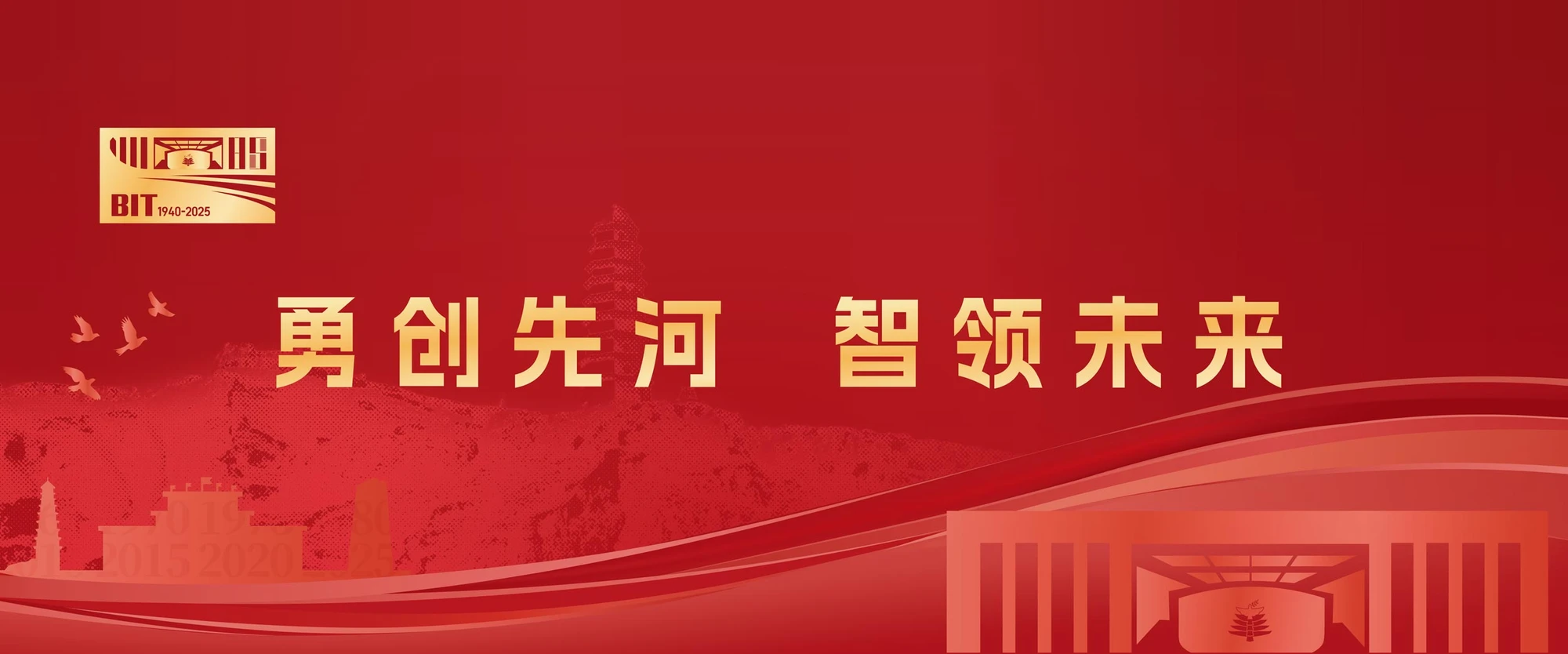


Established in 1940, the Beijing Institute of Technology is a non-profit public higher education institution located in the urban setting of the large metropolis of Beijing (population range of over 5,000,000 inhabitants).
Officially recognized by the Ministry of Education of The People's Republic of China, Beijing Institute of Technology (BIT) is a very large-sized coeducational Chinese higher education institution. Beijing Institute of Technology (BIT) offers courses and programs leading to officially recognized higher education degrees such as bachelor's degrees, master's degrees and doctorate degrees in several areas of study.
This 84-year-old Chinese higher-education institution has a selective admission policy based on entrance examinations. International applicants are eligible to apply for enrollment.
BIT also provides several academic and non-academic facilities and services to students including a library, housing, sports facilities, financial aids and/or scholarships, as well as administrative services.
Location & Contact
Mailing address, phone, email, and social channels for Beijing Institute of Technology are listed below.
Academic Details
Beijing Institute of Technology's key academic numbers — student body size, staffing, and accreditation context.
Academic Structures
Beijing Institute of Technology's faculties, schools, institutes, and constituent units are listed below.
Unit 19 items
- College of Aerospace Science and Technology
- College of Chemical Engineering and Environmental Science
- College of Computer Science and Technology
- College of Design Arts
- College of Foreign Studies
- College of Humanities and Social Science
- College of Information Sciences and Technology
- College of Life Science and Technology
- College of Management and Economics
- College of Material Science and Engineering
- College of Mechanical and Vehicle Engineering
- College of Natural Science
- College of Software
- Graduate School
- Qinhuangdao College
- School of Continuing Education and Distance Learning
- School of Higher Vocational Studies
- School of Physical Education
- Zhuhai College
Faculties & Divisions
All faculties operate under Ministry of Education of The People's Republic of China.
Aerospace Engineering (School) 1 subject offered
Specialisations & Subjects
- Aeronautical and Aerospace Engineering
Automation (School) 1 subject offered
Specialisations & Subjects
- Electronics and Automation
Chemical Engineering and the Environment (School) 3 subjects offered
Specialisations & Subjects
- Applied Chemistry
- Chemical Engineering
- Environmental Studies
Chemistry (School) 1 subject offered
Specialisations & Subjects
- Chemistry
Computer Science (School) 1 subject offered
Specialisations & Subjects
- Computer Science
Design and Arts (School) 4 subjects offered
Specialisations & Subjects
- Architectural and Environmental Design
- Communication Arts
- Design
- Industrial Design
Education (School) 1 subject offered
Specialisations & Subjects
- Education
Foreign Languages (School) 4 subjects offered
Specialisations & Subjects
- English
- German
- Japanese
- Spanish
Information and Electronics (School) 2 subjects offered
Specialisations & Subjects
- Electronic Engineering
- Information Technology
Law (School) 1 subject offered
Specialisations & Subjects
- Law
Life Science (School) 1 subject offered
Specialisations & Subjects
- Biological and Life Sciences
Management and Economics (School) 2 subjects offered
Specialisations & Subjects
- Economics
- Management
Materials Science and Engineering (School) 1 subject offered
Specialisations & Subjects
- Materials Engineering
Mechatronical Engineering (School) 2 subjects offered
Specialisations & Subjects
- Automotive Engineering
- Mechanical Engineering
Optoelectronics (School) 2 subjects offered
Specialisations & Subjects
- Electronic Engineering
- Optometry
Physics (School) 1 subject offered
Specialisations & Subjects
- Physics
Social Sciences (School) 2 subjects offered
Specialisations & Subjects
- Economics
- Social Work
Software (School) 1 subject offered
Specialisations & Subjects
- Software Engineering
Programs Offered
Below are Beijing Institute of Technology's active programmes, grouped by degree level, with search.
19 programmes on record. Each level below shows a sample. Compare these on the programs page All programs in China
Bachelor's Degree 19 programmes
Showing 10 of 19.
How to apply to Beijing Institute of Technology
A five-step path through the application process at Beijing Institute of Technology.
-
1
Find a programme that fits your goals
Begin by reviewing the programmes section above. Beijing Institute of Technology offers 19 programmes grouped by qualification level. Decide on a target tier (bachelor's, master's, or doctoral) before narrowing by subject.
-
2
Confirm you meet the requirements
Each programme at Beijing Institute of Technology has its own entry requirements — academic minimums, language proficiency, supporting documents, and sometimes interviews or portfolios. Check the programme-specific page or contact admissions to confirm eligibility.
-
3
Assemble your application package
Most applications require certified academic records, identification documents, language test certificates (IELTS, TOEFL, or equivalent for English-medium programmes), CV/résumé, and a statement of purpose. Allow extra time for document authentication.
-
4
Submit your application
Apply directly via Beijing Institute of Technology's online portal at www.bit.edu.cn. Complete the application form, upload supporting documents, and pay any application fee. Confirmation emails typically arrive within a few business days.
-
5
Contact admissions and follow up
After submitting, confirm receipt with the admissions office and track your application status through the portal. Reach the institution by phone at +86 (10) 6891 1438. Set reminders for any interview requests, additional document submissions, or admission decision deadlines.
Frequently Asked Questions about Beijing Institute of Technology
A short Q&A covering Beijing Institute of Technology's essentials — founding, location, and structure.
In what year was Beijing Institute of Technology established?
Beijing Institute of Technology was founded in 1940 (approximately 86 years ago).
Where is Beijing Institute of Technology located?
Beijing Institute of Technology is located in Beijing, China.
What is Beijing Institute of Technology's control type?
It is a public higher-education institution.
What is the student enrolment at Beijing Institute of Technology?
Student enrolment at Beijing Institute of Technology is around 27,000.
How is Beijing Institute of Technology ranked?
Beijing Institute of Technology holds rank QS 2027 #243.
What qualification levels does Beijing Institute of Technology offer?
Programmes at Beijing Institute of Technology cover bachelor's, master's and doctoral programmes.
How many faculties does Beijing Institute of Technology have?
The institution comprises 19 academic units.
Is Beijing Institute of Technology accredited?
The institution holds recognition from Ministry of Education.
Where can I learn more about Beijing Institute of Technology?
The institution's website is www.bit.edu.cn.
Top-Ranked Universities in China
Some China systems publish government rating frameworks (NIRF, QS Stars, regulatory grading) alongside rankings. These add independent signals beyond commercial ranking tables.


Faculties at nearby universities
Below are universities in the same area as Beijing Institute of Technology.
Where Else to Study General Engineering
These universities in China also offer General Engineering programmes, alongside Beijing Institute of Technology.

Universities Compared with Beijing Institute of Technology
These universities are of a comparable scale to Beijing Institute of Technology.
Studying in China: guides and resources





Spotted something outdated or missing?
Help us keep this page accurate — it takes about 30 seconds.