Far Eastern University
Philippines • Founded 1928
Updated May 2026
Overview
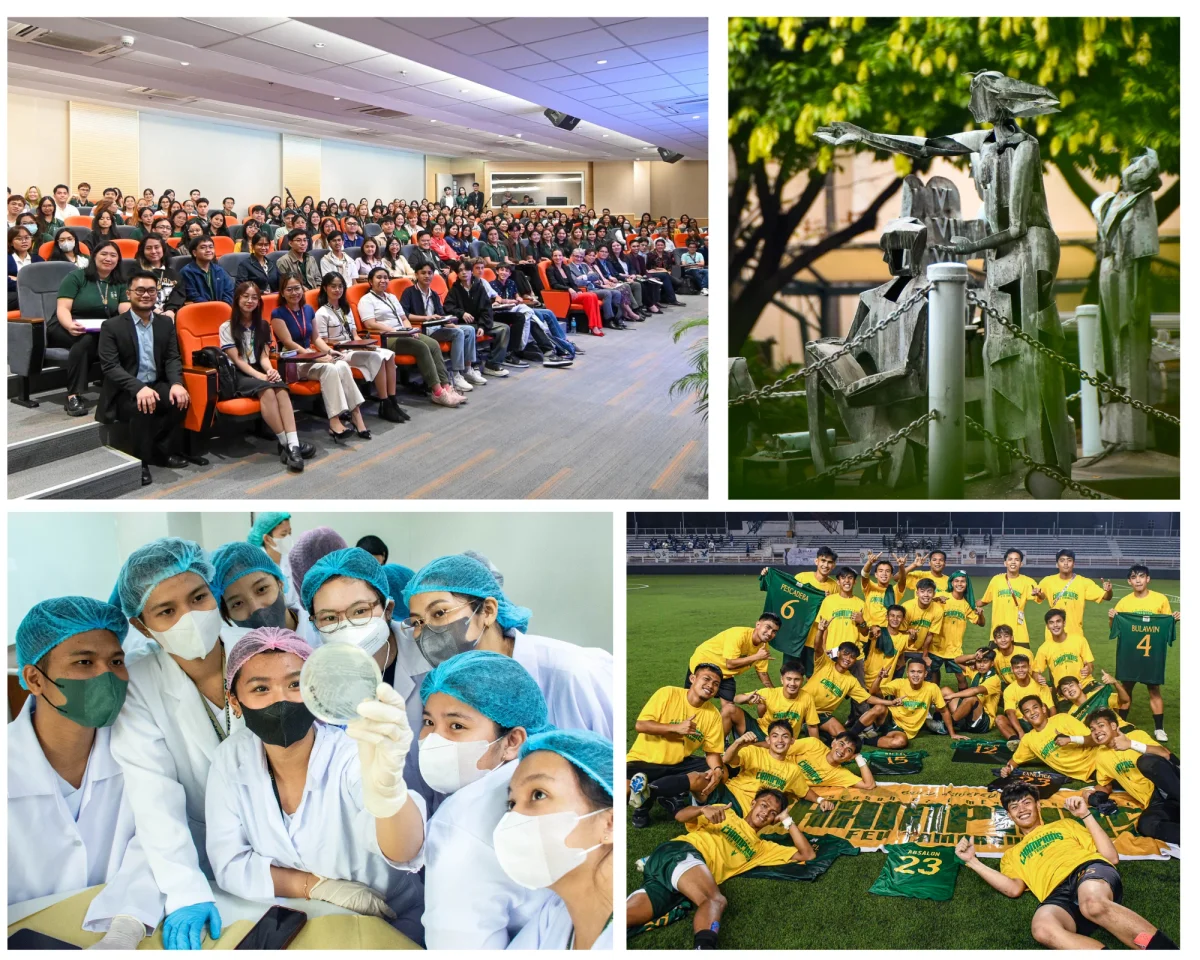


Founded 1928 as Institute of Accountancy and Business Administration, consolidated with Far Eastern College and incorporated under present title 1933.
East Asia College of Information Technology (EACIT). FEU took over East Asia College of Information Technology (EACIT) and merged it with its own College of Engineering to form FEU - East Asia College (FEU - EAC) 2002.
Location & Contact
Planning a visit to Far Eastern University or following up with admissions? Location and contact details are listed below. Admissions email typically replies within 5–10 business days during peak season.
Academic Details
Far Eastern University's student-to-faculty composition and recognition standing are listed below. Student support staff (advisers, counsellors) are typically separate from academic staff and often uncounted here.
Degrees
Far Eastern University's degree portfolio is grouped by level below. Each tier reflects different time commitments, academic depth, and career outcomes — useful when matching a programme to your current study stage.
Master's 14 programs
Master's programmes develop advanced specialised expertise, suited to senior industry positions and applied research.
- Administration
- Arts and Humanities
- Business Administration
- Educational Administration
- Filipino
- Government
- History
- Library Science
- Mass Communication
- Mathematics
- Nursing
- Physical Education
- Political Sciences
- Psychology
Doctoral 2 programs
Doctoral programmes train independent researchers, leading to academic, scientific, and senior advisory careers.
- Education
- Educational Administration
Faculties & Divisions
Each of Far Eastern University's faculties focuses on different subject clusters — the breakdown is below. Cross-faculty programmes exist but are usually administered by their lead division.
Engineering and Computer Studies (College) 9 subjects offered
Specialisations & Subjects
- Civil Engineering
- Computer Engineering
- Computer Networks
- Computer Science
- Electrical Engineering
- Electronic Engineering
- Engineering
- Industrial Engineering
- Information Technology
Common Career Paths
- Software Engineer
- Data Scientist
- Systems Analyst
Illustrative career directions for this field; specific outcomes depend on programme and student choices.
Accountancy, Business and Finance (Institute) 12 subjects offered
Specialisations & Subjects
- Accountancy
- Business Administration
- Economics
- Finance
- Hotel and Restaurant
- Hotel Management
- Human Resources
- Law
- Management
- Marketing
- Secretarial Studies
- Tourism
Common Career Paths
- Business Analyst
- Operations Manager
- Strategy Consultant
Illustrative career directions for this field; specific outcomes depend on programme and student choices.
Architecture and Fine Arts (Institute) 4 subjects offered
Specialisations & Subjects
- Advertising and Publicity
- Architecture
- Fine Arts
- Painting and Drawing
Common Career Paths
- Architect
- Urban Planner
- Interior Designer
Illustrative career directions for this field; specific outcomes depend on programme and student choices.
Arts and Science (Institute) 13 subjects offered
Specialisations & Subjects
- Applied Mathematics
- Arts and Humanities
- Biology
- English
- Filipino
- Information Technology
- International Studies
- Literature
- Mass Communication
- Medical Technology
- Natural Sciences
- Political Sciences
- Psychology
Common Career Paths
- Research Scientist
- Lab Technician
- Analyst
Illustrative career directions for this field; specific outcomes depend on programme and student choices.
Education (Institute) 13 subjects offered
Specialisations & Subjects
- Art Education
- Curriculum
- Education
- Educational Administration
- Foreign Languages Education
- Mathematics Education
- Native Language Education
- Physical Education
- Primary Education
- Science Education
- Secondary Education
- Special Education
- Sports
Common Career Paths
- Teacher
- Educational Administrator
- Curriculum Specialist
Illustrative career directions for this field; specific outcomes depend on programme and student choices.
Graduate Studies (Institute) 12 subjects offered
Specialisations & Subjects
- Arts and Humanities
- Business Administration
- Curriculum
- Education
- Educational Administration
- English
- Mass Communication
- Nursing
- Physical Education
- Psychology
- Special Education
- Teacher Training
Law (Institute) 2 subjects offered
Specialisations & Subjects
- Commercial Law
- Law
Common Career Paths
- Lawyer
- Legal Consultant
- Compliance Officer
Illustrative career directions for this field; specific outcomes depend on programme and student choices.
Nursing (Institute) 2 subjects offered
Specialisations & Subjects
- Health Sciences
- Nursing
Common Career Paths
- Registered Nurse
- Clinical Nurse
- Public Health Nurse
Illustrative career directions for this field; specific outcomes depend on programme and student choices.
Programs Offered
Each programme at Far Eastern University is grouped by the degree it leads to. New programmes can take 6–12 months to propagate through search engines, so the live catalogue here is the authoritative list.
44 programmes on record. Each level below shows a sample. Compare these on the programs page All programs in Philippines
Bachelor's Degree 30 programmes
Showing 10 of 30.
Master of Business Administration 1 programme
Master's Degree 11 programmes
Showing 10 of 11.
How to apply to Far Eastern University
A short guide to applying to Far Eastern University — five steps covering the path from programme selection to confirmation of receipt.
-
1
Research programmes at Far Eastern University
Use the programme finder to browse Far Eastern University's 44 active programmes. Filter by keyword or scan by degree level. Read curriculum details on each programme's dedicated page if available.
-
2
Review admissions criteria
Programme-level requirements at Far Eastern University typically include academic transcripts, language proficiency proof, identity documents, and a personal statement or interview. Confirm specific requirements with the admissions office.
-
3
Gather supporting documents
Prepare academic transcripts, ID/passport copies, language proficiency proof, a personal statement, and reference letters. International candidates may need apostilled or notarised translations — start early to avoid deadline pressure.
-
4
Lodge your application
Far Eastern University processes applications through www.feu.edu.ph. Create an account, fill out the application form, and submit your documents. Note application deadlines, which vary by intake and programme.
-
5
Confirm receipt and track progress
Confirm receipt of your application with the admissions office and keep an eye on your portal for status changes. Reach the institution by phone at 63 (2)-87777-338. Quick responses to any follow-up requests keep your application moving smoothly through the review process.
Frequently Asked Questions about Far Eastern University
Common questions students ask about Far Eastern University — answers pulled straight from the institution's published profile.
When did Far Eastern University open?
Far Eastern University traces its founding to 1928 (approximately 98 years ago).
Where is Far Eastern University located?
Far Eastern University is located in Manila, Philippines.
Is Far Eastern University public or private?
It is a private higher-education institution.
What qualification levels does Far Eastern University offer?
Far Eastern University offers bachelor's, master's and doctoral programmes.
Is Far Eastern University accredited?
The institution holds recognition from Philippine Association of Colleges and Universities Commission on Accreditation (PACUCUOA); Philippine Accrediting Association of Schools, Colleges and Universities (PAASCU).
What is Far Eastern University's official website?
The institution's website is www.feu.edu.ph.
Top-Ranked Universities in the Philippines
Top the Philippines universities often run international branch campuses. Far Eastern University's international footprint compared to this benchmark signals global engagement scale.


Where Else to Study Information Systems & Technology
Practicum and placement requirements vary widely across Information Systems & Technology programmes in the Philippines. Compulsory placements affect total time commitment but typically improve post-graduation employment outcomes.



Universities Compared with Far Eastern University
Joint research consortia among universities at Far Eastern University's level — shared grants, co-supervision arrangements — make peer institutions natural collaborators rather than just competitors.

Studying in Philippines: guides and resources






Spotted something outdated or missing?
Help us keep this page accurate — it takes about 30 seconds.