New Era University
Philippines • Founded 1975
Updated May 2026 · Source: neu.edu.ph · How we collect data
Overview
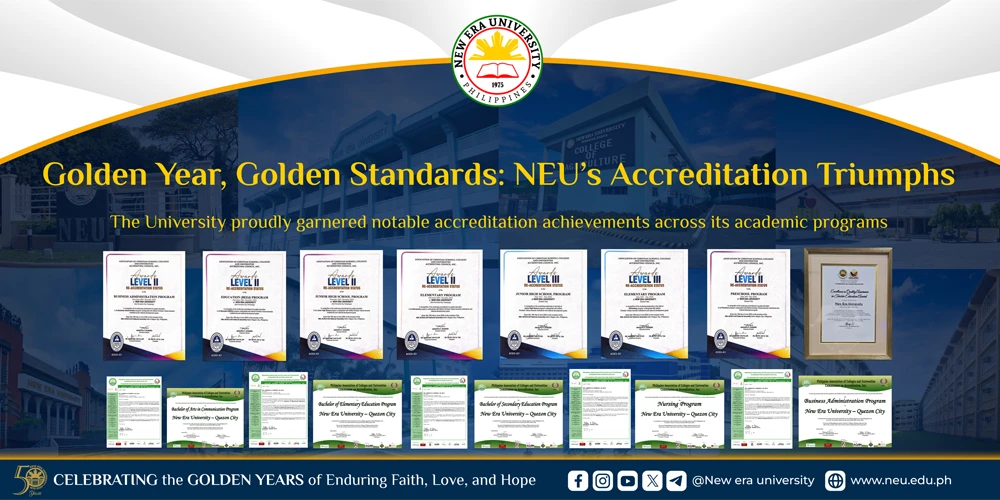

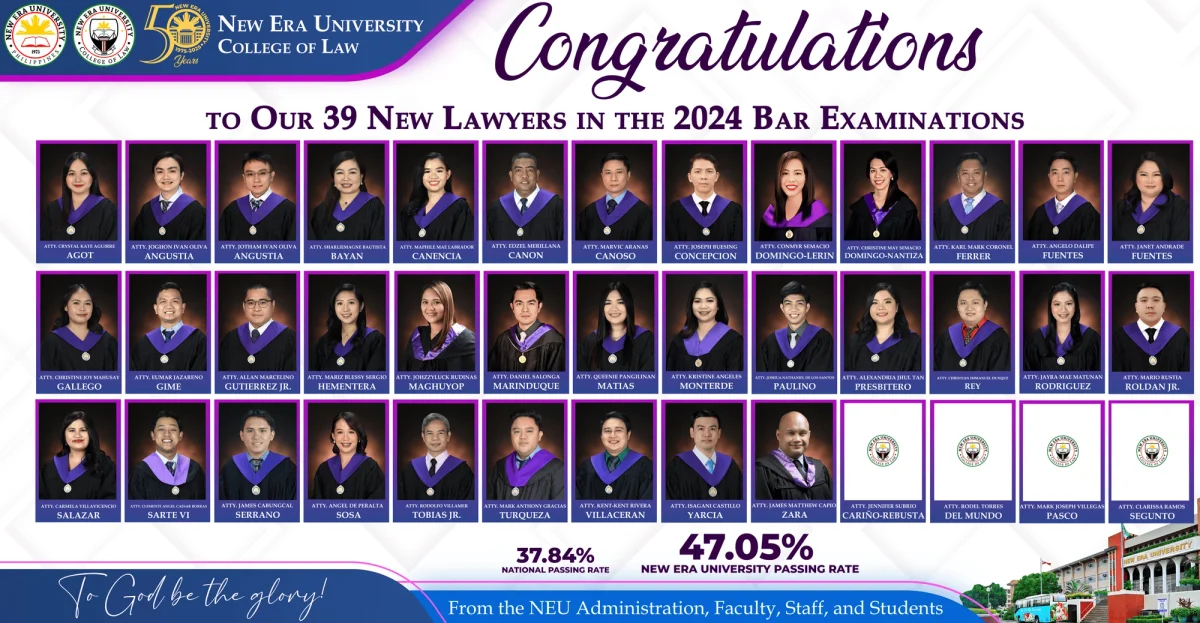

Established in 1975, the New Era University is a non-profit private higher education institution located in the urban setting of the metropolis of Quezon City (population range of 1,000,000-5,000,000 inhabitants), National Capital Region.
This institution also has branch campuses in General Santos City, Lipa City, San Fernando and Loyola Heights. Officially recognized by the Commission on Higher Education of the Philippines, New Era University (NEU) is a very large-sized coeducational Philippine higher education institution formally affiliated with the Christian-Restorationist religion.
New Era University (NEU) offers courses and programs leading to officially recognized higher education degrees such as pre-bachelor's degrees (i.e. certificates, diplomas, associate or foundation), bachelor's degrees, master's degrees and doctorate degrees in several areas of study. This 48-year-old Philippine higher-education institution has a selective admission policy based on entrance examinations and students' past academic records and grades.
The acceptance rate range is 90-99% making this Philippine higher education organization a least selective institution.
International applicants are eligible to apply for enrollment. NEU also provides several academic and non-academic facilities and services to students including a library, as well as administrative services.
Location & Contact
Where to find New Era University, plus its phone, email, website, and social media links.
Academic Details
A snapshot of New Era University's academic profile — enrolment, staffing, and recognition.
Academic Structures
Below is how New Era University is organised academically — the schools, faculties, and units.
Unit 6 items
- College of Arts and Sciences
- College of Business Administration
- College of Education
- College of Engineering and Technology
- College of Evangelical Ministry
- Graduate School
Faculties & Divisions
All faculties operate under Commission on Higher Education of the Philippines.
Arts and Sciences (College) 6 subjects offered
Specialisations & Subjects
- Biology
- Educational and Student Counselling
- Journalism
- Mass Communication
- Political Sciences
- Psychology
Business Education and Administration (College) 8 subjects offered
Specialisations & Subjects
- Accountancy
- Banking
- Business Administration
- Business Education
- Commercial Law
- Finance
- Human Resources
- Management
Education (College) 11 subjects offered
Specialisations & Subjects
- Curriculum
- Education
- English
- Filipino
- Foreign Languages Education
- Mathematics Education
- Native Language Education
- Preschool Education
- Social Studies
- Special Education
- Technology Education
Engineering and Technology (College) 8 subjects offered
Specialisations & Subjects
- Civil Engineering
- Computer Science
- Electrical Engineering
- Electronic Engineering
- Engineering
- Industrial Engineering
- Mechanical Engineering
- Telecommunications Engineering
Evangelical Ministry (College) 1 subject offered
Specialisations & Subjects
- Pastoral Studies
Law (College) 3 subjects offered
Specialisations & Subjects
- Constitutional Law
- Criminal Law
- Law
Nursing (College) 1 subject offered
Specialisations & Subjects
- Nursing
Graduate Studies (School) 9 subjects offered
Specialisations & Subjects
- Business Administration
- Education
- Educational Administration
- Educational Psychology
- Filipino
- Mathematics Education
- Native Language Education
- Social Sciences
- Special Education
Programs Offered
Browse New Era University's programmes by level, or filter by name.
42 programmes on record. Each level below shows a sample. Compare these on the programs page All programs in Philippines
Bachelor's Degree 34 programmes
Showing 10 of 34.
Master of Business Administration 1 programme
Master's Degree 4 programmes
Doctorate 3 programmes
How to apply to New Era University
Step-by-step guidance for applying to New Era University, in five steps.
-
1
Browse the programme catalogue
New Era University's catalogue includes 42 programmes. Browse by level, identify candidates matching your prior qualifications, and note their entry requirements for the next step.
-
2
Check eligibility for your chosen programme
Entry requirements vary by programme and degree level. Verify academic minimums, language tests (if international), and any additional documents required for New Era University's admissions process.
-
3
Get your documents ready
Typical documents include academic transcripts, identity proof (passport or national ID), language proficiency test scores, a personal statement or motivation letter, and recommendation letters. International applicants should account for translation and notarisation time.
-
4
Apply through the official channel
Submit your completed application through New Era University's official website at www.neu.edu.ph. Most institutions use an online portal — register an account, complete the application form, and upload your prepared documents. Keep copies of all submissions and confirmation receipts.
-
5
Reach out and track your application
Follow up to confirm your application was received and is being processed. Reach the institution by phone at +63 (2) 981 4221. Admissions teams may request interviews or additional documents — respond promptly to keep your application active.
Frequently Asked Questions about New Era University
Frequently asked questions about New Era University.
When was New Era University founded?
New Era University was established in 1975 (approximately 51 years ago).
What city is New Era University in?
New Era University operates from Quezon City, Philippines.
What is New Era University's control type?
New Era University is a private institution.
How big is New Era University's student body?
New Era University serves approximately 30,000-34,999 students.
What qualification levels does New Era University offer?
New Era University offers bachelor's, master's and doctoral programmes.
Is New Era University affiliated with a religion?
New Era University is associated with Christian-Restorationist.
How many faculties does New Era University have?
New Era University is organised into 6 academic units across its disciplines.
Who recognises New Era University?
New Era University is accredited by Philippine Association of Colleges and Universities Commission on Accreditation (PACUCOA).
Where can I learn more about New Era University?
You can find New Era University online at www.neu.edu.ph.
Top-Ranked Universities in the Philippines
Ranking methodologies vary across the Philippines — national rankings, subject-specific rankings, and international tables can each tell different stories about the same universities.


Other Philippine, Filipino Universities Affiliated with Christian-Restorationist
These universities in the Philippines are also affiliated with Christian-Restorationist.




Where Else to Study Education & Teaching
Universities in the Philippines with Education & Teaching programmes appear below, alongside New Era University.



Universities Compared with New Era University
Universities of a similar scale and standing to New Era University are listed below.

Studying in Philippines: guides and resources






Spotted something outdated or missing?
Help us keep this page accurate — it takes about 30 seconds.