University of Minnesota Twin Cities
Minneapolis, United States • Founded 1851 • World Rank #70
Updated Jun 2026
Overview
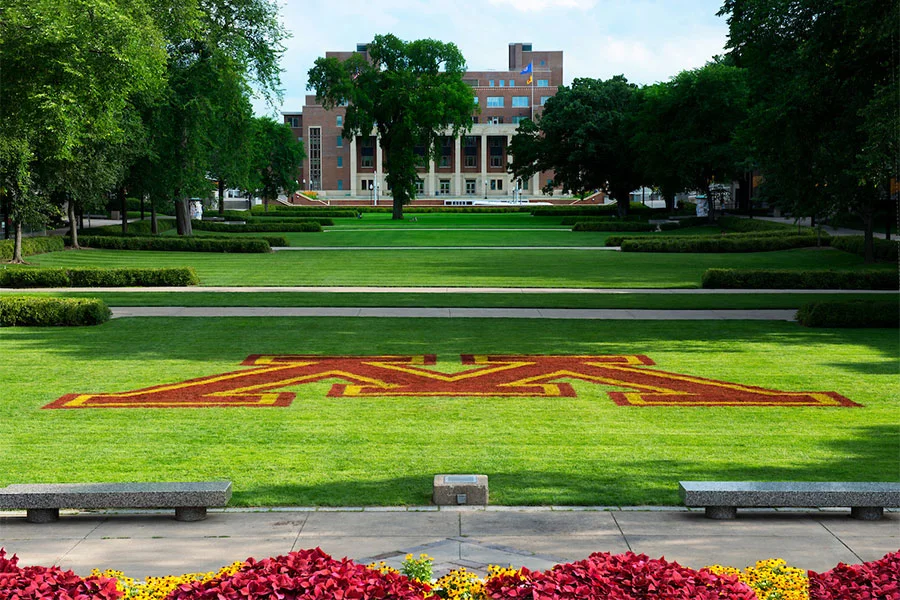
Founded in 1851, the University of Minnesota Twin Cities is a non-profit public higher education institution located in the urban setting of the medium city of Minneapolis (population range of 250,000-499,999 inhabitants), Minnesota.
This institution also has branch campuses in Crookston, Duluth, Morris and Rochester. Officially accredited by the Higher Learning Commission, University of Minnesota Twin Cities (U of M) is a very large-sized coeducational US higher education institution.
University of Minnesota Twin Cities (U of M) offers courses and programs leading to officially recognized higher education degrees such as pre-bachelor's degrees (i.e. certificates, diplomas, associate or foundation), bachelor's degrees, master's degrees and doctorate degrees in several areas of study. This 173-year-old US higher-education institution has a selective admission policy based on students' past academic records and grades.
The acceptance rate range is 70-79% making this US higher education organization a moderately selective institution.
International students are welcome to apply for enrollment. U of M also provides several academic and non-academic facilities and services to students including a library, housing, sports facilities, financial aids and/or scholarships, study abroad and exchange programs, online courses and distance learning opportunities, as well as administrative services.
Location & Contact
Where University of Minnesota Twin Cities sits geographically, plus the contact channels students use during admissions. Alumni-office inquiries are separate from admissions and have their own contact page.
Academic Details
Academic statistics for University of Minnesota Twin Cities — including its student body and academic staff numbers. Read these alongside rankings; institution scale changes how rankings should be interpreted.
Academic Structures
University of Minnesota Twin Cities's academic units, organised by type. Recently formed faculties (post-merger or post-split) often have updated curricula and may carry less institutional history than older units.
Unit 7 items
- Carlson School of Management
- College of Biological Sciences
- College of Continuing Education
- College of Design
- College of Education and Human Development
- College of Food, Agricultural and Natural Resource Sciences
- College of Liberal Arts
Programs Offered
Below are University of Minnesota Twin Cities's active programmes grouped by degree level, with search. Use the filter to narrow by keyword and the level groupings to compare options at the same qualification tier.
420 programmes on record. Each level below shows a sample. Compare these on the programs page All programs in United States
Bachelor's Degree 120 programmes
Showing 10 of 120.
Master's Degree 121 programmes
Showing 10 of 121.
Doctorate 80 programmes
Showing 10 of 80.
Professional Doctorate 15 programmes
Showing 10 of 15.
Certificate 31 programmes
Showing 10 of 31.
Postgraduate Certificate 53 programmes
Showing 10 of 53.
How to apply to University of Minnesota Twin Cities
The standard application path for University of Minnesota Twin Cities, broken into five practical steps with the documents and channels you will need at each stage.
-
1
Identify the right programme
Use the programme finder to browse University of Minnesota Twin Cities's 420 active programmes. Filter by keyword or scan by degree level. Read curriculum details on each programme's dedicated page if available.
-
2
Check entry requirements
Programme-level requirements at University of Minnesota Twin Cities typically include academic transcripts, language proficiency proof, identity documents, and a personal statement or interview. Confirm specific requirements with the admissions office.
-
3
Prepare your application documents
Prepare academic transcripts, ID/passport copies, language proficiency proof, a personal statement, and reference letters. International candidates may need apostilled or notarised translations — start early to avoid deadline pressure.
-
4
Submit via the institution
University of Minnesota Twin Cities processes applications through twin-cities.umn.edu. Create an account, fill out the application form, and submit your documents. Note application deadlines, which vary by intake and programme.
-
5
Get in touch with admissions
Confirm receipt of your application with the admissions office and keep an eye on your portal for status changes. Reach the institution by phone at +1 (612) 625 5000. Quick responses to any follow-up requests keep your application moving smoothly through the review process.
Frequently Asked Questions about University of Minnesota Twin Cities
Quick answers to the most common questions about University of Minnesota Twin Cities — covering location, founding, ranking, programmes, and admissions context.
How old is University of Minnesota Twin Cities?
The institution opened in 1851 (approximately 175 years ago).
Where is University of Minnesota Twin Cities located?
University of Minnesota Twin Cities is located in Minneapolis, United States.
What is University of Minnesota Twin Cities's control type?
It is a public higher-education institution.
What is the student enrolment at University of Minnesota Twin Cities?
Student enrolment at University of Minnesota Twin Cities is around over-50,000.
Where does University of Minnesota Twin Cities stand in university rankings?
University of Minnesota Twin Cities is ranked #70 globally and #17 in United States.
How is University of Minnesota Twin Cities organised academically?
University of Minnesota Twin Cities is organised into 7 academic units across its disciplines.
Is University of Minnesota Twin Cities accredited?
Yes, University of Minnesota Twin Cities is recognised by Higher Learning Commission.
What is University of Minnesota Twin Cities's official website?
University of Minnesota Twin Cities's official website is twin-cities.umn.edu.
Top-Ranked Universities in the United States
These are the most highly ranked universities in the United States. Putting University of Minnesota Twin Cities alongside them gives a clearer picture of where it sits in the national academic landscape, especially when reputation matters for credential portability.



Members of Association of Universities for Research in Astronomy (AURA)
Membership criteria for Association of Universities for Research in Astronomy (AURA) signal what the network values — research output, teaching quality, internationalisation, or institutional governance. Knowing the criteria helps interpret what membership means.


Faculties at nearby universities
Looking at higher education options close to University of Minnesota Twin Cities? These nearby campuses share similar academic structures and may suit students prioritising proximity to home or family. Regional ties also affect access to internships and local employer networks.



Where Else to Study Liberal Arts
Other universities in the United States that teach Liberal Arts appear below — useful for comparing programme depth against University of Minnesota Twin Cities. Programme structures differ even within the same country, so detailed comparison is worth the effort.



Universities Compared with University of Minnesota Twin Cities
Comparable institutions to University of Minnesota Twin Cities — by academic scale and standing — are gathered below. Same-tier shortlists give you flexibility on admissions outcomes without compromising on institutional level.



Studying in United States: guides and resources





Spotted something outdated or missing?
Help us keep this page accurate — it takes about 30 seconds.