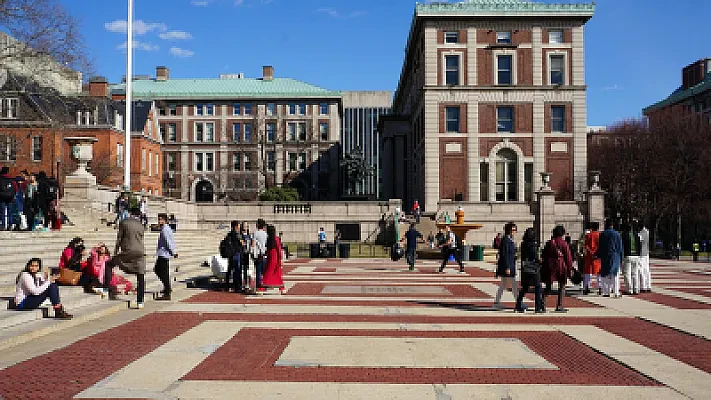
Baise University
China • World Rank #5401
Updated May 2026
Overview
Based in Baise, China, Baise University is a public institution that functions as a higher-education provider within China.
Academically, Baise University delivers teaching across bachelor's programmes. Its institutional structure includes numerous faculties and schools and runs a catalogue of active programmes across multiple disciplines.
Institutional scale at Baise University centres on 21,135 students, organised across faculties and academic units. Its campus environment provides the daily context for academic and student life.
Baise University is ranked #5401 globally and #656 within China. The institution participates in China's academic ecosystem alongside other higher-education providers.
Location & Contact
For visits or applications to Baise University, location and primary contact details are below. Open days are typically announced via social channels — follow them to receive event notifications.
Academic Details
The basic academic profile of Baise University, including enrolment and faculty composition. Total student count fluctuates intake-to-intake; treat the figure as approximate rather than precise.
Degrees
Each degree level at Baise University groups its qualifications below for easy comparison. The grouping makes it straightforward to find equivalent programmes across institutions.
Bachelor's 10 programs
Bachelor's programmes build foundational expertise, preparing graduates for entry-level professional roles and further postgraduate study.
- Agriculture
- Arts and Humanities
- Economics
- Education
- Engineering
- Fine Arts
- Law
- Management
- Mathematics
- Natural Sciences
Faculties & Divisions
The schools at Baise University and their associated subjects. Centres of excellence within faculties signal subjects where the institution invests in research and graduate-level activity.
Agriculture and Food Engineering (School) 3 subjects offered
Specialisations & Subjects
- Agricultural Equipment
- Biotechnology
- Food Science
Common Career Paths
- Engineer
- Project Manager
- Technical Consultant
Illustrative career directions for this field; specific outcomes depend on programme and student choices.
Chemistry and Environmental Engineering (School) 4 subjects offered
Specialisations & Subjects
- Chemical Engineering
- Chemistry
- Environmental Engineering
- Materials Engineering
Common Career Paths
- Engineer
- Project Manager
- Technical Consultant
Illustrative career directions for this field; specific outcomes depend on programme and student choices.
Educational Science (School) 2 subjects offered
Specialisations & Subjects
- Preschool Education
- Primary Education
Common Career Paths
- Teacher
- Educational Administrator
- Curriculum Specialist
Illustrative career directions for this field; specific outcomes depend on programme and student choices.
Fine Arts and Design (School) 3 subjects offered
Specialisations & Subjects
- Architectural and Environmental Design
- Design
- Fashion Design
Common Career Paths
- Designer
- Creative Director
- UX Researcher
Illustrative career directions for this field; specific outcomes depend on programme and student choices.
Foreign Languages (School) 3 subjects offered
Specialisations & Subjects
- English
- Thai Languages
- Vietnamese
Common Career Paths
- Translator
- Interpreter
- Language Teacher
Illustrative career directions for this field; specific outcomes depend on programme and student choices.
Humanities and Communication (School) 3 subjects offered
Specialisations & Subjects
- Chinese
- Classical Languages
- Foreigners Education
Common Career Paths
- Journalist
- Public Relations Specialist
- Content Strategist
Illustrative career directions for this field; specific outcomes depend on programme and student choices.
Industry and Business Administration (School) 3 subjects offered
Specialisations & Subjects
- International Business
- Management
- Marketing
Common Career Paths
- Business Analyst
- Operations Manager
- Strategy Consultant
Illustrative career directions for this field; specific outcomes depend on programme and student choices.
Information Engineering (School) 5 subjects offered
Specialisations & Subjects
- Computer Engineering
- Computer Science
- Electrical Engineering
- Electronics and Automation
- Telecommunications Engineering
Common Career Paths
- Engineer
- Project Manager
- Technical Consultant
Illustrative career directions for this field; specific outcomes depend on programme and student choices.
Management Science and Engineering (School) 5 subjects offered
Specialisations & Subjects
- Civil Engineering
- Engineering Management
- Geography (Human)
- Rural Planning
- Town Planning
Common Career Paths
- Engineer
- Project Manager
- Technical Consultant
Illustrative career directions for this field; specific outcomes depend on programme and student choices.
Materials Science and Engineering (School) 3 subjects offered
Specialisations & Subjects
- Electronics and Automation
- Metallurgical Engineering
- Physics
Common Career Paths
- Engineer
- Project Manager
- Technical Consultant
Illustrative career directions for this field; specific outcomes depend on programme and student choices.
Mathematics and Statistics (School) 3 subjects offered
Specialisations & Subjects
- Applied Mathematics
- Mathematics
- Statistics
Common Career Paths
- Data Analyst
- Statistician
- Actuary
Illustrative career directions for this field; specific outcomes depend on programme and student choices.
Music and Dance (School) 2 subjects offered
Specialisations & Subjects
- Dance
- Music
Physical Education (School) 2 subjects offered
Specialisations & Subjects
- Physical Education
- Sports Management
Common Career Paths
- Teacher
- Educational Administrator
- Curriculum Specialist
Illustrative career directions for this field; specific outcomes depend on programme and student choices.
Politics and Public Administration (School) 2 subjects offered
Specialisations & Subjects
- Humanities and Social Science Education
- Philosophy
Tourism Management (School) 2 subjects offered
Specialisations & Subjects
- Hotel Management
- Tourism
Common Career Paths
- Operations Manager
- Project Manager
- HR Manager
Illustrative career directions for this field; specific outcomes depend on programme and student choices.
Programs Offered
Look through Baise University's programmes by level or filter for keywords. Programme-level scholarships exist alongside institution-wide ones; the programme page typically lists them.
39 programmes on record. Each level below shows a sample. Compare these on the programs page All programs in China
Bachelor's Degree 39 programmes
Showing 10 of 39.
How to apply to Baise University
What applying to Baise University typically involves — research, eligibility check, document prep, submission, and follow-up.
-
1
Identify the right programme
Use the programme finder to browse Baise University's 39 active programmes. Filter by keyword or scan by degree level. Read curriculum details on each programme's dedicated page if available.
-
2
Check entry requirements
Programme-level requirements at Baise University typically include academic transcripts, language proficiency proof, identity documents, and a personal statement or interview. Confirm specific requirements with the admissions office.
-
3
Prepare your application documents
Prepare academic transcripts, ID/passport copies, language proficiency proof, a personal statement, and reference letters. International candidates may need apostilled or notarised translations — start early to avoid deadline pressure.
-
4
Submit via the institution
Baise University processes applications through www.bsuc.cn. Create an account, fill out the application form, and submit your documents. Note application deadlines, which vary by intake and programme.
-
5
Get in touch with admissions
Confirm receipt of your application with the admissions office and keep an eye on your portal for status changes. Quick responses to any follow-up requests keep your application moving smoothly through the review process.
Frequently Asked Questions about Baise University
Below are the key facts most prospective students ask about Baise University, drawn directly from institutional records.
In which city is Baise University?
Baise University is based in Baise, China.
Is Baise University a public or private institution?
Baise University operates as a public institution.
How many students study at Baise University?
Baise University has approximately 21,135 students.
What is Baise University's ranking?
It ranks #5401 globally and #656 in China.
What qualification levels does Baise University offer?
Programmes at Baise University cover bachelor's programmes.
Who recognises Baise University?
Yes, Baise University is recognised by Ministry of Education.
How do I find Baise University online?
The institution's website is www.bsuc.cn.
Top-Ranked Universities in China
A quick benchmark: here are the top-ranked universities in China. Useful for understanding how Baise University compares against the national reference points in higher education, and what alternatives exist if reach institutions are part of your strategy.

Where Else to Study Business & Management
Cohort intake size shapes class culture meaningfully in Business & Management. Some China institutions accept a few dozen, others hundreds — the difference affects peer-learning depth and faculty access.


Universities Compared with Baise University
Joint research consortia among universities at Baise University's level — shared grants, co-supervision arrangements — make peer institutions natural collaborators rather than just competitors.
Studying in China: guides and resources




Spotted something outdated or missing?
Help us keep this page accurate — it takes about 30 seconds.