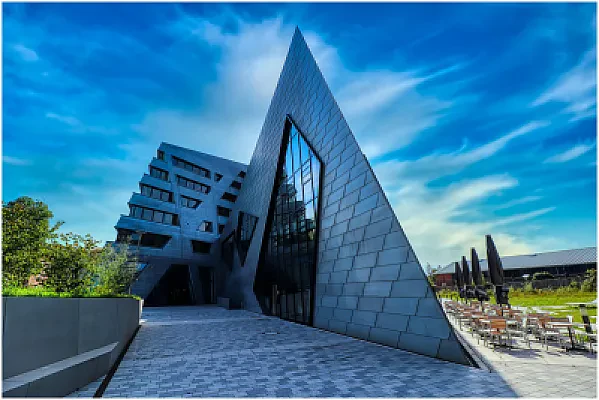
China University of Mining and Technology (Beijing)
Beijing, China
Updated May 2026 · Source: cumtb.edu.cn
Overview


Founded 1909 as Jiaozuo School of Railroad and Mines.
Became Private Jiaozuo Technology College 1931, then National Northwest Technology University 1938.The school moved from Jiaozuo to Tianjin and was renamed China Institute of Mining & Technology (CIMT) 1950. In the nationwide restructuring of universities and colleges, the mining engineering departments of Tsinghua University, the former Beiyang University, and Tangshan Institute of Railroad were merged into CIMT 1952.
Moved to Beijing and renamed Beijing Institute of Mining & Technology 1953. Moved to Sichuan Province 1970s.
The Institute resumed its former name CIMT 1978.
Acquired present title 1988. Acquired present status 1998.
Part of "211 Project" and "985 Project" universities. Main administrative body: Ministry of Education
Location & Contact
Mailing address, phone, email, and social channels for China University of Mining and Technology (Beijing) are listed below.
Academic Details
Below are the institutional metrics for China University of Mining and Technology (Beijing): scale, staffing, and accreditation.
Degrees
Also postdoctoral programs
Bachelor's 6 programs
- Engineering
- English
- Law
- Management
- Mathematics
- Natural Sciences
Master's 25 programs
- Accountancy
- Administration
- Applied Chemistry
- Applied Linguistics
- Architecture
- Business and Commerce
- Chemical Engineering
- Computer Science
- Economics
- Electronics and Automation
- English Studies
- Environmental Engineering
- Environmental Studies
- Finance
- Foreign Languages Education
- Geological Engineering
- Law
- Management
- Materials Engineering
- Mathematics
- Measurement and Precision Engineering
- Mechanical Engineering
- Mining Engineering
- Physics
- Safety Engineering
Doctoral 16 programs
- Applied Chemistry
- Automotive Engineering
- Chemical Engineering
- Computer Science
- Electrical Engineering
- Electronics and Automation
- Environmental Engineering
- Environmental Studies
- Finance
- Geological Engineering
- Management
- Mechanical Engineering
- Mechanics
- Mining Engineering
- Safety Engineering
- Surveying and Mapping
Faculties & Divisions
China University of Mining and Technology (Beijing)'s faculties, divisions, and subject specialisms are listed below.
Chemical and Environmental Engineering (School) 2 subjects offered
Specialisations & Subjects
- Chemical Engineering
- Environmental Engineering
Geosciences and Surveying Engineering (School) 2 subjects offered
Specialisations & Subjects
- Geological Engineering
- Surveying and Mapping
Humanities and Social Sciences (School) 5 subjects offered
Specialisations & Subjects
- Economics
- English Studies
- Law
- Linguistics
- Public Administration
Management (School) 2 subjects offered
Specialisations & Subjects
- Accountancy
- Business Administration
Mechanical, Electronic and Information Engineering (School) 3 subjects offered
Specialisations & Subjects
- Electronic Engineering
- Information Technology
- Mechanical Engineering
Mechanics and Civil Engineering (School) 3 subjects offered
Specialisations & Subjects
- Architecture
- Civil Engineering
- Mechanical Engineering
Resources and Safety Engineering (School) 1 subject offered
Specialisations & Subjects
- Mining Engineering
Science (School) 3 subjects offered
Specialisations & Subjects
- Mathematics
- Optics
- Physics
Frequently Asked Questions about China University of Mining and Technology (Beijing)
Quick answers to common questions about China University of Mining and Technology (Beijing).
Where is China University of Mining and Technology (Beijing) located?
China University of Mining and Technology (Beijing) is located in Beijing, China.
What is China University of Mining and Technology (Beijing)'s control type?
It is a public higher-education institution.
What is the student enrolment at China University of Mining and Technology (Beijing)?
Student enrolment at China University of Mining and Technology (Beijing) is around 14,000.
Is China University of Mining and Technology (Beijing) officially recognised?
China University of Mining and Technology (Beijing) is accredited by Ministry of Education.
What is China University of Mining and Technology (Beijing)'s official website?
You can find China University of Mining and Technology (Beijing) online at www.cumtb.edu.cn.
Top-Ranked Universities in China
Time-trend in rankings matters: rising universities in China may overtake China University of Mining and Technology (Beijing) or its peers over your study horizon. Year-on-year movement signals institutional momentum.


Faculties at nearby universities
Below are universities in the same area as China University of Mining and Technology (Beijing).


Universities Compared with China University of Mining and Technology (Beijing)
These universities are of a comparable scale to China University of Mining and Technology (Beijing).


Studying in China: guides and resources




Spotted something outdated or missing?
Help us keep this page accurate — it takes about 30 seconds.
Save this university to your shortlist
Save universities and programs, follow countries, and get deadline reminders by email. Free, takes a few seconds.