
École Normale Supérieure
Paris, France • Founded 1794
Updated May 2026
Overview
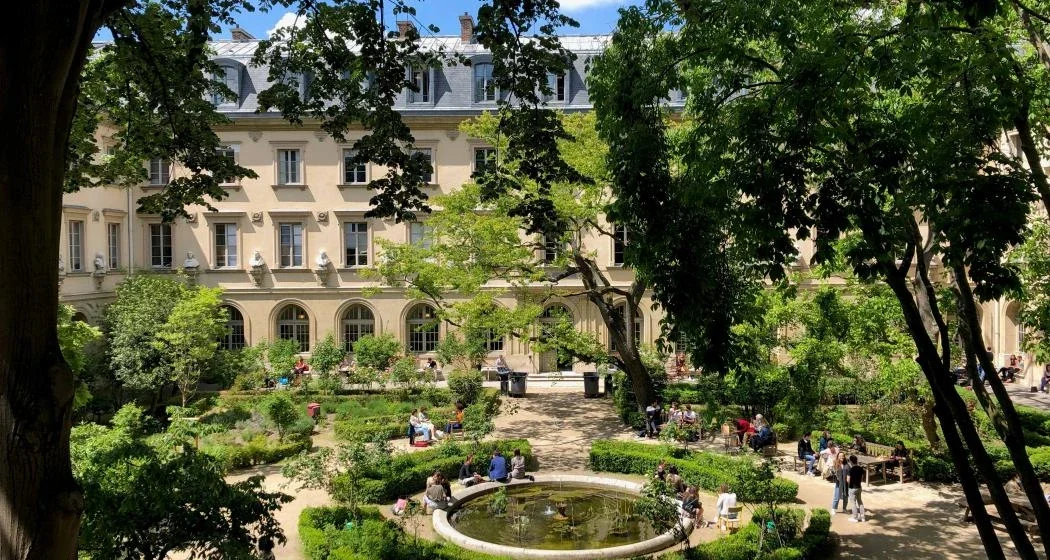

Established in 1794, the École Normale Supérieure (Normal Superior School) is a non-profit public higher education institution located in the urban setting of the large metropolis of Paris (population range of over 5,000,000 inhabitants), Ile-de-France.
Officially recognized by the Ministère de lEnseignement supérieur et de la Recherche, France (Ministry of Higher Education and Research of France), École Normale Supérieure (ENS) is a small-sized coeducational French higher education institution. École Normale Supérieure (ENS) offers courses and programs leading to officially recognized higher education degrees such as master's degrees and doctorate degrees in several areas of study.
International applicants are eligible to apply for enrollment. ENS also provides several academic and non-academic facilities and services to students including a library, study abroad and exchange programs, as well as administrative services.
Location & Contact
École Normale Supérieure's campus location, postal address, and the channels students typically use to reach the admissions team. Verified contact points help avoid third-party impersonators.
Academic Details
The basic academic profile of École Normale Supérieure, including enrolment and faculty composition. Total student count fluctuates intake-to-intake; treat the figure as approximate rather than precise.
Degrees
Preparation of Agrégation exam; DU. Doctorate in partnership with Université PSL
Master's 28 programs
Master's programmes develop advanced specialised expertise, suited to senior industry positions and applied research.
- Ancient Civilizations
- Applied Mathematics
- Applied Physics
- Astronomy and Space Science
- Cell Biology
- Chemical Engineering
- Chemistry
- Cinema and Television
- Cognitive Sciences
- Comparative Law
- Computer Science
- Earth Sciences
- Economics
- Environmental Studies
- Genetics
- Geography
- Immunology
- Literature
- Mathematics
- Medieval Studies
- Microbiology
- Molecular Biology
- Neurosciences
- Philosophy
- Physics
- Social Sciences
- Sociology
- Theatre
Doctoral 9 programs
Doctoral programmes train independent researchers, leading to academic, scientific, and senior advisory careers.
- Arts and Humanities
- Astronomy and Space Science
- Chemistry
- Cognitive Sciences
- Earth Sciences
- Environmental Studies
- Mathematics
- Physics
- Social Sciences
Other 1 program
- Accountancy
Faculties & Divisions
All faculties operate under Ministère de lEnseignement supérieur et de la Recherche, France.
Environment and Society (Centre) 2 subjects offered
Specialisations & Subjects
- Environmental Studies
- Social Sciences
Ancient Civilizations (Department/Division) 5 subjects offered
Specialisations & Subjects
- Archaeology
- Greek (Classical)
- Hebrew
- Latin
- Oriental Languages
Art History and Theories (Department/Division) 5 subjects offered
Specialisations & Subjects
- Aesthetics
- Art History
- Cinema and Television
- Musicology
- Theatre
Biology (Department/Division) 1 subject offered
Specialisations & Subjects
- Biology
Common Career Paths
- Biologist
- Lab Technician
- Research Scientist
Illustrative career directions for this field; specific outcomes depend on programme and student choices.
Chemistry (Department/Division) 1 subject offered
Specialisations & Subjects
- Chemistry
Common Career Paths
- Chemist
- Lab Researcher
- Quality Control Specialist
Illustrative career directions for this field; specific outcomes depend on programme and student choices.
Cognitive Studies (Department/Division) 2 subjects offered
Specialisations & Subjects
- Cognitive Sciences
- Neurosciences
Computer Science (Department/Division) 1 subject offered
Specialisations & Subjects
- Computer Science
Common Career Paths
- Software Engineer
- Data Scientist
- Systems Analyst
Illustrative career directions for this field; specific outcomes depend on programme and student choices.
Economics (Department/Division) 1 subject offered
Specialisations & Subjects
- Economics
Common Career Paths
- Economist
- Policy Analyst
- Financial Consultant
Illustrative career directions for this field; specific outcomes depend on programme and student choices.
Geography (Department/Division) 1 subject offered
Specialisations & Subjects
- Geography
Geosciences (Department/Division) 3 subjects offered
Specialisations & Subjects
- Geology
- Marine Science and Oceanography
- Meteorology
Common Career Paths
- Research Scientist
- Lab Technician
- Analyst
Illustrative career directions for this field; specific outcomes depend on programme and student choices.
Languages and Literature (Department/Division) 6 subjects offered
Specialisations & Subjects
- English
- German
- Literature
- Modern Languages
- Russian
- Spanish
Common Career Paths
- Translator
- Interpreter
- Language Teacher
Illustrative career directions for this field; specific outcomes depend on programme and student choices.
Mathematics and Applications (Department/Division) 2 subjects offered
Specialisations & Subjects
- Applied Mathematics
- Mathematics
Common Career Paths
- Data Analyst
- Statistician
- Actuary
Illustrative career directions for this field; specific outcomes depend on programme and student choices.
Philosophy (Department/Division) 1 subject offered
Specialisations & Subjects
- Philosophy
Physics (Department/Division) 1 subject offered
Specialisations & Subjects
- Physics
Common Career Paths
- Physicist
- Research Scientist
- Data Analyst
Illustrative career directions for this field; specific outcomes depend on programme and student choices.
Social Sciences (Department/Division) 6 subjects offered
Specialisations & Subjects
- Anthropology
- Economics
- Law
- Political Sciences
- Social Sciences
- Sociology
Common Career Paths
- Researcher
- Policy Analyst
- Social Worker
Illustrative career directions for this field; specific outcomes depend on programme and student choices.
Programs Offered
École Normale Supérieure's programme list, with search and degree-level grouping. Search matches programme names; if you don't see your subject, check the divisions section to locate the relevant faculty.
3 programmes on record. Compare these on the programs page All programs in France
Master's Degree 2 programmes
How to apply to École Normale Supérieure
Below is a five-step path through the application process at École Normale Supérieure, useful for first-time applicants and international students.
-
1
Find a programme that fits your goals
Begin by reviewing the programmes section above. École Normale Supérieure offers 3 programmes grouped by qualification level. Decide on a target tier (bachelor's, master's, or doctoral) before narrowing by subject.
-
2
Confirm you meet the requirements
Each programme at École Normale Supérieure has its own entry requirements — academic minimums, language proficiency, supporting documents, and sometimes interviews or portfolios. Check the programme-specific page or contact admissions to confirm eligibility.
-
3
Assemble your application package
Most applications require certified academic records, identification documents, language test certificates (IELTS, TOEFL, or equivalent for English-medium programmes), CV/résumé, and a statement of purpose. Allow extra time for document authentication.
-
4
Submit your application
Apply directly via École Normale Supérieure's online portal at www.ens.psl.eu. Complete the application form, upload supporting documents, and pay any application fee. Confirmation emails typically arrive within a few business days.
-
5
Contact admissions and follow up
After submitting, confirm receipt with the admissions office and track your application status through the portal. Reach the institution by phone at +33 (0)1 44 32 30 00. Set reminders for any interview requests, additional document submissions, or admission decision deadlines.
Frequently Asked Questions about École Normale Supérieure
Below are the key facts most prospective students ask about École Normale Supérieure, drawn directly from institutional records.
When was École Normale Supérieure founded?
École Normale Supérieure was established in 1794 (approximately 232 years ago).
What city is École Normale Supérieure in?
École Normale Supérieure operates from Paris, France.
Is École Normale Supérieure a public or private institution?
École Normale Supérieure is a public institution.
How big is École Normale Supérieure's student body?
École Normale Supérieure serves approximately 2,000-2,999 students.
What qualification levels does École Normale Supérieure offer?
École Normale Supérieure delivers master's and doctoral programmes across its academic units.
Is École Normale Supérieure officially recognised?
The institution holds recognition from Ministry of Higher Education, Research and Innovation.
Where can I learn more about École Normale Supérieure?
You can find École Normale Supérieure online at www.ens.psl.eu.
Top-Ranked Universities in France
Time-trend in rankings matters: rising universities in France may overtake École Normale Supérieure or its peers over your study horizon. Year-on-year movement signals institutional momentum.





Faculties at nearby universities
Nearby institutions to École Normale Supérieure often share sports, residence, and student-life facilities through regional consortia. The shared infrastructure can shape your day-to-day experience meaningfully.



Where Else to Study General Engineering
Other universities in France that teach General Engineering appear below — useful for comparing programme depth against École Normale Supérieure. Programme structures differ even within the same country, so detailed comparison is worth the effort.




Universities Compared with École Normale Supérieure
Below: institutions that students typically weigh against École Normale Supérieure when finalising their shortlist. The comparison set reflects scale and prestige; specific programme fit still needs separate verification.



Studying in France: guides and resources





Spotted something outdated or missing?
Help us keep this page accurate — it takes about 30 seconds.