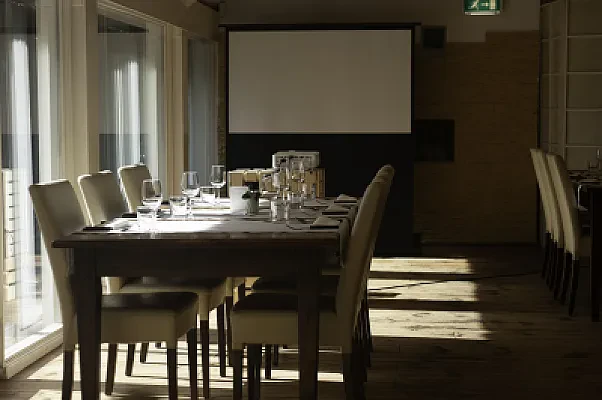
Bielefeld University of Applied Sciences
Bielefeld, Germany • Founded 1971
Updated May 2026 · Source: fh-bielefeld.de · How we collect data
Overview
Bielefeld University of Applied Sciences is among Germany's public university of applied scienceses, founded in 1971 and based in Bielefeld, Germany. It operates as a higher-education provider.
Academically, Bielefeld University of Applied Sciences teaches across bachelor's and master's programmes and is organised into multiple faculties.
The institution serves 10,552 students, doctoral-qualified faculty support teaching and research.
Location & Contact
Address, contact details, and online presence for Bielefeld University of Applied Sciences are summarised below.
Academic Details
Scale, staffing, and recognition figures for Bielefeld University of Applied Sciences are listed below.
Degrees
Also Certificate (Zertifikat)
Bachelor's 27 programs
- Applied Mathematics
- Architecture
- Biotechnology
- Business Administration
- Business Computing
- Civil Engineering
- Commercial Law
- Design
- E-Business/Commerce
- Electrical Engineering
- Electronic Engineering
- Electronics and Automation
- Energy Engineering
- Health Education
- Health Sciences
- Industrial Engineering
- Industrial Management
- Industrial and Organizational Psychology
- Information Technology
- International Business
- Management
- Mechanical Engineering
- Nursing
- Primary Education
- Social Work
- Transport Management
- Vocational Education
Master's 29 programs
- Accountancy
- Business Computing
- Business and Commerce
- Civil Engineering
- Commercial Law
- Computer Engineering
- Construction Engineering
- Data Processing
- Design
- Electrical Engineering
- Electronic Engineering
- Electronics and Automation
- Engineering Management
- Finance
- Health Education
- Human Resources
- Industrial Engineering
- Industrial Management
- Information Technology
- International Business
- Management
- Marketing
- Nursing
- Rehabilitation and Therapy
- Sales Techniques
- Sociology
- Taxation
- Transport Management
- Vocational Education
Faculties & Divisions
The schools and divisions inside Bielefeld University of Applied Sciences, with subject coverage, are listed below.
Gütersloh (Campus) 4 subjects offered
Specialisations & Subjects
- Business Administration
- Electronic Engineering
- Electronics and Automation
- Engineering
Minden (Campus) 4 subjects offered
Specialisations & Subjects
- Architecture
- Civil Engineering
- Health Sciences
- Nursing
Business Administration and Health Sciences (Department/Division) 9 subjects offered
Specialisations & Subjects
- Business Administration
- Business Computing
- Commercial Law
- Health Sciences
- Industrial and Organizational Psychology
- International Studies
- Law
- Management
- Nursing
Design (Department/Division) 6 subjects offered
Specialisations & Subjects
- Design
- Fashion Design
- Graphic Design
- Media Studies
- Multimedia
- Photography
Engineering and Mathematics (Department/Division) 11 subjects offered
Specialisations & Subjects
- Applied Mathematics
- Biotechnology
- Business Administration
- Computer Engineering
- Electronic Engineering
- Energy Engineering
- Engineering
- Machine Building
- Mathematics
- Mechanical Engineering
- Production Engineering
Social Sciences (Department/Division) 5 subjects offered
Specialisations & Subjects
- Management
- Pedagogy
- Social Sciences
- Social Studies
- Social Work
Frequently Asked Questions about Bielefeld University of Applied Sciences
Frequently asked questions about Bielefeld University of Applied Sciences.
When did Bielefeld University of Applied Sciences open?
Bielefeld University of Applied Sciences traces its founding to 1971 (approximately 55 years ago).
What city is Bielefeld University of Applied Sciences in?
Bielefeld University of Applied Sciences operates from Bielefeld, Germany.
Is Bielefeld University of Applied Sciences public or private?
It is a public higher-education institution.
How big is Bielefeld University of Applied Sciences's student body?
Bielefeld University of Applied Sciences serves approximately 10,552 students.
Is Bielefeld University of Applied Sciences officially recognised?
Bielefeld University of Applied Sciences is accredited by Akkreditierungskommission AQAS.
How do I find Bielefeld University of Applied Sciences online?
Bielefeld University of Applied Sciences's official website is www.fh-bielefeld.de.
Top-Ranked Universities in Germany
Top universities in Germany typically offer the most generous institutional scholarships. Bielefeld University of Applied Sciences's scholarship range relative to these benchmarks reflects funding capacity.

Faculties at nearby universities
Universities located near Bielefeld University of Applied Sciences are listed below.

Universities Compared with Bielefeld University of Applied Sciences
The institutions below are of a similar academic scale to Bielefeld University of Applied Sciences.
Studying in Germany: guides and resources


Spotted something outdated or missing?
Help us keep this page accurate — it takes about 30 seconds.