Rottenburg University of Applied Forest Sciences
Germany • Founded 1954
Updated May 2026 · Source: hs-rottenburg.net
Overview
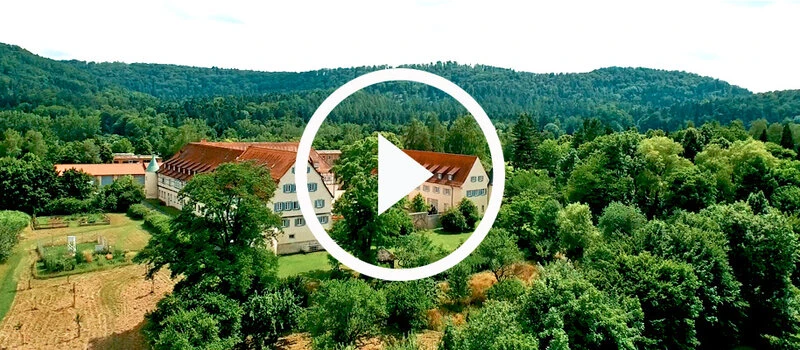


Rottenburg University of Applied Forest Sciences is among Germany's public universities, founded in 1954 and based in Rottenburg am Neckar, Germany. It operates as a higher-education provider.
Academically, Rottenburg University of Applied Forest Sciences teaches across bachelor's and master's programmes, is organised into multiple faculties and runs a small set of programmes.
Rottenburg University of Applied Forest Sciences has 1,010 students.
Location & Contact
Mailing address, phone, email, and social channels for Rottenburg University of Applied Forest Sciences are listed below.
Academic Details
Below are the institutional metrics for Rottenburg University of Applied Forest Sciences: scale, staffing, and accreditation.
Faculties & Divisions
Subject coverage by faculty at Rottenburg University of Applied Forest Sciences is listed below.
Forestry (Course/Programme) 1 subject offered
Specialisations & Subjects
- Forestry
Renewable Energy (Course/Programme) 1 subject offered
Specialisations & Subjects
- Energy Engineering
Resource Efficient Building (Course/Programme) 1 subject offered
Specialisations & Subjects
- Building Technologies
Sustainable Energy Competence (Course/Programme) 1 subject offered
Specialisations & Subjects
- Energy Engineering
Sustainable Regional Management (Course/Programme) 1 subject offered
Specialisations & Subjects
- Environmental Management
Timber Industry (Course/Programme) 1 subject offered
Specialisations & Subjects
- Forest Products
Water Management (Course/Programme) 1 subject offered
Specialisations & Subjects
- Water Management
Programs Offered
Below are Rottenburg University of Applied Forest Sciences's active programmes, grouped by degree level, with search.
8 programmes on record. Compare these on the programs page All programs in Germany
Bachelor's Degree 5 programmes
Master's Degree 3 programmes
How to apply to Rottenburg University of Applied Forest Sciences
A five-step path through the application process at Rottenburg University of Applied Forest Sciences.
-
1
Identify the right programme
Start by exploring the programmes section on this page. Rottenburg University of Applied Forest Sciences runs 8 active programmes across multiple degree levels. Narrow by qualification tier and read each programme description before shortlisting.
-
2
Check entry requirements
Before applying to Rottenburg University of Applied Forest Sciences, confirm you meet the academic, language, and document requirements for your chosen programme. International applicants should also check visa eligibility for Germany.
-
3
Prepare your application documents
Standard documents: official transcripts, identity proof, language test results, personal statement, and references. Confirm exact requirements with Rottenburg University of Applied Forest Sciences's admissions office before assembling, as expectations vary by programme.
-
4
Submit via the institution
Lodge your application through the official website (www.hs-rottenburg.net). Online forms are the standard route. Save your draft frequently and submit before the programme deadline.
-
5
Get in touch with admissions
Verify your application has been received by the admissions team. Monitor the portal for status updates, interview invitations, or document requests, and respond within the stated deadlines.
Frequently Asked Questions about Rottenburg University of Applied Forest Sciences
Common questions about Rottenburg University of Applied Forest Sciences, answered from data on record.
How old is Rottenburg University of Applied Forest Sciences?
The institution opened in 1954 (approximately 72 years ago).
What city is Rottenburg University of Applied Forest Sciences in?
Rottenburg University of Applied Forest Sciences operates from Rottenburg am Neckar, Germany.
Is Rottenburg University of Applied Forest Sciences public or private?
It is a public higher-education institution.
How big is Rottenburg University of Applied Forest Sciences's student body?
Rottenburg University of Applied Forest Sciences serves approximately 1,010 students.
What qualification levels does Rottenburg University of Applied Forest Sciences offer?
Rottenburg University of Applied Forest Sciences offers bachelor's and master's programmes.
What is Rottenburg University of Applied Forest Sciences's official website?
You can find Rottenburg University of Applied Forest Sciences online at www.hs-rottenburg.net.
Top-Ranked Universities in Germany
These are the most highly ranked universities in Germany. Putting Rottenburg University of Applied Forest Sciences alongside them gives a clearer picture of where it sits in the national academic landscape, especially when reputation matters for credential portability.



Where Else to Study Forestry & Natural Resources
Other institutions in Germany teaching Forestry & Natural Resources are listed below for comparison with Rottenburg University of Applied Forest Sciences.



Universities Compared with Rottenburg University of Applied Forest Sciences
Below are universities sometimes compared with Rottenburg University of Applied Forest Sciences.

Studying in Germany: guides and resources





Spotted something outdated or missing?
Help us keep this page accurate — it takes about 30 seconds.