
Ashoka University
Sonipat, India • Founded 2014 • QS 2026 #1201-1400
Updated May 2026
Overview
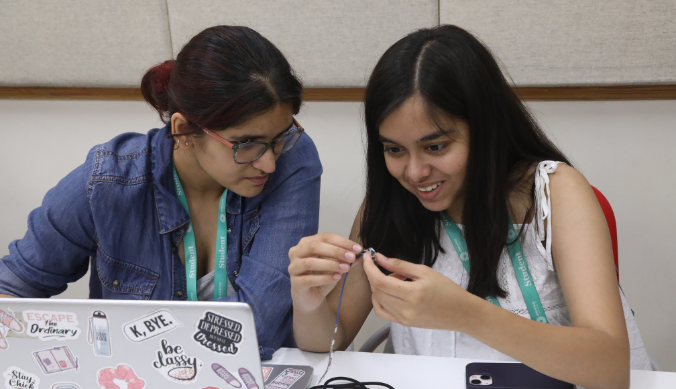
Established in 2014, the Ashoka University is a private higher education institution located in the urban setting of the medium city of Sonipat (population range of 250,000-499,999 inhabitants), Haryana.
Officially recognized by the University Grants Commission of India, Ashoka University is a very small-sized coeducational Indian higher education institution. Ashoka University offers courses and programs leading to officially recognized higher education degrees such as bachelor's degrees in several areas of study.
This 9-year-old Indian higher-education institution has a selective admission policy based on entrance examinations. Ashoka University also provides several academic and non-academic facilities and services to students including a library, as well as administrative services.
Location & Contact
Address book entry for Ashoka University: location, phone, email, web, and social channels. The press or media office handles institutional inquiries; admissions handles student-specific queries.
Academic Details
Ashoka University's institutional metrics and recognition context. Recognition reciprocity matters for credential portability — check whether your home country accepts Ashoka University's qualifications.
Academic Structures
Ashoka University's teaching organisation from faculties down to institutes. Faculty websites typically list their own programme catalogue, faculty bios, and contact information separately from the central site.
Unit 4 items
- School of Arts and Humanities
- School of Economics
- School of Natural and Applied Sciences
- School of Social Sciences
Programs Offered
Ashoka University's programme catalogue is grouped by level below — use the filter to narrow your shortlist. Programme entry windows and admissions criteria typically appear on each programme's dedicated page.
33 programmes on record. Each level below shows a sample. Compare these on the programs page All programs in India
Bachelor's Degree 20 programmes
Showing 10 of 20.
Master's Degree 3 programmes
Doctorate 9 programmes
Postgraduate Diploma 1 programme
How to apply to Ashoka University
How to apply to Ashoka University — a five-step structure with notes on documents, channels, and timing for each phase.
-
1
Find a programme that fits your goals
Use the programme finder to browse Ashoka University's 33 active programmes. Filter by keyword or scan by degree level. Read curriculum details on each programme's dedicated page if available.
-
2
Confirm you meet the requirements
Programme-level requirements at Ashoka University typically include academic transcripts, language proficiency proof, identity documents, and a personal statement or interview. Confirm specific requirements with the admissions office.
-
3
Assemble your application package
Prepare academic transcripts, ID/passport copies, language proficiency proof, a personal statement, and reference letters. International candidates may need apostilled or notarised translations — start early to avoid deadline pressure.
-
4
Submit your application
Ashoka University processes applications through ashoka.edu.in. Create an account, fill out the application form, and submit your documents. Note application deadlines, which vary by intake and programme.
-
5
Contact admissions and follow up
Confirm receipt of your application with the admissions office and keep an eye on your portal for status changes. Reach the institution by phone at +91. Quick responses to any follow-up requests keep your application moving smoothly through the review process.
Frequently Asked Questions about Ashoka University
Short Q&A on the institutional facts that matter most when shortlisting Ashoka University as a study destination.
When did Ashoka University open?
Ashoka University traces its founding to 2014 (approximately 12 years ago).
In which city is Ashoka University?
Ashoka University is based in Sonipat, India.
What is Ashoka University's control type?
Ashoka University is a private institution.
How many students study at Ashoka University?
Ashoka University has approximately 500-999 students.
How is Ashoka University ranked?
It ranks QS 2026 #1201-1400.
What is Ashoka University's academic structure?
Ashoka University has 4 academic units.
Is Ashoka University officially recognised?
The institution holds recognition from University Grants Commission of India.
What is Ashoka University's official website?
The institution's website is ashoka.edu.in.
Top-Ranked Universities in India
Top universities in India differ from flagship status: top is rankings-defined; flagship is often historically defined. The lists may overlap but are not identical.




Faculties at nearby universities
Below are universities in the same area as Ashoka University.



Where Else to Study Economics
Universities in India with Economics programmes appear below, alongside Ashoka University.




Universities Compared with Ashoka University
The institutions below are of a similar academic scale to Ashoka University.




Studying in India: guides and resources






Spotted something outdated or missing?
Help us keep this page accurate — it takes about 30 seconds.