Universitas Bung Hatta
Padang, Indonesia • Founded 1981
Updated Jun 2026
Overview
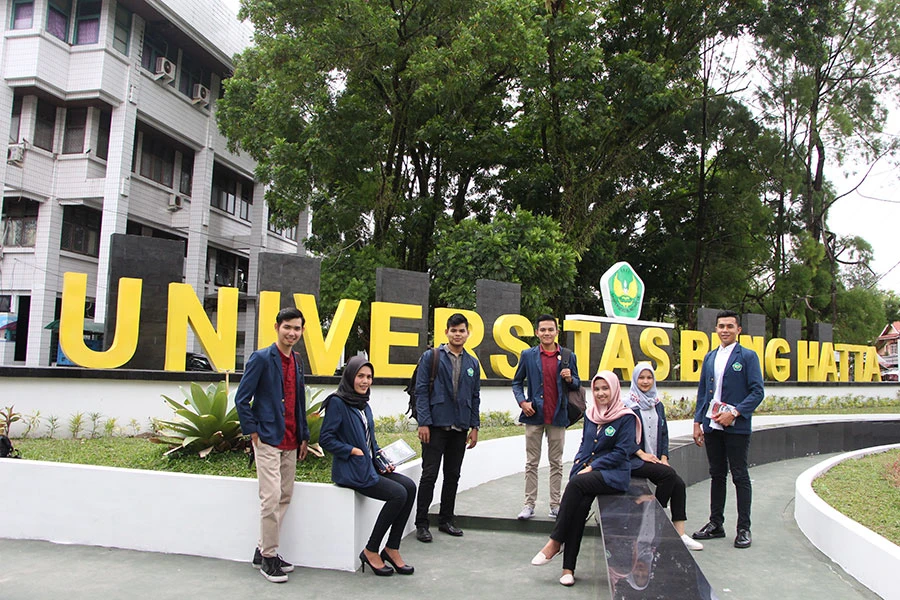


Universitas Bung Hatta is among Indonesia's higher-education institutions, founded in 1981 and based in Padang, Indonesia. It operates as a higher-education provider.
Location & Contact
Address book entry for Universitas Bung Hatta: location, phone, email, web, and social channels. The press or media office handles institutional inquiries; admissions handles student-specific queries.
Programs Offered
Universitas Bung Hatta's teaching programmes are listed below — search or scan by level. International student eligibility varies by programme — some require additional language or visa-pathway checks.
39 programmes on record. Each level below shows a sample. Compare these on the programs page All programs in Indonesia
Bachelor's Degree 28 programmes
Showing 10 of 28.
Master's Degree 9 programmes
Associate's Degree 1 programme
Postgraduate Certificate 1 programme
How to apply to Universitas Bung Hatta
Application guidance for Universitas Bung Hatta, structured as five practical steps with attention to documents and admissions communication.
-
1
Research programmes at Universitas Bung Hatta
Universitas Bung Hatta's catalogue includes 39 programmes. Browse by level, identify candidates matching your prior qualifications, and note their entry requirements for the next step.
-
2
Review admissions criteria
Entry requirements vary by programme and degree level. Verify academic minimums, language tests (if international), and any additional documents required for Universitas Bung Hatta's admissions process.
-
3
Gather supporting documents
Typical documents include academic transcripts, identity proof (passport or national ID), language proficiency test scores, a personal statement or motivation letter, and recommendation letters. International applicants should account for translation and notarisation time.
-
4
Lodge your application
Submit your completed application through Universitas Bung Hatta's official website at www.bunghatta.ac.id. Most institutions use an online portal — register an account, complete the application form, and upload your prepared documents. Keep copies of all submissions and confirmation receipts.
-
5
Confirm receipt and track progress
Follow up to confirm your application was received and is being processed. You can reach the institution by email at [email protected] or by phone at 0751-7051678. Admissions teams may request interviews or additional documents — respond promptly to keep your application active.
Frequently Asked Questions about Universitas Bung Hatta
Quick reference for Universitas Bung Hatta: founding, control type, student body, rankings, and recognition status in one place.
When was Universitas Bung Hatta founded?
Universitas Bung Hatta was established in 1981 (approximately 45 years ago).
In which city is Universitas Bung Hatta?
Universitas Bung Hatta is based in Padang, Indonesia.
Is Universitas Bung Hatta a public or private institution?
Universitas Bung Hatta operates as a private institution.
What is Universitas Bung Hatta's official website?
The institution's website is www.bunghatta.ac.id.
Top-Ranked Universities in Indonesia
Industry partnerships of Indonesia's top universities signal employer engagement at the apex of the system. Lower-ranked institutions including Universitas Bung Hatta may still partner with strong employers locally.



Faculties at nearby universities
Beyond Universitas Bung Hatta, the surrounding area hosts several universities with overlapping research strengths and faculty mixes. They are worth comparing if location flexibility matters to your decision and you want to keep options open within the same region.


Where Else to Study Education & Teaching
Capstone publication or portfolio output from Education & Teaching programmes affects what you graduate with. Some Indonesia institutions retain student work; others publish it as part of programme outputs.


Universities Compared with Universitas Bung Hatta
Joint research consortia among universities at Universitas Bung Hatta's level — shared grants, co-supervision arrangements — make peer institutions natural collaborators rather than just competitors.




Studying in Indonesia: guides and resources





Spotted something outdated or missing?
Help us keep this page accurate — it takes about 30 seconds.