Hijiyama University
Hiroshima-shi, Japan • Founded 1994
Updated May 2026 · Source: hijiyama-u.ac.jp · How we collect data
Overview
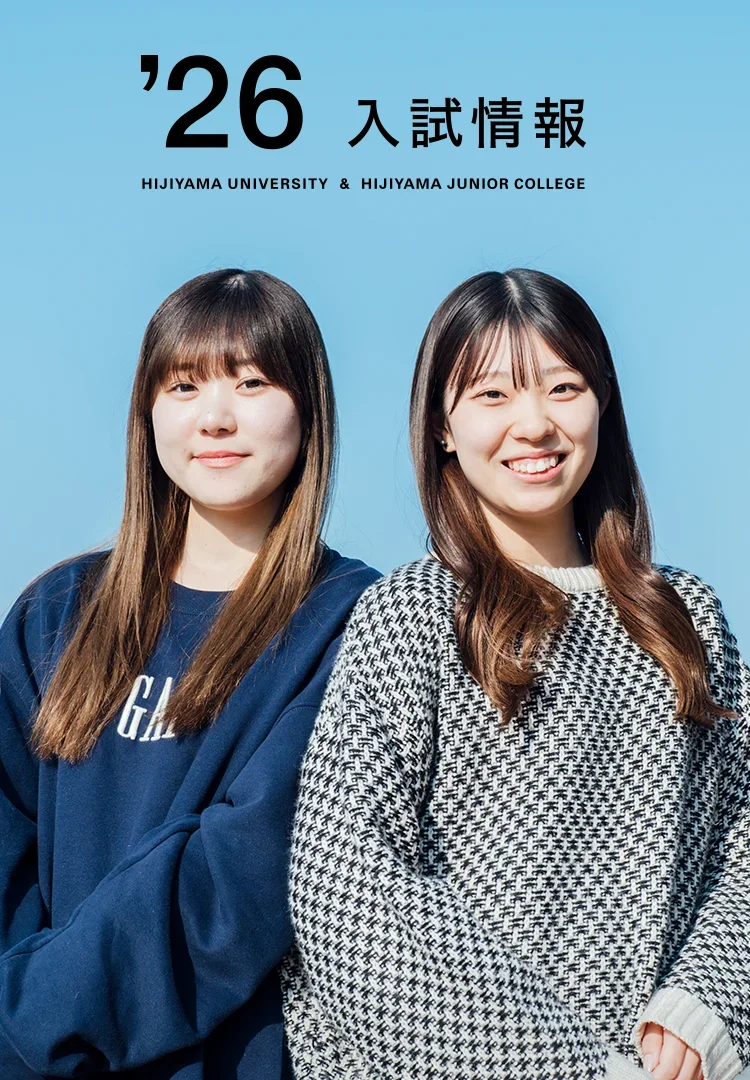
Hijiyama University traces its founding to 1994 and has since operated as a private university in Hiroshima-shi, Japan. The institution maintains a higher-education provider status.
At Hijiyama University, the institution teaches across multiple qualification levels, is organised into several faculties and runs a small set of programmes.
Location & Contact
Geographic and contact information for Hijiyama University is listed below.
Academic Details
Hijiyama University's academic profile in numbers is listed below.
Faculties & Divisions
The faculties at Hijiyama University, and what each one teaches, are listed below.
Junior Studies (College) 6 subjects offered
Specialisations & Subjects
- Design
- Dietetics
- Fine Arts
- Information Technology
- Interior Design
- Preschool Education
Contemporary Culture (Faculty) 15 subjects offered
Specialisations & Subjects
- Administration
- Advertising and Publicity
- Child Care and Development
- Clinical Psychology
- Communication Studies
- Cultural Studies
- English
- Japanese
- Literature
- Mass Communication
- Modern Languages
- Preschool Education
- Regional Studies
- Social Psychology
- Tourism
Graduate Studies (Graduate School) 15 subjects offered
Specialisations & Subjects
- American Studies
- Clinical Psychology
- Cultural Studies
- English
- Foreign Languages Education
- Information Management
- Information Sciences
- Japanese
- Linguistics
- Media Studies
- Modern Languages
- Psychiatry and Mental Health
- Psychology
- Psychotherapy
- Social Psychology
Programs Offered
Search and filter Hijiyama University's available programmes by degree level.
8 programmes on record. Compare these on the programs page All programs in Japan
Bachelor's Degree 6 programmes
Master's Degree 2 programmes
How to apply to Hijiyama University
Step-by-step guidance for applying to Hijiyama University, in five steps.
-
1
Find a programme that fits your goals
Use the programme finder to browse Hijiyama University's 8 active programmes. Filter by keyword or scan by degree level. Read curriculum details on each programme's dedicated page if available.
-
2
Confirm you meet the requirements
Programme-level requirements at Hijiyama University typically include academic transcripts, language proficiency proof, identity documents, and a personal statement or interview. Confirm specific requirements with the admissions office.
-
3
Assemble your application package
Prepare academic transcripts, ID/passport copies, language proficiency proof, a personal statement, and reference letters. International candidates may need apostilled or notarised translations — start early to avoid deadline pressure.
-
4
Submit your application
Hijiyama University processes applications through www.hijiyama-u.ac.jp. Create an account, fill out the application form, and submit your documents. Note application deadlines, which vary by intake and programme.
-
5
Contact admissions and follow up
Confirm receipt of your application with the admissions office and keep an eye on your portal for status changes. Quick responses to any follow-up requests keep your application moving smoothly through the review process.
Frequently Asked Questions about Hijiyama University
Quick answers to common questions about Hijiyama University.
In what year was Hijiyama University established?
Hijiyama University was founded in 1994 (approximately 32 years ago).
Where is Hijiyama University located?
Hijiyama University is located in Hiroshima-shi, Japan.
What is Hijiyama University's control type?
Hijiyama University is a private institution.
Is Hijiyama University accredited?
Hijiyama University is accredited by Japan Institution for Higher Education Evaluation (JIHEE).
What is Hijiyama University's official website?
You can find Hijiyama University online at www.hijiyama-u.ac.jp.
Top-Ranked Universities in Japan
Selectivity at the top Japan universities sets admissions baseline expectations for students applying to Hijiyama University. The selectivity gap between Hijiyama University and the leaders below tells you about admissions context.



Faculties at nearby universities
Below are universities in the same area as Hijiyama University.
Where Else to Study Clinical Psychology
Clinical Psychology is also taught at these universities in Japan.


Universities Compared with Hijiyama University
Universities of a similar scale and standing to Hijiyama University are listed below.
Studying in Japan: guides and resources




Spotted something outdated or missing?
Help us keep this page accurate — it takes about 30 seconds.