Tokyo Institute of Technology
Tokyo, Japan • Founded 1881 • QS 2026 #85
Updated May 2026 · Source: titech.ac.jp
Overview
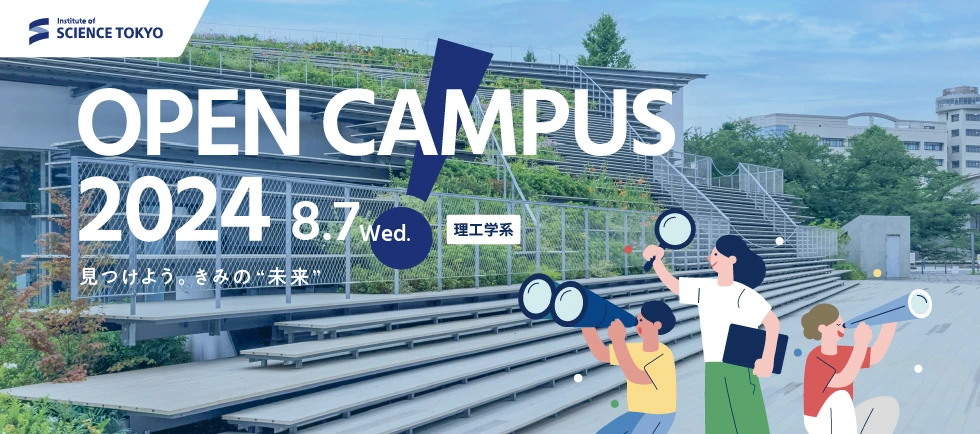

Established in 1881, the Tokyo Institute of Technology (Tokyo Kogyo Daigaku) is a non-profit public higher education institution located in the urban setting of the large metropolis of Tokyo (population range of over 5,000,000 inhabitants).
Officially recognized by the Ministry of Education, Culture, Sports, Science and Technology of Japan, Tokyo Institute of Technology is a medium-sized coeducational Japanese higher education institution. Tokyo Institute of Technology offers courses and programs leading to officially recognized higher education degrees such as bachelor's degrees, master's degrees and doctorate degrees in several areas of study.
This 142-year-old Japanese higher-education institution has a selective admission policy based on entrance examinations. The acceptance rate range is 0-9% making this Japanese higher education organization an extremely selective institution.
International applicants are eligible to apply for enrollment.
Tokyo Institute of Technology also provides several academic and non-academic facilities and services to students including a library, housing, sports facilities, financial aids and/or scholarships, study abroad and exchange programs, as well as administrative services.
Location & Contact
Address, contact details, and online presence for Tokyo Institute of Technology are summarised below.
Academic Details
Scale, staffing, and recognition figures for Tokyo Institute of Technology are listed below.
Academic Structures
The academic units of Tokyo Institute of Technology are listed below.
Unit 13 items
- Graduate School of Bioscience and Biotechnology
- Graduate School of Decision Science and Technology
- Graduate School of Information Science and Engineering
- Graduate School of Innovation Management
- Graduate School of Science and Engineering
- Interdisciplinary Graduate School of Science and Engineering
- School of Bioscience and Biotechnology
- School of Computing
- School of Engineering
- School of Environment and Society
- School of Life Science and Technology
- School of Materials and Chemical Technology
- School of Science
Faculties & Divisions
All faculties operate under Ministry of Education, Culture, Sports, Science and Technology of Japan.
Bioscience and Biotechnology (Graduate School) 4 subjects offered
Specialisations & Subjects
- Bioengineering
- Biological and Life Sciences
- Biomedical Engineering
- Molecular Biology
Decision Science and Technology (Graduate School) 3 subjects offered
Specialisations & Subjects
- Industrial Engineering
- Industrial Management
- Social Sciences
Information Science and Engineering (Graduate School) 5 subjects offered
Specialisations & Subjects
- Computer Science
- Environmental Engineering
- Information Sciences
- Mathematics and Computer Science
- Mechanical Engineering
Innovation Management (Graduate School) 1 subject offered
Specialisations & Subjects
- Engineering Management
Interdisciplinary Science and Engineering (Graduate School) 12 subjects offered
Specialisations & Subjects
- Applied Chemistry
- Applied Physics
- Artificial Intelligence
- Chemistry
- Computer Engineering
- Electronic Engineering
- Energy Engineering
- Environmental Engineering
- Information Technology
- Materials Engineering
- Mechanical Engineering
- Systems Analysis
Science and Engineering (Graduate School) 24 subjects offered
Specialisations & Subjects
- Aeronautical and Aerospace Engineering
- Applied Chemistry
- Ceramics and Glass Technology
- Chemical Engineering
- Chemistry
- Civil Engineering
- Communication Studies
- Construction Engineering
- Development Studies
- Earth Sciences
- Electrical and Electronic Engineering
- Electronic Engineering
- Electronics and Automation
- Materials Engineering
- Mathematics
- Mechanical Engineering
- Metallurgical Engineering
- Nuclear Engineering
- Nuclear Physics
- Physics
- Polymer and Plastics Technology
- Structural Architecture
- Systems Analysis
- Telecommunications Engineering
Biological Resources and Informatics (Research Division) Faculty details available
Specialisations & Subjects
No specified subjects listed.
Carbon Recycling and Energy (Research Division) 1 subject offered
Specialisations & Subjects
- Chemistry
Chemical Resources (Research Division) 7 subjects offered
Specialisations & Subjects
- Applied Chemistry
- Chemistry
- Inorganic Chemistry
- Laboratory Techniques
- Molecular Biology
- Natural Resources
- Organic Chemistry
Educational Facilities (Research Division) Faculty details available
Specialisations & Subjects
No specified subjects listed.
Foreign Language Research and Teaching (Research Division) 1 subject offered
Specialisations & Subjects
- Foreign Languages Education
Frontier Research (Research Division) Faculty details available
Specialisations & Subjects
No specified subjects listed.
Global Scientific Information and Computing (Research Division) 2 subjects offered
Specialisations & Subjects
- Computer Engineering
- Information Technology
Low Temperature Physics (Research Division) 1 subject offered
Specialisations & Subjects
- Physics
Materials and Structures (Research Division) 4 subjects offered
Specialisations & Subjects
- Building Technologies
- Materials Engineering
- Nanotechnology
- Structural Architecture
Nuclear Reactors (Research Division) 3 subjects offered
Specialisations & Subjects
- Energy Engineering
- Nuclear Engineering
- Safety Engineering
Precision and Intelligence (Research Division) 7 subjects offered
Specialisations & Subjects
- Bioengineering
- Biomedical Engineering
- Information Sciences
- Information Technology
- Materials Engineering
- Mechanical Engineering
- Microelectronics
Quantum Nanoelectronics (Research Division) 1 subject offered
Specialisations & Subjects
- Nanotechnology
Research and Development of Educational Technology (Research Division) 1 subject offered
Specialisations & Subjects
- Educational Technology
Research for Educational Facilities (Research Division) Faculty details available
Specialisations & Subjects
No specified subjects listed.
Research on Carbon Recycling and Energy (Research Division) Faculty details available
Specialisations & Subjects
No specified subjects listed.
Volcanic Fluid Research (Research Division) Faculty details available
Specialisations & Subjects
No specified subjects listed.
Bioscience and Biotechnology (School) 3 subjects offered
Specialisations & Subjects
- Bioengineering
- Biological and Life Sciences
- Biotechnology
Engineering (School) 18 subjects offered
Specialisations & Subjects
- Aeronautical and Aerospace Engineering
- Applied Chemistry
- Architecture and Planning
- Chemical Engineering
- Civil Engineering
- Computer Science
- Construction Engineering
- Electrical and Electronic Engineering
- Electronics and Automation
- Environmental Engineering
- Industrial Engineering
- Inorganic Chemistry
- Mechanical Engineering
- Metallurgical Engineering
- Organic Chemistry
- Polymer and Plastics Technology
- Structural Architecture
- Systems Analysis
Science (School) 5 subjects offered
Specialisations & Subjects
- Chemistry
- Earth Sciences
- Information Sciences
- Mathematics
- Physics
Programs Offered
Browse Tokyo Institute of Technology's programmes by level, or filter by name.
45 programmes on record. Each level below shows a sample. Compare these on the programs page All programs in Japan
Bachelor's Degree 17 programmes
Showing 10 of 17.
Master's Degree 25 programmes
Showing 10 of 25.
Doctorate 3 programmes
How to apply to Tokyo Institute of Technology
What applying to Tokyo Institute of Technology involves, in five steps.
-
1
Research programmes at Tokyo Institute of Technology
Tokyo Institute of Technology's catalogue includes 45 programmes. Browse by level, identify candidates matching your prior qualifications, and note their entry requirements for the next step.
-
2
Review admissions criteria
Entry requirements vary by programme and degree level. Verify academic minimums, language tests (if international), and any additional documents required for Tokyo Institute of Technology's admissions process.
-
3
Gather supporting documents
Typical documents include academic transcripts, identity proof (passport or national ID), language proficiency test scores, a personal statement or motivation letter, and recommendation letters. International applicants should account for translation and notarisation time.
-
4
Lodge your application
Submit your completed application through Tokyo Institute of Technology's official website at www.titech.ac.jp. Most institutions use an online portal — register an account, complete the application form, and upload your prepared documents. Keep copies of all submissions and confirmation receipts.
-
5
Confirm receipt and track progress
Follow up to confirm your application was received and is being processed. Reach the institution by phone at +81 (3) 3726 1111. Admissions teams may request interviews or additional documents — respond promptly to keep your application active.
Frequently Asked Questions about Tokyo Institute of Technology
Frequently asked questions about Tokyo Institute of Technology.
When did Tokyo Institute of Technology open?
Tokyo Institute of Technology traces its founding to 1881 (approximately 145 years ago).
In which city is Tokyo Institute of Technology?
Tokyo Institute of Technology is based in Tokyo, Japan.
Is Tokyo Institute of Technology public or private?
It is a public higher-education institution.
How many students study at Tokyo Institute of Technology?
Tokyo Institute of Technology has approximately 9,000-9,999 students.
Where does Tokyo Institute of Technology stand in university rankings?
It ranks QS 2026 #85.
What is Tokyo Institute of Technology's academic structure?
Tokyo Institute of Technology has 13 academic units.
Is Tokyo Institute of Technology officially recognised?
The institution holds recognition from Ministry of Education, Culture, Sports, Science and Technology (MEXT).
How do I find Tokyo Institute of Technology online?
Tokyo Institute of Technology's official website is www.titech.ac.jp.
Members of Open Education Consortium (OEC)
Other members of Open Education Consortium (OEC) are listed below.



Faculties at nearby universities
The institutions below are geographically close to Tokyo Institute of Technology.

Where Else to Study Information Systems & Technology
These universities in Japan also offer Information Systems & Technology programmes, alongside Tokyo Institute of Technology.


Universities Compared with Tokyo Institute of Technology
The institutions below are of a similar academic scale to Tokyo Institute of Technology.
Studying in Japan: guides and resources




Spotted something outdated or missing?
Help us keep this page accurate — it takes about 30 seconds.