Nihon Fukushi University
Japan • Founded 1953
Overview
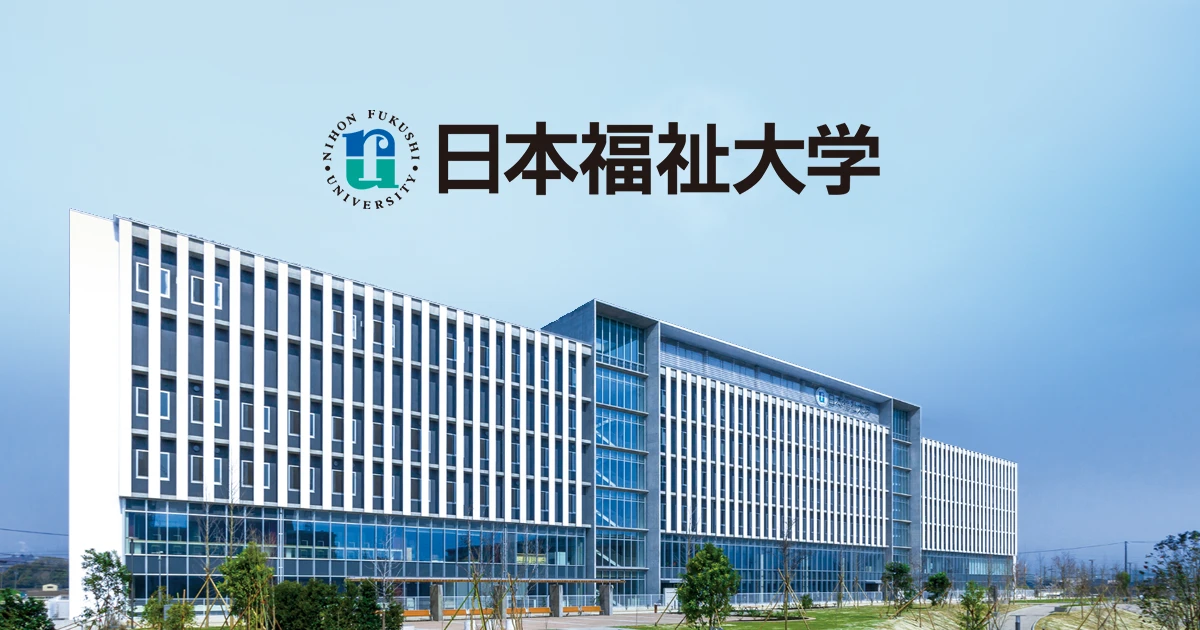
Founded in 1953, the Nihon Fukushi University is a non-profit private higher education institution located in the rural setting of the small city of Chita (population range of 50,000-249,999 inhabitants), Aichi.
This institution also has a branch campus in Handa and Nagoya. Officially recognized by the Ministry of Education, Culture, Sports, Science and Technology of Japan, Nihon Fukushi University (NFU) is a large-sized coeducational Japanese higher education institution formally affiliated with the Buddhist religion.
Nihon Fukushi University (NFU) offers courses and programs leading to officially recognized higher education degrees such as bachelor's degrees, master's degrees and doctorate degrees in several areas of study. This 71-year-old Japanese higher-education institution has a selective admission policy based on entrance examinations.
International students are welcome to apply for enrollment.
NFU also provides several academic and non-academic facilities and services to students including a library, housing, sports facilities, financial aids and/or scholarships, study abroad and exchange programs, online courses and distance learning opportunities, as well as administrative services.
Location & Contact
Geographic and contact information for Nihon Fukushi University — useful before scheduling visits or sending enquiries. Each channel below routes to a different team, so pick the one matching your question.
Academic Details
Below: the academic-side numbers and recognition that shape Nihon Fukushi University's reputation. Recognition and accreditation are distinct — recognition is government-level, accreditation programme-specific.
Degrees
Each qualification level at Nihon Fukushi University appears below with its degrees. Research-by-thesis versus taught master's programmes differ in structure, assessment, and graduate-school positioning.
Other 9 programs
- Business Administration
- Child Care and Development
- Clinical Psychology
- Development Studies
- Economics
- Health Administration
- Health Sciences
- Social Welfare
- Welfare and Protective Services
Faculties & Divisions
All faculties operate under Ministry of Education, Culture, Sports, Science and Technology of Japan.
Health and Social Research (Centre) 3 subjects offered
Specialisations & Subjects
- Epidemiology
- Health Sciences
- Social Studies
Welfare Policy Evaluation (Centre) 2 subjects offered
Specialisations & Subjects
- Social Policy
- Welfare and Protective Services
Welfare Technology (Centre) 1 subject offered
Specialisations & Subjects
- Information Technology
Child Development (Faculty) 5 subjects offered
Specialisations & Subjects
- Child Care and Development
- Clinical Psychology
- Primary Education
- Psychology
- Vocational Education
Economics (Faculty) 5 subjects offered
Specialisations & Subjects
- Business Administration
- Economics
- Finance
- Health Administration
- International Economics
Common Career Paths
- Economist
- Policy Analyst
- Financial Consultant
Illustrative career directions for this field; specific outcomes depend on programme and student choices.
Health Sciences (Faculty) 6 subjects offered
Specialisations & Subjects
- Health Sciences
- Information Sciences
- Nursing
- Occupational Therapy
- Physical Therapy
- Rehabilitation and Therapy
Common Career Paths
- Research Scientist
- Lab Technician
- Analyst
Illustrative career directions for this field; specific outcomes depend on programme and student choices.
International Welfare Development (Faculty) 5 subjects offered
Specialisations & Subjects
- English
- Information Technology
- International Business
- Transport and Communications
- Welfare and Protective Services
Social Welfare (Faculty) 5 subjects offered
Specialisations & Subjects
- Health Sciences
- Psychiatry and Mental Health
- Social Welfare
- Social Work
- Welfare and Protective Services
Welfare and Business Administration (Faculty) 5 subjects offered
Specialisations & Subjects
- Business Administration
- Health Administration
- Psychiatry and Mental Health
- Social Work
- Welfare and Protective Services
Common Career Paths
- Business Analyst
- Operations Manager
- Strategy Consultant
Illustrative career directions for this field; specific outcomes depend on programme and student choices.
Health and Social Services Management (Graduate School) 3 subjects offered
Specialisations & Subjects
- Health Administration
- Social Welfare
- Welfare and Protective Services
Common Career Paths
- Operations Manager
- Project Manager
- HR Manager
Illustrative career directions for this field; specific outcomes depend on programme and student choices.
International Social Development (Graduate School) 3 subjects offered
Specialisations & Subjects
- Development Studies
- Social and Community Services
- Welfare and Protective Services
Social Welfare Studies (Graduate School) 2 subjects offered
Specialisations & Subjects
- Clinical Psychology
- Social Welfare
Social Well-Being and Development (Graduate School) 3 subjects offered
Specialisations & Subjects
- Development Studies
- Health Administration
- Social Welfare
Health Sciences (Institute) 1 subject offered
Specialisations & Subjects
- Health Sciences
Common Career Paths
- Research Scientist
- Lab Technician
- Analyst
Illustrative career directions for this field; specific outcomes depend on programme and student choices.
Social Development Studies (Institute) 2 subjects offered
Specialisations & Subjects
- Development Studies
- Social Welfare
Asia Welfare and Social Development (Research Division) 3 subjects offered
Specialisations & Subjects
- Development Studies
- Social Welfare
- Welfare and Protective Services
Chita Peninsula (Research Division) 2 subjects offered
Specialisations & Subjects
- Cultural Studies
- History
Clinical Psychology (Research Division) 1 subject offered
Specialisations & Subjects
- Clinical Psychology
Common Career Paths
- Psychologist
- Counsellor
- Clinical Researcher
Illustrative career directions for this field; specific outcomes depend on programme and student choices.
Community Care (Research Division) 1 subject offered
Specialisations & Subjects
- Social and Community Services
Programs Offered
Search and filter Nihon Fukushi University's available programmes by degree level. The list reflects the institution's current catalogue and may not include programmes that are paused or pending approval.
Bachelor's Degree
10 programmes
These 10 programmes make up Nihon Fukushi University's undergraduate catalogue. A bachelor's degree is the baseline credential for most graduate careers and advanced study.
Faculty of Social Welfare 社会福祉学部 Social Work
Faculty of Comprehensive Policy Studies 総合政策学部 Public Policy
Faculty of Nursing 看護学部 Nursing
Faculty of Global Studies 国際学部 Politics & International Relations
Faculty of Economics 経済学部 Economics
Faculty of Engineering 工学部 General Engineering
Faculty of Health Sciences 健康科学部 Health Sciences
Faculty of Healthcare Management (Correspondence education) 福祉経営学部(通信教育) Business & Management
Faculty of Sports Science スポーツ科学部 Sport and Exercise Science
Faculty of Education and Psychology 教育・心理学部 Psychology
No programmes match your filter in this level.
Master's Degree
7 programmes
There are 7 programmes to choose from at Nihon Fukushi University for graduates, aimed at advanced expertise, a career change, or a stepping stone toward doctoral research.
Graduate School of Social Welfare - Clinical Psychology Major 社会福祉学研究科 心理臨床専攻 Clinical Psychology
Graduate School of Sports Science スポーツ科学研究科 Sport and Exercise Science
Graduate School of Nursing 看護学研究科 Nursing
Graduate School of International Social Development (Correspondence) 国際社会開発研究科(通信教育) Politics & International Relations
Graduate School of Health and Social Services Management 医療・福祉マネジメント研究科 Business & Management
Graduate School of Social Welfare - Social Welfare Major (Correspondence) 社会福祉学研究科 社会福祉学専攻(通信教育) Social Work
Graduate School of Social Welfare - Social Welfare Major (Full-time) 社会福祉学研究科 社会福祉学専攻(通学課程) Social Work
No programmes match your filter in this level.
Doctorate
3 programmes
Nihon Fukushi University delivers 3 programmes at doctoral level for graduates committed to advancing the frontier of their discipline through original inquiry.
Graduate School of Social Welfare and Development - Welfare Management Major 福祉社会開発研究科 福祉経営専攻 Business & Management
Graduate School of Social Welfare and Development - International Social Development Major (Correspondence) 福祉社会開発研究科 国際社会開発専攻(通信教育) Social Work
Graduate School of Social Welfare and Development - Social Welfare Major 福祉社会開発研究科 社会福祉学専攻 Social Work
No programmes match your filter in this level.
How to apply to Nihon Fukushi University
Application guidance for Nihon Fukushi University, structured as five practical steps with attention to documents and admissions communication.
- 1 Browse the programme catalogue
Nihon Fukushi University's catalogue includes 20 programmes. Browse by level, identify candidates matching your prior qualifications, and note their entry requirements for the next step.
- 2 Check eligibility for your chosen programme
Entry requirements vary by programme and degree level. Verify academic minimums, language tests (if international), and any additional documents required for Nihon Fukushi University's admissions process.
- 3 Get your documents ready
Typical documents include academic transcripts, identity proof (passport or national ID), language proficiency test scores, a personal statement or motivation letter, and recommendation letters. International applicants should account for translation and notarisation time.
- 4 Apply through the official channel
Submit your completed application through Nihon Fukushi University's official website at www.n-fukushi.ac.jp. Most institutions use an online portal — register an account, complete the application form, and upload your prepared documents. Keep copies of all submissions and confirmation receipts.
- 5 Reach out and track your application
Follow up to confirm your application was received and is being processed. Reach the institution by phone at +81 (569) 87 2211. Admissions teams may request interviews or additional documents — respond promptly to keep your application active.
Frequently Asked Questions about Nihon Fukushi University
Quick answers to the most common questions about Nihon Fukushi University — covering location, founding, ranking, programmes, and admissions context.
When was Nihon Fukushi University founded?
Nihon Fukushi University was established in 1953 (approximately 73 years ago).
What city is Nihon Fukushi University in?
Nihon Fukushi University operates from Mihama-shi, Japan.
Is Nihon Fukushi University public or private?
It is a private higher-education institution.
How big is Nihon Fukushi University's student body?
Nihon Fukushi University serves approximately 10,000-14,999 students.
Does Nihon Fukushi University have a religious affiliation?
Nihon Fukushi University is associated with Buddhism.
Who recognises Nihon Fukushi University?
Yes, Nihon Fukushi University is recognised by Japan University Accreditation Association (JUAA).
How do I find Nihon Fukushi University online?
Nihon Fukushi University's official website is www.n-fukushi.ac.jp.
Top-Ranked Universities in Japan
Ranking methodologies vary across Japan — national rankings, subject-specific rankings, and international tables can each tell different stories about the same universities.





Other Japanese Universities Affiliated with Buddhism
Religious heritage and campus architecture at Buddhism universities reflect institutional history. The peers below often share comparable physical traditions alongside academic ones.





Where Else to Study Social Work
Other universities in Japan that teach Social Work appear below — useful for comparing programme depth against Nihon Fukushi University. Programme structures differ even within the same country, so detailed comparison is worth the effort.


Universities Often Compared with Nihon Fukushi University
Universities at a similar tier to Nihon Fukushi University appear below, useful for cross-comparison on academic credentials. Comparable institutions often share faculty mobility patterns and external recognition signals.