Overview
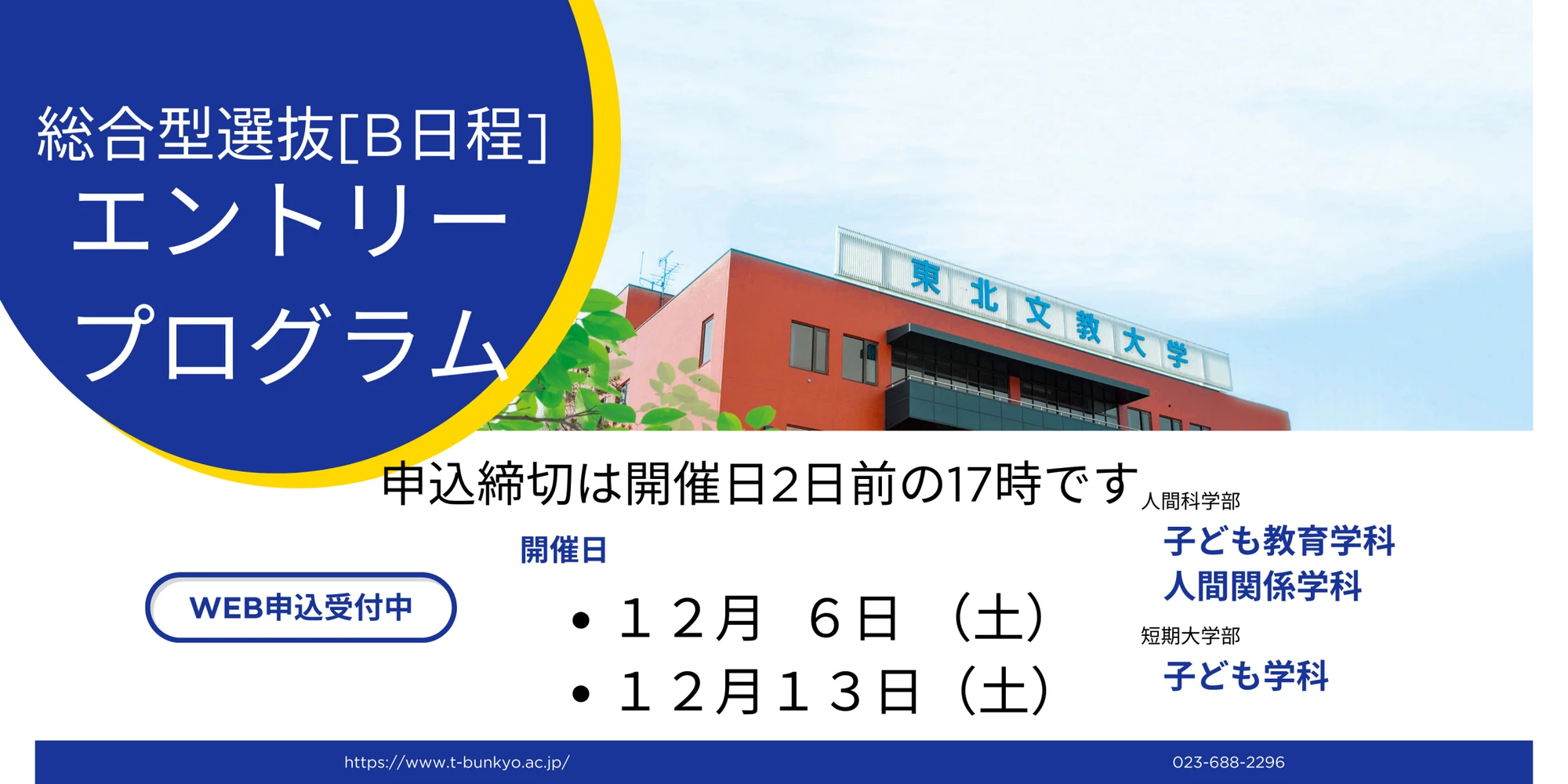


Tohoku Bunkyo University is a private university located in Yamagata, Japan. Founded in 1926, it operates as a higher-education provider.
At Tohoku Bunkyo University, the institution runs a small set of programmes.
Location & Contact
Address, contact details, and online presence for Tohoku Bunkyo University are summarised below.
Programs Offered
Search and filter Tohoku Bunkyo University's available programmes by degree level.
2 programmes on record. Compare these on the programs page All programs in Japan
Bachelor's Degree 2 programmes
How to apply to Tohoku Bunkyo University
A short guide to applying to Tohoku Bunkyo University — five steps.
-
1
Find a programme that fits your goals
Begin by reviewing the programmes section above. Tohoku Bunkyo University offers 2 programmes grouped by qualification level. Decide on a target tier (bachelor's, master's, or doctoral) before narrowing by subject.
-
2
Confirm you meet the requirements
Each programme at Tohoku Bunkyo University has its own entry requirements — academic minimums, language proficiency, supporting documents, and sometimes interviews or portfolios. Check the programme-specific page or contact admissions to confirm eligibility.
-
3
Assemble your application package
Most applications require certified academic records, identification documents, language test certificates (IELTS, TOEFL, or equivalent for English-medium programmes), CV/résumé, and a statement of purpose. Allow extra time for document authentication.
-
4
Submit your application
Apply directly via Tohoku Bunkyo University's online portal at www.t-bunkyo.jp. Complete the application form, upload supporting documents, and pay any application fee. Confirmation emails typically arrive within a few business days.
-
5
Contact admissions and follow up
After submitting, confirm receipt with the admissions office and track your application status through the portal. Reach the institution by phone at 023-688-2298. Set reminders for any interview requests, additional document submissions, or admission decision deadlines.
Frequently Asked Questions about Tohoku Bunkyo University
Quick reference for Tohoku Bunkyo University: founding, control type, and recognition status.
How old is Tohoku Bunkyo University?
The institution opened in 1926 (approximately 100 years ago).
Where can I find Tohoku Bunkyo University?
The institution is located in Yamagata, Japan.
Is Tohoku Bunkyo University a public or private institution?
It is a private higher-education institution.
What is Tohoku Bunkyo University's official website?
You can find Tohoku Bunkyo University online at www.t-bunkyo.jp.
Top-Ranked Universities in Japan
International student mix at Japan's top universities tends to be higher than at lower-ranked institutions. This affects campus culture and the value of student networks for international students.



Faculties at nearby universities
Universities located near Tohoku Bunkyo University are listed below.
Where Else to Study Education & Teaching
Education & Teaching is also taught at these universities in Japan.


Universities Compared with Tohoku Bunkyo University
Universities of a similar scale and standing to Tohoku Bunkyo University are listed below.

Studying in Japan: guides and resources




Spotted something outdated or missing?
Help us keep this page accurate — it takes about 30 seconds.