Lumbini Buddhist University
Nepal • Founded 2006
Updated May 2026
Overview
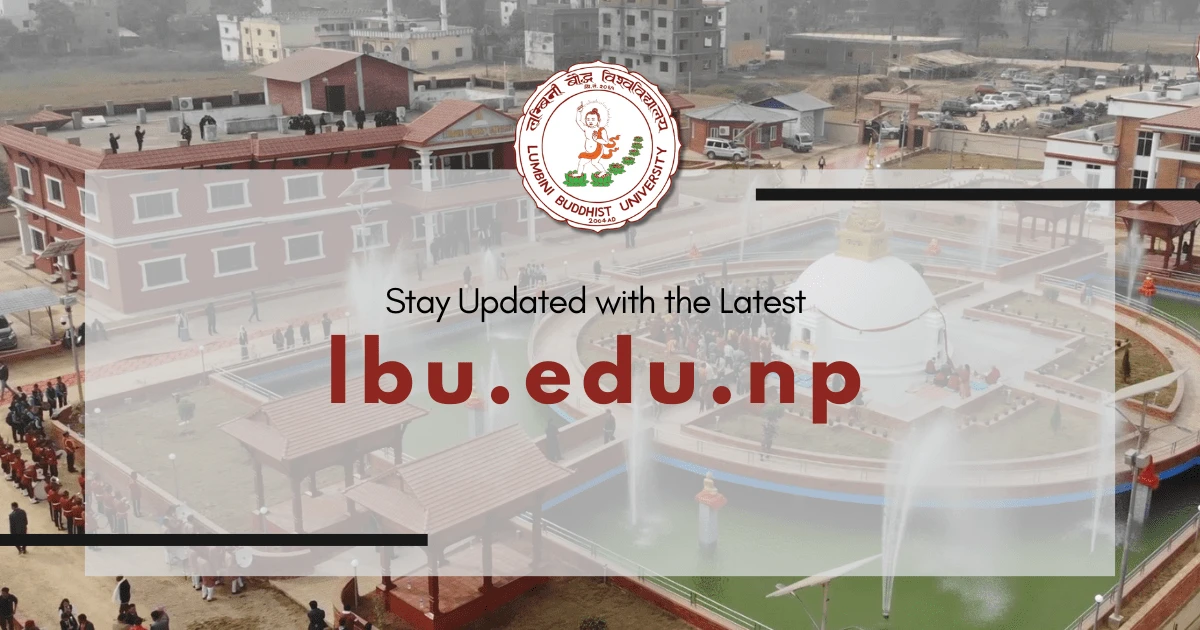
Established in 2006, Lumbini Buddhist University runs as a public university in Llumbini, Nepal. The institution functions as a higher-education provider within Nepal's higher-education sector.
Lumbini Buddhist University delivers higher education across bachelor's through doctoral programmes through several faculties. The institution offers a catalogue of active programmes for prospective students.
Location & Contact
Address, contact details, and online presence for Lumbini Buddhist University are summarised below. Cross-check with the official website if you intend to send documents or financial information.
Academic Details
The numbers behind Lumbini Buddhist University: student body, academic staff, and the recognising bodies validating its work. A baseline read for assessing institutional capacity and rigour.
Degrees
BA in Buddhism and Humanities, Buddhism and Travel and Tourism Management, Sowa Rigpa Medicine (Himalayan Buddhist Medicine); Postgraduate Diploma in Buddhist Studies, Traditional Nepalese Art, Library, Information Science and Buddhist Archival Management, Yogic Science and Buddhism, Archaeology and Buddhist Archaeological Sites; MA in Theravada Buddhism, Mahayana Buddhism, Applied Buddhism, Buddhism and Himalayan Studies, Buddhism and Peace Studies, Museology and Buddhist Collections
Bachelor's 2 programs
Bachelor's programmes build foundational expertise, preparing graduates for entry-level professional roles and further postgraduate study.
- Arts and Humanities
- Tourism
Master's 6 programs
Master's programmes develop advanced specialised expertise, suited to senior industry positions and applied research.
- Archaeology
- Asian Religious Studies
- Construction Engineering
- Engineering Management
- Museum Studies
- Peace and Disarmament
Faculties & Divisions
Lumbini Buddhist University's academic units and the subject areas each covers are listed below. Use this view to locate the faculty handling your subject — admissions and scholarship contact points often sit at the faculty level.
Buddhist Studies (Course/Programme) 6 subjects offered
Specialisations & Subjects
- Archaeology
- Arts and Humanities
- Asian Religious Studies
- Museum Studies
- Peace and Disarmament
- Tourism
Disaster Risk Engineering (Course/Programme) 2 subjects offered
Specialisations & Subjects
- Construction Engineering
- Engineering Management
Common Career Paths
- Engineer
- Project Manager
- Technical Consultant
Illustrative career directions for this field; specific outcomes depend on programme and student choices.
Programs Offered
Search and filter Lumbini Buddhist University's available programmes by degree level. The list reflects the institution's current catalogue and may not include programmes that are paused or pending approval.
15 programmes on record. Compare these on the programs page All programs in Nepal
Bachelor's Degree 5 programmes
Master of Business Administration 1 programme
Master's Degree 8 programmes
How to apply to Lumbini Buddhist University
A short guide to applying to Lumbini Buddhist University — five steps covering the path from programme selection to confirmation of receipt.
-
1
Research programmes at Lumbini Buddhist University
Use the programme finder to browse Lumbini Buddhist University's 15 active programmes. Filter by keyword or scan by degree level. Read curriculum details on each programme's dedicated page if available.
-
2
Review admissions criteria
Programme-level requirements at Lumbini Buddhist University typically include academic transcripts, language proficiency proof, identity documents, and a personal statement or interview. Confirm specific requirements with the admissions office.
-
3
Gather supporting documents
Prepare academic transcripts, ID/passport copies, language proficiency proof, a personal statement, and reference letters. International candidates may need apostilled or notarised translations — start early to avoid deadline pressure.
-
4
Lodge your application
Lumbini Buddhist University processes applications through www.lbu.edu.np. Create an account, fill out the application form, and submit your documents. Note application deadlines, which vary by intake and programme.
-
5
Confirm receipt and track progress
Confirm receipt of your application with the admissions office and keep an eye on your portal for status changes. Reach the institution by phone at 977-71-404084. Quick responses to any follow-up requests keep your application moving smoothly through the review process.
Frequently Asked Questions about Lumbini Buddhist University
Frequently asked questions about Lumbini Buddhist University, covering the institutional basics most prospective applicants want to confirm first.
In what year was Lumbini Buddhist University established?
Lumbini Buddhist University was founded in 2006 (approximately 20 years ago).
Where is Lumbini Buddhist University located?
Lumbini Buddhist University is located in Llumbini, Nepal.
Is Lumbini Buddhist University public or private?
It is a public higher-education institution.
What qualification levels does Lumbini Buddhist University offer?
Lumbini Buddhist University delivers bachelor's, master's and doctoral programmes across its academic units.
Is Lumbini Buddhist University affiliated with a religion?
Lumbini Buddhist University operates within the Buddhist tradition.
Is Lumbini Buddhist University accredited?
Yes, Lumbini Buddhist University is recognised by University Grants Commission (UGC).
What is Lumbini Buddhist University's official website?
You can find Lumbini Buddhist University online at www.lbu.edu.np.
Top-Ranked Universities in Nepal
The institutions topping Nepal's rankings give national context for Lumbini Buddhist University. Context matters because employer perception in Nepal often correlates with national rankings.



Other Nepali, Nepalese Universities Affiliated with Buddhist
Religious leadership opportunities (chaplaincy student programmes, community-led initiatives) are commonly available at Buddhist universities. Worth investigating at the peers below if leadership development matters.



Universities Compared with Lumbini Buddhist University
Faculty mobility between Lumbini Buddhist University and peer institutions is common — academics often move within a comparable tier. This signals shared academic standards and salary structures.




Studying in Nepal: guides and resources






Spotted something outdated or missing?
Help us keep this page accurate — it takes about 30 seconds.