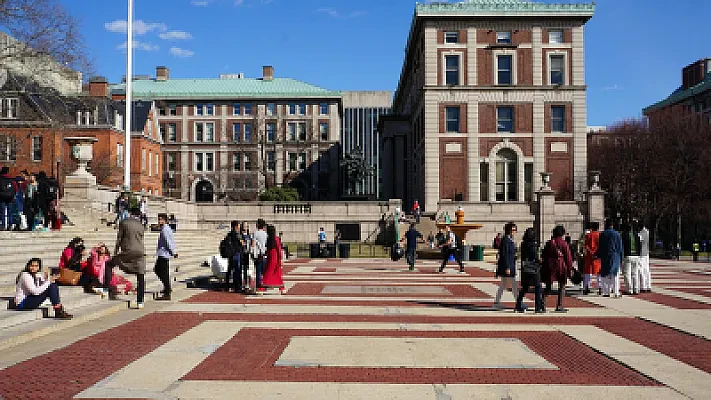
Riverside College
Bacolod City, Philippines • Founded 1958
Updated May 2026
Overview
Based in Bacolod City, Philippines, Riverside College is a private college that traces its founding to 1958. It functions as a higher-education provider within the Philippines's higher-education sector.
Academically, Riverside College delivers teaching across bachelor's and master's programmes. Its institutional structure includes several faculties and runs a catalogue of active programmes across multiple disciplines.
Location & Contact
Address book entry for Riverside College: location, phone, email, web, and social channels. The press or media office handles institutional inquiries; admissions handles student-specific queries.
Faculties & Divisions
Each of Riverside College's faculties focuses on different subject clusters — the breakdown is below. Cross-faculty programmes exist but are usually administered by their lead division.
Graduate (Course/Programme) 1 subject offered
Specialisations & Subjects
- Nursing
Undergraduate and Professional (Course/Programme) 7 subjects offered
Specialisations & Subjects
- Medical Technology
- Midwifery
- Nursing
- Physical Therapy
- Psychology
- Radiology
- Special Education
How to apply to Riverside College
Below is a five-step path through the application process at Riverside College, useful for first-time applicants and international students.
-
1
Find a programme that fits your goals
Identify which programmes Riverside College offers in your subject area. Decide on the qualification tier you want to pursue, then verify the specific programme exists at the institution.
-
2
Confirm you meet the requirements
Programme-level requirements at Riverside College typically include academic transcripts, language proficiency proof, identity documents, and a personal statement or interview. Confirm specific requirements with the admissions office.
-
3
Assemble your application package
Prepare academic transcripts, ID/passport copies, language proficiency proof, a personal statement, and reference letters. International candidates may need apostilled or notarised translations — start early to avoid deadline pressure.
-
4
Submit your application
Riverside College processes applications through www.riverside.edu.ph. Create an account, fill out the application form, and submit your documents. Note application deadlines, which vary by intake and programme.
-
5
Contact admissions and follow up
Confirm receipt of your application with the admissions office and keep an eye on your portal for status changes. Quick responses to any follow-up requests keep your application moving smoothly through the review process.
Frequently Asked Questions about Riverside College
Frequently asked questions about Riverside College, covering the institutional basics most prospective applicants want to confirm first.
In what year was Riverside College established?
Riverside College was founded in 1958 (approximately 68 years ago).
What city is Riverside College in?
Riverside College operates from Bacolod City, Philippines.
Is Riverside College public or private?
Riverside College is a private institution.
What qualification levels does Riverside College offer?
Programmes at Riverside College cover bachelor's and master's programmes.
What is Riverside College's official website?
Riverside College's official website is www.riverside.edu.ph.
Top-Ranked Universities in the Philippines
Research output among the Philippines's top universities sets the publication-and-citation upper bound. Comparing Riverside College's research output to this benchmark gives a fair institutional read.

Faculties at nearby universities
Universities close to Riverside College typically fall within the same regional student-transit zones, where transit discounts and shared passes reduce living costs across the cluster.



Universities Compared with Riverside College
Looking at Riverside College through a comparison lens? These universities share similar academic positioning and are commonly considered against Riverside College during the application process. Cross-comparison helps clarify the institutional fit beyond ranking signals.


Studying in Philippines: guides and resources





Spotted something outdated or missing?
Help us keep this page accurate — it takes about 30 seconds.