
Université de la Reunion
Saint-Pierre, France • Founded 1960 • World Rank #1753
Updated Jun 2026
Overview
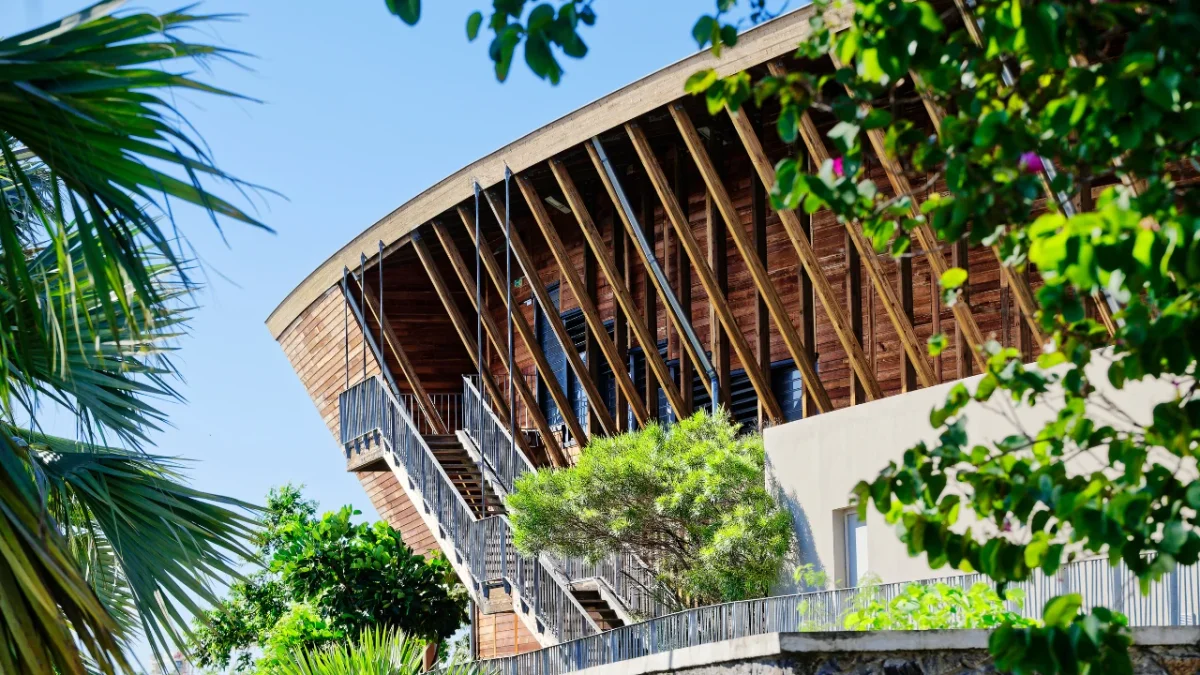
Established in 1960, the Université de la Reunion (University of Reunion) is a non-profit public higher education institution located in the small city of Saint Denis (population range of 50,000-249,999 inhabitants).
Officially recognized by the Ministère de lEnseignement supérieur et de la Recherche, France (Ministry of Higher Education and Research of France), Université de la Reunion is a large-sized coeducational Reunionese higher education institution. Université de la Reunion offers courses and programs leading to officially recognized higher education degrees such as pre-bachelor's degrees (i.e. certificates, diplomas, associate or foundation), bachelor's degrees, master's degrees and doctorate degrees in several areas of study.
This 64-year-old Reunionese higher-education institution has a selective admission policy based on entrance examinations. Université de la Reunion also provides several academic and non-academic facilities and services to students including a library, study abroad and exchange programs, as well as administrative services.
Location & Contact
The geographic and contact details below cover where Université de la Reunion is and how to reach its administrative offices. Campus emergency contact is typically distinct from general inquiries.
Academic Details
Université de la Reunion's student body, faculty composition, and recognition framework are summarised below. Use this section to gauge institutional weight before drilling into specific programmes.
Degrees
Masters recherche, Masters professionnel. Also prepares for Teaching Certificate and French as a Foreign Language Certificates (DELF, DALF).
Master's 19 programs
Master's programmes develop advanced specialised expertise, suited to senior industry positions and applied research.
- Anthropology
- Arts and Humanities
- Biological and Life Sciences
- Business Administration
- Civil Engineering
- Earth Sciences
- Economics
- Geography
- Health Sciences
- History
- Information Sciences
- Law
- Mathematics and Computer Science
- Modern Languages
- Natural Sciences
- Social Sciences
- Sports
- Teacher Training
- Technology
Doctoral 4 programs
Doctoral programmes train independent researchers, leading to academic, scientific, and senior advisory careers.
- Arts and Humanities
- Economics
- Law
- Management
Other 9 programs
- Arts and Humanities
- Business Administration
- Economics
- Engineering
- Health Sciences
- Law
- Natural Sciences
- Social Sciences
- Technology
Faculties & Divisions
All faculties operate under Ministère de lEnseignement supérieur et de la Recherche, France.
Arts and Social Sciences (Faculty) 9 subjects offered
Specialisations & Subjects
- Arts and Humanities
- Communication Studies
- Educational Sciences
- English
- Ethnology
- Geography
- Germanic Studies
- History
- Literature
Common Career Paths
- Researcher
- Policy Analyst
- Social Worker
Illustrative career directions for this field; specific outcomes depend on programme and student choices.
Health Sciences (Faculty) 5 subjects offered
Specialisations & Subjects
- Dentistry
- Medicine
- Midwifery
- Occupational Therapy
- Pharmacy
Common Career Paths
- Research Scientist
- Lab Technician
- Analyst
Illustrative career directions for this field; specific outcomes depend on programme and student choices.
Human Science and Environment (Faculty) 5 subjects offered
Specialisations & Subjects
- Cultural Studies
- Ecology
- Environmental Studies
- French
- Sports
Common Career Paths
- Research Scientist
- Lab Technician
- Analyst
Illustrative career directions for this field; specific outcomes depend on programme and student choices.
Law and Economics (Faculty) 3 subjects offered
Specialisations & Subjects
- Economics
- Law
- Political Sciences
Common Career Paths
- Economist
- Policy Analyst
- Financial Consultant
Illustrative career directions for this field; specific outcomes depend on programme and student choices.
Sciences and Technology (Faculty) 11 subjects offered
Specialisations & Subjects
- Biochemistry
- Biology
- Chemistry
- Computer Science
- Earth Sciences
- Food Technology
- Mathematics
- Molecular Biology
- Natural Sciences
- Physics
- Technology
Common Career Paths
- Research Scientist
- Lab Technician
- Analyst
Illustrative career directions for this field; specific outcomes depend on programme and student choices.
Business Administration (IAE) (Institute) 1 subject offered
Specialisations & Subjects
- Business Administration
Common Career Paths
- Business Analyst
- Operations Manager
- Strategy Consultant
Illustrative career directions for this field; specific outcomes depend on programme and student choices.
Confucius (Institute) 1 subject offered
Specialisations & Subjects
- Chinese
Teacher Training (INSPE) (Institute) 4 subjects offered
Specialisations & Subjects
- Educational Research
- Educational Sciences
- Teacher Trainers Education
- Teacher Training
Technology (IUT Saint-Pierre) (Institute) 7 subjects offered
Specialisations & Subjects
- Banking
- Business Administration
- Civil Engineering
- E-Business/Commerce
- Management
- Technology
- Telecommunications Engineering
Observatory for the Sciences of the Universe (Laboratory) 1 subject offered
Specialisations & Subjects
- Astronomy and Space Science
Common Career Paths
- Research Scientist
- Lab Technician
- Analyst
Illustrative career directions for this field; specific outcomes depend on programme and student choices.
Engineering (ESIROI) (School) 6 subjects offered
Specialisations & Subjects
- Construction Engineering
- Energy Engineering
- Engineering
- Food Technology
- Information Technology
- Telecommunications Engineering
Common Career Paths
- Engineer
- Project Manager
- Technical Consultant
Illustrative career directions for this field; specific outcomes depend on programme and student choices.
Programs Offered
Every programme Université de la Reunion offers, searchable by name and grouped by level. Pathway programmes leading from foundation to bachelor entry are sometimes listed separately from full degree programmes.
131 programmes on record. Each level below shows a sample. Compare these on the programs page All programs in France
Bachelor's Degree 32 programmes
Showing 10 of 32.
Master's Degree 99 programmes
Showing 10 of 99.
How to apply to Université de la Reunion
Practical steps to apply to Université de la Reunion, suitable as a starting checklist before contacting the admissions team directly.
-
1
Identify the right programme
Université de la Reunion's catalogue includes 131 programmes. Browse by level, identify candidates matching your prior qualifications, and note their entry requirements for the next step.
-
2
Check entry requirements
Entry requirements vary by programme and degree level. Verify academic minimums, language tests (if international), and any additional documents required for Université de la Reunion's admissions process.
-
3
Prepare your application documents
Typical documents include academic transcripts, identity proof (passport or national ID), language proficiency test scores, a personal statement or motivation letter, and recommendation letters. International applicants should account for translation and notarisation time.
-
4
Submit via the institution
Submit your completed application through Université de la Reunion's official website at www.univ-reunion.fr. Most institutions use an online portal — register an account, complete the application form, and upload your prepared documents. Keep copies of all submissions and confirmation receipts.
-
5
Get in touch with admissions
Follow up to confirm your application was received and is being processed. Reach the institution by phone at +591 (2) 62 93 80 80. Admissions teams may request interviews or additional documents — respond promptly to keep your application active.
Frequently Asked Questions about Université de la Reunion
Quick answers to the most common questions about Université de la Reunion — covering location, founding, ranking, programmes, and admissions context.
When was Université de la Reunion founded?
Université de la Reunion was established in 1960 (approximately 66 years ago).
In which city is Université de la Reunion?
Université de la Reunion is based in Saint-Pierre, France.
Is Université de la Reunion a public or private institution?
Université de la Reunion operates as a public institution.
How many students study at Université de la Reunion?
Université de la Reunion has approximately 10,000-14,999 students.
What is Université de la Reunion's ranking?
Université de la Reunion holds rank #1753 globally and #71 in France.
What programmes are available at Université de la Reunion?
Université de la Reunion delivers master's and doctoral programmes across its academic units.
Is Université de la Reunion accredited?
Yes, Université de la Reunion is recognised by Ministry of Higher Education, Research and Innovation.
How do I find Université de la Reunion online?
Université de la Reunion's official website is www.univ-reunion.fr.
Top-Ranked Universities in France
Alumni network strength of France's national leaders compounds over time. The peer-graduate networks at top institutions often outweigh academic differences in long-run career outcomes.





Faculties at nearby universities
Regional admissions cycle quirks (early-deadline schemes, regional aid programmes) apply consistently across the universities near Université de la Reunion. Worth knowing during shortlisting.


Where Else to Study Education & Teaching
Other universities in France that teach Education & Teaching appear below — useful for comparing programme depth against Université de la Reunion. Programme structures differ even within the same country, so detailed comparison is worth the effort.




Universities Compared with Université de la Reunion
Students applying to Université de la Reunion often shortlist similar institutions of comparable scale, prestige, and academic depth. These universities frequently appear alongside Université de la Reunion on application lists, useful for hedging or for direct head-to-head comparison.



Studying in France: guides and resources




Spotted something outdated or missing?
Help us keep this page accurate — it takes about 30 seconds.