ICES
La Roche-sur-Yon, France • Founded 1990
Updated May 2026
Overview


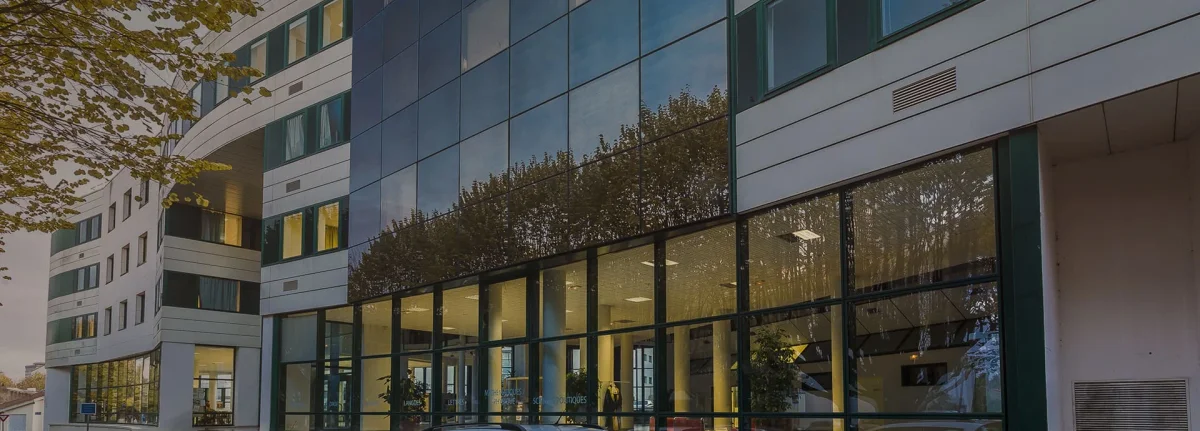
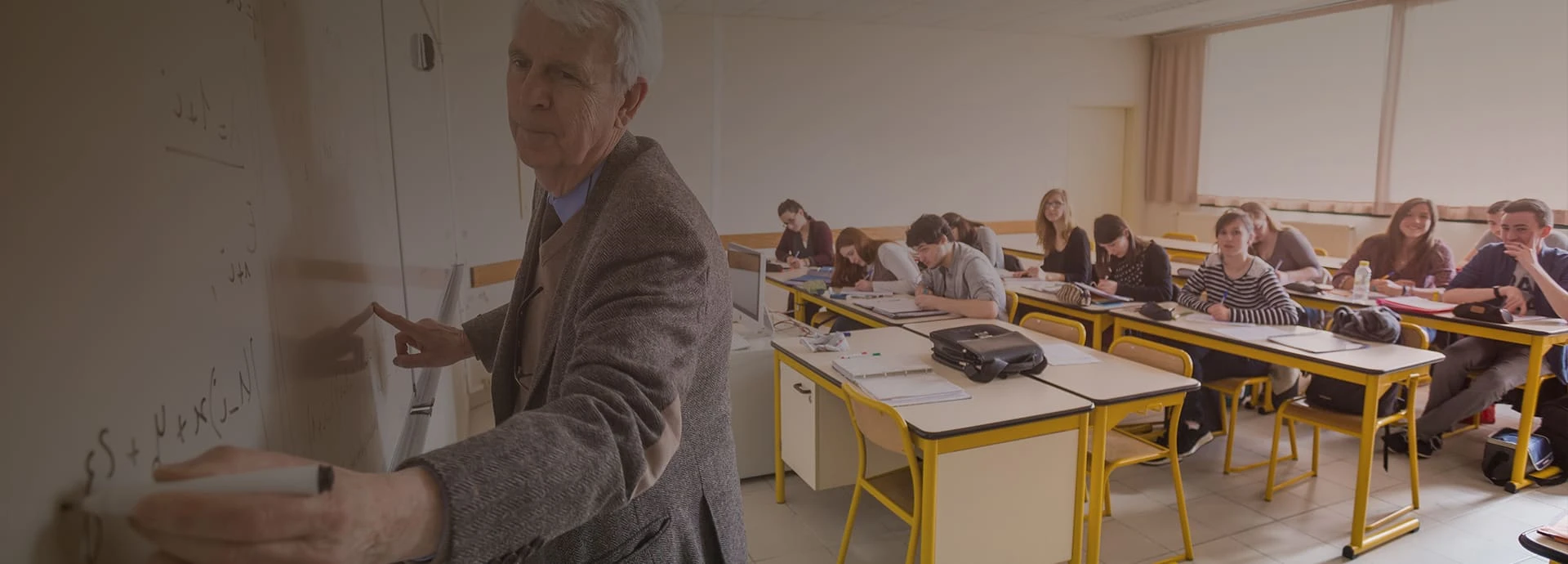
Founded in 1990, ICES is a private institution based in La Roche-sur-Yon, France. The institution operates as a higher-education provider, providing higher-education access in France.
The institution offers programmes across master's programmes. ICES's academic structure spans multiple faculties, supporting a catalogue of active programmes.
Location & Contact
Where ICES is located and how to contact its offices. Disability and accessibility information is usually held by a separate student services office worth contacting directly.
Academic Details
A snapshot of ICES's academic profile — enrolment, staffing, and the bodies recognising its work. Useful as a benchmark when comparing against peer institutions or national leaders.
Degrees
ICES's qualifications, sorted by level, give a quick overview of study routes. Use this view to scan from foundation through to research-level options before drilling into specific names.
Master's 6 programs
Master's programmes develop advanced specialised expertise, suited to senior industry positions and applied research.
- History
- International Relations and Diplomacy
- Law
- Political Sciences
- Private Law
- Public Law
Other 11 programs
- Arts and Humanities
- Biological and Life Sciences
- Biology
- Chemistry
- English
- History
- Law
- Mathematics
- Modern Languages
- Physics
- Political Sciences
Faculties & Divisions
The structure of ICES's faculties, with subjects each houses. Subject-area research clusters often cross faculty boundaries — check the institution's research strategy for active clusters.
History (Department/Division) 4 subjects offered
Specialisations & Subjects
- Ancient Civilizations
- Contemporary History
- History
- Medieval Studies
Languages (Department/Division) 1 subject offered
Specialisations & Subjects
- Modern Languages
Common Career Paths
- Translator
- Interpreter
- Language Teacher
Illustrative career directions for this field; specific outcomes depend on programme and student choices.
Law (Department/Division) 1 subject offered
Specialisations & Subjects
- Law
Common Career Paths
- Lawyer
- Legal Consultant
- Compliance Officer
Illustrative career directions for this field; specific outcomes depend on programme and student choices.
Letters (Department/Division) 2 subjects offered
Specialisations & Subjects
- Arts and Humanities
- Literature
Life and Geosciences (Department/Division) 7 subjects offered
Specialisations & Subjects
- Biological and Life Sciences
- Biology
- Biotechnology
- Genetics
- Molecular Biology
- Pharmacology
- Physiology
Common Career Paths
- Research Scientist
- Lab Technician
- Analyst
Illustrative career directions for this field; specific outcomes depend on programme and student choices.
Mathematics, Physics and Chemistry (Department/Division) 3 subjects offered
Specialisations & Subjects
- Chemistry
- Mathematics
- Physics
Common Career Paths
- Chemist
- Lab Researcher
- Quality Control Specialist
Illustrative career directions for this field; specific outcomes depend on programme and student choices.
Political Sciences (Department/Division) 3 subjects offered
Specialisations & Subjects
- Economics
- International Relations and Diplomacy
- Political Sciences
Common Career Paths
- Research Scientist
- Lab Technician
- Analyst
Illustrative career directions for this field; specific outcomes depend on programme and student choices.
Programs Offered
Search the ICES programme catalogue or scan it by degree level. The catalogue updates periodically; recently added programmes may not yet appear in some search-engine results.
33 programmes on record. Each level below shows a sample. Compare these on the programs page All programs in France
Bachelor's Degree 33 programmes
Showing 10 of 33.
How to apply to ICES
Step-by-step guidance for applying to ICES, covering the typical sequence from programme selection to admissions follow-up.
-
1
Research programmes at ICES
Start by exploring the programmes section on this page. ICES runs 33 active programmes across multiple degree levels. Narrow by qualification tier and read each programme description before shortlisting.
-
2
Review admissions criteria
Before applying to ICES, confirm you meet the academic, language, and document requirements for your chosen programme. International applicants should also check visa eligibility for France.
-
3
Gather supporting documents
Standard documents: official transcripts, identity proof, language test results, personal statement, and references. Confirm exact requirements with ICES's admissions office before assembling, as expectations vary by programme.
-
4
Lodge your application
Lodge your application through the official website (ices.fr). Online forms are the standard route. Save your draft frequently and submit before the programme deadline.
-
5
Confirm receipt and track progress
Verify your application has been received by the admissions team. Reach the institution by phone at 02 51 46 12 13. Monitor the portal for status updates, interview invitations, or document requests, and respond within the stated deadlines.
Frequently Asked Questions about ICES
Below are the key facts most prospective students ask about ICES, drawn directly from institutional records.
How old is ICES?
The institution opened in 1990 (approximately 36 years ago).
In which city is ICES?
ICES is based in La Roche-sur-Yon, France.
Is ICES a public or private institution?
ICES operates as a private institution.
What degrees does ICES offer?
Programmes at ICES cover master's programmes.
Does ICES have a religious affiliation?
ICES is associated with Christian.
Is ICES accredited?
The institution holds recognition from Ministry of Higher Education, Research and Innovation.
What is ICES's official website?
The institution's website is ices.fr.
Top-Ranked Universities in France
Below are the highest-ranked universities in France — natural comparison points for ICES. Top institutions in France typically have the strongest international recognition and graduate-school placement.




Other French Universities Affiliated with Christian
Prayer and worship space provision is generally a baseline at Christian universities. The peers below typically maintain dedicated spaces alongside academic facilities.





Faculties at nearby universities
Within easy reach of ICES, these institutions host comparable faculties and admissions structures — useful for regional shortlisting. Regional universities often coordinate on credit transfer and joint programme delivery.



Where Else to Study Law
Practicum and placement requirements vary widely across Law programmes in France. Compulsory placements affect total time commitment but typically improve post-graduation employment outcomes.




Universities Compared with ICES
When students choose ICES, they typically weigh it against institutions of similar standing. These universities sit at a comparable level — useful comparisons before committing to a final choice, especially when programme content is similar across the options.




Studying in France: guides and resources




Spotted something outdated or missing?
Help us keep this page accurate — it takes about 30 seconds.