Universität Konstanz
Konstanz, Germany • Founded 1966 • World Rank #897
Updated May 2026
Overview
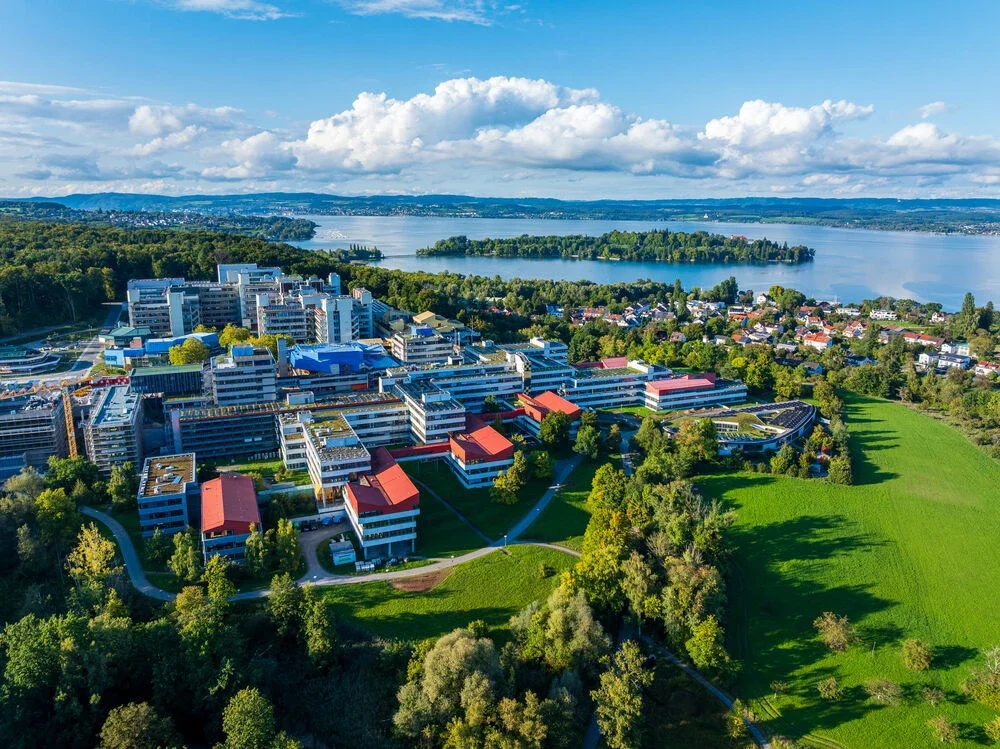



Established in 1966, the Universität Konstanz (University of Konstanz) is a non-profit public higher education institution located in the urban setting of the small city of Konstanz (population range of 50,000-249,999 inhabitants), Baden-Wurttemberg.
Officially recognized by the Ministerium für Wissenschaft, Forschung und Kunst Baden-Württemberg (Ministry of Science, Research and the Arts of Baden-Württemberg), Universität Konstanz is a small-sized coeducational German higher education institution. Universität Konstanz offers courses and programs leading to officially recognized higher education degrees such as bachelor's degrees, master's degrees and doctorate degrees in several areas of study.
This 58-year-old German higher-education institution has a selective admission policy based on entrance examinations and students' past academic records and grades. International applicants are eligible to apply for enrollment.
Universität Konstanz also provides several academic and non-academic facilities and services to students including a library, housing, sports facilities, financial aids and/or scholarships, study abroad and exchange programs, as well as administrative services.
Location & Contact
Universität Konstanz's coordinates, postal address, and the contact channels admissions teams respond on. Campus tour bookings often have their own page distinct from general contact channels.
Academic Details
Enrolment, faculty headcount, and accreditation data for Universität Konstanz — the academic basics in one place. Cross-reference these against programme-specific data when finalising your shortlist.
Academic Structures
Universität Konstanz's academic backbone. Endowed schools (named after donors) may differ from general units in funding levels, scholarships available, and curriculum focus.
Unit 3 items
- Faculty of Humanities
- Faculty of Law, Economics and Politics
- Faculty of Sciences
Degrees
State Examination in Law; Teacher Training State Examination (Lehramt)
Bachelor's 32 programs
Bachelor's programmes build foundational expertise, preparing graduates for entry-level professional roles and further postgraduate study.
- Administration
- American Studies
- Ancient Civilizations
- Applied Mathematics
- Biological and Life Sciences
- Chemistry
- Computer Science
- Economics
- English Studies
- Fine Arts
- French
- French Studies
- Gender Studies
- German
- History
- Italian
- Law
- Linguistics
- Literature
- Mathematics
- Media Studies
- Nanotechnology
- Neurological Therapy
- Philosophy
- Physics
- Political Sciences
- Psychology
- Slavic Languages
- Sociology
- Spanish
- Sports
- Statistics
Master's 35 programs
Master's programmes develop advanced specialised expertise, suited to senior industry positions and applied research.
- Ancient Civilizations
- Anthropology
- Biological and Life Sciences
- Chemistry
- Child Care and Development
- Computer Science
- Data Processing
- Eastern European Studies
- Economics
- English
- European Studies
- Finance
- German
- Government
- History
- Humanities and Social Science Education
- Information Sciences
- Law
- Linguistics
- Literature
- Mathematics
- Media Studies
- Modern Languages
- Nanotechnology
- Philosophy
- Physics
- Political Sciences
- Psychology
- Public Administration
- Romance Languages
- Slavic Languages
- Social Sciences
- Sociology
- Speech Studies
- Sports
Doctoral 15 programs
Doctoral programmes train independent researchers, leading to academic, scientific, and senior advisory careers.
- Biology
- Chemistry
- Clinical Psychology
- History
- Linguistics
- Literature
- Mathematics and Computer Science
- Neurology
- Philosophy
- Physics
- Political Sciences
- Psychology
- Psychotherapy
- Public Administration
- Sociology
Other 8 programs
- Administration
- Arts and Humanities
- Economics
- Law
- Mathematics
- Natural Sciences
- Political Sciences
- Psychology
Faculties & Divisions
All faculties operate under Ministerium für Wissenschaft, Forschung und Kunst Baden-Württemberg.
Humanities (Faculty) 10 subjects offered
Specialisations & Subjects
- Arts and Humanities
- Educational Research
- Fine Arts
- History
- Linguistics
- Literature
- Media Studies
- Philosophy
- Sociology
- Sports
Common Career Paths
- Researcher
- Editor
- Cultural Analyst
Illustrative career directions for this field; specific outcomes depend on programme and student choices.
Politics, Law and Economics (Faculty) 4 subjects offered
Specialisations & Subjects
- Economics
- Law
- Political Sciences
- Public Administration
Common Career Paths
- Economist
- Policy Analyst
- Financial Consultant
Illustrative career directions for this field; specific outcomes depend on programme and student choices.
Sciences (Faculty) 9 subjects offered
Specialisations & Subjects
- Biology
- Chemistry
- Computer Science
- Information Sciences
- Mathematics
- Natural Sciences
- Physics
- Psychology
- Statistics
Common Career Paths
- Research Scientist
- Lab Technician
- Analyst
Illustrative career directions for this field; specific outcomes depend on programme and student choices.
Programs Offered
Universität Konstanz's catalogue, with name search and level grouping. Capstone or dissertation requirements vary across programmes — confirm what you'll be assessed on before applying.
121 programmes on record. Each level below shows a sample. Compare these on the programs page All programs in Germany
Bachelor's Degree 56 programmes
Showing 10 of 56.
Master's Degree 65 programmes
Showing 10 of 65.
How to apply to Universität Konstanz
Application guidance for Universität Konstanz, structured as five practical steps with attention to documents and admissions communication.
-
1
Find a programme that fits your goals
Universität Konstanz's catalogue includes 121 programmes. Browse by level, identify candidates matching your prior qualifications, and note their entry requirements for the next step.
-
2
Confirm you meet the requirements
Entry requirements vary by programme and degree level. Verify academic minimums, language tests (if international), and any additional documents required for Universität Konstanz's admissions process.
-
3
Assemble your application package
Typical documents include academic transcripts, identity proof (passport or national ID), language proficiency test scores, a personal statement or motivation letter, and recommendation letters. International applicants should account for translation and notarisation time.
-
4
Submit your application
Submit your completed application through Universität Konstanz's official website at www.uni-konstanz.de. Most institutions use an online portal — register an account, complete the application form, and upload your prepared documents. Keep copies of all submissions and confirmation receipts.
-
5
Contact admissions and follow up
Follow up to confirm your application was received and is being processed. You can reach the institution by email at [email protected] or by phone at +49 (7531) 880. Admissions teams may request interviews or additional documents — respond promptly to keep your application active.
Frequently Asked Questions about Universität Konstanz
Common questions about Universität Konstanz answered concisely, with each answer grounded in the institution's published data.
In what year was Universität Konstanz established?
Universität Konstanz was founded in 1966 (approximately 60 years ago).
Where can I find Universität Konstanz?
The institution is located in Konstanz, Germany.
What is Universität Konstanz's control type?
Universität Konstanz is a public institution.
How many students does Universität Konstanz have?
The institution has a student body of 5,000-5,999.
Where does Universität Konstanz stand in university rankings?
Universität Konstanz holds rank #897 globally and #47 in Germany.
What qualification levels does Universität Konstanz offer?
Universität Konstanz delivers bachelor's, master's and doctoral programmes across its academic units.
How many faculties does Universität Konstanz have?
Universität Konstanz is organised into 3 academic units across its disciplines.
Is Universität Konstanz officially recognised?
The institution holds recognition from Ministerium für Wissenschaft, Forschung und Kunst Baden-Württemberg.
What is Universität Konstanz's official website?
Universität Konstanz's official website is www.uni-konstanz.de.
Top-Ranked Universities in Germany
Subject-specific rankings sometimes diverge from overall national rankings. A university below Universität Konstanz overall may lead in your subject — worth checking subject tables separately.

Members of European University Association (EUA)
Fellow European University Association (EUA) members alongside Universität Konstanz are gathered below — useful if institutional networks matter to your decision. Networks shape exchange opportunities, joint degrees, and credential recognition across borders.


Faculties at nearby universities
Within easy reach of Universität Konstanz, these institutions host comparable faculties and admissions structures — useful for regional shortlisting. Regional universities often coordinate on credit transfer and joint programme delivery.


Where Else to Study Education & Teaching
Practicum and placement requirements vary widely across Education & Teaching programmes in Germany. Compulsory placements affect total time commitment but typically improve post-graduation employment outcomes.
Universities Compared with Universität Konstanz
Joint research consortia among universities at Universität Konstanz's level — shared grants, co-supervision arrangements — make peer institutions natural collaborators rather than just competitors.


Studying in Germany: guides and resources


Spotted something outdated or missing?
Help us keep this page accurate — it takes about 30 seconds.