Dublin City University
Dublin, Ireland • Founded 1989 • World Rank #740
Updated Jun 2026
Overview
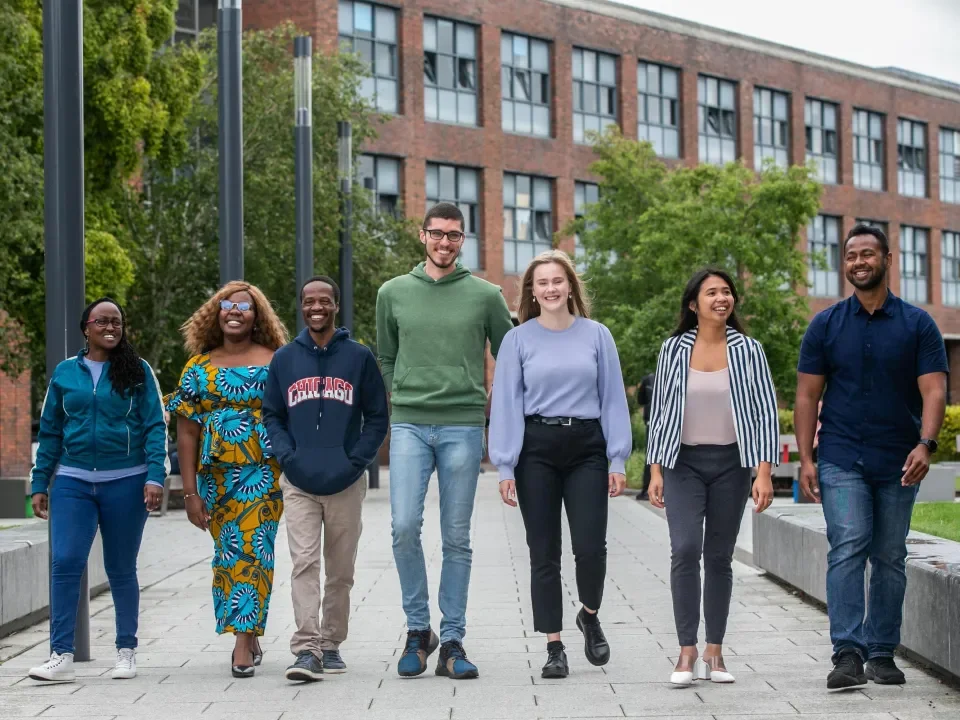


Founded in 1989, the Dublin City University is a non-profit public higher education institution located in the urban setting of the large city of Dublin (population range of 500,000-1,000,000 inhabitants), County Dublin.
Officially recognized by the Department of Education and Skills of Ireland, Dublin City University (DCU) is a large-sized coeducational Irish higher education institution. Dublin City University (DCU) offers courses and programs leading to officially recognized higher education degrees such as bachelor's degrees, master's degrees and doctorate degrees in several areas of study.
This 35-year-old Irish higher-education institution has a selective admission policy based on students' past academic records and grades. International students are welcome to apply for enrollment.
DCU also provides several academic and non-academic facilities and services to students including a library, sports facilities, study abroad and exchange programs, as well as administrative services.
Location & Contact
Looking to reach Dublin City University? Address, contact details, and online links below. For finance and tuition payment queries, the bursar or finance office is typically a separate contact point.
Academic Details
Below are the institutional metrics for Dublin City University: scale, staffing balance, and accreditation context. These shape the academic experience more than headline rankings often suggest.
Academic Structures
Below: how Dublin City University organises its faculties and constituent units. Distance learning programmes often sit in a separate division from on-campus teaching, with different administration.
Unit 8 items
- All Hallows College
- DCU Business School
- Faculty of Engineering and Computing
- Faculty of Humanities and Social Sciences
- Faculty of Science and Health
- Mater Dei Institute of Education
- Royal Irish Academy of Music
- St Patrick's College
Degrees
Also Undergraduate Certificate; Foundation Programme; Pre-Masters Programmes; Professional Postgraduate Diplomas. 'DCU Connected' also offer online postgraduate diploma (https://www.dcu.ie/connected)
Bachelor's 1 program
Bachelor's programmes build foundational expertise, preparing graduates for entry-level professional roles and further postgraduate study.
- Mathematics
Master's 15 programs
Master's programmes develop advanced specialised expertise, suited to senior industry positions and applied research.
- Computer Engineering
- Data Processing
- Education
- Electronic Engineering
- Engineering
- History
- Information Management
- Mechanical Engineering
- Music Education
- Psychology
- Public Relations
- Software Engineering
- Special Education
- Theology
- Translation and Interpretation
Doctoral 16 programs
Doctoral programmes train independent researchers, leading to academic, scientific, and senior advisory careers.
- Chemistry
- Communication Studies
- Computer Science
- Cultural Studies
- Education
- Engineering
- Geography
- Health Sciences
- History
- Law
- Mass Communication
- Mathematics
- Modern Languages
- Nursing
- Physics
- Psychology
Faculties & Divisions
All faculties operate under Department of Education and Skills of Ireland.
Engineering and Computing (Faculty) 9 subjects offered
Specialisations & Subjects
- Biomedical Engineering
- Business Computing
- Computer Engineering
- Computer Science
- Data Processing
- Electronic Engineering
- Environmental Engineering
- Mechanical Engineering
- Production Engineering
Common Career Paths
- Engineer
- Project Manager
- Technical Consultant
Illustrative career directions for this field; specific outcomes depend on programme and student choices.
Humanities and Social Sciences (Faculty) 22 subjects offered
Specialisations & Subjects
- Applied Linguistics
- Chinese
- Communication Studies
- Economics
- Environmental Studies
- Foreign Languages Education
- French
- German
- International Relations and Diplomacy
- Japanese
- Jazz and Popular Music
- Journalism
- Law
- Media Studies
- Multimedia
- Music
- Political Sciences
- Religious Studies
- Social Sciences
- Spanish
- Theology
- Translation and Interpretation
Common Career Paths
- Researcher
- Policy Analyst
- Social Worker
Illustrative career directions for this field; specific outcomes depend on programme and student choices.
Science and Health (Faculty) 24 subjects offered
Specialisations & Subjects
- Actuarial Science
- Applied Mathematics
- Applied Physics
- Artificial Intelligence
- Astronomy and Space Science
- Biological and Life Sciences
- Biology
- Biomedicine
- Biotechnology
- Cell Biology
- Chemistry
- Community Health
- Environmental Studies
- Genetics
- Mathematics
- Nursing
- Pharmacology
- Pharmacy
- Physical Education
- Physical Therapy
- Physics
- Psychology
- Psychotherapy
- Sports
Common Career Paths
- Research Scientist
- Lab Technician
- Analyst
Illustrative career directions for this field; specific outcomes depend on programme and student choices.
Education (Institute) 8 subjects offered
Specialisations & Subjects
- Education
- Foreign Languages Education
- Music Education
- Preschool Education
- Primary Education
- Religious Education
- Science Education
- Technology Education
Common Career Paths
- Teacher
- Educational Administrator
- Curriculum Specialist
Illustrative career directions for this field; specific outcomes depend on programme and student choices.
Business (School) 8 subjects offered
Specialisations & Subjects
- Accountancy
- Air Transport
- Business and Commerce
- E-Business/Commerce
- Finance
- International Business
- Marketing
- Transport Management
Common Career Paths
- Business Analyst
- Operations Manager
- Strategy Consultant
Illustrative career directions for this field; specific outcomes depend on programme and student choices.
Programs Offered
Search and filter Dublin City University's available programmes by degree level. The list reflects the institution's current catalogue and may not include programmes that are paused or pending approval.
155 programmes on record. Each level below shows a sample. Compare these on the programs page All programs in Ireland
Honours Degree 80 programmes
Showing 10 of 80.
Master's Degree 49 programmes
Showing 10 of 49.
Doctorate 3 programmes
Diploma 4 programmes
Postgraduate Certificate 3 programmes
Postgraduate Diploma 15 programmes
Showing 10 of 15.
How to apply to Dublin City University
Below is a five-step path through the application process at Dublin City University, useful for first-time applicants and international students.
-
1
Research programmes at Dublin City University
Start by exploring the programmes section on this page. Dublin City University runs 155 active programmes across multiple degree levels. Narrow by qualification tier and read each programme description before shortlisting.
-
2
Review admissions criteria
Before applying to Dublin City University, confirm you meet the academic, language, and document requirements for your chosen programme. International applicants should also check visa eligibility for Ireland.
-
3
Gather supporting documents
Standard documents: official transcripts, identity proof, language test results, personal statement, and references. Confirm exact requirements with Dublin City University's admissions office before assembling, as expectations vary by programme.
-
4
Lodge your application
Lodge your application through the official website (www.dcu.ie). Online forms are the standard route. Save your draft frequently and submit before the programme deadline.
-
5
Confirm receipt and track progress
Verify your application has been received by the admissions team. You can reach the institution by email at [email protected] or by phone at +353 (1) 700 5000. Monitor the portal for status updates, interview invitations, or document requests, and respond within the stated deadlines.
Frequently Asked Questions about Dublin City University
Short Q&A on the institutional facts that matter most when shortlisting Dublin City University as a study destination.
In what year was Dublin City University established?
Dublin City University was founded in 1989 (approximately 37 years ago).
What city is Dublin City University in?
Dublin City University operates from Dublin, Ireland.
What is Dublin City University's control type?
It is a public higher-education institution.
How big is Dublin City University's student body?
Dublin City University serves approximately 10,000-14,999 students.
How is Dublin City University ranked?
Dublin City University is ranked #740 globally and #5 in Ireland.
What programmes are available at Dublin City University?
Dublin City University offers bachelor's, master's and doctoral programmes.
How many faculties does Dublin City University have?
Dublin City University is organised into 8 academic units across its disciplines.
Is Dublin City University accredited?
The institution holds recognition from Quality and Qualifications Ireland - QQI (Dearbhú Cáilíochta agus Cáilíochtaí Éireann).
What is Dublin City University's official website?
You can find Dublin City University online at www.dcu.ie.
Members of European University Association (EUA)
Universities affiliated with European University Association (EUA) typically share standards on quality assurance, mobility programmes, and research collaboration. These fellow members are worth knowing if Dublin City University's affiliation matters to your shortlisting. Cross-membership institutions often facilitate joint events and credit transfer.




Faculties at nearby universities
Industry placements and co-op programmes around Dublin City University draw on the same regional employer base. The nearby universities listed below often compete for similar internship slots.

Universities Compared with Dublin City University
Students applying to Dublin City University often shortlist similar institutions of comparable scale, prestige, and academic depth. These universities frequently appear alongside Dublin City University on application lists, useful for hedging or for direct head-to-head comparison.


Studying in Ireland: guides and resources





Spotted something outdated or missing?
Help us keep this page accurate — it takes about 30 seconds.