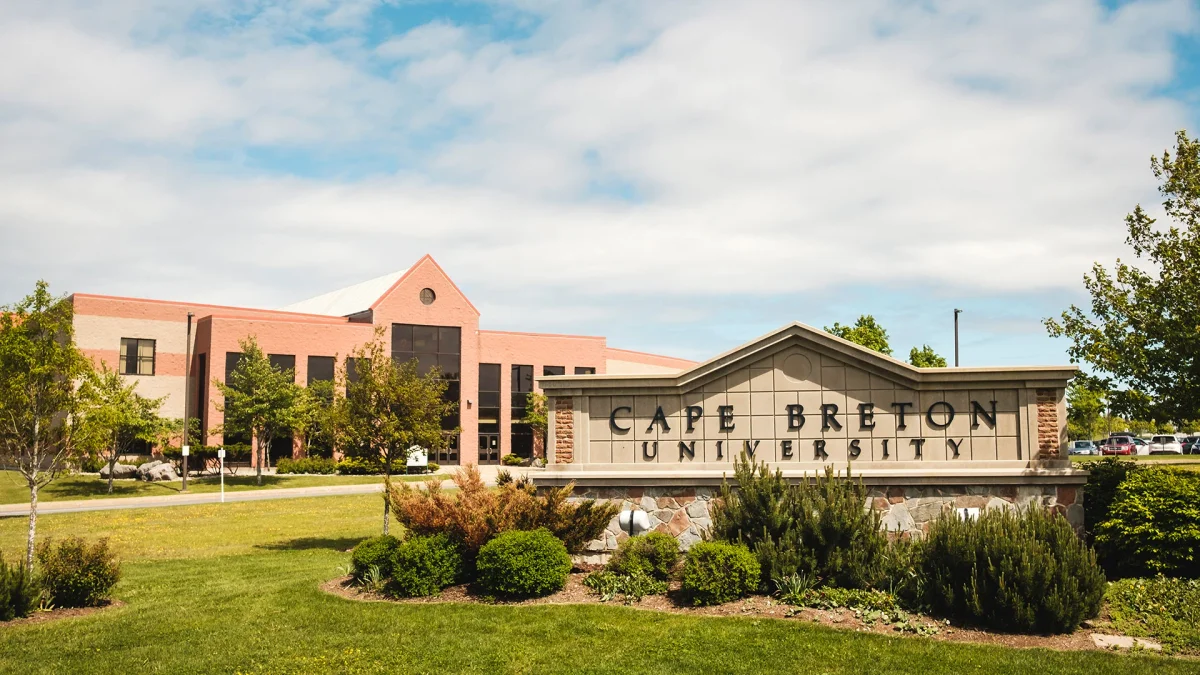
Bachelor of Engineering Technology in Chemical is a bachelor's degree in Chemical Engineering programme taught at Cape Breton University in Sydney, Canada. The programme runs for 3 years, delivered on campus. Tuition for international students is CAD 71,383 per total (CAD 33,994 per total for local students).
Cape Breton University's Bachelor of Engineering Technology (Chemical), delivered on campus, combines theoretical principles with technical training in chemical processes, instrumentation, and sample analysis, with relevance to fields such as engineering and nanotechnology, medicine and dentistry, food sciences, and environmental sciences. The degree is offered through direct entry, advanced-standing entry for students with a related diploma, and advanced-standing entry for students with a related undergraduate degree, with three-year (90-credit) and four-year advanced (120-credit) options available. Students carry out hands-on research using specialized laboratory equipment, including an NMR spectrometer, FT-IR and FT-Raman instruments, UV/Vis spectrometers, chromatography systems, an atomic absorption spectrometer, and a Linux computing cluster. CBU notes that this Bachelor of Engineering Technology credential does not lead directly to a professional engineering designation. The multiple entry pathways make the program suited both to students entering directly from secondary school and to diploma or degree holders seeking advanced standing in a technologist-level chemical program, rather than students specifically pursuing a licensed engineering career. The emphasis on instrumentation and laboratory analysis points toward applied technical roles in chemical processing, testing, and related industries.
Requirements
Minimum GPA:65.00 / %
Admission Requirements: This Bachelor of Engineering Technology in Chemical page does not set its own entrance standard beyond its high-school course list; it otherwise defers to Cape Breton University's general admission requirements. Canadian high school graduates need English 12 (academic or advanced), Math 12 (academic or advanced), two Science 12 level courses, and one further grade 12 academic or advanced course; transfer applicants must be in good academic standing at their current institution and meet the equivalent post-secondary requirement, and articulation agreements exist with partner colleges. CBU's institution-wide domestic threshold also applies: an overall average of at least 65%, with a minimum age of 16. International applicants are assessed against country-specific equivalency tables and must meet CBU's English-language requirement: IELTS Academic/Indicator 6.5 (no band below 6.0), TOEFL iBT/Home Edition 80 (no skill below 20) before 21 January 2026 or 4.5 after, Duolingo 120, PTE Academic 59, Michigan English Test 58, CAEL 60, or Oxford ELLT 7.
Application Details
Application Deadline:Domestic applicants apply directly to Cape Breton University: for September 2027 entry, general undergraduate applications open 1 October 2026 and close 3 September 2027, while the Bachelor of Social Work closes earlier on 15 January 2027 (documents by 22 January) and the Bachelor of Science in Nursing closes 26 February 2027; January 2027 entry closes 15 December 2026, and May 2027 entry closes 15 April 2027 for most programmes -- except the Bachelor of Education, whose only intake is May 2027 (Spring) and which closes 15 January 2027 (documents by 22 January), not 15 April. International applicants use the same application, with the September 2027 intake open 1 October 2026 to 15 May 2027, January 2027 closing 15 October 2026, and May 2027 closing 15 February 2027. CBU states deadlines may close early once enrolment targets are met, so admission runs on a rolling basis within each posted window rather than a firm cut-off. These are institution-wide dates; this programme publishes no deadline of its own.