Chiba University of Commerce
Japan • Founded 1928
Overview
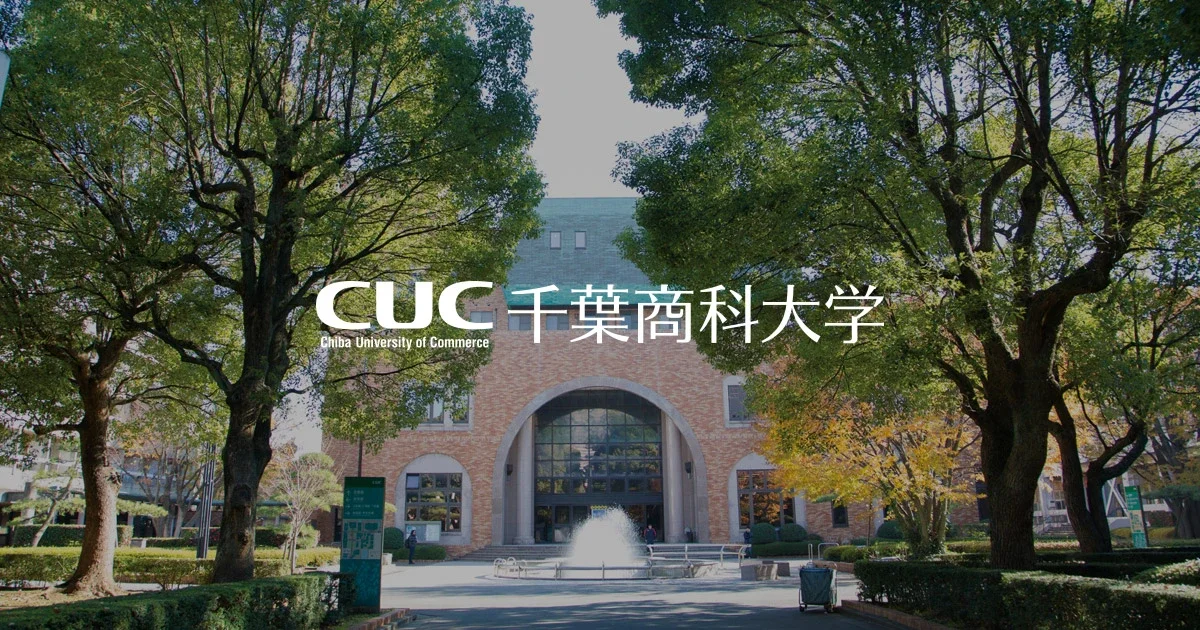


Chiba University of Commerce is a private university located in Ichikawa-shi, Japan. Founded in 1928, it operates as a higher-education provider.
The academic catalogue at Chiba University of Commerce runs across multiple qualification levels, with multiple faculties hosting a catalogue of active programmes. Each unit administers its own admissions and curriculum framework.
Location & Contact
Below are Chiba University of Commerce's address, location data, and primary contact channels. These are the basics you'll want before scheduling a campus visit or sending a formal admissions enquiry.
Academic Details
Academic statistics for Chiba University of Commerce — including its student body and academic staff numbers. Read these alongside rankings; institution scale changes how rankings should be interpreted.
Degrees
Also MBA Programme
Other 6 programs
- Arts and Humanities
- Business Administration
- Business and Commerce
- Economic and Finance Policy
- Economics
- Social Sciences
Faculties & Divisions
Chiba University of Commerce's faculties with the subjects they're known for. Industry partnerships are often faculty-level rather than institution-wide; check the faculty page for current partner organisations.
Commerce and Economics (Faculty) 8 subjects offered
Specialisations & Subjects
- Accountancy
- Business and Commerce
- Economics
- Industrial and Production Economics
- Information Sciences
- Law
- Management
- Modern Languages
Common Career Paths
- Economist
- Policy Analyst
- Financial Consultant
Illustrative career directions for this field; specific outcomes depend on programme and student choices.
Policy Informatics (Faculty) 7 subjects offered
Specialisations & Subjects
- Arts and Humanities
- Computer Science
- Cultural Studies
- Environmental Studies
- Information Technology
- Media Studies
- Political Sciences
Service Innovation (Faculty) 8 subjects offered
Specialisations & Subjects
- Accountancy
- Constitutional Law
- Economics
- Finance
- Information Sciences
- Marketing
- Psychiatry and Mental Health
- Service Trades
Commerce (Graduate School) 1 subject offered
Specialisations & Subjects
- Business and Commerce
Economics (Graduate School) 1 subject offered
Specialisations & Subjects
- Economics
Common Career Paths
- Economist
- Policy Analyst
- Financial Consultant
Illustrative career directions for this field; specific outcomes depend on programme and student choices.
Policy Informatics (Graduate School) 1 subject offered
Specialisations & Subjects
- Computer Science
Policy Studies (Graduate School) 1 subject offered
Specialisations & Subjects
- Social Policy
Service Innovation (Graduate School) 1 subject offered
Specialisations & Subjects
- Service Trades
Economics Research (Institute) 1 subject offered
Specialisations & Subjects
- Economics
Common Career Paths
- Economist
- Policy Analyst
- Financial Consultant
Illustrative career directions for this field; specific outcomes depend on programme and student choices.
Programs Offered
Below are Chiba University of Commerce's active programmes grouped by degree level, with search. Use the filter to narrow by keyword and the level groupings to compare options at the same qualification tier.
Bachelor's Degree
6 programmes
Chiba University of Commerce's 6 programmes at this tier lead to a bachelor's qualification, the first full degree most students pursue and the usual prerequisite for master's-level entry.
Department of Economics 商学部 経済学科 Economics
Department of Business Administration 商学部 経営学科 Business Administration
Faculty of Policy Planning and Management 総合政策学部 Business & Management
Faculty of Service Innovation サービス創造学部 Liberal Arts
Faculty of Humanities and Social Sciences 人間社会学部 Humanities & Cultural Studies
Department of Commerce 商学部 商学科 Business & Management
No programmes match your filter in this level.
Master's Degree
2 programmes
These 2 programmes form Chiba University of Commerce's master's offering, combining advanced coursework with independent work that signals readiness for leadership or research.
Graduate School of Commerce - Master's Program 商学研究科 修士課程 Business & Management
Graduate School of Accounting & Finance - Professional Degree Program 会計ファイナンス研究科 専門職学位課程 Accounting
No programmes match your filter in this level.
Doctorate
1 programme
There are 1 programme to choose from at Chiba University of Commerce for doctoral candidates. A PhD or equivalent typically takes three or more years of supervised, independent research.
Graduate School of Policy Studies - Doctoral Program 政策研究科 博士課程 Public Policy
No programmes match your filter in this level.
How to apply to Chiba University of Commerce
Below is a five-step path through the application process at Chiba University of Commerce, useful for first-time applicants and international students.
- 1 Research programmes at Chiba University of Commerce
Chiba University of Commerce's catalogue includes 9 programmes. Browse by level, identify candidates matching your prior qualifications, and note their entry requirements for the next step.
- 2 Review admissions criteria
Entry requirements vary by programme and degree level. Verify academic minimums, language tests (if international), and any additional documents required for Chiba University of Commerce's admissions process.
- 3 Gather supporting documents
Typical documents include academic transcripts, identity proof (passport or national ID), language proficiency test scores, a personal statement or motivation letter, and recommendation letters. International applicants should account for translation and notarisation time.
- 4 Lodge your application
Submit your completed application through Chiba University of Commerce's official website at www.cuc.ac.jp. Most institutions use an online portal — register an account, complete the application form, and upload your prepared documents. Keep copies of all submissions and confirmation receipts.
- 5 Confirm receipt and track progress
Follow up to confirm your application was received and is being processed. Admissions teams may request interviews or additional documents — respond promptly to keep your application active.
Frequently Asked Questions about Chiba University of Commerce
Common questions about Chiba University of Commerce answered concisely, with each answer grounded in the institution's published data.
How old is Chiba University of Commerce?
The institution opened in 1928 (approximately 98 years ago).
In which city is Chiba University of Commerce?
Chiba University of Commerce is based in Ichikawa-shi, Japan.
Is Chiba University of Commerce a public or private institution?
It is a private higher-education institution.
Is Chiba University of Commerce officially recognised?
Yes, Chiba University of Commerce is recognised by Ministry of Education, Culture, Sports, Science and Technology (MEXT).
How do I find Chiba University of Commerce online?
The institution's website is www.cuc.ac.jp.
Top-Ranked Universities in Japan
Japan's most prominent universities are listed below — relevant for assessing Chiba University of Commerce's national positioning. National prominence signals not just academic strength but also employer recognition.



Where Else to Study Business & Management
Other universities in Japan that teach Business & Management appear below — useful for comparing programme depth against Chiba University of Commerce. Programme structures differ even within the same country, so detailed comparison is worth the effort.




Universities Often Compared with Chiba University of Commerce
Peer cohort diversity — gender, nationality, socioeconomic background — varies more than rankings might suggest. Diversity affects classroom dynamics and post-grad networks.