
Newcastle University
Newcastle upon Tyne, United Kingdom • Founded 1834 • World Rank #205
Updated May 2026
Overview
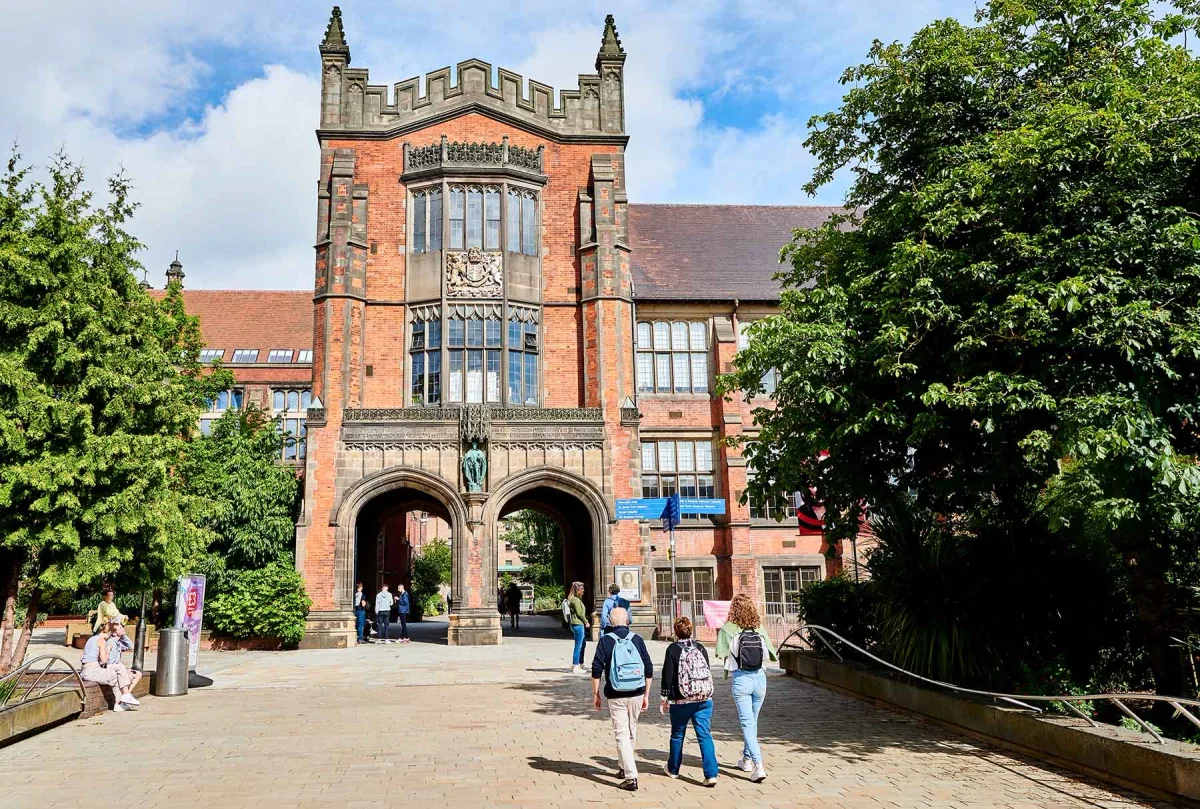

Founded in 1963, the Newcastle University is a non-profit public higher education institution located in the urban setting of the medium city of Newcastle upon Tyne (population range of 250,000-499,999 inhabitants), North East England.
This institution also has a branch campus in Gelang Patah and Singapore. Officially recognized/chartered by the Privy Council, Newcastle University (NCL) is a large-sized coeducational UK higher education institution.
Newcastle University (NCL) offers courses and programs leading to officially recognized higher education degrees such as pre-bachelor's degrees (i.e. certificates, diplomas, associate or foundation), bachelor's degrees, master's degrees and doctorate degrees in several areas of study. This 61-year-old UK higher-education institution has a selective admission policy based on entrance examinations and students' past academic records and grades.
International students are welcome to apply for enrollment.
NCL also provides several academic and non-academic facilities and services to students including a library, housing, sports facilities, financial aids and/or scholarships, study abroad and exchange programs, as well as administrative services.
Location & Contact
Mailing address, phone, email, and social channels for Newcastle University are gathered below for quick reference. Most enquiries route through the admissions team unless noted otherwise.
Academic Details
A quick read on Newcastle University's academic vitals — enrolment counts, faculty makeup, and recognition status. The combination determines class sizes, faculty access, and credential portability.
Academic Structures
Below: how Newcastle University organises its faculties and constituent units. Distance learning programmes often sit in a separate division from on-campus teaching, with different administration.
Unit 3 items
- Faculty of Humanities and Social Sciences
- Faculty of Medical Sciences
- Faculty of Science, Agriculture and Engineering
Degrees
Newcastle University's degree range. Credit-recognition across borders depends on the level and the qualification framework; check whether your home system accepts Newcastle University's credits.
Doctoral 56 programs
Doctoral programmes train independent researchers, leading to academic, scientific, and senior advisory careers.
- Accountancy
- Agriculture
- Archaeology
- Architecture
- Biological and Life Sciences
- Biomedicine
- Biotechnology
- Business Administration
- Chemical Engineering
- Chemistry
- Civil Engineering
- Classical Languages
- Clinical Psychology
- Computer Science
- Dentistry
- Economics
- Education
- Educational Psychology
- Electrical and Electronic Engineering
- Energy Engineering
- Environmental Studies
- Film
- Finance
- Fine Arts
- Genetics
- Geography
- History
- Journalism
- Landscape Architecture
- Law
- Linguistics
- Management
- Marine Engineering
- Marine Science and Oceanography
- Marketing
- Mathematics
- Mechanical Engineering
- Media Studies
- Medicine
- Microbiology
- Modern Languages
- Music
- Nanotechnology
- Neurosciences
- Nutrition
- Oncology
- Philosophy
- Political Sciences
- Psychology
- Public Health
- Sociology
- Speech Therapy and Audiology
- Statistics
- Surgery
- Translation and Interpretation
- Writing
Faculties & Divisions
All faculties operate under Privy Council.
Humanities and Social Sciences (Faculty) 15 subjects offered
Specialisations & Subjects
- Architecture
- Arts and Humanities
- Business Administration
- Cultural Studies
- Education
- English
- Geography
- History
- Landscape Architecture
- Linguistics
- Literature
- Modern Languages
- Political Sciences
- Social Sciences
- Sociology
Common Career Paths
- Researcher
- Policy Analyst
- Social Worker
Illustrative career directions for this field; specific outcomes depend on programme and student choices.
Medical Sciences (Faculty) 23 subjects offered
Specialisations & Subjects
- Anatomy
- Biochemistry
- Cardiology
- Cell Biology
- Dentistry
- Diabetology
- Embryology and Reproduction Biology
- Endocrinology
- Gastroenterology
- Gerontology
- Haematology
- Laboratory Techniques
- Medicine
- Neurology
- Oncology
- Paediatrics
- Physiology
- Public Health
- Radiology
- Respiratory Therapy
- Rheumatology
- Surgery
- Tropical Medicine
Common Career Paths
- Physician
- Clinical Researcher
- Healthcare Specialist
Illustrative career directions for this field; specific outcomes depend on programme and student choices.
Science, Agriculture and Engineering (Faculty) 15 subjects offered
Specialisations & Subjects
- Agricultural Economics
- Agriculture
- Biochemistry
- Biological and Life Sciences
- Biology
- Chemical Engineering
- Civil Engineering
- Environmental Studies
- Food Science
- Marine Science and Oceanography
- Marketing
- Mathematics
- Mechanical Engineering
- Natural Sciences
- Statistics
Common Career Paths
- Engineer
- Project Manager
- Technical Consultant
Illustrative career directions for this field; specific outcomes depend on programme and student choices.
Programs Offered
Search and filter Newcastle University's available programmes by degree level. The list reflects the institution's current catalogue and may not include programmes that are paused or pending approval.
278 programmes on record. Each level below shows a sample. Compare these on the programs page All programs in United Kingdom
Honours Degree 117 programmes
Showing 10 of 117.
Master's Degree 147 programmes
Showing 10 of 147.
Doctorate 10 programmes
Professional Doctorate 1 programme
Postgraduate Certificate 2 programmes
Postgraduate Diploma 1 programme
How to apply to Newcastle University
The standard application path for Newcastle University, broken into five practical steps with the documents and channels you will need at each stage.
-
1
Identify the right programme
Use the programme finder to browse Newcastle University's 278 active programmes. Filter by keyword or scan by degree level. Read curriculum details on each programme's dedicated page if available.
-
2
Check entry requirements
Programme-level requirements at Newcastle University typically include academic transcripts, language proficiency proof, identity documents, and a personal statement or interview. Confirm specific requirements with the admissions office.
-
3
Prepare your application documents
Prepare academic transcripts, ID/passport copies, language proficiency proof, a personal statement, and reference letters. International candidates may need apostilled or notarised translations — start early to avoid deadline pressure.
-
4
Submit via the institution
Newcastle University processes applications through www.ncl.ac.uk. Create an account, fill out the application form, and submit your documents. Note application deadlines, which vary by intake and programme.
-
5
Get in touch with admissions
Confirm receipt of your application with the admissions office and keep an eye on your portal for status changes. Reach the institution by phone at +44 (191) 208 6000. Quick responses to any follow-up requests keep your application moving smoothly through the review process.
Frequently Asked Questions about Newcastle University
Short Q&A on the institutional facts that matter most when shortlisting Newcastle University as a study destination.
When was Newcastle University founded?
Newcastle University was established in 1834 (approximately 192 years ago).
Where is Newcastle University located?
Newcastle University is located in Newcastle upon Tyne, United Kingdom.
What is Newcastle University's control type?
It is a public higher-education institution.
What is the student enrolment at Newcastle University?
Student enrolment at Newcastle University is around 25,000-29,999.
How is Newcastle University ranked?
Newcastle University holds rank #205 globally and #16 in United Kingdom.
What degrees does Newcastle University offer?
Programmes at Newcastle University cover bachelor's, master's and doctoral programmes.
How is Newcastle University organised academically?
The institution comprises 3 academic units.
Is Newcastle University officially recognised?
Yes, Newcastle University is recognised by Privy Council.
How do I find Newcastle University online?
The institution's website is www.ncl.ac.uk.
Top-Ranked Universities in the United Kingdom
Top the United Kingdom universities often run international branch campuses. Newcastle University's international footprint compared to this benchmark signals global engagement scale.




Members of European University Association (EUA)
Cross-credit recognition between European University Association (EUA) members reduces friction for students moving between universities. Newcastle University's membership often eases credit transfer to the institutions below.





Faculties at nearby universities
Geographic neighbours to Newcastle University appear below — each worth considering if location is part of your decision. Nearby institutions tend to share academic calendars, making cross-applications less complex.

Where Else to Study Natural Sciences & Mathematics
Beyond Newcastle University, several other universities in the United Kingdom deliver focused Natural Sciences & Mathematics programmes worth exploring before you commit to a single application. Programme depth and elective range vary significantly between institutions.



Universities Compared with Newcastle University
Selectivity rates (acceptance percentage) cluster around Newcastle University for the peer institutions below. Selectivity is one of the more stable signals of institutional positioning over time.





Studying in United Kingdom: guides and resources





Spotted something outdated or missing?
Help us keep this page accurate — it takes about 30 seconds.