
St. Edward's University
Austin, United States • Founded 1885
Updated Jun 2026
Overview
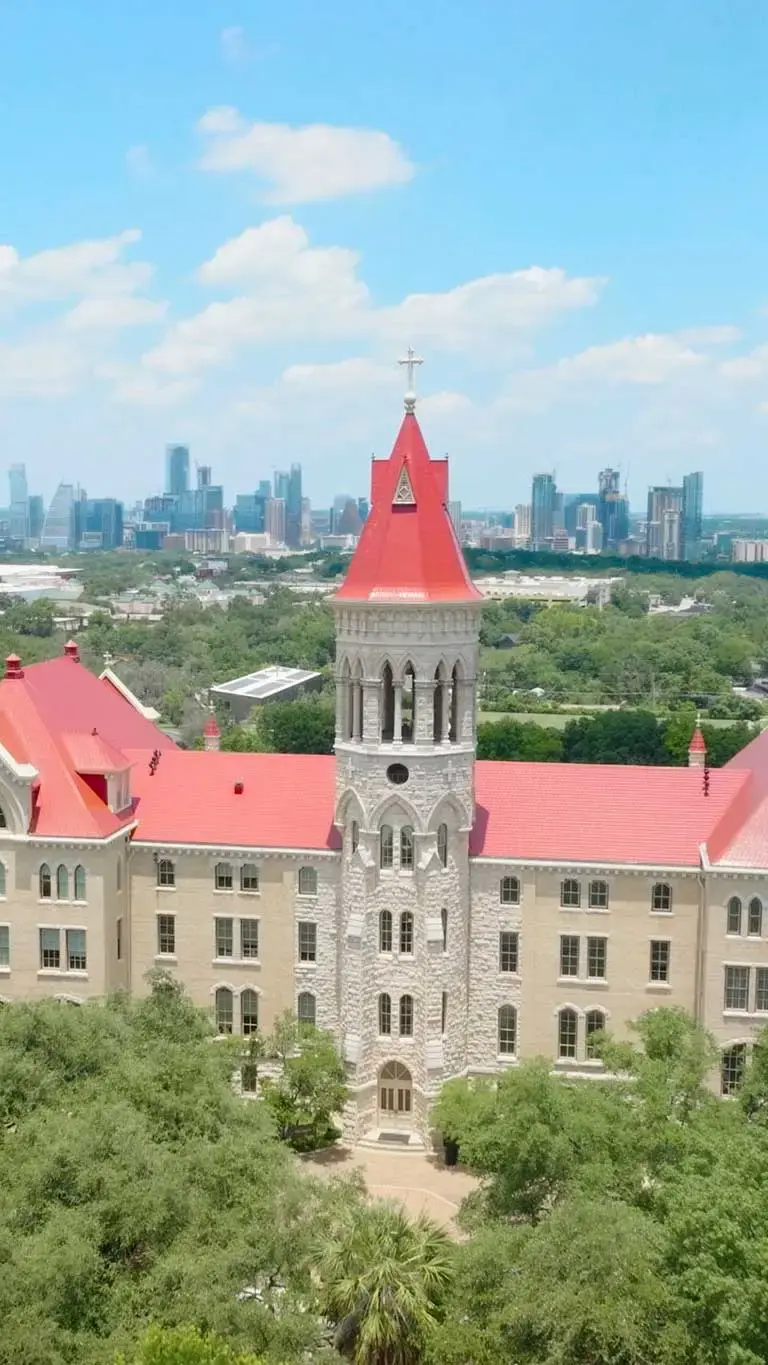

Established in 1885, the St.
Edward's University is a non-profit private higher education institution located in the urban setting of the large city of Austin (population range of 500,000-1,000,000 inhabitants), Texas. Officially accredited by the Southern Association of Colleges and Schools Commission on Colleges, St.
Edward's University (SEU) is a small-sized coeducational US higher education institution formally affiliated with the Christian-Catholic religion. St.
Edward's University (SEU) offers courses and programs leading to officially recognized higher education degrees such as bachelor's degrees, master's degrees and doctorate degrees in several areas of study.
This 139-year-old US higher-education institution has a selective admission policy based on entrance examinations and students' past academic records and grades. The acceptance rate range is 90-99% making this US higher education organization a least selective institution.
International applicants are eligible to apply for enrollment. SEU also provides several academic and non-academic facilities and services to students including a library, housing, sports facilities, financial aids and/or scholarships, study abroad and exchange programs, online courses and distance learning opportunities, as well as administrative services.
Location & Contact
Where St. Edward's University is located and how to contact its offices. Disability and accessibility information is usually held by a separate student services office worth contacting directly.
Academic Details
Below are the institutional metrics for St. Edward's University: scale, staffing balance, and accreditation context. These shape the academic experience more than headline rankings often suggest.
Academic Structures
The academic-side structure of St. Edward's University, broken down by unit type. International branch campuses, where they exist, are sometimes organised as separate units with their own structure.
Unit 5 items
- School of Behavioral and Social Sciences
- School of Education
- School of Humanities
- School of Management and Business
- School of Natural Sciences
Frequently Asked Questions about St. Edward's University
Frequently asked questions about St. Edward's University, covering the institutional basics most prospective applicants want to confirm first.
When was St. Edward's University founded?
St. Edward's University was established in 1885 (approximately 141 years ago).
In which city is St. Edward's University?
St. Edward's University is based in Austin, United States.
Is St. Edward's University a public or private institution?
St. Edward's University is a private institution.
How many students study at St. Edward's University?
St. Edward's University has approximately 3,000-3,999 students.
Does St. Edward's University have a religious affiliation?
Yes, St. Edward's University is affiliated with Christian-Catholic.
How is St. Edward's University organised academically?
The institution comprises 5 academic units.
Is St. Edward's University officially recognised?
Yes, St. Edward's University is recognised by Southern Association of Colleges and Schools Commission on Colleges.
How do I find St. Edward's University online?
St. Edward's University's official website is www.stedwards.edu.
Top-Ranked Universities in the United States
Alumni network strength of the United States's national leaders compounds over time. The peer-graduate networks at top institutions often outweigh academic differences in long-run career outcomes.




Members of Association of Catholic Colleges and Universities (ACCU)
St. Edward's University and the universities below are both members of Association of Catholic Colleges and Universities (ACCU).


Other American Universities Affiliated with Christian-Catholic
Universities affiliated with Christian-Catholic in the United States are listed below.



Faculties at nearby universities
Universities located near St. Edward's University are listed below.




Universities Compared with St. Edward's University
Below are universities sometimes compared with St. Edward's University.




Studying in United States: guides and resources





Spotted something outdated or missing?
Help us keep this page accurate — it takes about 30 seconds.