
Catholic University of Applied Social Sciences
Berlin, Germany • Founded 1991
Updated May 2026 · Source: khsb-berlin.de
Overview
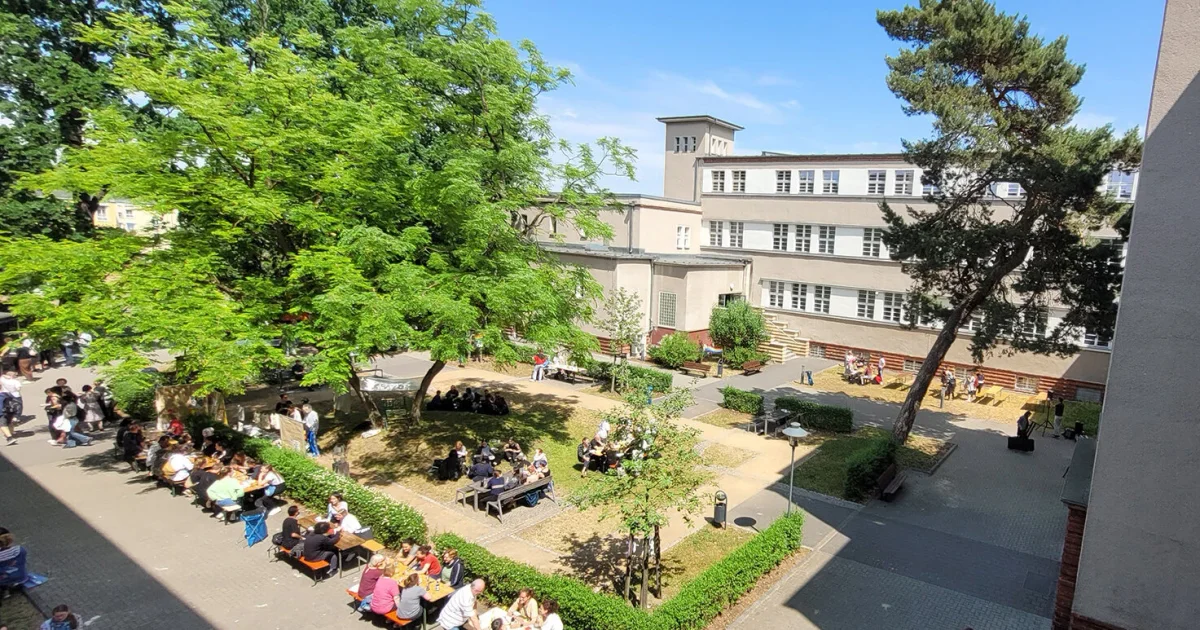
Established in 1991, the Katholische Hochschule für Sozialwesen Berlin (Catholic University of Applied Social Sciences Berlin) is a non-profit private higher education institution located in the urban setting of the metropolis of Berlin (population range of 1,000,000-5,000,000 inhabitants).
Officially recognized by the Senatsverwaltung für Wissenschaft, Gesundheit, Pflege und Gleichstellung, Berlin (Senate Department for Science, Health, Nursing and Gender Equality of Berlin), Katholische Hochschule für Sozialwesen Berlin (KHSB) is a very small-sized coeducational German higher education institution formally affiliated with the Christian-Catholic religion. Katholische Hochschule für Sozialwesen Berlin (KHSB) offers courses and programs leading to officially recognized higher education degrees such as bachelor's degrees and master's degrees in several areas of study.
This 33-year-old German higher-education institution has a selective admission policy based on students' past academic records and grades. KHSB also provides several academic and non-academic facilities and services to students including a library, study abroad and exchange programs, as well as administrative services.
Location & Contact
Where to find Catholic University of Applied Social Sciences, plus its phone, email, website, and social media links.
Academic Details
The figures below cover Catholic University of Applied Social Sciences's scale, staffing levels, and academic standing.
Degrees
Browse Catholic University of Applied Social Sciences's degree offerings by level.
Bachelor's 8 programs
- Art Therapy
- Education of the Handicapped
- Preschool Education
- Rehabilitation and Therapy
- Religious Education
- Social Work
- Special Education
- Theology
Master's 3 programs
- Psychotherapy
- Social Work
- Special Education
Faculties & Divisions
All faculties operate under Senatsverwaltung für Wissenschaft, Gesundheit, Pflege und Gleichstellung, Berlin.
Clinical Social Work (Course/Programme) 2 subjects offered
Specialisations & Subjects
- Public Health
- Social Work
Education (Course/Programme) 3 subjects offered
Specialisations & Subjects
- Education
- Pedagogy
- Preschool Education
Religious Education (Course/Programme) 1 subject offered
Specialisations & Subjects
- Religious Education
Social Gerontology (Course/Programme) 3 subjects offered
Specialisations & Subjects
- Gerontology
- Public Health
- Social Work
Social Work (Course/Programme) 1 subject offered
Specialisations & Subjects
- Social Work
Social Work as a Human Rights Profession (Course/Programme) 2 subjects offered
Specialisations & Subjects
- Human Rights
- Social Work
Special Education (Course/Programme) 2 subjects offered
Specialisations & Subjects
- Education of the Handicapped
- Social Work
Frequently Asked Questions about Catholic University of Applied Social Sciences
Common questions about Catholic University of Applied Social Sciences — answers from its published profile.
When did Catholic University of Applied Social Sciences open?
Catholic University of Applied Social Sciences traces its founding to 1991 (approximately 35 years ago).
In which city is Catholic University of Applied Social Sciences?
Catholic University of Applied Social Sciences is based in Berlin, Germany.
Is Catholic University of Applied Social Sciences public or private?
Catholic University of Applied Social Sciences operates as a private institution.
How many students study at Catholic University of Applied Social Sciences?
Catholic University of Applied Social Sciences has approximately 1,265 students.
What is Catholic University of Applied Social Sciences's religious tradition?
Catholic University of Applied Social Sciences is associated with Christian-Catholic.
Is Catholic University of Applied Social Sciences officially recognised?
Yes, Catholic University of Applied Social Sciences is recognised by AHPGS.
What is Catholic University of Applied Social Sciences's official website?
You can find Catholic University of Applied Social Sciences online at www.khsb-berlin.de.
Top-Ranked Universities in Germany
Some Germany systems publish government rating frameworks (NIRF, QS Stars, regulatory grading) alongside rankings. These add independent signals beyond commercial ranking tables.


Other German Universities Affiliated with Christian-Catholic
These universities in Germany are also affiliated with Christian-Catholic.



Faculties at nearby universities
The institutions below are geographically close to Catholic University of Applied Social Sciences.


Universities Compared with Catholic University of Applied Social Sciences
Universities of a similar scale and standing to Catholic University of Applied Social Sciences are listed below.


Studying in Germany: guides and resources





Spotted something outdated or missing?
Help us keep this page accurate — it takes about 30 seconds.