UiT The Arctic University of Norway official logo

UiT The Arctic University of Norway

Tromsø, Norway World Rank #689

Overview

English Name: UiT The Arctic University of Norway
Control Type: Public
World Rank: #689
Rank in Norway: #4
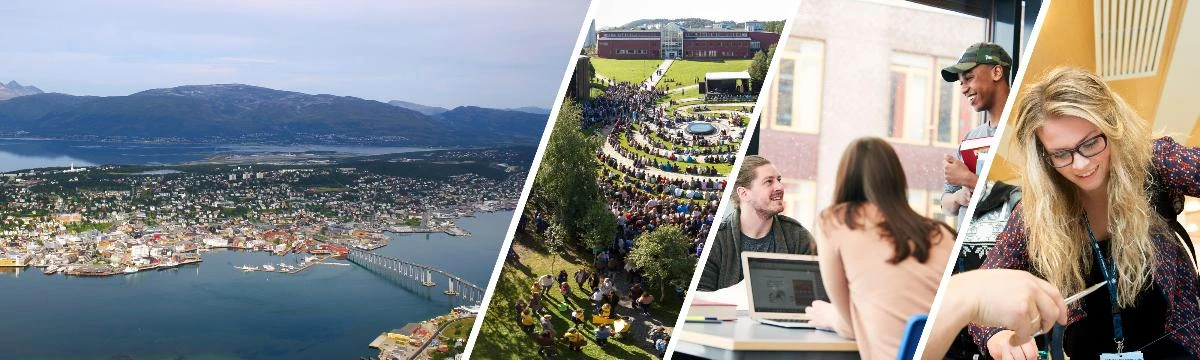
The UiT The Arctic University of Norway campus grounds
1 / 5

Founded 1968, officially opened by King Olav V 1972.

A State institution enjoying considerable autonomy in both academic and financial matters. Financed primarily by the government.

Merged with Tromso University College 2009. Formerly known as University of Tromsø until merger with the University College of Finmark 2013, then merged with Narvik University College (Høgskolen i Narvik) and Harstad University College (Høgskolen i Harstad) in 2016

Location & Contact

UiT The Arctic University of Norway's coordinates, postal address, and the contact channels admissions teams respond on. Campus tour bookings often have their own page distinct from general contact channels.

Address: PO Box 6050 Langnes
Postal Code: 9037
Social Media:

Academic Details

UiT The Arctic University of Norway's academic structure, enrolment numbers, and accreditation context are gathered below. Together they describe how the institution operates beyond the surface-level overview.

Academic Year: August to June (August-December; January-June)
Accrediting Agency: Ministry of Education and Research (Kunnskapsdepartementet); Norwegian Agency for Quality Assurance in Education (Nasjonalt organ for kvalitet i utdanningen – NOKUT)
Admission Requirements: Secondary school certificate (examen artium) or recognized equivalent
Total Students: 11,759
Full-Time Academic Staff: 2,908

Degrees

Also Technological Programmes in Industrial Mathematics, Computer Science, Molecular Biotechnology, Electrical Engineering, Space Geophysics; Professional Degree Studies in Medicine, Psychology (6 yrs), Odonthology, Pharmacy, Law (5 yrs); One-year Studies in Library Studies, Foundation Course in Medicine; Postgraduate Certificate in Education (1 yr)

Bachelor's 29 programs

Bachelor's programmes build foundational expertise, preparing graduates for entry-level professional roles and further postgraduate study.

  • Aquaculture
  • Archaeology
  • Art History
  • Biology
  • Business Administration
  • Business and Commerce
  • Chemistry
  • Classical Languages
  • Computer Science
  • Cultural Studies
  • Economics
  • Educational Sciences
  • Fishery
  • Geology
  • Health Administration
  • History
  • Information Management
  • Literature
  • Mathematics
  • Modern Languages
  • Philosophy
  • Physics
  • Psychology
  • Religious Studies
  • Russian
  • Social Policy
  • Sociology
  • Statistics
  • Transport Economics
Master's 40 programs

Master's programmes develop advanced specialised expertise, suited to senior industry positions and applied research.

  • Acting
  • Adult Education
  • Aquaculture
  • Archaeology
  • Art History
  • Biology
  • Business Administration
  • Business and Commerce
  • Chemistry
  • Coastal Studies
  • Computer Science
  • Cultural Studies
  • Economics
  • Educational Research
  • Fishery
  • Geology
  • Health Sciences
  • History
  • Indigenous Studies
  • Information Management
  • Literature
  • Marketing
  • Mathematics
  • Medicine
  • Medieval Studies
  • Modern Languages
  • Natural Resources
  • Nordic Studies
  • Peace and Disarmament
  • Philosophy
  • Physics
  • Political Sciences
  • Public Health
  • Religious Studies
  • Secondary Education
  • Social Policy
  • Sociology
  • Special Education
  • Statistics
  • Visual Arts
Other 4 programs
  • Arts and Humanities
  • Law
  • Medicine
  • Social Sciences

Faculties & Divisions

Below: the faculties and divisions inside UiT The Arctic University of Norway. Faculty member affiliations sometimes span multiple units, particularly for interdisciplinary scholars.
Peace Studies (CPS) (Centre) 1 subject offered

Specialisations & Subjects

  • International Studies
Sami Studies (Centre) 1 subject offered

Specialisations & Subjects

  • Nordic Studies
Women's and Gender Research (Centre) 1 subject offered

Specialisations & Subjects

  • Gender Studies
Biosciences, Fisheries and Economics (Faculty) 8 subjects offered

Specialisations & Subjects

  • Aquaculture
  • Biological and Life Sciences
  • Business and Commerce
  • Economics
  • Fishery
  • Industrial and Production Economics
  • Leadership
  • Marine Biology

Common Career Paths

  • Economist
  • Policy Analyst
  • Financial Consultant

Illustrative career directions for this field; specific outcomes depend on programme and student choices.

Engineering Science and Technology (Faculty) 7 subjects offered

Specialisations & Subjects

  • Building Technologies
  • Civil Engineering
  • Computer Engineering
  • Computer Science
  • Electrical Engineering
  • Industrial Engineering
  • Safety Engineering

Common Career Paths

  • Engineer
  • Project Manager
  • Technical Consultant

Illustrative career directions for this field; specific outcomes depend on programme and student choices.

Fine Arts (Faculty) 5 subjects offered

Specialisations & Subjects

  • Dance
  • Fine Arts
  • Music
  • Theatre
  • Writing

Common Career Paths

  • Artist
  • Curator
  • Art Educator

Illustrative career directions for this field; specific outcomes depend on programme and student choices.

Health Sciences (Faculty) 12 subjects offered

Specialisations & Subjects

  • Biomedicine
  • Community Health
  • Dentistry
  • Ergotherapy
  • Health Sciences
  • Medicine
  • Nursing
  • Pharmacy
  • Physical Therapy
  • Psychology
  • Public Health
  • Radiology

Common Career Paths

  • Research Scientist
  • Lab Technician
  • Analyst

Illustrative career directions for this field; specific outcomes depend on programme and student choices.

Humanities, Social Sciences and Education (Faculty) 23 subjects offered

Specialisations & Subjects

  • Anthropology
  • Archaeology
  • Archiving
  • Art History
  • Classical Languages
  • Comparative Literature
  • Education
  • English
  • Finnish
  • French
  • German
  • Greek
  • History
  • Latin
  • Library Science
  • Linguistics
  • Nordic Studies
  • Philosophy
  • Political Sciences
  • Religious Studies
  • Russian
  • Sociology
  • Teacher Training

Common Career Paths

  • Teacher
  • Educational Administrator
  • Curriculum Specialist

Illustrative career directions for this field; specific outcomes depend on programme and student choices.

Law (Faculty) 1 subject offered

Specialisations & Subjects

  • Law

Common Career Paths

  • Lawyer
  • Legal Consultant
  • Compliance Officer

Illustrative career directions for this field; specific outcomes depend on programme and student choices.

Science and Technology (Faculty) 9 subjects offered

Specialisations & Subjects

  • Biology
  • Chemistry
  • Civil Security
  • Engineering
  • Geology
  • Information Technology
  • Mathematics and Computer Science
  • Physics
  • Statistics

Common Career Paths

  • Research Scientist
  • Lab Technician
  • Analyst

Illustrative career directions for this field; specific outcomes depend on programme and student choices.

Sports, Tourism and Social Work (Faculty) 3 subjects offered

Specialisations & Subjects

  • Social Work
  • Sports
  • Tourism

Common Career Paths

  • Tour Operator
  • Hospitality Manager
  • Travel Consultant

Illustrative career directions for this field; specific outcomes depend on programme and student choices.

Barents (Institute) 1 subject offered

Specialisations & Subjects

  • Marine Science and Oceanography

Programs Offered

UiT The Arctic University of Norway's teaching programmes are listed below — search or scan by level. International student eligibility varies by programme — some require additional language or visa-pathway checks.

Master's Degree

16 programmes

There are 16 programmes to choose from at UiT The Arctic University of Norway for graduates, aimed at advanced expertise, a career change, or a stepping stone toward doctoral research.

Industrial Engineering - Master 2 years 120 ECTS credits English
NB! Minor changes to the study plan may occur due to ongoing work with the study portfolio at UiT. A Master of Science degree in Industrial Engineering will provide students with the knowledge and capabilities to use appropriate techniques, skills, and tools to identify, formulate, analyze, and solve complex problems in both engineering and management. With normal progress, a student will be able to obtain a master degree after two years, corresponding to 120 credits. If the student wants to combine the master study with work in an external company, it is possible to extend the program to three or four years. A customized education plan will then be suggested. After finishing this education, students will have a solid foundation to enter a variety of positions at global base. The typical positions are senior engineer, project managers, developers, consultants, managers and researchers. Many of our former students are holding managerial or senior research positions in public organizations or private companies. What sets our program apart is its unwavering commitment to sustainability, resilience, and human-centered systems and technologies. As a student, you'll have exclusive access to state-of-the-art manufacturing equipment, including Robots, Cobots, Autonomous vehicles, Hybrid and metal printers, Virtual and augmented reality systems, and much more. Historically, our M.Sc program has attracted a diverse and dynamic cohort of students from around the globe. They have excelled in both management and advanced technical engineering roles, making them highly sought-after in the job market. Join us on this transformative journey, where innovation and excellence meet to shape the future of industrial engineering. Apply now to become a part of our vibrant community of aspiring leaders!"
Duration: 2 years
Credits: 120 ECTS credits
Indigenous Studies - master 2 years 120 ECTS credits English
The Centre for Sami Studies offers a two-year full-time master's programme in Indigenous Studies (MIS). The programme is multidisciplinary within social sciences and humanities, and rootet in research conducted at UiT regarding the Sami and other Indigenous peoples. The thematic focus of the programme is the historical and contemporary experiences that Indigenous peoples have faced across the globe, and the development of the international Indigenous movement. During the two years of studies, students take five thematic courses focused on key issues in Indigenous studies, and one elective are designed to give a broad base, from which students may choose a relevant research topic for the master's thesis. The thesis work is supervised by a faculty member from the Sami Centre and the other units. Topics are chosen in cooperation with the program coordinator. It is customary to conduct data collection for the master's thesis at the end of the second semester.
Duration: 2 years
Credits: 120 ECTS credits
Geosciences - master 2 years 120 ECTS credits English
The study consists of a Master's Thesis (60 ECTS) as well as mandatory and elective courses (60 ECTS). The number of elective courses varies in regards to topic(s) of study. You can either follow courses at The University Centre in Svalbard, elsewhere in Norway or abroad. The Master`s program in Geosciences is aimed at providing students with a solid in-depth education covering, e.g., marine geosciences, structural geology, petrology, mineralogy, ore geology, sedimentology, quaternary geosciences, petroleum geosciences and geohazards The research undertaken in geology at UiT Arctic University of Norway focuses mainly on fieldwork in Northern Norway, in climate and marine geology with research cruises in the polar areas. We have unique geology right on our doorstep, which offers a special understanding of the processes that continue to shape the earth. Close cooperation with e.g. industry, the public sector and other research institutions ensures that you as a M. Sc. student gain experience in fields relevant for the job market.
Duration: 2 years
Credits: 120 ECTS credits
Fine Art - master 2 years 120 ECTS credits English
The purpose of the study programme, Master of Fine Art is to develop the student's ability to work as a professional artist. The programme aims to reflect the contemporary conceptions of what it means to work as a professional artist and thereby offer students the opportunity to develop their individual ambitions to work professionally in the field of fine arts. As the main objective is to educate artists, the creation of works of art, exhibitions and other artistic expressions constitutes the most important aspects in the programme of study. The programme also provides a foundation for other professional roles in and relating to the field of art.
Duration: 2 years
Credits: 120 ECTS credits
Environmental Law - master 2 years 120 ECTS credits English
Throughout their studies at Uppsala University, University of Eastern Finland and UiT the Arctic University of Norway, NOMPEL students acquire in-depth knowledge of the law on effective management of natural resources, including the protection of biodiversity, and climate change and the energy transition. NOMPEL builds on the expertise at the three partner institutions. Updated course descriptions for the courses taught at the different institutions are available at the respective institution’s website. First semester: Uppsala University (UU) The first semester of the programme, comprising 30 ECTS, is spent in Uppsala. During this semester two themes are addressed. The first is a general introduction to the role of law in the formulation and implementation of environmental policies. This comprises the functions and potentials of different environmental legal instruments and principles, as well as how legislation and legal principles can counteract implementation of environmental objectives and green growth. Students will also learn how international and EU environmental law interact with national law, using Nordic countries as examples, as well as the basic structures and challenges of environmental law making and implementation. The second theme of the first semester is more substantive and relates to the effective management of natural resources, including the protection of biodiversity. The objective is to analyse the relation between the management of natural resources (forest, water, wind etc.) and the interest of conserving biodiversity, as stipulated in international law, EU law and also the law of the Nordic states. This part of the first semester also constitutes the introduction to natural resource management and biodiversity protection, various subfields of which are subject to in depth discussions during subsequent semesters. Second semester: University of Eastern Finland (UEF) The second semester of the programme is spent at the School of Law of the University of Eastern Finland (UEF), Joensuu. The university is home to the Centre for Climate Change, Energy and Environmental Law (CCEEL), which brings together around 80 senior and junior scholars specialised in climate change, energy, natural resources and environmental law. At UEF, NOMPEL students take courses, for a total of 30 ECTS, comprising the following themes: climate change law and policy; international environmental law; green transitions; international forest law; international water law; environmental and social impact assessment. All NOMPEL courses at UEF are taught by international experts, providing unique insights into developments in international, European, and national environmental law. At UEF, NOMPEL students also have access to a host of extracurricular activities organised for all CCEEL Masters students. Third semester: UiT the Arctic University of Norway (UiT) The third semester is spent at UiT the Arctic University of Norway, Tromsø. At UiT you find one of the worlds’ largest research centres for the law of the Sea (Norwegian Centre for the Law of the Sea, NCLOS), devoted to teaching and research on the law of the sea and marine environmental law. The studies at UiT add to and broadens the student’s in-depth knowledge on marine resource management and biodiversity protection and energy and climate change Law. The courses in Tromsø are taught subsequently and gives a total of 30 ECTS. The first course focuses on marine environmental law and sustainable use of living marine resources and includes studies on the protection of biodiversity in marine harvesting, in areas within and beyond national jurisdiction, and offers case studies on regional implementation. The second course provides students with advanced knowledge of the interdependence between climate and energy, including the implications of climate change law for the energy sector, renewable energy, emissions trading and carbon capture and storage. The course will also offer case studies from the Arctic. Fourth semester: The master's thesis The fourth semester is administered by UiT, where the students must register, though students are not required to stay in Tromsø throughout the entire semester. Students will produce an individual master’s thesis on a topic related to the subjects taught in the programme. The topic must be approved by UiT, which will also appoint an academic supervisor. All students are required to attend a mandatory course training students in legal methodology, thesis structuring and writing skills. Each thesis is evaluated and graded by two examiners appointed by UiT.
Duration: 2 years
Credits: 120 ECTS credits
Electrical Engineering - Master 2 years 120 ECTS credits English
The master’s program covers essential and advanced skills within electric energy conversion, electric drives, control methods and power systems for electrical engineers working with the technology for the future. These technologies are critical for the electrification and digitalisation of our society, an important element towards a sustainable future. Important applications are renewable energy generation, energy storage, energy distribution, and electric transport including electric vehicles, ships, and aircrafts. Advanced skills are supported by fundamental knowledge given within electromagnetism, power electronics, programming, power systems, control engineering, measurement system, signal transmission and mathematics. In the third semester, the student can choose to specialise by their choice of electric courses, or exchange to another institution provided that external courses are similar in content and scope to those specified in this program description. See additional information and an overview of mandatory tasks in the individual course descriptions.
Duration: 2 years
Credits: 120 ECTS credits
English Literature - master 2 years 120 ECTS credits English
The master's programme in English literature gives students the opportunity to study a broad range of literary and cultural texts in English, while specializing in an area of their choice under the leadership of a researcher in that field. The English section can offer supervision in English, Irish, American and post-colonial literatures, and is particularly strong in the areas of romanticism, modernism, and contemporary literature.Each year, students are offered courses organized around socially-relevant themes, key literary periods and genres, and/or prominent authors. All master's level courses include training in secondary research and literary theory, practice in close analysis, and feedback on students' written work. In moving from coursework to the master's thesis, students move toward a more specialized focus and more independent research. This research is supported by each student's supervisor and by a series of organized work-in-progress seminars targeting the skills needed for master's-level research.
Duration: 2 years
Credits: 120 ECTS credits
English Acquisition and Multilingualism - master 2 years 120 ECTS credits English
The Master covers graduate level studies in acquisition and multilingualism with English as one of the languages involved. The course work provides a solid grounding in how languages are acquired in different contexts (first, second, third, heritage/minority languages), how multilingualism may influence the course of development in a language, and how it affects not only the languages but also the brains that house them. The Master comprises a course component of 60 ECTS and a thesis of 60 ECTS. The 60 ECTS based on course work should be completed in the first year of study, while the second year (60 ECTS) should be dedicated to writing the thesis.
Duration: 2 years
Credits: 120 ECTS credits
Engineering Design - Master 2 years 120 ECTS credits English
Engineering Design is rooted in engineering science, and you will learn about product design and computational technology applied to challenges related to design, geometry, dynamics, and materials engineering. The Engineering Design program provides students with an understanding of form development and aesthetic design, along with in-depth knowledge of the mathematical and physical principles and methods involved in the design process. Special emphasis is placed on geometry and form, product design and design processes, structural analysis, material selection, and computer-based modeling and simulation. One of the most critical aspects of any product is its ability to withstand the stresses it is designed for. For instance, product shape and material choices must be adapted to extreme heat or cold, large loading conditions, or exposure to electrical or thermal radiation. Sometimes friction needs to be maximized - other times minimized. Flexible hinges (like those on plastic bottle caps) must endure repeated use without breaking. In addition, products often need to meet multiple demands: lightweight, high stiffness, cost-efficiency, or soundproofing. This means that design and material choices must be optimized and sustainably selected. Arctic conditions, such as cold, ice, and snow, are also considered in the design process. A systematic design process requires detailed analysis and calculations, following established processes and techniques that you will learn throughout the program. Advanced engineering problems can be solved using the deep understanding of mathematical and physical theories you will gain during the study in Engineering Design. As part of the program, you will also engage in project work where you will design, calculate, model, simulate, redesign, and create prototypes. Graduating as a Master of Science in Engineering Design, you will have a strong theoretical foundation, making you valuable in any company striving to stay ahead in technological innovation. Core Subjects You will learn systematic methods for selecting the right materials and designing various products and structures. The program places strong emphasis on composite materials, as well as modern and advanced materials and structural systems. In addition, you will study applied mathematics and engineering theory, which are used to model, visualize, simulate, and perform calculations on products and structural components. You will learn how to apply this knowledge to take a product from an idea, through a virtual model, and all the way to a physical prototype, using modern manufacturing techniques such as 3D-printing. *The program is offered at Campus Narvik, with all lectures also available online for remote participation.
Duration: 2 years
Credits: 120 ECTS credits
Aerospace Engineering - master 2 years 120 ECTS credits English
The program is applicable for students with an interest in learning, developing and applying state-of-the-art technology for space-related purposes. This type of technology has many similarities with technologies for other extreme environments, such as arctic regions and subsea, and students with interest in development of technologies in such fields will also find this program relevant. The program covers the following disciplines: • Satellite Communication• Satellite Structures, Materials and Mechanisms• Satellite Data Processing• Systems Engineering• Satellite Power Systems• Embedded Systems• Mathematical Modeling and Simulation• Classical Mechanics• Linear Algebra and Numerical Methods• Control Engineering• Artificial Intelligence and Intelligent Agents See the individual course descriptions for more information about their contents.
Duration: 2 years
Credits: 120 ECTS credits
Contemporary Risk and Crisis Management - master 2 years 120 ECTS credits English
During the first year, students will have compulsory courses to learn about the core debates and perspectives in the fields of societal security, climate change and resilient societies, risk and safety management, crisis, and disaster management, in addition to research methods. This provides students, first, with an overview of the sources and nature of current threats and risks. Moreover, students are provided with theories, methods and strategies on how to manage these threats in different international contexts. This comprehensive and holistic approach provides a global perspective for students of risk and crisis management. The second year focuses on applying these perspectives to research and the Master Thesis project. The thesis projects are designed individually by the students supported by supervisors.
Duration: 2 years
Credits: 120 ECTS credits
Computer Science - master 2 years 120 ECTS credits English
The program builds on skills in basic programming and database systems acquired through a bachelor’s degree (see admission requirements). It will provide you with a deeper and more detailed understanding on computer systems, software architecture and programming. Your master thesis towards the end of the program will allow you to develop a broader skillset within your chosen area of specialization. This master’s program in Computer Science is unique in its very experimental approach with a lot of practical programming exercises and laboratory work. The computer science courses are taught by active researchers and professors and are directly connected to the on-going research projects carried out by the academic staff at the department.
Duration: 2 years
Credits: 120 ECTS credits
Computational chemistry - master 2 years 120 ECTS credits English
Students in the Master in Computational Chemistry program at UiT will acquire advanced knowledge and hands-on skills in the theoretical foundations and computational methods used to model and predict molecular structure, properties, and reactivity. The curriculum emphasizes quantum chemistry, molecular mechanics, and the use of modern scientific software, enabling students to analyze complex chemical systems and gain deep insight into phenomena at the atomic and molecular level. Throughout the program, students will develop the practical ability to carry out quantum chemical and molecular simulations, automate workflows, and interpret computational data using scripting and high-performance computing tools. The coursework and research activities are closely integrated with current scientific challenges, offering opportunities to specialize in areas like catalysis, drug discovery, spectroscopy, and materials science. Graduates will learn how to assess computational results critically, explain and communicate scientific findings, and reflect on the broader implications of molecular modeling in chemical research and sustainable innovation. The program prepares students for doctoral studies or research careers worldwide, blending strong theoretical insight with practical, interdisciplinary problem-solving skills for academia and industry.
Duration: 2 years
Credits: 120 ECTS credits
Biomedicine - master 2 years 120 ECTS credits English
The program will focus on contemporary problems and methods in biomedicine. A recurring theme for the master’s program is “molecular mechanisms in diseases”. This will serve as a unifying thread that connects various courses and subjects. Students will obtain theoretical and practical biomedical knowledge. The program has an interdisciplinary approach integrating fields such as biology, medicine, pharmacolcogy, and biotechnology. The students will be trained in written and oral presentations. Taken together, the students will develop comprehensive knowledge on biomedical research, forming a foundation for developing treatments and strategies to enhance public health.
Duration: 2 years
Credits: 120 ECTS credits
Biology - master 2 years 120 ECTS credits English
The Biology - Master´s program provides opportunities to explore an array of pressing questions within modern biology and emphasize some of society`s challenges regarding management of natural resources and biodiversity. Each of the specializations is strongly linked to ongoing research in our research groups, providing the relevant theoretical background, training in state-of-the-art laboratory and field methods, innovative and critical thinking for problem solving, thesis and publication writing as well as training of presentation and knowledge transfer proficiency. Thus, students will be given the opportunity, and is expected, to actively participate as part of the research collegiate in the research group, the department and with relevant external institutions depending on master thesis and master specialization activity. It is possible to conduct part of the master project in collaboration with external organizations such as Fram Centre Institutes (e.g., Norwegian Polar Institute,Institute of Marine Research,Norwegian Institute for Nature Research (NINA),Norwegian Institute ofBioeconomy Research (NIBIO),Akvaplan-niva, Nofima) and the University centre inSvalbard (UNIS), or other organizations in Norway and abroad. In this case, an internal supervisor at our department of Arctic and Marine Biology, in addition to the external supervisor at the host Institution will be affiliated with the project.
Duration: 2 years
Credits: 120 ECTS credits
Applied Computer Science - Master 2 years 120 ECTS credits English
After completing this study, you will have the prerequisites to develop advanced computer games, virtual reality and create realistic simulations, such as collisions, rigid bodies, inverse kinematics and fluid mechanics. As a student you will benefit from the close bonds Narvik has to national and international research partners and our professional lab facilities. Throughout the studies you will build a strong and competitive fundament as a technical programmer and developer of advanced software and learning systems. The teaching activities are driven by active research groups within the fields of AI, geometric modeling and applied mathematics. This can serve as a basis for: Artificial intelligence (AI), machine learning and intelligent agentsGeometric modeling, virtual reality, computer graphics and animationsObject-oriented programming, meta- and GPU programmingThe development of large software systems, and massive multipurpose systems After completing the diploma thesis on a selected topic, you are equipped with a comprehensive knowledge set in dealing with technical and managerial challenges, which makes you attractive to companies within many industries. Former students have generally found exciting opportunities as experts or leaders in the most technologically advanced companies or within academia.
Duration: 2 years
Credits: 120 ECTS credits

Associate, Certificate & Other Qualifications

1 programme

UiT The Arctic University of Norway offers 1 programme as shorter-cycle and preparatory qualifications, a flexible tier for skills-focused learners or those bridging into undergraduate study.

Arctic Nature Guide - one year programme 1 year 60 ECTS credits English
This international study program will provide candidates with the opportunity to experience Svalbard’s nature and culture at close hand by combining arctic friluftsliv with a practical program in tourism and guiding. The study program is a full-time program comprising 60 ECTS credits. The study program is given on Svalbard. The study program is a given in cooperation with UNIS – The University Center in Svalbard. The study program is according to the profession standard defined by the Norwegian Nature Guide Association (NNGA). By fulfilling the study program and complete the required amount of nature guide work experience, the candidates are in a position of becoming members of NNGA and an approved Arctic Nature Guide and International Mountain Leader (UIMLA) by the Norwegian Nature Guide Association. Arctic Nature guides educated in this study program have work limitations according to these frames of nature; an Arctic Nature Guide do not have competence to work in nature where there is a particular risk of falls with serious consequences or terrain steeper than 30 degrees on layered winter snow. The courses contains a large degree of activity and long outdoor expeditions. It is therefore required that the students are in good physical shape and able to carry equipment for a multidays expeditions in the arctic. The candidates must be able to maintain a physical and mental surplus during long and cold outdoor excursions sleeping in tent and snow caves. Most of the field excursions involve Nordic mountain skiing, so candidates must be experienced skiers and be physically fit for Nordic mountain skiing over long distances. Candidates must have their own personal equipment in accordance with the individual equipment list.
Duration: 1 year
Credits: 60 ECTS credits

How to apply to UiT The Arctic University of Norway

The standard application path for UiT The Arctic University of Norway, broken into five practical steps with the documents and channels you will need at each stage.

  1. 1
    Research programmes at UiT The Arctic University of Norway

    UiT The Arctic University of Norway's catalogue includes 17 programmes. Browse by level, identify candidates matching your prior qualifications, and note their entry requirements for the next step.

  2. 2
    Review admissions criteria

    Entry requirements vary by programme and degree level. Verify academic minimums, language tests (if international), and any additional documents required for UiT The Arctic University of Norway's admissions process.

  3. 3
    Gather supporting documents

    Typical documents include academic transcripts, identity proof (passport or national ID), language proficiency test scores, a personal statement or motivation letter, and recommendation letters. International applicants should account for translation and notarisation time.

  4. 4
    Lodge your application

    Submit your completed application through UiT The Arctic University of Norway's official website at en.uit.no. Most institutions use an online portal — register an account, complete the application form, and upload your prepared documents. Keep copies of all submissions and confirmation receipts.

  5. 5
    Confirm receipt and track progress

    Follow up to confirm your application was received and is being processed. Admissions teams may request interviews or additional documents — respond promptly to keep your application active.

Frequently Asked Questions about UiT The Arctic University of Norway

Quick answers to the most common questions about UiT The Arctic University of Norway — covering location, founding, ranking, programmes, and admissions context.

Where is UiT The Arctic University of Norway located?

UiT The Arctic University of Norway is located in Tromsø, Norway.

What is UiT The Arctic University of Norway's control type?

UiT The Arctic University of Norway is a public institution.

What is the student enrolment at UiT The Arctic University of Norway?

Student enrolment at UiT The Arctic University of Norway is around 11,759.

Where does UiT The Arctic University of Norway stand in university rankings?

It ranks #689 globally and #4 in Norway.

What programmes are available at UiT The Arctic University of Norway?

Programmes at UiT The Arctic University of Norway cover bachelor's and master's programmes.

Who recognises UiT The Arctic University of Norway?

Yes, UiT The Arctic University of Norway is recognised by Ministry of Education and Research (Kunnskapsdepartementet); Norwegian Agency for Quality Assurance in Education (Nasjonalt organ for kvalitet i utdanningen – NOKUT).

What is UiT The Arctic University of Norway's official website?

You can find UiT The Arctic University of Norway online at en.uit.no.

Universities Often Compared with UiT The Arctic University of Norway

Peer universities to UiT The Arctic University of Norway by academic scale and prestige are listed below. These often share comparable faculty depth, research output, and graduate outcomes, making the comparison more meaningful than ranking alone.

Explore More Universities in Norway

Free calculators and converters to plan your study-abroad journey.

Latest Articles

Fresh guides and advice for studying abroad.

View all →
System Share
Copy Link
More Share Options