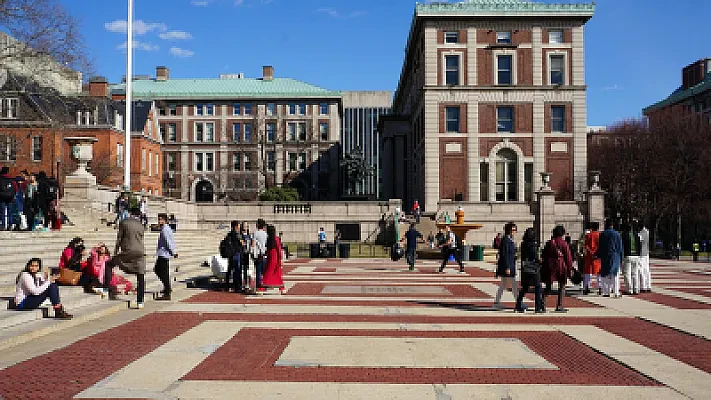
Universitetet i Bergen
Bergen, Norway • Founded 1946 • World Rank #431
Updated May 2026
Overview

Established in 1946, the Universitetet i Bergen (University of Bergen) is a non-profit public higher education institution located in the urban setting of the medium city of Bergen (population range of 250,000-499,999 inhabitants), Hordaland.
Officially recognized by the Kunnskapsdepartementet, Norge (Ministry of Education of Norway), Universitetet i Bergen (UiB) is a large-sized coeducational Norwegian higher education institution. Universitetet i Bergen (UiB) offers courses and programs leading to officially recognized higher education degrees such as bachelor's degrees, master's degrees and doctorate degrees in several areas of study.
This 78-year-old Norwegian higher-education institution has a selective admission policy based on students' past academic records and grades. International applicants are eligible to apply for enrollment.
UiB also provides several academic and non-academic facilities and services to students including a library, sports facilities, study abroad and exchange programs, as well as administrative services.
Location & Contact
Need to mail, call, or visit Universitetet i Bergen? Address, phone, and digital contact options below. Religious and cultural accommodation queries route through specific student services.
Academic Details
Universitetet i Bergen's student-to-faculty composition and recognition standing are listed below. Student support staff (advisers, counsellors) are typically separate from academic staff and often uncounted here.
Degrees
Universitetet i Bergen offers degrees across multiple levels. Full-time, part-time, and sandwich (with placement year) modes change total time commitment and total cost meaningfully.
Bachelor's 14 programs
Bachelor's programmes build foundational expertise, preparing graduates for entry-level professional roles and further postgraduate study.
- Arts and Humanities
- Dentistry
- Design
- Fine Arts
- Health Sciences
- Interior Design
- Law
- Mathematics and Computer Science
- Medicine
- Music
- Natural Sciences
- Performing Arts
- Religion
- Social Sciences
Master's 13 programs
Master's programmes develop advanced specialised expertise, suited to senior industry positions and applied research.
- Arts and Humanities
- Dentistry
- Design
- Education
- Fine Arts
- Health Sciences
- Interior Design
- Law
- Mathematics and Computer Science
- Medicine
- Natural Sciences
- Performing Arts
- Social Sciences
Other 10 programs
- Arts and Humanities
- Dentistry
- Health Sciences
- Law
- Mathematics and Computer Science
- Medicine
- Music
- Natural Sciences
- Psychology
- Social Sciences
Faculties & Divisions
All faculties operate under Kunnskapsdepartementet, Norge.
Geobiology (Centre) 2 subjects offered
Specialisations & Subjects
- Natural Sciences
- Technology
Common Career Paths
- Biologist
- Lab Technician
- Research Scientist
Illustrative career directions for this field; specific outcomes depend on programme and student choices.
International Health (Centre) 1 subject offered
Specialisations & Subjects
- Health Sciences
Intervention Science in Maternal and Child Health (Centre) 4 subjects offered
Specialisations & Subjects
- Community Health
- Health Sciences
- Paediatrics
- Social and Preventive Medicine
Common Career Paths
- Research Scientist
- Lab Technician
- Analyst
Illustrative career directions for this field; specific outcomes depend on programme and student choices.
Sciences and Humanities (Centre) 2 subjects offered
Specialisations & Subjects
- Arts and Humanities
- Natural Sciences
Common Career Paths
- Research Scientist
- Lab Technician
- Analyst
Illustrative career directions for this field; specific outcomes depend on programme and student choices.
Women's and Gender Research (Centre) 2 subjects offered
Specialisations & Subjects
- Gender Studies
- Women's Studies
Fine Art, Music and Design (Faculty) 5 subjects offered
Specialisations & Subjects
- Design
- Fine Arts
- Interior Design
- Music
- Visual Arts
Common Career Paths
- Designer
- Creative Director
- UX Researcher
Illustrative career directions for this field; specific outcomes depend on programme and student choices.
Humanities (Faculty) 10 subjects offered
Specialisations & Subjects
- Archaeology
- Arts and Humanities
- Classical Languages
- Comparative Literature
- History
- Linguistics
- Literature
- Modern Languages
- Music
- Philosophy
Common Career Paths
- Researcher
- Editor
- Cultural Analyst
Illustrative career directions for this field; specific outcomes depend on programme and student choices.
Law (Faculty) 1 subject offered
Specialisations & Subjects
- Law
Common Career Paths
- Lawyer
- Legal Consultant
- Compliance Officer
Illustrative career directions for this field; specific outcomes depend on programme and student choices.
Mathematics and Natural Sciences (Faculty) 11 subjects offered
Specialisations & Subjects
- Astronomy and Space Science
- Biological and Life Sciences
- Chemistry
- Computer Science
- Earth Sciences
- Marine Science and Oceanography
- Mathematics
- Meteorology
- Natural Sciences
- Physics
- Statistics
Common Career Paths
- Data Analyst
- Statistician
- Actuary
Illustrative career directions for this field; specific outcomes depend on programme and student choices.
Medicine and Dentistry (Faculty) 2 subjects offered
Specialisations & Subjects
- Dentistry
- Medicine
Common Career Paths
- Physician
- Medical Researcher
- Clinical Specialist
Illustrative career directions for this field; specific outcomes depend on programme and student choices.
Psychology (Faculty) 2 subjects offered
Specialisations & Subjects
- Educational Sciences
- Psychology
Common Career Paths
- Psychologist
- Counsellor
- Clinical Researcher
Illustrative career directions for this field; specific outcomes depend on programme and student choices.
Social Sciences (Faculty) 7 subjects offered
Specialisations & Subjects
- Anthropology
- Communication Studies
- Economics
- Geography (Human)
- Political Sciences
- Social Sciences
- Sociology
Common Career Paths
- Researcher
- Policy Analyst
- Social Worker
Illustrative career directions for this field; specific outcomes depend on programme and student choices.
Birkeland Centre for Space Science (Research Division) 1 subject offered
Specialisations & Subjects
- Astronomy and Space Science
Common Career Paths
- Research Scientist
- Lab Technician
- Analyst
Illustrative career directions for this field; specific outcomes depend on programme and student choices.
Bjerknes Centre for Climate Research (Research Division) 1 subject offered
Specialisations & Subjects
- Meteorology
Cancer Biomarkers (CCBIO) (Research Division) 2 subjects offered
Specialisations & Subjects
- Medicine
- Microbiology
Centre for Research-based Innovation in Sustainable Fishing and Pre-processing technology (CRISP) (Research Division) 1 subject offered
Specialisations & Subjects
- Marine Science and Oceanography
K.G.Jebsen Centres (Research Division) 4 subjects offered
Specialisations & Subjects
- Diabetology
- Health Sciences
- Neurology
- Psychiatry and Mental Health
Sea Lice (Research Division) 2 subjects offered
Specialisations & Subjects
- Marine Science and Oceanography
- Molecular Biology
The Michelsen Centre for Industrial Measurement Science and Technology (MIMT) (Research Division) 1 subject offered
Specialisations & Subjects
- Marine Science and Oceanography
Common Career Paths
- Research Scientist
- Lab Technician
- Analyst
Illustrative career directions for this field; specific outcomes depend on programme and student choices.
UiB Global (Research Division) 3 subjects offered
Specialisations & Subjects
- Health Sciences
- Natural Sciences
- Social Sciences
Programs Offered
Each programme at Universitetet i Bergen is grouped by the degree it leads to. New programmes can take 6–12 months to propagate through search engines, so the live catalogue here is the authoritative list.
136 programmes on record. Each level below shows a sample. Compare these on the programs page All programs in Norway
Bachelor's Degree 68 programmes
Showing 10 of 68.
Master's Degree 51 programmes
Showing 10 of 51.
Certificate 11 programmes
Showing 10 of 11.
Other Programs 6 programmes
How to apply to Universitetet i Bergen
Application guidance for Universitetet i Bergen, structured as five practical steps with attention to documents and admissions communication.
-
1
Browse the programme catalogue
Universitetet i Bergen's catalogue includes 136 programmes. Browse by level, identify candidates matching your prior qualifications, and note their entry requirements for the next step.
-
2
Check eligibility for your chosen programme
Entry requirements vary by programme and degree level. Verify academic minimums, language tests (if international), and any additional documents required for Universitetet i Bergen's admissions process.
-
3
Get your documents ready
Typical documents include academic transcripts, identity proof (passport or national ID), language proficiency test scores, a personal statement or motivation letter, and recommendation letters. International applicants should account for translation and notarisation time.
-
4
Apply through the official channel
Submit your completed application through Universitetet i Bergen's official website at www.uib.no. Most institutions use an online portal — register an account, complete the application form, and upload your prepared documents. Keep copies of all submissions and confirmation receipts.
-
5
Reach out and track your application
Follow up to confirm your application was received and is being processed. Reach the institution by phone at +47 55 58 00 00. Admissions teams may request interviews or additional documents — respond promptly to keep your application active.
Frequently Asked Questions about Universitetet i Bergen
Common questions about Universitetet i Bergen answered concisely, with each answer grounded in the institution's published data.
When was Universitetet i Bergen founded?
Universitetet i Bergen was established in 1946 (approximately 80 years ago).
In which city is Universitetet i Bergen?
Universitetet i Bergen is based in Bergen, Norway.
Is Universitetet i Bergen public or private?
Universitetet i Bergen is a public institution.
How many students study at Universitetet i Bergen?
Universitetet i Bergen has approximately 15,000-19,999 students.
What is Universitetet i Bergen's ranking?
Universitetet i Bergen holds rank #431 globally and #3 in Norway.
What programmes are available at Universitetet i Bergen?
Universitetet i Bergen delivers bachelor's and master's programmes across its academic units.
Is Universitetet i Bergen officially recognised?
Yes, Universitetet i Bergen is recognised by Ministry of Education and Research (Kunnskapsdepartementet); Norwegian Agency for Quality Assurance in Education (Nasjonalt organ for kvalitet i utdanningen – NOKUT).
Where can I learn more about Universitetet i Bergen?
Universitetet i Bergen's official website is www.uib.no.
Members of European University Association (EUA)
Membership in European University Association (EUA) signals a shared commitment to academic quality and cross-institutional exchange. These other members of the same network sit alongside Universitetet i Bergen in that ecosystem, and may offer mobility benefits or programme partnerships.




Faculties at nearby universities
Students considering Universitetet i Bergen often compare it against universities in the same region. Below are nearby institutions with comparable academic departments and student support structures, useful for cross-shortlisting.


Where Else to Study Linguistics & Language Studies
Programme-level scholarships for Linguistics & Language Studies students vary substantially across Norway institutions. Often the less-marketed scholarships are the easiest to secure for qualified applicants.


Universities Compared with Universitetet i Bergen
Below: institutions that students typically weigh against Universitetet i Bergen when finalising their shortlist. The comparison set reflects scale and prestige; specific programme fit still needs separate verification.



Studying in Norway: guides and resources


Spotted something outdated or missing?
Help us keep this page accurate — it takes about 30 seconds.