Københavns Universitet official logo

Københavns Universitet

Copenhagen, Denmark Founded 1479 World Rank #76

Overview

English Name: University of Copenhagen
Local Name: University of Copenhagen
Acronyms: KU
Founded: 1479
Control Type: Public
Entity Type: Non-profit
World Rank: #76
Rank in Denmark: #1
Motto: Coelestem adspicit lucem
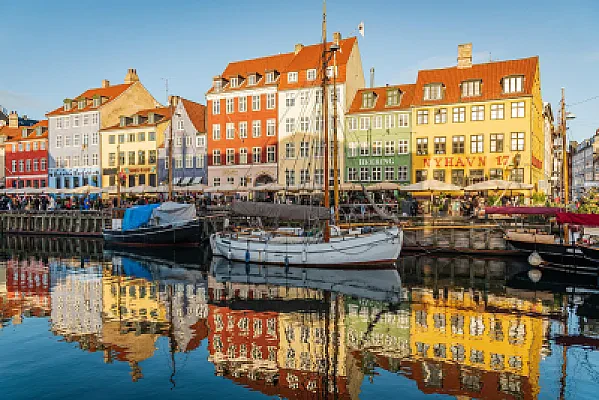
Front view of Københavns Universitet
1 / 5

Established in 1479, the Københavns Universitet (University of Copenhagen) is a non-profit public higher education institution located in the urban setting of the metropolis of Copenhagen (population range of 1,000,000-5,000,000 inhabitants), Capital Region of Denmark.

This institution also has a branch campus in Tåstrup and Fredensborg. Officially recognized by the Uddannelses- og Forskningsministeriet (Ministry of Higher Education and Science of Denmark), Københavns Universitet (KU) is a very large-sized coeducational Danish higher education institution.

Københavns Universitet (KU) offers courses and programs leading to officially recognized higher education degrees such as bachelor's degrees, master's degrees and doctorate degrees in several areas of study. This 545-year-old Danish higher-education institution has a selective admission policy based on students' past academic records and grades.

International applicants are eligible to apply for enrollment.

KU also provides several academic and non-academic facilities and services to students including a library, sports facilities, financial aids and/or scholarships, study abroad and exchange programs, as well as administrative services.

Location & Contact

Below are the location pin, postal details, and primary contact methods for Københavns Universitet. International applicants should account for postal mail processing time when sending physical documents.

Address: Krystalgade 25
Postal Code: 1172
Phone: +45 3532 2626
Fax: +45
Social Media:

Academic Details

Below are the institutional metrics for Københavns Universitet: scale, staffing balance, and accreditation context. These shape the academic experience more than headline rankings often suggest.

Academic Year: September to June (September-January; February-June)
Accrediting Agency: Ministry of Higher Education and Science
Admission Requirements: Secondary school certificate (studentereksamen), or foreign equivalent, and entrance examination in Danish language. Bachelor’s degree for admission into Master's programmes. Foreign exchange and guest students should be enrolled at a University in their home country or elsewhere abroad during their proposed stay at the University of Copenhagen
Student Enrollment: 35
Academic Staff Range: over-5,000
Campus Setting: Urban
Memberships & Networks
European University Association (EUA) International Alliance of Research Universities (IARU) League of European Universities (LERU) 4EU+

Academic Structures

Københavns Universitet's academic structure — the schools, colleges, and divisions inside the institution — is laid out below. Use this map when figuring out which faculty owns the programme you want.

Unit 6 items
  • Faculty of Health Sciences
  • Faculty of Humanities
  • Faculty of Law
  • Faculty of Science
  • Faculty of Social Sciences
  • Faculty of Theology

Degrees

Bachelor programmes taught in Danish. Many Master programmes taught in English

Bachelor's 9 programs

Bachelor's programmes build foundational expertise, preparing graduates for entry-level professional roles and further postgraduate study.

  • Arts and Humanities
  • Health Sciences
  • Law
  • Medical Science
  • Medicine
  • Natural Sciences
  • Social Sciences
  • Theology
  • Veterinary Science
Master's 9 programs

Master's programmes develop advanced specialised expertise, suited to senior industry positions and applied research.

  • Arts and Humanities
  • Health Sciences
  • Law
  • Medical Science
  • Natural Sciences
  • Political Sciences
  • Social Sciences
  • Theology
  • Veterinary Science

Faculties & Divisions

All faculties operate under Uddannelses- og Forskningsministeriet.

Health and Medical Sciences (Faculty) 5 subjects offered

Specialisations & Subjects

  • Dentistry
  • Medicine
  • Pharmacology
  • Public Health
  • Veterinary Science

Common Career Paths

  • Physician
  • Clinical Researcher
  • Healthcare Specialist

Illustrative career directions for this field; specific outcomes depend on programme and student choices.

Humanities (Faculty) 11 subjects offered

Specialisations & Subjects

  • Arts and Humanities
  • Cultural Studies
  • English
  • Germanic Languages
  • Information Sciences
  • Library Science
  • Linguistics
  • Media Studies
  • Nordic Studies
  • Regional Studies
  • Romance Languages

Common Career Paths

  • Researcher
  • Editor
  • Cultural Analyst

Illustrative career directions for this field; specific outcomes depend on programme and student choices.

Law (Faculty) 1 subject offered

Specialisations & Subjects

  • Law

Common Career Paths

  • Lawyer
  • Legal Consultant
  • Compliance Officer

Illustrative career directions for this field; specific outcomes depend on programme and student choices.

Science (Faculty) 13 subjects offered

Specialisations & Subjects

  • Biology
  • Chemistry
  • Computer Science
  • Environmental Studies
  • Food Science
  • Mathematics
  • Nanotechnology
  • Natural Resources
  • Natural Sciences
  • Nutrition
  • Physics
  • Science Education
  • Sports

Common Career Paths

  • Research Scientist
  • Lab Technician
  • Analyst

Illustrative career directions for this field; specific outcomes depend on programme and student choices.

Social Sciences (Faculty) 6 subjects offered

Specialisations & Subjects

  • Anthropology
  • Economics
  • Political Sciences
  • Psychology
  • Social Sciences
  • Sociology

Common Career Paths

  • Researcher
  • Policy Analyst
  • Social Worker

Illustrative career directions for this field; specific outcomes depend on programme and student choices.

Theology (Faculty) 3 subjects offered

Specialisations & Subjects

  • African Studies
  • Religious Studies
  • Theology

Common Career Paths

  • Religious Educator
  • Pastoral Counsellor
  • Faith Community Leader

Illustrative career directions for this field; specific outcomes depend on programme and student choices.

Programs Offered

The programmes you can apply for at Københavns Universitet are grouped by degree level. Programme-level accreditation (separate from institutional) matters for regulated professions like law, medicine, and engineering.

Associate, Certificate & Other Qualifications

137 programmes

Beyond the main degree tiers, Københavns Universitet runs 137 programmes as certificates, diplomas, and associate or foundation programmes — useful for upskilling or as a pathway to bachelor's entry.

University of Copenhagen, Frederiksberg Campus English
University of Copenhagen, Maersk Tower English
University of Copenhagen, South Campus English
South Campus English
The South campus is located just south of the city centre and has a vibrant student community. The campus is home to the Faculty of Humanities, the Faculty of Law and the Faculty of Theology.
City Campus English
Studying at City Campus means being downtown Copenhagen. Everything the city has to offer is right outside the door. Nevertheless, it is easy to escape city noise in order to study or relax in one of the many beautiful, surrounding parks.The campus area accommodates the Faculty of Social Sciences and a part of the Faculty of Health and Medical Sciences.
The Royal School of Library and Information Science English
North Campus English
Sino-Danish Center, Beijing, China English
The Sino-Danish Center for Education and Research (SDC) is a joint project on education and research between the eight Danish universities, the Danish Ministry of Science, Innovation and Higher Education, the University of the Chinese Academy of Sciences (UCAS) and the Chinese Academy of Sciences (CAS).Sino-Danish Center is located at UCAS' Zhongguancun Campus, centrally located in Beijing.
Frederiksberg Campus English
The Frederiksberg Campus houses part of the Faculty of Science with areas of studies including natural and biosciences as well as part of the School of Veterinary Medicine and Animal Science at the Faculty of Health and Medical Sciences, including the University Hospital for Companion Animals. It is located a few kilometres west of the city centre in beautiful green surroundings. Frederiksberg is a popular residential area. The Frederiksberg Campus area includes beautful gardens with many facilities for students, including a student-run café in an old greenhouse.
University of Copenhagen English
IT and Cognition Humanities & Cultural Studies 2 years English
Candidates will be interesting to industry as well as research, and are popular in both places. They typically work with cognitive technologies in the the industry or do frontier research in image and language processing or related areas.The reason is, of course, that computational modeling becomes more and more important in research, and that in order to create good IT products it is important to know what, cognitively speaking, is easy and difficult for people to understand. This knowledge can help create information and communication technology that can make users' daily lives and workflows easier and facilitate the implementation of new products to achieve greater efficiency and user satisfaction.Our past students have jobs at places like SAS Institute, Gallup, Textkernel, or continue their studies in PhD programs at universities in Denmark or elsewhere.
Duration: 2 years
Forest and Nature Management Agriculture & Environmental Sciences 2 years English
Graduates from the MSc programme in Forest and Nature Management are sought-after, and the programme offers plenty of opportunities for making a career in Denmark or internationallyGraduates find employment in both the public and private sectors and can work with forestry, nature and the environment worldwide, for instance:
Duration: 2 years
Anthropology Humanities & Cultural Studies 2 years English
As an anthropologist, you have a sharp sense of what is important to people; therefore, anthropologists often work as consultants, coordinators, project leaders or office managers with responsibility for projects.The following is a list of some of the career opportunities available for anthropologists:
Duration: 2 years
African studies 2 years English
Having gained the knowledge, skills and competences noted above, graduates in African Studies may pursue – and have pursued – careers in a fairly wide range of professional fields.These include careers in: international development and/or humanitarian organisations, be these bilateral, multilateral or non-governmental; various kinds of national government agencies such as those concerned with foreign affairs, the environment, migration and refugees, security, social development and so on; different arenas within the private sector such as business investment, consultancy, entrepreneurship or corporate social responsibility; the media or other spheres of information and communication; or continuing in academia as a researcher and/or teacher.
Duration: 2 years
Statistics 2 years English
Complex statistical problems arise in almost all types of research, and advanced statistical methodologies are widely used. Consequently, statisticians are in high demand as partners and team members in many projects.The current unemployment rate amongst statisticians is zero. Statisticians find jobs in, for instance: Some statisticians are employed at universities as scientists or teachers. This requires you to get a PhD. Others work as consultants or as private entrepreneurs.
Duration: 2 years
Economics Humanities & Cultural Studies 2 years English
The recent economic crisis has increased the demand for skilled economists enormously. There are infinite career opportunities for an MSc in Economics, such as:
Duration: 2 years
Global Health 2 years English
The MSc in Global Health is aimed at job functions related to a diverse national and international sector that holds many opportunities for professional jobs as advisors, consultants and programme managers.Sectors of particular relevance are:
Duration: 2 years
Global Development Law 2 years English
The study programme paves the way for several new types of employment depending on your specialisation during the second year of the programme.Many candidates will go on to jobs in private companies which interact with the Global South (Africa, Asia and Latin America). Other graduates will find employment in institutions and organisations engaged in development work and more international issues.There is considerable potential for Danish production companies, service businesses and consultants in the global markets, especially in the BRICS countries (Brazil, Russia, India, China, South Africa) and in the new growth countries, for example Indonesia, Mexico, Turkey and several African countries. Graduates of this new study programme can help realise this potential.The programme can also lead to a research career within global development.
Duration: 2 years
Security Risk Management Law 2 years English
Upon completing the programme, graduates will be able to work in both private and public organisations in jobs focusing on development, evaluation and management of projects regarding organisational and political change. Potential jobs for graduates of the MSc in Security Risk Management thus include e.g. (this is based on the Danish job market but may be extended to other countries as well):Private sector: Public sector:
Duration: 2 years
Immunology and Inflammation 2 years English
With a degree in Immunology and Inflammation you have a wide range of career opportunities. You can work within the medical and pharmaceutical industries, at hospitals, within research or education.
Duration: 2 years
Computer Science 2 years English
A degree in Computer Science opens the door for a tremendous range of career and employment possibilities. Whether you dream of a career as a programmer or software designer, you will work with many creative applications of IT. Or, perhaps your ambitions reside more within a research oriented career, within fields such as logistics, medical diagnostics or robotics.An enormous demand for computer scientists exists throughout the private sector. You will also find numerous opportunities for employment in public institutions, as a university researcher or within other educational establishments. Your work might consist of the design and development of new systems and new software or the maintenance and expansion of existing systems including advice and consultancy.IT security is one particular area of growth in which the security of web and IT systems is tested. Among the many other possibilities, numerous computer scientists engage in entrepreneurship and establish companies of their own.
Duration: 2 years
Biotechnology 2 years English
Your knowledge, communication skills and your experimental competences ensure that you have good job opportunities within many areas in Denmark as well as abroad:
Duration: 2 years
Quantum Information Science 2 years English
There is a growing demand, both in Denmark and internationally, for the unique skills and competencies you have acquired. You may find work:
Duration: 2 years
Mathematics - Economics 2 years English
The job opportunities are very good for MSc graduates in mathematics-economics. For example, many mathematical economists work in Denmark and abroad in the financial sector with advanced model development for banks and insurance companies, and others work at national banks and public institutions, and also as researchers at universities.The close collaboration and relationship with economics is also reflected in the fact that many economic advisers and experts are mathematical economists.
Duration: 2 years
Actuarial Mathematics 2 years 120 ECTS credits English
As an actuarial mathematician you could be hired to work for: Your work will be to solve statistical problems and deal with risk theory in relation to various types of insurance. Additionally, you can gain employment in public administration or within higher education.The field is experiencing robust growth, in part due to the development of a rich theory of mathematical finance and also as a response to the reorientation that practical insurance is experiencing due to, for instance, the integration of banking, credit and insurance activities. Further reorientation of the actuarial profession has developed as a result of changes to and interpretations of the risk landscape in which catastrophe, including climate change, is becoming a more and more prominent concern. The future looks bright for you should you choose to pursue the MSc in Actuarial Mathematics.
Duration: 2 years
Credits: 120 ECTS credits
Biology 2 years English
Biologists work in a variety of occupational settings. The MSc programme in Biology covers a broad set of skills, so immediate job prospects are good. Also, your education and training can easily be targeted to suit specific career aims. Often, biologists get jobs in: The MSc programme in Biology covers a broad set of skills, so immediate job prospects are good. Also, your education and training can easily be targeted to suit specific career aims.
Duration: 2 years
Chemistry Agriculture & Environmental Sciences 2 years English
Duration: 2 years
Geology-Geoscience Agriculture & Environmental Sciences 2 years English
An MSc in Geology gives you a world of opportunities for employment with many interesting and different socially relevant assignments in Denmark and abroad. Most types of jobs involve fieldwork, analyses and the dissemination of findings.Public sector jobs are typically in regional/municipal/public authorities, government research institutes like the Geological Survey of Denmark and Greenland (GEUS), Risø National Laboratory and the Danish Meteorological Institute (DMI), or at universities and other institutions of higher education.In industry, jobs are spread out across many different sectors.The largest private sector job sources are oil companies, construction companies and consulting engineering firms.An increasing number of geologists from Denmark find work abroad in connection with environmental development work and consulting in the mining and oil industries, and at universities and other research institutions.
Duration: 2 years
Human Biology 2 years English
With a degree in Human Biology you are prepared for a wide range of careers within research, development and consulting and is an excellent foundation for further PhD research. Over 50% of Human Biology students continue onto a PhD.Graduates have found both public and private sector employment, in e.g. the biomedical industry, the environment sector, large biotechnology companies, food technology firms as well as research centers, hospitals and academic institutions.The Human Biology programme has also established a committee made up of members of the National Research Council, scientists from private and public research groups, University lecturers as well as representatives from the programme itself who can assist students in networking and provide guidance on job prospects.
Duration: 2 years
Molecular Biomedicine 2 years English
The goal of the programme is to ensure that graduates can participate as fully-fledged members of international biomedical research teams, and have the best possible training to continue with Phd studies at world-leading universities and laboratories.With a background in Molecular Biomedicine graduates are particularly well suited for jobs in in the biomedical industry, at hospitals and other research environments.Admission Read more about the specific admission requirements and the assessment of candidates qualifications and experience that is carried out. You apply directly through the online portal at the University of Copenhagen with all relevant documentation. In addition, documentation may be required verifying that your proficiency in English is at a specified level. Read about language requirements of the University of Copenhagen
Duration: 2 years
Nanoscience 2 years English
The MSc in Nanoscience is a commercially oriented programme. This means that the primary labour market for graduates is the growing number of Danish and international high-tech companies. The programme organises match-making events between students and companies. These can often lead to thesis projects, summer jobs and employment with a company upon graduation.
Duration: 2 years
Physics 2 years English
Unemployment among physics graduates is quite rare indeed and most physicists find work in a variety of settings. These include, but are far from limited to, private and public sector research, finance, programming in the IT industry and oil exploration.Astrophysicists find employment as teachers or at observatories all over the world. There are job opportunities for biophysicists at hospitals or in the pharmaceutical industry, while geophysicists may work as meteorologists, or as consultants at national maritime agencies, environmental organisations etc.The private sector has begun to deploy physicists in a more business-oriented context. A good example is how, in finance, physicists are engaged to predict market fluctuations. Some physicists are also employed as programmers in the IT sector as they often have strong programming backgrounds.
Duration: 2 years
Medicinal Chemistry 2 years English
As a medicinal chemist, you can expect to find work in a broad range of areas within the pharmaceutical, biopharmaceutical and biotech industry that design, discover and develop new drugs.
Duration: 2 years
Bioinformatics Agriculture & Environmental Sciences 2 years English
Many MSc graduates in bioinformatics find employment in biotech companies. A large proportion of the graduates continue on to a PhD programme.
Duration: 2 years
Climate Change Agriculture & Environmental Sciences 2 years English
Broad-based expertise on climate change is in high demand, and CCIMA offers a wide range of career opportunities:
Duration: 2 years
Mathematics 2 years English
MSc graduates in Mathematics have many different job opportunities, and there is basically no unemployment. Many graduates find employment in the private sector, where they either work specifically with applying mathematics to specialised problems, for instance within economics or telecommunications, or act as "trouble shooters" in a broader sense.When employers are asked why they hire Mathematics graduates, they often emphasise the mathematician's abilities to see patterns in problems that often arise and to solve them once and for all.There is also a high demand for mathematics teachers in upper secondary education and other post compulsory education programmes. Moreover, there is the opportunity to continue conducting research in mathematics after earning a PhD.
Duration: 2 years
Pharmaceutical Sciences 2 years English
An MSc in Pharmaceutical Sciences will give you an educational background that will supplement other experts in the field. Your educational profile will be much in demand thanks to your BSc in a technical, natural science or health science field combined with a pharmaceuticals-oriented MSc that focuses on medicines and the development of drugs, therapies and related products.An MSc in Pharmaceutical Sciences can also be used as a career path to enter the 3-year PhD education e.g. at the Drug Research Academy which is a graduate programme in pharmaceutical sciences at the Graduate School of Health and Medical Sciences.
Duration: 2 years
Biochemistry 2 years English
As an MSc in Biochemistry, you will have an internationally recognised research-based education geared towards research and teaching at the highest level. Unemployment among Biochemistry graduates has been low for several years.You can find employment at universities, institutions of higher education, within the biotechnology and pharmaceutical industries, at hospital laboratories or in the public sector. You can also continue your research and obtain a PhD in Denmark or abroad.
Duration: 2 years
Geography and Geoinformatics 2 years English
Geographers are both generalists, who can think interdisciplinarily and incorporate different perspectives, and specialists, who are experts within one area. This combination of ‘breadth' and ‘depth' means that geographers find employment in many different areas, including:
Duration: 2 years
Integrated Food Studies 2 years English
The occupational aim of the Master´s degree is divided into four domains of the food sector described by the following job functions:
Duration: 2 years
Neuroscience 2 years English
With an MSc degree in Neuroscience you have a wide range of career opportunities. You are qualified to continue your academic studies as a PhD student at world-leading universities, or you can find work mostly within the medicotechnical and pharmaceutical industries, at hospitals, within research or education.
Duration: 2 years
Nanoscience and Technology 2 years English
With an MSc degree in Nanoscience and Technology you will gain academic skills that allow you to work in various areas such as: In addition to being able to work as a link between different professions, you will also have the advantage of knowing Chinese culture, traditions and language. This enables you to function as a bridging link between Danish and Chinese companies.Read more about the programme structure here.
Duration: 2 years
Water and Environment Agriculture & Environmental Sciences 2 years English
With an MSc in Water and Environment you can work within research, administration, consultancy, and project management. Through employment in, for example: You can contribute to reducing and preventing water pollution, promoting sustainable use of water, protecting the environment, improving the state of aquatic ecosystems and alleviating the effects of floods and droughts.
Duration: 2 years
Environmental and Natural Resource Economics Business & Management 2 years English
As a graduate from the MSc programme in Environmental and Natural Resource Economics, you have good career opportunities. You will typically be working with focus on environmental and natural resource economic analyses, project assessment, and management and development assignments. You will often be working in a multidisciplinary setting where you, with your knowledge of both social and natural science, are the link between different disciplines, e.g. between economists and biologists and developers and conservationists.This may be in both private companies, public institutions or NGOs – both nationally and internationally.There is a well-established collaboration between the students and the business community that ensures excellent prospects for internships or project collaborations, providing you with a unique experience and a good network.Recent graduates from the programme have, for example, found jobs in the EU, the Danish Ministry of Climate and Energy, DONG Energy, the Danish Environmental Protection Agency, the Danish Energy Agency, Coloplast and the World Conservation Union. Furthermore, many graduates have successfully pursued a career in research.
Duration: 2 years
Food Innovation and Health Agriculture & Environmental Sciences 2 years English
With a degree in Food Innovation and Health, you will be able to carry out consulting work in Food Innovation and health as well as perform assignments in connection with gastronomic health promotion, e.g. in private companies and within the health sector.You will be able to work with development, management and administration within niche production, gastronomic product development and health promotion in society in general.The programme is also aimed at product development of flavourful and appetising convenience foods in the food industry. You will also be able to work with teaching and research.
Duration: 2 years
Environment and Development Agriculture & Environmental Sciences 2 years English
The programme gives you career opportunities within development in developing countries. As an MSc in Environment and Development, you can, among other things:
Duration: 2 years
Agriculture Agriculture & Environmental Sciences 2 years English
Depending on specialisation, graduates pursue a wide range of careers:
Duration: 2 years
Animal Science Agriculture & Environmental Sciences 2 years English
The various specialisations open up to a growing number of jobs within many different sectors, such as:
Duration: 2 years
Agricultural Economics Agriculture & Environmental Sciences 2 years English
With an MSc degree in Agricultural Economics, you may find employment with various institutions and companies in Denmark as well as internationally. You may, for example, be hired by: Admission The BSc programme in Agricultural Economics at the Faculty of Science and BSc graduates in Economics from other Danish universities qualifies graduates directly for admission to the MSc programme in Agricultural Economics.Students holding a BSc degree from other study directions at the Faculty of Science or a BSc degree from another institution of higher education may be admitted on an individual basis. Read about minimum course requirements. Read about language requirements of the University of Copenhagen Apply directly through the online portal at the University of Copenhagen with all relevant documentation. A list of the most commonly recognized exams and diplomas can be found at the Danish Agency for Higher Education
Duration: 2 years
Environmental Science Agriculture & Environmental Sciences 2 years English
As a graduate with expertise in environmental science, you have many career opportunities, and you are generally highly sought-after in the labour market. This is particularly true internationally where, among other things, new and ambitious EU legislation in the environmental area is creating many jobs within the EU administration and in companies required to comply with the new legislation.Recent graduates from the programme are, for example, working both in Denmark and abroad, e.g.:
Duration: 2 years
Food Science and Technology 2 years English
Duration: 2 years
Landscape Architecture Agriculture & Environmental Sciences 2 years English
As a landscape architect and urban planner, you have many exciting career opportunities. You can, for example, work with developing specific plans for new urban spaces and areas, harbour transformations etc. at a private architectural firm.Or you can work in the public sector as, for example, nature manager, parks officer or city planner in charge of developing parks and green areas.Many landscape architects and urban planners also start their own business, where they handle development, design and management tasks for private individuals, companies and public authorities.Finally, quite a few landscape architects and urban planners work within communication, research or teaching.
Duration: 2 years
Nature Management Agriculture & Environmental Sciences 2 years English
You may find employment within public administration, for instance in municipalities, ministries or government agencies in Denmark, in the EU or internationally. In these public bodies, you may work with nature and planning at an overall strategic level or at a more operational level, for example as a project manager in a specific nature restoration project.Other opportunities include working as a consultant in private companies, consultancy firms or NGOs. Furthermore, you may find work in international and supranational organisations with political and management-related tasks. Or you may start a research and development career in the university community or other research institutions.
Duration: 2 years
Human Nutrition Agriculture & Environmental Sciences 2 years English
As an MSc in Human Nutrition, you wil have many different job opportunities, for example:
Duration: 2 years
UCPH International Summer Programme Humanities & Cultural Studies English
University of Copenhagen (UCPH) offers a wide range of international summer courses. All courses are taught at bachelor's and master's level and are open for domestic and international university students.UCPH International Summer Programme consists of more than 40 English taught courses. A broad range academic disciplines are represented by the six UCPH faculties: Faculty of Science, Faculty of Humanities, Faculty of Health and Medical Sciences, Faculty of Social Sciences, Faculty of Theology and Faculty of Law.For a complete list of courses please visit our websitehttps://studies.ku.dk/summer/Language of instructionAll courses are taught in English.DatesThe International Summer Programme offers courses in July and August.Application procedurePlease follow the procedure in the description for each course.Deadline and tuition feeDepends on choice of course.HousingThe International Summer Programme offers accommodation to international participants in collaboration with the Housing Foundation.
Social Data Science Humanities & Cultural Studies 2 years 120 ECTS credits English
As a graduate, you will be able to
Duration: 2 years
Credits: 120 ECTS credits
Kalundborg Campus English
Kalundborg campus is easy to access by train. The campus has many associations, and campus is located close to swimming and sports facilities, the city centre and library. Being near the sea, water sports activities such as rowing, windsurfing and sailing are also on offer. At the harbour, you will find beach volleyball courts, a giant outdoor screen and summer events.
Cognition and Communication Humanities & Cultural Studies 2 years English
The programme is intended to equip students for a career within communication, both theoretical and practical communication.Companies are increasingly looking for candidates who can apply their knowledge about cognitive processes, both in connection with the sale of products and services, in interpersonal communication among employees and external communication—and both face-to-face and as mediated by technologies.Graduates from the programme are able to analyse and interpret communicative aspects of, e.g., actions, emotions and thoughts. You can, for example, use these competencies to plan communication surveys, provide advice and consultancy within media production and to design and evaluate computer-mediated communication as well as to plan and implement communication strategies.
Duration: 2 years
Advanced Migration Studies Humanities & Cultural Studies 2 years English
The Master's programme in Advanced Migration Studies qualifies for a career in:
Duration: 2 years
Religious Roots of Europe 2 years English
Duration: 2 years
Applied Cultural Analysis 2 years English
The MACA programme combines hands-on corporate assignments with research-based knowledge. The programme focuses on how cultural analysis can contribute to the understanding of cultural phenomena in an occupational setting, As a student in the programme, you will deal with questions like: The master's programme is developed at the two universities in close co-operation with a number of companies with an interest in hiring employees with qualifications within innovation, project management, market analysis and communications. Graduates from MACA are most likely to find employment within the health care sector, public planning, tourism, marketing or media.
Duration: 2 years
Biosolutions Agriculture & Environmental Sciences 2 years 120 ECTS credits English
As a graduate, you will have acquired skills and competences that are in high demand:
Duration: 2 years
Credits: 120 ECTS credits
Mellemøstens sprog og samfund (arabisk, hebraisk, persisk, tyrkisk), København S, Studieretninger: Arabisk + Hebraisk + Persisk + Tyrkisk, Studiestart: Sommerstart Danish
Mellemøstens sprog og samfund (assyriologi, nærorientalsk arkæologi, ægyptologi), København S, Studieretninger: Assyriologi + Nærorientalsk arkæologi + Ægyptologi, Studiestart: Sommerstart Danish
Miljø- og fødevareøkonomi, Frederiksberg C, Studiestart: Sommerstart Danish
Moderne Indien og Sydasienstudier, København S, Studiestart: Sommerstart Danish
Molekylær biomedicin, København Ø, Studiestart: Sommerstart Danish
Musikvidenskab, København S, Studiestart: Sommerstart Danish
Nanoscience, København Ø, Studiestart: Sommerstart Danish
Naturressourcer, Frederiksberg C, Studiestart: Sommerstart Danish
Odontologi, København Ø, Studiestart: Sommerstart Danish
Professionsbachelor, skov- og landskabsingeniør, Auning, Studiestart: Sommerstart Danish
Professionsbachelor, skov- og landskabsingeniør, Fredensborg, Studiestart: Sommerstart Danish
Professionsbachelor, tandplejer, København N, Studiestart: Sommerstart Danish
Psykologi, København K, Studiestart: Sommerstart Danish
Pædagogik, København S, Studiestart: Sommerstart Danish
Religionsvidenskab, København S, Studiestart: Sommerstart Danish
Retorik, København S, Studiestart: Sommerstart Danish
Samfundsfag, København K, Studiestart: Sommerstart Danish
Sociologi, København K, Studiestart: Sommerstart Danish
Spansk og latinamerikansk sprog og kultur, København S, Studiestart: Sommerstart Danish
Statskundskab, København K, Studiestart: Sommerstart Danish
Sundhed og informatik, København Ø, Studiestart: Sommerstart Danish
Teater- og performancestudier, København S, Studiestart: Sommerstart Danish
Teologi, København S, Studiestart: Sommerstart Danish
Tysk sprog og kultur, København S, Studiestart: Sommerstart Danish
Veterinærmedicin, Frederiksberg C, Studiestart: Sommerstart Danish
Økonomi, København K, Studiestart: Sommerstart Danish
Østeuropastudier, København S, Studieretninger: Russisk + Polsk + Bosnisk/kroatisk/montenegrinsk/serbisk, Studiestart: Sommerstart Danish
Asienstudier (japanstudier), København S, Studiestart: Sommerstart Danish
Asienstudier (kinastudier), København S, Studiestart: Sommerstart Danish
Asienstudier (koreastudier), København S, Studiestart: Sommerstart Danish
Audiologopædi, København S, Studiestart: Sommerstart Danish
Bioinformatik, København Ø, Studiestart: Sommerstart Danish
Biokemi, København Ø, Studiestart: Sommerstart Danish
Biologi, København Ø, Studiestart: Sommerstart Danish
Bioteknologi, Frederiksberg C, Studiestart: Sommerstart Danish
Dansk, København S, Studiestart: Sommerstart Danish
Datalogi, København Ø, Studiestart: Sommerstart Danish
Datalogi-økonomi, København Ø, Studiestart: Sommerstart Danish
Engelsk, København S, Studiestart: Sommerstart Danish
Europæisk etnologi, København S, Studiestart: Sommerstart Danish
Farmaci, København Ø, Studiestart: Sommerstart Danish
Film- og medievidenskab, København S, Studiestart: Sommerstart Danish
Filosofi, København S, Studiestart: Sommerstart Danish
Folkesundhedsvidenskab, København K, Studiestart: Sommerstart Danish
Forhistorisk arkæologi, København S, Studiestart: Sommerstart Danish
Forsikringsmatematik, København Ø, Studiestart: Sommerstart Danish
Fransk sprog og kultur, København S, Studiestart: Sommerstart Danish
Fysik, København Ø, Studiestart: Sommerstart Danish
Fødevarer og ernæring, Frederiksberg C, Studiestart: Sommerstart Danish
Geografi og geoinformatik, København K, Studiestart: Sommerstart Danish
Geologi-geoscience, København K, Studiestart: Sommerstart Danish
Græsk, klassisk, København S, Studiestart: Sommerstart Danish
Grønlandske og arktiske studier, København S, Studiestart: Sommerstart Danish
Historie, København S, Studiestart: Sommerstart Danish
Idræt og fysisk aktivitet, København Ø, Studiestart: Sommerstart Danish
Indianske sprog og kulturer, København S, Studiestart: Sommerstart Danish
Informationsstudier, København S, Studiestart: Sommerstart Danish
Italiensk sprog og kultur, København S, Studiestart: Sommerstart Danish
Jura, København S, Studiestart: Sommerstart Danish
Kemi, København Ø, Studiestart: Sommerstart Danish
Klassisk arkæologi, København S, Studiestart: Sommerstart Danish
Kognitions- og datavidenskab, København K, Studiestart: Sommerstart Danish
Kommunikation og it, København S, Studiestart: Sommerstart Danish
Kunsthistorie, København S, Studiestart: Sommerstart Danish
Landskabsarkitektur, Frederiksberg C, Studiestart: Sommerstart Danish
Latin, København S, Studiestart: Sommerstart Danish
Lingvistik, København S, Studiestart: Sommerstart Danish
Litteraturvidenskab, København S, Studiestart: Sommerstart Danish
Machine learning og datavidenskab, København Ø, Studiestart: Sommerstart Danish
Matematik, København Ø, Studiestart: Sommerstart Danish
Matematik-økonomi, København Ø, Studiestart: Sommerstart Danish
Medicin, København Ø, Studiestart: Sommer- og vinterstart Danish
Medicin, Køge, Studiestart: Sommer- og vinterstart Danish
Medicinalkemi, København Ø, Studiestart: Sommerstart Danish
Antropologi, København K, Studiestart: Sommerstart

How to apply to Københavns Universitet

Application guidance for Københavns Universitet, structured as five practical steps with attention to documents and admissions communication.

  1. 1
    Research programmes at Københavns Universitet

    Københavns Universitet's catalogue includes 137 programmes. Browse by level, identify candidates matching your prior qualifications, and note their entry requirements for the next step.

  2. 2
    Review admissions criteria

    Entry requirements vary by programme and degree level. Verify academic minimums, language tests (if international), and any additional documents required for Københavns Universitet's admissions process.

  3. 3
    Gather supporting documents

    Typical documents include academic transcripts, identity proof (passport or national ID), language proficiency test scores, a personal statement or motivation letter, and recommendation letters. International applicants should account for translation and notarisation time.

  4. 4
    Lodge your application

    Submit your completed application through Københavns Universitet's official website at www.ku.dk. Most institutions use an online portal — register an account, complete the application form, and upload your prepared documents. Keep copies of all submissions and confirmation receipts.

  5. 5
    Confirm receipt and track progress

    Follow up to confirm your application was received and is being processed. Reach the institution by phone at +45 3532 2626. Admissions teams may request interviews or additional documents — respond promptly to keep your application active.

Frequently Asked Questions about Københavns Universitet

Common questions students ask about Københavns Universitet — answers pulled straight from the institution's published profile.

When did Københavns Universitet open?

Københavns Universitet traces its founding to 1479 (approximately 547 years ago).

What city is Københavns Universitet in?

Københavns Universitet operates from Copenhagen, Denmark.

Is Københavns Universitet a public or private institution?

Københavns Universitet is a public institution.

How big is Københavns Universitet's student body?

Københavns Universitet serves approximately 35,000-39,999 students.

How is Københavns Universitet ranked?

It ranks #76 globally and #1 in Denmark.

What programmes are available at Københavns Universitet?

Københavns Universitet offers bachelor's and master's programmes.

How many faculties does Københavns Universitet have?

The institution comprises 6 academic units.

Is Københavns Universitet accredited?

Københavns Universitet is accredited by Ministry of Higher Education and Science.

Where can I learn more about Københavns Universitet?

Københavns Universitet's official website is www.ku.dk.

Members of European University Association (EUA)

Membership in European University Association (EUA) signals a shared commitment to academic quality and cross-institutional exchange. These other members of the same network sit alongside Københavns Universitet in that ecosystem, and may offer mobility benefits or programme partnerships.

Faculties at Nearby Universities

Regional admissions cycle quirks (early-deadline schemes, regional aid programmes) apply consistently across the universities near Københavns Universitet. Worth knowing during shortlisting.

Where Else to Study Agriculture & Environmental Sciences

For students considering Agriculture & Environmental Sciences, these Denmark institutions deliver the discipline alongside Københavns Universitet. Look beyond programme names to compare module content, assessment methods, and stated graduate outcomes.

Universities Often Compared with Københavns Universitet

Endowment and financial peer comparison signals institutional resources and scholarship depth. Universities comparable to Københavns Universitet in this dimension often offer similar aid packages.
Explore More Universities in Denmark

Free calculators and converters to plan your study-abroad journey.

Latest Articles

Fresh guides and advice for studying abroad.

View all →
System Share
Copy Link
More Share Options