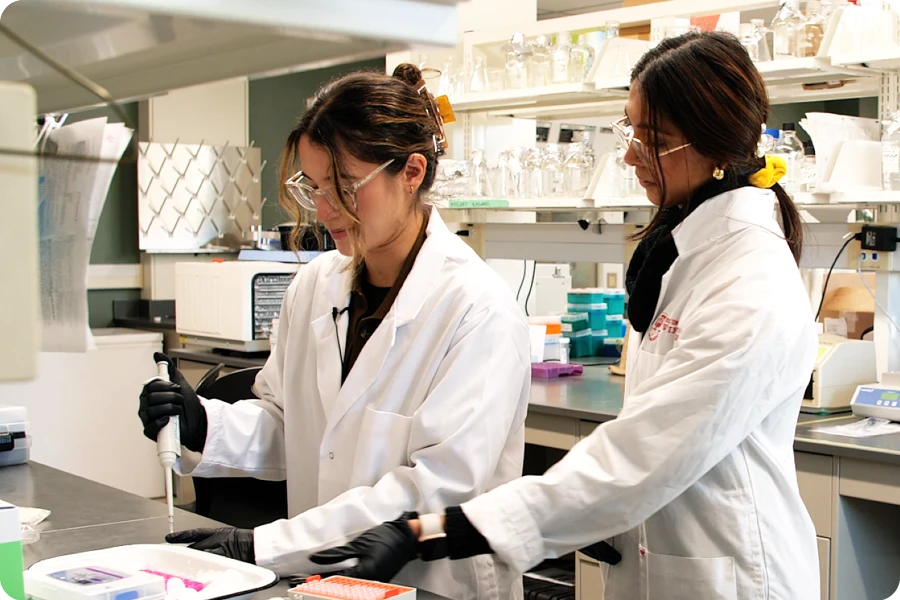
MA/MS in Environmental and Social Change at The University of Winnipeg in Winnipeg, Canada is a master's degree in Environmental Sciences programme. The programme runs for 2 years.
At a glance
Degree:Master's Degree
Field:Environmental Sciences
Duration: 2 years
We have no tuition fees or an application deadline on record for this programme yet — see the official programme page.
— it helps other students.
Last reviewed September 2026 ·
Program details
Overview
The Master in Environmental and Social Change (MESC) is an interdisciplinary, research-intensive graduate program in the Faculty of Graduate Studies, leading to an MA, MEnv, or MSc depending on the student's background and specialization. It draws on human geography, environmental sciences, and environmental studies to prepare students to address complex human-environmental problems through applied analytical techniques and critical thinking. The program centres on a major research project culminating in a thesis, supported by 12 credit hours of coursework: two required interdisciplinary core courses and two elective courses suited to the student's specialization. Core courses cover interdisciplinary studies in environmental and social change and interdisciplinary research foundations, while electives include topics in environmental science and physical geography, geographic information analysis, and managing for environmental sustainability. The program runs two years of full-time study. Graduates move into managerial, policy, and technical roles in environmental and social-science occupations across government agencies, Crown corporations, and non-profit organizations, or continue to doctoral study.
Requirements
Admission Requirements: Applicants must hold, or reasonably expect to hold by September, an undergraduate degree suited to their intended credential (MA, MEnv, or MSc), such as Environmental Sciences or Studies, Geography, Planning, History, Natural Resource Management, or Indigenous Studies, with a minimum cumulative grade point average of 3.0 out of 4.5. The application requires unofficial or official transcripts from all post-secondary institutions attended, contact information for two academic referees, and a CV/resume, with proof of permanent residency where applicable. Applicants whose first language is not English must meet The University of Winnipeg's institution-wide English proficiency requirement, satisfied through IELTS Academic 6.5 overall, TOEFL iBT 4.5 overall with no component below 4.0, Duolingo English Test 120, PTE Academic 58, CAEL 60 (CAEL online 70), LanguageCert Academic 67, or Cambridge C1 Advanced/C2 Proficiency 180, among the university's other accepted tests, with scores no more than two years old.