University of Lapland crest

University of Lapland

Rovaniemi, Finland World Rank #3123

Overview

English Name: University of Lapland
Control Type: Public
World Rank: #3123
Rank in Finland: #12
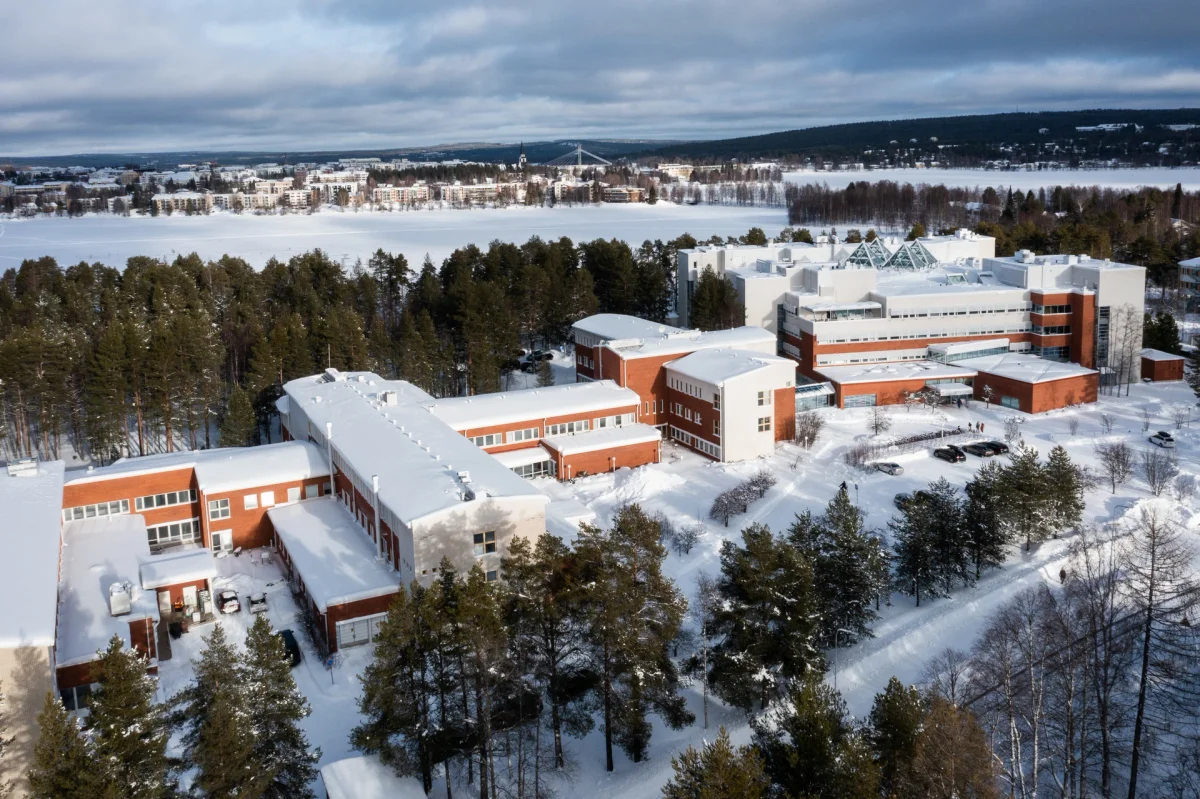
University of Lapland campus from the outside
1 / 2

Founded 1979.

A State institution. The University of Lapland is part of the Kajaani University Consortium (KUC) a networked academic community focused on scientific research, university teaching and community relations.

The Kajaani University Consortium consists of four networked universities (Eastern Finland, Lapland, Jyväskylä and Oulu) that have units in Kajaani and Sotkamo. The Consortium is coordinated by University of Oulu.

University of Lapland is also member of the University of the Arctic (Uartic), a network of over 200 universities, colleges, research institutes and other organizations concerned with education and research in and about the North

Location & Contact

Below are University of Lapland's address, location data, and primary contact channels. These are the basics you'll want before scheduling a campus visit or sending a formal admissions enquiry.

Address: P.O. Box 122 Yliopistonkatu 8
Postal Code: 96101

Academic Details

Below: the academic-side numbers and recognition that shape University of Lapland's reputation. Recognition and accreditation are distinct — recognition is government-level, accreditation programme-specific.

Academic Year: August to May (August-December; January-May)
Accrediting Agency: Ministry of Education and Culture
Admission Requirements: Secondary school certificate (ylioppilastutkinto) or equivalent
Total Students: 6,000

Degrees

Each qualification level at University of Lapland appears below with its degrees. Research-by-thesis versus taught master's programmes differ in structure, assessment, and graduate-school positioning.

Other 6 programs
  • Administration
  • Design
  • Education
  • Fine Arts
  • Law
  • Social Sciences

Faculties & Divisions

University of Lapland's academic units by subject area. New subject areas (data science, sustainability studies) often emerge as inter-departmental majors before settling into a single faculty.

Arctic (Centre) 2 subjects offered

Specialisations & Subjects

  • Arctic Studies
  • Environmental Studies
Language (Centre) 1 subject offered

Specialisations & Subjects

  • Modern Languages
Art and Design (Faculty) 8 subjects offered

Specialisations & Subjects

  • Art Education
  • Clothing and Sewing
  • Fashion Design
  • Graphic Design
  • Industrial Design
  • Interior Design
  • Media Studies
  • Textile Design

Common Career Paths

  • Designer
  • Creative Director
  • UX Researcher

Illustrative career directions for this field; specific outcomes depend on programme and student choices.

Education (Faculty) 6 subjects offered

Specialisations & Subjects

  • Adult Education
  • Education
  • Gender Studies
  • Primary Education
  • Teacher Training
  • Technology Education

Common Career Paths

  • Teacher
  • Educational Administrator
  • Curriculum Specialist

Illustrative career directions for this field; specific outcomes depend on programme and student choices.

Law (Faculty) 3 subjects offered

Specialisations & Subjects

  • Comparative Law
  • International Law
  • Law

Common Career Paths

  • Lawyer
  • Legal Consultant
  • Compliance Officer

Illustrative career directions for this field; specific outcomes depend on programme and student choices.

Social Sciences (Faculty) 11 subjects offered

Specialisations & Subjects

  • Administration
  • International Relations and Diplomacy
  • Management
  • Political Sciences
  • Psychology
  • Public Law
  • Social Sciences
  • Social Welfare
  • Social Work
  • Sociology
  • Tourism

Common Career Paths

  • Researcher
  • Policy Analyst
  • Social Worker

Illustrative career directions for this field; specific outcomes depend on programme and student choices.

Lapland Institute for Tourism Research and Education (Institute) 1 subject offered

Specialisations & Subjects

  • Tourism

Common Career Paths

  • Teacher
  • Educational Administrator
  • Curriculum Specialist

Illustrative career directions for this field; specific outcomes depend on programme and student choices.

Programs Offered

Every programme University of Lapland currently runs, grouped by degree level and searchable. Status and intake details vary by programme — verify with the institution before committing to applications.

Master's Degree

40 programmes

University of Lapland provides 40 programmes at master's level for graduates who want to specialise further or strengthen their standing for doctoral applications.

Muotoilun koulutusohjelma, taiteen kandidaatti ja maisteri (3 v + 2 v) Arts, Design & Architecture 300 credits
Credits: 300 credits
Kasvatustieteet, kandidaatti ja maisteri (3 v + 2 v) Social Sciences & Education 300 credits
Credits: 300 credits
Kestävyyskasvatuksen kandidaatti- ja maisteriohjelma, kasvatustieteen kandidaatti ja maisteri (3 v + 2 v) Social Sciences & Education 300 credits
Credits: 300 credits
Kuvataidekasvatuksen koulutusohjelma, taiteen kandidaatti ja maisteri (3 v + 2 v) Arts, Design & Architecture 300 credits
Credits: 300 credits
Kuvataidekasvatuksen koulutusohjelma, taiteen maisteri (2 v) Arts, Design & Architecture 120 credits
Credits: 120 credits
Luokanopettaja, kandidaatti ja maisteri (3 v + 2 v) Social Sciences & Education 300 credits
Credits: 300 credits
Luokanopettajan maisteriohjelma, kasvatustieteen maisteri (2 v) Social Sciences & Education 120 credits
Credits: 120 credits
Matkailututkimuksen tutkinto-ohjelma, yhteiskuntatieteiden kandidaatti ja maisteri (3 v + 2 v) Applied Professions & Services 300 credits
Credits: 300 credits
Matkailututkimus, yhteiskuntatieteiden maisteri (2 v) Applied Professions & Services 120 credits
Credits: 120 credits
Muodin ja tekstiilisuunnittelun koulutus, taiteen maisteri (2 v) Arts, Design & Architecture 120 credits
Credits: 120 credits
Muodin ja tekstiilisuunnittelun koulutusohjelma, taiteen kandidaatti ja maisteri ( 3 v + 2 v) Arts, Design & Architecture 300 credits
Credits: 300 credits
Muotoilun koulutus, taiteen maisteri (2 v) Arts, Design & Architecture 120 credits
Credits: 120 credits
Kasvatustieteen maisteriohjelma, kasvatustieteen maisteri (2 v) Social Sciences & Education 120 credits
Credits: 120 credits
Oikeustiede, oikeustieteen maisteri (2 v) Law 120 credits
Credits: 120 credits
Oikeustieteet, oikeusnotaari ja maisteri (3 v + 2 v) Law 300 credits
Credits: 300 credits
Palvelumuotoilun monialainen maisteriohjelma, taiteen maisteri (2 v) Arts, Design & Architecture 120 credits
Credits: 120 credits
Politiikkatieteet, kansainväliset suhteet tai valtio-oppi, yhteiskuntatieteiden maisteri (2 v) Social Sciences & Education 120 credits
Credits: 120 credits
Politiikkatieteiden ja sosiologian tutkinto-ohjelma, yhteiskuntatieteiden kandidaatti ja maisteri (3 v + 2 v) Social Sciences & Education 300 credits
Credits: 300 credits
Sosiaalityö, kandidaatti ja maisteri (3 v + 2 v) Social Sciences & Education 300 credits
Credits: 300 credits
Sosiaalityö, maisteri (2 v) Social Sciences & Education 120 credits
Credits: 120 credits
Sosiologia, yhteiskuntatieteiden maisteri (2 v) Social Sciences & Education 120 credits
Credits: 120 credits
Taiteen asiantuntija maisteriohjelma, taiteen maisteri (2 v) Arts, Design & Architecture 120 credits
Credits: 120 credits
Yhdenvertaisuuden ja jatkuvan oppimisen maisteriohjelma, kasvatustieteen maisteri (2 v) Social Sciences & Education 120 credits
Credits: 120 credits
Johtaminen, yhteiskuntatieteiden maisteri (2 v) Social Sciences & Education 120 credits
Credits: 120 credits
Audiovisuaalisen mediakulttuurin koulutus, taiteen maisteri (2 v) Arts, Design & Architecture 120 credits
Credits: 120 credits
Audiovisuaalisen mediakulttuurin koulutusohjelma, taiteen kandidaatti ja maisteri (3 v + 2 v) Arts, Design & Architecture 300 credits
Credits: 300 credits
Erityisopettajan maisteriohjelma, kasvatustieteen maisteri (2 v) Social Sciences & Education 120 credits
Credits: 120 credits
Erityispedagogiikan asiantuntijan maisteriohjelma, kasvatustieteen maisteri (2 v) Social Sciences & Education 120 credits
Credits: 120 credits
Erityispedagogiikka ja erityisopettaja, kandidaatti ja maisteri (3 v + 2 v) Social Sciences & Education 300 credits
Credits: 300 credits
Graafisen suunnittelun koulutus, taiteen maisteri (2 v) Arts, Design & Architecture 120 credits
Credits: 120 credits
Graafisen suunnittelun koulutusohjelma, taiteen kandidaatti ja maisteri (3 v + 2 v) Arts, Design & Architecture 300 credits
Credits: 300 credits
Hallintotiede, hallintotieteiden maisteri (2 v) Social Sciences & Education 120 credits
Credits: 120 credits
Hallintotieteiden ja johtamisen tutkinto-ohjelma, hallintotieteiden tai yhteiskuntatieteiden kandidaatti ja hallintotieteiden tai yhteiskuntatieteiden maisteri (3 v + 2 v) Social Sciences & Education 300 credits
Credits: 300 credits
Audiovisuaalisen mediakulttuurin koulutus, taiteen maisteri (2 v) 2 years Finnish
Audiovisuaalisen mediakulttuurin koulutusohjelmassa yhdistyvät luovalla tavalla tiede, taide ja teknologia. Opinnoissasi painottuvat audiovisuaalinen tuotanto, mediatutkimus, taiteellinen tutkimus, mediataide ja mediakulttuuri.Lisäksi voit opiskella esimerkiksi liikkuvaa kuvaa, multimediaa, pelisuunnittelua ja äänisuunnittelua. Osa opinnoistasi on teoriaa ja osa käytännön tekemistä. Voit mielenkiintosi mukaan valita painotatko opinnoissasi tieteellistä, taiteellista vai tuotannollista puolta.Maisteriopinnoissa voit syventää valitsemasi audiovisuaalisen osaamisalueen, kuten liikkuvan kuvan, multimedian, valokuvan, ääni-ilmaisun tai pelillisyyden osaamista. Maisteri tason opintokokonaisuuksille on tyypillistä tutkimuksen sekä tuotannollisen ja taiteellisen toiminnan integroituminen toisiinsa. Tämä tarkoittaa esimerkiksi tutkimuksessa esiin nousseiden kysymysten tai teemojen soveltamista taiteellisiin produktioihin tai tuotannollisessa toiminnassa nousseiden kysymysten tutkimuksellistamista. Mediatieteen opinnäytetyön aihepiirinä voi olla vaikkapa virtuaalitodellisuus, pelit, sosiaalinen media, äänikerronta, tekoäly, elokuva, valokuva tai televisio-ohjelma.Valmistuttuasi olet pätevä toimimaan audiovisuaalisen alan osaamista vaativissa tehtävissä, kuten erilaisissa mediatuotannoissa, kehitys- ja suunnitteluprojekteissa, viestinnässä, kouluttajana, taiteilijana, tutkijana tai yrittäjänä.
Duration: 2 years
Tourism, Culture and International Management, Master of Social Sciences (2 yrs) Applied Professions & Services 2 years 120 credits English
What will you learn?To understand contemporary lifestyle-related consumption and trendsTo understand the link between cultural industries and tourismTo gain expertise in designing and managing responsible tourismTo use versatile methodological tools to gain and understand market knowledgeThe Master’s degree programme in Tourism, Culture and International Management (TourCIM) has been created to meet the demand for professionals with the ability to develop and execute responsible tourism. The two-year Master’s degree programme provides you with knowledge and tools necessary to work on the interface between the production and consumption of tourism experiences. The TourCIM programme offers an exceptional combination of current issues in tourism, management and cultural studies.The TourCIM programme is based on the assumption that an in-depth understanding of the values underlying business strategies and consumption practices are essential for the development of responsible tourism. Our teaching and research reflect this premise and consider cultural and lifestyle-related research and knowledge, in particular, as crucial for gaining insights into existing and future tourism markets.
Duration: 2 years
Credits: 120 credits
International tuition: 13,000 EUR/year
Sustainable Art and Design, Master of Arts (Art and Design) (2 yrs) Arts, Design & Architecture 2 years 120 credits English
During the studies, insights from fields of environmental art, public art, socially-engaged art and service design are introduced. Students are encouraged to find methods and tools that intersect between art and design. In their two-year master’s degree programme, students carry out project-based studies that have strong working-life orientation. Art-based research and/or action research is implemented in to these projects. The main focus is to work in real environments with real stakeholders outside the university. Arctic nature and culture form the frame and context for the studies.Sustainable Art and Design master’s programme has been developed to respond to the changing role of the creative professional in society. The content is designed to harness the potential of service design and applied visual arts in social, community or business contexts. During the degree, students will develop their skills and competence in:socially engaged art, public art, applied visual arts and service designcollaborative and interdisciplinary workingcommunity and environment centred design and artidentifying and making the most of entrepreneurial opportunitiesinterdisciplinary and arts-based research in ArcticThe degree aims to develop:professional expertise at the intersections of art and environmental issues, art and social work, art and regional development, art and design practicecompetence in interdisciplinary working with business and community groupsadvanced skills in project design and managementexpertise in place-based artistic and development strategies, especially in Arctic communitiesresearch and evaluation skills in art, design and sustainable developmentIn short, service design and applied visual arts are used by our students to work with clients and community groups to identify problems and create solutions - It’s creative collaboration.www.ulapland.fi/aadInstagram: @sustainableartanddesign
Duration: 2 years
Credits: 120 credits
International tuition: 13,000 EUR/year
Northern Tourism, Master of Social Sciences (2 yrs) Applied Professions & Services 2 years 120 credits English
The Master’s Degree Programme in Northern Tourism offers a comprehensive and international approach to tourism and reflects on the growing global influence and relevance of change in the north. It brings together researchers and students from the northern universities, with an interest to develop responsible tourism futures.Tourism, an industry that is growing in the northern and Arctic regions, is affected by globalization and environmental transformation, but also plays a role in changing the North. For example, tourism can be a component of community development, drawing out creative solutions to social, economic and environmental challenges. On the other hand, tourism can bring unwanted and unintended pressures that have negative outcomes for community structures and the environment.Our research and education on sustainable northern tourism builds knowledge on the challenges facing the northern and Arctic regions and offers tools for the sustainable development of tourism in the North. Through the involvement of the Thematic Network on Northern Tourism, our programme offers education based on the research activities of the leading tourism scholars from Arctic areas. The joint component consists of a field course and of two online courses.
Duration: 2 years
Credits: 120 credits
International tuition: 13,000 EUR/year
Master’s Degree Programme in Service Design Strategies and Innovations (2 yrs) Arts, Design & Architecture 2 years 120 credits English
Service Design Strategies and Innovations (SDSI) is a jointly organised Erasmus Mundus master’s programme with a focus on service design, management and business. We educate versatile service innovators who can enable change in public and private organisations through strategic design, management and creative leadership. We have strong connections to industry. Students have opportunities to work with real industry partners on study topics and projects. Our programme includes study periods in Kuldīga (Latvia), Tallin (Estonia) and Rovaniemi (Finland). Graduates will be awarded with multiple degrees: Master of Arts (Art and Design) by the University of Lapland, Master of Design by the Art Academy of Latvia and Master of Arts by the Estonian Academy of Arts.  SDSI programme is funded by the European Union. Yearly around 20 of the selected students are awarded Erasmus Mundus scholarships, providing a monthly stipend of 1400 EUR for the entire 24-month program. More information about the programme: www.sdsi.ma/, Facebook/Instagram: @sdsi.master.  The first phase of the application process to SDSI programme is organised by the Art Academy of Latvia jointly with SDSI programme partner institutions. Successful applicants are selected to the SDSI programme in the Art Academy of Latvia. Information and application deadlines can be found here: www.sdsi.ma/admission. This second phase of the application process is for the applicants who are already selected to the SDSI programme in the Art Academy of Latvia in the first phase of the application process. In this second phase, applicants apply for the degree study right also for the SDSI programme in the University of Lapland. 
Duration: 2 years
Credits: 120 credits
International tuition: 8,000 EUR/year
Arctic Indigenous Cinema, Master of Arts (Art and Design) (2 yrs) Arts, Design & Architecture 2 years 120 credits English
The Arctic Indigenous Cinema programme contributes to arctic Indigenous storytelling in the field of audiovisual media by providing high-level education and supporting the development of Indigenous-led creative culture. The program focuses on moving image as the medium of storytelling, by encouraging the students to cultivate their own cinematic thinking and artistic voice, and by nurturing the understanding of film as the form of indigenous storytelling. Indigenous identity and perspectives form the foundation for both artistic practice and academic research within the programme. 
Duration: 2 years
Credits: 120 credits
International tuition: 13,000 EUR/year
Arctic World Politics, Master of Social Sciences (2 yrs) Social Sciences & Education 2 years 120 credits English
The Arctic is deeply entangled with world politics and the large global challenges of our time. Climate change and global warming have a profound impact on Arctic geographies, societies, and ways of life. Growing external interest in the region’s natural resources and transport routes has moved the region into the epicenter of broad geopolitical concerns and global divisions and tensions. Yet, knowledge and experiences of Arctic peoples, societies and communities, including Indigenous peoples, can profoundly challenge these dominant narratives and framings of the Arctic, and provide alternative, decolonial, and critical perspectives and agency to world politics and global change. Never has there been such demand for new, multidisciplinary knowledge on the Arctic region and its connections to the rest of the world.  In this context, it is crucial to examine whose experiences and what kind of knowledge are valued in political decisions and policymaking, and for what purposes that knowledge is used. The master's degree programme in Arctic World Politics addresses these issues from a critical, multidisciplinary perspective that centers local-to-global connections and Indigenous knowledge, combining Politics and International Relations, Indigenous Studies, Environmental Studies, Sociology, Anthropology and Gender Studies. In addition to power relations, conflicts and systems of governance between human societies and states, we highlight the central role of multispecies relations, socioeconomics and Indigenous worldviews. During the two-year study program, you will build a comprehensive understanding of world politics, especially from the perspective of Arctic peoples, societies and communities, and develop skills in multidisciplinary and critical thinking. Such skills are necessary to address a variety of complex problems and challenges that are shaping global change today, and in future. The program culminates on a Master’s thesis that allows you to explore in depth a topic of your own choosing.  The master's degree programme in Arctic World Politics is unique to University of Lapland. The programme allows you not just to study, but also live in a Northern society and environment, and study as a member of an international, multidisciplinary research community with strong expertise in interdisciplinary Arctic research.
Duration: 2 years
Credits: 120 credits
International tuition: 13,000 EUR/year

Doctorate

5 programmes

Browse 5 programmes of research-degree study at University of Lapland. Each culminates in a thesis defended before examiners as an original scholarly contribution.

Doctor of Arts (Art, Design) postgraduate degree, University of Lapland Taiteen tohtori, jatkotutkinto Arts, Design & Architecture 210 credits
Credits: 210 credits
Doctor of Education, postgraduate degree, (lisenciate, doctor), University of Lapland Kasvatustieteen tohtori, jatkotutkinto Social Sciences & Education 240 credits
Credits: 240 credits
Doctor of Laws, postgraduate degree, University of Lapland Oikeustieteen tohtori, jatkotutkinto (tohtori) Law 180 credits
Credits: 180 credits
Doctor of Social Sciences, postgraduate degree, University of Lapland Yhteiskuntatieteiden tohtori, jatkotutkinto Social Sciences & Education 210 credits
Credits: 210 credits
Doctor of Administrative Sciences, postgraduate degree, University of Lapland Hallintotieteiden tohtori, jatkotutkinto Social Sciences & Education 3 years 210 credits Finnish +1
The Faculty of Social Sciences of the University of Lapland is the leading research unit in Social Sciences in northern Finland. Our particular aim is to strengthen social scientific research in Arctic and northern areas. The foundation of our research is at our Faculty's major and minor subjects comprising strong basic sciences and multidisciplinary subjects.
Duration: 3 years
Credits: 210 credits

How to apply to University of Lapland

The standard application path for University of Lapland, broken into five practical steps with the documents and channels you will need at each stage.

  1. 1
    Browse the programme catalogue

    Start by exploring the programmes section on this page. University of Lapland runs 45 active programmes across multiple degree levels. Narrow by qualification tier and read each programme description before shortlisting.

  2. 2
    Check eligibility for your chosen programme

    Before applying to University of Lapland, confirm you meet the academic, language, and document requirements for your chosen programme. International applicants should also check visa eligibility for Finland.

  3. 3
    Get your documents ready

    Standard documents: official transcripts, identity proof, language test results, personal statement, and references. Confirm exact requirements with University of Lapland's admissions office before assembling, as expectations vary by programme.

  4. 4
    Apply through the official channel

    Lodge your application through the official website (www.ulapland.fi). Online forms are the standard route. Save your draft frequently and submit before the programme deadline.

  5. 5
    Reach out and track your application

    Verify your application has been received by the admissions team. Monitor the portal for status updates, interview invitations, or document requests, and respond within the stated deadlines.

Frequently Asked Questions about University of Lapland

Concise answers to the most-searched questions about University of Lapland, useful as a quick orientation before exploring the rest of the profile.

What city is University of Lapland in?

University of Lapland operates from Rovaniemi, Finland.

Is University of Lapland public or private?

University of Lapland is a public institution.

How big is University of Lapland's student body?

University of Lapland serves approximately 6,000 students.

How is University of Lapland ranked?

It ranks #3123 globally and #12 in Finland.

Is University of Lapland officially recognised?

University of Lapland is accredited by Ministry of Education and Culture.

Where can I learn more about University of Lapland?

University of Lapland's official website is www.ulapland.fi.

Top-Ranked Universities in Finland

Finland's leading universities appear below, useful for benchmarking University of Lapland's academic standing. Use this list as the upper-bound reference for academic prestige within Finland.

Faculties at Nearby Universities

If you're weighing University of Lapland against other institutions in the area, these neighbouring universities offer overlapping faculties and similar admissions cycles. They are useful for shortlisting based on travel distance or campus environment.

Where Else to Study Social Sciences & Education

Cohort diversity (gender, nationality, prior experience) shapes the Social Sciences & Education classroom experience. Some Finland programmes publish demographic data; others do not, but the question is worth asking.

Universities Often Compared with University of Lapland

Yield rates (proportion of admitted students who enroll) cluster among peer institutions. High-yield universities signal strong applicant preference compared to peers at the same selectivity level.


Explore More Universities in Finland

Free calculators and converters to plan your study-abroad journey.

Latest Articles

Fresh guides and advice for studying abroad.

View all →
System Share
Copy Link
More Share Options