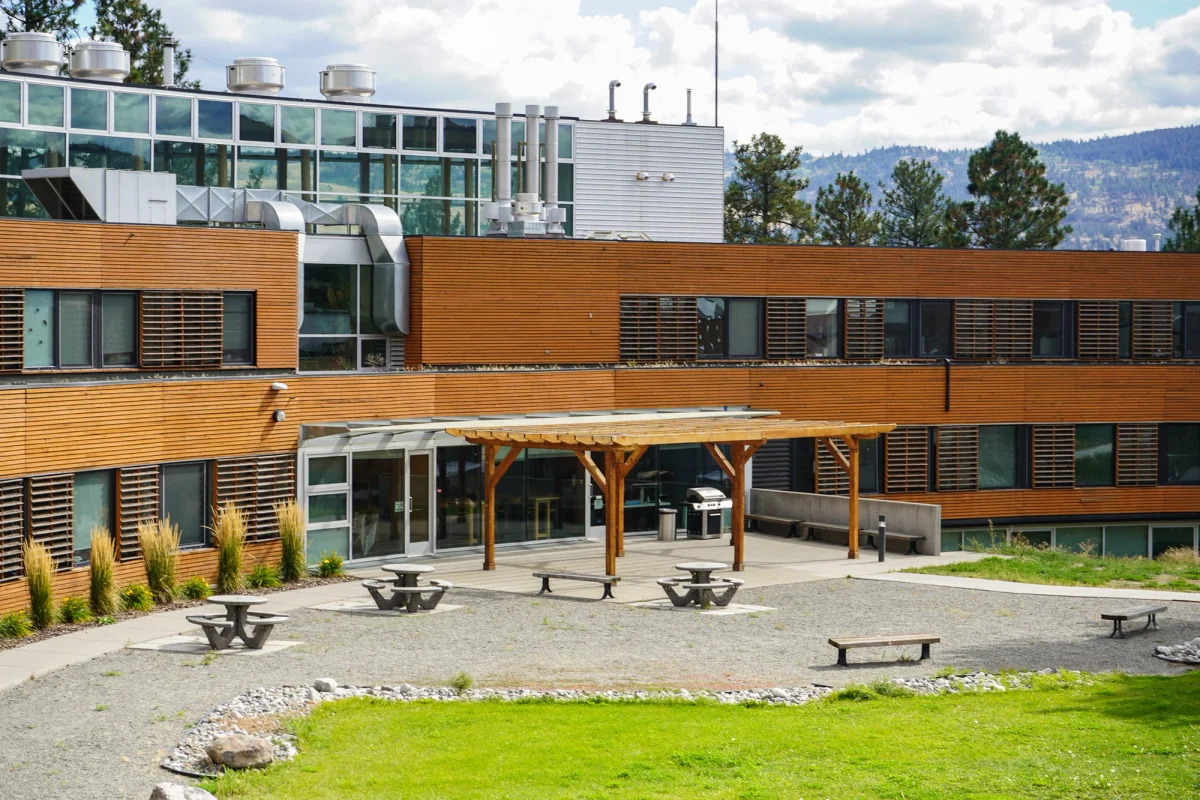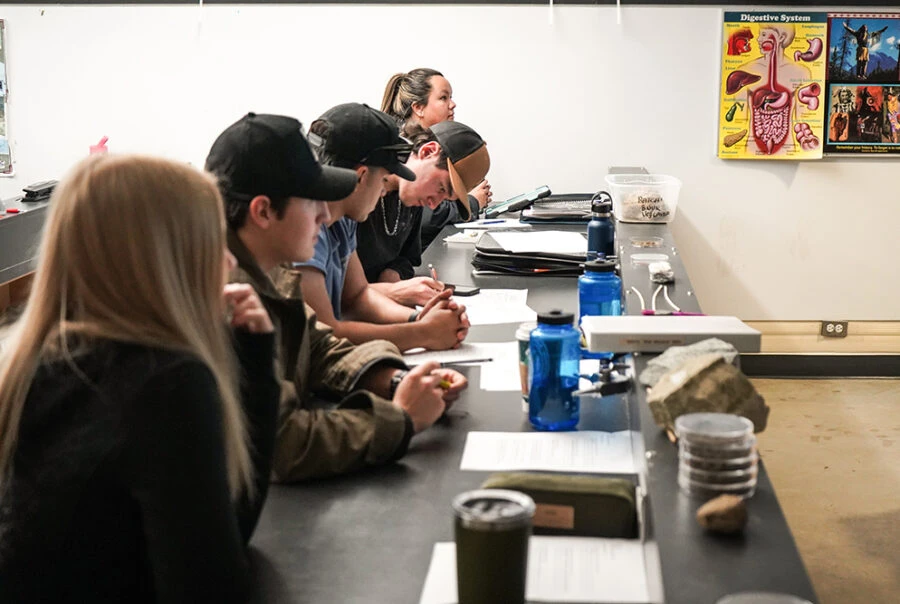
Established in 1983, the Nicola Valley Institute of Technology is a non-profit private higher education institution located in the suburban setting of the medium town of Merritt (population range of 2,500-9,999 inhabitants), British Columbia.
This institution also has a branch campus in Burnaby. Officially recognized by the Ministry of Post-Secondary Education and Future Skills of British Columbia, Nicola Valley Institute of Technology (NVIT) is a very small-sized coeducational Canadian higher education institution.
Nicola Valley Institute of Technology (NVIT) offers courses and programs leading to officially recognized higher education degrees such as pre-bachelor's degrees (i.e. certificates, diplomas, associate or foundation) and bachelor's degrees in several areas of study. This 41-year-old Canadian higher-education institution has a selective admission policy based on entrance examinations and students' past academic records and grades.
The acceptance rate range is 80-89% making this Canadian higher education organization a least selective institution.
International applicants are eligible to apply for enrollment. NVIT also provides several academic and non-academic facilities and services to students including a library, as well as administrative services.
Location & Contact
Nicola Valley Institute of Technology's address, phone, email, and social presence. Department-level scholarship enquiries route faster through the specific faculty rather than central admissions.
A quick read on Nicola Valley Institute of Technology's academic vitals — enrolment counts, faculty makeup, and recognition status. The combination determines class sizes, faculty access, and credential portability.
Student Enrollment: 500
Academic Staff Range: under-50
Campus Setting: Suburban
Programs Offered
Nicola Valley Institute of Technology's teaching offering by degree level. Programmes archived in past intakes may still appear on search engines; the live list here is the current source of truth.
Bachelor's Degree
1 programme
Nicola Valley Institute of Technology runs 1 programme at bachelor's level — undergraduate programmes that usually span three to four years and serve as the standard entry route into a profession or further study.
Social Work: Bachelor's Degree (BSW)Others4 yearsOn-campusEnglish
The Bachelor of Social Work (BSW) emphasizes the knowledge and skills relevant to both Indigenous and mainstream individuals, families and communities. You will increase knowledge and skills based on an Indigenous perspective and contemporary social work practice. Through classroom experience and critical analysis, you are encouraged to design an ethical social work framework valuing diversity, equality, respect and the dignity and worth of all persons. Graduates of the program will have greater knowledge, skills and abilities to practice social work with diverse populations. The BSW program is fully accredited by the Canadian Association for Social Work Education.
These 55 programmes group Nicola Valley Institute of Technology's shorter and preparatory qualifications together: associate degrees, diplomas, certificates, and foundation courses that suit focused or transitional study.
Indigenous Early Childhood Education Assistant Micro-credentialIndigenous Focus4 monthsOn-campusEnglish
The Indigenous Early Childhood Education (IECE) program provides students with the skills and knowledge to provide quality care and education for young children. The IECE certificate honours Indigenous ways of knowing and being by placing local and traditional child development practices at the center of the program and by preparing Early Childhood Educators to work with children in the community in which they reside. The IECE certificate program encourages students to examine both the role of the child, family and the educator focussing on concepts of belonging, learning, and sharing to strengthen identity through culture. The program supports the Early Childhood Educator in developing strategies for guiding and caring that support healthy social-emotional development for young children.
The Indigenous Court Orientation Micro-Credential is offered to prepare individuals interested in participating in Indigenous Courts (also known as First Nations Courts) and other justice initiatives. This credential is intended to assist and prepare individuals to understand court principles, procedures, and the goals of Indigenous Courts, so they can contribute their knowledge and experiences to the sentencing of Indigenous individuals and assist Judges in crafting probation conditions and healing plans consistent with Indigenous values and traditions.
Aboriginal Community Economic Development CertificateIndigenous Focus1 yearOn-campusEnglish
The Aboriginal Community Economic Development program provides a first year certificate with an option of taking a second year diploma. As NVIT's ACED program fulfills the 16 competencies of the Council for the Advancement of Native Development Officers' (CANDO) technician status, upon completion of the 2nd year, students have the option to apply for technician status with CANDO. In addition to the Diploma and CANDO Certification, the Diploma ladders into a Bachelor of General Studies Degree from Simon Fraser University. Students have the opportunity to take this Degree in affiliation with SFU on the NVIT Campus.
Indigenous Support Worker Training Micro-credentialIndigenous Focus8 weeksOn-campusEnglish
The Indigenous Support Worker Training aims to prepare students to be valuable support members in Community with the ability to promote and maintain the physical, emotional, cognitive, and social well-being of clients in a non-direct patient care capacity under the supervision of a health professional. The Indigenous Support Worker Training Micro-credential is a program that focuses on training students to work in Indigenous communities as health care assistants. The program covers various topics such as cultural diversity within Indigenous groups; respecting traditional knowledge and practice; providing culturally sensitive care; health access for Indigenous people; confidentiality and communication; culturally sensitive communication; components of health care, self-care, and holistic care; introduction to the human body; cleaning practices; and community relevance. Upon completion of the program, students will have acquired the necessary skills and knowledge to work as support workers in Indigenous communities.
Health Care Assistant CertificateHealth Sciences30 weeksOn-campusEnglish
The Health Care Assistant Certificate prepares you to work as a Health Care Assistant in a variety of settings. The program is divided into three levels—each level consists of theory, laboratory practice, and clinical experience. The theory component is delivered through discussion groups, student presentations, lectures, demonstrations and guest speakers. You will apply the theory component in the laboratory and clinical settings. The Health Care Assistant certificate is earned with the completion of all credits listed under the Health Care Assistant completion plan.
Aboriginal Governance and Leadership CertificateIndigenous Focus1 yearBlendedEnglish
The Aboriginal Governance and Leadership Certificate (AGLP) is to strengthen Aboriginal peoples' skills and abilities to govern, grounded in the learners' traditional knowledge, leadership values, and community development interests. The AGLP will support the growth and establishment of ethical, effective leaders and public servants who contribute to improving governing systems and sustainable development outcomes in Aboriginal communities and institutions, for the benefit of current and future generations. Using a blended delivery model, each level of the AGLP will be offered on a part-time basis. The intent of this blended model is to maximize the flexibility of program delivery for working professionals and public servants, and allow for multiple entry/exit points that support the retention of learners and long-term course completion.
Nadut'en Language Fluency DiplomaOthersOn-campusEnglish
The Nadut’en Language Fluency Diploma is a foundational programs with a focus on Nadut’en content in the language fluency curriculum. Admission is open to all learners within the respective Nadut’en communities, particularly those wishing to enhance their knowledge, understanding and conversational ability of Indigenous languages.
St’át’imcets Language Fluency DiplomaOthersOn-campusEnglish
The St'át'imcets Language Fluency Diploma program is foundational and innovative with a focus on St'át'imcets content in the language fluency curriculum. Admission is open to all learners within the respective Indigenous communities, particularly those wishing to enhance their knowledge, understanding and conversation ability of Indigenous languages.
NVIT’s Open Certificate Program provides flexible, foundational education rooted in Indigenous perspectives. This program provides a broad-based academic foundation that allows for transferability within NVIT and with external post-secondary institutions. Communities are empowered to choose courses that reflect their unique interests, priorities, and aspirations. Communities can establish a customized 30-credit course plan aligned with their specific educational objectives. With approval from the appropriate Dean, this customized course plan can include a specialization to the Open Certificate, reflecting their unique combination of courses. To ensure the program’s applicability and transferability, courses included in the Open Certificate program must be selected from University Transfer (UT) department courses, Language Fluency courses, and/or UT qualifying Business courses as per the BC Transfer Guide. These courses are recognized for their alignment within the British Columbia Transfer Guide to provide learners with a solid foundation to pursue further education or accreditation if they choose. Course selection can be first year, second year, or a combination of both, depending on whether learners meet prerequisite requirements.
Access to Practical Nursing DiplomaHealth Sciences72 weeksOn-campusEnglish
The Access to Practical Nursing Diploma prepares you with the knowledge, skills, judgments, and attitudes to perform to the full range of competencies as identified by the College of Licensed Practical Nurses of British Columbia (CLPNBC). The curriculum provides a learning experience that is integrated, professional, collaborative, and culturally sensitive with an aim to prepare graduates to care for individuals (and by extension, families of individuals) at multiple life stages and in a variety of practice settings. Consistent with the CLPNBC Entry to Practice Competencies for Licensed Practical Nurses, the focus for beginner's practice is care of clients with less complex and more predictable outcomes. Additionally, upon successful completion of the program, graduates will possess the competencies to successfully complete the Canadian Practical Nurse Registration Exam (CPNRE).
Aboriginal Community Economic Development DiplomaIndigenous Focus2 yearsOn-campusEnglish
The Aboriginal Community Economic Development (ACED) Diploma is the second year of the ACED Certificate. As NVIT's ACED program fulfills the 16 competencies of the Council for the Advancement of Native Development Officers' (CANDO) technician status, upon completion of the second year, you have the option to apply for technician status with CANDO. In addition to the Diploma and CANDO Certification, the Diploma ladders into a Bachelor of General Studies Degree from Simon Fraser University. You have the opportunity to take this Degree in affiliation with SFU on the NVIT Campus.
Secwépemc Language Fluency DiplomaOthersOn-campusEnglish
The Secwépemc Language Fluency Diploma program is foundational and innovative programs with a focus on Secwepemc Language content in the language fluency curriculum. Admission is open to all learners within the respective Secwépemc communities, particularly those wishing to enhance their knowledge, understanding and conversational ability of Indigenous languages. The program is designed to be delivered year-long through the Fall, Spring and Summer semesters. The Secwépemc Language Fluency Diploma is approved by the local language authorities in their respective communities. Successful completion of the program will allow graduates to work with community members and First Nations Organizations.
Nle?kepmx Language Fluency DiplomaOthers2 yearsOn-campusEnglish
The Nleʔkepmx Language Fluency Diploma focuses on the Nleʔkepmx content in the language fluency curriculum. Admission is open to all learners within the respective Nleʔkepmx communities, particularly those wishing to enhance their knowledge, understanding and conversational ability of Indigenous languages. This program is approved by the local language authorities in their respective communities. This certificate allows graduates to work in entry-level with community members and First Nations Organizations.
Niwhkinic Language Fluency DiplomaOthersOn-campusEnglish
The Niwhkinic Language Fluency Diploma program is a foundational and innovative programs with a focus on Niwhkinic Language content in the language fluency curriculum. Admission is open to all learners within the respective Niwhkinic communities, particularly those wishing to enhance their knowledge, understanding and conversational ability of Indigenous languages.
Indigenous Human Services CertificateIndigenous Focus1 yearOn-campusEnglish
The Indigenous Human Service Certificate and Diploma prepares you for a career in non-profit agencies, Indigenous communities, and government. Graduates of the certificate program will be able to provide support and assistance to agencies and communities coping with economic disadvantage, mental health issues, developmental, gender and diversity issues, as well as challenges such addictions, family change and involvement with the justice system. Once you complete the Diploma portion of the program, you will be able to extend these supports and services to individuals and families. The program focuses on developing skills in trauma-informed practice, social policy from a decolonization perspective, and effective communication. With a combination of academic and experiential learning, you will gain the tools to address complex social challenges while fostering empathy, professionalism, and cultural understanding. Upon graduation, you will be prepared to make meaningful contributions to the well-being of communities. You may wish to continue your education and have the opportunity to ladder into the Social Work Degree Program at NVIT.
Associate of Arts DegreeArts2 yearsOn-campusEnglish
The Associate of Arts Degree is awarded to recognize the successful completion of the equivalent of two years of full-time study. Transfer credit may be granted for approved courses completed at other institutions. Upon successful completion, students can transfer to a University into their desired Arts or Education majors. If you have plans to pursue a Bachelor of Social Work (BSW) degree, you can enroll in this program to accumulate the 60 credits of coursework required for entry into the BSW program.
The Indigenous Adult Instructor Diploma (IAID) provides you with the transferrable skills and knowledge to facilitate teaching and learning in an Indigenous adult learning environment. Course activities and tasks are designed to help you envision and practice how to transcend Indigenous worldviews, epistemologies, typologies, and learning approaches into adult education. You will develop your teaching and learning philosophy and practice, and strengthen your work with Indigenous leaners, families, communities and nations.
College Readiness Program - BC Adult Graduation DiplomaOthersOn-campusEnglish
The College Readiness Program helps adult learners build the skills needed for NVIT programs through tuition-free courses in reading, writing, math, and science. Learners receive personalized support to prepare for success in post-secondary education. The College Readiness program offers courses designed to help adults obtain prerequisite skills for entry to NVIT career/technical and/or academic programs. College Readiness is designed for the adult learner who did not complete high school or who needs to review high school level academic skills before advancing to post-secondary level study. Courses in the program help learners develop skills in reading, writing, study skills, mathematics and science at fundamental provincial levels (literacy/numeracy through grade 12).
Welder Foundation CertificateOthers28 weeksOn-campusEnglish
This foundation program prepares learners for entry level positions as apprentice welders in most sectors of the economy including manufacturing, construction, transportation, resource extraction, and resource development. Students engage in a variety of classroom and shop activities where they learn both theoretical principals of welding and hands-on processes to master practical welding skills.
The Youth Explore Trades Skills (YETS) program, a partnership between NVIT and local school districts, lets learners explore carpentry, culinary, welding, and electrical trades. It develops safe workplace practices and workforce skills, preparing students for industry-specific roles with potential certifications like First Aid, WHMIS, and FoodSafe. Registered with SkilledTradesBC, it ensures recognized credentials and job readiness. The Youth Explore Trades Skills (YETS) gives learners an opportunity to explore four trades: carpentry, culinary, welding, and electrical. Learners will also develop safe workplace practices and workforce skill development. Familiarity offers learners theoretical and practical knowledge in an experiential and realistic overview. The Youth Explore Trades Skills program is a partnership between NVIT and involved school districts. This is a Dual Credit program registered with SkilledTradesBC.
Automotive Service Technician Foundation CertificateOthers33 weeksOn-campusEnglish
This 33-week program (990 hours) takes students with little or no previous experience in the automotive repair trade and supplies them with the necessary skills to seek employment in this industry as an apprentice technician. This program introduces the students to many aspects of servicing and repair in the automotive repair trade with a focus on developing practical skills. Graduates of this program will receive 450 hours towards Automotive Service Technician Year 1 (AST 1) certification and the opportunity to write the AST 1 Certificate of Qualification exam. The AST 1 Certificate of Qualification and 1590 hours are required to proceed into AST 2. Automotive Service Technicians possess the full range of knowledge and abilities required to perform preventative maintenance, diagnose problems and repair vehicle systems including engines, vehicle management, hybrids, steering, braking, tires, wheels, drivetrains, suspension, electrical, electronics, heating, ventilation and air conditioning (HVAC), restraints, trim and accessories of automotive vehicles and light trucks with a gross vehicle weight less than 5,500 kg.
Bridging to Trades CertificateTrades12 weeksOn-campusEnglish
The Bridging to Trades program provides students with pre-foundational training in several high-demand industrial trades. Students will also develop necessary employment skills including resume writing, interviewing tactics, and other job-search related tools. Throughout the 12 week program, students will understand workplace safety and gain significant hands-on experience in each of the following four trades: - Electrical (Electrician) - Plumbing (Plumber)/ Pipefitting (Pipefitter) - Machining (Machinist)/ Millwright - Welding (Welder)
Carpentry levels 1 and 2 are designed to support apprentices registered with the Industry Training Authority (ITA) to continue their apprenticeship pathway in preparation for writing their Interprovincial Red Seal Exam. Carpenter Level 1 includes general areas of competency and associated learning tasks. Carpenters construct, install, renovate, maintain, and repair residential, civil, industrial, commercial, and institutional structures made of wood, steel, concrete, composite, and other materials. While the scope of the Carpenter trade includes many aspects of building construction, a growing number of carpenters work for contractors in areas of trade practice such as concrete forming, framing, finishing, interior systems, renovations, and surveying. Carpenter Level 2 is designed to support apprentices registered with SkilledTradesBC in preparation for writing their Interprovincial Red Seal Exam. Carpenters construct and maintain a broad range of building projects composed of composite materials, wood, and wood substitutes. Along with using blueprints and tools to prepare for excavation and shoring, carpenters put together and situate forms for pouring concrete and install interior and exterior finish components including cabinets, doors, windows, and siding on smaller projects.
Electrician Foundation CertificateOthers24 weeksOn-campusEnglish
The Electrician Foundation Program reflects the standards based on the Construction Electrician Red Seal Occupational Standard (RSOS – 2015) and the Industrial Electrician Red Seal Occupational Standard (RSOS – 2016). The curriculum for the first year of the electrician apprenticeship program adheres to requirements established by the British Columbia Ministry of Advanced Education, which includes installing residential, commercial, and industrial systems according to the Canadian Electrical Code. These courses prepare you for careers in the electrical industry or allied crafts. Installing, maintaining, and repairing electrical equipment in commercial, industrial, and residential settings is the specialization of electricians. You will engage in extensive practical exercises to develop their job-readiness in residential, commercial, and industrial wiring. This includes wiring of practical labs, drawing and labelling schematic and wiring diagrams, as well as bending conduit and installing cable tray using various types of electrical fittings for indoor and outdoor use.
Professional Cook 1 & 2: Culinary Arts ProgramArts35 weeksOn-campusEnglish
The Culinary Arts Program is designed to provide learners with opportunities to develop the knowledge, skills, and attitudes necessary to function effectively as culinary professionals and leaders in the culinary field with an increased understanding of Indigenous culture and traditions related to food. Level 1: Under the direction and supervision of a culinary professional, graduates will be empowered to perform all kitchen activities such as preparing and presenting vegetables, soups, sauces, meat, fish, and poultry; cold kitchen items; desserts, baking and pastry; basic menu planning and costing; as well as knowledge of safety, sanitation, and food storage. Level 2: NVIT’s program introduces apprentices to Indigenous culture through traditional food gathering and preparation. Indigenous knowledge and traditional practices are weaved throughout the program and will ensure occupational knowledge related to the provincial and federal codes, statutes, and standards.
Residential Construction Foundations CertificateOthers24 weeksOn-campusEnglish
The program introduces students to all aspects of the trades including the use of hand tools, portable power tools and other equipment used by carpenters. Through the construction of a residential wood-frame project students are given the opportunity to work with a variety of materials used by carpenters including lumber, panel products, concrete, fasteners and hardware. The focus is on developing practical skills for the construction workplace.
Building Indigenous Theory Micro-credentialIndigenous Focus16 weeksOn-campusEnglish
The Building Indigenous Theory Micro-credential is designed to assist students and First Nations communities to building upon their academic foundation to achieve success in graduate studies. It will provide learners with the transferrable skills and knowledge to facilitate teaching and learning in an Indigenous adult learning environment. Course activities and tasks are intended to help participants envision and practice how to incorporate Indigenous worldviews, epistemologies, typologies, and learning approaches into adult education.
First Nations Leadership Orientation Micro-credentialIndigenous FocusOn-campusEnglish
Designed for community leadership members, this program explores the principles of governance, community values, and succession planning guided by captikʷɬ. Participants will examine how First Nations governance systems, practices, and laws serve as constitutional foundations for culturally grounded protocols. The program highlights the diversity of Indigenous leadership, from traditional to contemporary governing systems, values, and ceremonies that strengthen resilience and advance social justice. Rooted in tmixʷ, this program emphasizes that Community values are fundamental to ensuring sustainability, balance, and autonomy remain interconnected. Leadership members will engage in practical applications of interpersonal negotiation and communication strategies, bridging theory with real-world governance challenges. Rather than applying colonial governance concepts, this program reaffirms Indigenous self-governance as a long-standing and evolving system that existed long before colonialism and continues to shape strong, self-determined Communities.
This program is to develop office administration skills and provide the necessary administrative skills to provide administrative support at the entry level. It is designed for persons who want to upgrade their office skills for certification and those entering the office workplace for the first time. It is ideal for individuals who do not have previous education or background in computing.
Secwépemc Language Fluency CertificateOthersOn-campusEnglish
The Secwépemc Language Fluency Certificate program is foundational and innovative programs with a focus on Secwepemc Language content in the language fluency curriculum. Admission is open to all learners within the respective Secwépemc communities, particularly those wishing to enhance their knowledge, understanding and conversational ability of Indigenous languages. The program is designed to be delivered year-long through the Fall, Spring and Summer semesters. The Secwépemc Language Fluency Certificate is approved by the local language authorities in their respective communities. Successful completion of the program will allow graduates to work with community members and First Nations Organizations.
Indigenous Business DiplomaBusiness2 yearsOn-campusEnglish
The Indigenous Business program follows the Four Food Chiefs’ seasonal teachings, blending Traditional Knowledge with business education to foster holistic growth, cultural vitality, and sustainable, community-focused leadership. It is designed to empower you with essential skills and knowledge to navigate the complex landscape of business within Indigenous contexts, with a particular emphasis on land governance and sustainable economic practices. Guided by Storywork, this two-year diploma program consists of 20 carefully curated courses deeply rooted in Community-led Indigenous Knowledge Systems. By integrating Indigenous teachings with contemporary business principles, this program equips learners with a comprehensive understanding of the unique challenges and opportunities faced by Indigenous Communities in the modern economy.
Indigenous Human Services DiplomaIndigenous Focus2 yearsOn-campusEnglish
The Indigenous Human Service Diploma prepares you with a career in non-profit agencies, Indigenous communities and government. Graduates will be able to provide support and assistance to individual, families and communities coping with economic disadvantage, mental health issues, developmental, gender and diversity issues, as we as challenges such as addictions, family change and involvement with the justice system. Learners who wish to continue their education have the opportunity to ladder into the Social Work Degree Program at NVIT.
Niwhkinic Language Fluency CertificateOthersOn-campusEnglish
The Niwhkinic Language Fluency Certificate program is a foundational and innovative programs with a focus on Niwhkinic Language content in the language fluency curriculum. Admission is open to all learners within the respective Niwhkinic communities, particularly those wishing to enhance their knowledge, understanding and conversational ability of Indigenous languages.
Dakelh Language Fluency CertificateOthers1 yearOn-campusEnglish
The Dakelh Language Fluency Certificate & Diploma programs are foundational and innovative programs with a focus on Dakelh content in the language fluency curriculum. Admission is open to all learners within the respective Indigenous communities, particularly those wishing to enhance their knowledge, understanding and conversation ability of Indigenous languages.
Dakelh Language Fluency DiplomaOthers2 yearsOn-campusEnglish
The Dakelh Language Fluency Certificate & Diploma programs are foundational and innovative programs with a focus on Dakelh content in the language fluency curriculum. Admission is open to all learners within the respective Indigenous communities, particularly those wishing to enhance their knowledge, understanding and conversation ability of Indigenous languages.
Indigenous Holistic Wellness and Addictions CertificateIndigenous Focus1 yearOn-campusEnglish
The Indigenous Holistic Wellness and Addictions Certificate is open to anyone interested in a career in Indigenous Health and Wellness and Addictions (IHWA). In addition, individuals who are currently in Addiction fields such as Alcohol and Drug Counsellors or Addiction Workers will find a benefit in obtaining a credential and/or specialized professional development training to meet job requirements. The IHWA Program is developed and implemented based on Circle Learning principles, the Medicine Wheel concept, Red Road Philosophy, Experiential Learning, and the Seven Sacred Teachings integrated with local Traditional Knowledge and practices. Courses include a focus on healing through understanding the history of Indigenous colonization, complex trauma theory, genocide, and the reclaiming of self as an Indigenous person in a traditional spiritual way.
Medical Office Assistant CertificateHealth Sciences1 yearOn-campusEnglish
The Medical Office Assistant Certificate is designed to provide you with the skills training and knowledge required to work within a medical office. Additionally, you will learn how to create and maintain patient records as well as perform coding and billing. You'll be taught how to assist physicians with examinations, prepare patients for clinical procedures and other administrative duties in various health care settings.
Aboriginal Governance and Leadership DiplomaIndigenous Focus2 yearsOn-campusEnglish
The Aboriginal Governance and Leadership Diploma is to strengthen Aboriginal peoples' skills and abilities to govern, grounded in the learners' traditional knowledge, leadership values, and community development interests. The AGLP will support the growth and establishment of ethical, effective leaders and public servants who contribute to improving governing systems and sustainable development outcomes in Aboriginal communities and institutions, for the benefit of current and future generations. The culmination of the diploma program will be an internship course where learners will engage in a leadership/governance community research project that will be published and contribute to future learner development.
Business Administration CertificateBusiness1 yearOn-campusEnglish
The Business Administration Certificate program at NVIT is designed to prepare you for leadership and management roles in business, Indigenous self-sufficiency, and self-government. These programs combine organizational knowledge with technical, analytical, and management skills, empowering learners to address the unique challenges and opportunities in Indigenous and broader business contexts. Emphasizing traditional and contemporary Indigenous values, you will develop a management style rooted in cultural principles and practical applications.
Business Administration DiplomaBusiness2 yearsOn-campusEnglish
The Business Administration Diploma programs at NVIT is designed to prepare you for leadership and management roles in business, Indigenous self-sufficiency, and self-government. These programs combine organizational knowledge with technical, analytical, and management skills, empowering learners to address the unique challenges and opportunities in Indigenous and broader business contexts. Emphasizing traditional and contemporary Indigenous values, students develop a management style rooted in cultural principles and practical applications.
Nadut'en Language Fluency CertificateOthersOn-campusEnglish
The Nadut’en Language Fluency Certificate is a foundational programs with a focus on Nadut’en content in the language fluency curriculum. Admission is open to all learners within the respective Nadut’en communities, particularly those wishing to enhance their knowledge, understanding and conversational ability of Indigenous languages.
Nsyilxcen Language Fluency DiplomaOthersOn-campusEnglish
The Nsyilxcen Language Fluency Certificate focuses on the Nsyilxcen content in the language fluency curriculum. Admission is open to all learners within the respective Indigenous communities, particularly those wishing to enhance their knowledge, understanding and conversation ability of Indigenous languages. The program is approved by the local language authorities in their respective communities. Upon successful completion of the certificate, you have the option to enroll in the diploma for further study. Once you complete the program, you can work with community members and First Nations organizations.
First Nations Speech and Language Assistant CertificateIndigenous Focus1 yearOn-campusEnglish
The First Nations Speech and Language Assistant Certificate (FNSL) is offered through community-based delivery. The program prepares you to work at the paraprofessional level in the speech and language field under the direction of a speech language pathologist. Due to the unique challenges of many remote and semi-remote First Nations communities, participants will also receive training in the use of technology as a way of delivering speech language services. This program is specifically designed for people working in First Nations communities such as schools, head start programs, and preschools.
Indigenous Early Childhood Education CertificateIndigenous Focus1 yearOn-campusEnglish
The Indigenous Early Childhood Education (IECE) program provides you with the skills and knowledge to provide quality care and education for young children. The IECE certificate honours Indigenous ways of knowing and being by placing local and traditional child development practices at the center of the program and by preparing Early Childhood Educators to work with children in the community in which they reside. The IECE certificate program encourages you to examine both the role of the child, family and the educator focusing on concepts of belonging, learning, and sharing to strengthen identity through culture. The program supports the Early Childhood Educator in developing strategies for guiding and caring that support healthy social-emotional development for young children.
Nsyilxcen Language Fluency CertificateOthersOn-campusEnglish
The Nsyilxcen Language Fluency Certificate focuses on the Nsyilxcen content in the language fluency curriculum. Admission is open to all learners within the respective Indigenous communities, particularly those wishing to enhance their knowledge, understanding and conversation ability of Indigenous languages. The program is approved by the local language authorities in their respective communities. Upon successful completion of the certificate, you have the option to enroll in the diploma for further study.
The Transformative Education Pathway Certificate is designed to prepare learners—particularly Indigenous learners—for entry into the Bachelor of Education program, offered through a collaborative partnership between UBC and NVIT. The certificate provides foundational and prerequisite coursework grounded in Indigenous perspectives, relational learning, and culturally responsive practice. It also aligns with provincial standards for teacher education, ensuring that learners are well-prepared to transition into a B.Ed. program.
The Environmental Resources Technology Certificate focuses on the natural resource sectors including forestry, fishery enhancement, environmental assessment, mining and grassland ecology. The first year of the program provides you with the skill set necessary for data collection work in the field. You will learn field skills such as tree and plant identification, navigation skills, mapping skills for use in the field and with geographic information systems, soils identification, resource measurements (distance, heights, slope, diameters, and elevation) and fire ecology. Since many students will work within BC First Nations traditional territories, courses in Ethnoscience and Aboriginal case law are key to provide an understanding of the uniqueness and impact that First Nation people have on the land base. Upon completion of the first year of the program, students are granted an Environmental Resources Technician Certificate.
Indigenous Holistic Wellness and Addictions Advanced DiplomaIndigenous Focus3 yearsOn-campusEnglish
The Indigenous Holistic Wellness and Addictions Advanced Diploma is open to individuals interested in a career in the field as well as individuals who are currently in Addiction fields such as Alcohol and Drug Counsellors or Addiction Workers will find a benefit in obtaining a credential and/or specialized professional development training to meet job requirements. The IHWA Program is developed and implemented based on Circle Learning principles, the Medicine Wheel concept, Red Road Philosophy, Experiential Learning, and the Seven Sacred Teachings integrated with local Traditional Knowledge and practices. Courses include a focus on healing through understanding the history of Indigenous colonization, complex trauma theory, genocide, and the reclaiming of self as an Indigenous person in a traditional spiritual way. Students who have completed the IHWA certificate and diploma may apply to the advanced diploma.
Indigenous Holistic Wellness and Addictions DiplomaIndigenous Focus2 yearsOn-campusEnglish
The Indigenous Holistic Wellness and Addictions Certificate was developed in partnership with the Hey Way-Noqu’ Healing Circle for Addictions Society (HHCAS). The program provides core skills required for Indigenous Holistic Wellness and Addictions Counsellor certification and includes Indigenous-specific content. The NVIT courses are University Transfer course credits, which are transferable and ladderable to related fields. This program will assist individuals who are current and/or prospective Wellness Workers, Alcohol and Drug Counsellors, and Addiction Workers that may need to obtain upgrading for certification. This program will provide continuing credit hours, up-grade, and professional development to meet job requirements and post-secondary credits for an incomplete plan.
Nle?kepmx Language Fluency CertificateOthers1 yearOn-campusEnglish
The Nleʔkepmx Language Fluency Certificate focuses on the Nleʔkepmx content in the language fluency curriculum. Admission is open to all learners within the respective Nleʔkepmx communities, particularly those wishing to enhance their knowledge, understanding and conversational ability of Indigenous languages. This program is approved by the local language authorities in their respective communities. This certificate allows graduates to work in entry-level with community members and First Nations Organizations, or continue onto the diploma program.
St’át’imcets Language Fluency CertificateOthersOn-campusEnglish
The St'át'imcets Language Fluency Certificate program is foundational and innovative with a focus on St'át'imcets content in the language fluency curriculum. Admission is open to all learners within the respective Indigenous communities, particularly those wishing to enhance their knowledge, understanding and conversation ability of Indigenous languages.
The Environmental Resources Technology Diploma focuses on natural resource sectors including forestry, fishery enhancement, environmental assessment, mining and grassland ecology. The Envionmental Resources Technology Diploma is the second year of the program following the first year certificate program. Forest Surveys and Environmental Assessment Surveys integrate year one measurement skills into applications that are important for assessing the land base. Courses in Wildlife, Fisheries, Grasslands, Environmental Planning, Watershed Hydrology, and Timber Development give students the theoretical knowledge needed to design and carry out field studies. Upon completion of year two of the program, students are granted an Environmental Resources Technologist Diploma which qualifies students to work within a variety of disciplines including forestry, fisheries, wildlife, environmental monitoring, environmental assessment, and working with communities on helping with environmental projects.
Foundations in Innovation and Technology CertificateTechnology (IT)12 weeksOn-campusEnglish
The Foundations in Innovation and Technology Certificate introduces students to a range of technology-based fields in the knowledge-economy, with a specific focus on current opportunities in BC. This modular program offers students insight into the common tools and resources utilised by leading technology-driven industries, while supporting them to develop basic workplace and employment skills. You will gain hands-on experience in the following technology-based career sectors: Administrative Professional, Communication and Digital Marketing, Web Development and Coding, Software Testing, Network Set Up and Support, GIS/GPS Mapping. Upon successful completion of this program, you will have the opportunity to proceed into more advanced curriculum streams, co-ops and ongoing professional development training, facilitated by the First Nations Technology Council alongside industry and educational partners.
Indigenous Early Childhood Education DiplomaIndigenous Focus2 yearsOn-campusEnglish
The Indigenous Early Childhood Education (IECE) program at NVIT prepares graduates to be effective early childhood development workers by meeting provincial licensing, academic, community, and Indigenous standards. Offered in partnership with communities, the program involves local elders and knowledge keepers in its delivery, providing a unique focus on Indigenous content in both certificate and diploma pathways. The Indigenous Early Childhood Education program (IECE) is designed to meet provincial licensing, academic standards, community and Indigenous standards to ensure NVIT graduates are successful and effective early childhood development workers in BC communities. The Indigenous Early Childhood Education programs are unique in that they are only delivered in partnership with communities. This ensures that communities have local elders and knowledge keepers involved with the delivery of programs. The diploma program meets provincial certification and licensing standards for infant/toddler and special needs children. This program is designed to run eight months from the beginning of September to the end of April. Successful completion of this program allows graduates to work as supervisors in a variety of daycare settings, to work with children who have special needs and to work with infants and toddlers under three years of age.
The Executive Assistant Diploma is designed to provide training in office management. After successfully completing the Office Administration Assistant Program students will continue to develop administrative and professional skills; work with computer technology; network with professionals in the field; and prepare for a wide range of careers within the business world.
How to apply to Nicola Valley Institute of Technology
What applying to Nicola Valley Institute of Technology typically involves — research, eligibility check, document prep, submission, and follow-up.
1
Find a programme that fits your goals
Use the programme finder to browse Nicola Valley Institute of Technology's 56 active programmes. Filter by keyword or scan by degree level. Read curriculum details on each programme's dedicated page if available.
2
Confirm you meet the requirements
Programme-level requirements at Nicola Valley Institute of Technology typically include academic transcripts, language proficiency proof, identity documents, and a personal statement or interview. Confirm specific requirements with the admissions office.
3
Assemble your application package
Prepare academic transcripts, ID/passport copies, language proficiency proof, a personal statement, and reference letters. International candidates may need apostilled or notarised translations — start early to avoid deadline pressure.
4
Submit your application
Nicola Valley Institute of Technology processes applications through www.nvit.ca. Create an account, fill out the application form, and submit your documents. Note application deadlines, which vary by intake and programme.
5
Contact admissions and follow up
Confirm receipt of your application with the admissions office and keep an eye on your portal for status changes. Reach the institution by phone at +1 (250) 378 3300. Quick responses to any follow-up requests keep your application moving smoothly through the review process.
Frequently Asked Questions about Nicola Valley Institute of Technology
Short Q&A on the institutional facts that matter most when shortlisting Nicola Valley Institute of Technology as a study destination.
When did Nicola Valley Institute of Technology open?
Nicola Valley Institute of Technology traces its founding to 1983 (approximately 43 years ago).
Where is Nicola Valley Institute of Technology located?
Nicola Valley Institute of Technology is located in Merritt, Canada.
Is Nicola Valley Institute of Technology public or private?
Nicola Valley Institute of Technology operates as a private institution.
What is the student enrolment at Nicola Valley Institute of Technology?
Student enrolment at Nicola Valley Institute of Technology is around 500-999.
Is Nicola Valley Institute of Technology accredited?
Yes, Nicola Valley Institute of Technology is recognised by Ministry of Post-Secondary Education and Future Skills of British Columbia.
How do I find Nicola Valley Institute of Technology online?
You can find Nicola Valley Institute of Technology online at www.nvit.ca.
Top-Ranked Universities in Canada
Industry partnerships of Canada's top universities signal employer engagement at the apex of the system. Lower-ranked institutions including Nicola Valley Institute of Technology may still partner with strong employers locally.
Universities near Nicola Valley Institute of Technology often have cross-enrolment or visiting-student arrangements that let students take modules at the partner institution. Worth checking if subject coverage at Nicola Valley Institute of Technology is narrow in your area.
Programme delivery mode varies across the Others programmes listed — online, hybrid, and in-person formats differ in tuition, schedule flexibility, and credential recognition across borders.
Universities Often Compared with Nicola Valley Institute of Technology
Beyond Nicola Valley Institute of Technology, several other universities operate at a comparable level — by ranking, heritage, or scale. They are worth knowing as you build your shortlist, particularly if you want options at the same competitive tier.