IHE Delft Institute for Water Education official logo

IHE Delft Institute for Water Education

Delft, Netherlands Founded 1957

Overview

English Name: IHE Delft Institute for Water Education
Founded: 1957
Control Type: Public
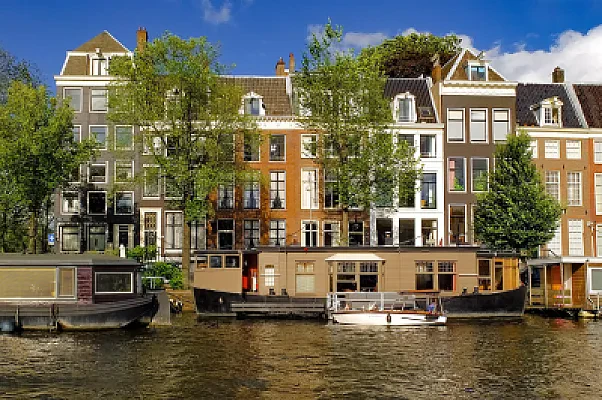
IHE Delft Institute for Water Education central facility
1 / 2

Created in 1957 as the International Course in Hydraulic Engineering, became International Institute for Hydraulic and Environmental Engineering (IHE) in 1976 and in 2003 the UNESCO-IHE Institute for Water Education.

Acquired current title and status in 2017. Today, IHE Delft has developed into one of the largest graduate water education facilities in the world

Location & Contact

IHE Delft Institute for Water Education's campus address and the ways prospective students can reach the institution. For visa queries, contact the international student services office directly rather than central admissions.

Address: PO Box 3015
Postal Code: 2601 AX
Map:

Academic Details

These figures give a quick read on IHE Delft Institute for Water Education's scale, staffing levels, and academic standing. Use them to ground decisions about programme fit and institutional capacity.

Academic Year: October to October
Accrediting Agency: Accreditation Organisation of the Netherlands and Flanders (NVAO)
Admission Requirements: (for Masters programme): Undergraduate degree in related field, 2-3 years' practical or research experience; (PhD programme): UNESCO-IHE MSc or equivalent. English proficiency for all courses (IELTS: min 6.0; TOEFL paper-based: min 550; TOEFL computer-based test: min 213; TOEFL internet-based: min 79)

Degrees

Also short professsional courses and online courses

Master's 4 programs

Master's programmes develop advanced specialised expertise, suited to senior industry positions and applied research.

  • Environmental Studies
  • Sanitary Engineering
  • Water Management
  • Water Science
Doctoral 4 programs

Doctoral programmes train independent researchers, leading to academic, scientific, and senior advisory careers.

  • Environmental Studies
  • Sanitary Engineering
  • Water Management
  • Water Science

Faculties & Divisions

IHE Delft Institute for Water Education's departmental layout. Some institutions use 'school' for what others call 'department' — terminology varies but the function (subject area management) is similar.

Environmental Science (Course/Programme) 2 subjects offered

Specialisations & Subjects

  • Environmental Management
  • Environmental Studies

Common Career Paths

  • Environmental Consultant
  • Sustainability Officer
  • Climate Analyst

Illustrative career directions for this field; specific outcomes depend on programme and student choices.

One year Master of Science Programme in Sanitation (Course/Programme) 1 subject offered

Specialisations & Subjects

  • Sanitary Engineering

Common Career Paths

  • Research Scientist
  • Lab Technician
  • Analyst

Illustrative career directions for this field; specific outcomes depend on programme and student choices.

Water Management and Governance (Course/Programme) 1 subject offered

Specialisations & Subjects

  • Water Management

Common Career Paths

  • Operations Manager
  • Project Manager
  • HR Manager

Illustrative career directions for this field; specific outcomes depend on programme and student choices.

Water Science and Engineering (Course/Programme) 5 subjects offered

Specialisations & Subjects

  • Civil Engineering
  • Coastal Studies
  • Information Sciences
  • Irrigation
  • Water Science

Common Career Paths

  • Engineer
  • Project Manager
  • Technical Consultant

Illustrative career directions for this field; specific outcomes depend on programme and student choices.

Urban Water and Sanitation (Department/Division) 1 subject offered

Specialisations & Subjects

  • Sanitary Engineering

Programs Offered

IHE Delft Institute for Water Education's programmes, with filter and level-based grouping. The combination of search and tier view makes shortlisting faster across large catalogues.

Master's Degree

18 programmes

IHE Delft Institute for Water Education's 18 programmes at this tier lead to a master's qualification, valued for the focused, research-informed depth they add beyond undergraduate study.

Groundwater and Global Change – Impacts and Adaptation (joint degree) Natural Sciences & Mathematics 2 years 120 ECTS credits
Duration: 2 years
Credits: 120 ECTS credits
Water Science and Engineering Engineering & Technology 2 years 106 ECTS credits
Duration: 2 years
Credits: 106 ECTS credits
Urban Water and Sanitation Engineering & Technology 2 years 106 ECTS credits
Duration: 2 years
Credits: 106 ECTS credits
Water Management and Governance Natural Sciences & Mathematics 2 years 106 ECTS credits
Duration: 2 years
Credits: 106 ECTS credits
Environmental Science Natural Sciences & Mathematics 2 years 106 ECTS credits
Duration: 2 years
Credits: 106 ECTS credits
Water Hazards, Risks and Climate Engineering & Technology 11 months 68 ECTS credits English

Climate change and related exceptional weather conditions are here to stay. Whether it concerns droughts, floods or any of the other climate extremes, the world urgently needs to adapt to ‘the new normal’.

There are three main components to this track: describing and quantifying spatiotemporal climate risks; developing fit-for-purpose adaptation pathways and associated measures and defining appropriate approaches in governance, engineering and information.

Depending on your interest, you might focus on cities, river basins, coastal or dryland areas, that all come with their own particular climate challenges. Depending which profile you choose, amongst a wide range of other topics, you will learn about water sensitive cities and sustainable urban drainage; climate adaptation politics, water conflicts and financing; drought and flood management; artificial intelligence and decisions support systems or about sea level rise and coastal adaptation in rapidly urbanizing deltas.

Duration: 11 months
Credits: 68 ECTS credits
Local tuition: 20,700 EUR/year
International tuition: 20,700 EUR/year
Water and Sustainable Development 1 year 68 ECTS credits English

This programme targets early and midcareer water professionals, who have the ambition to gain knowledge and skills to tackle water challenges while enhancing their career opportunities within the water sector or related organizations. It covers the broad field of water, including drinking water; sanitation; water resources; water for food, energy and ecosystems; ecosystems’ health; water management and governance; coastal processes; hydrology; water and climate related hazards and risks; river engineering.

While covering core competencies, such as interdisciplinarity and working in multi-disciplinary group settings, the programme allows students to follow a customized study trajectory tailored to their professional needs. Students may opt for deepening their disciplinary knowledge or choose to broaden their knowledge to adjacent water fields relevant for their career.

Thematic areas addressed in this programme are Water Hazards, Risks and Climate; Water and Health; Water, Food and Energy; and Water Resources and Ecosystem Health. Within these thematic areas, modules are offered in various disciplinary profiles: 1) engineering sciences; 2) governance and management; 3) environment; 4) sanitation, and 5) digital innovation and hydroinformatics.

Duration: 1 year
Credits: 68 ECTS credits
Local tuition: 20,700 EUR/year
International tuition: 20,700 EUR/year
MSc in Flood Risk Management 2 years 120 ECTS credits English

Flood Risk Management is a multiple-degree joint MSc programme offered by IHE Delft in cooperation with the Technical University of Dresden in Germany, UPC Barcelona in Spain and University of Ljubljana in Slovenia. Students start at Technical University of Dresden in Germany before coming to IHE Delft for the 2nd semester, and then move to UPC Barcelona and University of Ljubljana for the 3rd semester. In the final semester, students undertake a thesis research project in association with one of the abovementioned institutions and possibly external partners.

More information: www.floodriskmaster.org

Duration: 2 years
Credits: 120 ECTS credits
Local tuition: 18,000 EUR/year
International tuition: 18,000 EUR/year
Water Resources and Ecosystem Health Agriculture & Environmental Sciences 11 months 68 ECTS credits English

Globally, ecosystems and the water resources they support are in perilous decline. Maintaining healthy ecosystems is the basis for delivering resources equitably and efficiently to support people’s health and well-being and is the basis for sustainability.

You will learn about the movement of water through the landscape and how to apply this knowledge to support sustainable management of river basins.

You will study the basic concepts and interlinkages in the biosphere, the role of biodiversity, the hydrological cycle, their relationship with ecosystem health and how this underpins human health and wellbeing. Depending on the profile you choose, you will learn about measuring and monitoring, data analysis, GIS and remote sensing, simulation modelling, the value of open access data and software, river basin development and environmental management policy processes, and methods for planning and managing. Ultimately you will be able to apply your expertise to achieve sustainable Water Resources and Ecosystem Health in an interdisciplinary setting.

Duration: 11 months
Credits: 68 ECTS credits
Local tuition: 20,700 EUR/year
International tuition: 20,700 EUR/year
Groundwater and Global Change - Impacts and Adaptation 2 years 120 ECTS credits English

Groundwater and Global Change – Impact and Adaptation is a joint MSc programme offered by IHE Delft in cooperation with the Technical University of Dresden in Germany and the University of Lisbon in Portugal. Students start at University of Lisbon before coming to IHE Delft for the 2nd semester, and then move to Technical University of Dresden for the 3rd semester. In the final semester, students undertake a thesis research project in association with one of the abovementioned institutions and possibly external partners.

Duration: 2 years
Credits: 120 ECTS credits
Local tuition: 18,000 EUR/year
International tuition: 18,000 EUR/year
Water and Health Agriculture & Environmental Sciences 11 months 68 ECTS credits English

Safe water and sanitation are the primary drivers of public and environmental health and are human rights. Improving service levels to provide safely managed drinking water and sanitation, such as regulated piped water and a complete sanitation service chain, can dramatically improve public wellbeing.

This track engages with the direct and indirect linkages between water and health. You will learn how wastewater, drinking water and sanitation relate to urbanization, climate change, human behaviour and aspirations.

You will be introduced to the key management and governance dimensions, challenges and solutions. Depending on the profile you choose, you will learn to adequately evaluate, develop, design, and manage sanitation or drinking water provision, including treatment and re-use, transport and distribution, or learn more about the broader technological, socio-economic and public health issues, including management and governance.

Duration: 11 months
Credits: 68 ECTS credits
Local tuition: 20,700 EUR/year
International tuition: 20,700 EUR/year
Environmental Technology and Engineering 2 years 120 ECTS credits English

IMETE is a joint MSc programme offered by IHE Delft in cooperation with the Ghent University in Belgium and the University of Chemistry and Technology, Prague, Czech Republic. Students start at the University of Chemistry and Technology before coming to IHE Delft for the 2nd semester, and then move to Gent for the 3rd semester. In the final semester, students undertake a thesis research project in association with one of the abovementioned institutions and possibly external partners.

Duration: 2 years
Credits: 120 ECTS credits
Local tuition: 18,000 EUR/year
International tuition: 18,000 EUR/year
International Master in Water Science Engineering for Innovation and Sustainability Engineering & Technology 2 years 89 ECTS credits English

Colombia faces growing and complex challenges in the management of its water resources, ranging from flood and drought risks to pollution, degradation of aquatic ecosystems, and the impact of climate change. The program comprehensively addresses water resources through an interdisciplinary lens—one that combines technical expertise with sustainability and state-of-the-art methodologies.

This double degree program aims to develop a new generation of experts equipped not only with advanced scientific and engineering knowledge but also with a deep understanding of sustainability principles and global best practices. The inclusion of sustainable development as a core element is vital for shaping professionals capable of designing long-term solutions that balance environmental, economic, and social considerations.

Duration: 2 years
Credits: 89 ECTS credits
Local tuition: 20,249 EUR/year
International tuition: 20,249 EUR/year
Water and Sustainable Development (research) 2 years 120 ECTS credits English

the curriculum of this research MSc programme includes common parts, thematic track modules, research proposal development, electives and an extensive thesis research part.

All students join the intro week, mixed weeks and the interdisciplinary project – the common parts – together. The thematic track modules and MSc thesis research, however, are part of a customized learning trajectory based on your personal learning ambitions.

The first part of study follows a similar trajectory to the regular MSc in Water and Sustainable Development, with a variation in course work during the mixed weeks, and a philosophy of science module to emphasise research skills.

In the second part, you will focus on your individual research, with additional elective courses and training in advanced academic skills.

Duration: 2 years
Credits: 120 ECTS credits
Local tuition: 36,500 EUR/year
International tuition: 36,500 EUR/year
Water, Food and Energy Agriculture & Environmental Sciences 11 months 68 ECTS credits English

Food and energy production require substantial amounts of water. At the same time, water scarcity, and the decline of ecosystems threaten equitable access to food and energy.

You will examine water related linkages between food and low-carbon energy production, critically assessing possible trade-offs and synergies.

Integrated approaches for land and water management will be considered in the broader context of land tenure and water reform processes, relating this to markets, technologies and social justice.

You will learn to critically analyse how changes in water and land allocation, to produce food and energy, shape processes of rural transformation and livelihoods of different groups in society. Depending on the profile you choose, you will learn to develop appropriate governance mechanisms and digital innovations; plan, design, operate and maintain irrigation infrastructure or develop and integrate new and existing forms of water-based energy, amongst many other subjects. In summary, this track aims for society’s transformation to more sustainable and equitable practices.

Duration: 11 months
Credits: 68 ECTS credits
Local tuition: 20,700 EUR/year
International tuition: 20,700 EUR/year
Limnology and Wetland Management Agriculture & Environmental Sciences 2 years 120 ECTS credits English

The LWM Master programme is designed for scientists, technologists, engineers, conservationists and environmental managers who have professional interest in aquatic ecosystem research and management. Provided are knowledge and skills to address environmental problems and to interact with stakeholders, managers and policy makers for appropriate management solutions. Graduates are qualified to investigate, monitor and manage aquatic ecosystems by integrating ecological, technical and socio-economic knowledge and skills.

LWM is a joint degree master programme of BOKU, IHE Delft Institute for Water Education, The Netherlands and Egerton University, Kenya. The MSc degree is awarded as joint degree from all three partner universities and the academic credits are awarded according to the according to the ECTS. The MSc programme structure/curriculum consists of three semesters of four months each, which are held in Austria (BOKU), The Netherlands (IHE Delft) and Kenya (Egerton University) and followed by a twelve months research period.

All three study locations are world-famous tourist locations - Vienna (Austria), Delft (The Netherlands) and Nakuru/Egerton (Kenya) – thus, go for studying where others are going for holidays and sight-seeing! We are very much inviting you to study in three different countries together with students from all over the world.

Duration: 2 years
Credits: 120 ECTS credits
Local tuition: 7,005 EUR/year
International tuition: 7,005 EUR/year
Water Science and Engineering in Hydropower Development Engineering & Technology 2 years 97 ECTS credits English

Graduates of this study programme are able to plan hydropower plants as well as to assess existing ones. They are competent contact persons for all aspects of hydropower and provide the necessary expertise for inspection or maintenance work, development and application tasks as well as to specify their necessity. As such, the programme is attractive to professionals from both the government sector and the hydropower industry.

Duration: 2 years
Credits: 97 ECTS credits
Local tuition: 17,204 EUR/year
International tuition: 17,204 EUR/year
Coastal Hazards, Risks, Climate Change Impacts and Adaptation 2 years 120 ECTS credits English

The programme is organized around the following thematic areas: (1) Ocean and atmospheric sciences, (2) Coastal dynamics and hazards, (3) Coastal modellling, (4) Risk assessment in coastal areas, (5) Coastal protections and restoration, (6) Fieldwork and data analysis, and (7) Climate change impacts and adaptation.The students will start the academic year at UC, where they receive courses addressing core competences in Thematic Areas (1) and (2), and partially in areas (3) and (4), totalising 30 ECTS. In February of the following year, the students move to IHE Delft, where they will acquire 30 ECTS in the second semester, taking more advanced courses within Thematic Areas (3), (4) and partially (5) and (7). At IHE DELFT the students will also have some elective courses to reach the 30 ECTS to be achieved. Following conclusion of the second semester in July, the students move to UAlg in September, where they will study during the third semester. Here they will obtain advanced training in Thematic Areas (5), (6) and (7), and will present their thesis proposal. At UAlg the students will also have a number of optional courses to reach the 30 ECTS to be achieved.At the end of the third semester, in January, students can follow a voluntary internship period at one of the associated partners before their thesis research (30 ECTS), or start their thesis work righ away (30 ECTS).

Duration: 2 years
Credits: 120 ECTS credits
Local tuition: 16,605 EUR/year
International tuition: 16,605 EUR/year

Associate, Certificate & Other Qualifications

25 programmes

Alongside its degrees, IHE Delft Institute for Water Education provides 25 programmes at associate, certificate, diploma, and foundation level, typically shorter and more applied in focus.

Water Resources Planning under Changing Climate and Environment 2 ECTS credits English

A brief introduction of the climate system and the causes of climate change and variability, and the impacts of climate change on the hydrological cycle/water resources, the environment and water-use sectors. Adaptation measures and economic aspects, and adaptation strategies under uncertainty.

Institutional and organizational aspects of water resources management and development. Importance of involving stakeholders in water management and climate change adaptation, and strategies on how to involve stakeholders.

Practical workshop conducted as a groupwork role play in which participants represent specialists and/or stakeholders from a wide range of water-related sectors that are involved in formulating future plans for water resources development of Climateland. The WEAP modelling package will be used to investigate the feasibility of their conceived potential future planning measures including the effects of climate change on the water resources and its allocation of Climateland. Future climate data inputs are derived from existing climate model results for selected IPCC scenarios. Groupwork to address specific problems and investigate potential solutions, which subsequently need to be integrated into a master planning for the coming 50-75 years. Presentation of outcomes for the entire basin in an oral presentation to the Government, and a joint classroom discussion.

Credits: 2 ECTS credits
Local tuition: 3,670 EUR/year
International tuition: 3,670 EUR/year
Energy Harnessing in the Urban Water Cycle Agriculture & Environmental Sciences 5 ECTS credits English

Water and energy are fundamentally interconnected — energy is required to extract, treat, and distribute water, while water is essential for producing and sustaining many forms of energy. Managing these two critical resources in an integrated way is key to achieving sustainability and resilience in the face of climate change and urban growth. This calls for professionals who can adopt a dual perspective, understanding both the water and energy dimensions of modern infrastructure systems. As the global demand for sustainable resource management continues to rise, so too does the need for experts who can navigate the complex interdependencies between these sectors.

Despite this growing importance, MSc-level education focusing on the technical aspects of the Water–Energy nexus remains very limited worldwide. Academic programs often treat water and energy as separate disciplines, leaving a gap in interdisciplinary training. This course is designed to fill that gap by providing participants with the knowledge and analytical tools to understand, assess, and optimize interactions between water and energy systems.

Credits: 5 ECTS credits
Local tuition: 2,600 EUR/year
International tuition: 2,600 EUR/year
On-site Sanitation and Treatment Agriculture & Environmental Sciences 5 ECTS credits English

On-site sanitation is the most common form of sanitation around the world. In this course, you will explore these systems holistically, from the superstructure to treatment, gaining a full understanding of how they function and can be improved.

This course serves multiple key audiences. First, civil and environmental engineers typically receive training focused primarily on sewered or networked sanitation systems. This course expands their expertise by introducing them to onsite sanitation solutions, which are often overlooked in traditional curricula. Secondly, professionals working in low- and middle-income countries, as well as those in the humanitarian sector, frequently engage with on-site sanitation systems in the field but lack formal education in this area. This course provides them with the knowledge needed to make informed, effective decisions.

Credits: 5 ECTS credits
Local tuition: 2,600 EUR/year
International tuition: 2,600 EUR/year
Irrigation Design, Performance Assessment and Modernisation Agriculture & Environmental Sciences 5 ECTS credits English

This course provides an in-depth, interdisciplinary approach to assessing and modernizing irrigation schemes. Participants will learn how to evaluate system performance, understand the rationale for modernization, and redesign irrigation schemes that are technically sound, socially equitable, and economically viable.

The course combines theoretical sessions with hands-on exercises and a central case study. Students begin by assessing the performance of an irrigation scheme, analyzing data within the context of equity, sustainability, and local realities. Each participant adopts a specific stakeholder perspective—such as a government agency, NGO, or international organization—to appreciate the diverse interests that shape modernization programs. Through interactive engagement with peers, participants explore trade-offs and synergies in making complex technical, social, political, and economic decisions.

The course addresses common challenges in irrigation systems, including design flaws, operational and maintenance issues, and socio-political dynamics that affect long-term sustainability. Unlike traditional irrigation courses, which often treat social and organizational factors as secondary, this course integrates technical design with stakeholder perspectives, farmer diversity, gender considerations, land rights, and cultural contexts.

Credits: 5 ECTS credits
Local tuition: 2,600 EUR/year
International tuition: 2,600 EUR/year
Water Quality Assessment and Monitoring Agriculture & Environmental Sciences 5 ECTS credits English

In order to manage aquatic ecosystems effectively, physical, chemical and biological information needs to be collected, analysed, interpreted and reported on. The selection and application of appropriate methods in relation to their anticipated use is crucial for the assessment of the water quality in groundwaters and freshwater surface water bodies.The design and evaluation of water quality monitoring networks in relation to the set objectives is analysed for surface water and groundwater. At the same time, the interconnection between the surface and groundwaters as well as the spatial and temporal variation of their water quality is taken into consideration in order to understand and manage the influence of different factors such as inputs of (treated) wastewaters and agricultural drainage. Finally, special attention is given to the report of the water quality assessment and monitoring results with the use of appropriate statistical tools for the interpretation and presentation of large data sets that will form the base for the development of pollution prevention and management strategies.

Through exercises participants will become familiar with data analysis, while through the use of case studies they will gain insight on how to appropriately design a monitoring network. They are then asked to apply their knowledge by designing a monitoring network plan for their country.

Credits: 5 ECTS credits
Online course Public and Environmental Health in Emergencies 4 months 5 ECTS credits English

This course aims to instruct participants on how to critically design WASH responses to humanitarian crises while focusing on protecting public health.

This will be achieved through:

  • An overview of the basics of environmental health and epidemiology
  • An in-depth description of WASH approaches, including technical interventions, hygiene promotion and behaviour change, community engagement
  • The design of an evidence-based and people-centred phased approach to humanitarian WASH interventions.

The learning objectives are to:

  • Explain the link between public health and the environment in the WASH sector
  • Select context-appropriate WASH interventions in emergencies, including health care facilities
  • Analyse public health data/sources during different phases of a humanitarian crisis to assess the progression/regression of public health outcomes
  • Design an adequate WASH response (incl. hygiene promotion and behaviour change programmes) during the different phases of a humanitarian crisis focusing on public health outcomes

Syudy subjects include:

  • Introduction to WASH and public health in emergencies
  • Design a WASH response to reduce risks of public health emergencies or to respond to public health crises
  • Epidemiology in emergencies
  • WASH approaches in response to disease outbreaks in emergency contexts
  • WASH in health care facilities
Duration: 4 months
Credits: 5 ECTS credits
Local tuition: 1,120 EUR/year
International tuition: 1,120 EUR/year
Experimental Methods for Evaluation of Wastewater, Sanitation & Environmental Technologies Agriculture & Environmental Sciences 5 ECTS credits English

Emphasizing practical problem-solving, participants learn experimental design, scale-up of laboratory results, and performance evaluation for full-scale wastewater and (faecal) sludge treatment systems. The course is taught by an experienced, diverse teaching team and includes a one-day field visit to enrich the learning experience. It covers both fundamental and advanced laboratory techniques and experimental methods commonly used in wastewater treatment, sanitation, and sanitary engineering.

Credits: 5 ECTS credits
Local tuition: 2,600 EUR/year
International tuition: 2,600 EUR/year
Design of Risk Reduction Measures in Coastal Zones Agriculture & Environmental Sciences 5 ECTS credits English

Worldwide, ports require protection works to prevent access channel siltation and to safeguard safe port access. In addition, surrounding low lying areas require adequate protection against flooding and processes of coastal and riverbank erosion.

Apart from the development of sustainable sediment management strategies (e.g. sediment nourishments at beaches) and nature-based solutions on a system level, hard structures like breakwater and dykes continue to play an inevitable and crucial role in the protection of ports and lowland areas.

This course offers training in the design of coastal protection works like breakwaters and dykes for professional by world-famous design engineers with worldwide experience.

Students will learn how to design a breakwater and a dyke starting from boundary conditions like tides and waves. The design includes an analysis of the optimal shape and materials required for the core of the structures and the revetments. The course offers and in-depth analysis of the hydraulic forcings like waves and tides and the requirements to withstand extreme conditions, including possible failure mechanisms.

Students will work both individually and in groups on breakwater and dyke designs where they will apply their newly acquired knowledge on the physical processes in a real-life case study.

Credits: 5 ECTS credits
Local tuition: 2,600 EUR/year
International tuition: 2,600 EUR/year
Assessing Social and Environmental Impacts Agriculture & Environmental Sciences 5 ECTS credits English

This three- week short course gives participants a foundational understanding of impact assessment approaches – in particular ESIA and SEA as well as the role of law in environmental protection. Impact assessment is introduced as an integrated and interdisciplinary process that can help support sustainable development by informing stakeholders about the trade-offs among (negative) impacts and benefits expected from human interventions on the environment and their consequences on people.

Knowledge about impact assessment is developed through interactive lectures during the first week of the course by academics and practitioners from the fields of law and impact assessment.

Topics that are covered include: international and national water & environmental law; ESIA concepts, methods and practice; SEA concepts, methods and practice; Economic aspects of Impact Assessment; and ESIA follow-up and monitoring.

Participants are encouraged to share their own insights about the legal instruments and/or impact assessment practices from their own countries during the course. Lectures are complemented by practical skills where participants will have the opportunity to apply the methods through a ESIA role-playing game that is played by participants and a group project where participants apply the Impact Assessment framework in a real-world case study from Cameroon.

Credits: 5 ECTS credits
Local tuition: 2,600 EUR/year
International tuition: 2,600 EUR/year
Online course Governance in Humanitarian Contexts 5 ECTS credits English

The course aims to critically analyse the humanitarian architecture, the different humanitarian contexts, and decision-making for WASH through a multi-level governance approach.

Learning objectives

  • Discuss key leadership skills to influence decision-making processes at an inter-personal level
  • Analyse data from humanitarian information systems to support decision-making processes within WASH interventions
  • Analyse quality, monitoring and accountability systems that safeguard the delivery of inclusive WASH interventions in humanitarian contexts
  • Explain the components and functioning of multi-level governance systems and apply them to humanitarian contexts
Credits: 5 ECTS credits
Online course Biological Wastewater Treatment: Principles, Modelling and Design 6 ECTS credits English

This online course covers the latest developments on biological wastewater treatment and their principles, compiled in a lecture package including around 40 hours of video-recorded lectures.
The knowledge and understanding of wastewater treatment has advanced to a fundamentally-based ‘first principles’ approach embracing chemistry, microbiology, physical and bioprocess engineering, and mathematics. This course integrates the postgraduate course material of professors from research groups around the world that have contributed to the advances in wastewater treatment technologies. The postgraduate material has been compiled in a text book and a DVD package with more than 40 hours of video-recorded lectures by the author professors, and tutorial exercises for self-study, available to the participants particularly from developing countries where access to advanced level courses in wastewater treatment is not readily.

The course covers different topics of major importance ranging from fundamental principles on microbial metabolism to biological removal of organic matter, nutrients and pathogen removal. It also addresses operational aspects (such as toxicity, bulking sludge and process control) and tackles recent developments on wastewater treatment concerning innovative nitrogen removal technologies (such as Anammox), membrane bioreactors (MBR), and biofilm reactors.

Credits: 6 ECTS credits
Wastewater Treatment Processes & Technologies Agriculture & Environmental Sciences 5 ECTS credits English

The course “Wastewater Treatment Processes and Technologies” equips participants with the essential knowledge and tools to evaluate, design, and optimize modern wastewater treatment systems. Combining theoretical principles with practical applications, it enables participants to assess the performance of existing facilities and develop customized treatment configurations that effectively remove carbon, nutrients, and pathogens according to specific wastewater characteristics.

The course covers a wide range of key technologies, including activated sludge systems, anaerobic reactors, waste stabilization ponds, constructed wetlands, and membrane bioreactors. By the end of the module, participants will have a comprehensive understanding of both conventional and advanced treatment processes, preparing them to design and implement sustainable wastewater management solutions.

Credits: 5 ECTS credits
Local tuition: 2,600 EUR/year
International tuition: 2,600 EUR/year
Policy Analysis Agriculture & Environmental Sciences 5 ECTS credits English

Appropriate water policy is a prerequisite of sustainable development. However, experts and analysts working on policy processes know that simply preparing scientific reports or policy briefs does not automatically lead to the successful implementation of policy.

In this course, we will offer you modern concepts of policy analysis and use hands-on methods to apply systems thinking and actor analysis to structure complex problems and develop effective policy analysis and policy process designs. This will enable you to contribute to policies that consider society, economy and the environment, which will support sustainable development.

Theory, Methods and Project

The course covers three main topics, which are closely intertwined: Theory, Methods and Project. The first lectures and sessions will introduce you to the theoretical perspectives on policy analysis and its role in decision-making. This is followed by lectures and activities to practice specific methods for policy analysis. In parallel, you will work on your project assignment(s). This work is supported by regular feedback from peers and course instructors.

Course topics covered include the roles of policy analysis, methods for qualitative systems analysis, actor analysis and scenario analysis, as well as designs for policy analysis activities. We will be working with the TU Delft “Policy Analysis of Multi-Actor Systems”.

Credits: 5 ECTS credits
Local tuition: 2,600 EUR/year
International tuition: 2,600 EUR/year
River Basin Modelling Agriculture & Environmental Sciences 5 ECTS credits English

In this course students learn different types of modelling approaches for supporting river basin planning and management. Diverse model-based analyses are introduced, varying from water resources allocation, modelling of river systems and catchment, including surface water – groundwater interactions, as well as modelling water quality aspects. Given the increasing availability of remotely sensed data, models for basin-wide water balance analyses are also introduced. These aspects are covered via lectures, exercises and workshops, mostly using modelling software available from DHI Denmark, such as MIKE HYDRO Basin, MIKE+, MIKE SHE and MIKE EVO Lab, supported with some basic Python and GIS analyses.

Credits: 5 ECTS credits
Local tuition: 2,600 EUR/year
International tuition: 2,600 EUR/year
Modelling Coastal Hazards Agriculture & Environmental Sciences 5 ECTS credits English

Coastal communities worldwide are increasingly threatened by erosion, flooding, and sea-level rise. Addressing these challenges requires experts who can accurately model and predict coastal hazards. The Modelling Coastal Hazards short course is a highly practical program designed to equip participants with the skills to simulate complex coastal processes and apply state-of-the-art tools to real-world problems.

The course emphasizes hands-on learning using leading open-source software widely adopted in both academia and professional practice. Participants gain practical experience with:

  • Delft3D Flexible Mesh (FM): for regional hydro-morphodynamic modelling
  • XBeach: for simulating nearshore storm and hurricane impacts
  • ShorelineS: for modelling long-term shoreline evolution

This year, the course also introduces the basic principles of Artificial Intelligence (AI) and pattern recognition using global remote-sensing data, demonstrating how data-driven approaches can complement traditional coastal models.

Motivating Context
Understanding and modelling coastal change is essential for designing sustainable and nature-based interventions.

Credits: 5 ECTS credits
Local tuition: 2,600 EUR/year
International tuition: 2,600 EUR/year
Water Conflict, Cooperation and Diplomacy 2 ECTS credits English

Many countries in the world share water resources – be it rivers, lakes or aquifers – with their neighbours. In light of increasing pressure on water resources due to raising demands, we often hear warnings that disagreements about using shared water resources might lead to increased tensions or, in the worst case, to conflict.

To prevent such situations, it is crucial to reflect on how to govern shared waters in a sustainable way. Indeed, there are many examples of peaceful cooperation on shared waters around the world. In this course, participants will learn about the complex linkages between water and conflict, and how to overcome challenges of governing shared waters. It will familiarize participants with different tracks and tools of water diplomacy, using examples from different basins in the world and practical experience of involved experts.

Participants will learn to critically engage with the key principles of international water law and different institutional arrangements for transboundary water cooperation. At a more practical level, the course will introduce the basics of practical skills of negotiation. Participants will learn about multiple perspectives, cultures, and spiritualities and how they are expressed in water conflict transformation; and will practice a range of conflict transformation tools through in-class exercises.

Credits: 2 ECTS credits
Local tuition: 3,670 EUR/year
International tuition: 3,670 EUR/year
Online course Desalination and Membrane Technology 5 months 5 ECTS credits English

This course provides you with theoretical and practical knowledge on the design and operation of reverse osmosis systems applied in desalination of seawater and brackish water. Specific topics such as membrane fouling, scaling, and cleaning are dealt with in detail, including pre-treatment options and the latest developments in monitoring and controlling fouling.

Duration: 5 months
Credits: 5 ECTS credits
Local tuition: 1,120 EUR/year
International tuition: 1,120 EUR/year
City Wide Inclusive Sanitation 5 ECTS credits English

Urban areas around the world continue to face major sanitation challenges. The Citywide Inclusive Sanitation (CWIS) approach offers an innovative and transformative way forward — shifting the focus from infrastructure provision to sustainable, equitable, and comprehensive sanitation service delivery.

This course introduces participants to the key principles and practical applications of the CWIS approach. It explores how cities can move beyond traditional sewer-based systems by combining both on-site and off-site solutions, while addressing critical aspects such as equity, inclusivity, financial sustainability, governance, and regulation.

As CWIS is increasingly promoted by international development banks and integrated into new urban sanitation projects, there is a growing demand for professionals equipped with the knowledge and skills to apply this approach effectively.

By joining this training, participants will strengthen their capacity to design and implement sanitation solutions that are sustainable, inclusive, and fit for rapidly urbanizing contexts.

Credits: 5 ECTS credits
Local tuition: 2,500 EUR/year
International tuition: 2,500 EUR/year
Online course Building Resilient Systems in Fragile Contexts Engineering & Technology 4 months 5 ECTS credits English

Participants will be able to assess, design and implement resilience-based approaches to address uncertainty and risk in WASH systems, particularly in fragile contexts where advancing the humanitarian-development nexus is crucial. Participants will learn what conditions are needed for long term sustainability, perseverance and quick recovery of these systems.

This will be achieved through:

i. A theoretical exploration of the concept of resilience: pathways, characteristics, and social-technical relations.

ii. Three case studies based on real-life humanitarian crises covering different contexts (climate, conflict, and social vulnerability) that are progressively developed through the course.

iii. Delving into comprehensive assessments for analysing the risks inherent in WASH systems through real-life scenarios

iv. Developing tailor-made approaches that foster the (local, financial and/or institutional) resilience of WASH systems (in fragile contexts).

Duration: 4 months
Credits: 5 ECTS credits
Local tuition: 1,120 EUR/year
International tuition: 1,120 EUR/year
Wastewater Reuse in Agriculture Agriculture & Environmental Sciences 5 ECTS credits English

Participants gain an interdisciplinary understanding of wastewater reuse, covering treatment strategies, regulatory frameworks, and risk management. The course combines theory with practical learning through interactive case studies, field-based examples, and decision-making tools that can be applied in participants’ home contexts.

Designed for a diverse professional audience, especially from the Global South, the course equips participants to implement sustainable reuse practices. With a focus on circular economy and resource recovery, it provides timely skills to meet the growing demand for safe and efficient wastewater reuse in agriculture.

Credits: 5 ECTS credits
Local tuition: 2,600 EUR/year
International tuition: 2,600 EUR/year
Wastewater Treatment Design and Selection Agriculture & Environmental Sciences 5 ECTS credits English

The course aims to reduce the global number of wastewater treatment facilities that fail prematurely due to inappropriate technology selection, high running costs, or overlooked operational and maintenance needs.

Learning is highly practical. Participants apply their knowledge in guided group exercises, selecting the most appropriate treatment train for a fictive community while considering investment and operational costs. Once a treatment train is chosen, groups proceed to process and engineering design, including preliminary sketches of a full-scale plant layout.

Throughout the course, participants collaborate, debate, and defend their designs in front of a panel on the final day. The learning experience is further enriched with a field visit to a local wastewater treatment facility.

Credits: 5 ECTS credits
Local tuition: 2,600 EUR/year
International tuition: 2,600 EUR/year
River Morphodynamics Agriculture & Environmental Sciences 5 ECTS credits English

This course is based on theoretical background but it is strongly oriented to practical applications by linking separate topics such as flood, sediment transport, longitudinal (i.e., slope and depth) and transversal (i.e., meandering, bank erosion) river bed changes, engineering issues (dam sediment retention, reservoir sedimentation, navigation, flood and erosion protection) environmental issues and restoration of river habitats.

Front lectures are combined with exercises and formative assessments to consolidate specific knowledge and analytical skills. The course includes three days of introduction to river morphodynamics modelling with the Delft3D software, including hands on exercises.

During the course we make sure to bring examples from different parts of the world across different climates and socio-economic areas. Some examples are the Pantanal (South America), the braided rivers of the Himalaya piedmonts (Asia), the Ganges-Brahmaputra Delta (Asia), the Okavango Delta (Africa), the Rhine–Meuse–Scheldt delta (Europe), the dam removals of North America.

Key experts on the field of morphodynamics and river engineering will give lectures on theoretical background, river morphology and river interventions and on river modelling with hands-on Delft3D model, providing scientific, analytical and practical views on river engineering practices.

Credits: 5 ECTS credits
Local tuition: 2,600 EUR/year
International tuition: 2,600 EUR/year
Water Resources Assessment using Remote-Sensing Data 3 ECTS credits English

The course, by leveraging satellite-based remote sensing data and modern data science tools like Python, GIS, and machine learning, equips participants to turn data into actionable solutions to monitor surface water, groundwater and soil moisture, enabling cost-effective solutions for drought mitigation, flood forecasting, and transboundary water governance. The course bridges interdisciplinary gaps between hydrology, data science, and water management and prepares the participants to innovate in water security, climate adaptation, and sustainable development.

Credits: 3 ECTS credits
Local tuition: 3,670 EUR/year
International tuition: 3,670 EUR/year
Humanitarian WASH Agriculture & Environmental Sciences 5 ECTS credits English

1. Introduction to Humanitarian Contexts

  • Phases of emergencies
  • Types of emergencies
  • Different humanitarian settings
  • Current status of the humanitarian crisis
  • WASH cluster
  • Triple nexus

2. Governance and Law related to Humanitarian WASH

Components and functioning of multi-level governance systems, applied to humanitarian contexts.

3. Humanitarian WASH and Public Health

Relevance of environmental and public health in WASH humanitarian responses. This builds on knowledge from Topic 1.

  • Introduction to public health
  • Focus on WASH related diseases
  • Principals of communicable diseases
  • Field epidemiology
  • Humanitarian WASH interventions and approaches

4. Urban Humanitarian Settings

Complexities and good practices of humanitarian response in urban settings.

5. Resilience in the Humanitarian WASH Sector

Discussion of the concept of resilience and its relevance in the humanitarian WASH sector

6. Innovations in Humanitarian WASH

Research different innovations in Humanitarian WASH

Credits: 5 ECTS credits
Local tuition: 2,600 EUR/year
International tuition: 2,600 EUR/year
Organizing Water Agriculture & Environmental Sciences 5 ECTS credits English

Water and water-related challenges world-wide demand adequate management responses. In this module, the focus is primarily on how water management is organized in the Global South and the Global North, and what choices are made in that process. The module emphasizes the complexity of water management and the increasing need for coordination and integration between sectors, stakeholders, scales, etc. In this light, we also discuss how the organization of water is subject to change - infrastructural changes, changes in how water management is regulated, climate change, changes in what civil society prioritizes – and how water management responds to these changes.

The course combines concepts of how water management can be organized with an exploration of the practice of organizing water management. These themes are explored through interactive lectures of IHE staff and experts from the Dutch and international water sector (see lectures below), a research and fieldwork project in the Netherlands, exploring real-world water management challenges and applying the concepts learned in class (group work), and a reading assignment to critically engage with core water management concepts (individual).

Credits: 5 ECTS credits
Local tuition: 2,600 EUR/year
International tuition: 2,600 EUR/year

How to apply to IHE Delft Institute for Water Education

The standard application path for IHE Delft Institute for Water Education, broken into five practical steps with the documents and channels you will need at each stage.

  1. 1
    Find a programme that fits your goals

    Use the programme finder to browse IHE Delft Institute for Water Education's 43 active programmes. Filter by keyword or scan by degree level. Read curriculum details on each programme's dedicated page if available.

  2. 2
    Confirm you meet the requirements

    Programme-level requirements at IHE Delft Institute for Water Education typically include academic transcripts, language proficiency proof, identity documents, and a personal statement or interview. Confirm specific requirements with the admissions office.

  3. 3
    Assemble your application package

    Prepare academic transcripts, ID/passport copies, language proficiency proof, a personal statement, and reference letters. International candidates may need apostilled or notarised translations — start early to avoid deadline pressure.

  4. 4
    Submit your application

    IHE Delft Institute for Water Education processes applications through www.un-ihe.org. Create an account, fill out the application form, and submit your documents. Note application deadlines, which vary by intake and programme.

  5. 5
    Contact admissions and follow up

    Confirm receipt of your application with the admissions office and keep an eye on your portal for status changes. Quick responses to any follow-up requests keep your application moving smoothly through the review process.

Frequently Asked Questions about IHE Delft Institute for Water Education

Concise answers to the most-searched questions about IHE Delft Institute for Water Education, useful as a quick orientation before exploring the rest of the profile.

How old is IHE Delft Institute for Water Education?

The institution opened in 1957 (approximately 69 years ago).

Where can I find IHE Delft Institute for Water Education?

The institution is located in Delft, Netherlands.

Is IHE Delft Institute for Water Education a public or private institution?

IHE Delft Institute for Water Education is a public institution.

What qualification levels does IHE Delft Institute for Water Education offer?

IHE Delft Institute for Water Education offers master's and doctoral programmes.

Who recognises IHE Delft Institute for Water Education?

The institution holds recognition from Accreditation Organisation of the Netherlands and Flanders (NVAO).

What is IHE Delft Institute for Water Education's official website?

The institution's website is www.un-ihe.org.

Top-Ranked Universities in the Netherlands

Top universities in the Netherlands differ from flagship status: top is rankings-defined; flagship is often historically defined. The lists may overlap but are not identical.


Faculties at Nearby Universities

Universities near IHE Delft Institute for Water Education often have cross-enrolment or visiting-student arrangements that let students take modules at the partner institution. Worth checking if subject coverage at IHE Delft Institute for Water Education is narrow in your area.

Where Else to Study Agriculture & Environmental Sciences

Cohort diversity (gender, nationality, prior experience) shapes the Agriculture & Environmental Sciences classroom experience. Some the Netherlands programmes publish demographic data; others do not, but the question is worth asking.

Universities Often Compared with IHE Delft Institute for Water Education

Admissions advisor commonalities exist within peer tiers — advisors recommending IHE Delft Institute for Water Education often recommend the universities below alongside it as natural cross-applications.

Explore More Universities in Netherlands

Free calculators and converters to plan your study-abroad journey.

Latest Articles

Fresh guides and advice for studying abroad.

View all →
System Share
Copy Link
More Share Options