Logo of Technische Universiteit Eindhoven

Technische Universiteit Eindhoven

Eindhoven, Netherlands Founded 1956 World Rank #333

Overview

English Name: Eindhoven University of Technology
Local Name: Eindhoven University of Technology
Acronyms: TUe
Founded: 1956
Control Type: Public
Entity Type: Non-profit
World Rank: #333
Rank in Netherlands: #10
Motto: Mens Agitat Molem
Colours: Red and dark blue
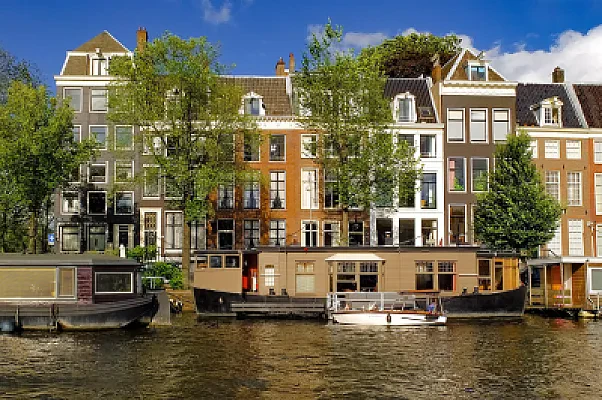
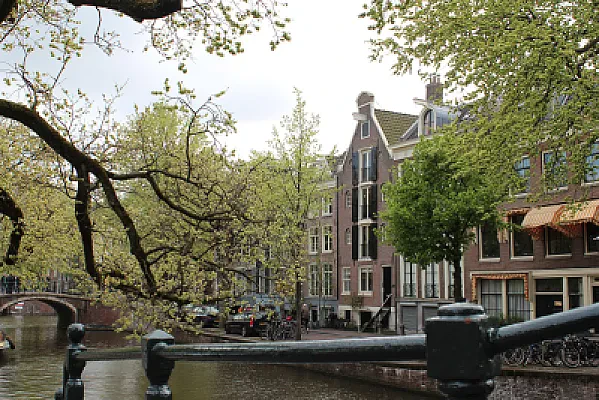
Technische Universiteit Eindhoven campus building
1 / 2

Founded in 1956, the Technische Universiteit Eindhoven (Eindhoven University of Technology) is a non-profit public higher education institution located in the urban setting of the small city of Eindhoven (population range of 50,000-249,999 inhabitants), North Brabant.

Officially recognized by the Ministerie van Onderwijs, Cultuur en Wetenschap, Nederland (Ministry of Education, Culture and Science of the Netherlands), Technische Universiteit Eindhoven (TUe) is a large-sized coeducational Dutch higher education institution. Technische Universiteit Eindhoven (TUe) offers courses and programs leading to officially recognized higher education degrees such as bachelor's degrees and master's degrees in several areas of study.

International students are welcome to apply for enrollment. TUe also provides several academic and non-academic facilities and services to students including a library, sports facilities, study abroad and exchange programs, as well as administrative services.

Location & Contact

Address, contact details, and online presence for Technische Universiteit Eindhoven are summarised below. Cross-check with the official website if you intend to send documents or financial information.

Address: Postbus 513
Postal Code: 5600 MB
Phone: +31 (40) 247 9111
Fax: +31 (40) 246 3120
Social Media:

Academic Details

Below are the institutional metrics for Technische Universiteit Eindhoven: scale, staffing balance, and accreditation context. These shape the academic experience more than headline rankings often suggest.

Academic Year: September to August (September-December; December-March; March-August)
Accrediting Agency: Accreditation Organisation of the Netherlands and Flanders (NVAO).
Admission Requirements: Secondary school (VWO) certificate in appropriate subjects (profile N+T; N+G; or combinatieprofiel van beiden N+T/N+G), or recognized equivalent
Student Enrollment: 10
Academic Staff Range: 400-499
Campus Setting: Urban
Memberships & Networks
European University Association (EUA) Conference of European Schools for Advanced Engineering Education and Research (CESAER)

Degrees

Find the degree level matching your study stage at Technische Universiteit Eindhoven. Bologna-process cycles (1st/2nd/3rd) map roughly to bachelor's, master's, and doctoral but with country-specific variations.

Bachelor's 3 programs

Bachelor's programmes build foundational expertise, preparing graduates for entry-level professional roles and further postgraduate study.

  • Architecture
  • Business Administration
  • Engineering
Master's 12 programs

Master's programmes develop advanced specialised expertise, suited to senior industry positions and applied research.

  • Architecture and Planning
  • Biomedical Engineering
  • Business Administration
  • Computer Engineering
  • Education
  • Electrical and Electronic Engineering
  • Engineering
  • Health Sciences
  • Law
  • Mathematics
  • Natural Sciences
  • Nuclear Engineering
Doctoral 9 programs

Doctoral programmes train independent researchers, leading to academic, scientific, and senior advisory careers.

  • Automotive Engineering
  • Biological and Life Sciences
  • Chemical Engineering
  • Chemistry
  • Education
  • Industrial Engineering
  • Mathematics
  • Mechanical Engineering
  • Physics

Faculties & Divisions

All faculties operate under Ministerie van Onderwijs, Cultuur en Wetenschap, Nederland.

Applied Physics (Faculty) 5 subjects offered

Specialisations & Subjects

  • Applied Physics
  • Nuclear Physics
  • Physics
  • Solid State Physics
  • Thermal Physics

Common Career Paths

  • Physicist
  • Research Scientist
  • Data Analyst

Illustrative career directions for this field; specific outcomes depend on programme and student choices.

Architecture, Building and Planning (Faculty) 6 subjects offered

Specialisations & Subjects

  • Architecture
  • Architecture and Planning
  • Building Technologies
  • Construction Engineering
  • Engineering Drawing and Design
  • Town Planning

Common Career Paths

  • Architect
  • Urban Planner
  • Interior Designer

Illustrative career directions for this field; specific outcomes depend on programme and student choices.

Biomedical Engineering (Faculty) 1 subject offered

Specialisations & Subjects

  • Biomedical Engineering

Common Career Paths

  • Biomedical Engineer
  • Medical Device Specialist
  • Clinical Engineer

Illustrative career directions for this field; specific outcomes depend on programme and student choices.

Chemical Engineering and Chemistry (Faculty) 7 subjects offered

Specialisations & Subjects

  • Analytical Chemistry
  • Chemical Engineering
  • Industrial Chemistry
  • Inorganic Chemistry
  • Organic Chemistry
  • Physical Chemistry
  • Polymer and Plastics Technology

Common Career Paths

  • Process Engineer
  • Plant Manager
  • Materials Specialist

Illustrative career directions for this field; specific outcomes depend on programme and student choices.

Electrical Engineering (Faculty) 5 subjects offered

Specialisations & Subjects

  • Computer Engineering
  • Electrical Engineering
  • Measurement and Precision Engineering
  • Power Engineering
  • Telecommunications Engineering

Common Career Paths

  • Electrical Engineer
  • Power Systems Engineer
  • Automation Specialist

Illustrative career directions for this field; specific outcomes depend on programme and student choices.

Industrial Design (Faculty) 1 subject offered

Specialisations & Subjects

  • Industrial Design

Common Career Paths

  • Designer
  • Creative Director
  • UX Researcher

Illustrative career directions for this field; specific outcomes depend on programme and student choices.

Industrial Engineering and Innovation Sciences (Faculty) 4 subjects offered

Specialisations & Subjects

  • Human Resources
  • Industrial and Organizational Psychology
  • Industrial Engineering
  • Labour and Industrial Relations

Common Career Paths

  • Engineer
  • Project Manager
  • Technical Consultant

Illustrative career directions for this field; specific outcomes depend on programme and student choices.

Mathematics and Computer Science (Faculty) 2 subjects offered

Specialisations & Subjects

  • Computer Science
  • Mathematics

Common Career Paths

  • Software Engineer
  • Data Scientist
  • Systems Analyst

Illustrative career directions for this field; specific outcomes depend on programme and student choices.

Mechanical Engineering (Faculty) 3 subjects offered

Specialisations & Subjects

  • Materials Engineering
  • Measurement and Precision Engineering
  • Mechanical Engineering

Common Career Paths

  • Mechanical Engineer
  • Design Engineer
  • Manufacturing Engineer

Illustrative career directions for this field; specific outcomes depend on programme and student choices.

Centre for Innovation Studies (Research Division) 2 subjects offered

Specialisations & Subjects

  • Industrial and Organizational Psychology
  • Management
Centre for Wireless Technology (Research Division) 3 subjects offered

Specialisations & Subjects

  • Radiophysics
  • Telecommunications Engineering
  • Telecommunications Services
Embedded Systems Institute (Research Division) 2 subjects offered

Specialisations & Subjects

  • Electrical and Electronic Engineering
  • Measurement and Precision Engineering
European Institute for Statistics, Probability, Stochastic Operations Research and its Applications (Research Division) 2 subjects offered

Specialisations & Subjects

  • Finance
  • Statistics

Common Career Paths

  • Statistician
  • Data Analyst
  • Actuary

Illustrative career directions for this field; specific outcomes depend on programme and student choices.

Institute for Complex Molecular Systems (Research Division) 3 subjects offered

Specialisations & Subjects

  • Applied Mathematics
  • Chemistry
  • Statistics

Programs Offered

Technische Universiteit Eindhoven's teaching offering by degree level. Programmes archived in past intakes may still appear on search engines; the live list here is the current source of truth.

Bachelor's Degree

8 programmes

Technische Universiteit Eindhoven lists 8 programmes that award a bachelor's degree — the foundational tier where students establish a discipline before narrowing their focus later.

Applied Mathematics Technische Wiskunde Engineering & Technology 3 years 180 ECTS credits English

In the Bachelor program Applied Mathematics, you will learn to transform everyday problems into mathematical models that help you solve problems and improve situations in everyday life.
You can find mathematical thinking everywhere. In debit card encryption, in transport planning, in spaceship design, in insurance rates, in designing wind farms, and in the time you spend waiting for the light to turn green: mathematicians trained at TU/e are involved in all these issues and more.

With applied mathematics, you can solve problems that at first may not even appear to be mathematical in nature: practical problems that exists in industry or governmental institutions.

This major offers a sophisticated balance between acquiring expert knowledge, learning skills and working on real-world challenges. After graduation, you will receive a Bachelor of Science (BSc) in Applied Mathematics.

Your major takes up about half of your three-year bachelor's degree program. You will take a number of essential courses and electives, learn theory, mathematical modeling and build your professional skills. In addition, you will follow courses that contribute to your future role as an engineer, involving working on a variety of real-world assignments, independently and in groups. With the assistance of your coach, you will
develop a solid foundation for a career involving mathematics.

Duration: 3 years
Credits: 180 ECTS credits
Local tuition: 2,694 EUR/year
Chemical Engineering and Chemistry Scheikundige Technologie Engineering & Technology 3 years 180 ECTS credits English

Develop new materials and processes for large-scale production. From smart molecules for drug delivery to sustainable energy solutions: shape the future with Chemical Engineering and Chemistry at TU/e

The bachelor’s program in Chemical Engineering and Chemistry at TU/e combines chemistry, materials science, and process engineering into a versatile degree. You’ll learn to design innovative substances and materials while mastering the techniques to scale these processes for industrial production. The program focuses on societal challenges like sustainable energy and health, equipping you to create solutions with real-world impact. Through a blend of theory and practice, you’ll apply your knowledge in hands-on projects. Work on designing smart molecules for controlled drug delivery or developing materials for cleaner energy technologies. Beyond technical skills, you’ll gain insights into the practical applications of your work, such as the role of organic chemistry in medical innovations. The program culminates in a major project, where you choose a topic that matches your interests and ambitions. Whether you plan to pursue further studies or enter the workforce, this bachelor’s program provides a solid foundation for a promising career in an international and innovative field.

Duration: 3 years
Credits: 180 ECTS credits
Local tuition: 2,694 EUR/year
Architecture, Urbanism and Building Sciences Engineering & Technology 3 years 180 ECTS credits English

AUBS is focused on all aspects relevant to the making or transforming of the Built Environment i.e.quality of life, safety, usefulness of the building, the city and surroundings.

You start with a broad basis in which all facets of the built environment are dealt with. You will follow courses in Architecture, Building Physics, Structural Engineering, Urban Planning and Real Estate. You learn how to work in teams, and you specialize in a discipline of which the exact profile is partly determined by your own ambitions. Through an interdisciplinary and multidisciplinary approach you will learn to communicate effectively with team members from other disciplines and collaborate on a well-conceived and thoroughly reasoned product.

Due to this multidisciplinary way of working, you are able to gain a broad insight in the design of buildings, houses, offices, museums or even entire neighborhoods. You will deepen your knowledge about the technology, design and the construction process.

You learn about the cohesion between various disciplines during design projects. You will also discover which discipline best fits you and where you want to develop your knowledge during the second year. During the third year you learn how to combine the various specialisms. For instance, by working in teams to complete multidisciplinary design assignments.

Duration: 3 years
Credits: 180 ECTS credits
Local tuition: 2,694 EUR/year
Sustainable Innovation Engineering & Technology 3 years 180 ECTS credits English

In Sustainable Innovation you study innovations from a technological, economic and societal perspective, to enable society at large to consume and produce in a sustainable way.
A society with sustainable consumption and production. That's the ambition of students of the Sustainable Innovation major.This major focuses on the introduction of new sustainable technologies in society, for example in energy supplies and the built environment. Introducing new technologies always involves a number of players: government, industry, social groups and knowledge institutes, as well as consumers. In Sustainable Innovation you consider a problem from the viewpoint of these different players. Just look at the introduction of solar panels: that involves much more than technology alone. Factors like costs, regulations and social acceptance are also important.

https://youtu.be/r55jWYf-JbE

Duration: 3 years
Credits: 180 ECTS credits
Local tuition: 2,694 EUR/year
Industrial Design Engineering & Technology 3 years 180 ECTS credits English

The bachelor's program Industrial Design focuses on designing interactive systems, products and related services that change, intensify or make life more comfortable.

As a student of Industrial Design Engineering, you will learn to translate new technologies and social trends and issues into innovations for everyday life. Making is an important part your learning path.

You will learn to incorporate innovation, data, creativity, technology, user needs, aesthetics, social impact and business interest into design. Smart home systems, artificial intelligence, smart clothing, health, sustainable materials and motivational games are examples of projects you may work on.

The Industrial Design curriculum is based on self-directed and competency-centered learning. You will work on design assignments in a team with fellow students. You will receive intensive guidance from fellow students, coaches, and experts and work together with researchers.

The international teaching staff consists of lecturers and supervisors, some of whom come from practice. Such as a design agency or a large company. There is close cooperation with the professional practice, and projects will often have clients from practice.

The official language of the bachelor's program is English.

Duration: 3 years
Credits: 180 ECTS credits
Local tuition: 2,694 EUR/year
Industrial Engineering Technische Bedrijfskunde Engineering & Technology 3 years 180 ECTS credits English

Industrial Engineers aim to improve the functioning of organizations through (re)design and streamlining of processes. In short, they want to make the organization operate better.
In this Bachelor's program, you will learn how to understand business processes from various perspectives: human, technological, data, information systems, economics, and organization. You aim to make organizations more efficient and streamline processes. You are results-oriented and driven to solve problems, improve quality, and increase production.

Whether it is production processes where you follow the flow of goods from raw materials to finished products or personnel processes where you examine the use of people, you want to solve bottlenecks, improve quality, and increase production. In short, you want to make the organization function better.

You will learn how to conduct integrated analyses of business processes, using knowledge in the areas of logistics, information systems, innovation management, business economics, and labor and organizational psychology, supported by your knowledge of mathematics and your skills in research and design.

https://youtu.be/mr-tsY3EW-g

Duration: 3 years
Credits: 180 ECTS credits
Local tuition: 2,694 EUR/year
Psychology & Technology Engineering & Technology 3 years 180 ECTS credits English

In Psychology & Technology you learn how technology influences people, and how you can use knowledge of psychology to let people use technology as effectively as possible.
Psychology & Technology is a degree program that gives you a solid foundation in behavioral science and behavioral research. You will also learn to think like an engineer by specializing in one of the following three technical fields: Robotics, ICT, or Living (architecture). You will take the subjects associated with the technical specializations at TUe's technical faculties. In addition, you have a wide choice of freely selectable subjects at TUe. A substantial part of our education is challenge-based, which means that students work on real challenges and problems. In the second year, you work on a multidisciplinary challenge-based project with students from other programs. The Bachelor's final project forms the conclusion of the program, you either work on a research project, or at the university Innovationspace where you work on challenges in collaboration with students from other programs (mostly corporate). After the Psychology & Technology program, you can start various advanced programs to start a career as an employee or entrepreneur.

https://youtu.be/zv5uxIKO57U

Duration: 3 years
Credits: 180 ECTS credits
Local tuition: 2,694 EUR/year
Electrical Engineering Engineering & Technology 3 years 180 ECTS credits English

Electrical Engineering plays a role in everything involving electricity and magnetism.
Electrical Engineering plays a role in everything involving electricity and magnetism. For instance, in the development of electrical motors for cars or the design of the very latest wireless chips for cell phones. Electrical Engineering is crucial in almost every modern technology: from reading information on a DVD to signal processing in medical equipment. At TU/e, for instance, we focus on wireless energy transfer. What does that mean for the future? Suppose the battery of your cell phone or tablet is always fully charged, then you won't need a separate charger. And you can use your TV anywhere because you won't have to plug it in!

Duration: 3 years
Credits: 180 ECTS credits
Local tuition: 2,694 EUR/year

Master's Degree

20 programmes

Technische Universiteit Eindhoven lists 20 programmes awarding a master's — the tier where graduates build the specialist credentials many senior and technical roles now expect.

Systems and Control Engineering & Technology 2 years 120 ECTS credits English

The Systems and Control master's program will train you to be an engineer with strong professional expertise in modeling, systems analysis, and controller design.
The Master's program Systems and Control will train you to be a specialist in the modeling and control of complex technical systems and processes of this type. To do this successfully, you take courses that cover the theory and mathematical basis behind modeling, systems analysis, and controller design, and you apply this theory to real systems. You will also gain knowledge about data-based control and artificial intelligence, as both topics are important in the design and control of future high-tech systems. In addition, you have the freedom to choose more than half of your courses from a list of electives, which allows you to delve into the application techniques you find most interesting.

Duration: 2 years
Credits: 120 ECTS credits
Local tuition: 2,694 EUR/year
Innovation Management Engineering & Technology 2 years 120 ECTS credits English

The Master Innovation Management is a challenging program that prepares students to lead innovation processes and manage change in various organizations and sectors.
Innovation Management studies the management of innovation processes and develops theories, tools and techniques to make businesses more innovative. Key aspects of this discipline are management of product
development, technology entrepreneurship, marketing management, human aspects of innovation, strategy and technology management. The program introduces students to academic theories, tools and techniques to manage innovations both within and across companies. You will learn how to use the knowledge that you gain in carrying out research into innovation management and in industrial applications. You will also learn how to analyze the current innovative performance of a company, explain it in terms of quality, cost and time, and improve this performance by re-engineering innovation processes.
As a graduate you are well-prepared for a wide range of positions and careers. You can work as a product development manager, innovation manager, procurement and inventory manager, strategy consultant, or manager of research and development alliances. You can also start your own business or choose a career in research.
The Master IM at TU/e is a 2-year, full-time, English-taught program.

Duration: 2 years
Credits: 120 ECTS credits
Local tuition: 2,694 EUR/year
Construction Management and Engineering Engineering & Technology 2 years 120 ECTS credits English

CME is offered by the Built Environment and Industrial Engineering & Innovation Sciences. Unique by research-driven and project-oriented approach to education.

Construction Management & Engineering (CME) Master at TU/e explores the area between 'construction engineering' and 'scientific management and economics'. It focuses on managing and implementing information processes, emphasizing smart cities & buildings grounded in societal challenges (e.g., climate change, energy transition, circular economy, digital twinning). It looks at:
•City Information Management (CIM)
considering urban informatics (e.g., geospatial data, sensor data, 3D city data), creating virtual representations of cities with real-time connections to the physical world and its residents, catering to various stakeholders (e.g., municipalities, citizens, architects, planners, engineers, companies) to make informed decisions using urban analytics in smart cities.
•Building Information Management (BIM)
managing information throughout the building life cycle, improving the Architecture, Engineering, Construction, Operation, and Demolishment process, using both static data (e.g., building models, point clouds) and dynamic data (e.g., sensor data, IoT) to create digital twins of buildings and its occupants and process data employing AI technology in smart buildings.

Duration: 2 years
Credits: 120 ECTS credits
Local tuition: 2,694 EUR/year
Embedded Systems Engineering & Technology 2 years 120 ECTS credits English

The Embedded Systems program focuses on the design of efficient and reliable systems.
You can find embedded systems in many of the products that we use every day, from television sets to copiers. The combination of computer science (software) and electrical engineering (hardware) in these types of equipment requires an integrated approach towards the design process. That in turn requires a new type of engineer who has a knowledge of both software and hardware. The Master's program in Embedded Systems is a co-production of the departments of Mathematics and Computer Science and Electrical Engineering, awaiting students with a Bachelor's in computer science or electrical engineering. It rests on a sound theoretical foundation, with an emphasis on the design of quality embedded systems.

To construct reliable protocols for the behaviour of complex software systems, you need to have knowledge of algorithms, performance, hardware, and design and documentation methods. These subjects are all covered as part of this program. You also need an understanding of the variability and maintainability of these protocols, aspects that are covered in the compulsory element of the program.

Duration: 2 years
Credits: 120 ECTS credits
Local tuition: 2,694 EUR/year
Artificial Intelligence and Engineering Systems Natural Sciences & Mathematics 2 years 120 ECTS credits English
Duration: 2 years
Credits: 120 ECTS credits
Local tuition: 2,694 EUR/year
Operations Management & Logistics Business & Management 2 years 120 ECTS credits English

Operations Management & Logistics is a multidisciplinary field that covers disciplines as supply chain management, information systems, human performance management, and transportation.
The program provides theories, skills, and techniques for studying, improving, and mastering operational processes. The technical business knowledge you acquire is applied in various projects, where you will experience conducting your own research and applying it in highly complex systems in practice. The final project is an empirical research project, which means you determine the research question yourself and conduct the study independently. This usually takes place in close collaboration with a company and is always related to the activities of the Beta research school. Logistics Research in Eindhoven is among the top in Europe. In the program, education is closely intertwined with the most recent research results. In terms of the educational model, the courses are characterized by extensive project work and depth in both research and practice. The mentor plays a crucial role in the program and will guide you throughout three out of the four semesters. Lastly, the Eindhoven program distinguishes itself from others through its strong international orientation.

https://youtu.be/zWRZSBwovEU

Duration: 2 years
Credits: 120 ECTS credits
Local tuition: 2,694 EUR/year
Cybersecurity Natural Sciences & Mathematics 2 years 120 ECTS credits English

Transform from Bachelor in Computer Science and Mathematics into an academic expert in the area of information security in general and computer and network security in particular!
From unauthorized access to malicious manipulation, the threats that exist when storing or sending electronic data are on the increase. For that reason, data security is of ever greater importance. Information Security Technology provides the essential tools for data protection and secure communication.

The IST master track allows you to familiarize yourself with subjects such as:

  • Cyberattacks
  • Cipers and cryptographic protocols
  • Access control
  • Network security
  • Defensive software mechanisms
  • Protocol verification


The program will teach you how to become is an academic expert in the area of information security in general, and in computer & network security in particular.

Duration: 2 years
Credits: 120 ECTS credits
Local tuition: 2,694 EUR/year
Science and Technology of Nuclear Fusion Engineering & Technology 2 years 120 ECTS credits English

The global pursuit of nuclear fusion—an energy source that is safe, clean, and virtually limitless—is accelerating at an unprecedented pace. While ITER in southern France remains the cornerstone of fusion research, the field has expanded dramatically.

Startups worldwide are racing to revolutionize fusion technologies, governments are competing to build the first operational fusion reactors, and breakthrough demonstrations of fusion energy production have sparked new hope for a sustainable energy future.

Controlling matter at temperatures exceeding 100 million degrees, designing and operating superconducting magnets, withstanding intense power fluxes and radiation, and mastering the operation of the most complex machines ever built. These are not just technical feats—they are opportunities to be part of a transformation that could redefine energy for humanity. At Eindhoven University of Technology, our Master of Science and Technology of Nuclear Fusion equips you to meet these challenges head-on. The program integrates applied physics, mechanical engineering, and electrical engineering into a cohesive curriculum tailored to the practical goals of fusion research and technology development. Beyond technical expertise, you will gain experience in international, interdisciplinary teams, with a strong focus on the societal and ethical aspects of fusion energy.


Duration: 2 years
Credits: 120 ECTS credits
Local tuition: 2,694 EUR/year
Mechanical Engineering Engineering & Technology 2 years 120 ECTS credits English

Mechanical engineering is about devising, designing, analyzing, making and improving technological solutions, from large scale to below nanometer level.
In the Master's degree program Mechanical Engineering you learn to apply concepts and models to complex engineering issues arising in science and industry. Teaching and research are closely integrated within this program. You are kept aware of the latest developments in the discipline. You become familiar with all the latest tools and technologies. The Master's Program of Mechanical Engineering consists of three research clusters, each with its own research area. At the start of your master's program, you choose one of these clusters, namely Dynamical Systems Design (DSD), Computational and Experimental Mechanics (CEM) of Thermo Fluids Engineering (TFE). The specialization you choose is an important point of focus in your master's program. The first year is dedicated to a core program, specialization courses, professional skills and electives. Most of the second year is dedicated to an internship and graduation project.

The Master's program Mechanical Engineering is an excellent starting point for an interesting career: the department works intensively with many large and smaller high-tech companies.

Duration: 2 years
Credits: 120 ECTS credits
Local tuition: 2,694 EUR/year
Data Science and Artificial Intelligence Engineering & Technology 2 years 120 ECTS credits English

The Master DS&AI aimed at students interested in studying and combining advanced data analysis techniques with AI methods and techniques in order to understand, use and develop intelligent systems.
Each year of this two-year master program is divided into semesters (September to January, and February to July) and each semester is composed of two quartiles of ten weeks each. During this time, you have lectures, followed by an examination period of two to three weeks. During these two years, you will follow core and specialization courses, electives and professional development courses, possibly do an internship and carry out your final graduation project.

The program is taught in English.

Students who finish their Master Data Science and Artificial Intelligence will be Master of Science (MSc) in Data Science and Artificial Intelligence and will receive a Data Science and Artificial Intellifence-diploma. This diploma guarantees the development of a scientific perspective combined with an engineering approach that forms an excellent foundation for a successful career.

Duration: 2 years
Credits: 120 ECTS credits
Local tuition: 2,694 EUR/year
Chemical Engineering Engineering & Technology 2 years 120 ECTS credits English

Chemical engineering plays an important role to solve many societal, economical, social and ethical problems. For example the development of new sorts of energy, new materials and new molecules.

In the program Chemical Engineering at TU/e, you are trained as a chemical engineer, specializing in innovative solutions for global challenges in sustainability, energy, and health. The program integrates cutting-edge research with practical applications, equipping you to tackle societal and technological issues with expertise in areas like organic and supramolecular chemistry, catalysis, process engineering, and materials science. You will explore topics such as creating sustainable materials, developing cleaner energy technologies, and driving medical innovations. The program offers two tracks: Molecular Systems and Materials Chemistry and Chemical and Process Technology, allowing you to tailor your studies to your interests and career ambitions. The close integration of education and research ensures that the program is rooted in the latest insights from internationally renowned research groups and institutes at TU/e. As a Master's student, you actively participate in research activities, benefiting from TU/e's strong international reputation. This combination of practical experience and scientific advancement prepares you for a future at the forefront of chemical engineering.

Duration: 2 years
Credits: 120 ECTS credits
Local tuition: 2,694 EUR/year
Automotive Technology Engineering & Technology 2 years 120 ECTS credits English

Automotive Technology offers a Master's degree program based on a systems approach, providing multidisciplinary knowledge. There are no comparable programs in Europe.
The automotive industry is fast-moving with new technologies. The traditional car has been developed into a controlled high-tech system full of mechanics, electronics, sensors and informatics. The increase in vehicle intelligence has led to a vast demand for highly educated engineers able to think on system level, to work in a variety of disciplines and to observe the complete system rather than a collection of components.

This program teaches students to observe the car as a system. It offers in-depth knowledge about essential parts of a vehicle, e.g. dynamics, real-time software, electric powertrains, and human-machine interaction. The program gives an outstanding starting point for a successful career. Eighty percent of the Dutch automotive industry is located in the region of Brainport Eindhoven.

The Automotive Technology educational program includes generic core courses, elective courses and project assignments. The program is built around two specializations: Smart Mobility and Sustainable Mobility. The second year consists of an internship and a graduation project.

Duration: 2 years
Credits: 120 ECTS credits
Local tuition: 2,694 EUR/year
Computer Science and Engineering Engineering & Technology 2 years 120 ECTS credits English

Do you want to play a leading role in the development in scientific research, industry, business or in (government) organizations? Then join TU/e's Master Computer Science and Engineering program!
In the Master of Computer Science and Engineering program, you will learn to design quality software. You will also combine a scientific perspective with the approach of an engineer. You will systematically produce inventories of requirements and incorporate them into your design. You will also be able to make qualitative and quantitative judgments regarding the extent to which those requirements have been met.

This program equips you with knowledge of algorithms, performance, hardware, and design and documentation methods. You will be able to apply this to create reliable protocols for the behaviour of complex software systems. As a master-level graduate, you will be able to play a leading role in the development of your specialist field, whether in scientific research, in industry, in commercial businesses or in (government) organizations.

A wide choice of electives gives you the freedom to determine the content of your program, enabling you to take your studies in any direction.

Duration: 2 years
Credits: 120 ECTS credits
Local tuition: 2,694 EUR/year
Connected World Technologies Natural Sciences & Mathematics 2 years 120 ECTS credits English

Broadband Telecommunication technology is a key enabler for today's information society. It's a field with strong dynamics, so it's crucial that there are constantly innovations.
The special Master's track is broadly based, including, photonic IC's, wireless transceiver electronics, network operation, computational electromagnetics, adaptive signal processing, ultra-fast optical switching and signal coding. Telecommunication is a very broad field, comprising research, development and manufacturing of devices, equipment and systems. Furthermore it covers the development and operation of a broad spectrum of applications. As a graduate you will be able to find employment at a very wide range of companies and institutes. For example you could find work in telecommunication operators, manufacturers of equipment and systems, application developers, service providers, network installation and exploitation companies, research institutes, consultancies and government agencies.

Duration: 2 years
Credits: 120 ECTS credits
Local tuition: 2,694 EUR/year
Architecture, Building and Planning Engineering & Technology 2 years 120 ECTS credits English

Building engineers have a high degree of responsibility in finding the right balance between science, technology and design.

The master's program Architecture, Building and Planning consists of courses and design and research projects teaching you to solve future societal problems related to the built environment. The master's program ABP has 6 master tracks:

  • Architectural Urban Design and Engineering (AUDE)
  • Building Physics and Services (BPS)
  • Urban Systems and Real Estate (USRE)
  • Structural Engineering and Design (SED)
  • EIT Sustainable Urban Mobility Transitions (SUMT)
  • EIT Smart Mobility Data Science and Analytics (SMDA)

A key characteristic of the program is its in-depth disciplinary character with a relation to the other building disciplines that you can shape yourself based on your personal interests. Using the knowledge you gain in your own discipline, you learn to understand problems of the other disciplines. You will develop a design-oriented approach based on analytical abilities, synthetic skills and the many opportunities offered by information technology. Whatever your preferences, this program offers you a wide range of opportunities to choose from and you as a student define the focus of your program yourself.

Duration: 2 years
Credits: 120 ECTS credits
Local tuition: 2,694 EUR/year
Industrial and Applied Mathematics Engineering & Technology 2 years 120 ECTS credits English

The Industrial and Applied Mathematics (IAM) Master offers an excellent program combining training in applied mathematics with personal development, soft skills training, and career preparation.
Mathematics is flourishing in a world full of exciting developments. Technological advances in the digital domain pose new challenges as well as new opportunities. This is reflected in the enormous increase in the availability of data and its use in society and industry (Big Data, data science, smart industry), as well as the increase in computing power (equal contributions of faster computers and better algorithms). There are also future developments, like quantum computing, that have already cast their shadow on security, prompting (for instance) the development of post-quantum cryptography. There is thus an increasing need in society for applied mathematicians with state-of-the-art mathematical knowledge and skills.

This Master's program offers you an excellent place to learn the tools and methods needed to start contributing to society's technological needs. It provides large flexibility through a wide range of elective courses. The teaching in the master's program is strongly related to the departmental research focus areas. Apart from the mathematical topics, the program also covers personal development, soft skills, and career orientation.

Duration: 2 years
Credits: 120 ECTS credits
Local tuition: 2,694 EUR/year
Sustainable Energy Technology Engineering & Technology 2 years 120 ECTS credits English

The Sustainable Energy Technology master's program will train you to be an engineer with deep expertise in the field of energy technology. You will be up to date with the latest developments.
The Master's program Sustainable Energy Technology (SET) is an interdisciplinary program in which six departments work together. The six departments are: Mechanical Engineering, Electrical Engineering, Chemical Engineering and Chemistry, Applied Physics, Architecture, Building and Planning and Industrial Engineering & Innovation Sciences. This collaboration ensures that energy technologies are highlighted from different perspectives.

In the master Sustainable Energy Technology you will be trained to be an engineer with scientific knowledge who can analyze the current energy transition from techno-economic and social perspectives. With courses given by the various departments, you will receive a broad education but will also have plenty of opportunities to deepen your specialization in the aspect of the energy transition that interests you. Topics include the operation of the current energy market, the electricity network, the operation of energy sources such as solar panels, solar collectors, heat pumps, wind energy, biomass, and the global impact of renewable energy sources.

Duration: 2 years
Credits: 120 ECTS credits
Local tuition: 2,694 EUR/year
Human-technology Interaction Engineering & Technology 2 years 120 ECTS credits English

The interaction between technology and their users is central in the HTI-master. Students acquire basic psychological knowledge and learn to apply this to improve existing, or design new technologies.
This Master's program focuses on the user of technology. The program offers advanced psychological knowledge and combines it with technological knowledge and skills of free choice. Besides attending courses, students in the first year work in teams on a 'user-centered' design, and carry out a research project. The second year consists of an international track or an internship, after which the Master concludes with a Master's thesis project. A student carries out this Master's thesis project individually under the supervision of lecturers. As a graduate of the program you will be able to assess the viability of new technological developments in relation to human constraints, preferences and capabilities.

https://youtu.be/Wzcrha6kky0

Duration: 2 years
Credits: 120 ECTS credits
Local tuition: 2,694 EUR/year
Applied Physics Engineering & Technology 2 years 120 ECTS credits English

Applied physicists have a different view of the world around us. Physical phenomena become fascinating challenges to investigate and analyze. As an applied physicist, you take it a step further by using your knowledge to create new technologies.
For example, think of:

  • improving quantum communication
  • advancing future clean renewable energy systems
  • developing faster and smarter photonic chips

You will work on ambitious projects at the forefront of physics and real-world applications. Often, you will be part of multidisciplinary teams, collaborating with research institutes and high-tech companies in the Brainport region.

Novel experimental and computational tools and leading technologies
The master's program in Applied Physics leads to a Master of Science in Applied Physics (MSc). You will develop your expertise in a specialized field. Through practice-oriented projects and advanced tools, you will be well prepared for complex challenges and a career in which you can make a meaningful contribution to society.

Duration: 2 years
Credits: 120 ECTS credits
Local tuition: 2,694 EUR/year
Biomedical Engineering Engineering & Technology 2 years 120 ECTS credits English

Today's technology has become an essential part of modern healthcare. We use physics, chemistry, mathematics and electrical engineering, together with a medical and biological understanding.
The program in Biomedical Engineering aims to train engineers who are able to organize and carry out both fundamental and applied research in the field of biomedical engineering. This relatively new engineering discipline is based on integrating technological and life sciences, and allows you to specialize in a number of different directions. The subject matter is complex, and the focal areas involved include innovation and development.

The program is research-driven and design-oriented. Most of the courses have a biomedical and technical orientation. As a biomedical engineer you will be able to work in a number of different disciplines within the overall field of biomedical engineering, for example as a developer or designer of products or services based on medical technology for trade and industry. It is also possible to follow a program for clinical physicists after your master's, although this means that you will have to take specific elective courses during your master's program. The program is research-driven, and as a student your academic training is based on intensive involvement in research.

Duration: 2 years
Credits: 120 ECTS credits
Local tuition: 2,694 EUR/year

Associate, Certificate & Other Qualifications

2 programmes

These 2 programmes group Technische Universiteit Eindhoven's shorter and preparatory qualifications together: associate degrees, diplomas, certificates, and foundation courses that suit focused or transitional study.

Automotive Systems Design Engineering & Technology 2 years 120 ECTS credits English

Are you ready to kick-start your career in high-tech automotive? Then join TU/e's Automotive Systems Design program!
Are you about to receive your master's degree, but are you not quite done learning? Are you ready to sink your teeth into a high-tech project of your own? Join one of the Professional Doctorate in Engineering (PDEng) programs at TU/e. You will become an expert in high-level technological design and gain valuable work experience in the research and development departments of leading high-tech companies.

The automotive industry is rapidly changing into a high-tech sector facing huge challenges in terms of multidisciplinary product and process engineering. The trend towards smart components and systems is a strong driver for the Dutch automotive sector and requires new generations of engineers with additional skills and training. As a technological designer, you can have the rewarding task of translating new
ideas and plans into automotive system designs. The Automotive Systems Design program will give your career in high-tech automotive a kick-start. In the program you focus on strengthening both your
technical and non-technical competencies relating to efficient, effective design and development of technologies and applications for modern high-tech automotive systems.

Duration: 2 years
Credits: 120 ECTS credits
Data Science 2 years 120 ECTS credits English

The Professional Doctorate in Engineering program Data Science is a two-year post-master's program. It qualifies its students to become top-level professional data scientists.
Data Science is concerned with the problem of finding patterns and creating value from vast streams of data in the context of a data domain.

The main themes of the program are:
• Collect, explore, analyze, interpret, and present huge data sets
• Approach data and domain problems from multiple perspective
• Create value for organizations by designing novel data driven solutions

The program combines statistics, computer science, mathematics, and design theory with the business acumen to explore data sets, gather insights, visualize results, and communicate meaningful findings to stakeholders taking into consideration underlying ethical and legal aspects.

About PDEng
A PDEng program is a more industry-oriented alternative to a PhD trajectory. Whilst a PhD is focused on a career as an independent researcher, a PDEng prepares a trainee for an industrial career as a technological designer. Like a PhD candidate, a PDEng candidate has the status of TU/e employee after being selected for this program, and receives a salary and attractive benefits package.

Duration: 2 years
Credits: 120 ECTS credits

How to apply to Technische Universiteit Eindhoven

Step-by-step guidance for applying to Technische Universiteit Eindhoven, covering the typical sequence from programme selection to admissions follow-up.

  1. 1
    Find a programme that fits your goals

    Start by exploring the programmes section on this page. Technische Universiteit Eindhoven runs 30 active programmes across multiple degree levels. Narrow by qualification tier and read each programme description before shortlisting.

  2. 2
    Confirm you meet the requirements

    Before applying to Technische Universiteit Eindhoven, confirm you meet the academic, language, and document requirements for your chosen programme. International applicants should also check visa eligibility for Netherlands.

  3. 3
    Assemble your application package

    Standard documents: official transcripts, identity proof, language test results, personal statement, and references. Confirm exact requirements with Technische Universiteit Eindhoven's admissions office before assembling, as expectations vary by programme.

  4. 4
    Submit your application

    Lodge your application through the official website (www.tue.nl). Online forms are the standard route. Save your draft frequently and submit before the programme deadline.

  5. 5
    Contact admissions and follow up

    Verify your application has been received by the admissions team. Reach the institution by phone at +31 (40) 247 9111. Monitor the portal for status updates, interview invitations, or document requests, and respond within the stated deadlines.

Frequently Asked Questions about Technische Universiteit Eindhoven

The questions below summarise Technische Universiteit Eindhoven's vital institutional details — useful as a quick reference before drilling into specific sections.

When was Technische Universiteit Eindhoven founded?

Technische Universiteit Eindhoven was established in 1956 (approximately 70 years ago).

Where is Technische Universiteit Eindhoven located?

Technische Universiteit Eindhoven is located in Eindhoven, Netherlands.

Is Technische Universiteit Eindhoven a public or private institution?

Technische Universiteit Eindhoven is a public institution.

What is the student enrolment at Technische Universiteit Eindhoven?

Student enrolment at Technische Universiteit Eindhoven is around 10,000-14,999.

How is Technische Universiteit Eindhoven ranked?

It ranks #333 globally and #10 in Netherlands.

What programmes are available at Technische Universiteit Eindhoven?

Technische Universiteit Eindhoven offers bachelor's, master's and doctoral programmes.

Is Technische Universiteit Eindhoven officially recognised?

Yes, Technische Universiteit Eindhoven is recognised by Accreditation Organisation of the Netherlands and Flanders (NVAO)..

What is Technische Universiteit Eindhoven's official website?

The institution's website is www.tue.nl.

Top-Ranked Universities in the Netherlands

Alumni network strength of the Netherlands's national leaders compounds over time. The peer-graduate networks at top institutions often outweigh academic differences in long-run career outcomes.

Members of European University Association (EUA)

Member institutions of European University Association (EUA) often have reciprocity arrangements on accreditation — degrees from one member institution typically face fewer credential-recognition issues at others.

Faculties at Nearby Universities

Healthcare and student insurance rules often apply at the regional level around Technische Universiteit Eindhoven. Nearby universities typically follow the same health-coverage requirements for enrolled students.

Where Else to Study Engineering & Technology

Supervision quality at the Engineering & Technology programme level is hard to assess externally but affects research output and graduate-school placement. Talk to current students or alumni where possible.

Universities Often Compared with Technische Universiteit Eindhoven

Yield rates (proportion of admitted students who enroll) cluster among peer institutions. High-yield universities signal strong applicant preference compared to peers at the same selectivity level.

Explore More Universities in Netherlands

Free calculators and converters to plan your study-abroad journey.

Latest Articles

Fresh guides and advice for studying abroad.

View all →
System Share
Copy Link
More Share Options