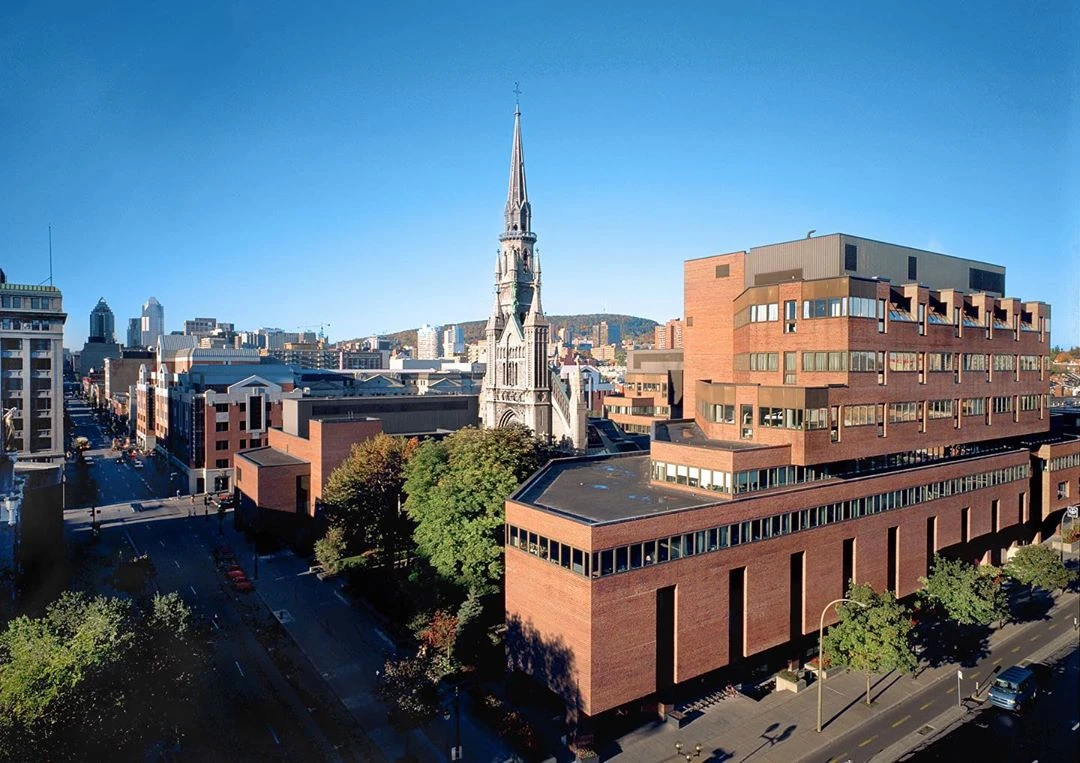
MA/MS in Sciences de l'atmosphère is a master's degree in Natural Sciences programme offered by Université du Québec à Montréal in Montréal, Canada. The programme runs for 2 years, delivered on campus. Tuition for international students is CAD 712 per credit (CAD 104 per credit for local students).
Also offered as: Certificate
At a glance
Degree:Master's Degree
Field:Natural Sciences
Duration: 2 years
Delivery: On Campus
Local tuition: CAD 104 / credit
International tuition: CAD 712 / credit
We have no an application deadline on record for this programme yet — see the official programme page.
— it helps other students.
Last reviewed September 2026 ·
Program details
Overview
The Master of Science in Atmospheric Sciences (Sciences de l'atmosphère) at Université du Québec à Montréal is a research-based programme combining coursework with an independent thesis project. It totals 45 credits: 19 in coursework and 26 for the research thesis, completed over a nominal two years full-time, with a maximum of three years full-time or five years part-time. Coursework covers atmospheric physics, synoptic meteorology, cloud dynamics, climate physics, data assimilation, and atmospheric remote sensing. The programme meets World Meteorological Organization standards and professional meteorologist certification requirements, preparing graduates for careers in weather forecasting, air quality, climate modelling, wind energy, or doctoral studies. Admission requires a bachelor's degree in meteorology, atmospheric sciences, physics, applied sciences, or a related field, completed with a cumulative average of at least 3.2 on a 4.3 scale; applicants averaging 2.8 to 3.2 may be considered. Essential prerequisite knowledge includes applied mathematics and classical physics; candidates lacking this background must complete additional prerequisite courses. Admission is in the fall term only.
Requirements
Minimum GPA:3.20 / 4.3
Admission Requirements: Admission requires a bachelor's degree in meteorology, atmospheric sciences, physics, applied sciences, or a related field, completed with a cumulative average of at least 3.2 on a 4.3 scale; applicants averaging 2.8 to 3.2 may be considered. Applicants need essential prerequisite knowledge in applied mathematics (calculus, differential equations, programming) and classical physics (mechanics, thermodynamics, waves, electromagnetism); candidates lacking this background must complete prerequisite courses.