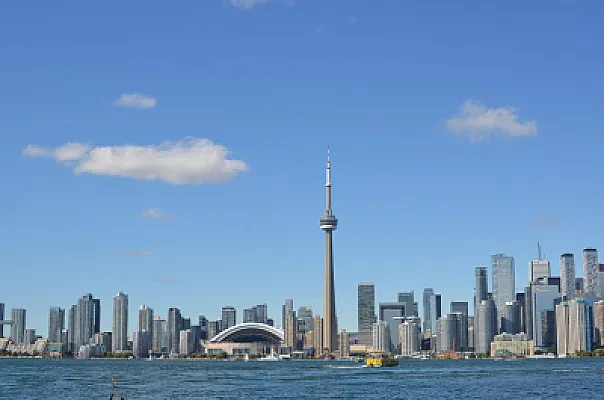
Humber Polytechnic (formerly Humber College Institute of Technology & Advanced Learning) is one of Canada's largest publicly funded polytechnic institutions, operating three Toronto campuses: North (205 Humber College Blvd., Etobicoke), Lakeshore (3199 Lake Shore Blvd.
West) and the Downtown Campus / International Graduate School at 59 Hayden Street. Branded as Canada's Polytechnic, Humber delivers career-focused education across six faculties spanning applied technology, business, health and life sciences, liberal arts, media and design, and social and community services.
It offers 204 full-time programs in 17 areas of interest, ranging from certificates, diplomas and advanced diplomas to honours bachelor's degrees, Ontario graduate certificates, apprenticeships and master's degrees, alongside large continuous professional learning and real estate education operations. Per its 2024-2025 annual report, Humber enrolls 66,760 full-time students plus over 21,000 professional learners.
Teaching emphasizes work-integrated learning, industry partnerships and hands-on training in state-of-the-art labs.
International students are admitted in three intakes (September, January, May) with rolling, capacity-limited admissions, and the institution provides on-campus residence for more than 1,700 students at its North and Lakeshore campuses.
Location & Contact
Humber College's physical location and the contact details prospective students typically need before applying or visiting. Channels listed below come from the institution's published profile.
Address: 205 Humber College Blvd., Toronto, Ontario M9W 5L7 (North Campus)
Below are the institutional metrics for Humber College: scale, staffing balance, and accreditation context. These shape the academic experience more than headline rankings often suggest.
Academic Year: Three intakes: Fall (September), Winter (January) and Summer (May). Fall 2026 classes begin Sep 8, 2026; Winter 2027 classes begin Jan 11, 2027; Summer 2027 orientation runs May 3-7, 2027. Fall and Winter terms include reading weeks; the college is closed Dec 24-Jan 1.
Admission Requirements: DOMESTIC APPLICANTS (Canadian citizens, permanent residents and protected persons) apply through ontariocolleges.ca rather than to Humber directly; the processing fee charged there is CAD 150 and is non-refundable. Academic basis: an Ontario Secondary School Diploma or an accepted equivalent - a Grade 12 diploma from any other province or territory, Secondary V in Quebec - together with the Grade 11 and Grade 12 courses each program lists on its own page. Humber sorts applicants into three routes. Secondary-school applicants still in Grade 12 are assessed on Grade 11 marks and any conditional offer needs a final Grade 12 transcript before classes begin. College or university transfer applicants are assessed on their post-secondary courses, and for a bachelor's degree the post-secondary GPA carries the decision. Mature applicants are those without completed secondary or post-secondary study who will be 19 or older on the first day of class for a certificate or diploma, or 21 or older for a degree; they may be invited to admission testing, but degree applicants must still present the required U-level courses because testing cannot substitute for them. A Canadian citizen or permanent resident educated outside Canada must have credentials assessed - ICAS for a secondary-school transcript, WES for post-secondary study - course-by-course wherever specific courses or a ranking grade are needed. Degree applicants must disclose their complete education history.
INTERNATIONAL APPLICANTS (living outside Canada, or inside Canada without permanent residency) apply instead on Humber's own web application; the fee is CAD 100, covers up to two program choices in a single intake, and waiver codes are offered to some applicants already onshore. Academic entry is set country by country - use Humber's Academic Equivalency tool for the standard that applies to your school system - and the same program-specific prerequisites and extras (portfolio, audition, letter of intent, references) apply as for domestic applicants.
ENGLISH PROFICIENCY applies to both groups whenever English is not your first language or your previous education was in another language, and Humber publishes a different minimum for each credential level. Certificates, diplomas and advanced diplomas: IELTS Academic 6.0 overall with nothing under 5.5; TOEFL iBT 80 with 20 in each skill, or 4.0 with nothing under 3.5 on the scale used from January 2026; PTE Academic 53-57; Duolingo 105; CAEL 60; MET 56; LanguageCert Academic 65-69 with no skill under 60. Bachelor's degrees: IELTS 6.5 with nothing under 6.0; TOEFL iBT 84 with 21 per skill, or 4.5 with nothing under 4.0 on the new scale; PTE 58-60; Duolingo 115; CAEL 60 including 60 in writing; MET 59; LanguageCert 70-74 with no skill under 65. Bachelor of Science - Nursing sits higher again: IELTS 7.0 with nothing under 6.5; TOEFL iBT 100 with 21 per skill, or 5.0 with nothing under 4.5 on the new scale; CAEL 60 with 60 in writing; MET 64; LanguageCert 75-79 with no skill under 70. Graduate certificates and master's degrees: IELTS 6.5 with nothing under 6.0; TOEFL iBT 88 with 22 per skill, or 4.5 with nothing under 4.0 on the new scale; PTE 61-64; Duolingo 125; CAEL 70; MET 62. Results stay valid for 24 months and individual programs may set a higher bar; Duolingo is not accepted for the Pharmacy Technician diploma. Instead of a test you may present one year of full-time secondary study in an English-language school system (accepted for every level except master's degrees), or one successful full year at an accredited college or university where English was the language of instruction. Humber's own English for Academic Purposes route also qualifies you: a 60 per cent Semester 2 average for certificates, diplomas and advanced diplomas, 75 per cent for bachelor's degrees, and 80 per cent at Level 8 for graduate certificates and master's degrees. Applicants whose first language is French can waive testing by showing three years of English in a Canadian secondary school or its equivalent.
Total Students: 66,760
Campus Setting: Urban
Academic Structures
Humber College's organisational chart for teaching: faculties, schools, institutes, and constituent units. Research-intensive universities often add institutes or centres alongside teaching faculties.
Unit8 items
Faculty of Applied Sciences & Technology
Faculty of Health & Life Sciences
Faculty of Liberal Arts & Sciences
Faculty of Media, Creative Arts, and Design
Faculty of Social & Community Services
Longo Faculty of Business
School of Clean Energy
School of Nursing
Programs Offered
Humber College's programme list, with search and degree-level grouping. Search matches programme names; if you don't see your subject, check the divisions section to locate the relevant faculty.
Clinical Psychology · 8 semesters · On-campus · English
International tuition:CAD 23,368/yearLocal tuition:CAD 7,854/yearStart:SeptemberMin. GPA:65.00 / %
Domestic applicants apply through ontariocolleges.ca under Humber's general admission process. The Bachelor of Behavioural Science requires an Ontario Secondary School Diploma or equivalent, including Grade 12 English (E...
International tuition:CAD 23,332/yearLocal tuition:CAD 7,904/yearStart:SeptemberMin. GPA:65.00 / %
Domestic applicants apply through ontariocolleges.ca under Humber's general admission process. The Bachelor of Child and Youth Care requires an Ontario Secondary School Diploma or equivalent, including Grade 12 English (...
Business Administration · 8 semesters · On-campus · English
International tuition:CAD 23,077/yearLocal tuition:CAD 7,854/yearStart:September and JanuaryMin. GPA:65.00 / %
Domestic applicants apply through ontariocolleges.ca under Humber's general admission process. The Bachelor of Commerce – Accounting requires an Ontario Secondary School Diploma or equivalent, including Grade 12 English...
Business Administration · 8 semesters · On-campus · English
International tuition:CAD 23,111/yearLocal tuition:CAD 7,854/yearStart:September and JanuaryMin. GPA:65.00 / %
Domestic applicants apply through ontariocolleges.ca under Humber's general admission process. The Bachelor of Commerce – Digital Business Management requires an Ontario Secondary School Diploma or equivalent, including...
International tuition:CAD 23,077/yearLocal tuition:CAD 7,854/yearStart:September and JanuaryMin. GPA:65.00 / %
Domestic applicants apply through ontariocolleges.ca under Humber's general admission process. The Bachelor of Commerce – Fashion Management requires an Ontario Secondary School Diploma or equivalent, including Grade 12...
Business Administration · 8 semesters · On-campus · English
International tuition:CAD 23,077/yearLocal tuition:CAD 7,854/yearStart:September and JanuaryMin. GPA:65.00 / %
Domestic applicants apply through ontariocolleges.ca under Humber's general admission process. The Bachelor of Commerce – Finance requires an Ontario Secondary School Diploma or equivalent, including Grade 12 English (EN...
Business Administration · 8 semesters · On-campus · English
International tuition:CAD 23,077/yearLocal tuition:CAD 7,854/yearStart:September and JanuaryMin. GPA:65.00 / %
Domestic applicants apply through ontariocolleges.ca under Humber's general admission process. The Bachelor of Commerce – Healthcare Management requires an Ontario Secondary School Diploma or equivalent, including Grade...
Business Administration · 8 semesters · On-campus · English
International tuition:CAD 23,077/yearLocal tuition:CAD 7,854/yearStart:September and JanuaryMin. GPA:65.00 / %
Domestic applicants apply through ontariocolleges.ca under Humber's general admission process. The Bachelor of Commerce – Human Resources Management requires an Ontario Secondary School Diploma or equivalent, including G...
Business Administration · 8 semesters · On-campus · English
International tuition:CAD 23,077/yearLocal tuition:CAD 7,854/yearStart:September and JanuaryMin. GPA:65.00 / %
Domestic applicants apply through ontariocolleges.ca under Humber's general admission process. The Bachelor of Commerce – International Business requires an Ontario Secondary School Diploma or equivalent, including Grade...
Business Administration · 8 semesters · On-campus · English
International tuition:CAD 23,077/yearLocal tuition:CAD 7,854/yearStart:September and JanuaryMin. GPA:65.00 / %
Domestic applicants apply through ontariocolleges.ca under Humber's general admission process. The Bachelor of Commerce – Management Studies requires an Ontario Secondary School Diploma or equivalent, including Grade 12...
International tuition:CAD 23,368/yearLocal tuition:CAD 7,854/yearStart:SeptemberMin. GPA:65.00 / %
Direct entry requires an Ontario Secondary School Diploma or accepted equivalent, including Grade 12 English (ENG4U or equivalent) at a minimum of 65 per cent, five further Grade 12 U or M courses, and an overall minimum...
International tuition:CAD 23,332/yearLocal tuition:CAD 7,904/yearStart:SeptemberMin. GPA:65.00 / %
Direct entry requires an Ontario Secondary School Diploma or accepted equivalent, including Grade 12 English (ENG4U or equivalent) at a minimum of 65 per cent, five further Grade 12 U or M courses, and an overall minimum...
International tuition:CAD 23,111/yearLocal tuition:CAD 7,854/yearStart:September and JanuaryMin. GPA:65.00 / %
Direct entry requires an Ontario Secondary School Diploma or accepted equivalent, including Grade 12 English (ENG4U or equivalent) at a minimum of 65 per cent, Grade 12 Mathematics (MDM4U, MCB4U, MGA4U, MCV4U or MHF4U, o...
International tuition:CAD 23,077/yearLocal tuition:CAD 7,854/yearStart:September and JanuaryMin. GPA:65.00 / %
Direct entry requires an Ontario Secondary School Diploma or accepted equivalent, including Grade 12 English (ENG4U or equivalent) at a minimum of 65 per cent, Grade 12 Mathematics (MDM4U, MCB4U, MGA4U, MCV4U or MHF4U, o...
International tuition:CAD 23,111/yearLocal tuition:CAD 7,854/yearStart:September, JanuaryMin. GPA:65.00 / %
Direct entry requires an Ontario Secondary School Diploma (OSSD) or equivalent, including Grade 12 English (ENG4U or equivalent) at a minimum of 65 per cent and Grade 12 Mathematics (MDM4U, MCB4U, MGA4U, MCV4U or MHF4U,...
International tuition:CAD 23,077/yearLocal tuition:CAD 7,854/yearStart:September and JanuaryMin. GPA:65.00 / %
Direct entry requires an Ontario Secondary School Diploma or accepted equivalent, including Grade 12 English (ENG4U or equivalent) at a minimum of 65 per cent, Grade 12 Mathematics (MDM4U, MCB4U, MGA4U, MCV4U or MHF4U, o...
International tuition:CAD 23,077/yearLocal tuition:CAD 7,854/yearStart:September and JanuaryMin. GPA:65.00 / %
Direct entry requires an Ontario Secondary School Diploma or accepted equivalent, including Grade 12 English (ENG4U or equivalent) at a minimum of 65 per cent, Grade 12 Mathematics (MDM4U, MCB4U, MGA4U, MCV4U or MHF4U, o...
International tuition:CAD 23,077/yearLocal tuition:CAD 7,854/yearStart:September and JanuaryMin. GPA:65.00 / %
Direct entry requires an Ontario Secondary School Diploma or accepted equivalent, including Grade 12 English (ENG4U or equivalent) at a minimum of 65 per cent, Grade 12 Mathematics (MDM4U, MCB4U, MGA4U, MCV4U or MHF4U, o...
International tuition:CAD 23,077/yearLocal tuition:CAD 7,854/yearStart:September and JanuaryMin. GPA:65.00 / %
Direct entry requires an Ontario Secondary School Diploma or accepted equivalent, including Grade 12 English (ENG4U or equivalent) at a minimum of 65 per cent, Grade 12 Mathematics (MDM4U, MCB4U, MGA4U, MCV4U or MHF4U, o...
International tuition:CAD 23,077/yearLocal tuition:CAD 7,854/yearStart:September and JanuaryMin. GPA:65.00 / %
Direct entry requires an Ontario Secondary School Diploma or accepted equivalent, including Grade 12 English (ENG4U or equivalent) at a minimum of 65 per cent, Grade 12 Mathematics (MDM4U, MCB4U, MGA4U, MCV4U or MHF4U, o...
International tuition:CAD 24,180/yearLocal tuition:CAD 9,459/yearStart:September, January, MayMin. GPA:70.00 / %
This Master of Computer Science programme requires a four-year honours degree, or equivalent, from a recognized institution in computer science, information technology, software, computer engineering or a closely related...
International tuition:CAD 24,025/yearLocal tuition:CAD 10,159/yearStart:SeptemberMin. GPA:70.00 / %
This Master of Engineering programme requires a four-year honours degree, or equivalent, from a recognized institution in mechanical, mechatronics, industrial or electrical engineering or a closely related subject, with...
International tuition:CAD 14,996/totalLocal tuition:CAD 14,508/totalStart:September
This Certificate of Achievement's stated admission requirement is a portfolio: applicants submit 3 to 4 pieces of original creative work — graphic design, film, illustration, sketches or 3D work — demonstrating artistic...
General Engineering · 2 semesters · On-campus · English
International tuition:CAD 21,886/totalLocal tuition:CAD 5,562/totalStart:September, January
Direct entry to this Certificate requires an Ontario Secondary School Diploma (OSSD) or equivalent, including Grade 12 English (ENG4C or ENG4U, or equivalent) and a Grade 11 or 12 mathematics course (MCR3U, MCF3M, MBF3C,...
International tuition:CAD 18,647/totalLocal tuition:CAD 5,125/totalStart:September
Direct entry to this Certificate requires an Ontario Secondary School Diploma (OSSD) or equivalent, including Grade 12 English (ENG4C or ENG4U, or equivalent) and three further Grade 11 or Grade 12 C, M or U courses; mat...
Civil Engineering & Construction · 2 semesters · On-campus · English
International tuition:CAD 8,603/semesterLocal tuition:CAD 1,308/semesterStart:September and January
Direct entry requires an Ontario Secondary School Diploma (OSSD) or equivalent, including Grade 12 English at the C or U level (ENG4C or ENG4U) plus Grade 12 Mathematics at the C or U level (MAP4C, MCT4C, MDM4U, MCB4U, M...
Community Integration Through Co-Operative Education is a supported program for applicants with a documented intellectual or developmental disability; the programme page states no separate English-language-proficiency te...
International tuition:CAD 8,189/semesterLocal tuition:CAD 1,378/semesterStart:September, January and May
Academic eligibility requires an Ontario Secondary School Diploma (OSSD) or equivalent, including Grade 12 English (ENG4C or ENG4U or equivalent) plus three further Grade 11 or Grade 12 C, M or U courses. Applicants whos...
Electrical Engineering · 2 semesters · On-campus · English
International tuition:CAD 21,552/totalLocal tuition:CAD 7,045/totalStart:September, January and May
Academic eligibility requires an Ontario Secondary School Diploma (OSSD) or equivalent, including Grade 12 English (ENG4C or ENG4U or equivalent), Grade 12 Mathematics (MAP4C, MCT4C, MDM4U, MCB4U, MGA4U, MCV4U or MHF4U o...
Local tuition:CAD 2,283/totalStart:September and January
Academic eligibility requires an Ontario Secondary School Diploma (OSSD) or equivalent, including Grade 12 English (ENG4C or ENG4U or equivalent) plus three further Grade 11 or Grade 12 C, M or U courses. Applicants whos...
International tuition:CAD 18,837/totalLocal tuition:CAD 4,434/totalStart:September
Direct entry is via Ontario Secondary School Diploma (OSSD) or equivalent, including Grade 12 English (ENG4C or ENG4U) plus three further Grade 11 or Grade 12 C, M or U courses, or mature-student, college-transfer or uni...
Civil Engineering & Construction · 2 semesters · On-campus · English
International tuition:CAD 22,226/totalLocal tuition:CAD 6,745/totalStart:September and January
Direct entry is via Ontario Secondary School Diploma (OSSD) or equivalent, including Grade 12 English (ENG4C or ENG4U), Grade 12 Mathematics (MAP4C, MCT4C, MDM4U, MCB4U, MGA4U, MCV4U or MHF4U) and two further Grade 11 or...
Applied Design · 4 semesters · On-campus · English
International tuition:CAD 21,672/yearLocal tuition:CAD 5,757/yearStart:September, January
Direct entry to this Diploma requires an Ontario Secondary School Diploma (OSSD) or equivalent, including Grade 12 English (ENG4C or ENG4U, or equivalent) and three further Grade 11 or Grade 12 C, M or U courses; mature-...
Business Administration · 4 semesters · On-campus · English
International tuition:CAD 20,187/yearLocal tuition:CAD 5,931/yearStart:September, January
Direct entry to this Diploma requires an Ontario Secondary School Diploma (OSSD) or equivalent, including Grade 12 English (ENG4C or ENG4U, or equivalent) and three further Grade 11 or Grade 12 C, M or U courses; mature-...
Patisserie & Baking Arts · 4 semesters · On-campus · English
International tuition:CAD 7,488/semesterLocal tuition:CAD 1,378/semesterStart:September and January
Domestic applicants apply through ontariocolleges.ca under Humber's general admission process. The Baking and Pastry Arts Management diploma requires an Ontario Secondary School Diploma or equivalent, including Grade 12...
Medicine & Health · 4 semesters · On-campus · English
International tuition:CAD 8,795/semesterLocal tuition:CAD 1,378/semesterStart:September and January
Domestic applicants apply through ontariocolleges.ca under Humber's general admission process. The Biotechnology diploma requires an Ontario Secondary School Diploma or equivalent, including Grade 12 English (ENG4C or EN...
Civil Engineering & Construction · 4 semesters · On-campus · English
International tuition:CAD 8,322/semesterLocal tuition:CAD 1,308/semesterStart:September and January
Direct entry requires an Ontario Secondary School Diploma (OSSD) or equivalent, including Grade 12 English at the C or U level (ENG4C or ENG4U) plus Grade 12 Mathematics at the C or U level (MAP4C, MCT4C, MDM4U, MCB4U, M...
Business Administration · 4 semesters · On-campus · English
International tuition:CAD 8,262/semesterLocal tuition:CAD 1,378/semesterStart:September, January and May
Direct entry requires an Ontario Secondary School Diploma (OSSD) or equivalent, including Grade 12 English at the C or U level (ENG4C or ENG4U) plus Grade 12 Mathematics at the C or U level (MAP4C, MCT4C, MDM4U, MCB4U, M...
Business Administration · 4 semesters · On-campus · English
International tuition:CAD 8,262/semesterLocal tuition:CAD 1,378/semesterStart:September, January and May
Direct entry requires an Ontario Secondary School Diploma (OSSD) or equivalent, including Grade 12 English at the C or U level (ENG4C or ENG4U) plus Grade 12 Mathematics at the C or U level (MAP4C, MCT4C, MDM4U, MCB4U, M...
Business Administration · 4 semesters · On-campus · English
International tuition:CAD 8,262/semesterLocal tuition:CAD 1,378/semesterStart:September
Direct entry requires an Ontario Secondary School Diploma (OSSD) or equivalent, including Grade 12 English at the C or U level (ENG4C or ENG4U) plus Grade 12 Mathematics at the C or U level (MAP4C, MCT4C, MDM4U, MCB4U, M...
Business Administration · 4 semesters · On-campus · English
International tuition:CAD 8,262/semesterLocal tuition:CAD 1,378/semesterStart:September, January and May
Direct entry requires an Ontario Secondary School Diploma (OSSD) or equivalent, including Grade 12 English at the C or U level (ENG4C or ENG4U) plus Grade 12 Mathematics at the C or U level (MAP4C, MCT4C, MDM4U, MCB4U, M...
Medicine & Health · 5 semesters · On-campus · English
International tuition:CAD 12,562/semesterLocal tuition:CAD 1,783/semester
The academic requirements below are Humber's Ontario baseline; an international applicant meets the equivalent standard for their own country of study through Humber's Academic Equivalency tool and then the same program...
Medicine & Health · 6 semesters · On-campus · English
International tuition:CAD 26,279/yearLocal tuition:CAD 7,984/yearStart:September
Direct entry to this Advanced Diploma requires an Ontario Secondary School Diploma (OSSD) or equivalent, including Grade 12 English (ENG4C or ENG4U, or equivalent), Grade 11 or Grade 12 Biology (SBI3C, SBI3U or SBI4U), a...
Film & Animation · 6 semesters · On-campus · English
International tuition:CAD 23,095/yearLocal tuition:CAD 7,688/yearStart:September
Direct entry to this Advanced Diploma requires an Ontario Secondary School Diploma (OSSD) or equivalent, including Grade 12 English (ENG4C or ENG4U, or equivalent) and three further Grade 11 or Grade 12 C, M or U courses...
International tuition:CAD 22,082/yearLocal tuition:CAD 4,441/yearStart:September, January
Direct entry to this Advanced Diploma requires an Ontario Secondary School Diploma (OSSD) or equivalent, including Grade 12 English (ENG4C or ENG4U, or equivalent), Grade 12 Mathematics (MAP4C, MCT4C, MDM4U, MCB4U, MGA4U...
International tuition:CAD 24,670/yearLocal tuition:CAD 4,334/yearStart:September, January
Direct entry to this Advanced Diploma requires an Ontario Secondary School Diploma (OSSD) or equivalent, including Grade 12 English (ENG4C or ENG4U, or equivalent), Grade 12 Mathematics (MAP4C, MCT4C, MDM4U, MCB4U, MGA4U...
Business Administration · 6 semesters · On-campus · English
International tuition:CAD 8,262/semesterLocal tuition:CAD 1,378/semesterStart:September, January and May
Direct entry requires an Ontario Secondary School Diploma (OSSD) or equivalent, including Grade 12 English at the C or U level (ENG4C or ENG4U) plus Grade 12 Mathematics at the C or U level (MAP4C, MCT4C, MDM4U, MCB4U, M...
Business Administration · 6 semesters · On-campus · English
International tuition:CAD 8,262/semesterLocal tuition:CAD 1,378/semesterStart:September, January and May
Direct entry requires an Ontario Secondary School Diploma (OSSD) or equivalent, including Grade 12 English at the C or U level (ENG4C or ENG4U) plus Grade 12 Mathematics at the C or U level (MAP4C, MCT4C, MDM4U, MCB4U, M...
Business Administration · 6 semesters · On-campus · English
International tuition:CAD 8,913/semesterLocal tuition:CAD 2,377/semesterStart:September
Direct entry requires an Ontario Secondary School Diploma (OSSD) or equivalent, including Grade 12 English at the C or U level (ENG4C or ENG4U) plus Grade 12 Mathematics at the C or U level (MAP4C, MCT4C, MDM4U, MCB4U, M...
International tuition:CAD 9,074/semesterLocal tuition:CAD 1,378/semesterStart:September and January
Direct entry requires an Ontario Secondary School Diploma (OSSD) or equivalent, including Grade 12 English at the C or U level (ENG4C or ENG4U), and three further Grade 11 or Grade 12 C, M or U courses beyond those liste...
International tuition:CAD 9,074/semesterLocal tuition:CAD 1,378/semesterStart:September
This accelerated pathway is open to applicants who already hold a bachelor's degree, advanced diploma, diploma or equivalent credential; the programme page states no field restriction beyond that. Mature-student and coll...
Civil Engineering & Construction · 6 semesters · On-campus · English
International tuition:CAD 9,134/semesterLocal tuition:CAD 1,378/semesterStart:September and January
Direct entry requires an Ontario Secondary School Diploma (OSSD) or equivalent, including Grade 12 English at the C or U level (ENG4C or ENG4U) plus Grade 12 Mathematics at the C or U level (MAP4C, MCT4C, MDM4U, MCB4U, M...
Medicine & Health · 3 semesters · On-campus · English
International tuition:CAD 24,558/totalLocal tuition:CAD 6,691/totalStart:September, January
Admission to this Graduate Certificate requires a bachelor's degree, advanced diploma, diploma, or equivalent, as Humber's programme page states, with no further field restriction specified. Applicants whose first langua...
Patisserie & Baking Arts · 2 semesters · On-campus · English
International tuition:CAD 20,825/totalLocal tuition:CAD 11,191/totalStart:May
Admission to this Graduate Certificate requires a bachelor's degree, advanced diploma or diploma, or equivalent, in baking and pastry arts management, culinary management, or an apprentice cook program, as Humber's progr...
Media Studies & Mass Media · 3 semesters · On-campus · English
International tuition:CAD 21,000/totalLocal tuition:CAD 6,698/totalStart:September
Admission to this Graduate Certificate requires a bachelor's degree, advanced diploma, diploma, or equivalent, as Humber's programme page states, with no further field restriction specified. Applicants whose first langua...
Advertising & Digital Marketing · 3 semesters · On-campus · English
International tuition:CAD 21,002/totalLocal tuition:CAD 6,872/totalStart:September
Admission to this Graduate Certificate requires a bachelor's degree, advanced diploma, diploma, or equivalent, as Humber's programme page states, with no further field restriction specified. Applicants whose first langua...
Business Administration · 3 semesters · On-campus · English
International tuition:CAD 22,538/totalLocal tuition:CAD 6,329/totalStart:September
Admission to this Graduate Certificate requires either a bachelor's degree or equivalent, or a diploma in paralegal or law-clerk studies, as Humber's programme page states. Applicants whose first language is not English...
AI & Machine Learning · 2 semesters · On-campus · English
International tuition:CAD 19,624/totalLocal tuition:CAD 7,780/totalStart:September, January
Admission to this Graduate Certificate requires a bachelor's degree, advanced diploma, diploma, or equivalent, as Humber's programme page states, with no further field restriction specified. Applicants whose first langua...
AI & Machine Learning · 2 semesters · On-campus · English
International tuition:CAD 20,993/totalLocal tuition:CAD 7,780/totalStart:September, January, May
Admission to this Graduate Certificate requires a bachelor's degree, advanced diploma or diploma, or equivalent, preferably in computer programming, software engineering or computer science; applicants must also have com...
International tuition:CAD 21,030/totalLocal tuition:CAD 6,917/totalStart:September
Admission to this Graduate Certificate requires a bachelor's degree, advanced diploma, diploma, or equivalent, as Humber's programme page states, with no further field restriction specified. Applicants whose first langua...
Software Engineering · 2 semesters · On-campus · English
International tuition:CAD 13,151/semesterLocal tuition:CAD 3,570/semesterStart:September and January
This postgraduate certificate does not follow Humber's Grade-12/OSSD route: admission requires a bachelor's degree, advanced diploma or diploma in a technology-based field such as computing, engineering, IT or applicatio...
Business Administration · 4 semesters · On-campus · English
International tuition:CAD 11,350/semesterLocal tuition:CAD 2,272/semesterStart:September, January and May
Admission requires either a bachelor's degree or equivalent in any discipline - business, statistics/mathematics or computer programming backgrounds are highlighted as an asset - or an advanced diploma, diploma or equiva...
Below is a five-step path through the application process at Humber College, useful for first-time applicants and international students.
1
Find a programme that fits your goals
Humber College's catalogue includes 230 programmes. Browse by level, identify candidates matching your prior qualifications, and note their entry requirements for the next step.
2
Confirm you meet the requirements
Entry requirements vary by programme and degree level. Verify academic minimums, language tests (if international), and any additional documents required for Humber College's admissions process.
3
Assemble your application package
Typical documents include academic transcripts, identity proof (passport or national ID), language proficiency test scores, a personal statement or motivation letter, and recommendation letters. International applicants should account for translation and notarisation time.
4
Submit your application
Submit your completed application through Humber College's official website at humber.ca. Most institutions use an online portal — register an account, complete the application form, and upload your prepared documents. Keep copies of all submissions and confirmation receipts.
5
Contact admissions and follow up
Follow up to confirm your application was received and is being processed. Reach the institution by phone at +1-416-675-3111. Admissions teams may request interviews or additional documents — respond promptly to keep your application active.
Frequently Asked Questions about Humber College
Quick answers to the most common questions about Humber College — covering location, founding, ranking, programmes, and admissions context.
When was Humber College founded?
Humber College was established in 1968 (approximately 58 years ago).
Where can I find Humber College?
The institution is located in Toronto, Canada.
How many students does Humber College have?
The institution has a student body of 66,760.
How many faculties does Humber College have?
Humber College has 8 academic units.
Where can I learn more about Humber College?
You can find Humber College online at humber.ca.
Top-Ranked Universities in Canada
Graduate-school placement rates among Canada's top universities set the upper bound for that signal. Humber College's placement rate relative to leaders is one signal of academic preparation depth.
Alumni networks within a region often outlast individual institutional choice. Universities near Humber College share post-grad employer connections that benefit students from any of them.
If Humber College is on your shortlist for studying Business Administration, these peer institutions in Canada offer comparable academic depth, industry links, and graduate outcomes. Cross-applying to multiple is common practice in this discipline.
The institutions below sit at a comparable academic standing to Humber College, often shortlisted together. Same-tier comparison helps when you have a target level but want to weigh non-ranking factors like culture or specialism.