NSCAD University
Halifax, Canada • Founded 1887
Updated Sep 2026
Overview
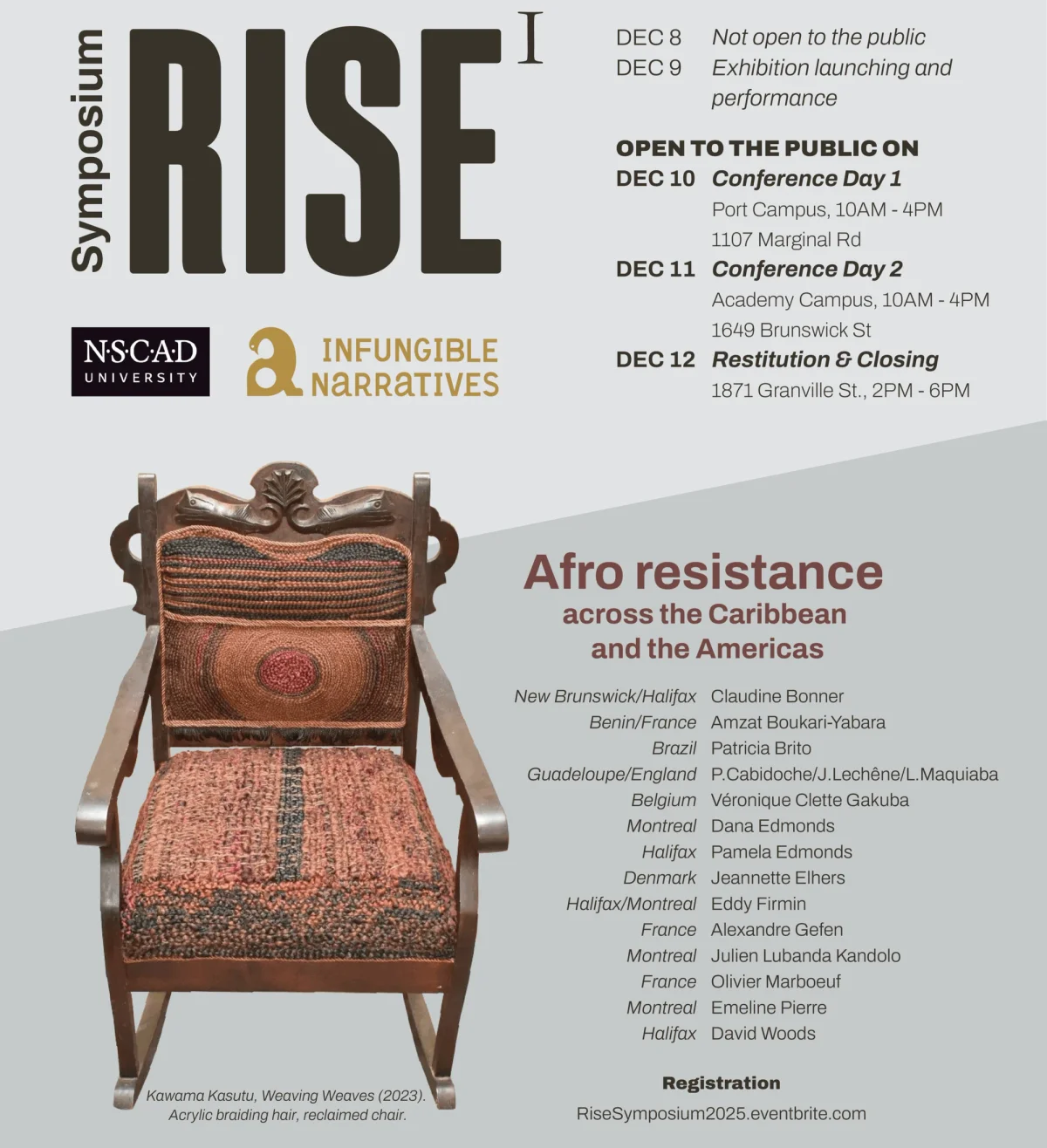
NSCAD University is a public art, craft and design university in downtown Halifax, Nova Scotia, governed under the University Act of Nova Scotia by a Board of Governors and a Senate.
It began in 1887 as the Victoria School of Art and Design, founded by educator Anna Leonowens with Helen Kenny and the sisters Ella and Eliza Ritchie to mark Queen Victoria's Golden Jubilee; it was incorporated by provincial charter as the Nova Scotia College of Art in 1925 and became the degree-granting Nova Scotia College of Art and Design in 1969, the year design studies were formally recognized. Teaching is spread across three campuses: the Fountain Campus, a block of heritage buildings on Duke Street that the university bought in 2002; the Academy Campus beside the Halifax Citadel; and the Port Campus on the Halifax waterfront.
Every undergraduate starts with a year-long Foundation Studies program before moving into a Bachelor of Fine Arts major in ceramics, drawing, expanded media, film, interdisciplinary arts, jewellery design and metalsmithing, painting, printmaking, photography, sculpture or textiles and fashion, a Bachelor of Design in interdisciplinary design, or a Bachelor of Arts in art history. Graduate study covers a studio-based Master of Fine Arts, a Master of Design and a Master of Arts in Art Education, alongside a post-baccalaureate certificate in design and visual arts certificates.
The university runs the Anna Leonowens Gallery and the NSCAD Press, and its Lithography Workshop prints are held by collections such as the Victoria and Albert Museum; Andy Warhol accepted an honorary degree here in 1972.
Roughly $200,000 in internal and external scholarships and bursaries is awarded each academic year, with entrance awards ranging from $500 to $9,000.
Location & Contact
Need to get in touch with NSCAD University or find your way to campus? Address, phone, email, and online links are below. These reflect what the institution publishes on its official channels.
Academic Details
NSCAD University's institutional metrics — useful for sizing it against other shortlisted universities. The proportion of academic staff with doctorates correlates with research output and graduate-school admissions.
Academic Structures
To understand where programmes live within NSCAD University, the academic structure is mapped below. Some institutions run joint faculties with external bodies — credentialing in those cases is shared.
Unit 9 items
- Academy Campus
- Division of Craft
- Division of Design
- Division of Fine Art
- Division of Foundation
- Division of Historical and Critical Studies
- Division of Media Arts
- Fountain Campus
- Port Campus
Degrees
Each degree level at NSCAD University groups its qualifications below for easy comparison. The grouping makes it straightforward to find equivalent programmes across institutions.
Bachelor's 14 programs
Bachelor's programmes build foundational expertise, preparing graduates for entry-level professional roles and further postgraduate study.
- Art History, Non-Studio (BA)
- Art History, Studio (BA)
- Ceramics (BFA)
- Expanded Media (BFA)
- Film (BFA)
- Fine Art - Drawing (BFA)
- Fine Art - Painting (BFA)
- Fine Art - Printmaking (BFA)
- Fine Art - Sculpture (BFA)
- Interdisciplinary Arts (BFA)
- Interdisciplinary Design (BDes)
- Jewellery Design and Metalsmithing (BFA)
- Photography (BFA)
- Textiles and Fashion (BFA)
Master's 3 programs
Master's programmes develop advanced specialised expertise, suited to senior industry positions and applied research.
- Art Education (MAAE)
- Design (MDes)
- Fine Arts, Studio (MFA)
Diploma & Certificate 3 programs
Diploma and certificate routes deliver focused, applied training for fast entry into skilled occupations.
- Post-Baccalaureate Certificate in Design
- Visual Arts Certificate
- Visual Arts Certificate for Teachers
Programs Offered
NSCAD University's teaching programmes are listed below — search or scan by level. International student eligibility varies by programme — some require additional language or visa-pathway checks.
20 programmes on record. Each level below shows a sample. Compare these on the programs page All programs in Canada
Bachelor's Degree 14 programmes
Showing 10 of 14.
Master's Degree 3 programmes
Postgraduate Certificate 3 programmes
How to apply to NSCAD University
Application guidance for NSCAD University, structured as five practical steps with attention to documents and admissions communication.
-
1
Browse the programme catalogue
NSCAD University's catalogue includes 20 programmes. Browse by level, identify candidates matching your prior qualifications, and note their entry requirements for the next step.
-
2
Check eligibility for your chosen programme
Entry requirements vary by programme and degree level. Verify academic minimums, language tests (if international), and any additional documents required for NSCAD University's admissions process.
-
3
Get your documents ready
Typical documents include academic transcripts, identity proof (passport or national ID), language proficiency test scores, a personal statement or motivation letter, and recommendation letters. International applicants should account for translation and notarisation time.
-
4
Apply through the official channel
Submit your completed application through NSCAD University's official website at nscad.ca. Most institutions use an online portal — register an account, complete the application form, and upload your prepared documents. Keep copies of all submissions and confirmation receipts.
-
5
Reach out and track your application
Follow up to confirm your application was received and is being processed. You can reach the institution by email at [email protected] or by phone at +1 (888) 444 5989. Admissions teams may request interviews or additional documents — respond promptly to keep your application active.
Frequently Asked Questions about NSCAD University
The questions below summarise NSCAD University's vital institutional details — useful as a quick reference before drilling into specific sections.
In what year was NSCAD University established?
NSCAD University was founded in 1887 (approximately 139 years ago).
In which city is NSCAD University?
NSCAD University is based in Halifax, Canada.
Is NSCAD University a public or private institution?
It is a public higher-education institution.
How many students study at NSCAD University?
NSCAD University has approximately 500-999 students.
What programmes are available at NSCAD University?
NSCAD University offers bachelor's and master's programmes.
What is NSCAD University's academic structure?
The institution comprises 9 academic units.
Who recognises NSCAD University?
Yes, NSCAD University is recognised by Department of Advanced Education of Nova Scotia.
Where can I learn more about NSCAD University?
The institution's website is nscad.ca.
Top-Ranked Universities in Canada
The institutions topping Canada's rankings give national context for NSCAD University. Context matters because employer perception in Canada often correlates with national rankings.

Members of Universities Canada (UC)
Strategic alliances often grow alongside Universities Canada (UC) membership — bilateral agreements deepen collaboration beyond the broader network frame. Such alliances sometimes exist between NSCAD University and specific members below.

Faculties at nearby universities
Religious and cultural amenities cluster around NSCAD University's region, so the universities below typically draw from similar community infrastructure outside the campus itself.



Where Else to Study Visual Arts
Industry partnership exclusives on Visual Arts programmes vary — some Canada institutions hold sponsored chairs, others run rotating industry guest-teaching arrangements.



Universities Compared with NSCAD University
Comparable institutions to NSCAD University — by academic scale and standing — are gathered below. Same-tier shortlists give you flexibility on admissions outcomes without compromising on institutional level.
Studying in Canada: guides and resources



Spotted something outdated or missing?
Help us keep this page accurate — it takes about 30 seconds.