Šiauliai State Higher Education Institution

Šiauliai, Lithuania Founded 2002

Overview

English Name: Šiauliai State Higher Education Institution
Acronyms: ŠVK
Founded: 2002
Control Type: Public
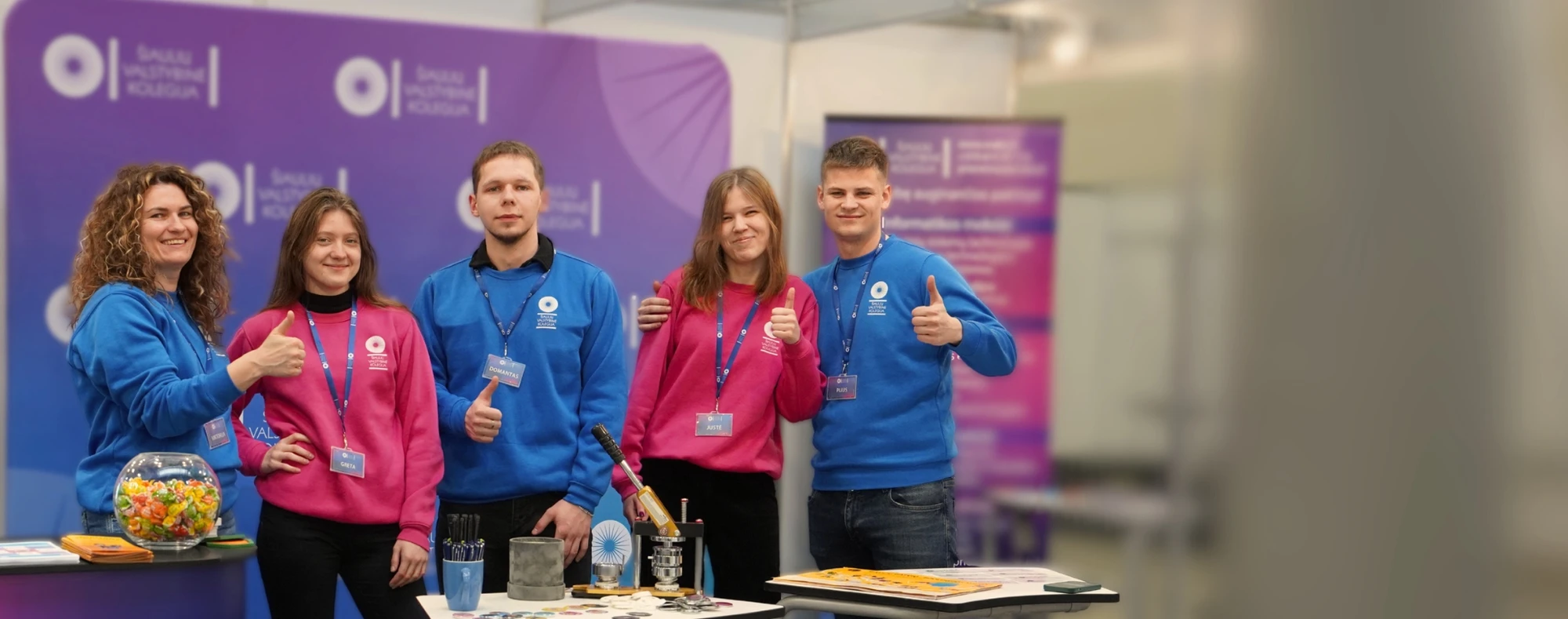
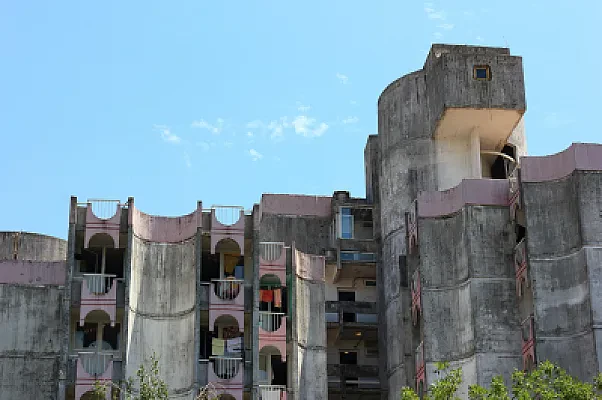
Šiauliai State Higher Education Institution institutional grounds
1 / 4

A college based in Šiauliai, Lithuania, Šiauliai State Higher Education Institution was founded in 2002 and operates as a higher-education provider. Its institutional context places it within Lithuania's wider academic ecosystem.

Šiauliai State Higher Education Institution's academic profile spans multiple qualification levels, organised across its academic units. The institution maintains a focused programme catalogue for enrolled students.

Location & Contact

Address book entry for Šiauliai State Higher Education Institution: location, phone, email, web, and social channels. The press or media office handles institutional inquiries; admissions handles student-specific queries.

Map:
Social Media:

Programs Offered

Šiauliai State Higher Education Institution's current programme offering broken down by degree level. Curriculum revisions happen periodically; check the version year on each programme page if accreditation portability matters.

Bachelor's Degree

21 programmes

There are 21 programmes to choose from at Šiauliai State Higher Education Institution for undergraduates. A bachelor's degree builds the broad disciplinary foundation most employers and postgraduate courses expect.

Transport Logistics Technologies Transporto logistikos technologijos Engineering & Technology 3 years On-campus
General Description: Objective(s) of a study programme: To train qualified specialists capable to design, organize and control sustainable technological processes of road and rail transport logistics by applying smart technologies that enable the digitization and automation of transport logistics operations. Learning outcomes: Knowledge and its application: 1. To know the general laws of mathematics, physics, mechanics, materials science, and electronics; 2. To know the essential concepts of engineering sciences study field and to understand their content; 3. To know the basic and up-to-date vehicle structures, the principles of their operation and maintenance; 4. To understand the criteria for the selection of structural and maintenance materials; 5. To know logistics business management systems, information technologies and possibilities of their use; 6. To know the system structure of transport, its elements, specifics of vehicle usage and development trends. Special (engineering analysis and design) skills: 7. To analyze the technological process of passenger and/or freight transportation, to understand and interpret the results obtained; 8. To analyse and estimate passenger or and/or freight flows using appropriate methods; 9. To select vehicles considering their technical and maintenance characteristics, route peculiarities and environmental conditions; 10. To apply logistics information technologies when designing the technological process of freight or passenger transportation; 11. To solve the problems of designing the technological process of freight or passenger transportation, taking into account legal and environmental requirements and cost-effectiveness; 12. To develop sustainable freight technology, taking into account the requirements of legislation, the principles of the circular economy, and the possibilities of using artificial intelligence. Ability to carry out research and practical activities: 13. To collect and analyze data necessary for technological solutions of transport logistics problems utilizing information networks and databases; 14. To assess the possibilities of providing freight and/or passenger transportation services; 15. To have work skills with technological and laboratory equipment used in transport engineering. 16.To optimally manage the technological process of transportation by ensuring safe traffic on the road, taking into account the transportation conditions and the organization of vehicle technical maintenance; 17. To organize the loading and storage process, ensuring employee safety, business digitization principles and developing the concept of sustainability; 18. To understand and evaluate the business environment and opportunities, to plan and organize the activities of the company (branch), to control the financial flows of the company. Personal (decision-making, lifelong learning, collaboration and teamwork) skills: 19. To communicate with specialists in state and foreign languages, individually and in a team when solving professional tasks; 20. To understand the impact of transport engineering solutions on society and the environment, to be responsible for the quality of activities, to learn independently in changing professional activities. Activities of teaching and learning: Lecture, workshop, consultation, self-study, course paper and practice. Methods of assessment of learning achievements: Assessment is carried out during the whole semester and at the exam session. Ten-point criteria-based assessment system as well as cumulative assessment is applied. Outcomes of the study subject are evaluated through interim assessments during the semester (control tasks, written quizzes, examinations (theoretical and practical tasks), laboratory, individual works defense and etc.). The studies of each subject end with an examination or assessment of student's self-study work (project, course project, practical activity evaluation, etc.). Student's knowledge and skills are assessed at the exam session only after student completes the assigned interim assessment tasks during the semester. Final assessment (mark) consists of marks for interim assessments and an examination mark. Its composition is calculated according to the ratios intended in the description of the subject. Framework: Study subjects (modules), practical training: Scope of the main part of study field subjects is 156 credits (including practices): Physics, Mathematics, Engineering and Exploitation Materials, Transport System, Road Vehicles, Railways, Engineering and Computer Graphics, Technical Mechanics, Logistics, Road Vehicle Technical Maintenance, Traffic Engineering, Electronics, Engineering Research, Environmental and Occupational Safety, Loading Technologies, Transport Law, Freight Transportation, Warehouses, Technological Practice, Transport Economics and Management, Intelligent Transport Systems, Passenger Transportation, Freight Transportation Practice, Graduation Practice, Graduation Paper, Digital Logistics Technologies, Professional English / Professional Russian / Professional German, Professional Language, etc. The total duration of practices is 20 weeks: Introductory Transport Technology Practice – 2 weeks Logistics – 2 weeks Technological Practice – 4 weeks Freight Transportation Practice – 8 weeks Graduation Practice – 4 weeks Specializations: Optional courses: Second foreign language (English) / Second foreign language (Russian) / Second foreign language (German) / Communication Psychology; Philosophy / Sociology Sustainable Transportation / Transport Terminals; Transportation of Dangerous Cargo / Multimodal Transportation; Customs Procedures / Expedition and Insurance; Freely elective subjects Distinctive features of a study programme: Engineering education in the field of transport logistics. Application of specialized logistics technologies in studies. Graduates, applying engineering solutions, digital logistics technologies, will be able to plan, organize and manage freight and passenger transportation processes via road and rail transport Access to professional activity or further study: Access to professional activity: The graduate will be able to work as a technologist, operator or manager in various private or public companies conducting freight and passenger transportation by road or rail transport, bus and taxi fleets or to establish a transportation services company, to manage it and organize its work Access to further study: Studies can be continued at universities under the programmes of Transport Engineering field and other fields of study programmes. After completion of bridge courses or fulfilling other requirements of the accepting higher education institution, students can pursue second cycle Master's studies
Duration: 3 years
Delivery: On-campus
Production and Logistic Management Gamybos ir logistikos vadyba Business & Management 3 years On-campus
General description: Objective(s) of the study programme: The aim of the Study Programme Production and Logistics Management is to provide students with the knowledge about the planning, organization and coordination of production and production logistics processes and skills that allow constructive application of this knowledge in professional activities, to manage staff, material and information resources and flows, to solve theoretical and practical problems of professional activities and innovation implementation, to communicate and cooperate in professional activities and to work successfully under competitive market conditions. Learning Outcomes: Graduate after successful completion the study programme: 1. Knows and applies knowledge that provides practical knowledge of the field of activity, based on the latest scientific insights and / or practical activities when planning, organizing, executing and evaluating production and production logistics processes, solving complex production business problems 2. Knows and applies important knowledge of production and production logistics, business system management, information technologies, engineering and computer graphics, materials engineering, production technologies, personnel management, principles of social responsibility and ethics to the business 3. Is able to collect, systematize and manage data and information, performing production and production logistics processes was well as when solving production business problems 4 Is able to carry out applied research by selecting and applying various research methods, analyzes and interprets results of the research 5 Is able to plan, organize, carry out and assess production and production logistics processes by independently choosing technological, organizational and methodical means. 6 Is able to analyze, evaluate and manage production and production logistics personnel, material and information resources 7 Is able to assess the quality of production and production logistics activities and to solve complex problems of production business and innovation implementation, to submit proposals on issues of process management improvement 8 Is able to express fluently and persuasively thoughts orally and in writing while communicating and cooperating with partners, clients and coworkers, discussing and negotiating production and production logistics issues in Lithuanian and foreign languages 9 Is able to work individually and in a team, take responsibility for the production and production logistics activities, results and quality of own and subordinate employees, follow the principles of social justice, professional ethics and citizenship in professional activities 10 Is able to analyze problems independently, innovatively and creatively develops production and production logistics knowledge and skills necessary for continuous professional development and dissemination of experience 11 Perceives moral and social responsibility for the impact of his/her activity and its results on public, economic and cultural development, wellbeing and environment. Activities of teaching and learning: Lectures, workshops, seminars, discussions, individual and group tasks, presentation of their results, practice, excursions, independent written works, case studies, literature analysis, etc. Methods of assessment of learning achievements: Assessment is carried out during the whole semester and at the exam session. Ten-point criteria-based assessment system and cumulative assessment system are used consisting of interim assessments, practical, control tasks, student's independent written work, course paper, individual and group assignments, case study, presentation of results assessment and examination. The final assessment consists of interim assessments and exam assessment in accordance with the proportions provided for each subject description. Framework: Study subjects (modules), practical training: Scope the main part of study field subjects is 136 credits (including practical training): Communication Psychology, Economics, Statistics, Applied Mathematics, Law, Management, Accounting and Finance, Production Logistics, Fundamentals of Engineering, Engineering and Computer Graphics, Materials Engineering, Personnel Management, Marketing, Applied Research Methodology, Management Accounting, Production Technologies, Production Management, Course Paper, Warehouse Management, Business Management Systems, Environmental and Human Safety, Quality Management, etc. Deepening in the field (15 credits): Production Business Organization / Production Company Logistics; Production Process Management / Supply Chain Management; Innovation Management / Project Management. Subjects of General and Digital Competences (Self-) Development (20 credits): Information Technology, Professional Foreign Language, Professional Language, Foreign Language II (English) / German / Russian / Swedish), Philosophy / Sociology. Freely elective subjects (9 credits). The total duration of practices is 24 weeks: Professional Cognitive Practice (4 weeks), Production Management (6 wks.), Production Logistics Processes (6 wks.), Graduation Practice (8 weeks). Specializations: - Elective subjects: Student can choose to study: 1. Foreign Language II (English) / German / Russian Swedish) 2. Subjects of General and Digital Competences (Self-) Development: Philosophy / Sociology 3. Subjects for deepening in the field alternatives: Production Business Organization / Production Company Logistics; Production Process Management / Supply Chain Management; Innovation Management / Project Management. 4. Freely elective subjects. Distinctive features of a study programme: It is a unique study programme in Lithuania. While studying, not only the aspects of production management, but also the aspects of production logistics are deepened; there are great variety for the choice of study subjects (31 credits) and, at the same time, for individualization of studies; more study time than usual time is allocated for practices (36 credits, i.e. 24 weeks). Access to professional activity or further study: Access to professional activity: After graduating from the Production and Logistics Management Study Programme and acquiring the professional bachelor's degree in Business Management, graduates will be able to choose from professional activities in Lithuania and in the European Union countries in production and production logistics, warehouses, etc. companies of various sizes, to create their own production business, and etc. Graduates will be able to work as a production management and logistics specialists (foremen) and a head of unit in various private or public production companies. Access to further study: Graduates may get their learning outcomes recognized, if they want to take university study programmes of the first cycle. After completion of bridge courses or fulfilling other requirements of the accepting institution, access to the first cycle university studies. Graduates can continue their studies in Lithuanian and foreign higher education institutions in management and business study fields second cycle study programmes.
Duration: 3 years
Delivery: On-campus
Office Management Įmonių ir įstaigų vadyba Business & Management 3 years On-campus
General description: Objective(s) of the study programme: The aim of the Study Programme Office Management is to enable students to acquire knowledge and skills to design, plan, organize, coordinate, evaluate and develop activities of a company / institution unit, manage human resources and information, creatively and critically apply research methods and tools in solving problems of professional activities, continuously improve by adapting to the changing global environment. Learning Outcomes: Graduate after successful completion the study programme: 1. Knows the main management theories and concepts, analyzing the most important management functions, explaining companies / institutions as a distinctive socio-economic system, applying them in identifying and solving complex problems of professional activities 2. Knows the basics of finance, marketing, accounting, human resource management, organization processes management, is able to apply them in practical activities, following the principles of social responsibility and ethics 3. Is able to carry out applied empirical research, collect, systematize, analyze data, formulate conclusions and purposefully use the accumulated information to solve the company / institution's activities problems 4. Is able to plan, organize, coordinate and evaluate the activities of a company / institution's unit, submit proposals on the issues of activities improvement 5. Is able to manage information, documents and other activities processes of a company / institution using modern technologies (office equipment) and information systems 6. Is able to administer personnel management activities reasonably selecting human resources management methods and measures. 7. Is able to form and maintain company / institution's image following the principles of professional ethics 8. Is able to express thoughts fluently and persuasively, to convey information while communicating and cooperating with specialists of various fields and other persons in Lithuanian and foreign languages 9. Is able to work individually and in a team in a multicultural work environment, identify problems and make decisions 10. Is able to communicate effectively in writing and orally, independently develop subject knowledge and abilities needed for continuous professional development. 11. Is able to work creatively in a team, taking responsibility for the quality of his/her own and team's performance, results in a changing global environment Activities of teaching and learning: Lectures, workshops, seminars, discussions, individual and group tasks, presentation of their results, practice, independent written works, case studies, literature analysis, etc. Methods of assessment of learning achievements: Assessment is carried out during the whole semester and at the exam session. Ten-point criteria-based assessment system and cumulative assessment system are used consisting of interim assessments, practical, control tasks, student's independent written work, course paper, individual and group assignments, presentation of results assessment. The final assessment consists of interim assessments and exam assessment in accordance with the proportions provided for each subject description. Framework: Study subjects (modules), practical training: Scope the main part of study field subjects is 131 credits (including practical training): Communication Psychology, Economics, Statistics, Applied Mathematics, Law, Management, Accounting and Finance, Office Equipment Management, Professional Ethics, Business Administration (in Lithuanian / English), Project Management, Marketing, Applied Research Methodology, International and Intercultural Communication (in English), Document Management, Course Paper, Crisis Management (in English / English), Human Resources Management, Environmental and Human Safety, Creative Industries, Entrepreneurship and Leadership (in Lithuanian / English), Graduation Paper, etc. Deepening in the field (15 credits): Career Management / Internal and External Communication, Teamwork / Public Procurement Administration, Company Management Systems / Personnel Management Documentation. Subjects of General and Digital Competences (Self-) Development (25 credits): Information Technology, Philosophy / Sociology, Professional Language, Professional Foreign Language, Foreign Language II (English) / German / Russian) Freely elective subjects (9 credits) The total duration of practices is 22 weeks: Professional Cognitive Practice (4 weeks), Document Management System Practice (4 wks.), Human Resources Management Practice (6 wks.), Graduation Practice (8 weeks). Specializations: - Elective subjects: Student can choose to study: 1. Subjects in Lithuanian or English: Business Administration (in Lithuanian) / English) and Crisis Management (in Lithuanian / English) and Entrepreneurship and Leadership (in Lithuanian / English). 2. Foreign Language II (English) / German / Russian) 3. Subjects of General and Digital Competences (Self-) Development: Philosophy / Sociology 4. Subjects for deepening in the field alternatives: Career Management / Internal and External Communication, Teamwork / Public Procurement Administration, Company Management Systems / Personnel Management Documentation. 5. Freely elective subjects Distinctive features of a study programme: Aspects of corporate and institution management are studied, it is possible to deepen in two fields: human resources management or administration of companies and institutions; there are big opportunities for choice of study subjects (49 cr.), as well as corresponding individualization of studies; big study time is allocated for practices (33 credits, i.e. 22 weeks). Access to professional activity or further study: Access to professional activity: Graduate will be able to work as a head of a unit, head's assistant, manager, administrator, personnel manager, company representative in various institutions, companies, create his/her own company Access to further study: Graduates may get their learning outcomes recognized, if they want to take university study programmes of the first cycle. After completion of bridge courses or fulfilling other requirements of the accepting institution, students can continue their studies in the second cycle Master's degree management, business and other fields.
Duration: 3 years
Delivery: On-campus
International Business Tarptautinis verslas Business & Management 3 years On-campus
General Description: Objective(s) of a study programme: To train qualified international business specialists, capable to analyze business environment and processes, to create and manage a business, to implement international business projects, to communicate and negotiate in Lithuanian and foreign languages by focusing on the changing international business environment, consumer needs and company’s goals by applying the latest scientific knowledge and socially responsible business principles in national and international markets. Learning outcomes: Knowledge and its application - Knows and understands classical and modern theories of social, humanitarian, other sciences, their principles and methods and is capable to apply all this for business creation, management and development in national and international markets. - Has knowledge which helps to identify businesses and their environment as a specific socio-economic phenomenon, based on classical and contemporary management and economic theories, business management methods and tools, and is capable to apply them for making business decisions. Research skills - Is able to carry out applied researches that allow to evaluate processes and phenomena in business and its environment, applies analytical methods, formulates reasoned conclusions and solves concrete international business problems. - Collects, compiles and systematizes information from various sources, manages business data streams using modern information technologies. Special skills - Is capable to set up a company, plan, organize, manage, control and analyze business processes in a changing global business environment while seeking performance efficiency and quality. - Is capable to plan, manage and analyze financial, intangible and tangible international business resources. - Is able to organize international business logistic and sales processes and select innovative marketing tools. - Is able to forecast business trends, develop business projects, manage and implement them, make suggestions for improvement of international business activity and innovation implementation. Social skills - Communicates and cooperates with specialists and other individuals, discusses and is able to negotiate in multi-cultural space in Lithuanian and foreign languages. - Works in a team while taking responsibility for his/her own and subordinate employees activity results and quality, follows principles of social justice, professional ethics and citizenship in professional activities as well as fosters ethnocultural and intercultural relations Personal skills - Develops knowledge and skills independently, innovatively and creatively which are needed for continuous professional development as well as understands moral responsibility for impact of his/her activities results on society, economic and cultural development as well as for well-being and the environment Activities of teaching and learning: Active teaching and learning methods are used as well as virtualization of the study process and internationalization. The study programme foresees that teachers from abroad will teach topics of individual subjects, students and teachers will be able to travel under Erasmus+ exchange programme, thus internationalization of the programme will be ensured. In order to ensure innovative business specialist training, individual subjects topics will be taught by social partners from innovative businesses. The entirety of teaching and learning methods is intended to form general and special skills of professional activity required for independent and creative work of a trained specialist in the fields of international business management. The programme aims for students to be actively involved in the study process: lectures seek to create a discussion environment, methods that promote student's initiative and practical activity are used. Abilities and skills are formed while studying theory basics, practicing, doing individual tasks: utilizing a variety of methods such as demonstration, information search, problem solving, situation modeling, problem-based teaching, project activity, group practice, mind map and more. Methods of assessment of learning achievements: Study outcomes are evaluated over the whole semester as well as exam session and the level of achievement reached is calculated using the individual cumulative assessment index (ICI= Tin + Ein), which proportional valuation is determined by the teacher considering intended learning outcomes, subject content and the nature of assignments. All continuous and/or interim assessments of the subject, exams or any other form of learning outcomes assessment as well as practical tasks and defense of the practice activity (analysis) report are compulsory for students. Exam method is used for final evaluation of every subject which involves a test and practical tasks or development and defense of a project. The practice assessment ends by submitting and defending a practice report. The following tasks are set in order to assess a certain stage in the course of studies: practice report, course paper and final paper. Learning outcomes and requirements to demonstrate a set of skills and abilities of not just one but of related subjects may encompass the practice report and practice assignments. Framework: Study subjects (modules), practical training: Scope of the main part of study field subjects is 131 credits (including practices). Main studied subjects: Communication Psychology, Economics, Statistics, Business Mathematics, Management, International Business Law, Applied Research Methodology, International Marketing, International Business Organization and Business Imitation Practice, International Business Negotiation and Intercultural Communication (in Lithuanian / English), Accounting and Finance , International Logistics, International Sales Management, Quality Management, Course Paper, International Business Ethics and Social Responsibility, Environmental and Human Safety, Innovation and Project Management (in Lithuanian / English), Business Management Systems. Duration of the practice of professional and learning activities is 22 weeks. - Introductory Professional Practice at International Business Company is 4 weeks; - Business Management Practice at International Business Company abroad / in Lithuania is 4 weeks; - Final Practice is 12 weeks; - Business Imitation Practice is 2 weeks. Specialisations: Optional courses: Elective subjects for deepening in the field make 15 credits. One of the elective subject groups can be chosen: International Business Management: User Behavior (in Lithuanian / English), Internet Marketing (in Lithuanian / English), International Market Research (in Lithuanian / English); International Business Finance: Financial Management of International Business Company (in Lithuanian / English), Financial Evaluation of International Business Company (in Lithuanian / English), International Financial Settlements (in Lithuanian / English); Management of International Business Companies: Production and Service Management (in Lithuanian / English), Human Resources Management (in Lithuanian / English), International Business Company Risk Management (in Lithuanian / English) Students can choose subjects of general competences - Philosophy / Sociology, Foreign Language II (English / Russian / German / French / Swedish 9 credits are allocated for freely elective subjects. Students can freely choose elective subjects from those offered by the College or gain credits by participating in mobility projects. Distinctive features of a study programme: The study programme or a part of the study programme can be carried out in English. Students can choose and deepen their specific competencies in finance, marketing or business management. International Business Practice is carried out abroad under Erasmus+ exchange programme or other projects, taking into account the funds allocated for the study programme. In Business Imitation Practice, activity of a company is imitated, business imitation game is used, thus seeking to develop entrepreneurial, business organization and management skills. During the study process individual subject topics are delivered by social partners from advanced business companies and by teachers who are visiting from foreign higher education institutions. Access to professional activity or further study: Access to professional activity: Innovative, capable of communicating in several foreign languages graduates of the study programme will be able to manage an international business, create their own business and organize it internationally, work in Lithuanian and international companies, work as logistics, sales managers, project managers and heads of functional branches. Access to further study: Studies can be continued at universities following business and public management study field programmes.
Duration: 3 years
Delivery: On-campus
Business Analytics Verslo analitika Business & Management 3 years On-campus
General Description: Objective(s) of a study programme: To prepare analytically-minded business professionals with integrated business management and information technology knowledge, able to analyze changing business environment and processes, apply modern data analysis and research methods, data-driven strategies in analyzing, managing and modeling business company activities and sustainable development trends. Learning outcomes: After successful completion of the study programme, a student: Knowledge and its application – He/she knows and understands classical and modern theories of social sciences, humanities, computer science and other sciences, principles that enable understanding of external and internal environmental factors, business changes and innovative processes in creating and managing a business. – He/she has knowledge that allows to perform analysis of business and economic processes in a company, assess the state of the company and development possibilities, and is able to apply them in practical activities. Research skills – He/she is able to carry out applied research enabling to evaluate processes and phenomena in business and its environment and to make decisions for sustainable business development. – He/she collects and analyzes data necessary to identify the company's effective functioning and development possibilities using information technologies and applies qualitative and quantitative research methods in solving business problems. Special skills – He/she is able to collect, summarize, analyze and systematize the company's performance data, see business problems, understand their causes, evaluate possible alternatives to business decisions and make reasonable and cost-effective decisions. – He/she is able to apply data analysis methods, model problem solutions, predict trends in a changing business environment, make proposals to improve the company's activities and implement innovations. – He/she is able to plan, manage and analyze the activities of businesses and their divisions, anticipating the need for human, financial and other resources and sources. – He/she is able to select and use business management systems, data analytics and visualization tools enabling to analyze, manage and predict the company's activities. Social skills He/she is able to communicate with specialists and other persons, convey knowledge and own attitude, and work individually and in a team, in accordance with the principles of professional ethics and social responsibility. – He/she is able to systematize, and summarize analysis data using visualization technologies, clearly communicate information and explain data analysis results and insights, critically evaluate business management problems and solve them, develop and strengthen business management skills, and discuss relevant professional issues. Personal skills – He/she is able to properly handle confidential information ensuring data security. – He/she is able to develop independently in the field of professional activity through lifelong learning and understand the consequences of social responsibility for sustainable business activities. Activities of teaching and learning: The set of applied teaching and learning methods is aimed at forming the general abilities required for the independent, creative activity of the educated specialist, as well as the special abilities of professional activity in the fields of business management and data analysis and modeling. The program aims for the student to actively participate in the study process: a discussion environment is created in the lectures, and methods are used that encourage the student's initiative and practical activity. Abilities and skills are formed by studying theoretical foundations, practising, performing individual tasks, and using various methods, such as demonstration, information search, problem-solving, situation modeling, problem-based teaching, project activities, group practice, mind mapping, etc. Methods of assessment of learning achievements: The continuous assessment of learning outcomes takes place over a whole semester as well as exam sessions and the level of achievement reached by each individual student is evident from the Individual Cumulative Index (ICI= Tkn + Ekn), which proportional valuation is determined by the teacher and depends on the intended learning outcomes, subject content and the nature of assignments. All continuous and/or interim assessments of the subject, exams or any other form of learning outcomes assessment as well as practical tasks and defense of the practice activity (analysis) report are compulsory for students. The exam method is used for the final evaluation of every subject which involves a test and practical tasks or development and defense of a project. The practice assessment ends by submitting and defending a practice report. The following tasks are set in order to assess a certain stage in the course of studies: practice report, course paper and final paper. Learning outcomes and requirements to demonstrate a set of skills and abilities of not just one but of related subjects may encompass the practice report and practice assignments. Framework: Study subjects (modules), practical training: Scope of the main part of study field subjects is 132 credits (including practices). Main studied subjects: Economics, Statistics, Applied Mathematics, Management, Business Law, Applied Research Methodology, Marketing, Production and Service Management, Sales Management, Accounting, Financial Management, Course Paper, Business Ethics and Social Responsibility, Environmental and Human Safety, Innovation and Project Management (in Lithuanian / English), Business Management Systems, Algorithm Basics and Programming, Big Data and Databases, Data Analysis, Information Security. The duration of the practice of professional and learning activities is 30 credits (20 weeks). – Business Data Analysis Practice – 9 credits (6 weeks); – Practice of Business Simulation – 3 credits (2 weeks); - Graduation Practice – 18 credits (12 weeks). Specialisations: Optional courses: Elective subjects for deepening in the field make 15 credits: Logistics / Supply Chain Management (in Lithuanian / English), Business Finance Analytics / Economic Analysis (in Lithuanian / English), Digital Marketing / Sales and Digital Business (in Lithuanian / English). It is possible to choose subjects of general competence development – Philosophy / Sociology. Distinctive features of a study programme: The programme is interdisciplinary and innovative, as it integrates information technology knowledge and develops digital skills to analyze and model solutions to business problems using modern newest technologies. The aim of the Programme and intended learning outcomes are directed not only to business creation and management and skills to apply this knowledge constructively in a wide field of professional activity but also to analyze big business data, to model reasonable and economically feasible solutions to problems in a changing business environment, using modern data analytics and visualization tools and business management systems, to communicate in Lithuanian and foreign languages, to follow the principles of socially responsible business. During the practice of business economics, the activities of a company are simulated, and a business simulation game is used, thus the aim is to develop entrepreneurial, business organization and management skills. During the study process, individual subject topics are delivered by social partners from advanced business companies and by teachers who have come from foreign higher education institutions. Access to professional activity or further study: Access to professional activity: Innovative graduates of the study Programme who are able to communicate in foreign languages will be able to manage a business company, create their own business and organize it, and work in Lithuanian and international companies as business analysts, business consultants, market analysts, marketing analysts, pricing analysts, procurement analysts, production analysts, product managers, project managers, and managers of functional units. Access to further study: Studies can be continued at universities in the programs of business and public management fields.
Duration: 3 years
Delivery: On-campus
Social Work Socialinis darbas Social Sciences & Education 3 years On-campus
General Description: Objective(s) of a study programme: To train social work specialist, capable to initiate social changes in society and to enable a person, family, group and community to create social welfare in the changing global environment in accordance with the principles of human rights assurance and social responsibility Learning outcomes: Knowledge and its application: 1. He/she knows theory and methods of social work, theories of human behaviour and its change in the social environment, the development of the social work profession, the principles of ethics, human rights, social justice, national social security, and applies interprofessional cooperation in research-based social work practice, determines the need for social services, provides social services using information, communication and assistance technologies. 2. He/she knows and applies the fundamentals of social, humanities and other theories in providing social services to clients. Research skills: 3. He/she carries out practice-oriented social work research, interprets its results in the context of the activities of institutions providing social services and social policy. 4. He/she applies the results of applied research to solve social problems and develop professional activities by introducing innovations in social work. Special abilities: 5. Recognizes, analyzes and evaluates the needs, strengths and possibilities of a person, family, group, community (hereinafter - the customer), follows regulatory legal acts and institutional documents, develops a person's social skills, anticipates the emergence of social problems in the community, organizes and evaluates the impact of social services on the client, applies social work methods, creating a full-fledged communication and trust based relationship, representing the client's rights and interests, using internal and external resources, motivating and empowering the client for self-help. 6. He/she develops and implements social assistance plans for client, institutional, regional, national programmes and projects, plans rational resources, evaluates the effectiveness of social services, programmes and projects. 7. He/she collaborates with representatives of various institutions, organizing and developing innovative social services, empowering clients to contribute to social welfare. 8. He/she analyses and explains the impact of social policy on ensuring human rights and reducing social exclusion. 9. His/her practical activities are guided by the principles of social justice, human rights, values of social work and professional ethics, and provides for the improvement of the social assistance process. Social abilities: 10. He/she communicates and collaborates with clients, colleagues, team members and other professionals, politicians, media, scientists in accordance with the norms of respect, understanding, agreement and ethics. 11. He/she fluently expresses thoughts in writing and orally in the state and foreign languages, discusses relevant professional issues, generates ideas in order to strengthen the prestige of the social work profession. Personal abilities: 12. He/she critically evaluates and reflects on his/her professional growth, professional activities, improves personal and professional competences, recognizing the importance of lifelong learning. 13. He/she systematizes and analyzes information from national and international information sources, uses media and assistance technologies, ensures confidentiality and independently makes decisions, acting professionally in changing situations. 14. He/she takes care of personality cognition, development and professional qualification improvement, shares best practices in creating the image of the social work profession. Activities of teaching and learning: Lecture, workshop, consultation, self-study task, course paper and practice. Methods of assessment of learning achievements: Assessment is carried out during the whole semester and at the exam session. Ten point criteria based assessment system as well as cumulative assessment is applied. Outcomes of the study subject are evaluated through interim assessments during the semester (control tasks, written quizzes, examinations (theoretical and practical tasks), individual tasks defense and etc.). The studies of every subject end with an examination or assessment of student's self-study work (project, course paper, practical activity evaluation, etc.). Student's knowledge and skills are assessed at the exam session only after student completes the assigned interim assessment tasks during the semester. Final assessment (mark) consists of marks for interim assessments and an examination mark. Mark is calculated according to the ratios defined in the description of the subject. Framework: Study subjects (modules), practical training: Study field subjects: Basics of Psychology, Volunteering and Experiential Teaching/Learning, Social Work Values and Ethics, Social Welfare Policy and Protection, Personal Development Psychology, Social Work Theory and Methods, Communication and Conflict Management, Disability Integration, Social Work with Family and Children, Social Gerontology, Social Pedagogy and Andragogy, Sciology and Social Problems, Social Work Research, Social Counselling and Crisis Management, Teamwork and Decision Making Processes, Course Paper, Social Innovation, Employment Theory and Therapy, Social Work Case Management, Graduation Paper. Practices: Social Services Institutions Activity Cognitive Practice, Social Work Process Organization Practice; Social Work Services Research Practice (Graduation Practice). Subjects of general and digital competences (self-) development Social Work Informatics, Professional Language, Professional Foreign Language (English, German, Russian), Professional Career Design / Entrepreneurship and Management, Contemporary Philosophy Fields / Social Philosophy. Specialisations: Optional courses: Student's options for deepening in the field: Social Work in Health Care Institutions / Psychosocial Rehabilitation; Community Social Activities / Community Health / Sociocultural Community Education; Intercultural Social Work / Social Work With Youth / Working With Heterogeneous Groups; Media in Social Work Practice / Social Entrepreneurship; Human Rights And Social Justice / Diversity And Inclusion. Distinctive features of a study programme: – the study plan has been updated with a focus on the principles of the concept of inclusive social work practice: (self-)inclusion, partnership, advocacy, honesty. – all practices will be accompanied by practice case analysis group practices conducted by a lecturer with supervisor training. – experiential adventure in nature is organized for the first year students with the purpose is to encourage students to learn from practice and improve reflective skills, based on the prospect of cooperation and raise the need to constantly rethink one’s values. – the specifics of the subjects intended for deepening in the field are based on the trends of contemporary social work changes, which help to assimilate and manage various forms and techniques of social work related to the social policy changes of today. Access to professional activity or further study: Access to professional activity: Graduate will be able to work as social worker, provide and organise as well as administer social services in state and private social security, education, health care, and law enforcement institutions: social services centres, family and child welfare centres, day care centres for children, people with special needs, the elderly and the aged, social care homes, community childcare homes, hospitals, rehabilitation units, rehabilitation centres, prisons, various non-governmental organisations, create social business, etc. Access to further study: Graduates can continue their studies at universities under the Social Sciences study fields group Social Work field and other study fields programmes. Graduates can get their learning outcomes recognized, if they want to take university study programmes of the first cycle. After completion of bridge courses or fulfilling other requirements of the accepting higher education institution, students can pursue second cycle Master's studies.
Duration: 3 years
Delivery: On-campus
Construction Statyba Engineering & Technology 4 years Blended
General Description: Objective(s) of a study programme: To prepare creatively thinking, communicative, responsible construction engineering specialists capable to independently plan, organize and technically manage construction works, taking into account the development of the principles of construction digitization, environmental protection and sustainability, as well as seeking to improve in professional activities. Learning outcomes Knowledge and its application: 1. To have a general knowledge of mathematics, physical and technological sciences to understand and describe the processes taking place in construction engineering. 2. To know the most important concepts, properties and areas of use of construction materials, products and structural elements. 3. To acquire fundamental and up-to-date knowledge of construction engineering applied in practice. 4. To know the principles of digital construction, data and process management systems and their application possibilities. Special (engineering analysis and design) skills: 5. To analyze and select structural building solutions, structural and computational schemes, while applying logical thinking, analysis and modelling skills. 6. To analyze and apply international, European and Lithuanian standards in design and construction process 7. To apply specialized computer programmes and building information modelling principles when designing and organizing building construction processes in accordance with the established technical, economic and environmental requirements. Ability to carry out research and practical activities: 8. To collect the necessary information, systematize and interpret it when solving construction engineering problems. 9. To have practical skills in working with geodesic, building diagnostic devices and building materials and structures analysis equipment, to analyze the results obtained and to present conclusions. 10. To select and apply technological processes of general construction and repair works. 11. To evaluate and prepare the documentation necessary for the commencement and execution of construction, ensuring work safety, fire safety, environmental protection and building maintenance administration. 12. To participate in working groups in the implementation of digitalised construction projects, taking into account the principles of circular economy, ethics, environmental protection, occupational safety and health and sustainability. Personal (decision-making, lifelong learning, collaboration and teamwork) skills: 13. To have teamwork skills, be capable to communicate with managers, employees, clients and society as well as independently deepen knowledge seeking to improve professional qualification. 14. To understand engineering solutions impact on society and environment and assume responsibility for results of engineering activities. Activities of teaching and learning: Active teaching and learning methods are used to achieve intended learning outcomes. (lectures, laboratory works, individual projects, individual consultations, seminars, workshops, group work, case studies, etc). The entirety of teaching and learning methods is designed to develop the future professionals’ general skills necessary for independent and creative work as well as special professional skills. Lectures, workshops, practical works, practical seminars, laboratory works, simulations, individual tasks, group work, etc Methods of assessment of learning achievements: Ten-point criteria-based assessment system and cumulative assessment system are used consisting of interim assessments, practical, control tasks, laboratory works report and defense, student's independent written work, course paper, individual and group assignments, presentation of results assessment. The final assessment consists of interim assessments and exam assessment in accordance with the proportions provided for each subject description. Framework Study subjects (modules), practical training: Scope the main part of study field subjects is 141 credits (including practices). Pagrindinės studijų krypties dalykų apimtis kreditais – 141 (su praktikomis). Main studied subjects: Mathematics, Construction Drawing, Construction Materials, Applied Physics, Construction Physics, Applied Mechanics, Geodesy (with practice), Building Structures, Sustainable Environment and Human Safety, Geotechnics, Construction Work Technology, Engineering Systems, Calculation of Structures, Building Maintenance, Construction Work Organization, etc. The total duration of practices is 20 weeks: Introductory Construction Works Practice – 2 weeks; Geodesy Practice – 2 weeks; Construction Works Technological Practice – 6 weeks; Construction Works Organization Practice – 6 weeks; Graduation Practice – 4 weeks. Specializations: Optional courses Elective subjects for deepening in the field (18 credits): Urban Environment / Innovative Building Materials and Products; Repair and Reconstruction Technologies /Energy-saving Buildings; Computer Calculation of Structures / Modeling of Engineering Systems. Elective subjects of general and digital competences (self-) development - 12 credits): Professional German Language / Professional English Language / Professional Russian Language; Sociology / Philosophy; Psychology of Communication / Basics of Law. 3 credits are allocated for freely elective subjects. Distinctive features of a study programme: The Construction study programme has been awarded the Evalag accreditation mark, which proves the international accreditation of the study programme. This programme is the only one of all construction engineering programmes offered in Lithuanian higher education institutions, which was evaluated by international experts with the highest possible rating. Access to professional activity or further study: Access to professional activity: Graduates of the Construction study programme will be able to work in design companies, companies operating in the construction sector, as well as building designers, construction managers, managers, estimators, or create own business. Access to further study: Studies can be continued at universities under the Civil Engineering field and other fields of Engineering Sciences study fields group of study programmes. After completion of bridge courses or fulfilling other requirements of the accepting higher education institution, students can pursue second cycle Master's studies.
Duration: 4 years
Delivery: Blended
Technical Exploitation of Automobiles Automobilių techninis eksploatavimas Engineering & Technology 3 years On-campus
General Description: Objective(s) of a study programme: To train qualified specialists capable of performing automobile technical maintenance, diagnostics and repair while selecting innovative technological and organizational aids and ensuring the quality and responsibility of the professional performance results Learning outcomes: To acquire skills and abilities: 1. Graduate will know and be able to apply methods and techniques of parameters calculation and technical aids and their management methods; 2. Graduate will know the system structure of automobile transport, its elements, specifics of vehicle usage and development trends. 3. Graduate will be able to evaluate materials used in engineering, properties of structural elements and their application for engineering solutions. 4. Graduate will know problems of automobile technical exploitation impact on the environment as well as traffic safety issues and will know how to work out solutions. To be able to perform engineering analysis: 5. Graduate will be able to identify and evaluate automobile mechanisms, units as well as structural elements of the system and their interactions; 6. Graduate will independently analyze and evaluate automobile diagnostics parameters, and measurement results. To have knowledge and skills necessary to perform project works in Land Transport Engineering study field: 7. Graduate will perform automobile technical maintenance and repair projection and exploitation tasks considering scientific and technological advancements; 8. Graduate will choose optimal technological equipment, aids and materials necessary to carry out automobile technical maintenance or repair. To be able to carry out applied research: 9. Graduate will collect and analyze data necessary for innovation implementation utilizing information networks and databases; 10. Graduate will carry out applied research, utilizing laboratory and industrial equipment, discuss the results of testing and laboratory work and present findings; 11. Graduate will have work skills with technological equipment used for automobile diagnostics, technical maintenance and repair works. To have practical knowledge and skills to perform engineering tasks: 12. Graduate will carry out technological process of technical maintenance and repair of automobiles. 13. Graduate will organize and carry out automobile technical maintenance and material provision for repairs; 14. Graduate will apply economically based engineering solutions that reduce pollution of the environment and increase vehicle safety as well as ensure safe working conditions. To have personal and social abilities: 15. Graduate will communicate with specialists while dealing with professional challenges, will be responsible for the quality of activity and study independently in changing professional activity field; 16. Graduate will understand and assess the business environment and opportunities, as well as planning and organize activities of a company (branch). Activities of teaching and learning: Lecture, workshop, consultation, individual work, course project and practice. Methods of assessment of learning achievements: Assessment is carried out during the whole semester and the exam session. Ten-point criteria-based assessment system as well as cumulative assessment is applied. Outcomes of the study subject are evaluated through interim assessments during the semester (control tasks, written quizzes, examinations (theoretical and practical tasks), laboratory, individual works defense and etc.). The studies of every subject end with an examination or assessment of student's self-study work (project, course project, practical activity evaluation, etc.). Student's knowledge and skills are assessed at the exam session only after student completes the assigned interim assessment tasks during the semester. Final assessment (mark) consists of marks for interim assessments and an examination mark. Its composition is calculated based on proportions that have been foreseen in the description of the study subject. Framework: Study subjects (modules), practical training: Professional English Language / Professional French Language / Professional German Language / Professional Russian Language; Basics of Professional Language Culture; Automobiles; Physics; Information Technologies; Engineering and Computer Graphics; Mathematics; Materials Science; Transport System; Electrotechnics and Electronics; Technical Mechanics; Technical Measurements; Automobile Electric and Electronic Equipment; Automobile Equipment Practice; Automobile Maintenance; Work Safety; Metal Technology; Automobile Diagnostics; Technology of Automobile Repair; Technologies of Car Service Companies; Technological Practice in Car Service Enterprises; Environmental Protection; Transport Economics; Safe Exploitation of Automobiles; Pre-Graduation Practice, etc. Specialisations: – Optional courses: Communication Psychology / Law of Transport; Engineering Research / Philosophy of Technology / Basics of Management; Special and Specialized Automobiles / Car Service Technological Equipment; Engine Management Systems / Automobile Technical Expertise; Body Repair / Engine Repair; Freely elective subjects Distinctive features of a study programme: A part of studies can be carried out in English and Russian Access to professional activity or further study: Access to professional activity: Graduate will be able to work as an engineer, a foreman, a head of automobile repair and exploitation company, auto service, automobile technical inspection center or could set up a private business and run it. Access to further study: Graduate will be able to continue studies at universities under the programmes in the study area of Technological Sciences in the study field of Land Transport Engineering.
Duration: 3 years
Delivery: On-campus
Software Engineering Programų sistemos Computer Sciences 3 years On-campus
General Description: Objective(s) of a study programme: To prepare a qualified specialist capable of identifying the needs of the organization, analyze information flows, design, program, test and implement software systems, apply security solutions and independently improve qualification. Learning outcomes: Knowledge and its application 1. To explain the concepts of fundamental sciences and software systems, understand their content, relations and applied solutions related to possible future developments and trends in the field of informatics sciences 2. To explain the principles of algorithmisation, human-computer interaction, programming paradigms, languages and technologies, software life cycle stages, development and maintenance methods 3. To know fundamental business, legal and ethical norms and to implement them, ensuring the rights and responsibilities defined in the activities of the informatics specialist 4. To apply design, programming, communication and safety knowledge for development and maintenance of programme systems 5. To understand software systems management, processes, models and methods and explain programme systems specification, design, testing and documentation Ability to carry out research 6. To describe software systems used in an organization and identify the problem of the software system being developed or upgraded 7. To search for information and to prepare the necessary data and information for the solution of the problem analysed in the study field of software systems 8. To analyze data and information according to defined criteria and interpret the results obtained 9. To evaluate data and information and provide reasoned conclusions and optimal solutions for solving the problem of the software system Special abilities 10. To apply software systems life cycle models, project management methods, standards and development tools when solving application software systems challenges 11. To reasonably select software systems development tools, appropriate methodologies and technologies for project creation, development and support 12. To model the needs and requirements, system features, restrictions of the software systems product or service 13. To design software systems architecture, components, user interface and testing programmes in accordance with the set requirements for the software systems 14. To prepare documentation for the design, development, installation and support of the software system 15. To develop software system components using database management and programming tools 16. To implement and supervise the software system in accordance with the applicable standards 17. To evaluate and adapt data security solutions to the system that is being developed 18. To test and evaluate product quality, integration and system detail Social skills. 19. To communicate professionally with professionals on professional topics in national and foreign languages 20. To work in a specialist or interdisciplinary group following professional ethics, principles and rules of social responsibility Personal abilities 21. To develop the competence of independent and lifelong learning 22. To work independently and take responsibility for own performance results 23. To creatively integrate the acquired knowledge and skills in solving the tasks of professional activities Activities of teaching and learning: Lectures, workshops, practical works, practical seminars, laboratory works, individual tasks, work in groups, etc. Methods of assessment of learning achievements: Assessment is carried out during the whole semester and at the exam session. Ten-point criteria-based assessment system as well as cumulative assessment is applied. Outcomes of the study subject are evaluated through interim assessments during the semester (control tasks, written quizzes, laboratory, individual works defense and etc.). The studies of every subject end with an examination or assessment of student's self-study work (project, course paper, practical activity evaluation, etc.). Student's knowledge and skills are assessed at the exam session only after student completes the assigned interim assessment tasks during the semester. Final assessment (mark) consists of marks for interim assessments and an examination mark. Its composition is calculated according to the ratios intended in the description of the subject. Framework: Study subjects (modules), practical training: Scope the main part of study field subjects is 141 credits (including practices). Main studied subjects: Basics of Algorithmization and Formal Languages, Database Management Systems, Programmes Systems Projects Management, SQL Programming, Object Oriented Programming, Programmes Systems Design, Programmes Systems Development, Programmes Systems Testing and Security, Applied Research Methodology, etc. The total duration of practices is 20 weeks: Database Management (2 weeks), Programming Practice (6 weeks), Programmes Systems Development Practice (6 weeks), Graduation Practice (6 weeks) Specializations: Optional courses: Subjects of General and Digital Competences Development (21 credits): Professional English Language / Professional German Language / Professional Russian Language; Philosophy of Technics / Sociology; Professional Ethics / Communication Psychology. Deepening in the field (18 credits): Programming in PHP / Programming in JAVA / Programming in C #; Programming of Interactive Systems / Programming of Smart Devices / Network Programming Distinctive features of a study programme: Students can deepen their knowledge in one of the three alternatives presented for deepening in the field: 1) Internet programmes systems 2) Programmes systems on the local network of an organization 3) Programmes systems for smart devices Access to professional activity or further study: Access to professional activity: The graduate after acquiring Professional Bachelor Degree of Computing will be able to work as a software designer, analyst, programmer, tester and software project manager. Access to further study: Studies can be continued at Lithuanian and foreign higher education institutions under second cycle study programmes in computing science field.
Duration: 3 years
Delivery: On-campus
Physiotherapy Kineziterapija Health Sciences 3 years On-campus
General description: Aim of the Study Programme: To train a physiotherapy specialist capable to work independently or in a multidisciplinary team, to carry out the examination of a person's functional and physical condition, assessment, treatment by movement with physical and physical factors, to promote a healthy lifestyle and carry out preventive activities, to maintain and restore optimal physical and functional capacities, to follow science-based clinical practice, professional values and a holistic approach. Learning Outcomes: Knowledge and its application graduate 1. Knows and understands human anatomy, physiology, pathology, patient examination, evaluation, treatment methods, ergonomic principles of motion management and healthy lifestyle depending on the patient's age, physical and functional characteristics. 2. Is able to apply the key principles of ethics, confidential information, use of information technologies, professional communication, social responsibility in practical activities and research field, taking into account human natural rights and national health care policy. Research skills 3. Is able to plan, conduct and publicize empirical research focused on practice, choose and apply qualitative and quantitative research methods to collect and analyze data, to follow the ethical principles of research, formulate conclusions and make innovative recommendations for solving rehabilitation process problems of a person. Special skills 4. Is able to analyze and recognize problems related to a person's psychosocial, psycho-emotional, functional and physical condition, select and apply physiotherapy examination techniques, tools and methods, formulate a physiotherapy diagnosis. 5. Is able to prepare and carry out the physiotherapy plan, integrate science-based practice in prevention, health promotion, treatment, adaptation and rehabilitation, is able to fill in and analyze professional documentation. 6. Is able to independently perform physiotherapy procedures, critically evaluate treatment effectiveness, quality of physiotherapy rovided services and safety, follow the equal opportunities and professional liability principles and ethics. 7. Is able to analyze, evaluate and substantiate professional performance results in cooperation with the patient, family member, rehabilitation team, create a relationship of mutual trust. Social skills 8. Is able to communicate orally and in writing, to cooperate with colleagues, patient, group, community, multidisciplinary team in professional field and / or multicultural environment. 9. Is able to take responsibility for the quality of his/her activities, convey knowledge in the field of physiotherapy to students and patients, to strengthen the image of the physiotherapist’ profession, follow the principles of professional ethics and citizenship. Personal skills 10. Is able to independently improve in personal and professional fields of activity, follow the principle of lifelong learning, critically assess professional knowledge, practices and values, creatively adapt to constantly changing situations, demonstrate moral responsibility to society and / or the environment. Activities of teaching and learning: Teaching and learning activities are focused on the development of students' personal, social, applied research and special skills as well as independent studies. Biggest part of the study programme is devoted to practical training and learning (practices and clinical practice). Following study methods are used: information methods (narrative, focused discussion, consolidation conversation, demonstration, etc.), practical (practical case studies, practical skills demonstration, commenting, simulation tasks, etc.), creative (logical proof, search, construction, work with scientific literature and etc.). Methods of assessment of learning achievements: Assessment is carried out during the whole semester. Cumulative criteria-based assessment is applied, consisting of mandatory interim and graduation assessments. Assessment methods allow for a combined assessment of theoretical knowledge and practical skills. To assess the learning outcomes methods of written evaluation (test, written quiz, practice report, examination) and oral evaluation (assessment of practical skills, defense of a project and a practice report) are used. Framework: Study subjects, practical training: Study field subjects General Physiotherapy (Integrated Practice); Clinical Physiotherapy; Human Anatomy and Physiology; Bioethics Legal Regulation; Physiotherapy (Integrated Practice); Therapeutic Exercises; Clinical Physiotherapy Patient Examination; Health Training and First Medical Aid; Physiotherapy Methods; Basics of Massage; Physiotherapy of Internal Diseases and Geriatric Patients (Integrated Practice); Physiotherapy of Cardiorespiratory Diseases; Physiotherapy of Surgical, Orthopedic, Traumatological Diseases (Integrated Practice); Course Paper; Physiotherapy of Nervous Diseases (Integrated Practice); Methodology of Applied Research; Physiotherapy in Obstetrics and Gynecology; Pediatric Physiotherapy (Integrated Practice); Health Project Management; Graduation Examination; Graduation Paper. The total duration of practices is 32 weeks: Specializations: - Elective subjects: The subjects (practices) for deepening knowledge in the field Motor Control / Motor Physiology; Management of Sensory Methodics / Soft Tissue Mobilization; Passive Methods of Physiotherapy Practice / Active Methods of Physiotherapy Practice; Sports Physiotherapy (Integrated practice) / Adapted Physical Education (Integrated practice). Subjects of General and Digital Competences (Self-) Development Psychology of Communication in Rehabilitation / Psychology of Health; Sociology of Health/ Practical Philosophy. Freely elective subjects Distinctive features of a study programme: – clinical practices integrated into the subjects of the field, which are carried out in specialized institutions (e.g. Pediatric Physiotherapy Practice is integrated into Pediatric Physiotherapy subject. Students carry out practices in pre-primary, special education and early rehabilitation institutions); – the specifics of the subjects intended for deepening in the field allow students of higher years to deepen their knowledge and improve practical skills of manual methodologies (Soft Tissue Mobilization), to incorporate neurosensomotor integration into the rehabilitation process (Management of Sensory Methodologies, Motion Management) using multisensory equipment, to apply athletes' injury prevention and treatment methods (Sports Physiotherapy (Integrated Practice). Access to professional activity or further study: Access to professional activity: Graduates may work in public and private personal health care or other institutions providing personal health services to patients of all ages (hospitals, medical rehabilitation and sanatorium treatment institutions, pre-school and special education institutions, institutions providing early rehabilitation, wellness and sports centres). Access to further study: Graduates may continue second cycle studies in the field of rehabilitation, in the group of business and public management study fields in accordance with the procedure established by the higher education institution.
Duration: 3 years
Delivery: On-campus
General Practice Nursing Bendrosios praktikos slauga Health Sciences 4 years On-campus
General Description: Objective(s) of a study programme: To train a nurse who under his/her competence is able to innovatively, qualitatively organize and implement patient nursing and health training, act responsibly, expeditiously, creatively, make reasoned decisions, convey professional information, holistic attitudes and social responsibility. Learning outcomes: Knowledge and its application: - To follow international and national health policy and legislation regulating health care when implementing nursing. - Critically systematize and link knowledge about a person's state of health, physical and social environment; apply knowledge of health, social and humanities sciences in organizing nursing and health training. Research skills: - To apply research evidence-based practice to solve nursing and innovation implementation problems. - To conduct scientific applied nursing research, interpret, analyze, summarize and present the results. Special abilities: - To identify the needs of the patient, family, community nursing when organizing nursing, taking into account the risk factors of lifestyle and environment. - To carry out nursing interventions, evaluate nursing results. - To recognize life-threatening conditions, initiate and independently provide immediate life-saving measures in cases of acute conditions, crises and disasters. - To encourage individuals, families, groups to live healthy, involve them in the management of health problems. Social abilities: - To communicate and collaborate effectively in a team of healthcare professionals implementing the nursing process and practical training of healthcare specialists. - To communicate orally and in writing with health care and other specialists, following professional ethics, demonstrating tolerance for diversity of beliefs and intercultural differences. Personal abilities: - To improve personal professional practice by choosing learning strategies and methods; to form an image of the nursing profession based on ethical values. - To demonstrate social responsibility, independently ensure the quality of the implemented nursing process. Activities of teaching and learning: Teaching and studying methods are based on intended learning outcomes and the content of each subject. The theoretical teaching with practical training is coordinated in real clinical environment For theoretical subjects are used - lecture, seminar, problem teaching, brainstorming, concepts analysis, discussions and other methods; for special skills development are used - demonstration, clinincal situation analysis, methods of working in pairs, real situations simulation methods, workshops and practices; for development of skills of carrying out research - information search, data collection on-the-spot, the methods of empirical research; for development of critical thinking - group work, self-reflection, public presentation, project development and other methods. Methods of assessment of learning achievements: To assess study subjects outcomes, methods of written evaluation (test, concept map, nursing plan, project, practice report, examination) and oral evaluation (colloquium, didactic testing, case study, defense of a project and a practice report) are used. Assessment is carried out by applying accumulative assessment system and using individual cumulative index. Studies are completed with the development and defence of the Professional Bachelor Graduation Paper. Framework: Study subjects (modules), practical training: Scope of subjects of the study field – 171 credits. Subjects studied: Anatomy, Physiology, Pathology; General Nursing; Environmental Health and Infection Control; Woman and Child Health Care; Community Nursing and Health Improvement; Child Nursing; Therapeutic Nursing and Pharmacology; Geriatric Nursing; Special Therapeutic Nursing; Emergency and Intensive Nursing; Mental Health Nursing; Surgical Nursing; Applied Research Methodology; Communication Psychology and Professional Ethics, etc. Compulsory study field practices: General Nursing, Obstetrics Nursing, Child Health Care, Community Nursing, Children Nursing, Geriatric Nursing, Therapeutic Nursing, Intensive Nursing, Mental Health Nursing, Surgical Nursing, Pre-Graduation Practice. The subjects of general and digital competences development are studied: Professional Language; Professional Foreign Language; Health Information Technologies; Health Sociology; Practical Philosophy. Specialisations: Optional courses: Students can choose their preferred foreign language (English, German, Russian). Elective practices, for deepening in the field: Community Health Care Practice / Practice of Mental Health Care, Urgent Medical Help / Anesthesia and Intensive Care Practice, Special Surgical Nursing / Special Therapeutic Nursing. Freely elective subjects (FES) are offered (6 credits). Students choose FES from comprehensive FES list at the College. Distinctive features of a study programme: Attention to the quality of students' practical preparation. Students acquire practical skills in specialized study rooms, working with modern simulation equipment. Variety of practices are offered for the deepening in the field and students can choose practices according to the desired specialized areas of nursing. Access to professional activity or further study: Access to professional activity: Graduates will be able to work in primary, secondary and tertiary level personal health care institutions, social services institutions (care homes for healthy and disabled people of all ages and other institutions) Access to further study: After completion of bridge courses or fulfilling other requirements of the accepting higher education institution graduates can pursue second cycle Master's studies following the order set by the higher education institution.
Duration: 4 years
Delivery: On-campus
Automotive Electronics Autotransporto elektronika Engineering & Technology 3 years On-campus
General Description: Objective(s) of a study programme: To prepare qualified specialists capable to install, diagnose, maintain and repair electronic and mechatronic vehicle systems by selecting innovative technological and organizational tools and ensuring the quality and responsibility of the professional performance results. Learning outcomes: Knowledge and its application: 1. To have general fundamental knowledge of mathematics, physical and technological sciences, allowing to understand and describe the processes taking place in the study fields of electronics and transport engineering; 2. To know the concepts of electronics engineering and transport engineering and understand their content; 3. To acquire knowledge of materials used in automobile mechatronic systems control equipment, properties of components and their application in engineering solutions; 4. To know the application possibilities of modern digital technologies in electronics. Special (engineering analysis and design) skills: 5. To analyze and evaluate automobile electronics systems and their interaction; 6. To be able to independently select optimal methods and appropriate equipment for solving problems in the field of transport electronics; 7. To create an automobile diagnostics and repair algorithm in accordance with the established technical, economic and environmental requirements; 8. To apply engineering knowledge in the design, implementation and control of automobile electronic control systems; 9. To design the technological process of electronic control. Ability to carry out research and practical activities: 10. To use various information sources and technologies to collect, systematize and interpret professional information; 11. To carry out research on vehicle electronic systems, evaluate the results and present conclusions; 12. To carry out research of electrical and electronic systems using laboratory and diagnostic equipment; 13. To operate, diagnose faults and repair electronic and mechatronic vehicle systems, ensuring employee safety and environmental protection; 14. To participate in working groups, implementing electronic and transport engineering field projects, taking into account the principles of circular economy, digitization of activities, ethical, environmental, commercial, operational, occupational safety and health circumstances and the development of the concept of sustainability; 15. To collaborate with professionals from other professional activities. Personal (decision-making, lifelong learning, collaboration and teamwork) skills: 16. To communicate with specialists and clients in Lithuanian and foreign languages, when solving professional tasks, to learn independently in changing professional activities; 17. To organize independently activities of the company (branch), while understanding responsibility for the results of engineering activities.Žinios ir jų taikymas: Activities of teaching and learning: Lectures, workshops, practical works, practical seminars, laboratory works, simulations, individual tasks, group work, etc. Methods of assessment of learning achievements: Ten-point criteria-based assessment system and cumulative assessment system are used consisting of interim assessments, practical, control tasks, laboratory works report and defense, student's independent written work, course paper, individual and group assignments, presentation of results assessment. The final assessment consists of interim assessments and exam assessment in accordance with the proportions provided for each subject description. Framework: Study subjects (modules), practical training: Subjects of the electronic engineering field: Fundamentals of Open Source Electronics, Physics, Engineering and Computer Graphics, Engineering Mechanics, Mathematics, Automobile Electrical Equipment, Electronics, Electrotechnics, Engineering Materials, Automobile Electronics Equipment, Automobile Comfort and Safety Systems, Automobile Communication and Smart Systems, Electronic Systems Design, Occupational Safety and Environmental Protection, Engineering Research, Microprocessors and Their Programming, Companies Economics and Management, Engine Management Systems. Subjects of the Transport Engineering field: Automobiles, Automobile Maintenance and Current Repair, Automobile Diagnostics, Electric Vehicles and Hybrid Vehicles. Practices: Electromechanical, Automobile Electronics, Truck Diagnostics, Passenger Car Diagnostics, Graduation. Specializations: Optional courses: Automatic Gearbox Control Systems / Suspension Control Systems / Brake Control Systems; Sociology / Technical Philosophy; Professional Foreign Language (English / German / Russian) Distinctive features of a study programme: The study programme is interdisciplinary: Electronics Engineering and Transport Engineering competencies are acquired. It is encouraged to gain international experience by studying a part of the subjects under the student exchange programmes. Modern laboratory, technical and diagnostic software is used during the studies. Access to professional activity or further study: Access to professional activity: The graduate will be able to work as an Electronics Engineer in electronic equipment maintenance and repair companies or as a transport engineer in automobile maintenance and repair companies and carry out individual activities. Access to further study: Graduate can continue his / her studies at universities under the Engineering Sciences study fields group Electronics Engineering and Transport Engineering study programmes.
Duration: 3 years
Delivery: On-campus
Automatics and Electrical Engineering Automatikos ir elektros inžinerija Engineering & Technology 3 years On-campus
Objective(s) of a study programme: To prepare electrical engineering specialists capable to select electrical and automation equipment and systems, to organize and carry out their installation, adjustment and operation. Learning outcomes: Knowledge and its application: 1. To have general fundamental knowledge of mathematics and physical sciences, allowing to understand and describe the processes taking place in the study fields of electrical and electronics engineering; 2. To know the concepts of electrical and electronic engineering, the functional purpose of the elements, their interrelationships and application possibilities; 3. To know the structure of electrical components, equipment and systems and their operation; 4. To apply the principles of management of modern controllers, microcontrollers, electric drives and other electrical equipment; 5. To know the possibilities of applying modern digital technologies in electrical and electronic engineering. Special (engineering analysis and design) skills: 6. To analyze company's electrical and automation systems and evaluate their functionality; 7. To select and apply engineering-technical solutions necessary for the implementation of the technological process; 8. To apply computer programmes for the modeling, calculation and design of electrical and automation systems; 9. To select and apply cost-effective automation elements in automated control systems; 10. To calculate key parameters of electric equipment and network and select their elements. Ability to carry out research and practical activities: 11. To use various sources of information to collect, systematize and interpret professional information; 12. To diagnose manufacturing equipment faults, identify and eliminate their causes; 13. To carry out measurements of electrical network parameters and tests of electrical drives using laboratory equipment; 14. To install electrical, pneumatic and hydraulic drive systems and to program automatic control devices; 15. To organize and safely carry out electrical and automation equipment installation, operation and repair works taking into account the principles of circular economy, artificial intelligence, digitization of engineering activities, environmental protection, commercial, activities organization circumstances and development of the concept of sustainability; 16. To collaborate with professionals from other professional activities. Personal (decision-making, lifelong learning, collaboration and teamwork) skills: 17. To communicate professionally with specialists and clients in Lithuanian and foreign languages, when individually and in a team solving professional activities tasks, to learn independently in changing professional activities; 18. Independently organize the activities of the company (branch), while understanding responsibility for the results of engineering activities. Activities of teaching and learning: Lectures, workshops, practical works, practical seminars, laboratory works, simulations, individual tasks, group work, etc. Methods of assessment of learning achievements: Ten-point criteria-based assessment system and cumulative assessment system are used consisting of interim assessments, practical, control tasks, laboratory works report and defense, student's independent written work, course project, individual and group assignments, presentation of results assessment. The final assessment consists of interim assessments and an examination assessment according to the proportions provided for in the description of each subject. Framework: Study subjects (modules), practical training: The major study field subjects (126 credits): Electro-technical Materials, Engineering and Computer Graphics, Physics, Mathematics, Electrical Measurements, Electromechanical Transducers, Theoretical Electrical Engineering, Environmental and Human Safety, Electrical Drives, Technical Mechanics, Operation of Technological Devices, Power Generation Technologies, Consumer Electrical Networks, Electropneumatic Systems, etc. Study field subjects (36 credits): Basics of Automation, Programming of Logic Controllers, Applied Electronics, Communication of Automation Systems, Automation of Technological Processes, etc. The total duration of practices is (20 weeks): Electrical Installation, Electrical Equipment Installation and Operation, Automation Equipment Installation and Operation, Graduation. Specializations: Optional courses: It is possible to choose the subjects of the study field: Electrical Drive Control Systems / Distribution Power Networks; Building Monitoring and Control Systems / Construction of Automation Modules; Programmable Logic Controller Systems / Basics of Robotics. Students can choose subjects of general and digital competences (self-) development: Professional English / Professional German / Professional Russian; Technical Philosophy / Sociology; Basics of Management / Psychology of Communication / Basics of Law. Distinctive features of a study programme: The interdisciplinary study programme, which develops special skills in Electrical Engineering and Electronics Engineering study fields, leads to especially good employability of graduates. Access to professional activity or further study: Access to professional activity: Graduates of the Automatics and Electrical Engineering study programme will be able to work as electrical engineers in electrical network companies, companies operating, installing and repairing electrical equipment and their control systems, companies engaged in the automation of technological processes. Access to further study: Graduates can continue their studies in Lithuanian and foreign higher education institutions in the second cycle study programmes in the fields of electrical engineering and electronic engineering.
Duration: 3 years
Delivery: On-campus
Production Engineering Gamybos inžinerija Engineering & Technology 3 years On-campus
General Description: Objective(s) of a study programme: To prepare a production engineering specialist having integrated knowledge of mechanical, electronic and information technologies as well as production organization, capable to understand technological processes, automated production, manage and supervise technological equipment, design and improve mechanical and mechatronic systems, independently adopt and implement solutions, innovatively work under competitive conditions and improve in professional activities. Learning outcomes: Knowledge and its application: 1. To have general fundamental knowledge of mathematics, physical and technological sciences, allowing to understand and describe the processes taking place in the study field of production engineering; 2. To know the essential concepts of production engineering and understand their content; 3. To know the materials used in production, their properties, criterion of selection and ways of processing; 4. To understand the management of technological equipment; 5. To know the principles of digital production, cloud manufacturing processes, the Internet of Things, business management systems and augmented reality. Special (engineering analysis and design) skills: 6. To evaluate processes in mechatronic systems when performing basic calculations, comparing and choosing conceptual solutions 7. To analyze and compare characteristics of materials, tools and equipment when developing the digital processing model 8. To formulate and perform design tasks in accordance with the standards and requirements defined by technical norms 9. To utilize computer programmes for calculation and design of mechanical, pneumatic, hydraulic and automatic systems Ability to carry out research and practical activities: 10. To collect and analyse data to solve the set production tasks using various information sources and databases 11. To carry out research of technological equipment management parameters, formulate practical conclusions 12. To have the skills to work with typical equipment used in the production engineering study field 13. To establish technological processes by selecting technological equipment and tools, applying the principles of digital production 14. To select production equipment components to carry out production processes 15. To maintain and manage technological equipment, assessing its reliability and controlling the quality of the production 16. To implement production projects taking into account modern economic, environmental and human safety aspects 17. To apply the concepts of artificial intelligence and sustainability in the development of production projects 18. To collaborate with professionals of other professional activities Personal (decision-making, lifelong learning, collaboration and teamwork) skills: 19. To communicate professionally with specialists and clients in Lithuanian and foreign languages, when solving professional tasks, to learn independently in changing professional activities. 20. To independently organize activities of a company (branch), while understanding responsibility for the results of engineering activities Activities of teaching and learning: Lectures, workshops, practical works, practical seminars, laboratory works, simulations, individual tasks, group work, etc. Methods of assessment of learning achievements: Ten-point criteria-based assessment system and cumulative assessment system are used consisting of interim assessments, practical, control tasks, laboratory works report and defense, student's independent written work, course paper, individual and group assignments, presentation of results assessment. The final assessment consists of interim assessments and exam assessment in accordance with the proportions provided for each subject description. Framework: Study subjects (modules), practical training: Scope the main part of study field subjects is 150 credits (including practices). Main studied subjects: Physics, Engineering Graphics, Engineering Materials, Mathematics, Technical Measurements, Electrotechnics And Electronics, Engineering Mechanics, Computer-Aided Design, Basics of Automation, Engineering Research, Machine Elements, Technological Equipment For Material Processing, Programming, Environmental And Human Safety, Gear Management Systems, Exploitation of Technological Equipment, Production Technologies, Computer-Aided Design For Material Processing, Economics And Management of Companies, Production Management, etc. The total duration of practices is 30 credits: Cognitive, Measurement, Exploitation, Technological, Graduation Practice. Specializations: Optional courses: Subjects of General and Digital Competences (Self-) Development (15 credits): Professional German Language / Professional English Language / Professional Russian Language; Sociology / Philosophy /Fundamentals of Law; Digital Technologies; Professional Language. Deepening in the field (15 credits): Basics of Robotics / Special Manufacturing Technology; Modernization of Technological Devices / Image Processing in Automated Manufacturing; Automatic Control of Technological Processes / Programming of Industrial Robots. Distinctive features of a study programme: Graduates of the study programme will be distinguished by "engineering versatility" due to the integrated knowledge of mechanics, electronics, computer science acquired during their studies, which will give them a competitive advantage in the labor market. Graduates will be able to use modern software design packages CAD / CAM / CAE, maintain CNC machines, mechatronic systems, laser equipment, perform engineering and consulting work in newly developed and modernized production companies that require integrated knowledge. Access to professional activity or further study: Access to professional activity: Graduates of the Production Engineering study programme will be able to work in production companies as technologists-programmers, capable to work with modern technologies; foremen, production managers, capable to organize the production process, understanding the importance of modernizing production processes, capable to select, assemble and adjust new equipment. The shortage of these specialists is felt in the innovative manufacturing sector, which is based on advanced technologies and has potential for development. Access to further study: Graduates can continue their studies in Lithuanian and foreign higher education institutions in mechanical and electronic engineering study fields second cycle study programmes.
Duration: 3 years
Delivery: On-campus
Information Management Informacijos valdymas Social Sciences & Education 3 years On-campus
Objective(s) of a study programme: To prepare information management specialists capable to search, organize, evaluate, use and disseminate information, using different forms of media as a medium to manage information in public, private and non-governmental sector organizations. Learning outcomes: Graduate after successful completion the study programme: Knowledge and its application 1. He/she knows the key information concepts, information processes and information activity models that allow to analyze and evaluate the information activities of organizations in a rapidly changing environment 2. He/she knows the principles of organizing information activities and is able to apply theoretical and practical knowledge in identifying and solving information management problems Research skills 3. He/she is able to carry out applied research to solve information management problems, independently apply social research methods, process data using modern information technologies 4. He/she is able to analyze organizational activities, consumer information behavior, information needs, evaluate and interpret research results 5. He/she knows ethical principles of research, is able to apply them and critically evaluate research results Special abilities 6. He/she identifies and evaluates users' information needs by linking them to their activities, tasks and activity perspectives 7. He/she organizes processes for the formation, search, digitization, dissemination and storage of traditional and digital information resources 8. He/she performs searches of data and information in various information systems and data repositories, independently selecting and applying information analysis tools and methods, and provides information services according to user needs. 9. He/she carries out information market monitoring, is able to manage information flows, information and knowledge resources while applying classification, systematization and metadata categorization standards. 10. He/she utilizes various social media platforms, while organizing informal information and cultural literacy education, developing creative skills and cognitive attitudes of people of different ages, advising users on resources related to various business activities. Social skills 11. He/she works independently and in a team with specialists of information and other fields, general public, Lithuanian and foreign partners, taking into account global changes and solving professional activity challenges. 12.He/she models ethical information behavior, assuming civic and social responsibility for the quality of his/her own and team's activities, communicating in writing and orally in an interdisciplinary environment Personal abilities. 13. He/she understands the importance of lifelong learning, is able to learn independently, critically evaluates, reflects and improves own professional activities. 14. Bases his/her activities on creativity, self-expression, innovation and leadership, understands moral responsibility for own activities and their impact on society and the environment. Activities of teaching and learning: Lectures, workshops, seminars, discussions, individual and group tasks, presentation of their results, practice, independent written works, case studies, literature analysis, mind maps, etc. Methods of assessment of learning achievements: Assessment is carried out during the whole semester and at the exam session. Ten-point criteria-based assessment system and cumulative assessment system are used consisting of interim assessments, practical, control tasks, student's independent written work, course paper, individual and group assignments, case study, presentation of results assessment and examination. The final assessment consists of interim assessments and exam assessment in accordance with the proportions provided for each subject description. Framework: Study subjects (modules), practical training: Scope the main part of study field subjects is 140 credits (including practices): Communication Psychology, Information Architecture, Media and Information Literacy, Management, Information and Knowledge Management, Formation, Management and Search of Information Resources, Organisation of Project Activities, Digital Technologies, Information Behaviour, Applied Research Methodology, Statistics, Organisation of Information Services, Course Paper, Creative Industries, Multimedia, Data and Work Safety, Digitalisation of Information Resources, Generative Artificial Intelligence, Information Ethics, Competitive Intelligence, Graduation Paper/ Graduation Project Deepening in the field (18 credits): Lectology / Business Organisation, Bibliography / Business Information Resources, Organisation of Cultural and Educational Activities / Organisation Information Management, Social Media / Interorganisational Cooperation and Partnership Subjects of General and Digital Competences (Self-) Development (22 credits): Information Technology, Sociology/Philosophy, Professional Language, Foreign Language II (English, German, Russian, Spanish, Norwegian), Professional Foreign Language The total duration of practices is 22 weeks: Introductory practice for information structures (2 weeks), Informational Behaviour Practice (4 weeks), Information Management Practice (4 weeks) Practice of Organizing Digital Media (4 weeks), Graduation (8 weeks) practice. Specializations: Optional courses: Student can choose to study: 1. Foreign language II (English, German, Russian, Spanish, Norwegian), 2. Subjects for deepening in the field (alternatives): Lectology / Business Organisation, Bibliography / Business Information Resources, Organisation of Cultural and Educational Activities / Organisation Information Management, Social Media / Interorganisational Cooperation and Partnership Distinctive features of a study programme: The study programme is the only one in the Information Services field in colleges. The programme prepares information management specialists able to monitor the information market, manage information flows, organize, use and disseminate information using different media forms as a medium for providing information to its users. This is a great choice for those who are interested in media, information analysis, evaluation, digitization, organization, systematization, ethical and legal use of information, data protection, application of artificial intelligence tools to manage information. The knowledge gained about the media and the application of artificial intelligence tools opens up wide career opportunities in various sectors. Graduates can work as information management strategists in various cultural, linguistic, information, digital environments, international organizations and start-ups, information managers responsible for information and knowledge management processes in the business and public sectors, project managers in digital or in information projects in cultural, educational institutions, non-governmental organizations, information services specialists, archivists, librarians, media literacy educators, helping audiences of all ages to understand how to use information critically and responsibly in memory storage institutions. Those wishing to expand their competences and qualifications internationally can choose to study under a double diploma agreement at the Porto Institute of Accounting and Administration of the Polytechnic Institute of Porto (ISCAP) already after the first year. Diplomas from both higher education institutions are awarded to those who have successfully completed such studies within the same period. Students can choose study subjects for deepening in one of two fields: Memory preservation institutions: Lectology, Bibliography, Organization of Cultural and Educational Activities, Social Media. Public, Private, Business and Non-governmental Organisations: Business Organization, Business Information Resources, Organization Information Management, Interorganizational Cooperation and Partnership. Access to professional activity or further study: Access to professional activity: Graduates will be able to work in business, public and non-governmental sector organizations, memory storage institutions – to work as a business information services specialist, archivist, fund keeper, librarian, bibliographer, documentary. Graduates will be able to monitor the information market, manage information flows, organize, evaluate, digitize, use to disseminate information, identify the needs of information users and consult and provide ethical, safe and legal content information, using different media forms and different information management and search tools, applying information ethics, data protection measures. Graduates will be able to work where competencies in communication, teamwork, creativity, service organization, digital information content creation, digital media, information management and business organization are required. Access to further study: Graduates can get their learning outcomes recognized, if they want to take university study programmes of the first cycle. After completion of bridge courses or fulfilling other requirements of the accepting institution, students can continue their studies in the second cycle Master's degree in information services, communication and other fields.
Duration: 3 years
Delivery: On-campus
Information Systems Technology Informacinių sistemų technologija Computer Sciences 3 years On-campus
General Description: Objective(s) of a study programme: To train a qualified specialist capable of analysing and defining user needs, assessing, projecting, implementing and administering computer systems and networks, forseeing development opportunities and security assurance, independently improving qualifications and adapting to constant changes in professional activities. Learning outcomes: Knowledge and its application 1. To explain the concepts of informatics engineering and fundamental sciences, understand their content, relations and applied solutions related to possible future developments and trends in the field of computing 2. To explain the principles of algorithmisation, programming, human-computer interaction, software life cycle stages, development and maintenance methods 3. To know business, legal and ethical norms and to implement them, ensuring the rights and responsibilities regulated in the activities of the informatics engineering specialist 4. To apply projection, programming, communication, cyber security knowledge to the development and support of computer networks / business systems 5. To explain the structure of computer equipment, its operating principles and application for solving information systems technology problems Ability to carry out research 6. To describe the organization's information systems and identify the problem of computer networks / business systems 7. To carry out search for information and prepare the necessary data and information for the computer network / business system being developed or updated 8. To analyze information, data and solutions based on reasonable criteria to solve the problem of computer networks / business systems 9. To choose and provide data and information to solve the problem of computer systems, justifying their suitability Special abilities 10. To apply optimal informatics engineering methods to solve the applied problems of computer networks / business systems 11. To choose software and hardware for project implementation in a reasoned manner 12. To be able to develop a problem solving algorithm and implement it with selected programming and database management tools 13. To carry out installation and maintenance work of computer hardware and software. 14. To carry out testing of systems against performance, safety and reliability criteria 15. To ensure stable operation and development of the prepared project 16. To collect and describe the requirements for the computer network / business system under development and prepare the project for the system under development 17a. To administer computer networks and configure network operating systems, applying relevant standards and technologies 17b. To implement and administer business systems by applying relevant standards, system life cycle stages and project management methods Social skills 18. To communicate professionally in state and foreign languages with professionals on professional topics 19. To work in a specialist or interdisciplinary group following professional ethics, principles and rules of social responsibility Personal abilities 20. To develop the competence of independent and lifelong learning 21. To work independently and take responsibility for own performance results 22. To creatively integrate the acquired knowledge and skills in solving the tasks of informatics engineering activities Activities of teaching and learning: Lecture, workshop, consultation, self-study task, team work, course paper and practice. Methods of assessment of learning achievements: Assessment is carried out during the whole semester and at the exam session. Ten-point criteria-based assessment system as well as cumulative assessment is applied. Outcomes of the study subject are evaluated through interim assessments during the semester (control tasks, written quizzes, examinations (theoretical and practical tasks), laboratory, individual works defense and etc.). The studies of every subject end with an examination or assessment of student's self-study work (project, course paper, practical activity evaluation, etc.). Student's knowledge and skills are assessed at the exam session only after student completes the assigned interim assessment tasks during the semester. Final assessment (mark) consists of marks for interim assessments and an examination mark. Its composition is calculated according to the ratios intended in the description of the subject. Framework: Study subjects (modules), practical training: The main study field subjects are: Basics of Algorithmization, Discrete Mathematics, Applied Physics, Applied Mathematics, Internet Technologies, Computer Graphics, Database Administration, Electronics, Computer Architecture, IT Project Management, Computer Networks and Cloud Technologies, Operating Systems, Basics of Programming, Internet of Things, Cyber Security, Object Oriented Programming, Business Information Systems, Business Economics and Business Management, Information Systems Engineering, Applied Research Methodology, Human Safety and Ergonomics. The total duration of practices is 20 weeks: Internet Technologies, Computer Software and Hardware, Object Oriented Programming, Specializations, Graduation Practice. Specializations: Specialization - Projection, installation and maintenance of computer networks Programming Network Management, Network Operating Systems and Their Administration, Computer Network Technologies and Safety Specialization – Business Systems Technology WEB Services, Business Processes Analysis and Modelling, Business Data Analytics, Business Electronic Processes Development and Integration Optional courses: Subjects of general and digital competences (self-) development Communication Psychology / Professional Ethics, Sociology / Philosophy of Technology, Professional English / Professional German/ Professional Russian. For deeper specialization in the field: Specialization - Projection, installation and maintenance of computer networks Programming Network Management, Network Operating Systems and Their Administration, Computer Network Technologies and Safety Specialization – Business Systems Technology: WEB Services, Business Processes Analysis and Modelling, Business Data Analytics, Business Electronic Processes Development and Integration Distinctive features of a study programme: Students can choose one out of two specializations from the study programme: Access to professional activity or further study: Access to professional activity: The graduate after acquiring Professional Bachelor Degree of Computing will be able to work as an analyst, project manager, database administrator, computer network administrator, business processes analyst, tester, computer network engineer, system administrator. Access to further study: Upon completion of the study programme Information Systems Technology studies can be continued at universities in the study programmes of the group of computing study fields. After completion of bridge courses or fulfilling other requirements of the accepting institution, access to the first cycle university studies.
Duration: 3 years
Delivery: On-campus
Multimedia Technologies Multimedijos technologijos Computer Sciences 3 years On-campus
General Description: Objective(s) of a study programme: To prepare a qualified specialist capable to analyse and assess employed audio and video technologies, select multimedia hardware and software, design, create, integrate and manage multimedia products, independently improve qualification and adapt to constant changes in professional activities Learning outcomes: Knowledge and its application 1. To explain the concepts of informatics engineering and fundamental sciences, understand their content, relations and applied solutions related to possible future developments and trends in the field of computing 2. To explain principles of algorithmization, programming, human-computer interaction, multimedia technologies 3. To know business, legal and ethical norms and to implement them, ensuring the rights and responsibilities regulated in the activities of the informatics engineering specialist 4. To apply design, programming, communication and safety knowledge when developing a multimedia product 5. To explain the structure, operating principles and application of computer and other specialized digital equipment to solve the challenges of multimedia technology Ability to carry out research 6. To identify the problem in the field of multimedia technologies and identify the need for a multimedia product. 7. To perform information and data search, selection and systematization for the justification of the development of the selected multimedia product and its realization possibilities 8. To analyze information and data using reasonable criteria and data analysis methods 9. To assess the suitability of information and data, to interpret the analysis results in a reasoned manner and to anticipate the stages of problem solving Special abilities 10. To apply optimal informatics engineering methods while solving specialized applied multimedia technology challenges 11. To reasonably select appropriate video, audio, text, graphic means for creation of a multimedia product 12. To create and improve websites and their components and install multimedia elements in them 13. To simulate and realize visual content, interactive graphic elements while presenting a company or a product 14. To create audiovisual content when presenting a company or a product 15. To carry out testing of a multimedia product against performance, safety and reliability criteria 16. To ensure stable operation and development of a developed project 17. To collect and describe requirements for the development of a multimedia product and prepare specification and project of the product to be developed Social skills 18. To communicate professionally in state and foreign languages with professionals on professional topics 19. To work in a specialist or interdisciplinary group following professional ethics, principles and rules of social responsibility Personal abilities 20. To develop the competence of independent and lifelong learning 21. To work independently and take responsibility for own performance results 22. To creatively integrate the acquired knowledge and skills in solving the tasks of informatics engineering activities Activities of teaching and learning: Lecture, workshop, consultation, self-study task, team work, course paper and practice. Lecture, workshop, consultation, self-study task, team work, course paper and practice. Methods of assessment of learning achievements: Assessment is carried out during the whole semester and at the exam session. Ten-point criteria-based assessment system as well as cumulative assessment is applied. Outcomes of the study subject are evaluated through interim assessments during the semester (control tasks, written quizzes, examinations (theoretical and practical tasks), laboratory, individual works defense and etc.). The studies of every subject end with an examination or assessment of student's self-study work (project, course paper, practical activity evaluation, etc.). Student's knowledge and skills are assessed at the exam session only after student completes the assigned interim assessment tasks during the semester. Final assessment (mark) consists of marks for interim assessments and an examination mark. Its composition is calculated according to the ratios intended in the description of the subject. Framework: Study subjects (modules), practical training: Basics of Algorithmization, Multimedia Hardware, Applied Physics, Graphic Design, Internet Technologies, Computer Graphics, Applied Mathematics, Database Management, Data Transmission and Management Technologies, IT Project Management, Internet Technologies and Corporate Style Creation Practice, 3D Graphics, Design and Modelling of Media Systems, Human Safety and Ergonomics, Audio and Video Technologies, Cyber Security, Programming, Multimedia Practice, Business Economics and Business Management, Course Paper, Applied Research Mehtodology, Graduation Practice Specializations: Optional courses: Communication Psychology / Professional Ethics, Sociology / Philosophy of Technology, Professional English / Professional German / Professional Russian, Social Media Technologies / WEB Design Technologies, 2D and 3D Visualization / Online Animation, Virtual Reality Modeling / Virtual Reality. Distinctive features of a study programme: Creating Static and Dynamic Multimedia Elements Access to professional activity or further study: Access to professional activity: The graduate after acquiring Professional Bachelor Degree of Computing will be able to work as as a project manager, database administrator, activities processes analyst, user interface developer. tester, multimedia product developer. Access to further study: Upon completion of the study programme studies can be continued at universities in the study programmes of the group of computing study fields. After completion of bridge courses or fulfilling other requirements of the accepting institution, access to the first cycle of university studies.
Duration: 3 years
Delivery: On-campus
Corporate Communication and Marketing Organizacijos komunikacija ir rinkodara Social Sciences & Education 3 years On-campus
General Description: Objective(s) of a study programme: To prepare a communication professional capable of planning and managing the internal and external communication of an organisation, researching the market and consumer behaviour, designing and implementing marketing strategies, and possessing leadership, teamwork and organisational skills, a broad range of erudition, critical thinking, and media literacy, and able to develop their professional competences through life-long learning. Learning outcomes: Knowledge and its application 1. Knows and understands basic communication concepts, is able to describe theories and models that analyse the organization's internal and external communication processes. 2. Knows theories of social sciences (law, ethics, psychology, philosophy, etc.) and how they can be applied to ensure the protection of copyright and consumer rights in creative services and products. 3. Understands the regulatory and self-regulatory systems of modern communications, their functions, marketing types, the impact of marketing environment forces on the marketing activities of the organization. 4. Is able to apply theoretical foundations for subjects providing practical knowledge of the field of activity (sociology, statistics, information and communication technologies, etc.), allowing analysis and evaluation of the activities of organisations at local, national and global level. Research skills: 5. Is able to conduct applied research, while selecting and adapting methods, to process data using modern information and communication technologies, and to critically analyse and interpret research results, in accordance with the ethical principles of social sciences research. Special abilities 6. Is able to identify, critically assess and independently develop various types of communication content. 7. Is able to develop and implement communication plans, to adapt the elements of the marketing complex to the target market, taking into account behavioural factors and interests of consumers, and to foster the image of the organisation. 8. Is able to select different communication channels, apply different media tools, creative techniques, public and mass communication technologies, realising organization's communication and marketing objectives in a changing environment. 9. Is able to manage the organization's internal and external communication, marketing elements, independently and within the team, while applying the principles of strategic communication. 10. In accordance with the rules on the protection of personal data, the protection of copyright and related rights and norms of professional ethics, seeks to ensure the protection of the copyright and consumer rights of creative services and products. Social abilities: 11. Effectively communicates in writing, orally and visually, is able to work in a team, while planning and implementing communication and marketing activities. 12. Addresses professional tasks in accordance with professional ethics and legal norms, while applying human, financial and time resources management capabilities. 13. Applies social responsibility competences in communication and collaboration with professionals of related area, the public and domestic and foreign partners. 14. Understands the differences in intercultural communication related to values, attitudes and behaviours based on race, ethnicity, religion, gender and age, and is able to communicate in foreign languages. Personal abilities: 15. Is able to carry out a variety of professional, creative, self-expressive and innovative activities in a changing environment, in accordance with the principles of freedom of expression, social responsibility, protection of human rights and other principles of democracy and civil society. 16. Is able to critically assess and reflect personal professional activities and implement lifelong learning principles. 17. Is able to make decisions independently, plan one’s activities and seek goals, while revealing leadership qualities and adapting to changes. Activities of teaching and learning: Lectures, workshops, seminars, discussions, individual and group tasks, presentation of their results, practice, excursions, individual writing tasks, case studies, concept mapping, “guest” lectures, reality simulation, problem-solving based learning, role playing, reflexion, analysis of literature, etc. Methods of assessment of learning achievements: Ten-point criteria-based assessment system and cumulative assessment system are used consisting of interim assessments, practical, control tasks, student's independent written work, course paper, individual and group assignments, case study, presentation of results assessment and examination. The final assessment consists of interim assessments and exam assessment in accordance with the proportions provided for each subject description. Framework: Study subjects (modules), practical training: Communication Psychology, Basics of Economics, Information and Communication Technologies, Communication Theory, Professional Language, Writing Styles, Organisational Communication, Statistics, Applied Research Methodology, Management, Public Speaking, Information Law, Marketing, Market Research, Visual Communication, Integrated Marketing Communication, Event Organization and Engineering, Change Management and Communication (in Lithuanian / English), Social Media (in Lithuanian / English), Information Security, Professional Ethics, International and Intercultural Communication (in English), etc. Practices: Organizational Communication, Digital Communication, Pre-graduation (total duration – 20 weeks). Specialisations: Optional courses: Student can choose to study: Foreign language (English, German, Russian, etc.), Philosophy / Sociology; alternatives of subjects for deepening in the field: Creative Industries / Digital Marketing Communication (in Lithuanian / English); Creative Project Management / Brand Management; Media Discourse / International Marketing (in Lithuanian / English); etc. Distinctive features of a study programme: The communication specialist prepared at Šiauliai State College will be able to work in any type of organisation in Lithuania or abroad, will not only be skilled with modern internal and external communication tools and methods, but will also be able to apply them in order to achieve the marketing objectives of the organisation, create and maintain the image of the organisation, present the organisation to the public, communicate and cooperate with partners and customers of the organisation, and will be able to act creatively and constructively in a changing environment. Individual subject topics are taught by the social partners in the study process, i.e. teachers who come from foreign higher education institutions, part of the study programme is carried out in English. Access to professional activity or further study: Access to professional activity: Graduates work as communication, marketing communication specialists, public relations specialists, public relations specialists, press representatives. Graduates can do communication work (including organisational, managerial) in a variety of organisations: business, manufacturing or trade, education, media, advertising, publishing, tourism, leisure and entertainment industries, architecture and urbanism, cultural and artistic organisations; develop individual creative industries business projects; provide advisory services of internal and external communication organisation; and apply modern information and communication technologies. Access to further study: Graduates can continue their studies in Lithuanian and foreign higher education institutions in communication, information, and management study fields second cycle study programmes.
Duration: 3 years
Delivery: On-campus
Cosmetology Kosmetologija Health Sciences 3 years On-campus
General Description: Objective(s) of a study programme: To train a cosmetology specialist capable to follow a holistic approach and work independently or in a team of specialists providing health care and beauty services, to perform an assessment of the client's skin condition and its additives, to provide high-quality and safe facial and body care services, to use modern cosmetic products, materials, tools and cosmetology apparatuses, organize the beauty services business and seek personal development Learning outcomes: Knowledge and its application. Graduate - 1. Knows and understands the basics of anatomy, physiology, pathology, dermatology, allergology, infectious disease control, pharmacology, cosmetic chemistry and materials science, hygiene, healthy lifestyle, Lithuanian national health system, legislation regulating the professional activities of a cosmetologist, principles of personal data protection 2. Knows and understands the composition of cosmetic products, materials, tools used in cosmetology, the principles of operation of cosmetological apparatus, application possibilities, complex usage at various age stages Research skills. Graduate - 3. Is able to plan, perform, publicize applied research oriented to the professional activities of a cosmetologist, formulate a problem, select and apply research methods, systematize and analyze data, follow the principles of research ethics, make recommendations, apply and implement cosmetological innovations Special abilities. Graduate - 4. Is able to assess the condition of the client's skin and its additives by selecting visual, manual, apparatuses research and evaluation methods, recognizing possible pathologies, formulate a cosmetological problem and predict the forecast, fill in and analyze professional documentation, ensure the protection of personal data 5. Is able to draw up individual short-term and long-term cosmetological care plans, taking into account the data of the examination of the condition of the skin and its additives, age peculiarities, combining methods, cosmetics, materials, tools, apparatus 6. Is able to perform manual and / or apapratus cosmetic procedures with mechanical and/ or physical impact, adjust their course depending on the client's condition, follow indications and contraindications, technical parameters of cosmetological apparatus, comply with safety, aseptic and antiseptic requirements of beauty services 7. Is able to critically assess the condition of the skin and its additives, the impact of cosmetic services, familiarize the client with the results, consult on skin and its additives care issues 8. Is able to plan and organize cosmetology services business and educational activities in accordance with a holistic approach in professional activities Social skills. Graduate - 9. Is able to teach clients responsibility for their health condition, strengthen the image of the cosmetologist profession, demonstrating a holistic approach, social responsibility, science-based professional activity 10. Is able to communicate and cooperate in writing and orally with clients, colleagues, social groups in the field of professional activities or in a multicultural environment, take responsibility for the quality of activities, follow professional ethics and citizenship Personal abilities. Graduate - 11. Is able to independently improve in personal and professional field of activity, follow the principle of lifelong learning, critically assess professional activity, knowledge and values, creatively adapt to constantly changing situations, demonstrate moral responsibility to society and the environment Methods of assessment of learning achievements: Teaching and learning activities are focused on the development of students' personal, social, applied research and special skills as well as independent studies. Almost half of the study programme is aimed at practical training and learning (workshops, professional activity practices). Following study methods are used: informational (narrative, focused discussion, consolidation conversation, demonstration, etc.), practical (practical case studies, practical skills demonstration, commenting, simulation tasks, etc.), creative (brainstorming, mixed sequence, construction, work with scientific literature and etc.). Framework: Study subjects (modules), practical training: Subjects of the study field Anatomy, Physiology and Pathology; Cytology and Microbiology; Cosmetic Chemistry and Materials Science; Makeup Techniques; General Cosmetology and Functional Diagnostics; Skin Diseases; Professional Ethics; Hand and Foot Care Techniques; Health Law; Massage; Facial Care Techniques and Physiotherapy (integrated practice); Internal Diseases and First Aid; Applied Research Methodology; Facial and Body Hair Removal Techniques; Business Basics; Personal Image Development; Beauty Service Management and Marketing; Course Paper; Body Care Techniques and Physiotherapy (Integrated Practice); Health Education; Final Practice; Graduation Paper; Final Examination. The total duration of practices is 20 weeks. The subjects (practices) for deepening knowledge in the field Pharmacology and Phytotherapy / Pharmacology and Aromatherapy; Clinical Cosmetology (integrated practice) / Clinical Cosmetology and Basics of Aesthetic Surgery (integrated practice); SPA Philosophy and Procedures / Non-traditional Massage. Subjects of General and Digital Competences (Self-) Development (21 credits): Practical Philosophy /Sociology of Health; Professional Language; Professional Foreign Language; Health Informatics; Communication Psychology / Customer Service Psychology Freely elective subjects Specialisations: Optional courses: The following range of subjects is designed for broadening students’ knowledge in the study field: Pharmacology and Phytotherapy / Pharmacology and Aromatherapy; Clinical Cosmetology (integrated practice) / Clinical Cosmetology and Basics of Aesthetic Surgery (integrated practice); SPA Philosophy and Procedures / Non-traditional Massage. Students can choose subjects of general and digital competences (self-) development: Practical Philosophy /Sociology of Health; Health Psychology / Customer Service Psychology. Students can choose freely elective subjects (FES) (9 credits). Students choose FES from comprehensive FES list at the College. Distinctive features of a study programme: – professional activity practices integrated into specialty subjects (eg. Body Care Techniques and Physiotherapy are integrated into the Body Care Techniques and Physiotherapy subject), which are performed in beauty salons, beauty parlours, health and wellness centers. – the specificity of subjects for deepening in the field allows further year students to deepen their knowledge and improve practical skills of manual techniques (non-traditional massage), to include elements of hydrotherapy, balneotherapy, thalassotherapy in the process of providing cosmetological services (SPA Philosophy and Procedures) using infrasauna, SPA massage table with hymalayan salt, to apply and select elements of phytotherapy or aromatherapy (Pharmacology and Phytotherapy, Pharmacology and Aromatherapy) in the process of providing cosmetological services according to the condition of the skin and its additives, to identify changes in the condition of the skin and its additives related to the use of medicines (Pharmacology and Phytotherapy, Pharmacology and Aromatherapy). Access to professional activity or further study: Access to professional activity: Graduates can work in beauty salons, health and wellness centers, movie and photo studios, beauty parlours and in other companies providing beauty services, cosmetics advertising and retailing as well as organize beauty services business. Access to further study: Graduates may continue their studies in the fields of health sciences, business and public management studies in Lithuanian or foreign higher education institutions.
Duration: 3 years
Delivery: On-campus
Accounting Apskaita Business & Management 3 years On-campus
General Description: Objective(s) of a study programme: To prepare specialists for organizations operating in the country and on the international market, capable of managing financial accounting, controlling the accounting of economic processes, preparing financial reports, performing analysis of financial status and performance, and participating in the preparation of organizational budgets, carrying out various project-based, creativity- and self-expression-based activities, constantly learning by evaluating challenges of the changing environment Learning outcomes: After successful completion of the study programme, a student: Knowledge and its application – He/she knows general principles of the economics, management, finance and accounting sciences, fundamental theories, enabling to understand internal and external environmental factors of organizations and their accounting, management and assessment methods and is able to apply them in practical accounting activities. – He/she understands the accounting functions of the public and private sector, is able to apply knowledge of professional activity, accounting methods, solving specific problems in the fields of accounting, taxes, auditing at the organizational level. – He/she knows and relies on legal acts regulating accounting and auditing procedures, principles of accounting and financial control. Research skills – He/she is able to conduct research, collect and analyze data necessary for decision-making by organizations or users of financial information, using modern information technologies and applying effective research methods and models. Special skills – He/she is able to use information technologies, special computer accounting software and process accounting information using them. – He/she applies accounting and tax legislation, international financial accountability and national financial accountability standards. – He/she understands the principles and aims of the procedure for registering and evaluating economic transactions, implements it and controls its legitimacy. – He/she manages the accounting of organizations and natural persons independently: formalizes economic transactions, accounts for long-term and short-term assets, equity, accounts payable and liabilities, income and costs, prepares a set of financial statements, statistical reporting, declares taxes. – He/she summarises, analyses, systematises the data of the organization's financial reports, evaluates the financial condition and performance results, cash flows, makes proposals for management, financing, and investment decisions. – He/she participates in preparing (prepares) the organization's budget, business plan, project, justifies the efficiency of resource utilization, applies the internal control system, assesses financial risks. – He/she is able to perform practical accounting activities, plans, organizes, controls the activities of the accounting department, independently choosing technological, organizational and methodological tools. Social skills – He/she is able to communicate effectively in the national language and at least one foreign language, convey knowledge and understanding, following professional ethics and citizenship, critically and consistently express ideas, raise accounting problems and solve them. Personal skills – He/she is able to self-develop in areas of professional activity, expands professional competence, is interested in innovations in accounting science, perceives responsibility for the impact of their activity results on public welfare and environment. – He/she is able to perform various activities based on creativity and self-expression in a changing and international environment. Activities of teaching and learning: The set of applied teaching and learning methods is aimed at forming the general abilities required for the independent, creative activity of the educated specialist, as well as the special abilities of professional activity in the fields of business management and data analysis and modeling. The program aims for the student to actively participate in the study process: a discussion environment is created in the lectures, and methods are used that encourage the student's initiative and practical activity. Abilities and skills are formed by studying theoretical foundations, practising, performing individual tasks, and using various methods, such as demonstration, information search, problem-solving, situation modeling, problem-based teaching, project activities, group practice, mind mapping, etc. Methods of assessment of learning achievements: The continuous assessment of learning outcomes takes place over a whole semester as well as exam sessions and the level of achievement reached by each individual student is evident from the Individual Cumulative Index (ICI= Tkn + Ekn), which proportional valuation is determined by the teacher and depends on the intended learning outcomes, subject content and the nature of assignments. All continuous and/or interim assessments of the subject, exams or any other form of learning outcomes assessment as well as practical tasks and defense of the practice activity (analysis) report are compulsory for students. The exam method is used for the final evaluation of every subject which involves a test and practical tasks or development and defense of a project. The practice assessment ends by submitting and defending a practice report. The following tasks are set in order to assess a certain stage in the course of studies: practice report, course paper and final paper. Learning outcomes and requirements to demonstrate a set of skills and abilities of not just one but of related subjects may encompass the practice report and practice assignments. Framework: Study subjects (modules), practical training: Scope of the main part of study field subjects is 136 credits (including practices). Study field subjects: Basics of Accounting, Business Law, Applied Mathematics, Document Management, Management, Basics of Finance, Business Economics, Marketing, Statistics, Financial Accounting, Audit and Internal Control System, International Financial Accountability Standards, Financial Analysis and Finance Management, Tax System, Management Accounting, Applied Research Methodology, Public Sector Accounting, Accounting of Sole Proprietorships, Partnerships and Residents’ Individual Activity, Course Paper, The duration of the practice of professional and learning activities is 20 weeks. Practice of Basics of Accounting (4 weeks), Practice of Accounting and Taxes (4 weeks), Practice of Computerised Accounting (4 weeks), Pre-Graduation Practice (8 weeks) Specialisations: - Optional courses: Cost Accounting / Budgeting and Control / Budgeting and Control in English; Compiuterised Accounting I / Compiuterised Accounting II; Accounting of Road Transport Enterprises / Accounting of Construction Enterprises / Accounting of Agricultural Enterprises; Project Management / Public Procurement / Project Management (in English) 6 credits are allocated to the student's freely optional subjects. Students can freely choose subjects from those offered at the Šiauliai State Higher Education Institution or take part in Erasmus+ mobility programme. It is possible to choose subjects of general competence development – Philosophy / Sociology, Communication Psychology / Business Ethics and Social Responsibility Distinctive features of a study programme: - Accounting specialists are trained not only for business companies, but also for the public sector. - The programme is taught by teachers who work in business and bring extensive practical experience to classroom. - Optional courses in the curriculum focus on enhancing knowledge and skills for managing accounting in road transport, construction, or agricultural companies, tailored to meet the regional employers' needs. - Students have the option to take certain courses in English and can also study abroad or complete internships at advanced foreign companies and organizations through the Erasmus+ exchange programme. Access to professional activity or further study: Access to professional activity: The graduate will be able to work in the accounting departments or services of companies, organizations, establish a service company providing accounting services and provide accounting management services, work as accountants Access to further study: Studies can be continued at universities in the programmes of Business and Public Administration group of study fields and Economics field.
Duration: 3 years
Delivery: On-campus
Dental Care Odontologinė priežiūra Health Sciences 3 years On-campus
General Description: Objective(s) of a study programme: To prepare an odontologist’s assistant, able to assist odontologists of various specialisations and dental hygienists, to perform intraoral procedures according to their appointments, to ensure oral care and prevention of oral diseases. Learning outcomes: 1. Knowledge and application: knows the legislation regulating the activities of the dental care specialist, regulatory documents regulating the workplace, environment and work safety, national and international health care policy, limits of professional activities and responsibilities; links knowledge about the personal health condition, physical and social environment with the provided dental care services. 2. Ability to conduct research: performs applied research by collecting, accumulating, interpreting research data necessary for oral health, ensuring the quality of evidence-based practice. 3. Social skills: communicates and cooperates in team activities when solving oral care problems; communicates in a professional environment in writing and orally in Lithuanian and foreign languages. 4. Personal skills: solves problems independently and creatively, makes decisions, evaluates their impact and acts in a defined clinical situation, using practical knowledge, adapting to new situations, understanding the importance of lifelong learning, strengthening the image of the profession; critically evaluates professional practice, collects and systematizes information, uses advanced technologies and information systems in the practice of odontologist’s assistant, ensures the confidentiality of information. 5. Special abilities: ensures infection control in accordance with the requirements of regulatory documents; Assists odontologists of various specializations, dental hygienists, working with odontological equipment, equipment, instruments and materials), when performing various odontological treatment procedures; recognizes oral and dental diseases in different patient groups according to different diagnostic methods, teaches patients the prevention of oral diseases and healthy lifestyle; fills in professional documentation, collecting the patient's life and health history, ensure the organisational processes of the institution providing odontological care services; work with X-ray and diagnostic equipment; identifies life threatening conditions and react properly thereto, provide necessary medical aid in urgent cases Activities of teaching and learning: Teaching and study activities are designed to develop students' abilities to collaborate in a team, to solve problems independently and to adapt to new situations, oriented to the student: lectures, discussions, seminars, consultations to convey information; workshops using multimedia and simulation, clinical works during procedures to develop special professional abilities; case studies, situation analysis, interactive methods, applied research to promote autonomy; search for targeted sources of scientific information, review of teaching materials, preparation of presentations, etc. Methods of assessment of learning achievements: A ten-point criteria-based assessment scale and a cumulative assessment system consisting of interim assessments is applied. The methods used are written assessment (test, concept map, case study, project, practical activity report, examination), oral assessment (colloquium, skills demonstration, public presentation, practice report defence, etc.). Practical skills are assessed by demonstrating them in a clinical setting. Framework: Study subjects (modules), practical training: Scope of mandatory subjects of the study field – 141 credits. Anatomy, Physiology, Pathology; Introduction to Clinical Dentistry; Infection Control in Odontology; Communication Psychology And Professional Ethics; Prevention of Odontological Diseases And Health Education; Fundamentals of Clinical Subjects And First Medical Aid; Oral Mucosal And Wrapping Diseases; Dental Diseases; Pharmacology And Pain Control In Odontology; Orthodontics And Orthopedic Dentistry; Administration of Odontological Care Institutions; Odontological Radiology; Applied Research Methodology; Oral Surgery. The total duration of practices is 28 weeks. Cognitive And Infection Control in Odontology; Assistance for Odontologist; Assistance for Odontologist Specialist; Children's Oral Care; Adult Oral Care; Graduation Practice. Specialisations: Optional courses: Students can choose to study the preferred foreign language (English, German, Russian), general and digital competence development subjects: Health Sociology / Statistical Data Analysis, as well as to choose subjects for deepening in the field: Aesthetic Odontology / Photography in Odontology; Odontological Care of Geriatric Patients / Odontological Care of Patients With Special Needs. Distinctive features of a study programme: The Programme has been developed taking into account the needs of the labour market; the aim is to ensure the application of the latest knowledge and technologies by using a modern study base, various communication tools in the study process, providing opportunities for flexible studies. Access to professional activity or further study: Access to professional activity: Graduates will be able to work in all levels of personal health care institutions providing dental care in cooperation with odontologists, odontologists specialists and others. Access to further study: Graduates of the study programme can continue their university studies and pursue the first cycle Bachelor's degree in accordance with the procedure established by the university. After completion of bridge courses or fulfilling other requirements of the accepting institution, graduate gains access to the second cycle Master's degree studies.
Duration: 3 years
Delivery: On-campus

Associate, Certificate & Other Qualifications

1 programme

This group collects Šiauliai State Higher Education Institution's 1 programme of certificates, diplomas, and foundation or associate programmes — practical entry points or stepping stones toward a degree.

Systems Administration 2 years On-campus
General Description: Objective(s) of a study programme: To prepare a qualified specialist capable of supervising, installing and administering computer systems and networks, ensuring information security, documentation of changes, providing technical and methodological assistance to users of computer systems, capable to study independently, work individually or in a team in order to achieve personal and professional development Learning outcomes: 1. To explain mathematical methods, concepts and solutions of Informatics Engineering sciences related to computer operation, hardware and software, and their practical applications 2. To explain the principles of algorithm formation, understand the specifications of information systems, principles of human-computer interaction, and security assurance 3. To comply with the principles and rules of legal regulation and social responsibility of Informatics Engineering specialist activities 4 To apply knowledge for the installation and maintenance of software and hardware, solving problems related to the operation of computer systems 5. To explain the structure of computer equipment, its operating principles and application for solving information systems technology problems 6. To collect data and use it to solve specialized professional problems 7. To apply Informatics Engineering methods to solve problems encountered in organizations 8. To plan installation works, set installation priorities, select software and hardware to solve problems, while ensuring infrastructure security 9. To install software and hardware, to carry out its maintenance and expansion, to ensure the preparation of documentation 10. To communicate with professionals and clients on professional topics 11. To work individually and in a team following professional ethics, principles and rules of social responsibility 12. To seek focused improvement in the professional field and awareness of the importance of continuous learning. 13. To work independently and take responsibility for own performance results Activities of teaching and learning: Lecture, workshop, consultation, self-study task, team work, project development and practice. Methods of assessment of learning achievements: Assessment is carried out during the whole semester and at the exam session. Ten-point criteria-based assessment system as well as cumulative assessment is applied. Outcomes of the study subject are evaluated through interim assessments during the semester (control tasks, written quizzes, examinations (theoretical and practical tasks), laboratory, individual works defense and etc.). The studies of every subject end with an examination or assessment of student's self-study work (project, practical activity evaluation, etc.). Student's knowledge and skills are assessed at the exam session only after student completes the assigned interim assessment tasks during the semester. Final assessment (mark) consists of marks for interim assessments and an examination (defense) mark. Its composition is calculated according to the ratios intended in the description of the subject. Framework: Study subjects (modules), practical training: The main study area is the volume of Study field subjects: Algorithmic and Programming Basics; Information Systems Administration; Computer Systems Data Imaging; Computer Architecture; Cognitive Practice; Applied Mathematics; Data Structures and Their Management; Computer Systems Maintenance Practice; Operating Systems; Human Safety and Ergonomics; Computer Networks and Cloud Technologies; Specialty Practice; Applied Project Subjects of general and digital competences (self-) development: Information Technologies; Professional English Language / Professional Russian Language / Professional German Language; Professional Language Specializations: - Optional courses: Professional English Language / Professional Russian Language/ Professional German Language Distinctive features of a study programme: Studies are focused on specialist training, a lot of practical activities and practices in real conditions Access to professional activity or further study: Access to professional activity: Graduates will be able to work as system administrators in information and communication technology sector businesses, information technology departments of organizations of other sectors. Access to further study: Graduates can continue their studies in the field of Informatics Engineering in Professional Bachelor studies.
Duration: 2 years
Delivery: On-campus

How to apply to Šiauliai State Higher Education Institution

The standard application path for Šiauliai State Higher Education Institution, broken into five practical steps with the documents and channels you will need at each stage.

  1. 1
    Research programmes at Šiauliai State Higher Education Institution

    Start by exploring the programmes section on this page. Šiauliai State Higher Education Institution runs 22 active programmes across multiple degree levels. Narrow by qualification tier and read each programme description before shortlisting.

  2. 2
    Review admissions criteria

    Before applying to Šiauliai State Higher Education Institution, confirm you meet the academic, language, and document requirements for your chosen programme. International applicants should also check visa eligibility for Lithuania.

  3. 3
    Gather supporting documents

    Standard documents: official transcripts, identity proof, language test results, personal statement, and references. Confirm exact requirements with Šiauliai State Higher Education Institution's admissions office before assembling, as expectations vary by programme.

  4. 4
    Lodge your application

    Lodge your application through the official website (svako.lt). Online forms are the standard route. Save your draft frequently and submit before the programme deadline.

  5. 5
    Confirm receipt and track progress

    Verify your application has been received by the admissions team. Reach the institution by email at [email protected]. Monitor the portal for status updates, interview invitations, or document requests, and respond within the stated deadlines.

Frequently Asked Questions about Šiauliai State Higher Education Institution

The questions below summarise Šiauliai State Higher Education Institution's vital institutional details — useful as a quick reference before drilling into specific sections.

How old is Šiauliai State Higher Education Institution?

The institution opened in 2002 (approximately 24 years ago).

What city is Šiauliai State Higher Education Institution in?

Šiauliai State Higher Education Institution operates from Šiauliai, Lithuania.

What is Šiauliai State Higher Education Institution's control type?

It is a public higher-education institution.

What is Šiauliai State Higher Education Institution's official website?

Šiauliai State Higher Education Institution's official website is svako.lt.

Top-Ranked Universities in Lithuania

National rankings in Lithuania often weight different signals than international rankings. The leaders below typically top both, but the order can differ meaningfully.

Faculties at Nearby Universities

Universities close to Šiauliai State Higher Education Institution typically fall within the same regional student-transit zones, where transit discounts and shared passes reduce living costs across the cluster.

Where Else to Study Engineering & Technology

If Šiauliai State Higher Education Institution is on your shortlist for studying Engineering & Technology, these peer institutions in Lithuania offer comparable academic depth, industry links, and graduate outcomes. Cross-applying to multiple is common practice in this discipline.

Universities Often Compared with Šiauliai State Higher Education Institution

Peer universities to Šiauliai State Higher Education Institution by academic scale and prestige are listed below. These often share comparable faculty depth, research output, and graduate outcomes, making the comparison more meaningful than ranking alone.

Explore More Universities in Lithuania

Free calculators and converters to plan your study-abroad journey.

Latest Articles

Fresh guides and advice for studying abroad.

View all →
System Share
Copy Link
More Share Options