Logo of Vytautas Magnus University

Vytautas Magnus University

Kaunas, Lithuania Founded 1922 World Rank #1760

Overview

English Name: Vytautas Magnus University
Local Name: Vytautas Magnus University
Acronyms: VDU
Founded: 1922
Control Type: Public
Entity Type: Non-profit
Religious Affiliation: Christian-Catholic
World Rank: #1760
Rank in Lithuania: #5
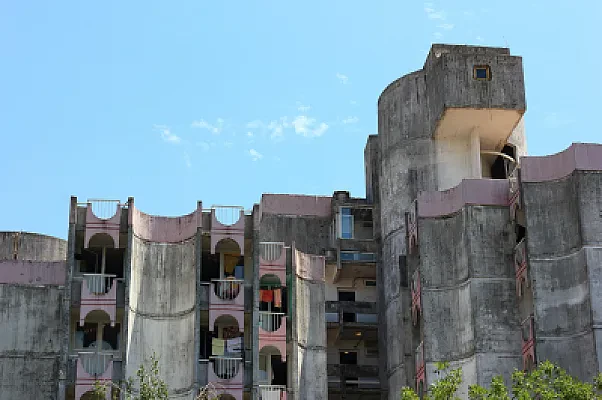
View of the Vytautas Magnus University campus
1 / 5

Established in 1922, the Vytauto Didžiojo universitetas (Vytautas Magnus University) is a non-profit public higher education institution located in the urban setting of the medium city of Kaunas (population range of 250,000-499,999 inhabitants).

Officially recognized by the Lietuvos Respublikos švietimo ir mokslo ministerija (Ministry of Education and Science of the Republic of Lithuania), Vytauto Didžiojo universitetas (VDU) is a medium-sized coeducational Lithuanian higher education institution formally affiliated with the Christian-Catholic religion. Vytauto Didžiojo universitetas (VDU) offers courses and programs leading to officially recognized higher education degrees such as bachelor's degrees, master's degrees and doctorate degrees in several areas of study.

This 102-year-old Lithuanian higher-education institution has a selective admission policy based on entrance examinations and students' past academic records and grades. The acceptance rate range is 0-9% making this Lithuanian higher education organization an extremely selective institution.

International applicants are eligible to apply for enrollment.

VDU also provides several academic and non-academic facilities and services to students including a library, sports facilities, study abroad and exchange programs, as well as administrative services.

Location & Contact

Address book entry for Vytautas Magnus University: location, phone, email, web, and social channels. The press or media office handles institutional inquiries; admissions handles student-specific queries.

Address: K. Donelaičio g. 58
Postal Code: 44248
Map:
Phone: +370 (37) 327812
Fax: +370 (37) 203858
Social Media:

Academic Details

Vytautas Magnus University's institutional metrics and recognition context. Recognition reciprocity matters for credential portability — check whether your home country accepts Vytautas Magnus University's qualifications.

Academic Year: September to June (September-December; February-June)
Accrediting Agency: Ministry of Education and Science (Švietimo ir mokslo ministerija)
Admission Requirements: Secondary school certificate (Brandos Atestatas)
Student Enrollment: 7
Academic Staff Range: 600-699
Campus Setting: Urban
Memberships & Networks
European University Association (EUA)

Degrees

Vytautas Magnus University's qualifications, sorted by level, give a quick overview of study routes. Use this view to scan from foundation through to research-level options before drilling into specific names.

Diploma & Certificate 37 programs

Diploma and certificate routes deliver focused, applied training for fast entry into skilled occupations.

  • Archaeology
  • Art Criticism
  • Arts and Humanities
  • Biology
  • Biomedical Engineering
  • Business Administration
  • Catholic Theology
  • Chemistry
  • Communication Arts
  • Computer Science
  • Ecology
  • Economics
  • Education
  • English
  • Environmental Studies
  • Ethnology
  • French
  • German
  • History
  • Information Sciences
  • Law
  • Linguistics
  • Lithuanian
  • Management
  • Mathematics
  • Pedagogy
  • Philology
  • Philosophy
  • Physics
  • Political Sciences
  • Psychology
  • Public Administration
  • Religious Studies
  • Social Sciences
  • Social Work
  • Sociology
  • Theology

Faculties & Divisions

All faculties operate under Lietuvos Respublikos švietimo ir mokslo ministerija.

Music (Academy) 1 subject offered

Specialisations & Subjects

  • Music
Arts (Faculty) 4 subjects offered

Specialisations & Subjects

  • Art Criticism
  • Art History
  • Fine Arts
  • Theatre
Catholic Theology (Faculty) 3 subjects offered

Specialisations & Subjects

  • Canon Law
  • Christian Religious Studies
  • Theology

Common Career Paths

  • Religious Educator
  • Pastoral Counsellor
  • Faith Community Leader

Illustrative career directions for this field; specific outcomes depend on programme and student choices.

Economics and Management (Faculty) 3 subjects offered

Specialisations & Subjects

  • Economics
  • Finance
  • Management

Common Career Paths

  • Operations Manager
  • Project Manager
  • HR Manager

Illustrative career directions for this field; specific outcomes depend on programme and student choices.

Humanities (Faculty) 11 subjects offered

Specialisations & Subjects

  • English
  • Ethnology
  • Folklore
  • French
  • German
  • History
  • Literature
  • Lithuanian
  • Native Language
  • Philology
  • Philosophy

Common Career Paths

  • Researcher
  • Editor
  • Cultural Analyst

Illustrative career directions for this field; specific outcomes depend on programme and student choices.

Informatics (Faculty) 3 subjects offered

Specialisations & Subjects

  • Computer Science
  • Mathematics
  • Statistics
Law (Faculty) 4 subjects offered

Specialisations & Subjects

  • Administrative Law
  • Commercial Law
  • International Law
  • Law

Common Career Paths

  • Lawyer
  • Legal Consultant
  • Compliance Officer

Illustrative career directions for this field; specific outcomes depend on programme and student choices.

Natural Sciences (Faculty) 4 subjects offered

Specialisations & Subjects

  • Biology
  • Chemistry
  • Environmental Studies
  • Physics

Common Career Paths

  • Research Scientist
  • Lab Technician
  • Analyst

Illustrative career directions for this field; specific outcomes depend on programme and student choices.

Political Science and Diplomacy (Faculty) 2 subjects offered

Specialisations & Subjects

  • International Relations and Diplomacy
  • Political Sciences

Common Career Paths

  • Research Scientist
  • Lab Technician
  • Analyst

Illustrative career directions for this field; specific outcomes depend on programme and student choices.

Social Sciences (Faculty) 4 subjects offered

Specialisations & Subjects

  • Education
  • Psychology
  • Social Welfare
  • Sociology

Common Career Paths

  • Researcher
  • Policy Analyst
  • Social Worker

Illustrative career directions for this field; specific outcomes depend on programme and student choices.

Programs Offered

Vytautas Magnus University's degree-level programme breakdown, with search. Industry-sponsored programmes often have bonded service or employment commitments — read the terms before accepting any sponsored place.

Bachelor's Degree

46 programmes

At undergraduate level, Vytautas Magnus University offers 46 programmes. These bachelor's degrees typically open both direct employment pathways and routes into postgraduate specialisation.

Logistics and Commerce Logistika ir prekyba Business & Management 4 years On-campus
General Description: Objective(s) of a study programme: The aim of the first cycle study programme of Logistics and Commerceis to prepare the specialists in logistics and commerce holding extensive expertise and able to apply the theoretical knowledge in business and management to the decision-making related to management and business organization at the entities operating in logistics and commerce and able to develop of the competitive and socially responsible business in the domestic and international markets. Learning outcomes: 1. Explain the essence of entrepreneurship, learn and compare the specifics of logistics and commerce activities related to business organizations and the possible effect thereof on the environment, business decisions, and general public. 2. Explain the economic, social, technological business resources and processes, issues and the importance of their decisions in planning, forecasting, and assessing the management of the logistics and commerce organizations, process and results of business organization, and is able to use the basic theoretical arguments or theories for substantiation of the managerial decisions in logistics and commerce operations, thereby developing the competitive and socially responsible business in the domestic and international markets. 3. Name and apply the modern business management theories and concepts, the factors of the logistics and commerce activities related to business, the methods for assessment of the effect and research thereof enabling them to learn the environment of commerce and logistic organizations and business as well as the processes taking place within the environment and the applicability of other methods in development of the competitive and socially responsible business in the domestic and international markets. 4. Identify the key business categories and phenomena defined by them, key business and management principles, methods, and strategies, and the diversity of business organization forms as well as the factors affecting the choice thereof, the financial and other resource accounting and management methods as well as the applicability thereof. 5. The students are able to collect and analyse the data necessary for addressing important issues in logistics and commerce by using the achievements and methods of the fundamental and applied research as well as organize and conduct applied research in consumer and competitor behaviour, employee motivation, responsibly prepare the information necessary for managerial decision-making inlogistics and commerce. 6. The students are able to apply and make managerial decisions for organization of management and business of logistics and commerce organizations in an innovative manner, establish logistics and commerce companies, plan, organize, coordinate and evaluate their operations, choose integrated technological, organizational, and methodological measures for management of the business environment, and able to develop the competitive and socially responsible business in the domestic and international markets. 7. The students are able to manage business information flows, social, technological processes and the interaction thereof in the operations of logistics and commerce organizations, analyse and substantiate the decisions in the areas of human, financial, material resource planning, organization, coordination, control, information management, and evaluation of the economic condition and performance. 8. The students are able to communicate with the specialists and public in dealing with tasks related to logistics and commerce operations, presenting the completed activities and results thereof, and cooperate effectively with the colleagues and clients, work in a team and represent interests. 9. Take the moral and ethical responsibility for the quality of the work by the subordinate employees and own work, assessment thereof following the professional ethics, civic approach, and perceives the effect of the performance results on the societal, economic, cultural development,well-being, and environment, and learn and improve skills independently in the area of logistics and commerce and plan the learning process. Activities of teaching and learning: Explanation, discussions, case analysis, watching videos, preparation and presentation of individual/group work, search and analysis of information, preparation of an individual written work, reflection, guest lecturer's lecture. Methods of assessment of learning achievements: Testing, written survey (during colloquium and exam); observation of discussion; evaluation of the progress of independent work preparation and the final oral presentation and written work; evaluation of final thesis preparation, presentation and defence. Framework: Study subjects (modules), practical training: Microeconomics Basic of Business and Public Management Mathematics Macroeconomics Bioeconomy Language of specialty Fundamentals of Accounting Finances Human resources management Logistics equipment and technology Business law Logistics management Business development Trade marketing Transport systems Warehousing and inventory management Logistics business administration Business planning and evaluation Trade management and e-commerce Commercial contracts Quality management International trade Logistics and commerce market research Logistics and commerce term paper Consumer behavior Business communication Logistics and commercial project management Entrepreneurship training Professional logistics and commerce practice Bachelor's thesis Practical training: The proffesonal practice aims to expand the knowledge of logistics and commerce and to acquire skills necessary for independent business activity in logistics or commerce. Professional practice in logistics and commerce consists of practical work in a real business company. Student is supposed to perform real tasks assigned by practice mentor in practice institution, analyse a real business situation related to logistics and commerce. During their professional practice, students, who already acquire business and general knowledge, forming practical skills and abilities required for self-employment in logistics and commerce. This proffesional practice is carried out by concluding a tripartite cooperation agreement with a logistics or commerce business company, a student and the university. Duration of the professional practice - 2 months. Specialisations: - Optional courses: Students can freely choose one subject from Group A and Group B study subjects in three semesters. Distinctive features of a study programme: - Full – time - (studies intensive and focused on practical activities) - Part – time - (non-intensive studies (4 study subjects per semester), mixed studies - most lectures via distance learning). Access to professional activity or further study: Access to professional activity: Graduates of the Logistics and Commerce bachelor's study program will be able to work in logistics, supply management, transportation, storage and transhipment service companies as coordinators, intermediaries, representatives, administrators of the logistics function, in agricultural supply and logistics companies and in organizations that coordinate this activity, in the purchasing, processing and processing of agricultural raw materials in trading companies, food and beverage production and sales companies, agricultural and logistics complexes, shopping centres and cargo transportation networks, as well as creating your own business in the field of logistics and trade. Access to further study: Upon successful completion, the graduates could continue the second cycle studies in the fields of business and management.at Vytautas Magnus University or other Lithuanian and foreign universities.
Duration: 4 years
Delivery: On-campus
Landscape Design Kraštovaizdžio dizainas Agriculture 4 years On-campus
Objective(s) of a study program: The main objective of the study program is to prepare comprehensive high quality university degree specialists, having knowledge of the nature elements and landscape management technologies, of art in spatial design, able to apply the laws of spatial planning, adapting or transforming landscape and natural environment elements according to the needs of society, to keep balance between human created elements and nature, carry out business in landscape design, to lead management of green spaces. The first partial objective is to provide the knowledge of society development and to inoculate the concepts of professional values, to develop social responsibility, to convey principles of sustainable development, skills of natural, cultural and social environment assessment in connection with the development of landscape architecture trends. Second partial objective – provide knowledge of the nature elements and landscape management technologies, to develop skills of rational use of natural resources, landscape planning and management business management in landscape design. Third partial objective – provide knowledge of spatial art, history and theory of landscape architecture, to develop capability of green space design incorporating harmony laws of art, creating a different scope and scale of human habitat. Learning outcomes: 1. To be able to describe and assess changes of natural, cultural and social environment, to define the transforming factors in those fields, to understand the needs of society. 2. To be able to reveal the ethical and professional values, social development factors and communication skills in professional activities. 3. To be able to analyze, evaluate and shape the landscape. 4. To recognize and be able to describe plants suitable for parks and gardens, to evaluate and to effect plant growing conditions, to be able to use plants in garden design. 5. To be able to combine the cultural and natural systems, to deal with the landscape of territorial unit integration questions. 6. To be able to selected research methods for observation and understanding of the natural processes, analyze and investigate the characteristics of their interactions. 7. To be able to describe the engineering objects, to apply various materials, methods, techniques, to use design documentation and be capable to administrate. 8. To be able to offer tools for natural environment improvement and recultivation, organize landscape design and management business, use natural resources in a sustainable way. 9. To be able to describe the history of the cultural form, to know and explain the typology of parks and gardens, to understand the design field as a social art. 10. To know the landscape planning and design theory and methods. 11. To be able to deal with the challenges of space development in planning, designing and managing the landscape, to apply regulations of land-use planning. 12. To be able to apply harmony laws of art in development of different scope and scale of human habitats. Activities of teaching and learning: Contact work consists of lectures, seminars, excursions, design studios, laboratory work, exercises, practices, consulting, tests, exams, supervising the final work. Student self-dependant learning activities include preparation for seminars, laboratory work, tests and exams, substantive literature studies, taking individual and group tasks, coursework, final work preparation and delivery. Teaching methods applied promote students' creative skills. They include debate, discussion, mind map, brainstorming, expert method, student presentations and approach to work in pairs and in groups, case studies of the real problems, development scenarios, practice in the workplace etc. The students are inspired for active participation in the lectures: after some introduction by the lecturer, they are supposed to read the study material before the following lectures, to formulate some questions, to speak to some topics, to participate in the discussion. Methods of assessment of learning achievements: Studies of the subject end with an exam. Exam may be taken in written or oral form. Before the exam session students are required to complete the laboratory, control, exercise activities, course projects and other forms of self-learning. The final note for a study subject consists of the knowledge evaluation during the exam (50-60%) and other work evaluation. Subject evaluation methods are as follows: problematic issues, tests, short answer demanding questions, questions to answer using the open literature, oral questions, individual notification, the team (small group), prepared the report presentation, poster, abstract, problem tasks laboratory or practical work deliveries, study trip report, substantive work diaries, employer's reference, practical training report, presentation of the results of training practice, role-play (performance), delivery, presentation of various projects, various reviews. Specializations: No specializations Optional courses: Students are supposed to take one study subject from both optional subject groups (totally 8 ECTS): Group 1: Arboriculture, Recreational Forestry; Group 2: Environmental sociology and Psychology, ect. Distinctive features of a study program: Students have the opportunity to study individual courses abroad under the ERASMUS program.
Duration: 4 years
Delivery: On-campus
Business Administration Verslo administravimas Business & Management 4 years On-campus
General Description: Objective(s) of a study programme: The aim of Specialisation of Sport Management of the Undergraduate Study Programme of Business Administration is to prepare business administration specialists of broad erudition and wide profile able to creatively apply theoretical innovations and practical achievements in professional activity, react to the changing Lithuanian and global business environment and different business contexts, including sport business and work in modern Lithuanian and international organizations also in prevailing small and medium business companies and sport associations. Specialisations: Sport management.
Duration: 4 years
Delivery: On-campus
Social Work and Psychosocial Counseling Socialinis darbas ir psichosocialinis konsultavimas Social Sciences & Education 4 years On-campus
General Description: Objective(s) of a study programme: Based on the latest theories-driven practice of social work and counseling to prepare innovative and leading social work professionals for the rapidly changing national and international labor market, who are able to apply multidisciplinary methods of social work and psychosocial counseling to identify the psychosocial needs of individuals (groups), families, communities, solve interpersonal and social problems or help to prevent them, promote social change, improve the quality of life, ensure human rights and strengthen solidarity and social justice. After completion of study program, a social sciences bachelor's degree is awarded. Learning outcomes: Graduates of the program will be able: 1. To describe and analyze the newest research-based theories in the field of social work, explaining human psychosocial development and complex human interaction with the environment (at micro, mezzo, macro levels), linking human psychosocial functioning, problem solving and social changes in complex and unpredictable situations. 2. Critically apply the newest social work theories, intervention and prevention strategies, while adhering to the ethical values of social work and counseling in order to empower individuals and groups in complex and unpredictable situations. 3. To apply quantitative and qualitative research methods when conducting social work research which aims to identify interpersonal and social problems of various people groups people, model the potential for psychosocial support and solutions to psychosocial problems, implement human rights, and advance the field's knowledge. 4. To evaluate the situation and select appropriate social work interventions and psychosocial counseling methods to empower individuals (their groups), families and communities, enhance psychosocial functioning and quality of life. 5. To comply to the fundamentals of social justice, human rights, social work values, and professional ethics in the day-to-day practice of social work and psychosocial counseling, while also offering guidance for the advancement of professional practice. 6. To analyze the directions/aspects of social policies in Lithuania and other countries and national social security system, prepare and submit proposals aiming at equality and non-discrimination in the implementation of social policy. 7. To act according to the principles of interdisciplinary team cooperation, provision and organization of social services and psychosocial support, principles of project and program management, including effective communication and teamwork with professionals and other relevant systems. 8. To integrate various forms of professional development (reflections, professional supervision, training, conferences, etc.), take care of personal growth and professional development, responsibly use and evaluate national and international sources of information, and to promote social work as a profession that supports and empowers individuals and groups. Activities of teaching and learning: Learning and teaching activities are organized to support students to perceive the aim of learning, plan, assess and reflect on the learning process, progress, and achievements. Study methods include individual and group projects, solving problem situations, role play, case studies, critical analysis of literature, document analysis, analysis of video material, analysis of actual educational situations, thematic debates, discussions, focus group discussion, collaborative activities in small groups and pairs, critical reflection, reflection diaries, inquiry-based learning and elements of action research, preparation of the learning portfolio, etc. Time is spared for student consultations aimed at clarifying arising questions individually or in groups, getting advice on performance of self-study assignments. Interactive lectures, seminars, group supervisions, practical activities, independent individual and group/team work promote students’ active learning, encourage them to relate acquired new knowledge to practice and try them out practically. Studies grounded on the personalized learning paradigm emphasize the development of the learner’s experience. Therefore, considerable attention is paid to students’ practical activities and reflection on them. Methods of assessment of learning achievements: Assessment methods and techniques are attuned to learning outcomes and competencies as well as relevant study methods. The following ways of assessment are used: the course teacher’s assessment, self-assessment of the student performed task, students’ assessment of each other’s tasks in pairs or groups, etc. Studies of the subjects of the study programme are completed with the evaluation of the student’s knowledge and skills on the 10-point grading system. Assessing student performance in individual subjects, assessment criteria are formulated in accordance with the summative assessment system for assessment of learning outcomes, applied at Vytautas Magnus University (including formative assessment too), defined in the Study Regulation of VMU. Evaluation of students’ academic achievements involves intermediate assessments and examination (or the defence of the student’s independent assignment). Students’ theoretical preparation and the ability to practically solve tasks of special educational support provision and improvement in the educational process are assessed. The final mark of the study subject consists of the marks for performance of intermediate tasks (individual projects/assignments, individual homework, tasks of solving problem situations, case study, written assignments, etc.) and for the examination (or the defence of the student’s independent project). The examination mark must constitute at least 30 per cent of the final mark, while the weight of individual constituents of intermediate assessments in the final mark is established / announced by the course teacher during the first lectures. Framework: Study subjects (modules), practical training: The study program consists of 240 credits: Artes liberales general study subjects (56 credits) and social work field study subjects are consisted of study subjects of other fields (psychology, sociology, law) (30 credits), specialty subjects and practices (154 credits). Specialty subjects consist of several blocks: -Knowledge and its application (36 ECTS) includes the following study subjects: Basics of Social Work; Basics of psychology for social work; Personality Development; Basics of Law in Social Work; Critical Social Work; Social Work with Family and Individuals; Social Work in Health Care System. -Study subjects for research skills (28 ECTS) include the following: Social work research methods; Pre-Diploma Social Work Practice; Project of Bachelor Final Research Paper; Social Work Bachelor Final Thesis. -Study subjects for special abilities (84 ECTS) include the following micro-level social work study subjects: Practicum in Motivational Interviewing; Basics of Psychosocial Counseling; Social Work With Groups; Crisis Intervention; Alternative Counseling Methods In Social Work; Psychosocial Counseling in Child And Family Welfare; Family in Risk Society; Methods For Empowering and Counseling Older People; Introduction to Social Work Field Practice; Social Work Field Practice 1; Social Work Field Practice 2; Social Work and Counseling Ethics; and mezzo and macro social work study subjects: Human Rights and Social Work; Systems of Social Security; Leadership and Preventive Work In the Community; Social Entrepreneurship and Management in Social Services Organization. -Study subjects for social abilities (20 ECTS) include the following: Human Behaviour in the Social Environment 1; Human Behaviour in the Social Environment 2; Methods of developing social skills; Coaching methods in social work. -Study subjects for personal abilities (16 ECTS) include the following: Practicum Of Group Supervision 1; Practicum Of Group Supervision 2; Professional Language and Academic Writing. Internships: The program consists of three internships. The purpose of introductory social work practice (4 ECTS, in the autumn semester of the 2nd year) is to get acquainted with the main areas and directions of social work activity. Students get acquainted with social work in state and non-governmental organizations operating in the field of social security (social services, protection of children's rights, etc.), health protection, education (science and education), law enforcement (probation and execution of sentences), employment and national defense. The purpose of qualifying social work practice (12 ECTS, in the third year of study) is to develop individual social work skills, emphasizing the development of psychosocial counseling skills (active listening, conducting consultative interviews, etc.), working in a real institution of the chosen social work field. The experience gained during the qualifying practice is reflected during the group supervision practice. The purpose of the pre-diploma social work practice (3 ECTS, in the spring semester of the fourth year) is to integrate practical experience and theoretical knowledge, justifying the practical relevance of the selected thesis topic. Bachelor thesis (15 ECTS). Specialisations: - Optional courses: - General study subjects (56 ECTS), that the students can choose from a list of Artes Liberales subjects and from all study programs conducted at the university; - Parallel studies, choosing from all the studies conducted at the university (psychology, pedagogy, sociology and anthropology, law, public administration, etc.). - Social work subjects: Psychosocial counseling in the field of child and family welfare; Family in a risk society. Distinctive features of a study programme: In comparison to other social work study areas, VMU's bachelor's degree programs in social work are exceptional and one-of-a-kind because they combine studies from various fields, fusing the theory and practice of psychosocial counseling in various social work fields (social services, health care, education, law enforcement), with an understanding of basic human rights and social justice principles, and encouraging the growth of critical thinking. Furthermore, sessions can be used to organize studies. numerous study options at universities abroad. Access to professional activity or further study: Access to professional activity: A graduate with a bachelor's degree in social sciences can work as a social worker or manager in governmental and non-governmental organizations that are involved in social security (social services, protection of children's rights, etc.), health protection, education (science and education), law enforcement (probation and execution of sentences), the employment service, national defense, or even start their own social business. A program graduate is qualified to offer psychological assistance and counseling to a range of clientele, including children and adolescents, young adults, families, the elderly, those struggling with mental illness or addiction, migrants, the unemployed, etc. Access to further study: The program's graduates will be able to pursue master's degrees in social work, sociology and anthropology, social policy, criminology, integrated communication, as well as other social sciences, law, business and public management, and educational sciences (after completing additional courses, if necessary).
Duration: 4 years
Delivery: On-campus
Sociology and Anthropology Sociologija ir antropologija Social Sciences & Education 4 years On-campus
General Description: Objective(s) of a study programme: The objective of the program is to train qualified sociologists who have a wide range of competences: competences in specific sociological and comprehensive social science analysis of various social processes within social institutions and society at large, competences in an application of interdisciplinary sociological, anthropological and communication studies knowledge to identify the contemporary social issues, competences in choosing the adequate and appropiate practical solutions to deal with contemporary social issues and in application of various sociological praxis and policies to propose those solutions, while keeping with general ethics code and principles. Learning outcomes: Graduates of the program will be able: 1. Competence to analyze and apply modern sociological, anthropological and communucation studies theories for the study of society and the analysis of various contemporary social issues. 2. Competence in critical thinking to observe, analyze and evaluate contemporary society and social and cultural problems on the national and global scale, while applying sociological analysis tools and methods. 3. Competence in applying theoretical (and conceptual) knowledge to identify and analyze social inquiries and seek after for the optimal practical solutions of sociological, anthropological and communication issues. 4. Competence to develop the skills of understanding of the principles of social science research methodology, assess, summarize, synthesize, and comment on different forms of solutions offered by the social research strategies for the optimal practical solutions of sociological, anthropological and communication issues. 5. Competence to develop personal professional ability to plan and perform an interdisciplinary sociological, anthropological and communication research, collect, analyze, and interpret data by using quantitative and qualitative social research methods in specific study field. 6. Competence to develop the ability to apply different approaches, statistical analysis softwares/ programs and tools to the analysis of social data in the data analysis of projects based on the research of social issues or the study field at large. 7. Competence to develop the professional ability to apply and perform secondary data sources in sociological analysis (statistical information, structured data sets, etc.) and effectively communicate about it to various segmented or mass audiences. 8. Competence to develop personal abilities in understanding the importance of management of informational literacy and new digital technologies within the interdisciplinary field of sociology, anthropology and communication studies or sociological and anthropological projects. 9. Competence to co-work and communicate with professionals and non-experts, and work in a team setting to plan and organize personal and group activities for internal and external communication while aiming to apply the interdisciplinary (sociologal, anthropological and communication studies) knowledge and skills. 10. Competence to develop the ability to initiate, prepare and implement various interdisciplinary (sociological, anthropological and communication studies) projects aiming to seek after for the optimal practical solutions within organization(s). 11. Competence to develop creative, systematic, critical thinking and abilities to act responsibly, considering the principles of sustainable development, and adhere to the fundamental principles of research ethics, scientific validity, and objectivity. 12. Competence to understand intercultural diversity aspects related to value, perceptual, cognitive, behaviour and communication differences, while aiming to find the solutions which require the interdisciplinary (sociologal, anthropological and communication studies) approach. Activities of teaching and learning: Learning and teaching activities are organized to support students to perceive the aim of learning, plan, assess and reflect on the learning process, progress, and achievements. Study methods include individual and group projects, solving problem situations, role play, case studies and analysis, critical analysis of literature, document anc content analysis, laboratory work, analysis of video material, analysis of actual educational situations, thematic debates, discussions, focus group discussion, collaborative activities in small groups and pairs, critical reflection, reflection diaries, inquiry-based learning and elements of action research, preparation of the learning portfolio, etc. Time is spared for student consultations aimed at clarifying arising questions individually or in groups, getting advice on performance of self-study assignments. Interactive lectures, seminars, practical activities, independent individual and group/team work promote students’ active learning, encourage them to relate acquired new knowledge to practice and try them out practically. Studies grounded on the personalized learning paradigm emphasize the development of the learner’s experience. Therefore, considerable attention is paid to students’ practical activities and reflection on them. Methods of assessment of learning achievements: Assessment methods and techniques are attuned to learning outcomes and competencies as well as relevant study methods. The following ways of assessment are used: the course teacher’s assessment, self-assessment of the student performed task, students’ assessment of each other’s tasks in pairs or groups, etc. Studies of the subjects of the study programme are completed with the evaluation of the student’s knowledge and skills on the 10-point grading system. Assessing student performance in individual subjects, assessment criteria are formulated in accordance with the summative assessment system for assessment of learning outcomes, applied at Vytautas Magnus University (including formative assessment too), defined in the Study Regulation of VMU. Evaluation of students’ academic achievements involves intermediate assessments and examination (or the defence of the student’s independent assignment). Students’ theoretical preparation and the ability to practically solve tasks of special educational support provision and improvement in the educational process are assessed. The final mark of the study subject consists of the marks for performance of intermediate tasks (individual projects/assignments, individual homework, tasks of solving problem situations, case study, written assignments, laboratory work, etc.) and for the examination (or the defence of the student’s independent project). The examination mark must constitute at least 30 per cent of the final mark, while the weight of individual constituents of intermediate assessments in the final mark is established / announced by the course teacher during the first lectures. Framework: Study subjects (modules), practical training: The study program consists of 240 credits: general study subjects and specialty study subjects as well as internships (in-service trainings). The main study language for Sociological and Anthropological Studies (SAS) specialization is Lithuanian, and for the Society, Culture and Communication (SCC) specialization is English: 1. General study (Artes liberales) subjects consist of 56 credits in SAS specialization, and of 48 credits in SCC specialization. The difference in volume of credits between specialization appears because students must have certain English language proficiency (C1 level) to enroll in SCC specialization, as the main study language for this specialization is English. 2. The credits of the blocks of compulsory subjects are distributed according to the chosen specialization. 1) Specialty subjects constitute 148 credits in total for SAS specialization, and 156 credits for SCC specialization: • Common study field specific subjects for both specializations (6 subjects, 34 credits) are taught in respective main study languages. These subjects are Social Change, Classical Sociological Theories, Contemporary Sociological Thinking, Demography, Qualitative Social Science Methods, Quantitative Methods in Social Sciences. • Different specialization specific subjects are offered according to the chosen specialization and study fields which are linked with the chosen specialization. SAS specialization subjects consist of 38 credits within study field subjects (Social Relations, Sociocultural Anthropology, Applied Sociology and Anthropology, Fieldwork methods, Social Project Management, etc.), and of 10 credits within other study field subjects (Applied Statistics, etc.). SCC specialization subjects consist of 10 credits within study field subjects (Cultural Diversity and Intercultural Communication, etc.), and of 58 credits within other study field subjects, mainly in communication studies (International Communication and Global Perspectives, Theory and Practice of Public Relations and Strategic Communication, Creative Production Lab, Representations, Identity and Principles of Visual Communication, Public Communication Regulation, etc.). • Elective study field subjects are chosen by the students: SAS specialization students must take 66 credits, SCC specialization students elect subjects of 54 credits volume. The examples of possible offered to elect subjects are Economy, Employment and Consumption, Social Inequality and Exclusion, Religion, Culture and Society, Health, Medicine and Society, Family Diversity in Contemporary Society, etc. 2) 2 internships/ in-service trainings must be taken by both specialization students during the last academic year studies (8 credits are dedicated for each internship). 3) Term paper (5 credits) and final BA thesis (15 credits) are prepared by both specialization students during the last academic year studies. Specialisations: Sociological and Anthropological Studies (taught in Lithuanian as a main study languange) Society, Culture and Communication (taught in English as a main study languange) Optional courses: • General study subjects that the students can select from a list of Artes Liberales subjects or other study programs: 56 credits in SAS specialization, and 48 credits in SCC specialization; • Students of SAS specialization select subjects of 66 credits and students of SCC specialization elect subjects of 54 credits from the list of common elective study field subjects (Economy, Employment and Consumption, Social Inequality and Exclusion, Religion, Culture and Society, Health, Medicine and Society, Family Diversity in Contemporary Society, etc.); • Students of SAS specialization select subjects of 48 credits volume from the list of specialization specific subjects which can be study field or other study field subjects (Social Relations, Sociocultural Anthropology, Applied Sociology and Anthropology, Fieldwork methods, Social Project Management, etc.); • Students of SCC specialization select subjects of 68 credits volume from the list of specialization specific subjects which can be study field or other study field subjects (International Communication and Global Perspectives, Theory and Practice of Public Relations and Strategic Communication, Creative Production Lab, Representations, Identity and Principles of Visual Communication, Public Communication Regulation, etc.). Distinctive features of a study programme: Sociology and Anthropology study program offered by VMU's on the bachelor's level are unique in that it offers two different sociology study field approach and combination with other discipline - students who would like to combine sociology with anthropology (Sociological and Anthropological Studies specialization) or sociology with communication studies (Society, Culture and Communication specialization). Sociological and Anthropological Studies specialization is orientated towards the development of professional skillset of sociological and anthropological projects implementation, quantitative and qualitative data collection, different type of data analysis, and recognition of various needs in organization(s) for the projects to explain social contemporary issues and problems. Society, Culture and Communication specialization is orientated towards the development of professional skillset to combine theoretical and practical sociological and communication knowledge, organize, and apply various types of social and media research, projects and implement solutions in organization(s). Both program specializations are also exceptional because: • There are offered broader and more comprehensive approach and understanding of contemporary society for students in study program, as one specialization (Sociological and Anthropological Studies) coordinates sociology and anthropology disciplines, while the other (Society, Culture and Communication specialization) combine fields of sociology and communication studies. • Sociological and Anthropological Studies are held in Lithuanian language with the focus towards contemporary Lithuanian society understanding, while the main study language of Society, Culture and Communication specialization is English, and it is orientated towards contemporary global society and communication processes understanding. • Sociological and Anthropological Studies dedicated to the students who would like to go into-depth in social research and project (different type of methodology and methods applications, data collection and analysis) side applications, while Society, Culture and Communication specialization provide students with the opportunities to go into-depth in communication solutions side applications. Access to professional activity or further study: Access to professional activity: Graduates of the Sociology and Anthropology Bachelor programme of Sociological and Anthropological Studies specialization acquire competences necessary for successful work at the national and international non-governmental organizations, social research centres, public opinion and market research institutions, governmental organizations, different media areas and other different areas of public life where the knowledge about interpersonal relations, intercultural diversities and their impact, competencies to identify social problems based on data analysis and to propose solutions and social research performance are required. Graduates of the Sociology and Anthropology Bachelor programme of Sociological and Anthropological Studies specialization acquire competencies necessary for a successful professional career in public and non-governmental organizations and private companies, social and media research centers, enterprises in the field of public opinion, media monitoring, market research, public relations and media, and other organizations in the areas where the knowledge about intercultural diversities and communication are essential. Graduates acquire competencies related to identifying the social and communication problems, proposing sociological or media research design, and suggesting solutions based on the research results. Graduates can work as analysts and communication specialists and have excellent communication skills in public relations, creative and feature writing, and other creative communication content aspects. Access to further study: Graduates of the programme are able to continue studies in the second cycle programmes in Social Sciences or other fields in Lithuania and abroad, whereas the social sciences BA is sufficient.
Duration: 4 years
Delivery: On-campus
Law and Finance Teisė ir finansai Law 4 years On-campus
General Description: Objective(s) of a study programme: The aim of the first cycle study programme is to prepare qualified lawyers or law specialists with good knowledge of Lithuanian law and finance system, having knowledge of international and the European Union law, who are able to effectively and ethically represent and consult clients, solve disputes, take and implement decisions on internal control or other matters relating to the operation of financial institutions, and easily adapt to the specificities of working in the European Union, continental and common law systems and traditions, in transnational organisations and financial system companies. Learning outcomes: 1. To identify and explain the main theories of law and finance, to apply the principles and norms of all the main branches and institutes of law, as well as knowledge of the financial system, its operating principles, components, and their functioning, and the issues of internal control of the activities of financial institutions, in the context of national and international legal regulation. 2. To carry out in-depth legal and financial analysis of a problem, to collect information and to critically evaluate it using national and international sources of information, to analyse issues arising in professional practice and to make decisions using legal and financial research methods, to carry out theoretical-applied research, to provide reasoned justification for the results obtained, and to interpret them. 3. To critically evaluate legal acts, to draft legal acts, including internal control documents for financial institutions, to critically and systematically analyse the rules of interpretation of law formed in court practice, the principles of law and data related to the field of finance in judicial and quasi-judicial proceedings, and to identify problems of legal regulation by linking the knowledge of law and finance. 4. To analyse and evaluate from a legal perspective human behaviour and activities as well as the behaviour and activities of social, business, and financial institutions, the nature, content and legality of different documents, and to make reasoned decisions on internal control or other issues relating to the operation of financial institutions, and on the resolution of conflicts. 5. To plan, organise, and control professional activities when working independently and as part of a team, communicating and collaborating with other professionals on legal and financial matters, resolving disputes, finding possible solutions and the appropriate application of knowledge of law and finance. 6. To be impartial, emphatic, and sensitive to the needs of other individuals and the environment, to reconcile opposing interests, and behave in accordance with established standards of professional ethical conduct. 7. To think consistently, logically, and critically; to justify and argue effectively using knowledge of law and finance; and to learn continuously as well as to keep up-to-date with developments in the regulatory and financial systems. Activities of teaching and learning: Future lawyers study university courses in general education, foreign languages, compulsory law and finance, as well as free electives. Internship in Law and Finance is a compulsory part of the study process provided for in the study programme in the field of Law, the aims of which are: to acquire a general understanding of future professional activities and practical skills in a real workplace; to assess one’s professional potential, to pursue professional development, and to plan one’s professional career in a constructive manner; to apply the theoretical knowledge acquired during the studies in practical activities, independently drafting legal documents as well as analysing and solving practical cases; to learn to work in a team; to become familiar with the values and norms of the institution where the internship is carried out and to learn to respect and use them in a responsible way. The volume of the Internship is 15 ECTS (400 hours) and takes place in Semester VII of the studies. The student carries out his/her internship in various state and local government institutions (e.g., courts, prosecutor’s offices, etc.), law firms, notary and bailiff offices, financial institutions and other human resources or legal departments of private and public companies, institutions, and organisations. Interdisciplinary studies develop students’ abilities to apply general legal norms and legal principles in solving factual situations, to use legal databases and to draft procedural documents. Particular emphasis is placed on the ability to analyse and critically assess processes in financial systems and business structures and to apply legal norms and principles governing financial activities in practice. Study programme is completed with a final bachelor thesis. Graduates are awarded a qualification degree of Bachelor of Law. During the studies information search, analysis of documents and scientific sources, problem solving, analysis of problematic situations and questions, case study, discussion, debate, preparation of research project, essay writing, oral presentations, group work take place. Methods of assessment of learning achievements: The university applies a cumulative grade evaluation system for the assessment of learning outcomes. Learning outcomes of students are evaluated by means of midterm tests, other intermediate evaluations (auditorial tests, presentation of papers, homework, individual tasks) and examination or independent work (project) performed by students. If the subject is taught as an intensive course, its outcomes are evaluated by means of the final examination only. The assessment methods used during the studies are: testing or examination (mid-term and exam); monitoring and evaluation of discussions and debates; monitoring and evaluation of performed practical tasks; evaluation of problem solutions; monitoring and evaluation of coursework, essays, case studies, reports, project presentations. Framework: Study subjects (modules), practical training: The programme is structured in three main parts: 16 credits for general subjects and languages, 34 credits for finance, 160 credits for law (including 15 credits for the thesis and 15 credits for the internship). Finance subjects: Fundamentals of Finance, Public Finance, Financial Accounting and Reporting, Taxes and Taxation, Business Finance Management, Investments and Risk. Subjects in Law: Legal Theory, Professional Ethics and Social Responsibility, Legal History, Administrative Law and Process I, Constitutional Law, Labour Law, Criminal Law: General Part, Civil Law I, Administrative Law and Process II, Civil Law II, Criminal Law: Special Part I, European Union Law, Corporate Law and Governance, Legal (Professional) English, Criminal Procedure Law I, Civil Procedure Law I, Criminal Law: Special Part II, International Public Law, Criminal Procedure Law II, Civil Procedure Law II, Methodology for Empirical Research in Law and Economics, Contract Law, Technology Law, Internship of Law and Finance, Bachelor Thesis. Specialisations: - Optional courses: Alternative introductory courses in fields of study taught in study programmes other than the one the student is studying and languages (16 ECTS). Distinctive features of a study programme: This is the only bachelor's program in law in Lithuania that combines the fields of law and finance. The programme is designed to respond to the need for an integrated mix of financial and legal knowledge, which is particularly important and necessary for the implementation of internal control over the activities of financial institutions, the requirements of supervisors and other issues related to the legal compliance of financial institutions. The study program is designed to prepare specialists who understand both Lithuanian and EU and international financial and economic phenomena, their essence, principles of operation, their risks and legal regulation. Graduates of this program will become not only qualified lawyers, their uniqueness will be the additionally acquired financial knowledge and the ability to combine these two areas with each other. Access to professional activity or further study: Access to professional activity: Graduates of the study programme Law and Finance can engage in practical activities: they can work as lawyers, especially in the field of financial law, in law enforcement agencies, bailiffs’ offices, legal services of public institutions, private companies, banks, investment companies, financial management services companies, and other companies in the financial sector, i.e., where there is a need for specialists in Law and Finance who are well versed in the essential elements of Lithuanian law and the country’s financial system, who have knowledge of international and European Union law and the international financial system, and who have the ability to effectively and ethically represent and advise their clients, to resolve disputes, and to take decisions on internal control and other issues related to the operation of financial institutions, as well as to implement them. Access to further study: Graduates of the programme can continue their studies in the second cycle study programmes in Law, Finance, and other Social Sciences.
Duration: 4 years
Delivery: On-campus
Catholic Theology Katalikų teologija Humanities & Cultural Studies 5 years On-campus
Objective(s) of a study programme: Catholic Theology Study Program aims to prepare qualified specialists of Catholic theology researchers of theological issues in contemporary world who will be able to work for Catholic institutions, applying Catholic Church’s teaching to pastoral work with youth and adults. Learning outcomes: Upon successful completion of the program, students will be able to: 1. Philosophically interpret the essential questions of human existence. 2. Interpret the content of Christian revelation in its historical and today’s context. 3. Substantiate authentic teaching of the Church in all areas of pastoral activity. 4. Prepare all age groups for Sacraments. 5. Organize the pastoral work in parishes, Church organizations, and state institutions. 6. Implement prepared projects in practice, as members of a team. 7. Choose the best ways of cooperation in various fields between the Church and State. 8. Appreciate the role of ecumenism and interreligious dialogue in pastoral activity. 9. Critically assess the social, cultural and political context of the country, in order to assist civil society’s development and contribute to the country’s smart, integral growth. 10. Comprehensively articulate a positive impact of Christianity and the Catholic Church on individuals, society and state, on the level of both religious education and public dialogue within some part of a religiously indifferent society. Activities of teaching and learning: Activitiesof teaching and learning are chosen in accordance with study objectives and outcomes. Innovative student-centered teaching and learning methods are used: discussion in class, cooperative learning and group work that encourage active student participation and integral thinking, various projects, creative assignments, conferences, and learning using information technology. Chosen methods engage students in active learning, promote students’ awareness, responsibility, the ability to work as a team, encourage students to analyze and critically assess the results. Methods of assessment of learning achievements: The cumulative scoring system is used. Chosen methods of assessment indicate what a student actually learned, what knowledge gained, what skills, values developed: oral and written examination, case study, scientific literature analysis, essay, paper, presentation, practicum diary, practicum report, thesis defense. Framework: Study subjects (modules), practical training: Study field courses (167 ECTS): Ontology, Philosophical ethics, The History of Ancient and Patristic Philosophy, Introduction to Theology, Natural Theology, Gnoseology, Speciality Language Culture: Theological Language, Philososphy of Religion, History of Medieval and Renaissance Philosophy, Philosophical Anthropology, Philosophy of Nature, History of Modern and Contemporary Philosophy, Theological Anthropology, Fundamentals of Communication Psychology, General Introduction to the Holy Scripture Patristic, Fundamental Theology – 1: Revelation and Fundamental Christology, Fundamental Theology – 2: Fundamental Ecclesiology and Theology of Religions, History of the Church of Modern Times, History of the Church of Ancient and Middle Ages, History of the Catholic Church in Lithuania, Fundamental Moral Theology, Liturgy, Church Art, Methodology of Research in Theology, The Synoptic Gospels and the Acts of the Apostles, Pentateuch, Trinitology and Protology, Christology and Soteriology, Pneumatology and Theology of Grace, Ecclesiology and Mariology, Special Moral Theology (1): Theological and Social Ethics, Special Moral Theology (2): Bioethics, Sexual and Conjugal Ethics, Eschatology, Spiritual Theology, Sacramental Theology, Pastoral Theology. Courses designed for increase of specialization (41 ECTS): The Pauline Letters, The Prophets, Code of Canon Law (1), Catechetics, The Wisdom Books of the Old Testament, Code of Canon Law (2), The Johannine Tradition, Oriental theology, Christian Archaeology. Practice (15 ECTS): Theology Practicum (Cognitive), Practicum: History of the Catholic Church in Lithuania (Qualifying), Pastoral Theology Practicum (Qualifying), Theological Practicum (Prie-Thesis). Final Degree Project (12 ECTS): Bachelor‘s Thesis in Catholic Theology. Specialisations: Optional courses: Distinctive features of a study programme: Faculty of Catholic theology is the only faculty that is established and approved by the Holy See in the Vatican. The faculty closely cooperates with the Holy See's Congregation for Catholic Education, which advises on the program’s design and other questions regarding studies and scientific activities, as well as carries out the analysis of the faculty’s activities. This partnership helps to ensure the program’s richer content and structure. Issued diploma meets the requirements set by both the Republic of Lithuania and the Holy See. Diploma is signed by the Rector and the Archbishop, who is the Grand Chancellor of the Faculty.
Duration: 5 years
Delivery: On-campus
Sustainable biobusiness Management Tvaraus bioverslo vadyba Business & Management 4 years On-campus
General Description: Objective(s) of a study programme: to prepare management specialists with knowledge and practical abilities to apply sustainable technologies for the production, processing and conversion of biological resources in the sustainable bio-business sector, who understand and are able to assess the economic, political, legal and social context in global society, when making sustainable management decisions in business and public organizations operating in the bio-economy sector and in public authorities responsible for the development of a sustainable bioeconomy sector towards a circular economy. Learning outcomes: 1. Able to explain the circular economy and regularities of bioeconomy development, describe economic, political, legal and social context in a global society, evaluate it when making managerial decisions, ensuring sustainable use of resources in the organization. 2. Able to describe and explain organizational systems and processes of planning, production, supply chain, marketing, human resources management, distribution of bioproducts and their management features in business, public organizations and government institutions operating in the bioeconomy sector. 3. Able to explain and apply biological production, processing and conversion of resources principles and describe the processes necessary for sustainable economic development. 4. Able to independently collect, systematize, analyze and interpret information and data needed for relevant research to perform and justify management decisions in the bioeconomy sector in business and public organizations and in government institutions. 5. Able to independently analyze and critically evaluate various economic, political, legal and social factors in identifying and justifying problems in the bioeconomy sector. 6. Able to accept reasonable organizations management decisions, integrating existing and new biological resources technologies and their effective use, including statistical data analytics, management and application of methods. 7. Able to prepare, evaluate and implement carry out investment projects and programs market research, to carry out product marketing, to manage the changes taking place in a sustainable biobusiness organization. 8. Able to manage and evaluate biological production, processing and conversion of resources technologies and technological processes, using appropriate experimental, analytical and statistical methods and applying it in practice. 9. Able to discuss constructively, work effectively in a team, in a diverse and multicultural work environment, in search of sustainable, socially responsible solutions for the development of biobusiness. 10. Able to communicate in writing and orally, study and work independently, think analytically and reflectively, act proactively, adapting to changes in the biobusiness sector and mastering new bio and engineering technologies. Activities of teaching and learning: Narrating, explaining, illustrating, presenting questions and answers, analyzing documents and scientific sources, analyzing problem examples and questions, solving problem situations, showing videos, consulting, formulating practical tasks, explaining, performing, formulating practical tasks or problems and demonstrating solutions, problem solving, discussions, debates, preparation of paper, project, report, presentation of paper, project, report, case analysis. Methods of assessment of learning achievements: In order to promote students' motivation, consistent, continuous work during studies, a cumulative assessment system is applied. Assessment methods: written test or survey, assessment of problem solutions, assessment of practical tasks, assessment of discussions and debates, assessment of paper, project, individual and group work, report and their presentation, assessment of case studies, etc. Framework: Study subjects (modules), practical training: General subjects of university studies - group A and B subjects (40 ECTS). The subjects that form the results of the management studies are group C subjects (138 ECTS). Of these, 16 ECTS are allocated to practical work, and 16 ECTS to the Bachelor's final thesis. Subjects that shape the results of other study areas are group C subjects (62 ECTS). Specialisations: - Optional courses: The Artes liberales study model is applied. Distinctive features of a study programme: The study program is interdisciplinary. Access to professional activity or further study: Access to professional activity: Possibilities of further studies or professional activities are discussed. After completing their studies and obtaining bachelor's degree in Business Management, graduates will be able to work:  managers, project managers, management and organization analysts, sustainable management consultants, sales, marketing and development managers, market research analysts, sales managers, specialists in the bioeconomy sector in operational and public organisations;  also work as group leaders, department administrators, program coordinators, advisors, consultants, evaluators, public relations specialists in government institutions (ministries, their departments, agencies, etc.) responsible for the development of the bioeconomy sector;  create your own business. Access to further study: Master studies
Duration: 4 years
Delivery: On-campus
Creative Business and Innovation Design Kūrybiško verslo ir inovacijų dizainas Business & Management 3 years On-campus
General Description: Objective(s) of a study programme: To prepare professional organization and business developers, managers and innovators who are acquainted with the latest methods and models of organization creation, design and management, capable of creating and implementing value-creating social and business ideas, and initiating changes and innovations in national and global environments with entrepreneurial competencies, systemic, analytical and creative thinking. Learning outcomes: 1. Will be able to explain, analyze and evaluate the main and specialized business activities and processes and apply the latest methods and models of organization creation and management for value creation. 2. Will be able to identify and explain the challenges and opportunities of modern business and social organizations in the context of management theories and global change. 3. Will be able to select and both critically and creatively apply management methods and appropriate qualitative and quantitative research methods, systematize, analyze and evaluate business data and information and select appropriate technological, organizational and methodological tools required for effective business or innovation design and long-term business value creation. 4. Will be able to apply business design and innovation design methodologies to solve important business economic, social and ethical problems. 5. Will be able to recognize the social, cultural and economic value of a product, service, business and / or social innovation, create an innovation and / or business model by assessing the consequences and impact of ideas, opportunities and actions. 6. Will be able to implement the created innovation and / or business model and develop them in conditions of uncertainty in a dynamic business environment. 7. Will be able to communicate and work effectively in a team and partnership with stakeholders, discuss relevant professional issues in an interdisciplinary environment, make decisions and take responsibility, initiative and leadership in creating social or business transformations and initiating and implementing change. 8. Will be able to demonstrate the basic values and principles necessary for a business specialist, systematic approach, analytical, critical and creative thinking, in accordance with the principles of business ethics and social responsibility. 9. Will be able to self-assess personal entrepreneurial competencies, form a plan for their development, consider their aspirations and desires and set goals, reflect individual and team experiences. Activities of teaching and learning: Provision of information using visual aids, case-based lecture, explanation of practical examples and issues, explanation of video examples, formulation and explanation of practical tasks, moderation of discussion, consulting independent work: search for and analysis of information presented in educational literature, periodicals, etc., case analysis preparation and performance of practical tasks. Methods of assessment of learning achievements: Written assessment (during the colloquium and examination); assessment of the oral presentation of seminar tasks; assessment of the independent group work preparation in progress and the final oral presentation. Framework: Study subjects (modules), practical training: General university subjects: subjects from groups A and B. During the first two years of studies a student has to accumulate a total of 34 ECTS from groups A and B (English level B2 is compulsory for all graduates of the university). Compulsory subjects for the Programme students (a total of 138 ECTS). Out of them: • Study field’s compulsory subjects: basics of entrepreneurship, value creation in business, emotional intelligence, personal leadership, creative project: personal growth, business language and communication, design mindset, team experience, basics of project management, creative project: community change, competitiveness and innovation, marketing solutions, creativity in business, social entrepreneurship, business design, service design, business finance, start-up ecosystems and modelling, sales and e-business, strategic management, basics of human resource management (in total 102 ECTS), other study fields compulsory subjects: business law, business digitization (in total 8 ECTS); • Practices: Smart practice: a business challenge; Innovation design practice: a social challenge; Business design practice: start-up development (in total 20 ECTS); • Bachelor thesis (16 ECTS). Specialisations: -- Optional courses: A and B groups optional courses Distinctive features of a study programme: The program is based on the Entrepreneurship Competence Framework “EntreComp” model approved by the European Commission, the EQ-Thinking model “Experience” – “Create” – “Initiate”, developed by the VMU Business Practice Center, and the mentoring model for students participating in their personal growth program. Studies are organized each semester through a practical project, working in interdisciplinary teams in a strategic social partnership between universities, business and the local community, based on long-term and purposeful efforts and attempts to solve various social, economic, scientific or technological problems. The program will be organized in conjunction with Junior Achievement and over 80 partner and social organizations. Access to professional activity or further study: Access to professional activity: Graduates of the study program will be able to work in the private and public sector as entrepreneurs, business development specialists, experience management specialists, project managers, product and service developers, innovation designers, team leaders, organizational unit managers, business design specialists, change initiators, change management consultants, social transformers; will be able to create and develop their own business, start-ups. Access to further study: A graduate of the Creative Business and Innovation Design bachelor programme will be able to enter master studies in management and business administration, finance, economics, as well as other social science areas in Lithuanian and foreign universities.
Duration: 3 years
Delivery: On-campus
Special Educational Support Specialioji pedagoginė pagalba 4 years On-campus
General Description: Objective(s) of a study programme: To educate highly competent speech and language therapists and special pedagogues, who are ready to work in the rapidly changing school and are able to recognize, assess and meet special educational needs (SEN) of persons of various ages, to professionally provide special educational support based on research and innovations, and counsel participants on educational issues. Particular attention is paid to the virtuous (value) education of professionals providing special educational support (speech and language therapists, special pedagogues) in order to ensure equal opportunities, following approaches and principles of human rights, and be ready for the advocacy of interests of persons with SEN and their families in educational and other communities. Learning outcomes: 1. Be able to explain the innovative tendencies, theories and practices in the fields of education, health care and social policy as well as in the field of special educational support at international and national contexts. 2. Be able to integrate psychology, pedagogy and related fields such as linguistics, biomedicine knowledge and apply it in identification and meeting SEN of children as well as special educational support provision in real practical situations. 3. Be able to apply various research methods, collect data, analyse results and assess special educational support processes and educational reality of persons experiencing SEN. 4. Be able to make action research and apply its results for the evidence based special educational support practice. 5. Be able to identify and systemically assess developmental pathways and individual structure of learner abilities as well as their special educational needs and a conceptuality of SEN, purposefully select and apply strategies and instruments of assessment. 6. Be able to create emotionally safe, engaging, motivating and inclusive educational environment, adjust, plan, organise, and manage educational content and process to address SEN of learner. 7. Be able to foresee and construct priorities, ways and means of special educational support provision, ensuring efficient functioning and participation of a person, widening accessibility of educational curriculum and efficiency of education; provide special educational support, evidence-based educational strategies, innovative means and technologies. 8. Be able to collaborate with a learner’s family and within interdisciplinary teams while evaluating learner SEN as well as other participants’ competencies and needs; to share with the information related to psychological, social and educational difficulties experienced by persons with special educational needs, while developing and strengthening their interactions for efficient learning. 9. Be able to communicate with persons taking into account their abilities, needs and peculiarities, provide consultations for education, and represent / advocate interests of learners with SEN and their families. 10. Be able to critically reflect special educational practice at a national and international context as well as to reflect own professional experience to ensure own professional development. 11. Be able to follow and apply principles of inclusion, professional ethics and respect to human rights. Activities of teaching and learning: Achievement of learning outcomes is facilitated by activities grounded on the principles of personalized learning and problem-based learning, applying the elements of universal design for learning and through reflective practice. Study activities are learner-centred and oriented to the change in the learner’s role, shifting from the ‘user’ to the ‘collaborative partner’ and creating a unique learning path. Learning and teaching activities are organized to support students to perceive the aim of learning, plan, assess and reflect on the learning process, progress and achievements. Study methods include individual and group projects, solving problem situations, role play, case studies, critical analysis of literature, document analysis, analysis of video material, analysis of actual educational situations, thematic debates, discussions, focus group discussion, collaborative activities in small groups and pairs, critical reflection, reflection diaries, inquiry-based learning and elements of action research, preparation of the learning portfolio, etc. Time is spared for student consultations aimed at clarifying arising questions individually or in groups, getting advice on performance of self-study assignments. Interactive lectures, seminars, practical activities, independent individual and group/team work, educational (study) visits, learning in non-traditional settings (schools, education centres, services providing educational assistance, etc.) promote students’ active learning, encourage them to relate acquired new knowledge to practice and try them out practically. Studies grounded on the personalized learning paradigm emphasize the development of the learner’s experience. Therefore, considerable attention is paid to students’ practical activities and reflection on them. Methods of assessment of learning achievements: Assessment of learning outcomes achievement is based on curriculum-based assessment (CBA), which is oriented to continuous recording and assessment of student progress. Assessment methods and techniques are attuned to learning outcomes and competencies as well as relevant study methods. The concept of personalized learning is implemented seeking shared responsibility of a student and a teacher for learning and learning outcomes achieved. The following ways of assessment are used: the course teacher’s assessment, self-assessment of the student performed task, students’ assessment of each other’s tasks in pairs or groups, etc. Considerable attention is paid to the assessment of a learning portfolio and self-assessment of own learning. Studies of the subjects of the study programme are completed with the evaluation of the student’s knowledge and skills on the 10-point grading system. Assessing student performance in individual subjects, assessment criteria are formulated in accordance with the summative assessment system for assessment of learning outcomes, applied at Vytautas Magnus University (including formative assessment too), defined in the Study Regulation of VMU. Evaluation of students’ academic achievements involves intermediate assessments and examination (or the defence of the student’s independent assignment). Students’ theoretical preparation and the ability to practically solve tasks of special educational support provision and improvement in the educational process are assessed. The final mark of the study subject consists of the marks for performance of intermediate tasks (individual projects/assignments, individual homework, tasks of solving problem situations, work portfolio, case study, written assignments, etc.) and for the examination (or the defence of the student’s independent project). The examination mark must constitute at least 30 per cent of the final mark, while the weight of individual constituents of intermediate assessments in the final mark is established/announced by the course teacher during the first lectures. Framework: Study subjects (modules), practical training: The study programme consists of 240 credits: Artes Liberales general university study subjects (40 ECTS) and speciality subjects and practices (practical placements) comprising study base in the field (200 ECTS). Speciality subjects form the following modules: of pedagogical studies, of selected pedagogical specialisation and selected deepened specialisation. 1. The module of pedagogical studies (61 credits, of which 31 ECTS are allocated to theoretical studies and 30 ECTS to pedagogical practical placements). - Subjects of the module of pedagogical studies: general psychology; developmental and pedagogical psychology; neuropsychology; general pedagogy and didactics; pedagogy of inclusive education; pedagogy of meeting special educational needs; final thesis of pedagogical studies; - Pedagogical practical placements (pedagogical specialization – Speech and Language Therapy): speech and language therapist’s practical placement in preschool educational institution (with integrated pedagogical action research); speech and language therapist’s practical placement at school (with integrated pedagogical action research); the speech therapist’s practical placement in health care institution ((with integrated pedagogical action research); - Practical placements (pedagogical specialization – Special Education): practice of education of preschool children with SEN (with integrated pedagogical action research); practice of education of children with mild and moderate SEN at school (with integrated pedagogical action research); practice of education of children with severe and profound SEN at school (with integrated pedagogical action research). 2. The module of selected pedagogical specialization (105 ECTS: pedagogical specialization studies make up 90 ECTS (of which 30 ECTS are allocated for subjects coinciding in specialisations and 60 ECTS are allocated for subjects of selected pedagogical specialization); 15 ECTS are allocated for the bachelor’s final thesis). Students choose one of two pedagogical specialization: Speech and Language Therapy or Special Education. - Studies of subjects coinciding in specializations: the human rights-based disability model; research methodology; psycho-sociology of disability; collaboration with family and teamwork; early and preschool meeting of special educational needs; systemic cognition of the child and assessment of special educational needs; alternative and augmentative communication. - Subjects of pedagogical specialization in Speech and Language Therapy: anatomy and physiology of speech and language; neurophysiology; introduction to social and psychological linguistics; phonetics of the standard Lithuanian language; development of child language; phonetic and phonological disorders; motor speech disorders; fluency disorders; spoken language disorders; written language disorders; bilingualism and multilingualism; voice, swallowing and eating disorders; loss of speech: aphasia and other neurological speech disorders; diversity of special educational needs and communication. - Subjects of pedagogical specialisation in Special Education: linguistic literacy development; mathematical literacy development; subject learning and content integration; disability due to intellectual disabilities; multi disability; disability caused by sensory impairments; learning disabilities and difficulties; ICT and compensatory devices; individual education and transition plan; development of curriculum and its managing, meeting special educational needs; autism spectrum disorders; behavioural and emotional disorders; children’s speech and language disorders. 3. The module of selected deepened specialization (34 ECTS, of which 10 ECTS are allocated to pedagogical practical placement of the deepened specialisation). Students choose one from three deepened specialization: Education of Children with Autism Spectrum and/or Behavioural Disorders or Education of Children with Visual Impairments or Education of Children with Hearing Impairments. - Subjects of deepened specialisation in Education of Children with Autism Spectrum and/or Behavioural Disorders: educational aspects of children with autism spectrum and/or behavioural disorders; educational strategies of children with autism spectrum and/or behavioural disorders; behaviour modelling; sensory processing disorder; prevention and management of aggression; pedagogical practical placement of children with autism spectrum disorders and/or behavioural disorders. - Subjects of deepened specialisation in Education of Children with Visual Impairments: development of visual, sensory and motor development and optical technologies; orientation and mobility of the blind and visually impaired persons; anatomy, physiology, pathology of visual organs and vision assessment; embossed writing system of the blind and ICT technologies; psycho-sociology of visual impairments; pedagogical practical placement of children with visual impairments. - Subjects of deepened specialisation in Education of Children with Hearing Impairments: hearing development and pronunciation teaching of children with hearing impairments and cochlear implant users; Lithuanian sign language, Level 2; teaching and learning of the Lithuanian language and communication in the Lithuanian language; basics of audiology and hearing aids; psycho-sociology of hearing impairments; teaching and learning of children with hearing impairments (with integrated pedagogical practical placement). Specialisations: Pedagogical specialisations (students choose one of two): 1. Speech and Language Therapy; 2. Special Education. Deepening specialisations (Graduates of each specialisation Speech and Language Therapy, and graduates of Special Education Students choose one from three deepening specialisation: 1. Education of Children with Autism Spectrum and/or Behavioural Disorders’ 2. Education of Children with Visual Impairments; 3. Education of Children with Hearing Impairments. Optional courses: Optional subjects established by VMU in the study programme Special Educational Support (from the subjects offered in the study programme) make up 50 ECTS: 16 ECTS which the student may choose at discretion from Artes Liberales study subjects as well as from all study programmes taught at the university, or from the list of subjects of group B; the student studies 34 ECTS credits, choosing one of the three offered deepened specialisations. Distinctive features of a study programme: 1. The study programme is the only one in the country, oriented to education of all special educational support providers in parallel studies, who are able to identify and meet children diverse educational needs, including educational needs related to autism spectrum and/or behavioural disorders, visual impairments, hearing impairments, and language, speech and communication disorders in order to ensure every child’s quality education and education together with their peers; 2. The study programme is based on the internationally recognized methodological approach of human rights and social justice, the social-educational model of special educational support, the concepts of personalized learning and inclusive education; 3. The study programme of this type was prepared in Lithuania for the first time, uniting scientists of Lithuania and other countries, working in the field of special education, and professional competencies necessary for the implementation of the programme. 4. The programme was prepared and it is planned to implement it in a close cooperation with educational institutions providing educational support in accordance with the signed cooperation agreements between Vytautas Magnus University and educational support providing setting (5 agreements were signed). Access to professional activity or further study: Access to professional activity: Upon completion of the study programme Special Educational Support (specialization: Speech and Language Therapy), specialists will be able to work as speech and language therapists and will be able to: - assess speaking, language and communication competencies, individual / special educational needs arising due to speech and language disorders of people of various ages; - provide speech and language therapy support for persons of various ages who have speech and language and/or secondary communication disorders in inclusive settings (preschool institutions, comprehensive education schools etc.) and in special education settings (special schools, special education units, multifunctional centres); in institutions providing counselling services (pedagogical psychological services, methodological centres, etc.); in institutions providing social services (child care homes, etc.); and private organizations providing speech and language therapy; after completing studies and taking additional courses, professionals will be entitled to work in health care institutions (early rehabilitation services, children’s and adults’ hospitals, rehabilitation centres, etc.); - provide counselling of educational process participants (teachers, parents, pupils, etc.) on the issues of recognition of and efficient support for persons with speech, language and communication disorders, work in the interdisciplinary team and the network with institutions providing support to the child, family and school. Upon completion of the study programme Special Educational Support (specialization: Special Education), specialists will be able to work as special pedagogues and be able to: - evaluate the capabilities and difficulties of persons of various ages, to identify their individual / special educational needs, to identify their causes, level and nature; - provide special educational support for children with SEN of different levels and types (related to various developmental peculiarities, disabilities, the impact of unfavourable environment) in inclusive preschool institutions, comprehensive education schools and special education settings (special schools, special education units, multifunctional centres); institutions providing counselling services (pedagogical psychological services, methodological centres, etc.); institutions providing social services (child care homes, etc.) and private organizations providing special pedagogical support; - provide counselling services for participants of the educational process (teachers, parents, pupils, etc.) on the issues of recognition of and efficient support for persons with SEN, work in the interdisciplinary team and the network of institutions providing support to the child, family and school. Students of the study programme Special Educational Support, selecting deepened specialisation Education of Children with Autism Spectrum and/or Behavioural Disorders, will be able to work as specialists who are able to: - assess children SEN related/caused by autism spectrum disorders and/or behavioural; - provide special educational support to children with behavioural and/or autism spectrum disorders, applying specific strategies of behaviour modelling, positive behaviour support, development of structured environment, alternative and augmentative communication, etc. in inclusive and special educational settings, in institutions providing counselling services, etc. Students of the study programme Special Educational Support, selecting deepened specialisation Education of Children with Visual Impairments, will be able to work as specialists who are able to: - assess pupils’ individual / special educational needs caused by visual impairments; - provide special educational support to children with visual impairments by communicating in Braille, developing their sensory and motor functions, orientation and mobility skills, employing special aids and compensatory devices in inclusive and special education settings; in institutions providing counselling services, etc. Students of the study programme Special Educational Support, selecting deepened specialisation Education of Children with Hearing Impairments, will be able to work as specialists who are able to: - assess children individual / SEN caused by hearing impairments and arising to cochlear implant users; - provide special educational support to children with hearing impairments in the educational process, communicating and conveying information in verbal, written and spoken (pronunciation, speech reading, etc.) language and Lithuanian sign language, applying special aids and using sound amplifying compensatory devices. Access to further study: Those who wish will be able to continue their studies in the Master’s degree study programmes in the field of education or other social science study and related fields.
Duration: 4 years
Delivery: On-campus
Political Studies Politikos studijos Social Sciences & Education 4 years On-campus
General Description: Objective(s) of a study programme: The aim of the study programme is to train highly qualified specialists in political science who are able to competently (re)explain, analyse, compare and evaluate political, economic and social processes in the world's countries and regions, to independently carry out research in political science, to prepare and carry out practical projects, and to be able to analyse, explain and predict the expression of political processes and their development tendencies from both a theoretical and an empirical point of view. The programme offers students the opportunity to choose one of three specialisations: World Politics and Economics (English), International Politics and Development Studies (English), Political Science and Leadership (Lithuanian). The degree is a Bachelor of Social Sciences. Learning outcomes: Knowledge and its application - be able to identify, explain, interpret and critically evaluate key theories and models in political science; - knowledge of and ability to draw on the latest research in political science; - be able to apply the knowledge acquired to practical global, national or local policy problems; - knowledge of the fundamentals of the social sciences and humanities (law, economics, management, sociology, anthropology, history, philosophy) which are closely related to the political sciences and an understanding of the place of the political sciences within the social sciences Ability to conduct research - be able to independently select a research topic and formulate a research problem relevant to the study of political science; - are familiar with the main research methods (qualitative and quantitative) in the social sciences and are able to select and apply those appropriate to the analysis of political phenomena and processes; - be familiar with at least one data collection and analysis tool and be able to design, conduct, describe interviews, surveys and use statistical data; - be able to locate, collect, interpret and critically evaluate information relevant to the research from a variety of sources; Special abilities - be able to understand, analyse and critically evaluate the changing content, actors and expressions of politics in the contemporary environment; - be able to select complex methodological tools to analyse political phenomena and processes; - be able to plan, organise and carry out a wide range of professional or analytical activities in the civil service, public or private enterprises, institutions or organisations, both in Lithuania and abroad. Social skills - be able to express oneself correctly in writing and orally in the language of the study programme, to speak concisely, clearly and comprehensibly to a variety of audiences, to use political science terms appropriately, and to present coherently and visualize ideas and research results in a high-quality manner; - be able to work as part of a team, take responsibility for the quality of performance, and organise their work in order to achieve the objectives set; - be guided by professional ethics and citizenship; Personal skills • is able to study independently, understands the importance of lifelong learning and plans his personal professional development; • is able to adapt to difficult-to-predict changes caused by rapid changes in knowledge and technology, and integrates and adapts acquired political science knowledge and experience to the needs of different professional activities; • respects copyright and other intellectual property rights, cites the thoughts of sources and other authors properly, legally and honestly, is intolerant of plagiarism; • realizes the moral responsibility for the impact of their activities and their results on the development of society, economy, culture, well-being and the environment. Activities of teaching and learning: The programme aims at active participation of students in the study process and aims to create an active educational environment using various methods: traditional and interactive lectures, practical work, discussions, problem-solving, reading and analysis of scientific literature, preparation of coursework and projects, etc. Theoretical lectures are combined with professional knowledge by inviting professionals from the relevant fields (politicians, diplomats, civil servants, public relations experts, NGOs and the private sector. Methods of assessment of learning achievements: The following assessment methods shall be used to assess the student's performance against the assessment criteria set out for the Policy Studies programme and its individual elements: oral assessment methods; presentation methods (presentation (public speaking, presentation, presentation)); written assessment methods (papers, reviews, essays); graphic and visual assessment methods (mind and concept maps; demonstration of work); cumulative and integrated assessment methods (folder or portfolio method, case studies, projects, seminars). The assessment of student achievement is based on a cumulative marking system, in which the final grade integrates the grades obtained in the midterm and the examination. The final grade integrates the grades of the midterm reports and the examination. The examination grade shall consist of 30-60 per cent of the final grade. Weighting of the individual components of the midterm reports on the final grade in accordance with the VMU Study Regulations, where the grade for the colloquium is between 15 and 35 per cent of the final grade; the grades for laboratory work, control work, homework and other assignments are between 15 and 35 per cent the final grade. Students' work is graded on a ten-point scale. Framework: Study subjects (modules), practical training: The Bachelor's degree takes 4 years (240 ECTS). The study programme consists of general university subjects, compulsory and optional subjects for specialisation, practical training and a bachelor thesis. Each specialisation consists of 15 ECTS of practical training and 15 ECTS of bachelor thesis. In the first two years of study, students may take co-university subjects (e.g. Philosophy, Logic, Photography, Architecture, Literature, Environmental Studies, etc.) in addition to the subjects of their chosen specialisation. From the third academic year onwards, students can choose electives in their field of interest ( e.g. Introduction to Latin American Studies, Russian Domestic and Foreign Policy, East Asian Political Systems, Security Challenges in the Modern World, Regional Development, etc.) Specialisations:  International Politics and Development Studies  World Politics and Economics  Political Science and Leadership Optional courses: The International Politics and Development Studies programme focuses on regional and national issues and causal analysis of regional and national processes in the EU's Eastern and Southern Neighbourhood. Students in this programme analyse the political systems, economic and social processes in Russia and Eastern Europe (Belarus, Ukraine, Moldova), the Southern Caucasus (Armenia, Georgia, Azerbaijan), the Middle East and North Africa, and the forms and strategies of international assistance and development cooperation in these countries. In addition to English, the language of study, students learn one of the languages of the developing world regions or countries at B1.1 level - French, Spanish, Arabic, Russian or Turkish - according to their personal preference and their regional orientation/qualification. The World Politics and Economics curriculum covers contemporary world processes such as globalisation, migration, terrorism, sustainable development, climate change, humanitarian crises, global financial and economic crises, and human rights issues. Students learn to analyse and evaluate these processes, identify the main trends in the world, and predict possible economic and political scenarios of global development. Students learn about the issues of different regions. This includes courses such as Introduction to Asian Studies, Introduction to Latin American Studies, US Domestic and Foreign Policy, Russian Domestic and Foreign Policy, Politics of the European Union etc. In Political Science and Leadership Studies, students study a wide range of subjects such as Foundations of International Relations, Lithuanian Foreign Policy, Institutions of the European Union, International and National Security, etc. In addition to the compulsory subjects, students also take optional specialised subjects. For example, Introduction to Latin American Studies, Introduction to Asian Studies, US Domestic and Foreign Policy, Russian Domestic and Foreign Policy, Introduction to Diplomacy, etc.A Distinctive features of a study programme: Depending on the specialisation chosen, students can study in Lithuanian (Political Science and Leadership) or English (International Politics and Development Studies or World Politics and Economics). The World Politics and Economics specialisation (taught in English) is an interdisciplinary research programme combining political science and economics to analyse a wide range of political and economic processes around the world Political Science and Leadership Programme - a classical study programme taught in Lithuanian and aimed at students choosing to study in Lithuania. The students are highly qualified professionals who are able to analyse social and political processes in a broad context, theoretically define and explain the peculiarities of the expression of the political process, and are able to identify and describe emerging trends in political life at a scientific political science level. The Bachelor of International Politics and Development Studies (taught in English) is aimed at Lithuanian and foreign students interested in disciplines such as: developing regions and states, international processes, human rights, economic and social development studies, regional studies, oriental studies, international and development strategies, migration, project design and implementation, and others. The aim of the programme is to train highly qualified graduates of Bachelor's degree programmes in Political Science, professional analysts who are able to competently (re)interpret, analyse, compare and evaluate political, economic and social processes in the countries and regions of the developing world, to (re)interpret and evaluate trends and strategies in international assistance to the countries of the developing world, to carry out independent research, and to design and implement practical and applied projects. Students can choose to study Turkish, French, Spanish, Russian, Arabic. While studying in the programme, students will be able to take advantage of the Erasmus exchange programme and experience studying not only in over 60 European universities, but also all over the world, from the USA to Japan. Access to professional activity or further study: Access to professional activity: Graduates of the programme have a wide range of career options depending on their areas of interest, strengths and personal goals. After graduation, graduates will have a broad range of personal career paths, such as: Public sector: working in public institutions such as government, ministries or municipalities, in policy-making, law-making, administration and other areas, as a specialist, civil servant, head of unit. Diplomacy: Become a diplomat or work in the Foreign Ministry service. Non-governmental organisations (NGOs): Involvement in humanitarian aid and project development in developing countries as a project manager. Human Rights Organisations: Advocate for human rights and work with international organisations working for justice and equality. Business: In consultancy firms, provide policy, regulatory or public sector advice to companies. Working for international organisations such as the United Nations or the European Union.
Duration: 4 years
Delivery: On-campus
Public Administration Viešasis administravimas Social Sciences & Education 4 years On-campus
General Description: Objective(s) of a study programme: To prepare highly qualified specialists in public administration and politics, able to creatively apply gained during the study process competencies, perform public service tasks with a strong sense of responsibility and high effectiveness. Learning outcomes: -Know and have skills to apply theories and conceptions of public policy and administration, public management, politics and international relations while executing concrete functions of the agencies or organizations of the public and nongovernmental sector, or functions of the civil society organizations; -Be able to theoretically define and explain peculiarities of the political process, recognize, analyse and characterise tendencies in political life; -Have skills to prepare legal acts and other documents related to public administration, formation and implementation of the public policy, be able to evaluate, explain and comment them; -Be able to plan, organise, execute and evaluate performance of the state agency, political institution or civil society organisation, with due regard to the knowledge of the dependencies of such performance on the peculiarities of the functioning political and administrative; -Be able to follow principles of democratic, responsible and effective public service. Activities of teaching and learning: Lectures; Seminars; Independent search, filing and analysis of information and scientific sources; Case analysis; Simulations of practical situations; Group discussions; Preparation of presentations; Observational and informational visits at the central government institutions, state and municipal agencies, civil society organizations. Methods of assessment of learning achievements: Tests, assessment of individual and group work, assessment of other tasks, exams. Framework: Study subjects (modules), practical training: Core of the study programme consists of the study subject in the fields of public administration and politics. Internship is usually done at the public administration agencies, but can be done in political or civil society organisation as well. Main study subjects/modules: Introduction into the Public Administration, Fundamentals of Political Science, Organisational and Bureau Culture, Fundamentals of International Relations, Political Philosophy, Political Sociology, Social Psychology, Lithuanian Political System and Tradition, Public Management and Public Sector Reforms, Civil Service Human Resource Management, Macroeconomics, Public Finances, Institutions of the European Union, Public Administration and Public Governance Systems, Local Government Systems, Ethics of Politicians and Civil Servants, Public Law, Management of Public Services, Public Security Organisations, Public Sector and Public Policy, Lithuanian Foreign Policy, Human Development, Research Methods in Public Policy and Public Administration, Speciality Language and Fundamentals of Academic Writing. Specialisations: - Optional courses: Comparative Constitutional Law, Introduction to Diplomacy, Evolution of the Lithuanian Political System, Policy of the Energetic Security, Technologies of the Electoral Campaigns, Geopolitics, Civil Society Organisations, Contemporary Political Philosophy, Parliamentarism and Parliamentary Activity of the Political Parties. Distinctive features of a study programme: Qualification degree in the two study fields: public administration and political science. Programme is oriented towards equally thorough knowledge of the theory and practise of public administration and politics, broader understanding of public service requirements in various political and organisational contexts, formation of dispositions favourite to effective and responsible civic activities. Access to professional activity or further study: Access to professional activity: Graduates of the Programme can work as specialists in the central government, other state and/or municipal agencies responsible for the formation and implementation of the public policy, civil society and political organizations. Access to further study: Graduates of the Programme will be eligible to continue studies in the Master study programs of the social sciences.
Duration: 4 years
Delivery: On-campus
Psychology Psichologija Social Sciences & Education 4 years On-campus
Objective(s) of a study programme: The general aim of the Undergraduate Psychology study programme is to prepare qualified psychologists capable of applying psychological knowledge in various areas in accordance with scientific and ethical principles. Learning outcomes: 1. Be familiar with basic areas of psychology and main activities of a psychologist. 2. Be able to understand essential psychological principles of behaviour on the individual, group, organization and community levels. 3. To know principles of constructing and applying assessment methods. 4. To apply simple psychological assessment methods as well as other methods of psychological investigation. 5. To assess the problem presented by the client, evaluate his/her potential strengths and advantages, and project a relevant means of psychological help. 6. Introduce the work of a psychologist and to generalize results of one’s own work. 7. Communicate and cooperate with professionals from other fields and work in teams and maintain effective communication with colleagues and clients. 8. Carry out empirical psychological research and apply evidence-based knowledge in practice. 9. Develop educational programmes related to human psychological functioning, and implement preventive psychology based interventions at the individual and group level. 10. Apply principles of psychological ethics in one’s professional activities. Activities of teaching and learning: Student-oriented, research-based activities of teaching and learning such as seminars, students’ independent work, lectures, individual and group counselling, teamwork, real-time communication with students via electronic devices; literature analysis, discussions, brain-storming, case analysis, simulation of situations, role-play, teamwork, reflection, teamwork project presentation and reviewing, etc. Methods of assessment of learning achievements: Continuous assessment using cumulative point system: written exams, practice, case analysis, projects and their presentation, etc. Specializations: - Optional courses: A student may choose additional subjects of the same or other study area (12 credit points). Distinctive features of a study programme: Majority of students and graduates assess the teachers as competent and highly qualified specialists able to maintain cooperative and equal relations with students.
Duration: 4 years
Delivery: On-campus
Regional studies Regiono studijos Humanities & Cultural Studies 4 years On-campus
General Description: Objective(s) of a study programme: The objective of the program is to train qualified regional specialists who have a broad humanitarian profile, understand the ethnic and cultural processes of East Asian / Scandinavian countries and their development, know the specifics of the region's cultures, are able to evaluate cultural heritage, diversity, uniqueness, can determine culture’s role in today's society and regional politics, can speak at least one regional language, are able to use the latest research methods of the humanities and social sciences, and have skills that can be applied in research, professional career or creative work. Learning outcomes: Graduates of the program will be able: 1. To describe the East Asian / Scandinavian regions and methods used in regional studies. 2. To define and precisely use the main concepts of regional studies, its composite disciplines, and interdisciplinary fields. 3. To describe the characteristics of the origin, development, and continuity of the traditional and modern cultures of individual East Asian / Scandinavian countries. 4. By using approaches of interculturalism and internationality to evaluate East Asia’s position in the context of the whole Asia / Scandinavia’s position in the Baltic region and the whole Europe. 5. To collect and classify primary and secondary written, visual, and oral sources on the regional cultural, ethnic, social, and political phenomena in the language of the region. 6. To carry out research using qualitative and quantitative research methods of the composite disciplines of the regional studies field. 7. To speak, write, read, and understand at least one language of the East Asian / Scandinavian region at a level corresponding to level B2 of the Common European Framework of Reference for Languages and apply language skills in research. 8. To evaluate the uniqueness of the East Asian / Scandinavian region, to identify problems arising in the cultural, social, political, and ethnic processes of the regions and to propose solutions. 9. To communicate with specialists and the general public in solving professional tasks; to disseminate information about East Asian / Scandinavian countries in a professional and modern way. 10. To work in a group in a pro-active and collaborative way. 11. To study independently and make individual plans about the learning process; to reflect on one's achievements and perceptions. 12. To take moral responsibility for the impact of one's activities on social, economic, and cultural development, well-being and environment. Activities of teaching and learning: Learning and teaching activities are organized to support students to perceive the aim of learning, plan, assess and reflect on the learning process, progress, and achievements. Study methods include individual and group projects, solving problem situations, role play, case studies, critical analysis of literature, document analysis, analysis of video material, analysis of actual educational situations, thematic debates, discussions, focus group discussion, collaborative activities in small groups and pairs, critical reflection, reflection diaries, inquiry-based learning and elements of action research, preparation of the learning portfolio, etc. Time is spared for student consultations aimed at clarifying arising questions individually or in groups, getting advice on performance of self-study assignments. Interactive lectures, seminars, practical activities, independent individual and group/team work promote students’ active learning, encourage them to relate acquired new knowledge to practice and try them out practically. Studies grounded on the personalized learning paradigm emphasize the development of the learner’s experience. Therefore, considerable attention is paid to students’ practical activities and reflection on them. Methods of assessment of learning achievements: Assessment methods and techniques are attuned to learning outcomes and competencies as well as relevant study methods. The following ways of assessment are used: the course teacher’s assessment, self-assessment of the student performed task, students’ assessment of each other’s tasks in pairs or groups, etc. Studies of the subjects of the study programme are completed with the evaluation of the student’s knowledge and skills on the 10-point grading system. Assessing student performance in individual subjects, assessment criteria are formulated in accordance with the summative assessment system for assessment of learning outcomes, applied at Vytautas Magnus University (including formative assessment too), defined in the Study Regulation of VMU. Evaluation of students’ academic achievements involves intermediate assessments and examination (or the defence of the student’s independent assignment). Students’ theoretical preparation and the ability to practically solve tasks of special educational support provision and improvement in the educational process are assessed. The final mark of the study subject consists of the marks for performance of intermediate tasks (individual projects/assignments, individual homework, tasks of solving problem situations, case study, written assignments, etc.) and for the examination (or the defence of the student’s independent project). The examination mark must constitute at least 30 per cent of the final mark, while the weight of individual constituents of intermediate assessments in the final mark is established / announced by the course teacher during the first lectures. Framework: Study subjects (modules), practical training: The study program consists of 240 credits: general study subjects (56 credits) and specialty study subjects as well as internships (184 credits). Specialty subjects consist of several blocks: 1. 42 credits of the chosen language of the region (6 semesters x 7 ECTS; the students must choose their specialty language during the first semester); 2. Compulsory subjects of the chosen specialization - 82 credits in the specialization of East Asian Cultures and Languages and 90 credits in the specialization of Scandinavian Cultures and Languages: - Common subjects for both specialties (4 courses, 24 ECTS): Intercultural Communication (East-West), Region Study Theories and Research Methods, Professional Language, Management of Projects. - Subjects unique to each specialization. Students of East Asian Cultures and Languages take the following courses (58 ECTS): History of Chinese Civilization, History of Japanese Culture, The History of Korean Culture, Eastern Civilizations, Late Modern History of East Asia, Contemporary Popular Culture in East Asia, Cultural Diversity of East Asia, Political Systems of East Asia Countries, Linguistics Typology and Language Contacts. Students of Scandinavian Cultures and Languages take the following courses (66 ECTS): History of Scandinavian Countries, Scandinavian Literature, Traditional and Contemporary Lifestyle In Scandinavian Countries, Scandinavian Mythology and Religion, Scandinavian Art of the 20th-21st c., Scandinavian Linguistics, Contemporary Ethnical Processes in the Baltic Region, Scandinavian Politics, Family Politics and Gender Studies of Scandinavian Countries, Heritage and Tourism in the Scandinavian Countries, Popculture Studies. 3. Elective courses (30 ECTS in East Asian specialization and 22 ECTS Scandinavian specialization) 4. Internships (15 ECTS): students of East Asian specialization have three types of internships - introductory, qualification and pre-diploma; students of Scandinavian specialization have two types of internships introductory and qualification. Final BA thesis (15 ECTS) Specialisations: Cultures and Languages of East Asian Countries Cultures and Languages of Scandinavian Countries Optional courses: - General study subjects (56 ECTS) that the students can select from a list of Artes Liberales courses or other study programs.; - Students of East Asian specialization select 30 ECTS, Scandinavian specialization - 22 ECTS. The students can select from a) second language of the region, b) courses related to the region (for example, Buddhism, Daoism and Confucianism, The Mythology and Folklore of East Asia, East Asian Gender and Sexuality Studies, Art of East Asia, Scandinavian Children‘s Literature, Scandinavian Folklore, Regional Cultural Politics, Contemporary Scandinavian Novel, The Cultural History of Scandinavian Ideas, Nordic Model of Democracy and Welfare, Finish Language, Culture and Literature: an Integrated Course and c) subjects of other study fields (for example, Fundamentals of Journalism, Basics and Development of Translation Theories, Literature, Advertising and Media, Basics of Linguistic Pragmatics, Political Systems of East Asia Countries). Distinctive features of a study programme: Regional studies offered by VMU's on the bachelor's level are unique in that they unify studies of two different regions (East Asia and Scandinavia). Both program specializations are also exceptional because: - There are no programs (or specializations) focused on the Scandinavian region at any Lithuanian university. In the specialization of Cultures and Languages of Scandinavian Countries, students are not only taught one regional language (Swedish or Norwegian), but also gain extensive knowledge of Scandinavian culture, history, literature, ethnic and social processes. - East Asian specialization studies cover the East Asian region (Japan, China, and Korea). What is unique is that Asian specialization studies cover several countries and allow to get to know a wider region rather than a single country. In addition, students have the opportunity to learn not only one regional language, but also the basics of a second regional language. - In Lithuania, only VMU offers to study about Korea and learn Korean language withing the specialization of Cultures and Languages of East Asian countries. Access to professional activity or further study: Access to professional activity: Graduates of the program can work as language teachers, translators, interpreters, specialists in cultural centers, museum educators, managers and researchers of educational, cultural, and academic projects, specialists and consultants of state and business institutions, etc. Graduates specializing in Scandinavian cultures and languages can work in various institutions of science, culture, education, and tourism both in Lithuania and in the Baltic and Scandinavian regions related to heritage, cultural preservation and dissemination of traditions; in the relevant subdivisions (departments) of ministries or regional administrations; cultural non-governmental organizations; European institutions and agencies. Graduates specializing in East Asian cultures and languages can work in Lithuanian and European governmental and non-governmental institutions, business organizations, academic institutions, as well as European and East Asian diplomatic institutions that require experts from the East Asian region. Access to further study: Graduates of the programme are able to continue studies in the second cycle programmes in Humanities and Social Sciences in Lithuania and abroad.
Duration: 4 years
Delivery: On-campus
Marketing Marketingas Business & Management 4 years On-campus
Objective(s) of a study programme: To prepare high qualification marketing specialists able to work as marketing department managers, manager advisors, marketing specialists and consultants in the companies of different profile. They are also able to research and apply skills and knowledge of marketing management to independent activity and further education, are capable of decision making when solving marketing problems, as well as of initiation and implementation of various marketing projects, creative application of interdisciplinary university education in different business environments and spheres of modern marketing management activity. Learning outcomes: Student having successfully accomplished the programme would be able: 1) To demonstrate the knowledge of the fundamental theoretical provisions and concepts of marketing management and related areas . 2) To apply knowledge when assessing the main activities of marketing management. 3) To apply theoretical innovations and practical achievements, tendencies and peculiarities of modern business environment, as well as different business contexts to the analysis of marketing situations. 4) To investigate marketing problems of different nature applying scientific research methods and methods for determination of research results validity. 5) To assess marketing issues and substantiate their relevance when analysing the impact of the changing business environment factors. 6) To demonstrate skills for the independent analysis of various marketing management situations/problems, decision making and implementation, as well as project management. 7) To demonstrate skills of oral and written communication, using professional business (including English) language. 8) To demonstrate group work skills: the ability to communicate with others, share work, take responsibility, etc. Activities of teaching and learning: Teaching methods: provision of information using visual aids; case-based lecture; formulation and explanation of practical tasks; explanation of procedure for analysis video examples, moderation of case analysis; moderation of discussion; consulting. Learning methods: individual work: search for and analysis of information presented in educational literature, periodicals, statistical literature, on internet, etc.; analysis of written and video cases; preparation of practical tasks; discussion; consulting; group consideration of seminar tasks; group work during the preparation of group work and its oral presentation; oral self reflection. Methods of assessment of learning achievements: Written assessment (during colloquium and examination); assessment of oral presentation of seminar tasks; assessment of process and final oral presentation of independent group work. Specialisations: – Optional courses: Students choose two courses from these elective courses: Integration Economics, Cost Accounting, Services Marketing Business Communication. Distinctive features of a study programme: The first two years of study emphasis on fundamental granting the broad erudition subjects and introductory courses of various science branches and study areas. The student has the opportunity to choose to learn even from the 30 world languages, as well as choose to study the parallel BA program and acquire parallel BA program certificate; create an individual study plans and decide which subjects to study and when.
Duration: 4 years
Delivery: On-campus
Food Quality and Safety Maisto kokybė ir sauga Agriculture 4 years On-campus
General Description: Objective(s) of a study programme: to train specialists in the field of Food studies who are able to solve the problems of food raw materials and production and process management, quality control, increasing the competitiveness of food industry, implementing sustainable production principles, protecting the environment and human health, implementing the principles of the circular economy. Learning outcomes: Student is able to: • explain the impact of primary production and food handling processes on the quality and safety of food raw materials and products, the environment, and the human; • describe the chemical composition of food raw materials and products, the properties of food components and their interactions, and understands the impact of food quality and nutrition on the quality of human life; • describe the processes of production, processing, spoilage and decomposition of food raw materials and products, to select appropriate methods of their control as well as to explain the impact of these processes on the quality and safety of raw materials and products; • formulate a scientific hypothesis, to select innovative methods of quality assessment of food raw materials and products, to plan and to conduct research, to statistically evaluate, to analyse and to summarize research results required to ensure the quality and safety of food raw materials and products throughout the food management chain; • analyse and to critically evaluate the factors influencing raw material and food management processes, ensuring sustainable production, respecting human health and the environment; • select appropriate raw materials, equipment, tools, processes and methods for handling food raw materials and products; • apply quality management systems to control and to evaluate the quality and safety of food raw materials and products at all stages of primary production and food handling; • communicate and to collaborate in solving food management tasks, to present information in a clear, reasoned manner and to collaborate with specialists in various fields of science; • make decisions independently and/or in a team, to critically evaluate and to apply the knowledge in practice, making decisions that ensure food quality and safety; • think critically, to solve problems, to work independently and in a group, to make responsible decisions and to adapt to a changing environment as well as to understand the need for lifelong learning and career planning. Activities of teaching and learning: Interpretation, presentation of questions and answers, literature analysis, case studies practical and laboratory works, analysis, testing, preparation, and presentation of reports; interpretation, discussion, testing, preparation, and presentation of reports; completion of a group task, etc. Methods of assessment of learning achievements: Written survey, case study evaluation, trial monitoring, report delivery monitoring, evaluation of case studies, discussion of discussions and trials, monitoring of report presentation, etc. Framework: Study subjects (modules), practical training: General microbiology; Mathematics and computer science; Inorganic and analytical chemistry; Professional language; Physical and colloid chemistry; Agricultural systems; Plant food raw materials ; Sustainable food systems; General ecology and environmental protection; Physics; Animal food raw materials; Food chemistry; Functional food; Sensory analysis of food products; Plant physiology; Production of food; Food microbiology and toxicology; Research methodology of raw materials and food; Biologically active nutrients ; Instrumental analysis of food products; Food safety and quality management systems; Coursework (Innovative product development; Information technology in the food sector; Professional internship; Gastronomic science; Storage of food raw materials; Engineering of processing and storage of food raw materials and products; Physiology of human nutrition; Food quality assessment; Biotechnology of food raw materials; Final thesis; Packaging materials and technologies. Specialisations: - Optional courses: Group A (consists of introductory courses to various branches of science and areas) and B courses (comprises the subjects which are chosen freely). Distinctive features of a study programme: The study field programmes are unique because of their interdisciplinarity, covering agronomy and engineering study fields, and trained specialists who acquire competencies important at all stages of the food chain, from growing, preparing, and processing quality raw materials to safe delivery to the consumer. Therefore, employers are interested in ensuring the employment of graduates of these study programmes in their companies Access to professional activity or further study: Access to professional activity: Graduates with a bachelor’s degree in agricultural sciences may work and are working in quality evaluation and management institutions, consulting companies, public institutions and private business; food raw materials processing, food production companies; catering, recreation and other companies providing services (hotels, guest houses, tourism complexes and rural tourism homesteads) as well as to create their own business. Access to further study: Graduates may also continue their studies in master study programmes of agricultural sciences or related fields of study at Lithuanian and foreign universities
Duration: 4 years
Delivery: On-campus
Mathematics and its Application Matematika ir jos taikymas Mathematics 4 years On-campus
General Description: Objective(s) of a study programme: The aim of Mathematics and its Application programme is to prepare: - broad minded specialists, having strong mathematical foundation, knowledge on using adequate mathematical tools for solving practical tasks in various situations, optimization and data analysis problems in industry, business and economics, as well as the skills in energy, artificial intelligence systems analysis and other areas closely related with mathematics in social or/and scientific life/activities; - mathematicians-professionals, who are able to integrate themselves into the knowledge society using well developed mathematical skills and abilities, to recognize, conceive and implement the interdisciplinary notion and concepts, to improve the professional lifelong learning competences and personal needs. Learning outcomes: Activities of teaching and learning: Methods of assessment of learning achievements: Framework: Study subjects (modules), practical training: Specialisations: Financial and Insurance Mathematics Artificial Intelligence Mathematics Mathematics in Energy Teaching Mathematics
Duration: 4 years
Delivery: On-campus
Agricultural Mechanical Engineering Žemės ūkio mechanikos inžinerija Engineering & Technology 4 years On-campus
Future bachelors of agricultural engineering study basics of agronomy and ecology, land cultivation and harvest processing machines, transportation and power machinery, machine maintenance technologies, engineering of stockbreeding technologies, machine building and maintenance technologies. Practical training is organized in three stages: educational practical training, industrial-technological practical training and engineering-project practical training. The duration of practical studies is 400 hours. The study programme for agricultural engineering is intended for persons who have obtained secondary education.
Duration: 4 years
Delivery: On-campus
New Media Art Naujųjų medijų menas 4 years On-campus
Duration: 4 years
Delivery: On-campus
Art History, Criticism and Media Menų istorija, kritika ir medijos Humanities & Cultural Studies 4 years On-campus
Objective(s) of a study programme: To prepare qualified art critics and art historians, who are capable of carrying out research of various art objects and phenomena, to assign them artistic and historical values, and to present art to the public. Learning outcomes: Graduate of the programme will be able to: 1. To use art historical methods and theories in the analysis of art objects and phenomena. 2. To apply different types and genres in writing art historical and critical texts. 3. To analyse art of different historical periods within cultural and social contexts. 4. To integrate knowledge of different forms of art (architecture, visual arts, theatre, photography, cinema, and music) into art historical research. 5. To assess Lithuanian art of different periods within the context of international art processes. 6. To assign art objects and phenomena artistic and historical values. 7. To organise art events in cultural and educational institutions and organisations. 8. To discuss about art and culture and present them to the public. Activities of teaching and learning: In order to implement the programme and to make sure that the students are provided with all possible facilities to achieve the learning outcomes during the years of study, a number of different methods of teaching and learning are used. The methods are applied in accordance with the specific character and learning outcomes of each study subject (module): classroom work (lectures and seminars), discussion on certain issues in small groups, individual analysis of study material, work on individual tasks, work on group tasks, case study, project activities, public presentation and discussion of individual work. Interactive media and visual material can be used in accordance to the aims of the subject. Students are motivated to participate actively in lectures and seminars, take part in discussions, formulate problem issues and take a critical stance towards actual events. Methods of assessment of learning achievements: Every study subject is finalized by the assessment of student‘s knowledge and competence using an absolute ten-point grading scale. Students‘ achievements are assessed through midterm exam, other intermediate assignments (homework, individual and team projects) and examination (or student‘s individual creative project). The final mark integrates the evaluation of all assignments and the examination (or student‘s individual creative project). The evaluation of examination (or student‘s individual creative project) has to make no less than 50 percent of the final mark. The proportion of the evaluation of other assignments in the total assessment of student‘s learning achievements is set by the teacher and announced in the course of first lectures. Specialisations: - Optional courses: 1. Students have to choose 8 subjects (24 credits) from the list of optional subjects: History of Photography, History of Movement and Dance, History of Applied Art, European Fine Arts from Romanticism to Art nouveau, Lithuanian Cinema, Landscape Architecture, Management and Analysis of Projects, The History of Musical Theatre, History of Lithuanian Photography, History of Performing Arts Research, Lithuanian Ethnic Architecture and Fine Arts, Lithuanian Drama, Urbanistics, Theater Critics, History of Fine Arts Research, History of Lithuanian Music, History of Stage Directing, History of Design, Art Criticism, Architectural Criticism. 2. Students have to choose four subjects from the general university programme (16 credits) from four blocks of subjects: biomedical and physical sciences (Environmental science, Astronomy, Biology, Information society technologies, Statistics); Humanities (The Ancient worldview of Lithuanian, Rhetoric and communication, History of Lithuanian culture, Religion science); Arts (Architecture, Audiovisual arts, Visual arts, Photography); Economics and management (Economics, Introduction to entrepreneurship, Management, Economic geography). 3. Students have to choose four subjects (16 credits) from the list of optional general university courses confirmed each study year by the Rector, usually including various foreign language courses, as well as Classical mythology, Arabic culture, Sexual ethics, Public health, New religious movements, Classic and modern marketing, Gender psychology, etc. Distinctive features of a study programme: -
Duration: 4 years
Delivery: On-campus
Forestry Miškininkystė Agriculture 4 years On-campus
Objectives of a study programme: The aim of the study Programme is to prepare the bachelors of forestry sciences who have the essential theoretical knowledge, are capable of critical thinking and are equipped with the latest knowledge of the sustainable and multi-purpose forest growing, protection and use; administration, management and planning of forestry; are capable of applying this knowledge (following the principles of the sustainable silviculture) in the specialised forest management and in improving the quality of human life under the constantly changing environmental conditions. First partial aim: - to develop students‘ human values, critical thinking, active citizenship, communication freedom, and responsibility in choosing values, i.e. to develop socially active persons for the Lithuanian economy, science and culture; Second partial aim: to develop the system of knowledge and abilities in the field of forest ecosystems; forest growing, use and protection; forest management and planning; and evaluation of modern forest growing technologies based on the latest forest science achievements and providing for the adaptation and organisation of the sustainable forestry. Third partial aim: to develop special competences in deepening the knowledge and developing the abilities in one of the branches of the forestry studies: forest growing, urban and recreational forestry, wildlife population and game management, forest resource accounting and design, and wood science. Learning outcomes: To apply the knowledge of the components of a forest ecosystem and forest ecosystem functions by evaluating the impact of forest growing technologies on forest ecosystems and on a sustainable forest management. To identify herbaceous and woody forest plants, fungi, insects, protected and game birds and mammals; soil types, forest types, forest production and ecological problems. To acquire the knowledge on the accounting of forest resources, the rational use of forest and wood resources, main forest management fields, forest administration (organisation and management), and its application in organising a sustainable forest management. To be able to collect and analyse the data; plan scientific or technological research; interpret findings of the statistical analysis relevant in considering main scientific forestry problems. To evaluate forest ecosystem conditions and efficiency of forestry and forest management technologies. To apply GIS, other information technologies and forest mensuration methods in accounting , evaluation, planning and administration of forest resources. To make appropriate decisions in increasing adaptation, sustainability and economic value of forest trees under changing environmental conditions. To select appropriate forest management technologies taking account of the potential natural forest vegetation, social and economic needs and game mammals; to organise forest management and the activity of forest enterprises pursuant to the human and environmental safety requirements; to evaluate effectiveness of forest enterprises. To use forest management planning projects and design timber harvesting by applying the principles of a sustainable, multifunctional and rational use of the forest under the changing environment To manage private companies and state forest enterprises under constantly changing forest policy, environmental and business conditions. To obtain special competencies while enriching knowledge and training abilities chosen specialization Activities of teaching and learning: Contact work consists of lectures, seminars, laboratory work, exercises, practices, consulting, tests, exams, supervising the final work. Contact work can be carried out by correspondence as well. Student self-dependant learning activities include preparation for seminars, laboratory work, tests and exams, taking individual and group tasks, independent scientific research work, coursework, final work preparation and delivery. Teaching methods applied promote students' creative skills. They include debate, discussion, mind map, expert method, student presentations and approach to work in pairs and in groups, case studies of the real problems, development scenarios, practice in the workplace etc. The students are inspired for active participation in the lectures: after some introduction by the lecturer, they are supposed to read the study material before the following lectures, to formulate some questions, to speak to some topics, to participate in the discussion. Methods of assessment of learning achievements: Studies of the subject end with an exam. Exam may be taken in written or oral form. Before the exam session students are required to complete the laboratory, control, exercise activities, course projects and other forms of self-learning. The final note for a study subject consists of the knowledge evaluation during the exam (50-60%) and other work evaluation. Subject performance evaluation methods are as follows: problematic issues, tests, short answer demanding questions, questions to answer using the open literature, oral questions, individual notification, the team (small group), prepared the report presentation, poster, abstract, problem tasks laboratory or practical work deliverables, professional practice statements presentation, presentation of the results of teaching practice, role-play (performance), delivery, presentation of various projects, scientific presentation of the results of various reviews etc. The Final Thesis should be defended at the Commission of Final Theses Defenses. Framework: Study subjects (modules), practical training: Study major field (branch) and related obligatory subjects, practices and final knowledge checks (177 CR.): - Higher Mathematics and Probability Theory; Plant Biology; General Ecology and Environmental Protection; Dendrology; Soil Science; Fundamentals of Geomatics; Fundamentals of Geomatics; Forest Tree Genetics and Plant Production Techniques; Forest Regeneration and Aforestation; Biology of Forest Mammals and Birds; Forest Ecology; Forest Protection; Computers in Forest Husbandry; Principles of Game Management; Forest Reclamation and Roads; Formation and Cuttings of Forest Stands; Forest Products Science; Principles of Forest Policy and Law; Forest Economics and Organisation of Production; Forestry Management; Private Forestry; Forest Management Planning; Timber Harvesting (including 1,0 cr. training practice) and other study subjects; - Plant Biology and Dendrology training practice; Training practice in Fundamentals of Geomatics and Forest Mensuration; Forestry Integrative Practice; Practice of Professional Activity; - Final Thesis Specializations: Specializations in study branches: “Forest Growing”, “Urban and Recreational Forestry”, Wildlife Population and Game Management”, Forest Resource Accounting and Design”, “Wood Science”. Optional courses: Optional blocks (specializations) (33 Cr.). Specializations should be chosen in second year studies by full time students, in third year studies – by part time studies. Amount of other optional subjects – 12 Cr. Distinctive features of a study programme: University students have the opportunity to study abroad according to ERASMUS programme.
Duration: 4 years
Delivery: On-campus
Performing Arts Atlikimo menas 4 years On-campus
General Description: Objective(s) of a study programme: The aim of the Performing Arts study programme is to train creative, highly qualified classical, popular and jazz musicians, instrumentalists, soloists, musicians of various ensembles and conductors, who are able to perform professionally in solo works and in various ensembles and orchestras, to analyse, interpret and evaluate musical works in terms of genre, style and other aspects, to continuously improve their professional competences and creativity, to relate the results of their artistic research to performance practice, and to foster the continuity of the traditions of musical culture. Learning outcomes: - Able to recognise, identify and explain the peculiarities of the musical language, style, genre, creative technique, technology, theoretical sources of music knowledge, the historical context of musical creation and the traditions of the performing arts of specific works, and to use this knowledge in practice in artistic activity. - The student is able to select, analyse and evaluate the musical repertoire of his/her specialisation from theoretical, historical and interpretative points of view, accumulating and expanding musical experience. - The ability to perform and interpret works from different eras, styles and genres, within the framework of the texts and contexts in which they were written, taking into account the performance techniques and practices of the period in question. - Able to recognise and explain the technical differences and identities between the technical possibilities of the voice and instruments, relating the specificity of the voice and the technical qualities of the instruments to the musical material being performed/interpreted/analysed/created, in the course of practical skills development and rehearsals. - Demonstrate strong professional skills and creative collaboration (identifying and applying general principles of communication, psychological underpinnings, contact with creative partners and the audience) in a variety of musical projects, in ensembles of varying sizes, with instrumentalists, singers, choirs, orchestras of different specialties, and in the application of the results of their artistic investigations in the practice of music performance. - The student is able to identify the relationship between the functioning of the art of music in society, the history of musical activity and other arts. - The ability to make innovative and creative decisions in diverse and unusual circumstances and situations for artistic activities, and to adapt to constant change in professional practice. - Using reflection and critical thinking, is able to assess personal skills and competences, the physiological and psychological challenges of music practice, creatively develop new artistic ideas, and create performance and work opportunities for self and partners taking into account the demands placed on the music performer in today's changing cultural and social contexts Activities of teaching and learning: The aim is for the student to develop an individual artistic style, so active (music making, reflection, problem analysis, discussion, project activities, modelling), interactive (use of virtual environments) and traditional methods (lectures, seminars) are all experienced and applied in accordance with the objectives of the lecture or the individual course. Methods of assessment of learning achievements: - Listening to and discussing the performance of the work (more detailed assessment criteria are given to students before each performance) - Testing of reading skills: reaction, accuracy, ensemble, - Discussion and performance of a musical arrangement - Testing - Analysis of the presentation of the written work - Assessment of the quality of the notation of the sample and the description of the collection algorithm Framework: Study subjects (modules), practical training: The structure of the Performing Arts study programme is 240 ECTS credits, of which 200-188 ECTS are dedicated to the specialty, 40-52 ECTS to study subjects prescribed by the higher education institution and/or chosen by students. The programme's internships are 15 ECTS Specialisations: - Accordion - Choral conducting - Vocal - Jazz (bass guitar, singing, flute, piano, guitar, clarinet, percussion, saxophone, trumpet, trombone) - Piano - Orchestral conducting - Popular music - Wind and percussion instruments (baritone, bassoon, flute, clarinet, percussion, oboe, saxophone, trumpet, trombone, tuba, valtorna, french horn) - String instruments (guitar, viola, double bass, violin, cello, harp, authentic music performance) - Organ Optional courses: - Free electives offered by the University - Parallel studies - Academia cum laude programme Distinctive features of a study programme: The Performing Arts programme is a classical programme, with the same subjects as other classical music schools. The uniqueness of the results of the study programmes in the field of music is reflected in the expressiveness of the music performed, in the non-verbal communication, in the process of cultural cooperation, in the transmission of the composer's coded message to the listener through the performer's musical and cultural awareness. The ability of the performer to communicate the emotional, physical and intellectual impact of music, and the unfolding of creative potential, is a fundamental aim of music studies. Another strand of the uniqueness of the learning outcomes is revealed through the interconnectedness of the activities necessary to achieve them: - knowledge and analysis of music theory and history, analysis of musical material - listening, performing, interpreting music, preparing creative works and projects, - public artistic activity, - cultural studies, social sciences and humanities - mastering the integration of information technologies. Access to professional activity or further study: Access to professional activity: The theoretical knowledge and practical skills acquired during the studies enable graduates to successfully design professional activities. Graduates of the Performing Arts degree programme successfully integrate into the labour market by joining various music collectives, engaging in individual and freelance artistic practice, and working in the creative industries sector. Graduates of related studies broaden their professional career opportunities in scientific, managerial, pedagogical or other fields. Graduates of the Programme may continue their studies at the Master's degree level in music in order to deepen their professional skills and broaden their qualification. Access to further study: Postgraduate university studies
Duration: 4 years
Delivery: On-campus
Music Production Muzikos produkcija 4 years On-campus
Objective(s) of a study programme: The objective of Music Production study programme is to prepare specialists with practical skills and knowledge, required for work in dynamic area of music production and technology, for creating original works in the areas of sound recording and design, music technology and related media and to provide personal presentation and project development skills. Learning outcomes: 1. Create audio visual installation environments with reference to theory and practice in this area. 2. Compose musical material using music technology software, hardware and the recording studio as creative tools. 3. Appraise and utilise the technologies employed within various media workflows. 4. Apply the principles of effective teamwork within a professional environment. 5. Administrate the processes within project development and its implementation while creating original works in the areas of sound recording and design, music technology and related media. 6. Evaluate and contextualise creative output and working processes in presentation of individual work. 7. Critically evaluate and contextualize music production, performance, cultural events and products, by using academic language. Activities of teaching and learning: In order to ensure that all learning outcomes are accomplished, various study methods are used in accordance to specifics of particular modules: lectures, consultations, presentation of visual and audio material, tutor led workshops, technical supervising, peer reviewing, discussions, realisation of group and individual assignments, individual study of reference material. Methods of assessment of learning achievements: Every course (module) ends with the assessment of students’ knowledge and skills in 10 points scale. Final mark is composed of assessments during the semester (written work, individual and group assignments) and exam (the assessment of student’s individual creative project or final written work). In regard to module’s specifics assessment is carried out in different ways: reading written work, listening to presentations, listening to music pieces, verbal examination, listening to case analysis, student’s and students’ group self-evaluation. Specialisations: – Optional courses: Students choose three modules (Philosophy, two levels of foreign language, 16 ECTS in total) from the A group of modules offered for the whole university, one module (4 ECTS) from subgroups of B group: “Arts”, “Humanities”, “Economics and Management”, “Biomedicine and Physical Sciences”. Students can choose up to 4 modules (16 ECTS) from the D group of modules which include courses related to expanding the knowledge in the fields of art and culture. The overall volume of A, B, D modules is 36 ECTS. Students can choose between “Practice as Research” and “Dissertation” and “Career Development Project” (the latter two are counted as one option) in speciality part of study programme. Distinctive features of a study programme: Study programme is taught in English, duration of the programme – 3,5 years.
Duration: 4 years
Delivery: On-campus
Sports studies Sporto studijos 4 years On-campus
General Description: Objective(s) of a study programme: The aim of the study program Sports studies is to prepare a broad erudition, competent, self-confident, leading, modern sports coach who is able to create an attractive motivating environment for athletes, knows the expression of positive interpersonal relationships in sports, applies modern training and coaching technologies and methods in sports, responsible for the progress and development of public life through sports from children to Olympic champions Bachelor of Sports, an innovative achievement sports coach. Learning outcomes: Knowledge, and its application: 1. Ability to explain the latest international and national sports and coaching science concepts, trends, theories and practices. 2. Ability to integrate and apply the acquired modern pedagogical, educational, psychological knowledge and advanced methods of their assessment in creating a favourable psychological, educational microclimate of the sports environment, strengthen positive interpersonal relationships in training settings for athletes of all ages. 3. Ability to know the principles of creating a safe, respectful and inclusive training environment and the principles of sports organization activities. Research skills: 4. Will be able to choose an innovative sports research methods to collect data, analyze research results and formulate conclusions in the preparation of the final thesis related to the training and coaching processes of athletes. 5. Will be able to apply the principles of ethics in conducting professional research and apply research results into the practice of coaching science in relation to athletes pre-competitive, competitive, post-competitive and recovery periods. Special abilities: 6. Ability to develop coaching programs and interpret the indicators of the athlete's physical and functional condition based on reasonable criteria, critically evaluate the impact of the intervention using modern athlete training technologies. 7. Ability to individualize and promptly adjust physical loads, in relation to the individual response of the athlete’s physical exertion, identifying the causes of errors in sports equipment and tactics, selecting and applying methods to correct them. 8. Ability to apply modern coaching methods, techniques, tactics of the chosen sport, organize sports competitions, conduct it, participate in the competition judging process. Social skills: 9. Ability to work responsibly in a team, communicate and collaborate effectively with athletes (fluently in native language and at least one foreign language), their parents, colleagues and develop the expression of positive interpersonal relationships taking into account the ethical, ethnic, social and cultural context of coach work. Personal skills: 10. Ability to make responsible and reasonable decisions, organize and plan the work, select adequate and effective methods of planning and organizing coaching process. 11. Ability to form independently relevant learning goals and plan professional and personal learning. Activities of teaching and learning: Lectures; Seminars; Exercises; Communication via IT; Inclusive lecture; Discussion; Analysis of scientific literature; Talk; Search of information; Situation analysis; Case modeling; Group work. Methods of assessment of learning achievements: Presentation of independent (group) work; Evaluative analysis; Reflection; Case delivery; Presentation ppt presentation; Peer review; Written task - scientific structured essay (analytical review of scientific articles, reviews); Self-assessment of gained experience; Monitoring the debate. Presentation of projects and application of interventions in practice. Framework: Study subjects (modules), practical training: Functional anatomy Motion control Sports physiology and medicine Sports genetics Theory and didactics of sports coaching: 1 Theory and didactics of sports coaching: 2 Theory and didactics of sports coaching: 3 Theory and didactics of sports coaching: 3 Theory and practice of selected sports:1 Theory and practice of selected sports:2 Theory and practice of selected sports:3 Sports history Sports ethics Sports management Sports law Sports biomechanics Sports education Specialization language General and Sports psychology Sports biochemistry and nutrition Methodology of sports science research 1 Methodology of sports science research: 2 Testing in sport 1 Testing in sport 2 E-learning technologies in sport Practice 1 (Training observation practice) Practice 2 (Under the supervision of a coach) Practice 3 (Independent practice) Course work of the study field Thesis Alternative, optional study subjects: Performance analysis 1 Performance analysis 2 Performance analysis 3 Performance analysis 4 Sports Psychology 1 Sports Psychology 2 Sports Psychology 3 Sports Psychology 4 Mastery of a personal trainer 1 Mastery of a personal trainer 2 Mastery of a personal trainer 3 Mastery of a personal trainer 4 Athletic training 1 Athletic training 2 Athletic training 3 Athletic training 4 Specialisations: Optional courses: University based subjects: Artes Liberales (Social Sciences, Natural Sciences, Technology and the Humanities) Alternative, optional study subjects in the sports study field: Performance analysis 1 Performance analysis 2 Performance analysis 3 Performance analysis 4 Sports Psychology 1 Sports Psychology 2 Sports Psychology 3 Sports Psychology 4 Mastery of a personal trainer 1 Mastery of a personal trainer 2 Mastery of a personal trainer 3 Mastery of a personal trainer 4 Athletic training 1 Athletic training 2 Athletic training 3 Athletic training 4 Distinctive features of the Study programme: 1. Sports studies study program is relevant and unique, as it is the only one in the country focused on the modern concept of Sports studies and see the training and preparation of sports coaches through integral and comprehensive acquisition of sports competencies. Vytautas Magnus University sees the training of a new generation of coaches not only as an expert in its field (specialization), but also through broader skills, knowledge and competence acquired through Liberal Arts, a new generation sports bachelor with foreign language skills (able to communicate in at least 2 foreign languages, English-C1 level), well-mastered information technologies and deepened Sports coaches competencies. 2. Studies are based on Liberal Arts. Vytautas Magnus University provides unique studies based on the Liberal Arts principle, which are unique to this university. 3. Foreign languages. VMU has a wide choice of foreign languages. In addition to speciality studies, Vytautas Magnus University provides students with strong and wide opportunities to choose foreign languages. As a compulsory level of English at graduation the student must reach C1 level and the student is given the opportunity to choose second foreign language studies from a list of more than 32 foreign languages. 4. Mastering computer literacy. In addition to speciality studies, there is a compulsory computer literacy competence that students gain through the studies that meet the ECDL certificate. 5. The study program Sports Studies is developed taking into account the five provisions of the successfully developed American Sport Education Program, abandoning specializations in small sports branches, but in order to develop human readiness, tendency to understand the object of study, anticipate the situation, perform certain targeted activities related to the site. There are five provisions in the study program: Values based learning, Social, pedagogical, physiological and management provisions are formed through the provided compulsory and alternative study subjects, acquiring the essential knowledge and skills necessary for bachelors of sports. 6. Scientific, pedagogical potential, material base. By merging VMU, ASU and LEU and VMU becoming a national teacher training center, successfully integrating LEU and ASU, appropriate conditions were created to consolidate scientific and academic staff in Kaunas and Vilnius by adapting modern sports infrastructure, laboratory equipment (Movement laboratory in Kaunas, Sports Research Laboratory in Vilnius), scientific and methodological resources. (Institute of Educational Research) and to create the best conditions for training sports specialists in Lithuania. Taking over the attractive and science-based experience of LEU physical and sports study programs, VMU aims to introduce a new concept of preparing highly competent sports coaches, which seeks to align with the development of the highest level sports competencies. Access to professional activity or further study: Access to professional activity: The right to work as a sports specialist with a wide range of competencies, a coach (Achievement Sports) and according to the areas of professional activity in which graduates have successfully completed the Study Program in Sports Studies could work are the following: 1. Sports coach (sports coach) 2. Athletic training coach 3. Personal trainer 4. Paralympic / Disability Sports Coach 5. Judge in sports competitions 6. Lecturer of seminars / trainings related to sports 7. Administrative work in the private or public sector of sport Access to further study: Master degree studies.
Duration: 4 years
Delivery: On-campus
Early Childhood and Pre-primary Pedagogy Ikimokyklinė ir priešmokyklinė pedagogika 4 years On-campus
General Description: Objective(s) of a study programme: To prepare a university-educated, responsible, competent preschool and social pedagogue who has a broad theoretical concept of childhood education, creatively interprets cultural traditions, can organize high-quality preschool and preschool children's education, and can provide social pedagogy help for all age groups , act in the context of globalization, social diversity, and new technologies, create and implement innovations in children's education, develop partnerships with family, professional and other communities. Learning outcomes: 1. Know and apply the most advanced philosophical, sociological, psychological, and educational science concepts and theories of child education and learning and will interpret educational activities from an interdisciplinary perspective. 2. Will be able to critically assess and realize the educational and cultural values of the nation and the European Community, the priorities of the implementation of education policy, the experience of the most advanced countries, the principles of humanistic, democratic, and civil society , sustainable development, scientific and technological achievements in the group of learners and community. 3. Will be able to identify relevant problems in the field of Children Support, preschool and preschool education and child and family support, collect, analyze, and systematize research data, rely on modern educational and psychological scientific achievements, educational research methods, and adopt effective practices related to the education of preschool and pre-school age children decisions. 4. Will be able to create integral programs for preschool education and educational assistance, oriented to different educational models, to the needs of families, to the diversity of children and their academic results, and to follow the principles of program quality management. 5. Will be able to create educational environments for preschool and preschool and children of various ages needing educational support to develop the basics of health, social, communication, cognitive, and artistic competencies in an integrated manner. 6. Will be able to reflect, plan, and organize an open preschool and preschool education process based on evidence of children's achievements, with respect for the child, parental involvement, dialogical interaction, and create situations for individual and group education of children. 7. When educating children of preschool and preschool age and providing socio-pedagogical assistance to all children, will be able to take into account their age capabilities, motivation, educational achievements, and needs, learning style, linguistic diversity, the experience of those who came from abroad, family culture, social situation, education contexts, to provide professional educational support and feedback to children and parents. 8. Will be able to apply child education and learning strategies based on modern scientific and didactic achievements, achievement evaluation and self-evaluation methods, and new information and communication technologies. 9. Will be able to strengthen the national, civic, and cultural identity necessary for professional activity in the context of globalization, participate in the processes of social and educational change, argue decisions for specialists and non-specialists, communicate in native and foreign languages (not lower than C1 level), apply modern communication technologies. 10. Will be able to act, learn, assume the role of a leader in cooperative groups, providing educational assistance to the child in teams, social partnerships with family, coordinate project activities and participate in institutional, professional, and local community networks. 11. Will have a strongly expressed professional identity, professional motivation for creative self-expression and lifelong learning, social responsibility, and tolerance for diversity. 12. Will be able to learn independently, reflect on their educational activities and their results, create and implement innovations in the field of preschool and preschool education, and solve the problems of academic assistance and support for all age groups, taking responsibility for the impact of their professional activities and their results on the well-being of children and their education, cultural, for the reduction of social and educational exclusion. Activities of teaching and learning: Knowledge transfer and application methodologies are applicable during interactive lectures, seminars, practical activities, independent individual, and teamwork: Active understanding, information processing, linking already acquired and new knowledge and experience, clearly understanding the learning goal and being oriented towards it, planning, acting, evaluating and reflecting on the learning process, progress and achievements, written works, discussions, debates, case studies, analyses, projects, problem-based learning, educational trips, role-playing games, presentations and discussions of works (assignments, reports and others), collegial assessment, expert method, video and audio conferences, video and audio lectures, module distance learning, texts analysis, commenting on texts, scientific discussion, heuristic conversation, logical proofs, interpretation and evaluation of educational ideas, demonstration of visual material, case analysis, simulation exercises, reflection, analysis of video material, quiz, creative tasks, role- playing games, self- and other-knowledge tasks, Venn diagram, thematic debates and reports, search for information sources, selection, systematization, information search in databases, independent study of scientific and methodical literature, document analysis, critical reflection of studied literature. Methodologies of the ability to act and self-assess based on learner reflection: Mind, Concept, Concept Mapping, Brainstorming, Essay Writing, Mind, Concept Mapping, Collaborative Group Work, Pair Tasks, Experiential, reflexive learning: visits to educational institutions, reflection diaries, analysis of educational aid cases and observation and reflection of activity situations, comment and discussion of filmed patients; practical work - selection and application of educational ideas and tools, reflection on their effectiveness, assessment of children's needs and achievements, exercises in creating programs, practices in developing plans, linking acquired and new knowledge and experience, organizing children's activities with the assistance of a mentor, working in pairs with a mentor, working independently, organization of fairs of educational ideas, reflection of practitioners, etc. Inquiry-based learning: qualitative research (content analysis, thematic analysis, ethnographic, action research, case study, and narrative inquiry) methodology, data collection, and analysis. Preparing a project in a collaborative group, preparing coursework, and preparing a bachelor's thesis. Methods of assessment of learning achievements: Knowledge transfer and application methodologies are applicable during interactive lectures, seminars, practical activities, independent individual, and teamwork: Active understanding, information processing, linking already acquired and new knowledge and experience, clearly understanding the learning goal and being oriented towards it, planning, acting, evaluating and reflecting on the learning process, progress and achievements, written works, discussions, debates, case studies, analyses, projects, problem-based learning, educational trips, role-playing games, presentations and discussions of works (assignments, reports and others), collegial assessment, expert method, video and audio conferences, video and audio lectures, module distance learning, texts analysis, commenting on texts, scientific discussion, heuristic conversation, logical proofs, interpretation and evaluation of educational ideas, demonstration of visual material, case analysis, simulation exercises, reflection, analysis of video material, quiz, creative tasks, role- playing games, self- and other-knowledge tasks, Venn diagram, thematic debates and reports, search for information sources, selection, systematization, information search in databases, independent study of scientific and methodical literature, document analysis, critical reflection of studied literature. Methodologies of the ability to act and self-assess based on learner reflection: Mind, Concept, Concept Mapping, Brainstorming, Essay Writing, Mind, Concept Mapping, Collaborative Group Work, Pair Tasks, Experiential, reflexive learning: visits to educational institutions, reflection diaries, analysis of educational aid cases and observation and reflection of activity situations, comment and discussion of filmed patients; practical work - selection and application of educational ideas and tools, reflection on their effectiveness, assessment of children's needs and achievements, exercises in creating programs, practices in developing plans, linking acquired and new knowledge and experience, organizing children's activities with the assistance of a mentor, working in pairs with a mentor, working independently, organization of fairs of educational ideas, reflection of practitioners, etc. Inquiry-based learning: qualitative research (content analysis, thematic analysis, ethnographic, action research, case study, and narrative inquiry) methodology, data collection, and analysis. Preparing a project in a collaborative group, composing coursework, and scheduling a bachelor's thesis. Framework: Study subjects (modules), practical training.
Duration: 4 years
Delivery: On-campus
Subject Education Mokomojo dalyko pedagogika 4 years On-campus
General Description: Objective(s) of a study programme: The aim of the Subject Education programme is to prepare high qualification subject teachers of lower secondary and secondary education who have acquired fundamental knowledge of the selected education field (education of natural sciences, social education, art and language education) and who, on the basis of the acquired intercultural, professional, general and personal competencies, will be able to ensure qualitative (self)education of pupils at present and in the future, will create different learning opportunities, develop personal competencies and the competencies of their pupils, would use the acquired competencies in educational activity and further studies. Learning outcomes: 1. To create (self)education curriculum of different education levels, based on the theoretical and didactical knowledge of the chosen education field (natural science, physical sciences, technologies, languages, social and artistic education). 2. To analyse, systematise and critically assess information, legal and political documents, related to the development of education curricula of different education levels. 3. To plan, organise, implement and summarise action research as well as scientific research and employ the obtained results in the education practice. 4. To assess the differences of individual learner development, personality peculiarities appearing due to the social environment, gender, nationality, culture or other factors and personalise the educational process in order to improve and form personal learner motivation, their self-guided learning and independence. 5. To plan, organise and manage the educational process taking into account individual needs and self-education potential of the learners, properly selecting and applying modern (self)education strategies and technologies. 6. To develop essential general and subject competencies of the learners in different spheres of educational activity by enhancing their learning to learn, cognitive, communication, initiative and creativity competencies, personal and informational culture, critical thinking and problem solving; to integrate the provisions of sociocultural and preventive programmes into the (self)education content, to expand subject matter related, general scientific and socio-cultural worldview of the pupils. 7. To present a business idea or problem, to reason a decision or research results orally and/or in writing in the state or a foreign language. 8. To act and learn in cooperation with the school community, learner groups and other environments. 9. To assume responsibility for the quality of the professional activity process and teaching results related to the learners’ learning achievements by enhancing professional and personal development as a moral component of professional identity. Activities of teaching and learning: Methodologies of knowledge provision and application that could be applied during interactive lectures, seminars, practical activities, independent individual and team work sessions: Active understanding, information processing, linking the acquired and new knowledge as well as experience, clear understanding of the learning aim and orientation to its achievement while planning, performing, assessing and reflecting on the learning process, progress and achievements, written works, discussions, debates, case studies, analyses, projects, problem teaching and learning activities, field trips, role plays, presentation and presentations and discussions of work (projects, reports, etc.), peer assessment, expert method, audio and video conferences, audio and video lectures, distance teaching and learning of a module, text analysis, text interpretation, scientific discussion, heuristic conversation, logical persuasion, interpretation and assessment of education ideas, demonstration of visual material, case analysis, simulations, reflection, analysis of video material, patchwork, creative tasks, role games, tasks for cognition of self and the others, Venn diagram, thematic debates and presentations, search for information resources, selection, systematising, search for information in data bases, independent study of scientific and methodological literature, document analysis, critical reflection on literature under study. Performance and self-assessment methodologies based on learner reflection: Designing mind maps and concept maps, brainstorming, essay writing, cooperation-based team work, pair work. Experience-based, reflexive learning: attending educational institutions, reflection diaries, observation and reflection on activity performance situations, watching and discussion of video recorded cases; practical work – selection of education ideas and teaching aids, their application and reflection on their efficiency, assessment of the children’s needs and achievements; practice in programme development, practice in designing plans; linking the acquired and new knowledge with the experience, organising children’s activities under assistance of a mentor and working independently, organisation of educational idea fairs, reflection on practice, and etc. Research based learning: the methodology of qualitative research (content analysis, thematic analysis, ethnographic, action research, case studies and narrative research), data collection and analysis. Project preparation in a cooperating group; preparation of a course paper; preparation of the final Bachelor thesis. Methods of assessment of learning achievements: Evaluation of written papers and theoretical analysis, reports on projects and individual works, (self)evaluation of the competence portfolio, peer assessment, essay writing, individual and group presentations, participation in discussions and debates, assessment of the oral presentation of the research paper and skills of providing counter-arguments to presenters; reflections, assessment of individual creative tasks and simulation, assessment of the description of the educational activity, assessment of the presentation and analysis of information obtained in the e-environment, assessment of interpretation of educational ideas, assessment of creative tasks, and etc. Assessment of student work portfolios, assessment of tasks performed in the virtual environment (MOODLE), critical reflections, reviews, assessment of papers and comparative analysis, and etc. Assessment of a project and its presentation, assessment of problem identification and its solution, and etc. Assessment of a part of the designed programme, assessment of the plan for children’s activity, assessment of the recording and identification of children’s needs and achievements, assessment of situation observation and reflection, assessment of practice portfolios, and etc. Assessment of mini research/study, assessment of research papers Framework: Study subjects (modules), practical training: Foreign language Artes liberales subjects Pedagogical modules (obligatory fo all specialisations): General and Developmental Psychology Health Education Pedagogy Development of Emotional Intelligence Curriculum Creation and Management Inclusive Education Final Paper of Pedagogical Studies Pedagogical Practice: Teaching Practice of Teacher Assistant Teaching Practice under Supervision of Mentor Independent Teaching Practice English Language and Second Foreign Language Pedagogy (French, German, Spanish Language): (Obligatory for specialization Englishs Language Pedagogy and Second Foreign Language): Subject Didactics 1 Subject Didactics 2 Modern English 1 English Grammar 1 English Phonetics and Phonology Modern English 2 English Grammar 2 Introduction into Linguistics English Morphology Country Study (the UK and the USA) English Syntax The Language of Research English Lexicology The Language of Media Introduction into Research Methodology English Stylistics British Literature Modern Language Teaching Technologies American Literature Intercultural Communication and Multilingualism English Language and Second Foreign Language Pedagogy (French): French Language and Culture 1 Basics of French Grammar French Language and Culture 2 French Grammar in Dialogues French Language and Culture 3 French Language and Culture 4 Tradition of Literary Genres in Francophone Countries / or / Culturological analysis of Literary Texts Diplomatic French Analysis of Spoken Language Historical Contexts of French Speaking Countries or Politics and Economics of Francophone Countries English Language and Second Foreign Language Pedagogy (German): Contemporary German 1 German Phonetics German Grammar 1 Contemporary German 2 German Grammar 2 Contemporary German 3 Contemporary German or Intercultural Communication Contemporary German 5 Contrastive Textlinguistics and Pragmatics Business German Modern Social and Cultural Life in Germany or German Lexicology German History English Language and Second Foreign Language Pedagogy (Spanish): Spanish language and communication I Spanish morpfology Spanish language and communication II Syntax of Spanish Spanish Language and Communication III Spanish Language and Communication IV Spanish Language and Communication V Didactics of Spanish as a foreign language Hispanic literature and media Contemporary society of the Spanish-speaking countries Regional and Historical Contexts of Spanish-speaking Countries Bachelor thesis Polish Language anl Literature Pedagogy Introduction into Linguistics (PL) Introduction to Literary Theory (PL) Old Polish Literature and Folklore (PL) Polish Phonetics and Phonology (PL) General and Developmental Psychology Health Education Polish Literature of Romanticism (PL) Lexicology and Lexicography (PL) Polish Literature of Positivism (PL) Morphology (PL) Stylistics and Text Linguistics (PL) Teaching Practice of Teacher Assistant (PL/EN) Polish Modernist Literature (PL) 1890-1914 Word Composition (PL) Polish Literature (1914-1944) (PL) Basics of Syntax (PL) Differentiation of the Polish Language (PL) Didactics of Polish Language and Literature (PL) Modern Polish Literature (PL) współczesna 1945-1989 Syntax of Composite Sentences (PL) Language Culture (PL) Introduction to Research Work and Academic Writing (PL) Contemporary Polish Literature (PL) najnowsza po 1989 Basics of Rhetoric (PL) Literature of Children and Youth (PL) Polish Language History (PL) BA Paper (PL) Lithuanian Language and Literature: Introduction to Philology Philological Culture of Ancient World Morphology Word Composition Lithuanian and Western European Literature (the Middle Ages – 19th Century) Lexicology and Lexicography Basics of the Latin Language Specialty Language Literary Text Analysis World Literature (19th-20th Century) Lithuanian Literature (19th – the Beginning of the 20th Century) Syntax of Lithuanian Introduction to Socio and Psycholinguistics Linguistic Communication Teaching Lithuanian as a Foreign Language Cognitive Linguistics Didactics of Lithuanian Language and Literature The Lithuanian Literature of the Inter-war Period Phonetics and Accentology of the Lithuanian Language Stylistics and Text Linguistics Academic Writing Research Work Lithuanian Literature (Exile and Soviet Lithuania) History of the Lithuanian Language and Dialectology UDL in Literature Lessons Topicality of Literary Education Contemporary Lithuanian Literature Folklore and Children Literature Creative Writing Modern Language Teaching Technologies Literature, Advertising and Media Text Editing Bachelor Thesis Biology Pedagogy (STEAM) Mathematics Basic ecology General biology Biology of Plants and Animals Probability theory and statistics Evolution and phylogeny Information technologies for teaching and learning Didactics of Biology Human and animal morphophysiology Foundations of STEAM education General genetics Biochemistry Principles of STEAM integration Biology specific tasks Human ecology Project based STEAM training Cell biology Microbiology Final paper pedagogical studies Bachelor thesis Chemistry Pedagogy (STEAM) Mathematics General and analytical chemistry General Physics Inorganic and bioinorganic chemistry Probability theory and statistics Chemical analysis I Information technologies for teaching and learning Chemistry didactics Organic and bioorganic chemistry Foundations of STEAM education Chemical analysis II Biochemistry Principles of STEAM integration Chemistry specific tasks Environmental chemistry Project based STEAM training Physical and colloidal chemistry Chemical technology Bachelor thesis Physics Pedagogy (STEAM) Calculus 1 Astronomy Calculus 2 Physics I Mechanics and molecular physics Probability theory and statistics Physics-2 Information technologies for teaching and learning Physics didactics Thermodynamics Foundations of STEAM education Quantum physics Atmospheric physics and climatology Principles of STEAM integration Physics specific tasks Atomic and subatomic physics Project based STEAM training Solid State Physics Computational physics Bachelor thesis Information Technologies Pedagogy (STEAM) Mathematics Fundamentals of Programming General physics Object oriented programming Probability theory and statistics Databases and information systems Information technologies for teaching and learning Didactics of informatics Graphics and visualization Foundations of STEAM education Computer architecture and operating systems Internet technology Principles of STEAM integration Informatics specific tasks Robotics and visual programming Project based STEAM training Artificial intelligence Multimedia technology Bachelor thesis Mathematics Pedagogy (STEAM) Mathematical analysis I Geometry General physics Mathematical analysis II Probability theory and statistics Discrete mathematics Information technologies for teaching and learning Didactics of mathematics Algebra Foundations of STEAM education History of mathematics Elementary mathematics 1 Numerical methods Principles of STEAM integration Mathematics specific tasks Elementary mathematics 2 Project based STEAM training Number theory Differential equations Bachelor thesis Technology Pedagogy (STEAM) Mathematics Design and Art Technologies General physics Resistant Materials I Design History Probability theory and statistics Ethnoculture. Textile Technologies I Information technologies for teaching and learning Didactics of Technologies Food Technologies I Foundations of STEAM education Applied Electronics I Resistant Materials II Principles of STEAM integration Technology specific tasks Applied Electronics II Project based STEAM training Food Technologies II Ethnoculture. Textile Technologies II Entrepreneurship education Bachelor thesis Ethics and Philosophy Pedagogy: Ancient Philosophy and Ethics Philosophy of Art Pedagogical Ethics Philosophy of Literature Philosophy and Ethics of Religion Medieval Philosophy and Ethics Didactics of Teaching Ethics Politics and Ethics Philosophy of Renaissance and Modern Ages Phenomenology Ontology Applied Ethics Methodic of Philosophical Pedagogical Investigation Psychoanalysis and Philosophy Humanistic Ethics and Cultural Diversity 19th Century Philosophy and Ethics Academic Writing Didactics of Teaching Philosophy Existentialism and Ethics Ecological Ethics Philosophy of Economics Philosophy of Media Philosophy and Ethics of the 20th and the 21st century Philosophy of History Political and Social Philosophy History of Lithuanian Philosophy Levinas` Philosophy and Ethics Meta-ethics Psychology and Ethics Arts Pedagogy Fundamentals of Fine Arts Studies Fundamentals of Visual Eexpression Colour Science Drawing and its Teaching 1 Composition and its Teaching 1 Modelling Drawing and its Teaching 2 Composition and its Teaching 1 Painting and its Teaching 1 Drawing and its Teaching 3 Painting and its Teaching 2 Composition and its Teaching 3 Visual Art Historypression of Media Didactics of of Fine Arts 1 Design Painting and its Teaching 1 Composition and its Teaching 4 Spatial Plastic Arts Research in Arts Education 1 Didactics of of Fine Arts 2 Coordination and Organisation of Exhibitions Inclusive Arts Education Research in Arts Education 2 Expression of Mixed Techniques Freestyle Drawing Expression of Graphhic Desing Two-Dimensional and Three -Dimensional Composition Modern Painting Installations Grahic Project Bachelor Thesis Music Pedagogy Music Performance 1 (Piano, Choir Studio, Singing) Music Performance 2 (Piano, Choir Studio, Singing) Music Performance 3 (Piano, Singing, Choir Studio ) Music Performance 4 (Piano, Singing, Choir Studio, Conducting) Music Playing 5 (Piano, Choir Studio and Conducting) Music Performance 6 (Piano, Choir Studio, Conducting) Music Performance 6 (Piano, Choir Studio, Conducting) Choir Studio Musical projects Harmony and Solfeggio Arrangement and Solfeggio Polyphony and Solfeggio Psychology of Musical Activities Ethnic Culture and Ensemble Music Musical Instruments at School Research in Music Education Esthetics of Music and Analysis of Compositions Musical creation History of World Music Culture 1 History of World Music Culture 2 History of Lithuanian Music World Traditional Music and Optional Instrument Subject didactics 1 (didactics of pre-school and primary music education) Computer Music Technologies Didactic Technologies of Music Foundations of music education Theory and Methodology of Pedagogical Research Pedagogy of games Non-formal Music Education Subject didactics 2 (didactics of middle and general music education) Bachelor Thesis Theather and Dance Pedagogy Acting Foundations I Movement Art Stage Speech Choreography Acting Foundations Ii Interactive Stage Art Classical Dance Communication: Voice and Speech Modern and Contemporary Dance Acting: Text and Performance Development of Musicality Theory and History of Movement and Dance History and Analysis of Drama Directing Dance Composition Creative Text Writing Vocal Dance Improvisation Media In Performing Arts Acting and Dancing in New Media Improvisation Creative Projects Cinema History and Analysis History and Analysis of Stage Directing Dance and Theatre in non-traditional Space Body and Object on a Stage Management of Creative Projects Bachelor Thesis Physical and Health Pedagogy Strategies for Saving and Enhancing Health Human Anatomy and Morphology Gymnastic Introduction into Movement Science The Didactics of Sports Games 1 : Basketball Training Human Physiology Track and Field Athletics 1 Genetics and Biology of Physical Performance The Didactics of Sports Games 2 : Handball Training Theory of Sports Science Kinesiology 1 The Didactics of Sports Games 3 : Volleyball Training Specialisation of the Selected Sport 1 Track and Field Athletics 2 Kinesiology 2 Specialisation of the Selected Sport 2 The Didactics of Sports Games 4 : Football (soccer) Training Sports Pedagogy and Psychology Outdoors Physical Activity Physical and Health Education Didactics 2 Course work Methodological Fundamentals of Research Work Prevention of Risky Behavior Fun Games for PE Specialisation of the Selected Sport 3 Non-traditional Sports Applied Physical Education The Didactics of Sports Games 5 : Tennis and Table Tennis Training Bachelor Thesis Swimming Management of Physical Activity and Sports Development of Healthy Eating Habits Specialisation of the Selected Sport 4 History and Geography Pedagogy: Prehistory of the Europe and the Balts Geography of Population and Settlements Hydrology and ocean geography Meteorology and climatology Topography and cartography Ancient History Geomorphology and basics of geology Geographic Information Systems History of the Middle Ages Human Geography and Regionalism Source study Europe and the World in Modern Times Human Geography of Lithuania History of the Grand Duchy of Lithuania Physical Geography of Lithuania History of Modern Times Geography of tourism and travel History methods and theory Lithuania in the 19th century History of National Minorities in Lithuania Research Project European Historiography Lithuania in the 20th century Landscape Geography and Environmental Protection The History of the Lithuanian Diaspora Political Geography Bachelor Thesis Specialisations: English Language and Second Foreign Language Pedagogy (French Language) English Language and Second Foreign Language Pedagogy (German Language) English Language and Second Foreign Language Pedagogy (Spanish Language) Polish Language anl Literature Pedagogy Lithuanian Language and Literature Pedagogy Biology Pedagogy (STEAM) Chemistry Pedagogy (STEAM) Physics Pedagogy (STEAM) Information Technologies Pedagogy (STEAM) Mathematics Pedagogy (STEAM) Technology Pedagogy (STEAM) Ethics an Phylosophy Pedagogy Arts Pedagogy Music Pedagogy Theather and dance Pedagogy Physical and Health Pedagogy History and Geography Pedagogy Optional courses: Polish Language and Literature Pedagogy: To choose one subject out of three: Studies about the Vilnius Region (PL); Culture and History of Poland (PL); Poland Country Studies (PL) To choose one subject out of three: Studies about the Vilnius Region (PL); Culture and History of Poland (PL); Poland Country Studies (PL). To choose one subject out of three: Studies about the Vilnius Region (PL); Culture and History of Poland (PL); Poland Country Studies (PL); Basics of Subject Didactics (PL); To choose one subject out of four: Development of Slavic Languages (PL); School Text Genres (PL); Media Genres (PL); Teaching Polish as a Foreign Language (PL). To choose one subject out of four: Basics of Translation (PL); Contrastive of Polish and Lithuanian Languages (PL); Literary Text Analysis (PL); Polish Literature Contexts (PL). To choose one subject out of two: Course Paper Of Literature (PL); Course Paper Of Linguistics (PL); Teaching Practice under Supervision of Mentor (PL/EN). To choose one subject out of four:Basics of Translation (PL); Contrastive of Polish and Lithuanian Languages (PL); Literary Text Analysis (PL); Polish Literature Contexts (PL). To choose one subject out of four: Development of Slavic Languages (PL); School Text Genres (PL); Media Genres (PL); Teaching Polish as a Foreign Language (PL). To choose one subject out of three: Lithuanian-Polish Literature Relationships (PL); Lithuanian Polish Literature (PL); Foreign Literature (PL) To choose one subject out of four: Basics of Translation (PL); Contrastive of Polish and Lithuanian Languages (PL); Literary Text Analysis (PL); Polish Literature Contexts (PL). Distinctive features of a study programme: Subject Education is a unique programme in Lithuania. The programme offers students the opportunity to select one or several subjects in four fields formed according to the general education subject fields: - The field of natural, physical and technological sciences – STEAM Education (Pedagogy of Biology, Chemistry, Physics and Technologies). In this field, the students will choose two subjects out of six offered in the programme (Chemistry, Biology, Physics, Informatics, Mathematics, Technologies) and in four years’ time will acquire the qualification of a teacher of two subjects. - The field of Language Education (Pedagogy of the English Language and another Foreign Language, Pedagogy of the Lithuanian Language and Literature). Having chosen the Pedagogy of the Lithuanian Language and Literature, the students will deepen their knowledge in the subject. Those who choose to study Pedagogy of the English Language and another Foreign Language (French, Spanish, German) will acquire the knowledge of two languages and will have an opportunity to teach another foreign language as an extra-curricular subject, chosen as minor studies together with English. - The field of social education (Pedagogy of Geography and History). The students will become teachers of two subjects (Geography and History). - The field of artistic education (Pedagogy of Music, Art, Dance and Theatre). In this field, the students will have an opportunity to either deepen their knowledge in a chosen speciality or additionally select minor studies of another art speciality. Access to professional activity or further study: Access to professional activity: Having completed the programme of Subject Education, the graduates will be awarded with a Bachelor degree in Education Sciences and will acquire the qualification of a teacher. The graduates of the programme will be prepared for the teacher’s work. They will be able to find employment in: • schools of general education, • vocational education schools, • institutions of non-formal education, • state, private and public organisations related to the education of natural and exact sciences. Access to further study: Depending on the selected study field, those willing will be able to continue Master programme studies in Education Science and in the Master programmes of the same field (natural science, physical sciences, arts, humanities).
Duration: 4 years
Delivery: On-campus
Pedagogy of primary education and early foreign language teaching Pradinio ugdymo pedagogika ir ankstyvasis užsienio kalbos mokymas 4 years On-campus
General Description: Objective(s) of a study programme: To prepare a teacher of primary education who is able to work at institutions of primary education and to apply methods and technologies based on the newest findings in pedagogical science and research and who is creative and capable of planning and organising high quality education of primary school pupils with a special focus on early foreign language teaching. Learning outcomes: 1. Will be able to integrate theoretical and didactic knowledge of various sciences (moral education, languages, mathematics, social and natural sciences, physical education, technologies and arts) and to design the curriculum of primary (self-)education on the basis of this knowledge. 2. Will be able to analyse, systematise and critically assess information as well as legal and political documents related with the preparation of pre-school, pre-primary and primary school teaching curricula. 3. Will be able to explain the features of personality development of pupils of an early school age emerging due to the influence of different environmental factors, and to understand the fundamentals of pupils’ (self)development as the basis for their professional activity. 4. Will be able to plan, organise, implement and summarise professional action research and scientific research and to use the research results in their teaching practice as well as to reflect on the perspectives of their professional development. 5. Will be able to create and ensure a safe learning environment that is oriented to learners’ needs and stimulates the learning process; will be able to design favourable conditions for the formation of pupils’ values and social skills as well as for their comprehensive personal development and self-expression through the use of various teaching tools, digital technologies and equipment, enhancing the variety of learning activities, learning accessibility to every learner, their engagement in group work and their development of independent learning skills. 6. Will be able to plan and monitor the teaching process purposefully and to select suitable teaching methods, materials and tools for effective achievement of aims and their evaluation. 7. Will be able to assess individual differences of development and growth, personal peculiarities, based on social environment, gender, nationality, culture, etc., and will be able to personalize the teaching process trying to improve and form personal pupils’ motivation, self-directed and independent learning. 8. Will be able to apply various innovative educational tools, technologies and methodologies in their teaching activities, to educate primary school pupils in line with these methodologies as well as to correctly use their native tongue and communicate in a foreign language in professional activities. 9. Will be able to work individually and in a team, to adapt easily to a changing environment and to cooperate productively. 10. Will be able to assume responsibility and leadership in educating pupils, fostering their innovativeness and developing critically thinking personalities. 11. Will be able to be open, flexible and critical in various pedagogy-related situations and plan their career by reflecting on the teaching process and results, assessing the activity, undertaking individual learning, affecting community with responsibility and assuming responsibility for their actions. Activities of teaching and learning: 1. Lectures 2. Discussions 3. Seminars 4. Group work 5. Role plays 6. Staging 7. Individual work 8. Analysis of textbooks 9. Project work 10. Practical activities of observation and teaching Methods of assessment of learning achievements: 1. Written tests 2. Assessment of practical activities 3. Assessment of individual work 4. Assessment of group work 5. Assessment of project work 6. Assessment of practice 7. Assessment of course papers and final papers Framework: Study subjects (modules), practical training: Art (Music, Theatre, Cinema) Education Creating Learning Environments Creativity in Art and Technology Curriculum Content Integration Methodology Curriculum Creation and Management Development of Emotional Intelligence Didactics of Language Knowledge Educational Psychology General and Developmental Psychology Health Education Integrated Mathematical Education Integrated Teaching of History and Geography in Primary Education Learning Technology of Linguistic Activities (Speaking, Listening, Reading and Writing) Natural Sciences Education Pedagogy Primary Education Philosophy of Education Physical Education. Dance. Pre-primary Education Reader Education Research on Professional Activities Responsible ICT Application in Primary Education Special Education and Psychology Teaching of Algebra and Statistics Teaching of Arithmetic and Geometry Teaching of Integrated Text Comprehension and Creativity Course Paper Final Project Practical training: Pedagogical Assistant Practice Pedagogical Practice in the Supervise of the Mentor 1 Pedagogical Practice in the Supervise of the Mentor 2 Self – Dependent Pedagogical Practice Specialisations: Children’s Literature in English-Speaking Countries English Grammar and Didactics Learning Technologies for English Learning English Phonetics and Its Didactics Development of English Communication Skills 1 Development of English Communication Skills 2 Early English Language Education Content and Language Integrated Learning (CLIL) at Early Stages Country Study (The UK and the USA) Course Paper in English Optional courses: Communication Psychology Culture of Professional Language and Academic Writing Education Systems and Sustainable Development Entrepreneurship and Financial Literacy Education Group Processes and Dynamics Identity and Intercultural Learning Individual Progress Assessment Strategies Informal Education for Children and Educational Projects Language Education in an Intercultural Context Primary School Management and Leadership Professional Ethics and Communication Technology of the Pedagogical Action Research Human Rights in Education Process Optional Courses (Group A) Foreign Language Distinctive features of a study programme: Upon the completion of this study programme, graduates will be able to apply the following skills: • design and create modern teaching and learning environments with the use of state-of-the-art learning technologies and innovations • ensure the development of children with different needs and interests (children with disabilities, talented children, with behaviour disorders, foreign nationals, re-migrant children, and etc.) • apply state-of-the-art teaching technologies and methodologies and analyse their impact on the activities of the child and the teacher. • apply strategies and methods of integrated education Access to professional activity or further study: Access to professional activity: To be employed in various types of primary schools, institutions for formal and informal education. Access to further study: Studies can be continued in the second cycle programmes in Education Science, Management or other fields of Social Sciences.
Duration: 4 years
Delivery: On-campus
Religion Pedagogy Religijos pedagogika 4 years On-campus
Future holders of a bachelor’s degree in religion study pedagogy, psychology, philosophy, ethics, the Holy Bible, world religions, etc. Pedagogical training is organized in secondary schools. The duration of practical training is eight weeks. During the training, students learn to apply the research results of the religious sciences in practice, acquire practical pedagogical and catechetical skills, and develop the skills needed to organise lessons in general education schools. This Christian pedagogic studies programme is intended for individuals who have a secondary education and would like to become teachers of religion.
Duration: 4 years
Delivery: On-campus
History Istorija Humanities & Cultural Studies 4 years On-campus
General Description: Objective(s) of a study programme: The objective of the programme is to educate highly qualified social and cultural professionals who are capable of developing knowledge of the humanities, combining historical and philosophical analysis. The programme places a strong emphasis on critical thinking, research skills and the ability to apply theoretical insights to problems. Through the study of historical events, philosophical concepts and the development of ideas, students will be prepared for ethical, cultural, and political discourse, lifelong learning, and professional development. Learning outcomes: It is expected that they will have a general knowledge of humanity's past and its social and intellectual development. They should be familiar with the major historiographical and philosophical schools. They should also be familiar with the general terminology of historical scholarship and with the most important concepts in the history of ideas, as well as the phenomena they refer to. Furthermore, they should be able to apply this knowledge in practice. Students will be able to conduct small-scale historical and philosophical research using information gathered from a variety of sources. They will be able to organise, classify and critically evaluate this information, applying appropriate research methods and knowledge and theoretical insights from other social sciences and humanities disciplines to its interpretation. The ability to explain the political, social, economic, and intellectual cultural processes of history from a geographical and chronological perspective is required. Demonstrate an understanding of the specific characteristics of philosophy and history as academic disciplines. Demonstrate the ability to apply the basic methodological principles of each discipline. Develop and present a coherent oral and written narrative on the topic under study. The programme will enable students to work effectively in teams and to adapt to the constant changes that occur in their professional activities. It will also facilitate the continuous development of their scientific competence in a targeted manner, as well as enabling them to reflect on the changing political, socio-cultural, and intellectual context. Furthermore, it will encourage independent study and the planning of the learning process. The student will be able to comprehend the influence of their performance on society, assume social responsibility for their performance, and be guided by professional ethics and citizenship. Activities of teaching and learning: The programme comprises lectures, seminars, independent study, internships, reading of educational literature, analysis of literature and sources, writing of coursework, and preparation of the final thesis. Methods of assessment of learning achievements: The attainment of the learning outcomes is evaluated throughout the semester, with the use of mid-term reports, seminars, papers, and teamwork. The final examination serves as the culminating assessment of the entire semester's work. The examinations are written. The students’ knowledge is evaluated on a scale of 1 (one) to 10 (ten) points. A grade of 1 to 4 on the examination is deemed unsatisfactory. Framework: Study subjects (modules), practical training: The programme of study comprises 240 credits. The programme comprises general university courses in the liberal arts (56 credits) and specialisation courses and practices (184 credits). The compulsory subjects of the specialisation (chosen specialisation) are 169 credits: Prehistory of the Balts, Europe and the World in Modern Times, European Historiography, History Methods and Theory, The Methods of the Historical Monuments Research, Historical Destiny of Prussia, Introduction to Lithuanian Historical Studies, Geopolitical Development of the GDL, The Estate Society of The GDL: Sociopolitical Features, Problems of the GDL Cultural History, Historical Development of Poland And Lithuania, Lithuania in the 20th Century, Lithuanian Historiography, Problems of Modern Lithuanian Cultural History, History of Modern Times, The Subsidiary Disciplines of History, Practice of the Historical Monuments Research, Russian – Lithuanian Historical Crossroads, Oral History Research Seminar, Ancient History, Source Study, Medieval Europe, Ancient Philosophy, Logic and Argumentation, Metaphysics, Medieval Philosophy, History of Utopias and Dystopias, Philosophy of the City and Everyday Life, Ethics, Epistemology, Renaissance and New Age Philosophy, Modern and Contemporary Philosophy, Phenomenology, Philosophy and Literature, Aesthetics and Philosophy of Art, Philosophical Translation, The Differences and Intersections Between Philosophy and Esotericism, Hermeneutics and Cultural Phenomenology, Applied Analytical Ethics, Psychoanalysis as a Philosophy, Contemporary Realisms, Phenomenology of Imagination and Memory, Moral Critique in Modern Philosophy, Philosophy of Technology, Methodology of Philosophy and Historical Ideas, History and Philosophy of Political Thought, Philosophy and History of Ecology, History of Medicine and Philosophy of the Body, Development and Philosophy of Science, History of Lithuanian Philosophy, Philosophy Didactics, Theories and History of Biopolitics, History and Philosophy of Feminism. Students in both specialisations are required to take five subjects (28 ECTS) together: Professional Language of History and Philosophy Sciences, Philosophy of History, Term Paper, History of the Development of Modern Lithuanian Nation, Pre-Diploma Internship. Students in both specialisations are required to complete 24 credits of electives. Practical work (15 ECTS credits): students in the History Studies specialisation undertake three internships, two of which are qualifying and one of which is pre-diploma; students in the Philosophy and History of Ideas specialisation undertake two internships, one of which is cognitive and one of which is pre-diploma. The final thesis (15 ECTS) Specialisations: History Studies Philosophy and History of Ideas Optional courses: One may enhance their understanding of a particular field of study by enrolling in specialized courses within that field. Distinctive features of a study programme: The unique features of the first cycle History study programme are linked to its special emphasis on the history of neighbouring countries. A particular attention is also paid to the techniques of oral history, which students put into practice by completing a micro-project and presenting it in the classroom. Special focus on Cultural Heritage is related to the development of theoretical and practical knowledge through field research on various heritage sites. Access to professional activity or further study: Access to professional activity: Graduates will be able to work as specialists capable of conducting research in the fields of history and philosophy in various national research and study institutions (universities, research institutes, museums, archives). They will also be able to work as consultants to historical memory and heritage institutions (e.g., The aforementioned graduates will be able to work in a number of different capacities, including as members of the Department for the Protection of Cultural Property, municipal monuments, educators in various educational and training institutions (schools, libraries, museums, historical associations), guides (with the additional qualification of guide) or content creators and promoters of history and philosophy (in publishing houses, the media, tourism companies), and specialists/experts in the field in other public institutions and private organisations, where a holistic understanding of the fast-changing trends in today's thinking and creation is needed and where qualified specialists in society and culture are valued. The University offers students the opportunity to obtain a teaching qualification, which will enable them to pursue careers as teachers of history and philosophy. Access to further study: Those who have completed their undergraduate studies will be able to continue their education in postgraduate programmes within the humanities and social sciences.
Duration: 4 years
Delivery: On-campus
Public Communication Viešoji komunikacija Social Sciences & Education 4 years On-campus
Objective(s) of a study programme: The Undergraduate Study Program in Public Communications (in Lithuanian) is aimed at preparing highly qualified communications and media professionals to engage in information and communication activities in professional fields and media sectors and at providing them with the necessary expertise, knowledge, awareness, and skills (1) to create journalistic and other types of informational content while integrating different media and communicational elements, (2) to initiate and practically implement various types of communication projects, and (3) to apply the lessons of an interdisciplinary university education in different fields of public communication and information environments. Learning outcomes: 1. Master professional skills, and posses awareness of relevant current affairs and analytical thinking: 1.1. Create journalistic, public relations and other type of communications content in a professional way; analyze and assess it, and develop strategies and communication plans in order to achieve the goals of modern organizations; 1.2. Master professional skills and competences such as professional (journalistic or PR) writing, analytical thinking, argumentative expression, information and results presentation, public speaking, communication in professional (also foreign) language. 2. Have scientifically-based knowledge about communication process: 2.1. Understand the functions of public communication in a democratic society and its specificity in various political, economic, or socio-cultural contexts; 2.2. Analyze, interpret and explain theoretical models of communication, assess the factors that determine the nature and success of communication processes; 2.3. Apply different research methods in the analysis of communication processes and their interrelationships. 3. Conduct himself/herself within the norms of professional norms and ethics: 3.1. Understand, critically analyze, and evaluate professional (journalistic or PR) activities from the legal, ethical, and professional perspectives. 4. Conduct himself/herself within the changing requirements for communication environments and conditions: 4.1. Master professional skills to combine creatively different communication activities and self-initiated projects and to execute them, to predict market and communication transformations, and to respond adequately to constantly changing business and communications environments; 4.2. Work in teams, take responsibility and provide leadership, adapt to rapidly changing media environments (and their economic, technological, and cultural conditions), and possess associational thinking and other collaborative work initiatives. Activities of teaching and learning: Expected program study results are to be achieved by applying various study forms, methods, and teaching techniques, such as: lectures, analysis of practical examples, discussions, case studies, also work in groups, consultation, and practical assignments (e.g., case analysis, blog-writing, opinion-writing, essay, project, interactive workshops and poster-making sessions), individual work, etc. Face-to-face and distance teaching and learning forms are implemented as well. Methods of assessment of learning achievements: Written exams; professional internship; case studies; small-scale researh projects; journalistic commentaries and columns, essays; interviews; PR materials (press releases, etc.); video-, audio- and photo-stories; reports; presentations; communication projects (PR strategies; PR campaign plans, etc.); media products (TV and radio shows and programs, magazine, online blog, etc.), portfolio of practical work. Framework: Study subjects (modules), practical training: Study field subjects in this program consist of 184 ECTS credits worth of courses: 1. Basic theoretical subjects (93 ECTS) (there basic subjects of the study field ensure that students gain basic theoretical as well as practical knowledge): “Introducing Public Communication Studies”. “News Sociology and Public Discourse”, “Basics of Journalism”, “Quantitative Research Methods for Communication”, “Public Communication Regulation”, “Social Responsibility and Ethics of Communication” , “Qualitative Communication Research”, “Technologies and Innovations in Knowledge Professions”, “International Communication and Global Perspectives”, “Risk Communication and Sustainable Development”, “Analysis of Popular Culture”, “Political Communication”, etc. 2. Special (professional) subjects (60 ECTS) (those include more complex and specific courses, and are designed to develop professional skills necessary for public communication activities within the field): 2.1. Applied courses in Journalism: “Journalism Theory and Practice”, “Creative and Feature Writing”, “Audiovisual Communication and Scriptwriting”, “Investigating and Critical Journalism”; 2.2. Applied courses in PR: “Theory and Practice of PR and Strategic Communication”, “Corporate Communication”, “Communication Management”, “Rhetoric and Public Speaking”. 2.3. Applied courses in Modern Publishing: “Principles of Multimodal and Interactive Communication”, “Graphic Design and Publishing”. 3. Two professional internships in the fields of Journalism and PR (8 ECTS each), which transfers the knowledge gained in the academia to practice in a professional setting (C3) and to the final thesis writing. 4. Final BA thesis (15 ECTS). Specialisations: None. Optional courses: As their main study field subjects students can choose 22 ECTS credits worth of subjects from other BA programs in Social Sciences and Humanities, such as: “Networking Society Communications”, “Social Economy and Civil Society”, “Social Psychology”, “Information vizualization”, “Representations, Identity and Principles of Visual Communication”, “Marketing Communications”, etc. Distinctive features of a study programme: Part of the programme modules are taught in English.
Duration: 4 years
Delivery: On-campus
English Philology Anglų filologija Humanities & Cultural Studies 4 years On-campus
Objective(s) of a study programme: The program of studies of the BA in English Philology aims at preparing English philology specialists with a broad range of knowledge who know English well, grasp the fundamental philological information and acquire the competences necessary for scholarly work in translation, literary theory and teaching the English language, as well as being able to successfully apply their knowledge of English philology in practice. This program prepares specialists who, once they have gained their BA degree, can continue their studies in this field at the master‘s level or move to studies in other fields: that is, they can choose master‘s studies in English philology, translation, computer linguistics, literary and cultural studies, education, journalism, political science and other fields in universities in Lithuania or abroad. Learning outcomes: Graduates of the English Philology BA study program will be able 1 To use fluent English in communicating orally and in writing in a variety of spheres of activity, as well as to apply their specialized knowledge working in Lithuanian, European and international institutions; 2 To analyze the differences among journalistic, scholarly and literary texts, applying the principles of text structure in practice; 3 To explain some of the cultural and historical features of English-speaking countries; 4 To describe the principal theoretical arguments of contemporary linguistic theory and the methods of analysis used for literary works, comparing the latter and applying this understanding in practice; 5 To understand the literary process and its changes, along with the significance of literary texts; 6 To define and analyze the most important translation strategies, applying the knowledge acquired during the period of studies in morphology, lexicology and grammar to the translation process; 7 To analyze and, in one‘s practical work, use the most recent methods in teaching and studying foreign languages; to suitably evaluate the possibilities offered by information technology in teaching foreign languages; 8 To apply in other spheres of activity the competences gained in carrying out scholarly research work and the correct presentation of research results. Activities of teaching and learning: Instruction methods: explanation, analysis, demonstration, discussion, tutoring, etc. Learning methods: group work, team-building, self-study, seminar work, discussion, research activities, learning-by-doing, experiential learning, debate, etc. Methods of assessment of learning achievements: The assessment of student knowledge is based on a cumulative grading system. Students have a mid-term exam (which comprises 30 per cent of the cumulative grade) and a final exam (50 per cent), as well as seminar and other individual work assessments such as tests, essays, presentations, etc. (20 per cent of the cumulative grade) during the semester. Evaluation rating scale ranges from 1 to 10, with 10 representing the highest level of achievement, 1-4 indicating fail. Exams are conducted in written form. Framework: Study subjects (modules), practical training: The scope of the study program is 240 ECTS. The program consists of General Education courses (Group A, Group B, Group D) and specialization courses (Group C). The total number of credits for Group C subjects is 190 ECTS. The program consists of compulsory and elective courses. Compulsory subjects: Contemporary English, Parts 1 and 2; Microphonetics; Essay Writing and Analysis, Text Analysis, Parts 1and 2; Survey of British Literature (700 to 1660); British Literature (from 1660); Introduction to English Linguistics; Survey of American Literature (from 1600 to 1900), Survey of American Literature (from 1900); History of the English Language; Translation from English, Language Standards and Principles of Editing; Teaching English as a Foreign Language; Final Degree Project (BA Thesis). During the third year of studies students choose 6 subjects (30 ECTS) from the group of Elective courses, 3 subjects per semester. Elective courses (3rd year): Theory of the Novel, Theory of Poetry, Theory of Short Story, Theory of Drama, Literature and Culture, Morphology, Lexicology and Lexicography, Language and Culture, and Syntax. Fourth year students choose 4 subjects from the following group of elective courses: Semantics, Corpus Linguistics, Ethnic Minority Literatures in English, Women’s Literature, Canadian Literature, Children’s Literature, Contemporary Drama, British Civilization, American Civilization, Special Course (Literature), Special Course (Linguistics), Contemporary English Teaching Theories, Individualized EFL Instruction: Theory and Practice. The subjects offered for 3rd-4th-year students vary each year; their list demonstrates the existing variety for different choices. Students write 2 course papers (10 ECTS) and have practical training (Introductory Practical Training, Qualifying Practical Training 1, Qualifying Practical Training 2, and Pre-diploma Practical Training) (16 ECTS). Specialisations: - Optional courses: Students are to take all the compulsory General Education courses (categories A and B) during the first two years of their studies. Compulsory General Education courses (category A): Philosophy 4 ECTS, Becoming of Modern Lithuania 4 ECTS, and Science 4 ECTS. Elective introductory courses in the four Knowledge Domains (category B): students select one course in each of the following areas, Social sciences (4 ECTS), Natural sciences (4 ECTS), Economics and management (4 ECTS), and Arts (4 ECTS). The category D offers a range of elective courses, out of which students are to choose 5-6 courses, depending on their individual interest areas. Distinctive features of a study programme: The scope of the study program is 240 ECTS. The program consists of General Education courses (Group A, Group B, Group D) and specialization courses (Group C). The total number of credits for Group C subjects is 190 ECTS. All lectures and seminars are taught in English.The Program finishes with the defense of the Bachelor Thesis (the Thesis is written in English, same as the language of its defense). The Program teaches students to be open to new cultural phenomena, to be able to adapt to different cultural communication styles, to understand the principal ideas expressed in major current linguistic and literary theories, to be able to apply them in practice, to analyse major strategies used in translation, to assess the basic thematic and informational structure of a text that needs to be translated and then render it in their native language, applying the knowledge gained in the study of morphology, lexicology and grammar. Students analyse current methods used in teaching foreign languages, discuss their application and assess methods used for the individual teaching and learning of the English language. By writing homework assignments, essays, term papers and the bachelor thesis students acquire concrete research skills: structuring research, collecting theoretical and empirical material, evaluating different information sources, presenting research results and modelling the research paper.
Duration: 4 years
Delivery: On-campus
Languages and Cultures Kalbos ir kultūros Humanities & Cultural Studies 4 years On-campus
General Description: Objective(s) of a study programme: The aim of the study programme Foreign Languages and Cultures is to train well qualified bachelors in the Humanities with a broad range of knowledge and competences, who have a good basic knowledge of Italian, French or German (C1 level) and an additional foreign language (B2 level). Graduates will grasp the fundamentals of linguistics, literary studies, translation, intercultural communication, and production of spoken and written texts, and will become familiar with the culture of a chosen country, its history, political and economic situation. Students will be able to translate from source into target language and vice versa, interpret and analyse different countries’ cultural phenomena in the European and global context. Graduates will be able to apply their linguistic, communicative, cultural, social and other competences in professional and academic areas. Learning outcomes: 1. Knowledge and its application: 1.1. A graduate is able to understand and describe language and literature as phenomena, define and use basic linguistic and literary terms, describe the main trends and methods of linguistics and literary studies, explain the peculiarities of the system of the language under study and its variants, the socio-cultural context, the particularities of the literature in the language under study, the prominent authors and their works, and identify and describe the different varieties of spoken and written language (styles, genres, and registers). 1. 2. A graduate is able to understand and analyze main translation theories and their methodologies, recognize, and explain problematic phenomena in the translation of artistic and disciplinary texts at different levels and make decisions based on a knowledge of translation studies, intercultural communication, linguistics, literary studies, and is familiar with and is able to use the most up-to-date translation technologies in translation. 1.3. A graduate is able to describe the historical facts, political and economic, social and cultural phenomena of the countries where the languages under study are spoken. 2. Special abilities: 2.1. A graduate is able to analyse the phenomena of the language under study at various levels – phonetic, phonological, morphological, syntactic, semantic, pragmatic, etc. – using appropriate linguistic methods. 2.2. A graduate is able to compose, refer to, translate and interpret texts independently, considering the particularities of the source and target languages, stylistics, and intercultural communication, edit texts of various genres in the language under study and Lithuanian, communicate orally and in writing in the language under study (C1 level) and the second foreign language (B2 level), taking into account the intention of the communication, addressee, social environment, etc. 2.3. A graduate is able to describe and analyze the main particularities of specific literary genres of the literature under study, to interpret and critically evaluate literary texts from a variety of periods, genres, and styles applying appropriate methods of analysis. 2.4. A graduate is able to use modern information technologies, data resources and sources, particular translation, and text editing software, creatively apply media technologies in the analysis of the language, literature, and translation analysis texts of the language, literature, and translation analysis under study, and to choose appropriate sources of information search and terminology. 3. Research skills 3.1. A graduate is able to collect and organize material, to carry out and describe linguistic, literary, translation, and interdisciplinary research by applying acquired knowledge and practical skills using the newest information technologies, modern databases, historical and current editions of scientific texts, library resources, etc. 3.2. A graduate is able to identify a linguistic (interdisciplinary), literary, or translation problem, select appropriate empirical material, research methods, and bibliographic sources, formulate hypotheses and research questions. 4. Social skills 4.1. A graduate is able to interact with representatives of his/her profession and the public by solving particular issues and presenting individual knowledge and performance to different audiences. 4.2. A graduate is able to work constructively as part of a team, carry out tasks, motivate team members to achieve common goals, and be accountable for and evaluate the quality of personal work. 4.3. A graduate is able to communicate and collaborate in an interdisciplinary and intercultural environment, openly embracing a diversity of traditions and viewpoints. 4.4. A graduate is able to apply the principles of professional ethics and citizenship. 5. Personal skills: 5.1. A graduate is able to plan and organize professional and learning activities independently and choose appropriate strategies to achieve personal goals. 5.2. A graduate is able to think critically and creatively and respond flexibly to change and innovation, to understand and take moral responsibility for personal performance and its impact on society. Activities of teaching and learning: These teaching and learning activities are used in lectures: Presentation, explanation, exemplification, asking and answering questions, watching videos, summarizing information, discussion and others. These teaching and learning activities are used in seminars: Analysis of problematic examples and questions, carrying out and generalizing tasks, consultations, analysis of specific examples, discussion, debates, preparing and presenting projects as group work and others. These teaching and learning activities are used in practical tasks: Observation, formulating practical tasks, explanation and carrying out the tasks, analysis of professional work, literary studies; solving problems, consultations, debates, discussions, oral self­ analysis, preparing and presenting reports, and others. Methods of assessment of learning achievements: Evaluation of the case study, tests or written examination, assessment of problem-solving tasks, observation of the performance of practical tasks, evaluation of problem-solving tasks, observation of discussions and debates, evaluation of essay, project, report, observation of the presentation of an essay, project, report, etc. Framework: Study subjects (modules), practical training: General university study courses: Foreign language Artes liberales subjects Study courses for all specializations (compulsory for all students): Fundamentals of Linguistics Basics and Development of Translation Theories Introduction to Literary Studies Language Standards and Principles of Editing Term Paper Intercultural Communication Bachelor Graduation Paper Elective study courses for all specializations (4) (students can choose any language except the main language of his/her specialization): Spanish Language and Culture I Spanish Language and Culture II Spanish Language and Culture III Spanish Language and Culture IV French Language and Culture I French Language and Culture II French Language and Culture III French Language and Culture IV Italian Language and Culture I Italian Language and Culture II Italian Language and Culture III Italian Language and Culture IV Contemporary German I Contemporary German II Contemporary German III Contemporary German IV Contemporary English (1) Contemporary English (2) English Morpho-Syntax Academic English C1/C2 English C1/C2: Business English Practices (compulsory for all specializations): Career Planning Practice in Foreign Philology Qualifying Practice in Foreign Languages and Intercultural Communication Compulsory courses in the specialization of Francophone Studies: French Language and Culture I French Language and Culture II French Language and Culture III French Language and Culture IV French Grammar I French Grammar II Text Grammar of French French Phonetics Introduction to Francophone Studies Basics of the Latin Language Academic Writing in French Tradition of Literary Genre of Francophone Countries Business French Applied Linguistics and Translation Translation of Specialised Texts Intermedial Analysis of Literary Texts Economics and Politics of Francophone Countries Diplomatic French Analysis of Spoken Language Linguistics of Romance Languages Cultural Analysis of Literary Texts Interpretation Historical Contexts of French Speaking Countries Compulsory courses in the specialization of Italian Studies and Romance Languages: Italian Language and Culture I Italian Language and Culture II Italian Language and Culture III Italian Language and Culture IV Italian Language and Culture V Italian Language and Culture VI Italian Grammar I Italian Grammar II Italian Grammar III Basics of the Latin Language History of The Mediterranean Region Academic Writing in Italian Survey of Italian Literature I Survey of Italian Literature II Translation from Italian I Translation from Italian II Linguistics of Romance Languages Contemporary Italian Literature Bachelor's Paper Writing Seminar Interpreting Elective courses in the specialization of Italian Studies and Romance Languages (1): History of Italian Art Classic Lithuanian and Western European Literature Modern Social and Cultural Life in Germany Compulsory courses in the specialization of German Language and Communication: Contemporary German I Contemporary German II Contemporary German III Contemporary German IV Contemporary German V German Grammar I German Grammar II German Sounds and their Pronunciation Text Grammar of German German History German Economic System Academic Writing in the Age of Artificial Intelligence Literature of German Speaking Countries in European Context German Business Language and Communication Analysis of Spoken German Translation of Subject–Specific Texts Contrastive Text Linguistics and Pragmatics German Politics in a Global Context Modern Social and Cultural Life in Germany Recent German Literature and Book Sector Lithuanian-German Relations: History and the Present Elective courses in the specialization of German Language and Communication (2): Legal German Language and Communication Media Language and Communication Language of Advertising and Marketing Communication Technical Language and Communication Tourism Language and Communication Specialisations: Francophone Studies; Italian Studies and Romance Languages; German Language and Communication Optional courses: Students may choose: 1. Courses from the General university A and B group study courses, 56 credits. 2. A second foreign language (English, Italian, Spanish, French and German), 24 credits in the 5th to 8th semesters. 3. In each specialization, one of several courses offered each semester according to the direction of studies. Distinctive features of a study programme: The study programme of Foreign Languages and Cultures is distinguished by a wide selection of study courses, learning of the studied languages from the basics (level A1), as well as the inclusion of learning a second foreign language from the basics (24 ECTS), taking into account the labor market and the demand of specialists who know several foreign languages. Each specialization also has its own uniqueness: 1) The Francophone Studies specialization emphasizes the spread of the French language in the world, its geolinguistic variants, culture, and literature, historical contexts of francophone countries, studies of politics and economics, translation of literary and subject-specific texts, etc. 2) The specialization in Italian Studies and Romance Languages emphasizes studies of the Italian language and culture (cinema, theater, literature, etc.), the history of Italy and the Mediterranean countries, translation studies, etc. 3) The German Language and Communication specialization emphasizes business German, the culture of German-speaking countries, study of the history, politics and economy of German-speaking countries, studies of social and cultural phenomena of German-speaking countries in the context of Europe and the world. Access to professional activity or further study: Access to professional activity: Graduates of the Francophone Studies specialization can work as specialists of the French language, consultants and translators in various scientific, cultural, business, translation, educational, and tourism companies, as well as researchers in intercultural projects related to the French language and Francophone countries. They can also work as translators and experts of culture of French speaking countries in state and EU institutions and non-governmental organizations. Graduates of the German Language and Communication specialization can work as specialists of the German language and politics in German speaking countries. They can work as experts in economy and society in state institutions of EU and other countries as well as in private companies as they are able to prepare and implement international business, media, marketing, cultural and other projects. They can also work as cultural, educational, scientific, and public communication experts of German-speaking countries in public companies or cultural centres. They can teach German in informal language schools or work as translators or specialists in tourism companies. Graduates of Italian Studies and Romance Languages specialization can work as experts of either Italian, Spanish or French languages. They can be consultants, translators in various educational institutions, translation offices, cultural centres, and publishing houses. Graduates can work as experts of Italy and other Mediterranean countries in travel agencies, state and EU institutions as well as private companies whose activities are associated with Italy and other Mediterranean countries. They can work in branches of those companies located in Lithuania or abroad as well as teach the language in informal language schools. In addition to the study programme, upon completion of minor studies in pedagogy, graduates can also be granted a teacher's qualification, which gives them the opportunity to work as teachers. Access to further study: Graduates of this study programme can continue their studies in the fields of linguistics, translation, literary studies, journalism, educology, political sciences, law, and other second cycle study programmes in Lithuania or abroad.
Duration: 4 years
Delivery: On-campus
Lithuanian Philology and Publishing Lietuvių filologija ir leidyba Humanities & Cultural Studies 4 years On-campus
Objective(s) of a study programme are: to prepare qualified specialists in Lithuanian Philology who have a solid foundation in language and literature, publishing technologies, who have profound knowledge in the interdisciplinary inquiries between language and literature, who are able to apply linguistic and literary knowledge and methods to other research fields, who are able to use not only the most up-to-date methods of applied linguistics, literary analysis, but also the methods of other research fields (sociology, psychology, history, art, computational science), and who have academic, research, professional, and creative skills. Learning outcomes: 1. To define main theories and methods of modern linguistics and literary study, and relate them to the practical work of a professional working in humanities. 2. To define the main publishing processes and to apply publishing and media tools in practice. 3. To apply the knowledge and research methods of language, literature, publishing and media technologies in other fields. 4. To classify and analyze the research/information sources, to make justified conclusions relying on modern linguistics and literary study research methods. 5. To prepare and to present (orally) academic paper following academic and professional discourse requirements. 6. To define the norms of the spoken and written standard language; to use them when preparing, editing, translating general or specialized (literary, academic, advertising, legal, media) texts. 7. To define literature as a phenomenon and a process encompassing social and cultural conditions for production, reception, circulation and use of literature, production of texts and development of genres. 8. To retrieve, classify, interpret, evaluate and to foresee the application possibilities of relevant information sources using the most up-to-date tools and technologies of language and literary analysis, processing, storage, language editing, publishing technologies, and other different resources (archives, libraries, etc.). 9. To define language and literature as an aggregate encompassing all levels and as a social and informational phenomenon that reflects and shapes national and individual mentality. 10. To plan daily activities and work schedule while working independently and in team. 11. To relate theoretical and practical knowledge while communicating and co-operating (orally and in written) with specialists and non-specialists in different working environments. 12. To argue logically, critically, and creatively; to justify one’s own opinion; to solve real-world problems from different perspectives. 13. To demonstrate flexibility in the professional workplace context. 14. To study and to plan learning process independently. Activities of teaching and learning: lectures, seminars, working in groups, case analysis, e-learning, individual work, self-directed learning, project-based learning, etc. Methods of assessment of learning achievements: Studies of all the subjects of the programme finish with evaluation of students’ knowledge and skills on a 10-pont grading system. Student’s achievements are evaluated on the basis of the results of the midterm tests, evaluation of other works (homework, individual tasks, and quizzes) and the exam. The final grade is calculated by summing up the grades of the midterm test, the exam and other tasks that had been evaluated by giving a grade. Specialisations: This study programme has no specialisations. Optional courses: Vytautas Magnus university is unique in Lithuania for its liberal study system and academic freedom which allows students to decide when and what subjects to take. Students are also provided with the opportunity to receive a certificate for a minor field of study together with their main diploma. Distinctive features of a study programme: 1. Applied nature. This study programme blends the study of Lithuanian philology with the core modules and the essential grounding publishing. 2. Attention to social challenges. Study programme pays great attention to social and cultural challenges such as a) emigration and rapidly emerging new Lithuanian diaspora; b) the need to disseminate Lithuanian studies under conditions of globalization; c) technological development, new media and publishing forms; d) traditional and modern research methods of applied linguistics; e) broader understanding of language, literature and publishing; f) parallels between European literature and culture.
Duration: 4 years
Delivery: On-campus
Informatics Systems Informatikos sistemos Computer Sciences 4 years On-campus
General Description: Objective(s) of a study programme: The aim of the programme (all specialisations) is to train IT specialists capable of developing innovative IT solutions in various fields of activity, managing artificial intelligence systems, analysing data and turning it into business insights. The aim of the specialisation of Artificial Intelligence Systems is to develop competences in data and systems analysis, artificial intelligence, and the application of machine and deep learning techniques in a wide range of fields, including image analysis, cyberspace analysis, automated text generation, finance and insurance, medicine, transport planning. The aim of the specialisation of Software Systems is to develop competences in the design, development and testing of multi-purpose software systems, as well as to teach how to develop innovative solutions for cloud computing, mobile applications, information systems, the Internet of Things and more. The aim of the specialisation of Business Informatics is to develop the skills to plan and implement digital transformation activities, to use IT tools for managing business processes, and to apply smart solutions for expanding business opportunities. The aim of the specialisation of Teaching of Information Technologies is to prepare students for IT teaching activities, to develop the ability not only to develop and implement IT solutions, but also to communicate this knowledge to a student audience. Learning outcomes: Students completing this program will be able to: • Apply fundamental and advanced informatics knowledge to a wide range of IT tasks. • Explain and apply basic data analysis, modelling and management methods to develop innovative IT solutions. • Apply knowledge of software lifecycle and its management in the design and support of software systems. • Conduct interdisciplinary applied research in computer science by collecting and analysing data, argumenting the solutions and formulating conclusions. • Analyze and critically evaluate latest trends in computer science, apply this knowledge in designing IT innovations. • Demonstrate understanding of the importance of in-depth computer science knowledge in designing IT applications in different activity areas. • Formalize and specify real-environment related problems, describe them in abstract way, employ formal reasoning. • Apply artificial intelligence, machine learning and deep learning methods. (specialisation Artificial Intelligence Systems). • Apply IT tools for business process management and tailor smart solutions to expand business opportunities (specialisation Business Informatics). • Develop and implement cloud computing, mobile application, information system, Internet of Things and other innovative software solutions according to functional and non-functional requirements (specialisation Software Systems). • Carry out information technology training activities, teach the use and development of IT solutions (specialization of Teaching of Information Technologies). • Describe and clearly and convincingly present the IT problems being solved and the proposed solutions to experts and non-IT specialists, using adequate presentation tools, media and methods. • Work in and lead multi-disciplinary teams in the development of multi-purpose IT products. • Demonstrate knowledge of economic, legal, social, ethnic and environmental context in digital transformation projects. • Plan self-directed learning, based on individual needs and continuous professional development. Activities of teaching and learning: Lectures, seminars, laboratory work, independent study, team projects, reading assignments, problem-solving exercises, preparation for laboratory sessions, mid-term exams, and final examinations. Methods of assessment of learning achievements: Knowledge and skills are assessed using a ten-point cumulative grading system. Knowledge and skills are assessed using a ten-point cumulative grading system. Learning outcomes are evaluated throughout the semester via mid-term examinations, laboratory work, individual and group projects, as well as via a final exam. The final grade is calculated as the sum of the weighted grades for each component. Framework: Study subjects (modules), practical training: The program totals 188 credits, encompassing both the internship and the final thesis. Core subjects include Programming Fundamentals, Object-Oriented Programming, Computer Architecture andOperating Systems, C# and Data Structures, Algorithm Analysis, Databases and Information Systems, Graphics and Visualization, Java Object-Oriented Programming Applications, Computer Networks, Human Computer Interaction, Internet technologies, Artificial Intelligence Application, Software Engineering, Internet of Things Systems, Language Technologies, Information Modelling, Deep Learning System Applicetions, Software Testing and Analysis, Distributed IT Project Management, Dynamical System Modelling, Enterprise IT Management, Digital Transformation and Financial Technologies. The program also includes a 10-week internship, equivalent to 15 credits. The aim of the internship is to apply in practice the knowledge of analysis, design and development of information systems and computer-aided processes, acquired during the studies. Specialisations: The programme has four specializations: · Artificial Intelligence Systems · Business Informatics · Software Systems · Teaching of Information Technologies Optional courses: • Deepening your knowledge in the field of study by choosing specialized subjects such as Mobile and Wireless Technologies, Data Coding and Compression, E-commerce, Cryptographic Data Security, Information Systems Security. • Choosing from various minor studies offered by the University. • Freely selecting university subjects from Groups A and B. Distinctive features of a study programme: A certificate of completion of minor studies can be obtained. All specialisations in the programme focus cover artificial intelligence and data analytics topics. Liberal studies principles allow students to shape their own study profile through specialisations and electives Access to professional activity or further study: Access to professional activity: Graduates of the Informatics Systems study programme work as software analysts, IT project managers, IT system architects, programmers, testers, system administrators, artificial intelligence specialists, artificial intelligence engineers, data engineers, data analysts, IT process optimisation engineers (MLOps, AIOps, DataOps, DevOps) in a wide range of organisations, state institutions and business structures, and are also able to set up information technology businesses, manage company IT departments, and pursue further studies at Master degree level. Access to further study: Master studie
Duration: 4 years
Delivery: On-campus
Multimedia and Internet Technologies Multimedijos ir interneto technologijos Computer Sciences 4 years On-campus
General Description: Objective(s) of a study programme: To educate highly qualified IT specialists, we aim to impart a blend of mathematics, engineering sciences, and the latest in IT and design knowledge. These specialists will develop multimedia and web-based products, integrating into the ever-growing, skill-intensive market for new technologies. They will be equipped to create new niches and products, as well as to independently initiate and develop innovative cyberspace projects. Learning outcomes: Students completing this program will be able to: • Apply knowledge of computer science, mathematics, physics, and art theory in computer animation and multimedia projects. • Utilize both traditional and contemporary media in the development of Internet and multimedia products and services. • Analyze recent trends in information technology and relate them to the development of new information products and services. • Identify and analyze new problems in mathematics, IT, and multimedia, planning strategies for their resolution using logical reasoning and algorithmic skills. • Critically evaluate artistic developments in multimedia and Internet systems, technologies, and products, considering aesthetics, ethical, social, economic, and safety contexts. • Specify, design, and implement Internet systems of varying complexity using modern multimedia technologies. • Design and implement multimedia systems at both the technical and software levels. • Communicate professionally and present multimedia and Internet technology products, results, and conclusions clearly and effectively in writing and orally to diverse audiences. • Engage in systematic and independent learning for continuous professional development in multimedia and Internet technologies, taking initiative and assuming personal responsibility. • Demonstrate creativity in developing and implementing multimedia and web technology products, as well as in solving professional challenges and problems. Activities of teaching and learning: Lectures, seminars, laboratory work, independent study, team projects, reading assignments, problem-solving exercises, preparation for laboratory sessions, mid-term exams, and final examinations. Methods of assessment of learning achievements: Knowledge and skills are assessed using a ten-point cumulative grading system. Learning outcomes are evaluated throughout the semester via mid-term examinations, laboratory works, individual and group projects, as well as via a final exam. The final grade is calculated as the sum of the weighted grades for each component. Framework: Study subjects (modules), practical training: The program totals 190 credits, encompassing both the internship and the final thesis. Core subjects include Information Technology and Programming Fundamentals, Audiovisual Art Fundamentals, Mathematics 1 and 2, Programming Technologies, Creative Multimedia Fundamentals, Visual Communication Fundamentals, Discrete Structures and Mathematical Logic, Geometry in Multimedia, Computer Architecture and Operating Systems, Databases and Information Systems, Composition Fundamentals, Probability Theory and Mathematical Statistics, C# and Data Structures, Multimedia Physics, Software Engineering, Digital Audio, Computer Networking, Graphics and Visualization, Computer User Interface Design, Virtual Environment and Computer Game Programming, Internet Technologies, Artificial Intelligence in Video Games, Algorithm Analysis, Project Management, Audio-Visual Technologies, Science language, Robotics, Copyright and Digital Content Management. The program also includes a 10-week internship, equivalent to 15 credits. Specialisations: None Optional courses: • Deepening your knowledge in the field of study by choosing specialized subjects such as Real-Time Online Systems Engineering, Spatial Image Fusion, Interactive Multimedia and Animation, Graphical Web Design, Augmented Reality Engineering, and Information Systems Security. • Choosing from various minor studies offered by the University. • Freely selecting university subjects from Groups A and B. Distinctive features of a study programme: An interdisciplinary programme that provides and combines knowledge of information technology, design and engineering sciences. A certificate of completion of minor studies can be obtained. Access to professional activity or further study: Access to professional activity: Graduates of the program can find employment across various sectors, including information technology, electronics, communication technologies, computer games and virtual environments, animation, advertising, and design agencies. Opportunities also exist in public information services, public communication companies, and other organizations such as public sector institutions, business companies, and NGOs. Additionally, graduates may pursue Master's degree programs in informatics, computer science, or related fields at both Lithuanian and foreign higher education institutions. Access to further study: Master studies
Duration: 4 years
Delivery: On-campus
Agronomy Agronomija Agriculture 4 years On-campus
Future holders of a bachelor's degree in Agronomy study general academic education subjects (10 credits program): Philosophy, Psychology, Development of Society, and Appellative Foreign Language. In addition, they study subjects of agricultural field (111 credits program): Agrochemistry, Crop Management, Soil Management, Gardening, Vegetable Growing, Weed Control, etc.; and other fields subjects (39 credits program): General of Environmental Engineering, Management and Economics of Agriculture, Business Project Management of Agriculture, and Agricultural Engineering. A person who graduates Crop Production Management study program achieves one study area degree (Bachelor of Agronomy). Practice is provided in the subjects of the study program, as follows: Botany, Soil Science, Crop Management, Gardening, Vegetable Growing, Soil Management, etc. Total 7,6 credits and one 10 credits professional practice, which lasts 10 weeks.
Duration: 4 years
Delivery: On-campus
Sustainable Engineering Tvarioji inžinerija Engineering & Technology 4 years On-campus
General Description: Objective(s) of a study programme: To prepare qualified, comprehensively educated environmental engineering specialists with fundamental knowledge of engineering activities, capable of creating sustainable agricultural production and organic waste management tools with the help of engineering tools and digital technologies and solving the problems of increasing their efficiency, saving resources, reducing the impact on climate change, as well as capable think critically and evaluate green bioenergy production processes and their impact on the environment. Learning outcomes: To explain the principles of natural, fundamental, engineering sciences, operation and application of information systems in engineering practical activities. Identify the impact of engineering solutions on the environment, climate change, determine their connection with economic consequences and describe engineering methods for solving problems of environmental sustainability and resource conservation in integral engineering systems. Apply effective research methods, laboratory analytical equipment to identify engineering problems in biosystems, evaluate and summarize research results and their reliability. Select the necessary professional and scientific information, systematize and analyze the data needed to solve environmental engineering problems, using the results and achievements of fundamental and applied engineering scientific research. Select and apply advanced information systems for data analysis and management of technological processes in biosystems, holistically solving environmental engineering problems. Apply design methods based on modern digital technologies to implement engineering solutions in a sustainable biological environment. Using engineering innovations, smart technologies and artificial intelligence to design production processes in biosystems according to established technical, economic and environmental requirements, to model, create and evaluate environmentally friendly products and the conversion of these products into products with higher added value. To be able to work effectively independently and in a team, to communicate with the national and international engineering community and the general public, to seek a rational combination of natural, human, technical and technological factors in solving environmental engineering problems in biosystems. Expose the business aspects of engineering consulting, the importance of individual lifelong learning and personal development, and take responsibility for the impact of one's performance in the context of environmental engineering and biosystems. Activities of teaching and learning: The most popular study methods: information analysis and summarization; interpretation; case study; problem solving; demonstration; preparation and presentation of projects; illustration; conducting tests; group or individual work; preparation and presentation of reports (abstracts). Methods of assessment of learning achievements: The following study assessment methods are the most popular: assessment of laboratory work reports; assessment of problem solving; written interview; assessment of individual or group work and its presentation; evaluation of completed practical tasks; case study evaluation; evaluation of the written or oral survey Framework: Study subjects (modules), practical training: General university study subjects - 40 ECTS. Study subjects in the field of environmental engineering: Introduction to the specialty; Engineering graphics; Theoretical mechanics; Elements of machines; Thermodynamics; Electrical engineering and electronics; Mechanics of fluid bodies; Automatic control; Sustainable Biosystems Engineering; Power and transport machinery; Mechatronic systems; Environmental Engineering; Sustainable animal husbandry; Human safety; Storage engineering; Reliability of engineering systems; Biowaste utilization engineering; Remote monitoring of machine work processes; Sustainability assessment of engineering systems; Design of intelligent animal husbandry structures; Evaluation of the life cycle of zoosystems; Bioproduct production technologies; Biowaste energy; Service of engineering systems; Green triboengineering; Practice of professional activity; Final work. Study subjects in the field of informatics: Programming technologies; computer aided design; Artificial Intelligence and Machine Learning Applications; Robotics, robots and aircraft in agriculture; Data science. Other study subjects: Mathematics; Chemistry; Physics; General Biology; Fundamentals of statistics; Agronomy; Animal Science; Language of specialty; Business planning and evaluation; Quality management; Circular economy. Specialisations: Optional courses: In the 7th semester, students have the opportunity to choose the direction in which they will continue to study and what topic they will prepare their final work on. The student chooses one of four topics: 1. Precision agriculture; 2. Smart animal husbandry; 3. Production of bioproducts; 4. Reliability of engineering systems. Distinctive features of a study programme: By combining natural and fundamental sciences with engineering and computer sciences, opportunities are provided to acquire skills in designing engineering intelligent systems and implementing them in living nature Access to professional activity or further study: Access to professional activity: The study program is focused on training highly qualified environmental engineering specialists. This enables future graduates of the program to adapt to the needs of the labor market and create their own engineering consulting business or realize themselves in international and national companies by working as engineers, experts, technologists, consultants, environmental inspectors, project and production managers. Graduates' professional activities are associated with various companies whose activities are related to the identification and holistic solution of environmental engineering problems, the design and implementation of engineering systems in the agricultural sector, the production of food and feed raw materials, the collection and processing of by-products, the management of industrial waste, the production of bioenergy, technical expertise and compliance assessment, quality control, consulting and with companies responsible for the implementation of the European Green Course. Access to further study: Graduates will be able to continue their studies and specialize more deeply in master's study programs of engineering sciences, technological sciences or other groups of study areas at Vytautas the Great University and other Lithuanian and foreign higher education institutions. Currently, there is an opportunity to study in the following study programs at the Faculty of Engineering of VMU ŽŪA: Agricultural Mechanical Engineering; Agricultural Engineering and Management; Sustainable energy; Transport engineering; Hydrotechnical construction engineering; Land management.
Duration: 4 years
Delivery: On-campus
Water Engineering Vandens inžinerija Engineering & Technology 4 years On-campus
General Description: Objective(s) of a study programme: The Aim of the Study Program "Water Engineering" is to Prepare Specialists of Broad Erudition and Highly Qualified Environmental Engineering, Who are Versed in Modern Theories, Methods and the Most Advanced Technologies of Water Engineering Science, Who Are Able to Analyze the Phenomena Occurring in Living Nature, Assess the State of the Quality of the Surrounding Environment, Holistically Solve the Problems of Sustainable use of Water Resources and Environmental Protection, Creatively Realize Innovative Technical and Technological Solutions in Various Areas of Water Resource Management. Learning outcomes: 1. To Describe the Basic Theories of Nature and Mathematics, the Principles Necessary for Understanding the Fundamental Foundations of the Field of Study of Environmental Engineering. 2. To Understand the Interdirectional Context of Environmental Engineering, to be Able to Apply the Methods and Processes of Other Scientific Directions in Solving the Problems of Sustainable use of Water Resources. 3. To identify, formulate and holistically solve the problems of environmental engineering by selecting appropriate analytical and modeling methods, measurement and production. 4. Be Able to Find the Necessary Scientific and Professional Information Using Databases and Other Sources of Information and to Properly Systematize it, Interpret it and Apply it to Solve Various Environmental Engineering Problems. 5. Be Able to Design and Improve the Engineering Systems of Installations Or Their Elements Intended To Improve The Quality of the Environment, to Model the Processes Occurring in them in Accordance With the Established Technical, Economic and Environmental Requirements Using Environmental Engineering Methodologies and Special Computer Programs. 6. To Plan and use Modern Laboratory and Field Research Equipment to Conduct Experiments, to Process and Evaluate Their Data and to Draw Conclusions. 7. Be Able to Creatively Select and Apply Appropriate Methods, Tools and Equipment For the Implementation of Environmental Engineering Solutions. 8. To Understand and Assess the Current Environmental Situation, to Predict the Likelihood and Extent of Impact on the Environment, its Components and People, the Ethical, Environmental and Commercial Circumstances of Engineering Activities, the Requirements of the Sustainability Concept, to Select or Model Environmental Control and Pollution Prevention Measures. 9. Holistically Understand the Impact of Environmental Engineering Decisions on Society and the Environment, Adhere to the Norms of Professional Ethics and Engineering Activities, Understand Responsibility for Engineering Activities, be Able to Communicate With The Engineering Community and the General Public. 10. To Understand the Importance of Individual Lifelong Learning in the Field of Environmental Engineering, to Prepare for it and to be Able to Work Effectively Independently and in a Team, to Know the Aspects of Project Management and Business, to Understand the Relationships of Technological Solutions With Their Socio-Economic Consequences and Responsibility for the Consequences of Engineering Activities, to Constantly Deepen Knowledge of Environmental Engineering, Applying Innovations in this Field in Their Activities, Taking Responsibility for Taking Care of Water Resources, Their Rational use and Protection. Activities of teaching and learning: In study subjects, in combination with the content and context of the subject, teaching and learning activities are usually used: combination with the content and context of the subject, teaching and learning activities are usually used: 1. Application of teaching and learning methods. 2. Specifics of teaching and learning in study subjects. 3. Application of informational, operational and creative teaching methods. 4. Distance learning and teaching methods (Moodle system, Teems. etc.). 5. Development of competence in learning to learn. 6. Development of learning individualization competencies. 7. Application of innovative teaching forms and methods. 8. Use of information technology (programs, databases, etc.). Methods of assessment of learning achievements: 1. Evaluation of Practical Tasks, Monitoring and Evaluation of Reports, Testing of Open-Ended Issues in Writing. 2. Testing of Open-Ended Issues in Writing. 3. Evaluation of Practical Tasks, Monitoring and Evaluation of Reports. 4. Monitoring and evaluation of Notifications, Testing of Open-Ended Issues in Writing. Framework: Study subjects (modules), practical training: Environmental Chemistry; Professional Language of Environmental Engineering Sciences; Final Work of Environmental Engineering; Basics of Environmental Engineering; Environmental and Construction Law; Environmental Impact Assessment; Management of Water Resources and floods; Internet of Things Applications; Sustainable Development of Water Management; Regulation of the Soil Moisture Regime; Soil Science; Data Science and Artificial Intelligence; Spatial Planning; Research of Lakes and Fundamentals of Oceanology; Physics; Geomatics; Geotechnics in Water Management; GIS and Remote Sensing Techiques; Hydraulics; Hydrology and Hydrogeology; Building Information Modeling; Investment Strategy and Project Management; Engineering Design; Fieldworks for Water Engineers; Computer Engineering Graphics; Smart Water Engineering Structures and Their Design; Climate Change And Its Impact on Water Management; Mathematics – 1; Mathematics – 2; Sewerage and Wastewater Treatment; Optimization; Fundamentals of Python Programming; Practice of Professional Activity; Robotics, Robots, And Aircrafts in Water Engineering; Theoretical and Strength Of Materials; Sustainable Fishery and Aquaculture Biotechnology; Drinking Water Treatment and Design of Water Supply Systems; Aquatic Ecology; Aquatic Ecosystems; Economics of Water Engineering; Rehabilitation of Water Resources and Water Bodies; Water Management Structures, Materials And Safety. Specialisations: Optional courses: The choice is provided by choosing group A and B study subjects and in the VII semester field of study subjects, in which 2 of the three study subjects are chosen (where 3 ECTS each, forming a total of 6 ECTS per semester). 2 of the three study subjects are chosen (where 3 ECTS each, forming a total of 6 ECTS per semester). Distinctive features of a study programme: Access to professional activity or further study: Access to professional activity:  Design-Engineering Work;  In the Water Engineering System: in the Design, Construction, Maintenance and Management of Hydrotechnical Structures in Enterprises and Institutions, in Water Supply and Wastewater Disposal and Waste Management Enterprises; Environmental Management, Design and Maintenance Companies;  in State and Municipal Institutions (Ministry of Environment, Department of Environmental Protection Under the AM, Environmental Protection Agency Under AM, Ministry of Agriculture of the Republic of Lithuania; Municipal Administrations of Cities and Districts);  in the Fields of the Environment and Water Management in the Preparation and Management of Projects (Companies of the Lithuanian Water Suppliers Association, Companies of the Lithuanian Builders' Association, companies of the Lithuanian Builders' Association, Companies of the Water Supply and Sewage Networks, Companies of the Lithuanian Association of Land Reclamation Companies, Companies of the Lithuanian Hydropower Association);  Build Your own Business; To Improve Qualifications by Continuing Studies in the Adjacent Master's Degree Programs. Access to further study: Studies Can be Continued in Master's Programs in the Field of Environmental Engineering or Civil Engineering Studies.
Duration: 4 years
Delivery: On-campus
Land Use Planning and Real Estate Valuation Žemėtvarka ir nekilnojamojo turto vertinimas Engineering & Technology 4 years On-campus
General Description: Objective(s) of a study programme: The aim of the study programme is to train broadly erudite and highly qualified specialists in the field of environmental engineering, who possess modern theories, methods and latest technologies of environmental engineering science, who are able to analyse and solve problems of formation, use and protection of the environment of sustainable cultural landscape, land and other real estate objects, as well as to implement innovative technical and technological solutions in various fields of land use planning, geodesy, cadastre and valuation of real estate objects. Learning outcomes: -To describe the basic principles of mathematics and physical science theory needed to identify the fundamental foundations of environmental engineering studies; - To describe the essential theoretical and applied foundations of land use planning, surveying, and the formation, use and valuation of cultural landscapes and real estate, and be able to identify the processes involved; -To identify the broader multidisciplinary context of environmental engineering by applying the principles of other scientific fields (civil engineering, surveying engineering, economics, management and business administration, etc.) to the issues of sustainable design, use and environmental protection of cultural landscapes, land and other real estate objects; - To identify and solve problems in land use planning, environmental protection, sustainable territorial development and the formation, use and valuation of real estate, selecting appropriate research methods and being able to evaluate the results obtained and their reliability; - To be able to develop and apply modern technological methods of geodetic works, land use planning design and real estate cadastral data management, holistically solving the challenges of the formation, use, valuation and environmental protection of land and other real estate objects; - To be able to find and select relevant scientific and professional information using data sets and other sources of information, and appropriately, organise and analyse it to solve various environmental engineering problems; - to design and use modern laboratory analytical and process analysis equipment, to process and evaluate environmental engineering solutions and be able to draw conclusions; - To be able to identify and assess the impact of engineering solutions on the formation and use of land and other real estate objects and the links to economic and environmental consequences, taking into account the development of the concept of environmental protection, organisation of commercial activities, occupational safety and sustainability; -To understand responsibility for engineering activities and their consequences, be able to interact with the national and international engineering community and the general public, and adhere to professional ethics and standards of engineering practice; - To know project management and business aspects, to understand the importance of individual continuous learning and personal development as well as to be able to work effectively independently and as part of a team with professionals from different backgrounds and at different levels. Activities of teaching and learning: Explanation, questions and answers, examining practical examples, discussions, case studies, laboratory work, data analysis and synthesis, its representation, etc. Methods of assessment of learning achievements: Evaluation of problematic solutions, testing, observation of discussions, written questioning, evaluation of case studies, discussion and evaluation of field laboratory work, evaluation of assignments, evaluation of the results of analysis, evaluation of videos and practical assignments Framework: Study subjects (modules), practical training: Basics Of Land Use Planning, Environmental Chemistry, Engineering Graphics, Higher Mathematics, Basics Of Geodesy, Practice Of Basics Of Geodesy, Physics, Optimization Methods And Basics Of Statistics, Computer Graphics And Topography, Spatial Planning, Geographic Information System, Cartography And Photogrammetry, Soil Science, Practice Of Geodetic Measurements, Geodetic Measurements, Professional Language Of Engineering Science, Land Reclamation And Roads Engineering, Land Use Planning, Real Estate Economics And Development, Project Of Land Use Planning, Basics Of Construction, Environmental Territory Planning, Landscape Management, Fundamentals Of Real Estate Valuation, Environmental And Construction Law, Practice Of Professional Activity, Research Methods Of Environmental Engineering, Real Estate Cadastre And Register, Real Estate Cadastre Course Work, Real Estate Law, Engineering Geodesy, Sustainable Territorial Development, Recreational Landscape Management, Cadastral measurements, Evaluation of Real Estate Development, Final Work Of Environmental Engineering, Real Estate Valuation, Organization Of Real Estate Works Specialisations: - Optional courses: Sustainable Territorial Development; Recreational Landscape Management; Cadastral measurements; Evaluation of Real Estate Development Distinctive features of a study programme: It is an exceptional wide scope and the only one of its kind in Lithuania university study programme in environmental engineering, which is distinguished by its interdisciplinary character, combining technological, environmental, economic and managerial aspects in solving the issues of land use planning, formation, sustainable use and evaluation of real property objects. Access to professional activity or further study: Access to professional activity: Graduates of the study programme can work as specialists, experts, consultants in various companies and institutions (environmental protection departments, services, municipal administrations, etc.) related to the management, valuation and administration of land and other real property. Graduates who have obtained the qualification certificates may also work as planners, surveyors, geodesists, real estate appraisers in state-owned, private or self-established companies preparing land use planning and landscape management projects, carrying out cadastral surveys of land and other real property, surveying and cartographic work and carrying out valuation of real estate. Access to further study: Graduates of the study programme may continue their studies in master's degree programmes in engineering, technological sciences or other fields of study groups at Vytautas Magnus University and other Lithuanian and foreign higher education institutions.
Duration: 4 years
Delivery: On-campus
Environmental Science and Protection Aplinkotyra ir aplinkos apsauga 4 years On-campus
General Description: Objective(s) of a study programme: The aim of Environmental Science and Protection Bachelor's study programme is to develop the knowledge and practical skills required for environmental specialist to perform environmental monitoring and assessment, analyse natural and anthropogenic environmental and climate changes, their impact on living organisms and ecosystems, and to select solutions for environmental impact mitigation according to the principles of sustainable development and environmental policy. Learning outcomes: • Will be able to define the main natural and anthropogenic components of the environment, their interaction and anthropogenic impact on the environment; • Will be able to apply fundamental and integrated environmental and sustainability knowledge, different theoretical and analytical methods explaining environmental impact, its drivers and suggesting solutions for environmental problems at different scales; • Will be able to employ fundamental and innovative environmental research equipment and analytical software for data collection, processing and analysis; • Will be able to apply quantitative and qualitative research methods for environmental monitoring and assessment of the state of the environment and its changes driven by anthropogenic activity; • Will be able to analyse short-term and long-term environmental and climate changes data and trends, determining their reasons and formulating conclusions; • Will be able to critically evaluate environmental data from different sources to assess the impact of economic activities on the environment and society and to select proper sustainability-based political, administrative, economic, and technical solutions for environmental impact mitigation; • Will be able to apply statistical, geoinformatics analysis and modelling of multidisciplinary data for environmental problems assessment and management; • Will be able to design and conduct desk, field and laboratory environmental research study applying professional knowledge and particular methods to assess the effects on environment and society; • Will be able to communicate with professionals and the public on environmental and sustainability topics and decisions made after taking into consideration legal documents, professional ethics, personal and professional responsibility, and incorporating the needs and views of stakeholders; • Will be able to work individually and in teams searching for and analysing information about the environmental and sustainability issues, formulating and presenting conclusions to target and non-target audience; • Will be able to conduct individual work efficiently, allocating time and resources, and communicating results in both an oral and written manner, continuously developing professional skills; • Will be able to critically evaluate professional activity and decisions made of one’s own and those of colleagues, considering the effects on the environment and on society. Activities of teaching and learning: Active lecture, seminar, laboratory and practice workshops, exercises, discussion, working with text, comparative analysis, brainstorm, case and problem situation analysis, planning and organization of various field and laboratory research, individual and group work, practical assessment, reports, projects. Methods of assessment of learning achievements: Cumulative grade in a 10-point system: project presentation, testing, reports, answers to written and oral questions, individual / group work task presentations, colloquiums, research papers, final thesis and its defense. Framework: Study subjects (modules), practical training: Environmental Science and Protection Bachelor's study programme covers 240 ECTS credits, including theoretical courses, field practices, research papers and final thesis. The programme curriculum is distributed over 4 study years (8 semesters). The programme consists of two parts: general university education part, which comprises 56 credits and specialty part, which comprises 184 credits of the programme. Specialisations: Optional courses: Students can choose optional subjects: Biochemistry, Animal Ecology, Geophysics, Geomorphology, Cell Biology, Biogeography and general university study subjects. Distinctive features of a study programme: Environmental Science and Protection Bachelor's study programme is focused on a broad field of study related to environmental aspects, interdisciplinarity, practical skills, research and professional activities related to environmental issues and their management. The programme is aimed at preparing highly qualified environmental specialists who have theoretical knowledge and practical skills to perform environmental monitoring and assessment, analyse natural and anthropogenic environmental and climate changes, their impact on living organisms and ecosystems, and to select solutions for environmental impact mitigation according to the principles of sustainable development and environmental policy. The study programme part includes theoretical and practical courses specifically related to the study programme (Group C) as well as final thesis (15 ECTS) and practice (16 ECTS). General university education part allows students to acquire a broad basic education due to VMU unique system of liberal studies (artes liberales), to develop openness to the world, to receive dissemination of liberal thought and high quality of studies. VMU system of artes liberales provides the possibility to deepen students’ knowledge on the selected topics, thus ensuring flexibility and individualization of their studies. Access to professional activity or further study: Access to professional activity: Graduates of the Bachelor’s study programme can continue their studies for a Master's degree in environmental science or start a professional activity. Graduates of the programme can work as environmental specialists in both private- and public-sector institutions, companies, agencies and their divisions, as well as sustainability and environmental consultants. Access to further study: Graduates will be able to continue their Master's studies in Lithuania and abroad after completing their Bachelor's degree in Environmental Science and Protection.
Duration: 4 years
Delivery: On-campus
Accounting and Finance Apskaita ir finansai Business & Management 4 years On-campus
General Description: Objective(s) of a study programme: The aim of the study programme is to prepare broadly educated, highly qualified, and versatile accounting and finance professionals who are knowledgeable in the principles and methods of accounting management, audit organization, financial analysis, and management. They should be able to independently formulate and critically evaluate financial and tax accounting policies, creatively solve accounting and financial management problems, collect financial data using information technology, plan, organize, control, and evaluate the finances of business and public organizations while justifying financial management decisions in a constantly changing environment. Learning outcomes: Knowledge and its application. 1.1. Recognizes and describes concepts related to economics, accounting, auditing, finance, management, and related study fields, explaining the phenomena and processes studied in these disciplines, management functions, marketing tools, social research methods, fundamental business principles and the specificities of applying modern information technology. 1.2. Understands accounting theories, describes the functions of financial, tax, management and social accounting, principles and methods of accounting organization and management, defines forms of presenting information to users, and explains the importance of applying accounting methods in shaping accounting policies and addressing relevant accounting management issues; describes the functions of internal control, internal and external auditing, the coherence of the audit process, and the requirements for formalizing audit results. 1.3. Understands and applies principles and methods of financial management, analysis, and control in business and public organizations, financial management theories and models, as well as econometric and mathematical methods; independently identifies and solves financial management problems, understands the mechanism of financial systems, and explains the impact of changes in financial markets on businesses and the relationship between public finances and the finances of business and public organizations. Analyses and critically assesses various economic, social and environmental processes, organizations' behaviour and their environment, legislation and application it in practice. Special skills 2.1. Independently analyses and critically evaluates the business environment and behaviour of organizations, selects comprehensive technological, organizational, and methodological measures, and applies them in planning, organizing, and controlling accounting activities and processes. 2.2. Demonstrates the ability to select accounting principles and methods in shaping accounting policies, ensuring the effectiveness of the accounting system and the reliability of information in managing financial, tax, and management accounting, and controlling organizational assets, equity, business processes, and performance. 2.3. Identifies accounting problems and independently selects possible problem-solving approaches; demonstrates the ability to independently prepare and present objective and timely financial and tax accounting information to users in accordance with ethical principles, perform analysis of this information, organize, and conduct audits, and formalize their results. 2.4. Demonstrates the ability to independently plan, organize, control, and critically evaluate the activities of business and public organizations, calculate and analyse their financial indicators, interpret and present research results, independently justify strategic, tactical, and operational financial management decisions, analyse and evaluate public financial policies, the impact of financial markets on business and public organizations, and personal finances. Scientific research skills. 3. Demonstrates the ability to independently collect, systematize, analyse, and interpret information necessary for addressing scientific and practical issues in accounting, finance, and their management; defines the scope of research in financial accounting, reporting, auditing, and financial management, considering economic, legal, social, ethical, and political contexts, and conducts empirical research employing a systematic and global perspective, utilizing modern information technologies, search sources, and methods of information processing and analysis. Social skills. 4. Takes responsibility for the dissemination of professional knowledge, ensuring honest and ethical performance of their own duties and those of their subordinates, maintaining a high level of professional culture, and addressing the social needs of society. Demonstrates the ability to work in teams, engage in constructive discussions, and communicate respectfully in multicultural and international groups and organizations. Personal skills. 5. They responsibly and thoroughly organize their work, think systematically and creatively, and independently assess accounting and finance changes by collaborating with professionals from various fields and taking responsibility for their work outcomes; continuously improve their professional skills, adapt flexibly to changes, and are open to changing their work or learning environment. Activities of teaching and learning: Studies include face-to-face studies (lectures, exercises, seminars, field visits to companies, etc.) and individual students work. The studies of each study course are concluded with an assessment of the student's knowledge and skills – an exam or other final assessment, the study programme ends with a final thesis and its defense. In the study process, in order to promote student activity and creativity, active learning study methods such as interpretation are used, discussion, debate, case studies, problem solving based learning, brainstorming, independent performance and presentation of an individual task, work in groups, performance of practical tasks. Methods of assessment of learning achievements: The cumulative score evaluation system is used for the assessment of achievements in all courses. Applied assessment methods: midterm; tests; individual tasks; defenses of practical works; presentation and defense of individual and group works; exam. Exams are conducted in writing. Intermediate assessments and the exam are assessed using the following assessment methods: written survey (during the midterm, exam, tests); evaluation of case studies; evaluation of the defense of practical works; evaluation of independent individual or group tasks and their presentation; monitoring and evaluating discussions. The final grade integrates the grades of the midterms and the exam. The value of the of the constituent parts midterms and the exam for the final grade are determined by the course teacher. Framework: Study subjects (modules), practical training: The study programme is designed in such a way that the knowledge and abilities of two interrelated areas of accounting and finance studies are developed. In the first year of study, the courses intended to develop fundamental knowledge of economics, management, and law are provided. In the first year of study, analytical abilities are deepened by studying the course "Mathematics". Knowledge and skills in the field of accounting are also being formed (course "Fundamentals of Accounting"). During the first two years of study, the general courses of group A and B of university studies are studied in artes liberales Considerable attention is paid to the education of the English language (students who complete the program must have reached the C1 level of English). In the second year, in addition to the courses for the development of fundamentals of finance, taxes, statistics, econometrics, managerial competences, knowledge is deepened and competences are developed in the field of accounting. The courses of the accounting direction are arranged in the structure of the programme by gradually deepening the knowledge in the field of financial accounting: "Financial accounting 1", "Financial accounting 2". In the second year, 8 ECTS of optional alternative courses of another direction are provided: in the third semester, the courses can be chosen " Business Social Responsibility and Ethics" or "Rhetoric and Communication" and in the fourth semester – the courses "Business Planning and Forecasting" or "Agricultural and Food Technologies" or "Marketing" or "International Business Law" or "Labor Law". The third year of study is dedicated to further, consistent deepening of knowledge and competences in the field of accounting, the courses of this field make up the majority of compulsory courses: in the field of financial accounting ("Financial Accountability", "Accounting information technologies", "Accounting in the public sector"), in the field of management accounting ("Fundamantals of Management Accounting"), in the field of audit ("Internal audit and control"). Knowledge in the field of finance is deepened ("Public finance", "Financial analysis") and the development of knowledge and competences in the field of financial management ("Fundamentals of financial management") is initiated. In addition, students start preparing for the final thesis: in the sixth semester, they go to internship in selected organizations ("Internship 1") and prepare a coursework ("Financial accounting Term Paper"), disclosing in detail the topic chosen from the studied accounting areas. In this semester, students can choose an alternative course of accounting or finance (optional courses: "Accounting and Finance in Non-Profit Organizations" or "Personal Financial Management" or "Banking"). In the seventh semester of the fourth year of study, students deepen their knowledge of financial management by studying the course " Management of Company Finance " and preparing a coursework ("Financial Management Term Paper "). It also deepens the knowledge of accounting in the courses "Accounting Information Systems", "Agribusiness Accounting", "International Accounting Regulations", "Fundamentals of Audit". In the eighth semester of the fourth year of study, students apply the acquired knowledge in internship by performing professional practice in selected organizations ("Internship 2") and prepare a internship report and study the course "Entrepreneurial Training" by simulating business in a simulated company at the university. In this semester, they also prepare, present and defend their bachelor's thesis. Internships: 15 credits in total. Final Bachelor thesis – 15 credits. Specialisations: there is no Optional courses: Students can choose artes liberales general courses of group A and B of university studies (32 credits in total) in the first and second study courses; in the second and third study year, alternative courses of accounting, finance or other fields of study (12 credits in total). Distinctive features of a study programme The artes liberales study model is applied. Study program is interdisciplinary, focusing not only on in-depth knowledge of accounting in various fields of activity, but also on the areas of taxation, auditing, finance and financial management and their synergy. The programme is conducted in Lithuanian and English languages. Access to professional activity or further study: Access to professional activity: Graduates will be able to work as leading specialists in the field of accounting, financial analysts, financial managers, internal auditors in national and international business enterprises, public sector organizations, audit firms, tax, insurance, control, and consulting institutions, financial institutions. They can also independently provide accounting, tax, and consulting services. Access to further study: Graduates have the opportunity to continue their studies in the master's programs of accounting, finance, economics, management and business administration, and other social sciences.
Duration: 4 years
Delivery: On-campus
Biology and Genetics Biologija ir genetika 4 years On-campus
General Description: Objective(s) of a study programme: The Biology and Genetics study programme is designed to prepare high-quality, broad-spectrum specialists in biology and genetics distinguished by creative and critical thinking, having fundamental knowledge and faculties necessary for various biology and genetics-related tasks. The programme focuses on providing all necessary knowledge needed to promote a broad range of expertise, erudition, and intellectual sense of satisfaction during studies, practice, and work. The programme also seeks to confer a deep interest in biology and genetics, apply it under various circumstances, and maintain professional competencies during lifelong learning. A graduate can work in the biotechnological and biomedical industry, at research institutions of biomedical profile and educational institutions or continue studies in the second cycle. Objectives of the Biology and Genetics study program: to provide the fundamental knowledge and skills required for work in the fields of biological and genetic sciences, including cell biology, microbiology, genetics, plant, and animal biology; to train highly qualified biology and genetics analysts, laboratory specialists capable of solving real problems in rapidly evolving molecular biology, genetics, cell biology, microbiology, biotechnology, biological systems modeling, synthetic biology, neurobiology, focused on more profound understanding and interpretation of natural processes. Learning outcomes: A person who has completed the study program in Biology and Genetics understands and is able to apply knowledge about: the significance of evolutionary processes, the emergence and change of biodiversity due to mutations, selection and genetic changes; hierarchical organization of basic structural units, molecular and cellular processes, systemic connections and importance in determining the functions of all living organisms; communications and interactions between living systems; the importance of the expression and transfer of genetic information in the context of the specific environment for the development, functions and behaviour of organisms; is able to theoretically identify and analyze current problems related to biology and genetics using modern methods of research and analysis; to collect biological samples, process and store them, work safely in the field, prepare study material in the laboratory; work with standard analytical biology equipment; monitor and measure quantitative and qualitative biological properties, events or changes, and systematically and reliably document them; work in accordance with the principles of good laboratory practice, bioethical rules; to creatively use information technologies for analytical and numerical description of a biological object, to use databases, to systematize the collected information; to search and study the latest scientific literature, to interpret the obtained results, to discuss the relevant professional issues in the official state language and in at least one foreign language and to be able to understand and interpret the data published in the literature; to work independently and in a group, as well as in an interdisciplinary team together with employees of other specialties; to organize and plan their professional and scientific activities and learning process, to continuously learn and improve in the professional field. Activities of teaching and learning: Lectures, laboratory works, seminars, individual and group assignments, practical, consultations, independent work. Methods of assessment of learning achievements: The cumulative system for the assessment of learning achievements is applied. Students’ learning achievements shall be assessed in midterms, assessing other work performed during the semester (defence of laboratory works, homework, and individual assignments) and examination or defence of students’ self-study work (project). Practice, course papers, research papers, creative and art projects shall be defended and assessed in accordance with the determined order. The final mark shall integrate the intermediate assessment and the examination marks. The examination mark shall make 50% of the final mark; the midterm mark shall constitute 15-35% of the final mark; the intermediate assessment of laboratory works, tests, homework, and other assignments shall constitute 5-35% of the final mark. Framework: Study subjects (modules), practical training: Calculus 1, General Biology, General and Analytical Chemistry, General Physics, Invertebrate Biology, Anatomy, Morphology and Systematics of Embriophytes, Organic and Bioorganic Chemistry, Algology and Mycology, Biochemistry, Professional Language of Natural Sciences, Statistical Methods in Environmental Science and Biology, Vertebrate Biology, Plant Ecophysiology, General Genetics, Microbiology, Human and animal morphophysiology, Biological Research, Evolution and Phylogeny, Animal Ecology, Technologies, Innovations and Entrepreneurship, Plant Ecology, Biophysics, Biogeography, Immunology, Cell Biology, Developmental Biology, Basic biotechnology and bioinformatics, Epigenetics, Neurobiology; Term paper No. 1, Term paper No.2, Bachelor thesis. Practice: Field Work in Plant Biology, Field Work in Animal Biology, Special Biology Practice. Specialisations: Students may choose to deepen their knowledge in biology, molecular biology, and genetics. Optional courses: Entomology, Human Genetics, Ornithology, Parasitology and Phytopathology, Molecular biology in biotechnology, Population and Ecological Genetics, Aquaculture systems, Ecogenotoxicology and Health, Plants and Society, Molecular genetics. Compulsory courses of general university studies. The courses of study basics in science areas and fields (Biomedical and Physical Sciences, Economics and Management, Humanitarian Sciences, Arts, Social Sciences). Distinctive features of a study programme: A distinctive feature of the study program is the possibility to choose a more detailed study at the levels of biodiversity populations, species and ecosystems, molecular biology and modern genetics. The program provides up-to-date scientific knowledge and practical skills that provide a solid foundation for further study and professional careers in the rapidly evolving fields of molecular biology, genetics, biomedicine, and biotechnology. Access to professional activity or further study: Access to professional activity: A graduate can work in the fields of biomedicine, agriculture, and the environment; in various biotechnology, microbiology, biopharmaceutical, and the food industry companies, clinical research and diagnostic laboratories, and private sector laboratories; may also work as a biology teacher in general education schools (during studies, it is possible to study additional disciplines required for a teacher's qualification). Access to further study: Upon completing the study program, graduates can continue their studies in the master's degree programs in life sciences (biology, biophysics, genetics, ecology, molecular biology, microbiology, biochemistry) and biotechnology.
Duration: 4 years
Delivery: On-campus
Biotechnology Biotechnologija 4 years On-campus
Duration: 4 years
Delivery: On-campus
Applied Ecology Taikomoji ekologija 4 years On-campus
General Description: Objective(s) of a study programme: To prepare theoretically competent / strong, critically and creatively thinking specialists in Ecology with an understanding of living nature and its processes, knowledge, and skills in ecology and environmental protection, an understanding of the relationship between organisms and the environment, and a motivated application of the ecological and environmental thinking paradigm in their professional activities in a context of a changing environment and declining biodiversity. Learning outcomes: Knowledge and its application. A graduate knows the general fundamental patterns of nature and anthropogenic phenomena, understands the magnitude of their effects and interactions, and is familiar with the methods of studying ecosystems and biodiversity used in complex nature studies. A graduate is able to describe the fundamental structures of natural systems, the principles of how they function, how they can evolve, and how living organisms adapt to changing environments. A graduate is able to explain the major local, regional and global environmental problems caused by human activity. A graduate is able to justify the solution of ecological and environmental problems following the principles of modern life sciences and the principles of ecology based on the knowledge provided by life sciences. A graduate is able to summarize the main environmental problems and their determinants and potential consequences. Ability to conduct research. A graduate is able to apply the latest quantitative and qualitative advances and research methods in ecology and other scientific areas. A graduate is able to identify a research problem in the field of Ecology studies, select and apply methods for its solution, analyze, systematize and summarize research data, formulate conclusions and possible solutions to problems. A graduate is able to systematize, analyze, and summarize research data, interpret research findings, formulate and defend research conclusions. Specific skills. A graduate is able to identify and describe herbaceous and woody plants, micro-organisms, fungi, insects, birds and animals, soil types, forest types, and ecological features. A graduate is able to use databases of ecological data and scientific publications, other sources of information, and analytical and software tools for statistical analysis and environmental research to obtain, analyze and summarize the data needed for professional activities. A graduate is able to assess the impact of economic activities on ecosystems and species diversity, the condition of air, soil, water, and the impact of environmental factors on human health, select pollution prevention and biodiversity protection measures, apply environmental impact assessment and monitoring systems. A graduate is familiar with and is able to evaluate socio-economic environmental regulatory measures. Social skills.A graduate is able to communicate in writing and orally, face-to-face and online, discuss issues constructively with colleagues, responsible institutions, and the public, work in a team, give feedback to communities, and take responsibility. Personal competences. A graduate learns and works independently to achieve personal and professional goals and understands the importance of lifelong learning in a changing environment Activities of teaching and learning: Implementation of the study program encourages creativity and innovation of teachers with variation and flexibility of active teaching (learning) methods: explanation, presentation of reports (essays), case study, problem-solving, demonstration, project preparation and presentation, information analysis and generalization, watching videos, professional practices, etc. Methods of assessment of learning achievements: The accumulative system for the assessment of learning outcomes is applied at the University. Students’ learning outcomes are assessed in midterms, another intermediate assessment tests and examination or defense of students’ works (projects). The final grade integrates the grades of intermediate assessment tests and examination. The examination grade makes 30–60% of the final grade. The structure of the accumulative system is presented in the description of each study course. Framework: Study subjects (modules), practical training: General University study courses - 47 ECTS, courses of the study field -153 ECTS, of which 15 ECTS is allocated for the final thesis; 15 ECTS—educational and professional practice; courses of other study fields - 40 ECTS. Professional practice is carried out in two semesters. Professional practice 1 (5 ECTS) is carried out in the sixth semester: institutions belonging to the State Service for Protected Areas under the Ministry of Environment and Professional practice 2 (10 ECTS) - institutions belonging to the Department of Environmental Protection under the Ministry of Environment. Specialisations: - Optional courses: General University study courses – 44 ECTS Courses of other study fields – 26 ECTS Distinctive features of a study programme: A Bachelor’s degree in Life Sciences provides students with a solid foundation of knowledge in life sciences, complemented by studies in ecosystem management and agriculture. The studies are based on comprehensive theory and a high level of practical and applied learning. The studies are designed to educate versatile students with a high level of knowledge about ecosystem sustainability, based on the vital skills required to use climate change-related technologies. Teachers in the Applied Ecology undergraduate program are focused on providing quality knowledge and student growth in a cohort-based learning community. Graduates of the program pursue various careers related to environmental protection, organic farming and climate change or continue their studies at Master level. Access to professional activity or further study: Access to professional activity: Graduates of the field of Ecology can work as teachers in educational institutions (colleges, vocational schools, etc.), researchers in science and study institutions, specialists in high technology, industry, research and development and production companies, analysis, analytics and other fields, create new businesses and work as specialists-ecologists in other ecological or nature protection and economic and management (state) institutions. Access to further study: studies at Master level.
Duration: 4 years
Delivery: On-campus
Economics Ekonomika Social Sciences & Education 4 years On-campus
General Description: Objective(s) of a study programme: To prepare competent economic specialists who are able to apply theoretical economic knowledge practically, to think analytically, creatively and critically, to evaluate situations, and to analyze the changing economic environment at the local and international levels, applying both traditional and innovative quantitative and qualitative methods of economic analysis. Learning outcomes: Students will/will be able to: 1. Recognize economic theories and understand the basic principles of economics, changes in the economic system, and apply the acquired knowledge to the analysis and integration of phenomena related to professional activities into economic decisions. 2. Apply theories from finance, management, marketing, and other social sciences, as well as their knowledge of economics, to the interdisciplinary study of economic problems at the micro and macro levels. 3. Collect and analyze data, integrate them when solving practical economic problems at micro and macro levels, identify, explain and properly evaluate economic processes taking place in organizations, countries and the world, using quantitative and qualitative research methods. 4. Critically evaluate and interpret data, research, and information necessary to solve general and specific economic, business, and social problems at the business, organizational, national, and international levels, formulate conclusions, and make recommendations. 5. Properly perform professional activities, applying quantitative and qualitative research methods, prepare reports based on data and make recommendations for decisions at the level of organizations, economic activities, sectors, regions and the country. 6. Analyze economic situations and decisions in different markets, taking into account global processes and the macroeconomic environment. 7. Communicate and discuss current economic issues, convey information, and present economic assessments, ideas, and business and social problems individually and in groups to a variety of audiences, while adhering to professional ethics. 8. Make and take responsibility for decisions in a diverse environment, plan, adapt and improve learning and work skills, and evaluate the results of professional activities Activities of teaching and learning: Lectures, seminars, discussions, debates, individual and group research assignments, presentation of their results, independent written work Methods of assessment of learning achievements: Assessment of individual and group tasks and their presentation, assessment of problem analysis, assessment of case studies, colloquium, exam. The assessment principles comply with the VMU Study Regulations. Framework: Study subjects (modules), practical training: Internship: 1. Economics Educational Practice (4 ECTS) 2. Economics Qualification Practice (11 ECTS) Subjects of the study field: 1. Microeconomics (6 ECTS) 2. Fundamentals of Finance (6 ECTS) 3. Macroeconomics (6 ECTS) 4. Principals of Programming for Economists (6 ECTS) 5. Microeconomics II (6 ECTS) 6. Financial Accounting and Reporting (6 ECTS) 7. Macroeconomics II (6 ECTS) 8. Applied Econometrics (6 ECTS) 9. Public Finance (4 ECTS) 10. Industrial Organization (4 ECTS) 11. Economic Forecasting (4 ECTS) 12. International Economics (4 ECTS) 13. Financial Calculation (6 ECTS) 14. Economics of Integration (6 ECTS) 15. Managerial Economics (6 ECTS) 16. Behavioral Economics (4 ECTS) 17. Labour Economics (6 ECTS) Research: 1. Economics Term Paper No. 1 (4 ECTS) 2. Economics Term Paper No. 2 (4 ECTS) 3. Bachelor Thesis in Economics (15 ECTS) Specialisations Business Economics Public Sector Economics Bioeconomics Optional courses: All subjects according to the relevant specialization: Subjects of the specialization "Business Economics": 1. Management Accounting (6 ECTS) 2. Strategic Management (6 ECTS) 3. Investment and Risk (6 ECTS) 4. Business Finance Management (6 ECTS) 5. Financial Modelling (6 ECTS) Subjects of the specialization "Public Sector Economics": 1. Demography (6 ECTS) 2. Strategic Management (6 ECTS) 3. Accounting in Public Sector (6 ECTS) 4. Introduction to Public Administration (6 ECTS) 5. Environmental Economics (6 ECTS) Subjects of the specialization "Bioeconomics": 1. Basics of Circular Economy (6 ECTS) 2. Strategic Management (6 ECTS) 3. Environmental Economics (3 ECTS) 4. Planning and Modelling of Bio-business (6 ECTS) 5. Bioeconomy Development (4 ECTS) 6. Environmental Engineering (5 ECTS) Distinctive features of a study programme: 1. The program aims to prepare competent economic specialists who are able to think analytically, creatively and critically, and apply theoretical economic knowledge in practice. 2. The specializations offered in the program provide students with the opportunity to deepen their knowledge and skills in the chosen field. Access to professional activity or further study: Access to professional activity: Upon completion of the Bachelor of Economics degree, a student will be able to work in governmental and non-governmental organizations and agencies, business enterprises, and banks. Access to further study: After graduation with a Bachelor's degree in Economics, students can continue their studies in Master's programs in International Economics, Finance, etc. at VMU and other universities in Lithuania and other countries.
Duration: 4 years
Delivery: On-campus
Economics and Finance Ekonomika ir finansai Social Sciences & Education 3 years On-campus
General Description: Objective(s) of a study programme: The aim of the Program is to educate students for the requirements of professional world in economics, in the context of globalization and economic integration; open minded when focusing on economics and financial topics and creatively applying tools of mathematical and statistical analysis, processing critical thinking, strengthening ability to analyze and assess the changes in economic environment. Learning outcomes: Program learning outcomes: 1. Ability to apply theories and knowledge of economics and finance that is sufficient for critical thinking during construction of research design and discussions with professional audience 2. Ability to apply theories of management, and marketing together with recent economic knowledge in interdisciplinary studies of economic and finance issues and discussions with various audiences. 3. Ability to assess and forecast changes of economic and financial indicators of organizations, countries and multi-national regions using mathematical, statistical analysis, econometrics knowledge and methods creatively 4. Ability to plan and conduct research, to interpret and conclude the findings in the context of everyday life of organizations and entire economy by using sense thinking. 5. Ability to collect and summarize primary, secondary and tertiary data relevant to solve economic, financial, social, ethical problems of organizations and countries. 6. Ability to communicate in economic analysis context using English language, produce and deliver economic, financial and business information to various audiences, give their own views, participate in negotiations and work efficiently in cross-cultural environment, 7. Ability to take responsibility for continuous learning and formal and informal professional development that is necessary to continue their studies and manage the career. Activities of teaching and learning: Analysis of problematic samples and questions; exercise and problem solving; verbal self-reflection; individual student work: search and analysis of information in educational literature and periodical sources. Consultations; discuss the tasks of group seminar; project-based learning; written group work and oral presentations. Methods of assessment of learning achievements: VMU applies criteria-based study achievement assessment system using a 10 grade scale. The lowest positive grade is 5. Student achievements are assessed by applying a cumulative grading system as stated in the Chapter 15 of the VMU Studies Regulation document and in corresponding with VMU Rector’s orders regarding student knowledge assessment issues. The goal of this system is to ensure trustworthy, objective and adequate student knowledge and skills assessment. According to this system, the final grade for the study subject consists of the following two equal parts: accumulative grade during semester (mid-term exam (20-30 per cent of the final grade), homework and other intermediate assessment (20-30 per cent of the final grade); and the final exam (50 per cent of the final grade). Framework: Study subjects (modules), practical training: Microeconomics, Microeconomics II, Macroeconomics, Macroeconomics II, Basics of Finance, Basis of Management, Principles of Marketing, Applied econometrics, Economic Firecasting, Mathematics, Statistical methods in economics, Industrial organization, Labor Economics, International Economics, Public Finance, Financial Calculations, Corporate Finance, Financial accounting and reporting, Managerial Economics, Business Ethics and Social responsibility, Research papers, Internship Specialisations: no Optional courses: Behavior economics, Welfare economics, Innovation economics and policy Distinctive features of a study programme: 1. Study program combines knowledge in economics and finance. Knowledge in finance is enough to continue the studies in finance field. 2. Studying is based on real case analysis 3. The graduates from the program will be ready to work in firm or industry level. Access to professional activity or further study: Access to professional activity: Graduates will be able to work as economics and finance specialists in various business organizations, banks and other financial institutions, governmental institutions, international economic, business and financial organizations; will be able to work as economics analysts in governmental institutions and business companies Access to further study: After graduation from bachelor-level study program Economics and Finance students will be able to continue their studies in master-level study programs in economics, finance and other fields of social sciences in Lithuanian or universities abroad.
Duration: 3 years
Delivery: On-campus

Master's Degree

65 programmes

Vytautas Magnus University provides 65 programmes at master's level for graduates who want to specialise further or strengthen their standing for doctoral applications.

Industrial ecology 2 years On-campus
General Description: Objective(s) of a study programme: The aim of the program is to prepare highly trained and qualified professionals in the interdisciplinary area of environment and technology sciences able to analyze, design and manage natural and industrial systems in a sustainable manner, to solve environmental problems at different levels by integrating appropriate technological, environmental and social approaches contributing to a greening of the economy. Learning outcomes: To understand, describe and analyze environmental, energy and industrial systems, their structure, functioning, complexity, dynamics and interrelations; To analyze complex environmental problems by determining their causal factors, interactions and integrating interdisciplinary knowledge related to energy and industrial sectors; To apply principles of industrial ecology for the solution of the problems, related to the use of different energy technologies and industrial systems; To operate with the core principles and methodologies underlying the current research in the interdisciplinary area combining environment, energy technologies and industrial systems; To apply methods and techniques used for system sustainability assessment, system input-output management and system dynamics analysis from the inter- and transdisciplinary approaches; To be able to plan and conduct theoretical analysis, experimental investigation and process based simulation of a particular industrial ecology problem, critically analyze and evaluate research data and results; To perform the analysis of relations between industrial system, energy transformation technologies, industrial management features and international environmental legislation and regulation for the economically reasonable and environmentally friendly solutions of the sustainable industry growth and the efficient use of energy resources; To use ecological and technological understanding of processes in industrial and energy systems for critical analysis of the development trends of technologies in the near- and distant-future and selection of an innovative technical, methodical or organizational approach in solving industry related ecology problems; To analyze the connections between industrial activity and processes in the environment and incorporate them into the solution of problems from a multidisciplinary perspective; To apply academic skills, research methods and tools from statistics, data collection, modelling techniques or experiments for the industrial material cycle optimization, development of innovations and implementation of new findings; To demonstrate ability to prepare and communicate on complex issues related to industrial ecology in inter- and transdisciplinary teams in both oral and written forms for academic and non-academic target groups in national and international context; To demonstrate ability to work collaboratively on industrial ecology projects involving typical business timelines; To demonstrate ability to work in an autonomous manner and as a member of a team, initiate, plan and take responsibility for activities related to practical and other field-specific problem-solving assignments; To make innovative decisions assessing possible public and ethical outcomes and perceiving moral responsibility for the impact of activity on economic development and the environment. Activities of teaching and learning: Presentation of information (including multimedia methods), explanation and illustration of theory, consultations, workshops, laboratory training, data analysis, analysis of scientific resources, experimentation, development of experiment, scientific and industrial process planning and development, practical group work including leading capabilities and following the lead development, individual single and multiple task and problem solving by example and practical work. Methods of assessment of learning achievements: Testing, conversation, problem solving, specific tasks, colloquium, reports and data presentation, result evaluation, exam Framework: Study subjects (modules), practical training: The programme is comprised of 10 compulsory subjects: Principles of industrial ecology and sustainable development, Ecosystems processes and services, Sustainable energy futures, System analysis and modelling, Tools for industrial ecology, Cleaner production and corporate social responsibility, Risk assessment and reduction, Chemical pollution management, Hybrid energy systems, GIS applications in industrial ecology. Specialisations: Optional courses: Students choose four out of ten optional subjects: Green economy and policy, Special course, Physical pollution management, Radioecology, Restoration of contaminated sites, Water and waste treatment and reuse technologies, Climate change science and solutions, Hydrogen energy and energy saving Technologies, Biofuels, Industrial energy systems. Distinctive features of a study programme: It prepares highly trained and qualified specialists in the interdisciplinary area of environment and technology sciences Access to professional activity or further study: Access to professional activity: Graduates can find jobs in the private and public sector as well in consulting companies or non-governmental organizations. Typical areas of employment of graduates are: i) Industrial companies, ii) Scientific Research, ii) Environmental and management consultancy, iv) International organizations, v) Teaching as well as vocational training and continuing education, vi) Quality assurance, vii) Administration and Management. Access to further study: Graduates can pursue their studies at the doctoral level.
Duration: 2 years
Delivery: On-campus
Biotechnology and pharmaceutical analysis 2 years On-campus
General Description: Objective(s) of a study programme: The aim of the program is to prepare highly qualified biotechnology specialists with the knowledge of biotechnology and pharmaceutical analysis, able to develop, optimize and implement fermentation processes, genetic engineering technologies, analyze and optimize separation and purification processes, able to properly perform qualitative and quantitative evaluation of analytes or continue doctoral studies. Learning outcomes: The learning outcomes of the program are focused on the theoretical and emphasis on practical learning, incorporating advanced knowledge in the field of biotechnology and pharmaceutical analysis, creating a basis for original ideas and their implementation; as well as the ability to integrate knowledge and formulate decisions taking into account social and ethical aspects. Study results: - will be able to explain the principles of the field of biotechnology studies and their multidisciplinary and interdisciplinary nature, the importance of separation methods, analysis of raw materials and intermediate and final products; - will be able to describe and analyze advanced achievements in biotechnology, genetic engineering and modern analysis; - will be able to use the acquired knowledge and understanding to conceptualize and apply biotechnological and analytical methods to models, systems and processes using mathematical analysis, computational modeling or experiments; -will be able to choose which methods and methodologies to apply in biotechnology and analytical processes, understand their limitations, be able to apply them and use special equipment; - will be able to combine knowledge of different fields of science and solve multiple biotechnological and analytical problems; - will be able to innovatively develop new and original ideas, methods and materials in the design of biotechnological lines, development, optimization and implementation of separation and analysis processes; - be able to make technological and analytical decisions in the face of multiple, technically and analytically indeterminate and inaccurate problems in biotechnology schemes and pharmaceutical and related analytical processes; - will be able to plan and perform analytical, modeling and experimental research, combining knowledge of biomedicine, technology and physical sciences; - will be able to find professional information from databases and other sources of information, will be able to identify, find and obtain the necessary data to critically evaluate them and present conclusions; - will be able to find professional information from databases and other sources of information, will be able to identify, find and obtain the necessary data to critically evaluate them and present conclusions; - will be able to describe the impact of technological and engineering solutions and related research on society and the environment, adhere to the norms of professional ethics and technological-engineering and research activities, is aware of the responsibility for these activities - will be able to work independently and in a team, will be able to be the leader of a team that can be formed by representatives of different fields of study and levels Activities of teaching and learning: Theoretical lectures, seminars, consultations, laboratory works, study of scientific literature, work in scientific laboratories, presentations of scientific projects, research projects, final research works Methods of assessment of learning achievements: Intermediate tests, colloquium, laboratory work and their defense, quality of homework, presentations of research work and practice, exam (written) Framework: Study subjects (modules), practical training: This study program consists of 10 compulsory subjects, Practical Research Project, Practice in Speciality, Scientific Profession Practice and Master's Thesis, a total of 120 credits. 20.5% of the total time of the study program is devoted to classroom work. There are 5 subjects in the first, second and third semesters, and the Master's thesis in the fourth. All students are required to complete 10 subjects (Genetic Engineering, Pharmaceutical Biotechnology, Analysis Methodology, Bioinformatics and Quality Assurance, Modern Sample and Raw Material Processing Technologies, Molecular Laboratory Diagnostics, Spectral and Electrochemical Methods in Biotechnology and Pharmaceutical Analysis, Quality Control and Toxicology of Pharmaceutical Preparations and Food, Separation in Bioprocesses and Bioanalysis, Modern Methods in Microbiological Analysis, Bioprocess engineering), practice and Master's thesis. Specialisations: Optional courses: In the second and third semesters, students can choose one of the optional modules. In the second semester, students choose between Industrial Fermentation Processes, Food Technology Analytics, Modern Analytical Methods in Pharmaceutical Biotechnology, Integral Analysis of Biological Systems, Pharmacognostic Analysis. In the third semester, students chooses between following subjects: Technologies for delivery and analysis of genes and functional substances, Perspectives of Natural Products in Pharmacy and Biotechnology, Mass Spectrometry, Sorption Materials Technology, Ecological Biotechnology, Pharmaceuticals and Food Supplements Technology. Distinctive features of a study programme: Programme prepares highly qualified specialists in multidisciplinary and interdisciplinary pharmaceutical analysis and biotechnology sciences. Access to professional activity or further study: Access to professional activity: Graduates will be able to work in the private and public business sectors, which are involved in industrial pharmaceutical production or biotechnology, diagnostic, scientific, experimental activities. Typical areas of employment for graduates are: industrial companies, research, quality control, training and lifelong learning, quality assurance, administration and management. Access to further study: Graduates can pursue their studies at the doctoral level at Lithuanian and foreign universities.
Duration: 2 years
Delivery: On-campus
Applied Biotechnology 2 years On-campus
General Description: Objective(s) of a study programme: To prepare prepare specialists with high quality and up-to-date training in a highly interdisciplinary field of Applied biotechnology with a focus (specializations) on Plant (Horticulture, Agriculture and Forest) Biotechnology and Innovative Bioelectrotechnologies, who would be able developing new products and technologies, work in positions with high levels of responsibility in research and study institutions and industry, or pursue their studies at the doctoral level Learning outcomes: Demonstrate, apply and integrate extensive knowledge within the different fields of Applied Biotechnology; Employ of the core principles and methodologies underlying current biotechnological research; Distinguish and analyse principles and problems of plant, forest, agriculture and bioelectrotechnologies and be able to use this knowledge in research and development work; Demonstrate the awareness and appreciation of the forefront of biotechnology; Demonstrate and operate of the core principles, methods and methodologies underlying current biotechnological research; Demonstrate and categorize molecular, cellular and biotechnological knowledge to design biotechnological systems, processes, and their elements; Employ scientific information databases and other reliable information sources for finding information and obtaining required data on a specific biotechnology problem or method; Demonstrate ability to plan and conduct analytical, simulation and experimental research on analysing or solving a particular biotechnology problem; Search, interpret and compile relevant scientific literature; Critically analyze and evaluate the data obtained from different sources or from practical experiments and draw conclusions; Describe, illustrate, interpret, analyse and evaluate the possibilities of plant and forest biotechnology as well as innovative bioelectrotechnology applications from a technical and a societal point of view; Analyse, monitor and measure the quantitative and qualitative physical, chemical, biochemical, molecular or other properties, events or changes, systematically record, analyse and document the obtained results; Apply molecular, cellular, biotechnological methods needed to carry out projects in plant and forest biotechnology as well as innovative bioelectrotechnologies; Demonstrate ability to use innovative approaches in solving biotechnological problems and the implementation of solutions; Demonstrate the ability to work collaboratively on biotechnology projects involving typical business timelines; Employ acquired knowledges and competences to systemically, critically, and creatively solve complex problems during communication and collaboration with colleagues and supervisors; Demonstrate excellent understanding of the effects of technological and engineering solutions on the public and environment, compliance with the rules of professional ethics and technological and engineering activities and awareness of responsibility for technological activities; Demonstrate ability to work as an individual and as a member of a team in the laboratory or the company; Demonstrate ability to function and communicate (in both oral and written forms) effectively with collaborators as well as in national and international context Activities of teaching and learning: Presentation of information (including multimedia methods), explanation and illustration of theory, consultations, workshops, laboratory training, data analysis, analysis of scientific resources, experimentation, development of experiment, scientific and industrial process planning and development, practical group work including leading capabilities and following the lead development, individual single and multiple task and problem solving by example and practical work. Methods of assessment of learning achievements: Testing, conversation, problem solving, specific tasks, colloquium, reports and data presentation, result evaluation, exam Framework: Study subjects (modules), practical training: The programme is comprised of six compulsory subjects common for all specializations: Design and Development of Biotechnological Processes and Plants, Molecular Biology, Molecular Biotechnology, Molecular Methods in Microbiology, Separation Methods in Biotechnology, and Cell and Tissue Culture Techniques, and four subjects specific for each specialization: Molecular Biology of Medicinal Plants, Forest Biotechnology, Agricultural Biotechnology, Horticulture Biotechnology (specialization Plant Biotechnology) and Mechanisms and Methods of Bioelectrotechnologies, Biomedical Applications of Pulsed Electric Fields, Instrumentation and Electrochemistry of PEF Technologies, Applications of Pulsed Electric Fields for Food and Biomass Processing (specialization Innovative Bioelectrotechnologies) Specialisations: Plant Biotechnology or Innovative Bioelectrotechnologies Optional courses: Students choose two out of seven optional subjects: Biofuel, Biotechnology for Medicine, Integral Analysis of Biological Systems, Biophotonics, Genetically Modified Organisms, Quantum-Chemical and Molecular Dynamics Modeling, Bionanotechnology and Biomodeling Distinctive features of a study programme: It prepares specialists with high quality and up-to-date training in a highly interdisciplinary field of Applied biotechnology with a deeper focus (specializations) on Plant (Horticulture, Agriculture and Forest) Biotechnology and Innovative Bioelectrotechnologies Access to professional activity or further study: Access to professional activity: Graduates can work in positions with high levels of responsibility in research and higher education institutions, and industry related to biotechnology, biomedicine, and food processing Access to further study: Graduates can pursue their studies at the doctoral level.
Duration: 2 years
Delivery: On-campus
Applied Sociology 2 years On-campus
Objective(s) of a study programme: The programme of Applied Sociology is designed to prepare specialists capable of originally and independently analysing peculiarities and problems of the functioning of society at its various levels. Graduates will also be able to prepare and complete research projects on social problems, to define solutions for social problems and to implement them by applying contemporary sociological theories and methods. Learning outcomes: 1.To apply sociological theoretical models for the analysis of peculiarities of the functioning and development of society; 2.To identify social problems within various social institutions – economics, politics, family, law, education, religion, medicine (i.e. macro level) and at the level of individual relations (i.e. micro level); 3.To analyse social problems from the perspective of local and global processes; 4.To prepare and implement research projects on social problems; 5.To conduct empirical research by applying quantitative and qualitative methods of social research; 6.To process research data with the data analysis software; 7.To analyse and interpret the data of sociological research and prepare research reports; 8.To define solutions for social problems and possibilities to implement these solutions; 9.To consult governmental, non-governmental and private organizations about the development of human resources, organizational culture, communication and interest coordination between various minority groups and to evaluate the intellectual and social resources of these organisations; 10.To clearly and non-ambiguously provide logical and knowledgeable conclusions for the audiences of specialists and non-specialists. Activities of teaching and learning: Lectures, seminars, discussions, group work and individual tasks, presentation of their results, literature analysis, research projects. The programme aims at active participation of the students in the study process: at promoting dialogue between the teacher and the student and avoiding teaching of a monologue nature. Methods of assessment of learning achievements: Midterm exams, written assignments, individual and group work evaluation, final exams. The final grade consists of the intermediate grades and the final exam grade. The value of its constituent parts is determined in the course description. Framework: Study subjects (modules), practical training: The volume of the programme of compulsory subjects is 60 credits (including practice and 2 research projects). Students study following subjects: Trends in Contemporary Social Theories Methodology of Social Sciences Issues in Quantitative Research in Sociology Sociology and Anthropology of Gender Issues in Qualitative Research in Sociology Medical Sociology and Anthropology Modern Political Sociology Specialisations: - Optional courses: Students choose 5 optional courses from the list of courses provided in the Study programme description (30 credits) Distinctive features of a study programme: The study program is carried out in Lithuanian and/or English language.
Duration: 2 years
Delivery: On-campus
Social Work 2 years On-campus
General Description: Objective(s) of a study programme: The Master in Social Work aims to train highly qualified social workers with the knowledge, skills, and methods needed to effectively apply social work interventions that are based on social justice and human rights for peoples‘ empowerment, structural changes, social inclusion, and social cohesion. Students choose between two specializations. Learning outcomes: Graduates of the program will be able: 1. To systemize conceptual approaches about the changes and perspectives of social work theories by paying specific attention to the critical and social constructionism paradigms that substantiate the application of innovative social work practice, methods, and interventions in professional contexts. 2. To design and perform the human rights-based research of social work practice and its contexts by applying quantitative and qualitative research methodologies with the aim to bring up to date the social work practice in micro, mezzo, and macro levels for the promotion of human rights and social justice in line with the human rights standards. 3. To justify the purposefulness and effectiveness of social work intervention by developing ethically-based and enabling empowering social worker’s and user’s interactions by use of specialized methods of work with individuals, families, and/or groups in unpredictable complex situations. 4. To initiate the creation and development of projects for social services, programs, and/or organizations by integrating the enabling innovative principles and methods of the management of organizations and interdisciplinary collaboration, by engaging local, national, and international financial, human and structural resources as well. 5. To substantiate the application of the human rights standards in social work and the importance of social work values for the development of innovations of empowering social service. 6. To comprehend the results of the analysis of the links between policies, resources, and social structures, and to develop the recommendations for the improvement of social policy, the development of the social service system, and sustainable social development to achieve sustainable and positive change. 7. To reasonably communicate professional information through cooperating with social work professionals, service users, and representatives of other professions and fields, and ethical and responsible ways to present relevant social and professional issues. 8. To critically assess one’s and others' continuing professional learning and the use of innovative social work professional knowledge along with the application of practical and research methods, the reflection on professional and learning experience, and its effects on social wellbeing. Activities of teaching and learning: The study methods used in lectures, seminars, and practicums include individual and group projects, problem-solving, case studies, critical analysis of scientific literature, analysis of research, analysis of documents, analysis of video, thematic debates, discussions, collaborative small-group activities, critical reflection, inquiry-based learning, and elements of action research, among others. Time is allocated for student consultations to clarify issues individually or in groups and for advice on the completion of independent assignments. Interactive lectures, seminars, teamwork, practical assignments, and individual and group work encourage students to learn actively, relate their new knowledge to practice, and test it in practice. The learning process emphasizes the growth of the student's experience. Methods of assessment of learning achievements: The University shall apply the accumulative system for the assessment of learning achievements. Students' study achievements shall be assessed in midterms, for intermediate work and examination or defence of students’ self-study work (project). The final mark shall integrate the intermediate work assessment and examination marks. The examination mark shall make 30-60% of the final mark. The proportions of separate components of intermediate work assessment and their weight in the final mark shall constitute 15-35% of the final mark. The weight of the separate components in the final grade is determined and announced by the lecturer during the first lectures of the course. Framework: Study subjects (modules), practical training: The study programme consists of 120 credits: compulsory subjects in the field of social work studies (84 credits) and elective subjects in social work and other fields of study (36 credits). The study subjects are divided into several blocks: - Knowledge and its application comprises the following study subjects: Social Work Theoretical Models; Social Work Paradigms; Social Criticism; Intercultural and International Communication; Ethnicity, migration and politics of identity; Contemporary International Crises; Sociology of Civil Society; Equity and inclusion in social work: intersectional approach. -Research skills comprise the following study subjects: Social Work Research 1; Social Work Research 2; Social Work Master Final Thesis. - Special abilities comprise the following study subjects: Social Constructionism Perspective in Social Work Practice; Trauma-informed social work practice; Family counselling in the context of changing society; Systemic family counselling in social work practice 1; Systemic family counselling in social work practice 2; Social inclusion in an ageing society; Social work interventions in mental health; Group Therapy in Social Work; Community Practice and Social Development in Social Work; Management of Social Programmes and Projects; Human Rights Perspectives in Social Work; Global Social Work: Reflective Practice for Justice and Peace. - Social abilities comprise the following study subjects: Critical reflection in social work; Human Resource Management in Social Work Organizations; Life long learning in social work. - Personal abilities comprise the following study subjects: Reflection and self-reflection: an experiential learning approach; Theory and Practice of Social Work Supervision. Specialization 'Transformative Social Work' Elective courses: Systemic family counselling in social work practice 1; Social Constructionism Perspective in Social Work Practice; Systemic family counselling in social work practice 2; Reflection and self-reflection: an experiential learning approach; Life long learning in social work; Social work interventions in mental health; Theory and Practice of Social Work Supervision; Social Criticism; Management of Social Programmes and Projects. Specialization 'Social Work in the Context of Global Crises' Elective courses: Intercultural and International Communication; Ethnicity, migration and politics of identity; Contemporary International Crises; Sociology of Civil Society; Equity and inclusion in social work: intersectional approach; Family counselling in the context of changing society; Social inclusion in an ageing society; Critical reflection in social work; Human Resource Management in Social Work Organizations. Distinctive features of a study programme: VMU MA Social Work: a study program where theory and practice, critical thinking and human rights, research and supervision, societal transformation, and empowerment of a person and family meet. Students can choose one of two specializations: 'Transformative Social Work' with a national focus and provided in Lithuanian, and 'Social Work in the Context of Global Crises' with an international focus and provided in English. Access to professional activity or further study: Access to professional activity: Social work offers a wide range of career opportunities in many walks of life and careers. Social workers provide social work services in the fields of social services, education, health, corrections and justice system, and armed forces, working in non-governmental, private, public, and governmental settings, including but not limited to national and global social work contexts. Graduates of the Master of Social Work program organize and manage social work activities, carry out social work research, implement prevention programs, administer, develop, and implement national and international projects and programs, initiate new social services, participate in social workers’ training and qualification programs, and plan, implement, and evaluate intervention processes all through the work with the individual, the family, the group, and the community. Social workers work in many areas of development of society, including but not limited to child protection and welfare, gender equality, aging populations, international migration, global crises (i.e. armed conflict and climate change), the empowerment and social inclusion of people with disabilities and other groups at risk. Professional domains covered by social work practice include psychosocial counseling, work with families and groups, community organization, preventive work, policy analysis and policy building, advocacy. Graduates of the specialization "Social Work in the Context of Global Crises" will be ready to join social work professional community at the international level, while graduates of the specialization "Transformative Social Work" will be prepared to join social work professional community at the national and international level. Access to further study: Graduates of the master’s degree in social work can pursue doctoral studies in doctoral programs in social work, sociology, education, and other social science doctoral programs in Lithuanian universities and internationally.
Duration: 2 years
Delivery: On-campus
School Psychology 2 years On-campus
Objective(s) of a study programme: The purpose is to prepare qualified school psychologists who, following the ethical and legal norms, will implement evaluative and scientific research, will provide psychological assistance for the participants of educational process, will be able to continue studies in doctoral programmes in the field of Social Sciences. Partial study aims for students are: a) to gain knowledge and special competences related to psychologist’s activities in educational institutions in order to evaluate diverse information on psychological issues of education process participants, possible interventions, reflecting the possible consequences; b) to deepen the scientific research of psychosocial functioning of education process participants as well as to interpret, present and implement research results in practice; c) to foster professional improvement and life-long learning through development of critical thinking, cooperation and ethical and legal responsibilities for decision-making and knowledge application. Learning outcomes: 1. To conduct scientific research work, to establish psychosocial functioning level of participants in the educational process, to apply the data received for development of practical and theoretical activity 2. To make critical assessment of models describing psychologist’s work at educational institutions, to develop professional skills and to plan individual and team activity 3. To systematize the latest information and research data about personality and cognitive development of pupils, influence of the family system on personality development, signs of addictions and psychopathology, and to plan ways of psychological intervention 4. To use psychological assessment data in the analysis of alternative solutions concerning psychological correction at the level of a person, group, and system, taking into account ethic and social consequences 5. To substantiate the need for individual and group counseling of participants in the educational process concerning psychological problems and to evaluate effectiveness of interventions 6. To implement prevention and correction programs aimed at development of academic skills and promotion of psychological well-being and mental health of pupils, following ethical and legal norms. 7. To assess individual differences and special education needs of pupils in the course of preparation of recommendations for solution of problems related to instruction and learning and in cooperation with parents and educators. 8. To develop methods of psychological education for participants in the educational process, taking into account the changeable needs of the educational institution and to evaluate effectiveness of such methods. Activities of teaching and learning: Student oriented, based on students‘ independent work, problem decision and insights: lectures, seminars, practicum, team and group work, analysis of scientific literature, case analysis, role playing, experiential activities in job places, reflection, discussions. Methods of assessment of learning achievements: Cumulative point system. The final grade consist from the components of cumulative point system of different subjects: written colloquium and exam, presentation of individual work in written or oral way, presentation of Project, case analysis, reflection of independent work. Percentage of components definable in subjects‘programs. Specialisations: - Optional courses: A student may choose additional subjects of the same or other study area (18 credit points); Distinctive features of a study programme: Some subjects are taught in English.
Duration: 2 years
Delivery: On-campus
Organizational Psychology 2 years On-campus
Objective(s) of a study programme: Organizational psychology master’s programme is designed to prepare a psychologist capable of applying current knowledge and methods in psychology, research, consultation and counselling skills based on sound scientific and ethical principles that will promote psychosocial well being and organizational effectiveness within the context of economic and social change. Learning outcomes: 1. Describe, critically evaluate and apply modern psychological theories explaining behaviour of an organization, person or group. 2. Evaluate and analyse psychological aspects and problems of functioning of organizations. 3. Carry out research on the basis of modern scientific methodology, to interpret the results properly, be able to present them appropriately, and give recommendations. 4. Consult organizations on leadership, personnel management, organisation of work, career counselling and promotion of psychological well-being of employees. 5. Elaborate and improve psychological intervention programmes (personnel education, health maintenance and promotion, team formation, employees’ adaptation and socialization, etc.), provide help in their implementation and be able to evaluate their effectiveness. 6. Work following Labour Law regulations and principles of professional ethics; 7. Work individually and in teams, exchange information and professional experience. Activities of teaching and learning: Student-oriented, research-based activities of teaching and learning such as seminars, students’ independent work, lectures, individual and group counselling, teamwork, real-time communication with students via electronic devices; literature analysis, discussions, brain-storming, case analysis, simulation of situations, role-play, teamwork, reflection, teamwork project presentation and reviewing, etc. Methods of assessment of learning achievements: Continuous assessment using cumulative point system: written exams, practice, case analysis, projects and their presentation, etc. Specialisations: - Optional courses: A student may choose additional subjects of the same or other study area (18 credit points); Distinctive features of a study programme: Some subjects are taught in English.
Duration: 2 years
Delivery: On-campus
Health Psychology 2 years On-campus
Objective(s) of a study programme: Health psychology master’s programme is designed to prepare specialists capable to apply the theories and methods of psychology to health promotion and disease prevention recognizing and influencing psychological-behavioural and social factors related to health and disease participating in all stages of treatment of chronic disease and rehabilitation, doing research and striving for better individual and community health related quality of life. Learning outcomes: Upon completion of the programme the students will have acquired the following competencies: 1. To know the background of health psychology development, linkages to core psychology and medicine, scientific and practical concepts relating health psychology to health care practice. 2. To know neuroendocrinological mechanisms as biological basis for health, psyche, behaviour and psychopharmacological treatment of disorders within a context of bio-psycho-social model, 3. To understand and be able to make assessment of cognitive-emotional reactions to illness and its bio-psycho-social consequences. Working within multidisciplinary teams in health care system to apply consultation, health education and other psychological methods for health promotion, maintenance, prevention of non communicable diseases, disability and premature death, and evaluate effectiveness of psychological interventions. 4. To know mechanism of addictive diseases, its consequences to the well-being of the person, family and community; to know possibilities for psychological prevention, treatment and rehabilitation of addicted patients. 5. To be able to recognize psychological-behavioural-social risk factors for non communicable disease mechanisms of its genesis, changes through the life span, interrelationships and prevalence within different social groups depending on age, gender and education level; to be able to evaluate effectiveness of psychological interventions for diminishing risk factors. 6. To know principal mechanisms of the development of non communicable diseases within the context of bio-psycho-social model. To be able to differentiate: a)behaviour adequate to medical, hygienic, social or health norms from problematic behaviour b) symptoms from syndromological pattern and c) disease’s features from its psychosocial consequences to health. 7. To know methods of psychological assessment of life style, risk factors and psychosocial consequences of diseases and to be able to fulfil the objectives for health promotion, prevention, treatment and rehabilitation within health care systems. 8. To know methodology of science for research and investigations in health psychology; be able to plan, organize and accomplish scientific research of psychological-behavioural-social factors as related to health promotion, disease prevention and rehabilitation within the multidimensional team in health care system. 9. To know requirements settled in health care system of biomedical, psychological ethics, law and legislation and be able to follow it within the multidisciplinary team. To understand consequences of social policy to health, morbidity, mortality and fulfilment of health care mission. Activities of teaching and learning: student-oriented, research-based activities of teaching and learning such as seminars, students’ independent work, lectures, individual and group counselling, teamwork, real-time communication with students via electronic devices; literature analysis, discussions, brain-storming, case analysis, simulation of situations, role-play, teamwork, reflection, teamwork project presentation and reviewing, etc. Methods of assessment of learning achievements: continuous assessment using cumulative point system: written exams, practice, case analysis, projects and their presentation, etc. Specialisations: - Optional courses: A student may choose additional subjects of the same or other study area (12 credit points); Distinctive features of a study programme: some subjects are taught in English.
Duration: 2 years
Delivery: On-campus
Diplomacy and International Relations 2 years On-campus
Future postgraduates in the Diplomacy and International Relations Programme study English language for diplomats, the contemporary international system, theories of international relations, international security and foreign policy strategy, etc, and take the following optional courses: history of diplomacy, international organisations, ethnic conflicts and international relations, European Union law, cross-cultural communications, the global economy and European integration, the world and Lithuania in the 20th century, etc. Practical training is not provided.The Diplomacy and International Relations Master’s Degree Study Programme is intended for individuals who have a bachelor’s degree and would like a master’s degree in political science. The Diplomacy and International Relations Master’s Degree Study Programme is intended for individuals who have a bachelor’s degree and would like a master’s degree in political science.
Duration: 2 years
Delivery: On-campus
Future Media and Journalism 2 years On-campus
Objective(s) of a study programme: The newly updated Master program in Future Media and Journalism applies multidisciplinary approach that combines competencies and skills of journalism (ideology of professionalism in a changing news ecology), emerging media technologies and hybrid content (text, audio-visual content, automated production, VR, AI) creation with informed analysis and problem solving of evolving societal questions. The program aims at training of engaged media professionals open to societal challenges, possessing journalistic knowledge and expertise to adequately respond to various societal needs, to critically analyze the impact of mediated communications in the public life, and to initiate innovative news services and produce multimedia products. Future Media and Journalism program nurtures entrepreneurial attitude: program graduates will acquire qualifications and a great diversity of skills and detailed professional competences ranging from the most general related to the comprehension of societal process to the most specific and subject (journalism and media) focused. Learning outcomes: 1. Conceptual and theoretical knowledge and competences: 1.1. To explore and analyze developmental trends identified within contemporary journalism and emerging/future media ecosystems; to review those in a broader transnational and political/economic, and historical perspective; 1.2. To evaluate transformations of contemporary media ecosystems in the context of accelerated communication, globalization, digitalization/platformization and mediatization, analyzing content, audiences, technologies and organizations; 1.3. To understand (explain, analyze) the functions of journalism, as a structural element of the future media ecosystems, and it’s changing role and functions in a democratic – inclusive knowledge – society. 2. Analytical and research-based competences: 2.1. To identify significant research questions in the field of journalism, media and communications, to initiate and manage scientific and applied research; 2.2. To apply qualitative, quantitative and mixed research methodology and empirical data collection techniques in media, journalism and communications research; 2.3. To critically reflect on the research process and outcomes; to draw research-based conclusions and recommendations. 3. Professional competences and skills: 3.1. To demonstrate solid knowledge (explain and assess) of systems of media regulation and self-regulation, cross-cultural differences and to pursue the principles of morality, social responsibility and human rights perspectives in journalism practice; 3.2. To apply innovative techniques and methods of gathering, selecting, evaluating, writing and editing news, while using different types and sources of information, given the media users and different channels; 3.3. To experiment and critically explore how art and content creation in contemporary journalism are related to affordances offered by emerging media technologies (text, audio-visual, VR, AI). 4. Social skills: 4.1. To apply effective and focused communication skills in both, professional and personal areas; 4.2. To demonstrate social empathy, responsibility and professionalism in decision-making. 5. Personal skills: 5.1. To demonstrate critical and analytical thinking skills, news and media literacy competences; 5.2. To apply creative writing, storytelling, fact-checking, innovative thinking, project management, team-building and life-long learning skills. Activities of teaching and learning: Diverse up-to-date teaching and active learning methods applied: lecture sessions, analysis of practical examples, discussions, workshops, case studies, work in groups, consultations and mentoring, project methods, practical assignments (e.g. case analysis, blog-writing, opinion-writing, essay, audio-visual production, etc.), individual work, etc. Face-to-face and distance learning forms are well integrated in the study process. Methods of assessment of learning achievements: Assessment system covers a variety of types (formal and informal) and methods (verbal, visual, practical) of assessment of learning achievements and is based on clear and objective criteria. Framework: Study subjects (modules), practical training: Obligatory courses: Democracy and Media Policy in a Changing Communications Ecosystem; News and Content Production Strategies; Audiovisual Media and Journalism; Strategic Narratives in a Post-Fact World; Media Activism and Human Rights; Emerging Media Design Technologies; Research and Analytics in Journalism and Media; Virtual and Augmented Reality Lab for Journalists. Journalism and Media Internship course (6 ECTS, organized during Summer semester) is included into the program to provide students with an opportunity to put their knowledge and skills into practice and gain on-the-job training in the field of journalism. MA Thesis is presented in written and oral by the end of the program. Specialisations: - Optional courses: Coding for Journalists; Visual and Popular Culture and Storytelling; Risk and Crisis Communication; Artificial Intelligence and Data Visualization; Platformization and Geopolitics of Digital Governance; Cross-cultural and International Communication. Distinctive features of a study programme: This is a 1,5 academic year (90 ECTS) graduate program based on blended learning, which includes in-class and online learning. Students have rich opportunities to participate in exchange programs based on Erasmus+ and bilateral agreements, research projects, international trainings, deepen their practical skills in Romas Sakadolskis Media Lab and sound studies, do an internship in media companies and start-ups in Lithuania and abroad. Access to professional activity or further study: Access to professional activity: Program alumni will be qualified to work in media and communications organizations, research and training institutions, media monitoring bureaus and market research companies. Access to further study: The Master’s Program in Future Media and Journalism qualifies for further studies, including PhD programs.
Duration: 2 years
Delivery: On-campus
International Economics 2 years On-campus
General Description: Objective(s) of a study programme: The International Economics study program aims to prepare competent, highly qualified economists, department managers and researchers who have in-depth knowledge and are familiar with the latest trends in economic and international economic theories; who are able to independently conduct scientific and applied research with limited information using appropriate research methods and techniques implementing organizational and economic strategies and policies in national and international contexts, making recommendations; and who are also able to communicate effectively with scientists, policy makers and practitioners around the world. Learning outcomes: Students will/will be able to: 1. Demonstrate knowledge of economics and understanding of international economic processes in the context of the social sciences, i.e. be able to independently analyze and critically evaluate economic, modern and international economic theory, processes and policies. 2. Apply and develop ideas and theories of international economics in an original way, assessing international and global economic processes and changes in the context of scientific research and global policy. 3. Solve problems in a new or uncertain multidisciplinary environment, integrating knowledge of international economics. 4. Analyze and critically evaluate the ideas of international economic processes in the context of interdisciplinary research. 5. Develop economic and interdisciplinary research independently, purposefully and creatively, using quantitative methods of analysis. 6. Discuss and comment on research findings and make proposals and recommendations for solving problems. 7. Solve multidimensional problems of international economics and assess economic processes with limited information in a new changing, uncertain global environment. 8. Provide recommendations for improving economic processes and policies in an international context, and to develop new knowledge and practices in the field of economics. 9. Clearly convey logical, scientifically based conclusions to professional and academic audiences. 10. Organize and conduct scientific research independently and in groups of scientists, guided by professional ethics and citizenship. 11. Choose areas of self-improvement and development, to engage in continuous learning that will enable them to continue their studies in a focused manner in doctoral programs or to study independently in targeted areas, and to communicate with colleagues. 12. Demonstrate the ability to think critically, systematically and strategically, to make innovative decisions in an uncertain environment, and to assess opportunities and consequences in the context of ethical values and sustainability. Activities of teaching and learning: Lectures, seminars, discussions, debates, individual and group research assignments, presentation of their results, independent written work. Methods of assessment of learning achievements: Assessment of individual and group tasks and their presentation, assessment of problem analysis, case analysis, colloquium and exam. The assessment principles comply with the VMU Study Regulations. Framework: Study subjects (modules), practical training: Study subjects and their volume: 1. Econometrics 2, 6 ECTS 2. Comparative Economics, 6 ECTS 3. Microeconomics and Game Theory, 6 ECTS 4. Innovation Economics, 6 ECTS 5. Optimization Methods in Economics, 6 ECTS 6. Behavioral and Experimental Economics, 6 ECTS 7. Global Economy, 6 ECTS 8. International Business, 6 ECTS 9. International Business Law, 6 ECTS 10. Green Economy and Sustainable Development, 6 ECTS 11. Value Chain Creation in International Business, 6 ECTS Research: 1. Macroeconomic Analysis and Research Methodology, 6 ECTS 2. Master Thesis in International Economics, 30 ECTS Specialisations: Optional courses: Three of the following: 1. Personal Finance Solutions 2. Self-Leadership Strategies 3. Sustainable Real Estate Development 4. Sustainable Career Management 5. Artificial Intelligence in Organizational Management 6. Financial Management Decisions in Business Organizations 7. Effective Team Building and Management 8. Mobbing in Employee Relationships 9. Strategic Thinking Distinctive features of a study programme: 1. The program includes two parallel tracks of courses: fundamental economics and mathematical, econometric analysis; and international business economy analysis track. 2. The program aims to prepare professionals who are uniquely prepared to work with different global markets. 3. It is a Master's program that offers the possibility of a double degree. 4. A wide variety of optional courses that allow students to gain knowledge in related specializations. Access to professional activity or further study: Access to professional activity: Upon completion of the Master's degree in International Economics, student will be able to work in international governmental and non-governmental national, regional or global organizations and agencies, international business enterprises and banks, where he/she will be able to make strategic decisions on cost optimization and profit maximization, assess the changing global environment, conduct scientific research on issues of international economic development and change; student will be able to continue his/her studies in a focused doctoral program in Economics or independently study targeted subjects, conduct scientific research on issues of international economic development. Access to further study: A graduate has the right to enroll in the third cycle studies.
Duration: 2 years
Delivery: On-campus
Integrated Communication 2 years On-campus
Objective(s) of a study programme: This graduate study program is aimed at preparing qualified communications and PR professionals to work in modern business, public and non-governmental organizations. Graduates of the program are able to design, analyze, evaluate, coordinate and influence various communication activities, to create and maintain accurate, consistent and effective communication internally and externally. It combines different fields and professional activities, including competences in information management, effective communication and public relations.Future professionals in integrated communications gain not only theoretical and practical knowledge, they are developing skills of cooperation and partnership, responsibility and tolerance, actively engage in university‘s, city’s and country’s public life, participate in community projects. Learning outcomes: 1. Generic competences to integrate theoretical, empirical and methodological knowledge acquired during the studies, and demonstrate strong ethical perspective in integrated communications and public relations: 1.1. Demonstrate knowledge of communication theories and models, critically analyze the role of public relations in dissemination of information, and apply underlying theories for analysis of integrated communications programs and campaigns; 1.2. Identify and anticipate cultural, social, political, market and technological changes and their implications for contemporary public relations and communications practice; 1.3. Apply quantitative and qualitative research methodologies and analytical tools to integrated communications and public relations research; 1.4. Demonstrate understanding of the communication regulation and corporate social responsibility, and apply legal and ethical principles in resolving professional questions; 1.5. Demonstrate effective communication skills across cultures and audiences in personal and professional life. 2. Specific competences to plan, manage and evaluate communications and public relations products and campaigns meeting high professional standards in a wide range of activities: 2.1. Design and implement hands-on field-based integrated communications campaign and public relations plan, while applying problem solving approach; 2.2. Identify various audience segments and articulate public information strategy methods for reaching diverse audiences; produce communications materials and campaigns to target specific audiences and analyze them in terms of desired effects; 2.3. Apply research, measurement and evaluation methods and tools to provide grounded evidence of the success or failure of integrated communications campaigns; 2.4. Integrate different techniques, tools and methods in corporate and institutional communication and public relations, applying the principles of professionalism. Activities of teaching and learning: Expected program study results are to be achieved by applying various study forms, methods, and teaching techniques, such as: lectures, analysis of practical examples, discussions, case studies, also work in groups, consultation, and practical assignments (e.g., case analysis, blog-writing, opinion-writing, essay, project, interactive workshops and poster-making sessions), individual work, etc. Face-to-face and distance teaching and learning forms are implemented as well. Methods of assessment of learning achievements: Written exams; professional internship; case studies; PR materials (press releases, etc.); reports; presentations; communication projects (PR strategies; PR campaign plans, etc.); portfolio of practical work. Framework: Study subjects (modules), practical training: Integrated Communications study program volume is 90 ECTS credits; the compulsory subject’s part of the program consists of: 1. Seven obligatory courses, which are research oriented and amount to 42 ECTS credits: “Risk and Crisis Communication”, “Communication Research Methodology”, “Social Structure and Organizations”, “Public Communication Policy”, “Integrated PR Strategies”, “Organizational Communication”, and “Organizational Psychology”. 2. 30 ECTS credits are assigned the final thesis writing (6 ECTS for Project Management and 24 ECTS for Master Thesis). Specialisations: None. Optional courses: Within the program students choose 3 elective courses (total of 18 ECTS), such as: “Propaganda Criticism”, “Communicative Rhetoric”, “Critique of Communicative Reason”, “Popular and Visual Culture”, “International and Intercultural Communication”, Creative Strategic Communications”. Distinctive features of a study programme: Program is 3-semester long (90 ECTS credits).
Duration: 2 years
Delivery: On-campus
Agricultural Economics 3 years Blended
General Description: Objective(s) of a study programme: The study programme is designed to develop highly qualified economists by providing economic knowledge of agriculture, food, processing of agricultural and food products, other bioproducts, and bioenergy systems and educating abilities necessary in professional practice for solving theoretical and practical issues in economics in view of the changing policies on production of agricultural, food, and bioenergy products, market conditions, as well as agricultural and rural development, or continuing doctoral studies and research in economics and related fields. Learning outcomes: 1. Possess comprehensive knowledge about general research methodology and, based on classical and modern economic theories, make systematic evaluations of the development of agriculture and other bioeconomy sectors under the conditions of sustainability, circularity, artificial intelligence expansion, globalization and climate change, agricultural policy measures, and international agreements in the field of international trade in agricultural and food products. 2. Know and make systematic evaluations of global and local contemporary issues of agricultural development and solution methods based on fundamental and applied scientific research findings. 3. Deal with atypical complex economic tasks in food, biofiber and bioenergy supply chains by implementing innovations and ensuring the application of sustainable development and social responsibility principles. 4. Integrate economic knowledge, apply modern economic analysis methods to assess and model economic phenomena and processes, economic and political decisions in agriculture, substantiating agricultural and rural development policy measures. 5. Develop and exercise a critical approach to identifying research and practical problems, formulating hypotheses, integrating general and specific research methods, and applying them in dynamically changing economic and interdisciplinary contexts. 6. Systematize and assess statistical information, apply mathematical and statistical data processing as well as quantitative and qualitative analysis methods for research in agricultural economics, interpret research results for the economic analysis and evaluation of agricultural and rural development policy, develop possible solutions, and assess their economic, social, and environmental impact. 7. Initiate, plan, organize, and conduct research autonomously in the field of economics and apply the research results to solving agricultural development problems, optimizing food, biofiber and bioenergy supply chains, and substantiating agricultural policy measures at the national, regional, and international levels. 8. Develop and apply specialized skills for solving economic problems in independent research work and/or professional activity, by integrating the most recent knowledge in economics and related scientific fields under changing, uncertain, and hardly predictable conditions; formulate economic arguments and assumptions, generate original ideas and apply them in the context of economic research. 9. Develop and understand different approaches and conduct constructive communication in collectively solving specialized issues in research and/or professional activity. Maintain discussions on relevant issues in economic practice and theory, including presentation of ideas, consultation, and expert assessment, communicating effectively in Lithuanian and at least one foreign language. Activities of teaching and learning: Teaching/learning activities create conditions for achieving study results. Active teaching/learning activities are used in the studies: problem-based teaching, case analysis, project method, teamwork, presentation of students' independent works and discussions. The following methods are usually used in practical sessions: expert method, interactive methods (examination of defined conditions/topics during seminars, exercises using IT tools), scenario creation methods (by constructing options for presenting solutions of problems under defined conditions). Methods of assessment of learning achievements: The assessment of student achievements is carried out in a ten-point system and is based on the achievement of evaluation criteria defined in the descriptions of study subjects, which are directly related to the study results. A cumulative assessment system of student achievements has been implemented at VMU. The final score for the subject achievement assessment is determined by the weighted average of intermediate assessments, independent work and exams grades during the semester. The evaluation weighting coefficients in the final assessment of achievements are specified in the description of the study subject, based on the provisions of the VMU Regulamine. The structure of the student achievement assessment score is suitable for a comprehensive and objective assessment of achievements, as the applied cumulative assessment system motivates students to learn not during the exam session, but consistently. Framework: Study subjects (modules), practical training: Scientific Research Methodology Applied Economic Analysis Agricultural Economics and Sustainable Development Agricultural Policy Environmental Economics and Policy Financial Economics Local and Regional Economics Applied Econometrics Innovation Economics Agri-Food Markets Analysis World Food Economics International Trade of Agri-Food Products Specialisations: Scientific Research Work Applied Research Optional courses: International Finance Business Strategic Management Welfare Economics and Policy Distinctive features of a study programme: The programme is designed to educate Masters of Economics who will be capable of working in a professional, responsible and creative way making decisions for business and policy in the field of agriculture, food products, other bioproducts, bioenergy production and distribution, development of competitive and socially responsible business according the challenges of sustainable development, economic globalization and trade liberalization. Access to professional activity or further study: Access to professional activity: Graduates of the programme will be able to work as heads of economics and finance departments, economists, analysts, and planners in agricultural, food processing, biofiber and bioenergy production enterprises, institutions, and organizations providing related services. They may also work as consultants in business and public organizations, agricultural and rural development policy makers and implementers in governmental institutions, experts in the implementation of the EU Common Agricultural Policy, as well as researchers and lecturers at universities and professional schools. Graduates will also be able to establish their own businesses, work as lecturers or researchers at higher education institutions. Access to further study: Graduates could continue studies at doctoral level in the fields of economics and management.
Duration: 3 years
Delivery: Blended
Pastoral Theology 2 years On-campus
Objective(s) of a study programme: The program is intended to prepare the professionals of pastoral care who are able to independently analyze the characteristics of pastoral work, with authority to determine the problems and their causes, to develop and to organize the pastoral care activity inside and outside of church institution sand in it coordinating structures, responding to different groups of believers and their needs. Study objectives: to prepare to participate effectively in the parish, deanery or diocesan pastoral activities, to be able to create their own jobs and create benefits for both the other, both for yourself and to develop the necessary competencies of pastoral work, creativity, initiative, reflectivity, communication. Learning outcomes: 1. To defend prepared a research paper project making references to the methodology of theological research; 2. Critically assess validity and reliability of research results to resolve problematic situations in pastoral work; 3. To organize pastoral activities in church organizations and state institutions; 4. Plan teaching and learning processes in order to ensure the effective pastoral activity in all its areas; 5. To provide pastoral assistance to individuals in various critical situations; 6. To choose the means of the new evangelization in pastoral work; 7. Assess the quality of pastoral activity in order to ensure its efficiency; 8. To prepare the strategies, programs, projects of the pastoral activities of the implementation. Activities of teaching and learning: Teaching methods: demonstration, explanation, moderating, giving feedback, observation. Learning methods: case studies, problem solving, designing, discussions, group work, imitation (simulation). Methods of assessment of learning achievements: Formal assessment methods: testing; analysis of research plans and research tools, presentations of independent work. Non-formal assessment methods: critical assessment, analytical assessment of answers to questions, discussion based on assessment. Framework: Study subjects (modules), practical training: The volume of study subjects – 120 ECTS Child and Adoslescent Psychology; Youth Preparation for Family Life; New Evengelization in the Secular World; Christian Anthropology in the Postmodern Ministry; The New Paradigms of Youth Ministry; Health and Christian Morality; The Methodology of Scientific Work in the Pastoral Theology; Liturgical Pastoral Work of God‘s People in Creating Sense of Community; Means of Social Communication in Pastoral Ministry; Pastoral Care; Research Paper No 1; Research Paper No 2; The Final Work of Master (License) in Pastoral Theology: Exam ex tota theologia and Master (Licenciate) Graduation Paper of Pastoral Theology. Specialisations: Optional courses: Politics and the People of God; Interreligious Dialogue in the Multicultural Context; Legal Aspects of the Sacrament of Matrimony; Pastoral Care of Vocations and Moral Relativism. Distinctive features of a study programme: The program of Pastoral Theology is the only program of its kind in Lithuania, where Graduates receive a qualification of Licentiate of Theology (STL).
Duration: 2 years
Delivery: On-campus
Social Anthropology 2 years On-campus
Objective(s) of a study programme: The aim of the study Programme is - to educate professionals of sociocultural anthropology in possession of high intercultural competences and ability to work efficiently in the global transnational and multicultural society by being able to explain the dynamics of contemporary human condition through the holistic and comparative perspective and to address social practices, political strategies, and cultural meanings with reference to ethnographic methodology and anthropological theorizing. Learning outcomes: 1. Ability to master anthropological concepts, theories, approaches and ability to use a variety of analytical perspectives in studying human socio-cultural diversity and communality 2. Competence in application of standard anthropological methodology (participant observation, textual critique, visual documentation, etc.) 3. Ability to demonstrate critical understanding of anthropological knowledge in studying concrete cases of social interaction particularly in the context of state, transnationalism and problems of inter-cultural understanding 4. Ability to demonstrate ethnographic fieldwork research based understanding of cultural and social groups and to voice their interests at different levels – in local, national and transnational organizations and institutions. 5. Thorough knowledge of how to identify occasions of social rupture caused by the collision of different global, transnational and local developments with ethnic, racial, religious identifications and politics. 6. Thorough knowledge of how to manage intercultural understanding and ability to monitor, analyze and offer solutions to mitigate social and cultural encounters and conflicts in contributing to the public debates on such issues 7. Thorough knowledge of how to design a research project, to write a grant proposal, conduct independent field research, analyze and interpret fieldwork data. 8. Ability to critically assess, compare and contrast concepts, ideas and data from different disciplinary and interdisciplinary contexts as well as to analyze and synthesize research data, provide an interpretation supported by evidence as well as develop an argument based on critical engagement with research material. 9. Conduct coursework creatively by having an independent approach to research material demonstrated by self-management and intellectual initiative. 10. Demonstrate public speaking skills: present concepts, ideas and data as well as enhance (where appropriate) by audio-visual material and ability to address diverse audiences with clear, coherent manner and in the light of evidence and argument. Activities of teaching and learning: Expected program study results are to be achieved by applying various study forms, methods, and teaching techniques, such as: lectures, analysis of practical examples, discussions, case studies, work in groups, consultations, practical assignments (e.g. case analysis, essay, project writing) Methods of assessment of learning achievements: A vast range of methods of assessment relevant to social sciences is used within the Programme, such as: written exams, research papers, research project writing and presenting, discussion, field –assignments, review writing, film analysis, etc. Framework: Study subjects (modules), practical training: Compulsory subjects comprise 36 ECTS credits (Contemporary Theories in Sociocultural Anthropology, Research Methods in Social Anthropology, Social and Cultural Identity, Ethnicity, Migration and Politics of Identity, Anthropology of State, Anthropology of Socialism and Post-socialism), 12 ECTS credits are intended for an individual research work (two modules - Research Project Design and Anthropological Fieldwork – each of 6 credits) which are compulsory as well. So in total 48 ECTS credits are allocated to the modules to fit the most important to the Programme theory-methodological and thematic focuses. Optional subjects comprise 42 ECTS credits (Cognitive Anthropology, Visual Anthropology, Sociology and Anthropology of gender) i.e. 7 subjects to be chosen of 13 modules listed as optional. All 13 optional modules address the learning outcomes of the Programme by applying theory-methodological and/or thematic focus of the Programme by broadening and deepening it and/or presenting particular anthropological subfield. Specialisations: - Optional courses: Students may choose optional subjects that comprise 42 ECTS creditsm i.e. 7 subjects. Distinctive features of a study programme: All the courses are available in English. Program students are given possibility to enrol into Southern Illinois University (SIU) certificate study program of Intercultural Understanding, taught by the visiting faculty from the Department of Anthropology of SIU. It offers an opportunity for the Programme students to attain the Certificate in Intercultural Understanding (Southern Illinois University, USA) by completing the 24 ECTS credit Module of Study by taking a total of four courses given on VMU campus as part of their degree studies.
Duration: 2 years
Delivery: On-campus
Choreomundus – Erasmus Mundus Master in Dance and Movement as Practical Knowledge and Heritage 2 years On-campus
General Description: Objective(s) of a study programme: To train highly qualified specialists in dance, movement, and related practices (e.g., sports and games) as intangible cultural heritage specialists capable of organizing and conducting research in ethnochoreology, dance and movement anthropology and heritage studies, analyze and evaluate intangible cultural heritage phenomena in local, national, and global contexts, prepare and implement various national and international projects in ethnochoreology, dance and movement anthropology, and intangible cultural heritage, to perform expert evaluations of these projects, to provide competent scientific and methodological consultations on ethnochoreology, dance and movement anthropology, and intangible cultural heritage in the fields of culture, science, education, and tourism in both the public and private sectors. Learning outcomes: 1.1. The student is thoroughly familiar with the 2003 UNESCO Convention for the Safeguarding of the Intangible Cultural Heritage, its content, policies, and operational guidelines, as well as with the methods of transmission and safeguarding of heritage in various environments. 1.2. The student is familiar with a broad conceptual and theoretical framework based on ethnochoreology and the anthropology of dance and movement, enabling them to critically analyze movement practices, taking into account cultural, social, and historical differences,both in the context of national heritage and diasporas. 2.1. The student is able to select analytical tools that enable them to systematically and creatively address complex issues and apply various theories to different movement practices and their contexts. 2.2. The student is able to evaluate methodologies in terms of their intellectual basis and suitability for researching specific movement practices. 2.3. The student is able to integrate theory and practice in the analysis of movements. 3.1. The student is able to independently conduct ethnographic and netnographic field research. 3.2. The student is able to conduct movement research in laboratory and field conditions using motion capture technologies. 3.3. The student is able to analyze movements using Laban kinetography and Laban movement analysis (LMA) tools. 4.1. The student is able to document, preserve, transmit, and promote dance and related movement practices as intangible heritage (rituals, martial arts, games, sports, physical theater) in the culturally diverse world of the 21st century. 4.2. The student are able to effectively share research results in seminars, conferences, and scientific publications. 5.1. The student is able to focus on creativity, original thinking, and critical thinking. 5.2. The student is able to adapt to dynamically changing societies and markets, as well as to innovations needed in their home countries, thanks to their autonomous thinking. 5.3. The student is able to develop their professional path. 5.4. The student is able to act sensitively in intercultural situations. Activities of teaching and learning: Lectures, panel discussions, plenary lectures of visiting scholars. Independent collection of ethnographic material in person and online, storytelling, explanation, illustration, interactive presentation of material, etc. Individual research, seminars, practical and methodological activities in small groups. Oral presentation of collected material, discussion, and commentary on scientific work. Methods of assessment of learning achievements: Submission of portfolio of ethnographic material; writing an essay based on ethnographic research; assesment of a motion capture project implemented in the laboratory. Framework: Study subjects (modules), practical training: Semester 1 Vytautas Magnus University Intensive 1: Decolonising Ethnochoreology and the Anthropology of Dance: An Introduction Dance, Displacement, Diaspora Ethnographic Research Methodologies, Archiving and Motion Capture Semester 2 National Kapodistrian University of Athens Intensive 2: Analysing and Notating Dance and Movement Dance Ethnography and Contemporary Issues a. Special Issues in Dance Studies (5 ECTS) b. Heritage in Motion: Dance Learning and Transmission (5 ECTS) Dissertation 1: Planning Fieldwork - Conceptual and Methodological Issues Semester 3 University of Clermont Auvergne Intensive 3: Critical Perspectives on Intangible Cultural Heritage Transmission and Circulation of Knowledge in Bodily Practices a. Documenting Bodily Practices: Textual and Filmic (5 ECTS) b. Corporeal Experience: Analysis and Transmission (5 ECTS) Dissertation 2: Ethnography in the Making Semester 4 University of Roehampton/ Vytautas Magnus University Group A VMU Cultural Diplomacy and Heritage (10 ECTS) Dissertation 3: Theorising Dance and Movement (20 ECTS) Group B UR Performance of Heritage (10 ECTS) Dissertation 3: Extended Essay (20 ECTS) Specialisations: None Optional courses: Optional subjects may be chosen if permitted by the Programme Committee. Distinctive features of a study programme: Erasmus Mundus programme Access to professional activity or further study: Access to professional activity: Various activities in the field of culture and sports: government, private, and NGO sectors. Access to further study: Doctoral studies in the field of humanities, social sciences, or arts in any country in the world, in accordance with the national law of that country.
Duration: 2 years
Delivery: On-campus
Environmental Management 2 years On-campus
Future specialists of environmental protection study environmental impact assessment, the management of environmental protection, ecotoxicology, urban ecology, the environment and health risk, geoinformation in environmental protection, radioecology, land management, project management, sustainable development, etc. Professional training is organised. The duration of training is four weeks. Scientific research, decision-making, and other skills are consolidated and improved during the training. This organisation of environmental protection programme is intended for individuals who have acquired a bachelor’s degree in ecology or environmental science and would like to become specialists of environmental protection.
Duration: 2 years
Delivery: On-campus
Applied Mathematics 2 years On-campus
Objective(s) of a study programme: The aim of the Applied Mathematics programme is to prepare broad-minded specialists with strong background and adequate skills for applying and developing of mathematical models for industry, business, finance and other areas. Learning outcomes: Graduates of the programme will be able to 1. Apply knowledge of mathematics and develop mathematical models for industry, business, finance and other areas. 2. Perform scientific investigations in mathematical modelling, data analysis, control fields, and develop software. 3. Apply newest knowledge of mathematics in solving problems of various dynamic processes. 4. Independently deepens and expands knowledge of application of mathematics. Activities of teaching and learning: Lectures, practical work, seminars, laboratory work, individual work, reading literature, solving problem tasks, preparation for lab work, midterm and final exams. Methods of assessment of learning achievements: Knowledge and skills are evaluated using criteria-based study achievement assessment system of a 10 mark scale. Study results are evaluated during the semester through the intermediate exams (mid-term exams, practical, laboratory work) and the final exam. Final and mid-term exams are performed in the written form. The final evaluation consists of weighting marks of each assessment. Specialisations: - Optional courses: It is possible: deepen subject areas knowledge, choosing a specialized field of study subjects;choose a variety of related studies offered by the university;choose free additional general subjects. Distinctive features of a study programme: It is possible to obtain a certificate of completion of related studies.
Duration: 2 years
Delivery: On-campus
Molecular Biology and Biotechnology 2 years On-campus
Future specialists in molecular biology and biotechnology study molecular biology, immunology, membranes and bioenergetics, the molecular biology of higher organisms, general biotechnology, enzymology, special biotechnology, bionanotechnology and biomodelling, genetically modified organisms, etc. Professional training is organised during research work and scientific practice. The duration of training is four credits (40 hours). Scientific research, experimentation, and other skills are consolidated and improved during the training. This molecular biology programme is intended for individuals who have acquired a bachelor’s degree in biology and would like to become specialists of the highest qualification in molecular biology and biotechnology.
Duration: 2 years
Delivery: On-campus
Ecology and Climate Change 3 years Blended
General Description: Objective(s) of a study programme: The goal of the Ecology and Climate Change study program is to prepare masters of ecology who understand the influence of climate change on ecosystem processes, the principles and methods of nature management and environmental protection, and the factors driving species richness and distribution, can foresee environmental changes induced by climate change, identify ecological and climate change problems and suggest solutions, and design nature management and environmental strategies, capable of making novel decisions, acting innovatively and competitively in the current economic sector, increasing ecosystem adaptation, and ensuring ecosystem services. Learning outcomes: Knowledge and its application. Analyses the structure, connectivity, functioning, pollution processes, and change of existing ecosystems under conditions of climate change and anthropogenic impact on the environment, explains the principles and methods of biodiversity protection and management, and is capable of applying environmental policy concepts, principles, and measures in professional activities. Analyses and compares fundamental theories, principles, methods, and systems of ecology and climate change management; integrates interdisciplinary knowledge in proposing environmental management solutions for implementing the Green Course and adapting to a changing climate. Research skills. Plans and conducts basic and applied ecological research to assess and manage ecological and climate change issues. Analyses, summarizes, and integrates research data, draws conclusions based on the findings of systematic ecological research, and makes suggestions for resolving ecological and climate change problems Special abilities. Critically examines and proposes new concepts and strategic measures for ecosystem conservation, climate change management, and environmental policy, and is capable of engaging in legislative processes in line with sustainable development principles and European Union and Lithuanian legislation, by evaluating practical and laboratory work, preparing final theses, and participating in projects, international studies, etc. Applies the latest interdisciplinary knowledge, mathematical, statistical, chemical, physical and other methods of analysis, uses information technology in planning and organizing nature protection and environmental management projects and works, solving climate change and environmental protection problems. Social abilities Organizes individual and team activities in environmental protection, climate change management and nature management, takes responsibility for the quality of activities and its improvement. Cooperates competently and reasonably with diverse segments of society to address ecological and climate change issues and displays the findings of his / her professional activities as an ecologist in the national and international professional arenas. Personal abilities. Critically assesses new ideas in ecology, has strategic ecological thinking skills, and looks for new ways to solve ecological, nature conservation, and climate change problems Activities of teaching and learning: Implementation of the study program encourages creativity and innovation of teachers with variation and flexibility of active teaching (learning) methods: explanation, presentation of reports (essays), case study, problem-solving, demonstration, project preparation and presentation, information analysis and generalization, watching videos, practice, etc. Methods of assessment of learning achievements: The accumulative system for the assessment of learning outcomes is applied at the University. Students’ learning outcomes are assessed in midterms, another intermediate assessment tests and examination or defence of students’ works (projects). The final grade integrates the grades of intermediate assessment tests and examination. The examination grade makes 30–60% of the final grade. The structure of the accumulative system is presented in the description of each study course. Framework: Study subjects (modules), practical training: The study program consists of 1. Study courses of the main study field and related courses, 2. Study courses of deeper specialization in the main study field (or other study field), 3. Research and final thesis. Study courses of the main study field and related courses—102 ECTS or 85% of the program volume (final thesis—30 ECTS out of them), study courses of deeper specialization in the main study field (or other study field)—18 ECTS or 15% of the program volume, scientific research practice— 6 ECTS or 5% of the program volume. Specialisations: - Optional courses: Study courses of deeper specialization in the main study field (or other study field)—18 ECTS Distinctive features of a study programme: A Master’s degree in Life Sciences provides students with a solid foundation of knowledge in life sciences, complemented by studies in ecosystem management and agriculture. The studies are based on comprehensive theory and a high level of practical and applied learning. The studies are designed to educate versatile students with a high level of knowledge about ecosystem sustainability, based on the vital skills required to use climate change-related technologies. Teachers in second cycle study programs are focused on providing quality knowledge and student growth in a cohort-based learning community. Graduates of the program pursue various careers related to environmental protection, organic farming and climate change management or continue their studies at Doctoral level. Access to professional activity or further study: Access to professional activity: Climate change, coupled with growing environmental challenges in Lithuania, Europe, and the rest of the world, creates a unique need for ecology and climate change management specialists who comprehend complex environmental processes and are capable of resolving ecological and climate change problems. Graduates of the Ecology and Climate Change study program have a diverse range of employment and career opportunities: they can work as managers, specialists, advisors, or consultants in state, science, and research institutions, high technology and innovation, industry, research and development, and manufacturing firms, educational institutions, analysis, analytics, certification, and accreditation, and other fields requiring knowledge of ecology and climate change. Graduates of the study program may find employment with the Ministry of the Environment, the Department of Environmental Protection and its subdivisions, the State Service for Protected Areas and its subdivisions, municipalities, and environmental protection departments of businesses, among others. Access to further study: Doctoral studies in area of Environment and ecology, Environmental engineering, Forestry.
Duration: 3 years
Delivery: Blended
Agroecosystems 2 years On-campus
General Description: Objective(s) of a study programme: To prepare highly qualified graduates with a master's degree in ecology capable of developing agroecosystems with different levels of intensity, improving their sustainability and productivity, managing ecological processes in agriculture, and using the acquired knowledge in scientific research and practical work. Learning outcomes: Knowledge and its application: 1. Will be able to describe the characteristics of agroecosystems of various intensities, explain the regularities of their formation and regulation, modelling possibilities, describe renewable and biological resources and their potential, define the peculiarities of intensive, sustainable and ecological farming systems, development directions and tendencies, interpret Lithuanian and EU strategic documents in the field of agriculture. Will be able to analysz the significance of biodiversity in natural and man-made ecosystems and propose ways to conserve it. 2. Will be able to analyse and form ecological processes in agriculture, productivity of crop communities and agroecosystems, linking the factors determining the quality of production, to describe ecosystem services. Scientific research abilities: Will be able to define modern research methods, to explain the principles of selection of these methods and the possibilities of their application in the study of agroecosystems and the impact of agricultural production on the environment. Will be able to plan and conduct research, evaluate research results, analyze them, evaluate them statistically, interpret, prepare scientific recommendations and proposals. Special abilities: 1. Will be able to evaluate the impact of environmental factors on the development and productivity of crop communities, to select effective crop formation measures taking into account the intensity of farming.2. From the agro-ecological point of view, to assess the impact of farming on the environment, the links with the circular bioeconomy, to provide proposals for the sustainable use of renewable and biological resources, to optimize and model the components of intensive, sustainable and organic farming systems. 3.Will be able to use scientific and professional information retrieval and geographic information (GIS) systems, formulate problems of scientific and professional work, determine their solution strategies, provide consultations on the application of alternative agricultural systems. Social abilities: Will be able to clearly and reasonably present generalized information on professional issues to specialists and other persons, critically evaluate and creatively apply knowledge in other fields (management, economics, technology) in practice. Will have the skills of managerial information management, business planning, organization and problem solving in agricultural systems of various intensities. Will have teamwork skills, will be able to communicate with specialists in other fields of science. Personal abilities: Will be able to constantly deepen professional knowledge and improve their competencies, evaluate and apply innovations in their field of work, independently and creatively solve problems, substantiate conclusions and recommendations. Activities of teaching and learning: Lectures, seminars, laboratory work, practicums, individual and team assignments. Methods of assessment of learning achievements: Written testing or survey; evaluation of performed laboratory work, practicums, individual and team tasks. Framework: Study subjects (modules), practical training: Agroecology; Agrobiological Potential of Plants; Biological diversity and its conservation; Organic Farming; Biology and Fertility of Soil; Experimental design and Analysis; Scientific Research Work 1; Scientific Research Work 2; Crop communities and their investigations, Weed Ecology; Soil tillage systems and Environment; Methodology of Extension, Final Thesis; 18 cr. of optional courses. No practical training. Specialisations: No specializations. Optional courses: 18 cr. (3 subjects) choose from the following subjects: Modelling of Agroecosystems; Environmental Protection; Renewable Agricultural Resources and Waste Management; Plant Protection in Organic Farming; Plant Food Product Quality and Safety; Bioeconomy Development; Soil Physics and Fertility; Soil Resources and GIS. Distinctive features of a study programme: An interdisciplinary master's degree program that includes studies in ecology and agronomy. Access to professional activity or further study: Access to professional activity: To work in scientific, consulting and management work in various agro-science and training and quality control companies, agribusinesses, organic food raw material production and marketing and organic farming certification systems, natural resource management and environmental protection, related governmental and non-governmental institutions and organizations. Access to further study: Upon completion of the Agroecosystem study program, studies can be continued in agronomy, ecology and other related doctoral study programs in natural and agricultural sciences.
Duration: 2 years
Delivery: On-campus
Biochemical Analysis 2 years On-campus
Objective(s) of a study programme: A highly educated, high caliber, critical and independent-minded professionals able to carry out and supervise the research and process control in the field of biochemical analysis. Learning outcomes: Knowledge and its applications: A1 Knowing the biological, chemical, biochemical and physical principles of living system composition and interactions, their influence on analytical method selection and results. A2 Knowing and understanding principles of mathematical, statistical and bioinformatical methods ant their application for biological system analysis. A3 Knowing modern methods of instrumental analysis and their application for environmental monitoring, product quality analysis, investigation of living organisms processes. Abilities of doing research: B1 Being able to apply interdisciplinary knowledge in solving qualitative and quantitative problems. B2 Being able to choose and apply appropriate analysis methods depending on available data and conditions; B3 Being able to find and synthesize information during the whole problem solving process and evaluate problem solution alternatives. Special abilities: C1 Being able to analyze real samples of different complexity, to develop analytical models and methods, and prove their adequacy. C2 Being able to employ new analysis methods for the development of original problem solution, to make method optimization and validation. C4 Being able to justify their decisions in theory and practice; Social abilities: D1 Being able to argue, critically evaluate and clearly communicate the generalized research information to the specialists of the domain and the lay audience. D2 Being able to work independently and in an interdisciplinary team. D3 Taking responsibility for the quality and evaluation of one‘s own work and for the work of employees under the management of the graduate, acting according to the professional ethics and public spirit. Personal abilities: E1 Understanding the importance of life-long learning and personal perfection for the professional activity and scientific research. E2 Being able to work and communicating at the national and international level and to make innovative decisions. E3 Understanding the responsibility for a personal activity and the effects of decisions taken for the society, environment and economic development. Activities of teaching and learning: Lectures, laboratory works, individual works, individual and group consultations, analysis of literature sources, seminars, discussions, debates, search, reflection, problem solving, case study, error analysis, theoretical modeling, written works, project preparations, presentations, demonstration, individual as well as team work. Methods of assessment of learning achievements: The criterion proportional cumulative grading ten-point scale to assess knowledge and abilities is applied. The learning outcomes of the program and its subjects are evaluated during intermediate semester reporting (midterm tests, projects and their reports, laboratory work reports and defending). The final grade consists of intermediate evaluations and final exam grades. Framework: Study subjects (modules), practical training: The total volume of the Master degree Programme of Biochemical analysis at VMU is 120 ECTS. Compulsory part consists of 10 study subjects which make the total of 60 ECTS. Elective part consists of 2 elective study subjects with 12 ECTS. 18 ECTS are related to Term paper and 2 Research works. The Mater thesis has 30 ECTS. Compulsory courses are: Methodology of biochemical analysis, Biologically active compounds, Separation methods in biotechnology, Membranes and bioenergetics, Methods of spectral analysis, Solid state and surface analysis, Modelling of chemical and biochemical processes, Molecular methods in microbiology, Optical technologies in scientific research, Integral analysis of biological systems. Students conduct biochemical analysis research in semesters 1-3. Students chose 2 elective subjects in semesters 2 and 3. Specialisations: - Optional courses: Elective courses are: Chemical and biochemical microanalysis, Chemical kinetics and catalysis, Genetically modified organisms, Plant biotechnology, Biotechnology for medicine, Environmental epidemiology, Enzymology, Molecular laboratory diagnostics, Analysis of food products. Distinctive features of a study programme: Part of the programme courses can be told in English.
Duration: 2 years
Delivery: On-campus
Financial Law 2 years On-campus
General Description: Objective(s) of a study programme: The aim of the study programme Financial Law is to prepare highly qualified Masters of Law who are familiar with the specifics of financial law institutes and their interactions and who are able to independently and critically analyse the legal environment of a financial institution and ensure that its activities comply with the regulatory requirements; who are able to successfully address the challenges posed by digital transformation, including personal data protection, prevention of money laundering, consumer protection; who are able to understand the contexts of the globalising business and legal environment; and who are able to propose concrete solutions to complex situations relating to the activities of financial institutions, taking into account the latest theories of legal science and the requirements of legal ethics. Learning outcomes: 1. To be able to analyse and apply in practice the main legislation, principles and case law on financial institutions, investments and financial instruments, taxation, personal data protection, prevention of money laundering and consumer protection in the context of national, EU and international comparative legal regulation, taking into account the latest financial innovations and technological transformations, consumer behaviour, and the requirements of professional ethics of lawyers. 2. To be able to initiate and organise scientific and applied research on contemporary financial law at national and international level, applying specialised research methodologies, as well as to interpret and to evaluate the societal and ethical implications of such research, and to draw scientifically sound conclusions. 3. In conducting research, to be able to make effective and efficient use of national and international general and specific sources of information on financial law, relevant databases, and modern technologies for managing legal compliance in financial institutions. 4. To be able to independently identify problems of legal regulation in the field of individual institutes of financial law, identifying problem areas in the activities of financial institutions, financial innovations and the application of technologies, and proposing possible ways and means of their solution and legal compliance. 5. To be able to independently ensure regulatory compliance of financial institutions by using smart technologies, developing instrumentation for regulating emerging legal relationships and resolving disputes, analysing and assessing the activities of individuals in the context of legal principles and norms, and critically evaluating the implications of decisions and risks. 6. To be able to present one’s views and knowledge in a fluent and well-reasoned manner, in national and second languages, in a contemporary financial law context, working in teams with different levels of management, competences and cultures, respecting cultural and traditional diversity and demonstrating leadership skills. 7. To have a broad interdisciplinary, critical, and value-based thinking, to be able to apply the skills and self-learning experience acquired during one’s studies in the ever-changing context of globalisation, taking responsibility for the development and strengthening of the profession in the field of financial law, and to be able to continuously self-learn, applying the acquired knowledge and skills in the contemporary practice of financial law. Activities of teaching and learning: Information search, analysis of documents and scientific sources, problem solving, analysis of problematic examples and questions, problem solving, case study, discussion, debate, preparation of research project, essay writing, oral presentations, group work. Methods of assessment of learning achievements: Testing or examination (during the colloquium and exam); monitoring and evaluation of discussions and debates; monitoring and evaluation of practical tasks performed; evaluation of problem solutions; monitoring and evaluation of coursework, essays, case studies, reports, project presentations. Framework: Study subjects (modules), practical training: Financial Law and Compliance Management of Financial Institutions; Investment and Financial Instruments Law; Tax Law; Financial Innovations and Technological Transformations; EU Digital Strategy and Personal Data Protection Law; Prevention of Money Laundering; Financial Law Laboratory; Behavioural Finance and Consumer Protection; Master’s Thesis. Specialisations: - Optional courses: Bankruptcy and Restructuring Law; Intellectual Property Law; Mergers and Acquisitions; Business Crime; Legal Regulation of Cyber Security; Special course. Distinctive features of a study programme: The Financial Law Master's program is uniquely tailored to blend legal and financial education, aiming to train adept legal compliance officers for financial institutions. This program focuses on key aspects of financial law, through a combination of theoretical courses and practical training. Students learn to analyze and ensure regulatory compliance, tackle challenges in digital finance, and apply interdisciplinary and critical thinking skills. Access to professional activity or further study: Access to professional activity: Graduates of this programme (both with and without a Bachelor’s degree in Law) can practise as lawyers, especially in the field of financial law, in law enforcement agencies, bailiffs’ offices, legal services of public authorities, private companies, banks, investment companies, financial management services companies and other companies in the financial sector, i.e., where there is a need for legal and financial professionals who are well versed in the essential elements of Lithuanian law and the country’s financial system, who have knowledge of international and European Union law and the international financial system, and who are able to effectively and ethically represent and advise their clients, resolve disputes, take decisions on internal control and other issues related to the operations of financial institutions and implement them. A person with a Bachelor’s degree in Law who completes this programme meets the qualification requirements to apply for admission to the regulated legal professions (of a judge, prosecutor, notary, attorney, bailiff) and to engage in the professional activities in the field of financial law described above. Access to further study: Graduates of the programme have the right to enroll in the third cycle studies.
Duration: 2 years
Delivery: On-campus
Criminal and Business Law 2 years On-campus
General Description: Objective(s) of a study programme: To prepare Masters of Business Criminal Law in the interdisciplinary area of business and criminal law educated in the specificities of the Lithuanian and European Union institutes of criminal law and criminal procedural law in the field of modern business crime, able to independently and critically analyse the problems of crime in modern business in the contexts of legal science and international, EU and national law, as well as able to apply knowledge, skills and insights in practice, find and suggest specific solutions in complex situations in the context of most recent law science theories and lawyer professional ethics. Learning outcomes: - Knows and is able to analyse in an integrated way and practically apply the main legal acts regulating business law and crime in the modern business area, as well as the principles and case law in the contexts of national, EU and international comparative legal regulation taking into consideration the requirements of professional lawyer ethics. - Knows and is able to analyse in an integrated way and apply the main principles and institutes regulating international and EU cooperation when explaining and investigating criminal acts in the area of modern business in the contexts of the most recent law science theories and lawyer professional ethics. - Can initiate, organise, perform and interpret scientific and applied research of criminality in modern business at the national and international levels applying specialised research methodologies and assessing their effect from the public and ethical point of view and presenting scientifically substantiated conclusions. - Is able to analyse critically and systematically the features of bodies of individual criminal acts in modern business area, presumptions of the acts’ investigation circumstances, pre-trial and judicial argument procedure according to the most recent technological achievements, professional ethic law principles, legal regulation scientific doctrine, the most recent practice of the European Human Rights Court and the EU Court of Justice in the broader context of legal regulation. - Is able to independently determine problems of legal regulation in the field of criminality in modern business and offer possible solutions assessing different law and science doctrines in an integrated way, as well as international experience and considering the imperatives of human rights protection and public welfare as the most important. - Is able to independently formulate solution strategies for identification and prevention of criminality in modern business analysing and assessing the activity of individuals in the context of legal principles and provisions, in accordance with the scientific doctrine, interdisciplinary attitude, international experience and the requirements of professional ethics evaluating the effects and risk of decisions critically. - Is able to fluently and argumentatively demonstrate own attitude, knowledge and skills in the national and the English language in the context of criminality identification and prevention in modern business, in groups of different management levels, competencies and cultures, treating cultural and traditional variety with respect and demonstrating leadership skills. - Has broad interdisciplinary critical thinking, is able to apply the skills and the experience of individual learning acquired in the study process in a constantly changing globalisation context, accepting responsibility for the development and reinforcement of the lawyer profession and is able to learn independently employing the knowledge and skills in the practice of identification and prevention of criminality in modern business. - Is able to systematise information, use national and foreign information resources and modern information technologies while modelling the strategies for identification and prevention of criminality in modern business and to assess effect of the adopted decisions in the public and ethical sense. Activities of teaching and learning: Teaching methods: narrating, explanation, illustration, analysis of practical examples, formulation of practical tasks or problems and demonstration of solutions, demonstration of problem solving, demonstration of video recordings, case analysis, moderation of discussion, asking questions, consultation, generalisation of information. Learning methods: Search for information, analysis of documents and scientific resources, task solving, analysis of problematic examples and questions, solution of problem situations, case analysis, discussion, debates, preparation of the course paper, preparation of an essay, preparation and presentation of reports, group work. Methods of assessment of learning achievements: Testing or examination in writing (during the mid-term test and the final exam); observation and evaluation of discussions and debates; observation and evaluation of the performed practical tasks; assessment of problem solving; observation and evaluation of course paper, essays, case analysis, reports and project presentations. Framework: Study subjects (modules), practical training: 1. Business, Financial crimes and crimes against cyberspace 2. Evidence and gathering of evidence in business, finance and cyberspace crimes 3. Investment and Financial Instruments Law 4. International and EU Co-operation in Criminal Matters 5. Tax Law 6. Preparation of the Research Work 6.Research project 7.Master thesis Specialisations: ---- Optional courses: Comparative criminal procedure Human Rights and Liability of Legal Persons in the Jurisprudence of ECHR and CJEU Liability for environmental crimes Internet Law Criminal enforcement of intellectual property Company Law EU and comparative company law Bankruptcy and Restructuring Law Intellectual property law Legal ethics Special course Distinctive features of a study programme: Interdisciplinarity of the program; electives; ability to choose courses in English. Access to professional activity or further study: Access to professional activity: Persons who have been granted the qualification degree of a Master of Law by finishing Master of Business Criminal Law program will be able to integrate into traditional legal professions (an attorney, a judge, a prosecutor, a notary, a bailiff), to work as lawyers in such state institutions as Financial crime investigation service, Service of special investigation, Tax inspection, work in pre-trial investigation, other financial institutions and private companies; they will also be able to successfully create and develop own business and establish consulting companies. Access to further study: Having completed this programme, it is possible to continue education in doctoral studies in the field of Law.
Duration: 2 years
Delivery: On-campus
Comparative Cultural Studies 2 years On-campus
Objective(s) of a study programme: The programme is designed with the aim to prepare highly qualified specialists in ethnic culture those will be able to organize and carry out research on ethnic culture, to analyze and to evaluate the ethnic culture phenomena in the context of the region's history and social processes, to teach and to write analytical articles analyzing the ethnic culture, to develop and implement various national and international ethnic cultural projects, to carry out their assessment, to scientifically advice on ethnic culture different organizations of science, education, tourism, public institutions and organizations. Learning outcomes: • to use the latest theories and methods of ethnology and folklore in ethnic cultural studies properly; • to provide scientific advice on culture to science and education, tourism, to various public institutions and organizations; • to analyze diverse cultures scientifically, to evaluate contemporary ethnic and cultural processes, impact of culture on personality; • to collect, organize and analyze scientific material on the Lithuanian ethnic culture and its heritage, to compare it with heritage of other European nations; • to write analytical articles related to ethnic culture; • to carry out research on ethnic culture (in scientific and educational institutions, museums, archives, libraries, national and regional parks); • to develop and implement research projects related to culture; Activities of teaching and learning: Lectures, seminars, consultations, discussions, professional games; individual and group tasks as well as their presentation; practices; individual work; Methods of assessment of learning achievements: Tests; evaluation of individual and group tasks and their presentations; evaluation of written individual work; exams; defense of bachelor thesis; Specializations: - Optional courses: Students select 4 optional courses from those listed below: Ethno-cultural tourism Psychological Anthropology: cross-cultural studies on gender and life cycle Cultural Psychology Ethnic music and modern pop music Management of ethnic cultural projects Research of contemporary culture: Theory and Methodology Ritual Theories Comparative Religion Culture of Lithuanian ethnic groups Lithuanian society in the 19th century. Europe and its regions Distinctive features of a study programme: Training of highly qualified professionals in ethnology with expertise in Lithuania and the region's traditional and modern cultures in the context of all European cultures.
Duration: 2 years
Delivery: On-campus
Religious studies 2 years On-campus
Objective(s) of a study programme: To prepare highly qualified specialists of non-confessional religious studies,capable of applying knowledge about historical and contemporary religious traditions of various regions of the world, their expressions and interactions with other spheres of social life in cultural, educational, social, legal, political, media and other professional activities that require competencies of religious studies and implement research on various religions, their expressions and interactions with other spheres of social life. Learning outcomes: Students 1. Are capable of identifying and describing historical and contemporary religious traditions of various regions of the world and their key expressions, to explain and critically assess interactions of these traditions with culture, politics, state, media, migration, gender, and other spheres and aspects of social life. 2. Are capable of describing and assessing theoretical approaches of research on religion, research methods and their suitability for various research aims and researching of different religious expressions and phenomena. 3. Are capable of finding, systemising, analysing, and critically assessing information about historical and contemporary religious traditions of various regions of the world, their expressions and interactions with other spheres of social life, necessary for research on religious phenomena and professional activities requiring competencies of religious studies. 4. Are capable of independently implementing academic research on historical and/or contemporary religious phenomena, formulating a research problem, choosing and combining approaches of various disciplines examining these phenomena and research methods, and presenting received results and conclusions in academic publications, reports, and recommendations. 5. Are capable of applying knowledge about religious traditions, their expressions and interactions with other spheres of social life in professional activities that require competencies of religious studies, taking into account relevant sociocultural processes, problems and/or questions of contemporary society. 6. Are capable of critically assessing the interactions of religious and non-religious spheres and, at the same time, nurturing the harmonious co-existence of individuals and institutions representing them in professional activities that require competencies of religious studies. 7. Are capable of critically, ethically and creatively thinking and discussing about historical and contemporary religious traditions of various regions of the world, their expressions and interactions with other spheres of social life, clearly and reasonably deliver summarized information about these traditions, their expressions and interactions for specialists of their field and various groups of society, taking into account į civil and social responsibility, problems and needs arising in the contemporary context. 8. Are capable of independently learning and pursuing professional activities that require competencies of religious studies, using insights from recent research of religious studies and other disciplines examining religion and results of continuous learning. 9. Are capable of grounding their research on religious phenomena or professional activities that require competencies of religious studies on the principles of public spirit, respect, impartiality, tolerance for religious convictions and other diversity of people and cultures, evaluate potential impact of this research and the methods of professional activities, their results and their communication on society and specific social groups, identify and innovatively and responsibly solve ethical questions that arise in this research or professional activities. Activities of teaching and learning: Narration, explanation, illustration, delivering Activities of teaching and learning: Narration, explanation, illustration, delivering of questions and answers, phenomenological analysis of flow of body and experience, dialectical analysis, analysis of documents and scholarly sources, analysis of examples and questions, formulation of practical tasks or problems and demonstration of its solutions, analysis of cases, preparation of independent reflections, interpretating and commenting texts, discussions, preparation and presentation of essay, preparation of papers, preparation and presentation of ethnographic case study, consultation Methods of assessment of learning achievements: Testing or examination in writing, evaluation of analysis of examples and questions, evaluation of solutions of problems, observation of discussions, evaluation of an essay and observation of its presentation, evaluation of a project and observation of its presentation, evaluation of a paper Framework: Compulsory study subjects: Theoretical Approaches and Research Methods in Religious Studies; History of Religions 1; Religious Texts and Their Exegesis; Philosophy of Religion; Psychology of Religion; Religious Ethics; History of Religions 2; Religious Institutions and Communities; History and Methodology of the Sciences in Religious Thought; Special Course; Magic, Esotericism and Religion; Alternative Religiosity; Rituals: Transmission of Knowledge in Bodily Religious Practices; Master Thesis. Specialisations: None Optional courses: Modernity and Religious Change; Religion, Society and the State; Religion and Art; Nature, Environmentalism and Religion; Experience, Cognition and Religion. Distinctive features of a study programme: Non-confessional religious studies that include providing knowledge about religious traditions of various historical periods and world regions, and developing skills to analyse various religious-related phenomena relevant in the contemporary context. Access to professional activity or further study: Access to professional activity: Lecturers, educators, analysts, specialists working at state and municipality institutions, NGOs and religious organizations; journalists, editors; politicians; policy developers; specialists working at archives and museums, archivists, curators, researchers, other specialists. Access to further study: PhD studies in the humanities and social sciences
Duration: 2 years
Delivery: On-campus
Religious Education 2 years On-campus
Objective(s) of a study programme: The main purpose of programme is to prepare broad-minded highly-qualified specialists holding Master in Religion Studies qualification degree, capable of working in various education structures and improving them, as well as evaluating and applying new developments in the theory and practice of youth and adult education. Religious Education master programme also reflects the concept of Religion Studies maitained by the Hole See – to prepare priests, laymen and members of consecrated life institutes for the work of evangelization in the present day world, professional ecclesiastical activity, representation of authentic Christian thought in the society, various missions in the Church and the task of teaching of Religion. Learning outcomes: Upon successful completion of the program, students will be able to: 1. Accomplish valid small-scale research in the area of religious education. 2. Develop research-based projects of religious education activities. 3. Evaluate the processes of religious education. 4. Initiate informal religious education. 5. Promote lifelong learning among the youth and adults. 6. Apply theological knowledge in personal life and educational activities. 7. Respond to different ethical and moral problems and manage them by promotion of various research methodologies and disciplines of religious education. 8. Transfer the knowledge of religion to the youth and adults effectively. Activities of teaching and learning: Forms and methods used in class and off class are standard for academia. Lectures, seminars, discussion, including group discussions, is the most favourite method of class-work to build critical thinking skills. For the course work assignments and, especially, during the Research Project Design and Pilot Fieldwork analysis students are expected to build analytic research skills and to produce knowledge individually. Final bacheor thesis is compulsory. Methods of assessment of learning achievements: Assessment criteria correlate with the intended learning outcomes and this is characteristic of every course of the Religious Education Programme. Every course of the Programme aims to reach certain learning outcomes that are presented in the Subject description posted on the internet. In order to make an assessment of student’s achievements, each Faculty member applies different forms of assessment depending on the intended learning outcomes, inscribed in the Subject description. The system of the accumulative mark is used at VMU. Student progress is evaluated on the basis of no less than two intermediate assessments (mid-semester examinations, individual assignments, projects, etc.) and the final examination. The final mark integrates the marks received on the intermediate assessments and on the final examination. The final examination comprises 50% of the final mark. Framework: Study subjects (modules), practical training: Study field courses (56 ECTS): Biblical catechesis, Pastoral management, Methodology of religious education research, Preparation of adults for the Sacramental life, Contemporary media and the Gospel paradigm, Liturgical anthropology, Psychological counseling in religious education, Educology of marriage, Development of Christian vocation, Visual communication of doctrine. Final Master Degree Project (30 ECTS): Master‘s Thesis in Religious Studies (Religious Education). Specialisations: – Optional courses: Optional study field courses (ECTS 4): Cathechetical methods, Community models of family life education and counseling. Distinctive features of a study programme: Faculty of Catholic theology is the only faculty that is established and approved by the Holy See in the Vatican. The faculty cooperates with the Holy See's Congregation for Catholic Education. This collaboration testifies the fact, that the commission framed from the experts of Lithuanian Centre for Quality Assessment in Higher Education and The Holy See’s Agency AVEPRO positively evaluates this programme and gives accreditation for maximum 6 years term at 2011 year.
Duration: 2 years
Delivery: On-campus
Practical Philosophy 2 years On-campus
General Description: Objective(s) of a study programme: The aim of this master study programme is to educate the highest qualification specialists who have acquired knowledge in philosophy and skills, as well as would be able to apply them practically in the area of analyzing philosophical problems, revealing philosophical assumptions in the humanities and natural sciences and interpreting contemporary ethical, social, political, esthetical and cultural phenomena. A master in Practical Philosophy is a high-quality specialist in the humanities, in the field of philosophy, who has acquired theories and methods of classical and the newest practical philosophy, can apply the knowledge in the fields of pedagogy, education and scientific research, can practically solve and analyze many problems of contemporary world argumentatively and can lead an interpersonal and intercultural dialogue. Learning outcomes Graduates will be able to: Analyse and interpret philosophical texts; - Articulate their philosophical position in written and oral form; - Develop interpersonal and intercultural dialogue; - Apply the phenomenological and analytical method to a variety of humanistic problems; - Reflect on the contemporary human situation in the world; - Examine the assumptions of the humanities and the natural sciences; - Philosophically interpret works of art; - Address ethical issues; - Analyse contemporary cultural trends; - Critically evaluate the current political situation. Activities of teaching and learning: Lectures, seminars, individual and group work Methods of assessment of learning achievements: Exams, written work Framework: Study subjects (modules), practical training: Ancient Practical Philosophy Philosophy and Methodology of Humanities Political Philosophy and Social Praxis Problems of Contemporary Ethics The Interaction between Theoretical and Practical Philosophy Critical Theory and Philosophy of Symbolical Thinking Modern Practical Philosophy Existential Ethics Posthumanist Ethics Specialisations: - Optional courses: Philosophy and Contemporary Art Practices Philosophical Ethics of Life and Death Ethics and Narratology Ethics of Dialogue Technology Ethics Distinctive features of a study programme: The programme places particular emphasis on the interdisciplinary links between the humanities, social sciences and natural sciences, which students must master through philosophical reflection. Access to professional activity or further study: Access to professional activity: A graduate in Practical Philosophy can work as a teacher in colleges and universities, as well as in research institutes, publishing houses, the media, and political and social institutions. Access to further study: Doctoral studies in Philosophy
Duration: 2 years
Delivery: On-campus
Literary Arts, Criticism and Communication 2 years On-campus
General Description: Objective(s) of a study programme: To prepare skilled literary critics of broad profile, who creatively research, interpret, review, appreaciate, and present literary phenomena and processes; who are able to act professionally in literary field, to identify and solve various literary issues, and to create original projects communicating literature. Learning outcomes: On completion of the program, students will be able to: 1. Identify, define, interpret and relate complex socio-cultural conditions for literary production, reception, distribution, usage, texts’ formation, and the development of genres. 2. Explain the properties, significance, and impact of literary criticism and communication on literary processes. 3. Explain and compare the aims, concepts and theoretical approaches of different disciplines in contemporary literary studies. 4. Investigate and evaluate the properties and functions of a particular literary phenomenon, a process or its part; and to compare the poetic characteristics, aesthetic and ideological attitudes of several different phenomena, creatively using suitable instruments, methods, and theoretical approaches. 5. Choose, apply, modify, and combine the instruments and methods of modern literary studies while analyzing a particular literary phenomenon or its part. 6. Formulate original and relevant questions in response to the latest literary processes, changing situation, and in relation to a specific complicated issue in literary studies; solve them with arguments, based on evidence, and conceptualize the conclusions. 7. Make a creative use of a wide range of relevant sources and technologies for literary research. 8. Adapt and rearrange the form and way of presenting the results of literary research taking into account the addressee’s literary competence and situation. 9. Write, edit and publish a text presenting, exploring and evaluating a particular literary phenomenon, process or part of it. 10. Discuss in public the processes and problems of literary field, presenting a responsible and informed views, seeing oneself as an agent of literary field in society. Activities of teaching and learning: Lectures, seminars, consultations, discussions, writing, active reading, case study, formulating questions for discussions and analysis of problematic cases, exercises in creative exploration, practicum, practical tasks, e-learning, work in groups and individually, project-based, self-directed and self-managed learning, etc. Methods of assessment of learning achievements: The assessment of student knowledge is based on a cumulative grading system. Students have a mid-term exam, a final exam, as well as seminar and other individual or group work assessments such as essays, presentations, etc. during the semester. Evaluation rating scale ranges from 1 to 10, with 10 representing the highest level of achievement, 1-4 indicating fail. Exams are conducted in written form. Framework: Study subjects (modules), practical training: During the first three semesters the students take four obligatory and one elective course per semester. During the fourth semester students write their Master’s thesis. Obligotary courses: Philosophy of Literature, Recent Methods for Literary Research, Poetry, Poetics and Rhetoric, Narrative and Narrative Theory, Drama and Performative Literature, Creative Writing: Literary Essays and Publicistic Texts, Cultural Media, Research Project: Practicum of Literary Criticism, Literary Editing, Comparative Literature, Diaspora Literature, Mythopoetic Discourses, Master’s Thesis Practical training During the second semester, by taking the course „Research Project: Practicum of Literary Criticism“, the students undertake one-month internship at a chosen workplace. Conducting the research project students investigate the possibilities of professional activity and test the acquired theoretical knowledge, abilities and competencies, by applying them in specific practice activity in their chosen work place. The acquired knowledge and data gathered during practice can become a basis for their future master’s thesis. Specialisations: - Optional courses: During the first three semesters the students, according to their study preferences and academic interests, can choose one elective course per semester. 1st semester options: Contemporary Communication Concepts, Critique of Culture Communication, Critics of Cultural and Creative Industries, Analysis of Creative Organizations, Elective course (from VMU master’s study programs); 2nd semester options: Creative Communication, Literary Translation 1, Project Management Basics, Special Course, Elective course (from VMU master’s study programs); 3rd semester options: Movements of Modernism and Postmodernism, Sociology of Literature, Cybertext Poetics, Literature and Media. Distinctive features of a study programme: The program integrates and combines the application of modern literary theories to the analysis of literary texts, the specifics of literary genres, practical aspects of creative writing and literary criticism, which are necessary while working in the contemporary field of literature and culture. Access to professional activity or further study: Access to professional activity: Graduates of the program gain qualifications to work as literary critics, reviewers, and editors in mass media and publishing; as literary agents; as coordinators and organizers of literary activities in various organizations for the dissemination of literary works (museums, creative organizations, non-governmental institutions), cultural and educational institutions (libraries, archives, schools, cultural centers); as researchers and pedagogical staff in academic institutions (universities, research centers), as field analysts for the dissemination of literary works in state institutions; they also can initiate and carry out independent projects for the dissemination of literary works (to organize festivals, discussions, other events). Access to further study: Studies can be continued in doctoral studies in the field of philology.
Duration: 2 years
Delivery: On-campus
Sociolinguistics and Multilingualism 2 years On-campus
Objective(s) of a study programme: The international master in Sociolinguistics and Multilingualism is an international master degree program which will provide an internationally selected body of degree students, motivated to understand and experience Europe, with high-level professional qualifications for conducting research and for job situations that require expertise in the fields of language policies, minority issues and the linguistic and cultural diversity of the EU within and across the member states. The international master in Sociolinguistics and Multilingualism is a research-based and research-oriented study program. It pays special attention to mediating profound theoretical knowledge in the field of sociolinguistics and to developing the students’ academic argumentation skills and their methodological preparedness of conducting research on a wide array of multilingualism topics, including questions of language policies and supporting the maintenance of minority and immigrant languages. Learning outcomes: Generic competences involve the following skills and abilities: — Critical and self-critical thinking: ability to think in scientific terms, to identify and to formulate a problem and/or to raise an issue, to address it with appropriate information and methodology, to provide solid argumentation and to arrive at a valid conclusion. — Working autonomously, designing strategies and managing time: ability to organise complex efforts, integrating the results of diverse studies and analyses and producing the required report by the established deadline. — Information-retrieval skills: ability to identify case-specifically relevant sources of information (electronic, written, oral, archival) and to use them in a professional manner, as appropriate to the problem and with the ultimate aim to integrate it, critically discussing, in research reporting. — Written and oral communication skills: Given the international character of the current program, only little attention can be paid to communication skills in the students’ mother tongues; the main focus is on developing their abilities to write and speak English at the level of a highly educated professional and according to the various registers, including the informal, the formal and the scientific; additional knowledge of German and at least two lesser-used and taught European national languages. — Cooperation and interpersonal skills: ability to participate in teamwork, e.g., to gather and treat data, develop analyses and present results — Cross-cultural communication skills: ability to work with others in multidisciplinary, multi-national and multilingual settings and to take the lead as appropriate, in an international, multicultural team. — Concern for quality and ethical commitment: awareness of the standards required for scientific research and publication including critical awareness and intellectual honesty. Specific competences can be defined along four main fields: (1) Sociolinguistic theories and methods; (2) Knowledge about Nordic and Baltic societies; (3) Language skills; and (4) Applying knowledge in practice: (1) Sociolinguistic theories and methods — General sociolinguistic knowledge: orientation in the major themes of present sociolinguistic debates in Europe as well as knowledge of global tendencies in sociolinguistics. — Sociolinguistic knowledge regarding multilingualism: knowledge and understanding of the sociolinguistic width, depth, state and challenges of multilingualism in Europe and the Baltic-Sea area. — Terminological skills: ability to use the appropriate terminology and the modes of expression of the discipline in oral and written form in English and in the further language(s) acquired during the current program. (2) Knowledge of Nordic and Baltic societies: — Awareness of historical settings: knowledge of the general diachronic framework and the ability to locate sociolinguistic research and debate in general and European and Baltic-Sea region research and debate in particular in the (socio-)historical settings of, e.g., colonisation, national awakening, totalitarianism, growth of Nordic democracies, urbanisation, modernisation, Europeanisation and globalization, and to see connections between present-day issues and the past. — Awareness of present societal, cultural and linguistic settings: knowledge of the contemporary Nordic and Baltic societies, the state and status of multilingualism and challenges posed by it. (3) Language skills — Professional working competence in English: knowledge of and ability to use English in writing and orally at the level of a higher-educated professional. — Knowledge of further international vehicular language: ability to understand and use German at the level which can be developed during the study semester in Germany, i.e.; in correspondence to student’s starting level. — Knowledge of lesser-used and taught languages: ability to understand and use at a level which can be developed during one study semester on the basis of student’s starting level. (4) Skills of applying knowledge in practice: — Identifying and formulating sociolinguistic research problems: ability to use sociolinguistic background information on Nordic and Baltic societies and information retrieval skills to formulate a coherent discussion of a sociolinguistic problem in general, and a multilingualism-concerned problem in particular. — Designing and conducting case studies in sociolinguistics and multilingualism: ability to plan and conduct individual research-based contributions to sociolinguistic knowledge bearing on a significant problem concerned with multilingualism in Baltic-Sea Europe. —Conducting empirical research projects: retrieving, understanding and analyzing multilingualism-centered sociolinguistic and language-sociological data as well as providing professional contributions and debates regarding the investigated issues. — Dealing with existing research knowledge: awareness of the resources available for conducting research and analytical studies on European and Baltic-Sea region multilingualism, including the existing digital data; ability to use them appropriately. — Interdisciplinary methodological skills: awareness of and ability to use relevant tools of sociology and cultural sciences as necessary with regard to a given research project. Activities of teaching and learning: - Types of courses: lectures, seminars, language courses. - Instruction methods: explanation, demonstration, reflective discussion, tutoring, case studies, problem solving; - Learning methods: group work, team-building, self-study, student-led seminar work, discussion, research activities, project- and problem-based learning, e-learning, independent study; - Learning-by-living: Studying in an international group develops social and interpersonal competences and adds value to cross-cultural communication skills. Methods of assessment of learning achievements: Midterm and final exams, written (projects, case analysis) and oral (presentations) assignments during the semester. The end-of-course evaluation is a summative one and complies with the regulations of the partner university administering the course. Specialisations: Two focus fields: a) Estonian – a language between East, North and West; b) Swedish and Baltic Languages. Optional courses: Students can choose to study any Nordic or Baltic language as elective courses. Distinctive features of the study programme: Joint-degree master programme; Study programme is conducted entirely in English.
Duration: 2 years
Delivery: On-campus
Modern Linguistics 2 years On-campus
General Description: Objective(s) of a study programme: to prepare wide profile specialists who possess knowledge of linguistics and its interdisciplinary relations, who are able to apply the knowledge of linguistics in the fields of language technologies and social studies and to use the methods of these research fields in linguistics, and who are able to meet the needs of the changing labour market. Learning outcomes: 1. To apply the knowledge of linguistics in the fields of language technologies and social studies and to use methods and knowledge of these research fields in linguistics. 2. To apply the knowledge of theories, branches and methods of modern linguistics in scientific research and practical activities. 3. To possess knowledge about the language as a system, to be able to relate language functions with grammatical and other means of expression as well as to analyse language units at different levels. 4. To possess knowledge about the term usage, terminology and to apply the work principles and standards of terminography. 5. To apply the gained knowledge of linguistics in teaching and learning other languages, translation and editing. 6. To collect and analyse data necessary for the solution of professional and research problems and to be able to present conclusions in an argumentative way. 7. To identify new facts as a result of a conducted applied research, to apply the knowledge creatively in research activities and to be able to interpret the results critically. 8. To use the technologies of language processing, compilation storage and editing and to apply language processing tools in practice. 9. To apply the knowledge of translation theories and methods in practical translation and editing. 10. To apply the methods of teaching and learning Lithuanian as a foreign language. 11. To communicate and cooperate with specialists from various research fields, to work in an interdisciplinary team, to solve the problems cooperatively, and to deliver feedback. 12. To be a suitable partner in common projects with specialists of other research and professional areas. 13. To develop logical and critical thinking skills, to be able to learn consistently and effectively and to organize the learning process independently. 14. To find innovative solutions, to evaluate alternative possibilities and the possible social and ethical outcomes of a specific activity. 15. To be able to adapt to the changing demands, to apply the acquired skills of scientific research in practice and to be able to improve one’s competence independently. Activities of teaching and learning: Lectures, seminars, team work, discussions, case studies, e-learning, individual work, self-directed learning, project based learning, reflection, etc. Methods of assessment of learning achievements: Studies of all the subjects of the programme finish with evaluation of students’ knowledge and skills on a 10 point grading system. Students’ achievements are evaluated on the basis of the results of the midterm tests, evaluation of other tasks (homework, individual work, and tests) and the examination. The final grade is calculated by summing up the grades of the midterm test, the examination and other tasks. Framework: Study subjects (modules), practical training: Compulsory subjects: - Trends in Modern Linguistics - Theoretical and Practical Grammar - Language Technologies - Language and Identity - Semantics and Pragmatics - Master Thesis Specialisations: Although the study programme does not have different specializations, the students may partially specialize in translation and language technologies or sociolinguistics by choosing respective thematic groups (Language Technologies and Translation; Sociolinguistics) and by writing an MA thesis on a specific topic. Optional courses: During the first and the second semester, the student has to choose 5 optional courses. The student may either choose all 5 courses from one or several courses from both thematic groups. 1st thematic group. Language Technologies and Translation: - Corpus Linguistics - Computer-Assisted Translation and Editing - Theories of Translation - Contrastive English-Lithuanian Stylistics - Consecutive Interpreting - Terminology and Terminography - Special Course 2nd thematic group. Sociolinguistics: - Multilingualism in Europe - Cross-Cultural Communication - Innovative Language Teaching Strategies - Psychology of Language - Quantitative and Qualitative Research Methods in Sociolinguistics - Statistical Analysis in Scientific Research - Special Course Distinctive features of a study programme: 1. Applied nature of the study programme which meets the needs of contemporary labour market: the knowledge of language technologies and their development; text management skills (production, translation and editing); language learning skills. 2. A specific focus on multilingualism, cross-cultural communication and the changing sociolinguistic environment. 3. Application of the knowledge of traditional and modern branches of applied linguistics in different research. Access to professional activity or further study: Access to professional activity: The graduates will be able to work in the spheres of language technologies, public communication and publishing, in advertising and translation agencies, information management offices, public offices, and other organizations which need language specialists; the graduates of the programme will be able to continue academic career in scientific research institutes and centers at universities or doctoral studies; they will also be able to teach Lithuanian as foreign language. Access to further study: The graduates may continue their studies in the joint doctoral programme in philology offered by VMU, KU, LKI and ŠU.
Duration: 2 years
Delivery: On-campus
Applied English Linguistics 2 years On-campus
General Description: Objective(s) of a study programme: The aim of the programme is to train qualified English philologists with a broad profile, who regard language as a complex phenomenon with its intrinsic and distinctive qualities and are able to independently analyse different levels and units of the English language, applying the knowledge of linguistics and translation to the analysis and translation of texts of different genres, registers, styles, and communicative intentions; to critically evaluate and produce such texts, applying creatively the knowledge of linguistics, sociolinguistics, intercultural communication, translation, and language teaching in their professional and scientific activities. Graduates of the programme are awarded a Master's degree in Humanities. The Applied English Linguistics programme, with its focus on developing skills in translation/ interpretation, the use of information technologies, and the application of linguistic knowledge and multilingual competences in intercultural communication and language learning, responds to the needs of the changing labour market. Simultaneously, the synthesis of modern theories of comparative linguistics, translation, language learning, and intercultural communication broadens students' academic and research interests and enables graduates to pursue doctoral studies. Learning outcomes: 1. Knowledge and its application. 1.1. learners will be able to identify, describe, and use appropriately specific concepts and terms in English linguistics, intercultural communication, translation and language teaching/ learning while analysing, translating and editing texts and teaching languages; 1.2. will get familiarized with the latest theories of linguistics, intercultural communication, language learning, and translation; apply in practice the basic principles of literary and specialised translation of texts (business, legal, scientific, etc.) employing the possibilities offered by automated translation programmes and computer lexicography. 2. Research skills 2.1. learners will be able to conduct research in the fields of English philology, intercultural communication, translation and language teaching; present the results of independent research in writing and orally to the target community, evaluate their research in the context of other research, and argue and defend their views in scientific events; 2.2. will be able to independently collect, analyse and critically evaluate textual and empirical research data, use modern data collection and processing techniques, and creatively apply theories from research in linguistics, translation, and language teaching. 3. Special abilities 3.1. will be able to independently analyse, produce, edit and critically evaluate texts of different genres, registers, styles and communicative intentions, to apply the latest knowledge of the theory and practice of linguistics and intercultural communication in an integrated manner, and to use the latest language technologies; 3.2. will be able to translate artistic and specialised texts (business, legal, scientific, etc.), taking into account the specifics of their translation, and to make use of the relevant possibilities offered by automated translation programmes and computerised lexicography, as well as to translate and interpret; 3.3. will be able to evaluate, select and apply a variety of language teaching/ learning methods, using multilingual competence and linguistic knowledge in different language teaching/ learning settings and contexts. 4. Social skills 4.1. will be able to communicate and collaborate effectively with linguists, English language specialists, editors, public discourse writers, traductologists, translators, didacticians and language teachers in solving relevant interdisciplinary problems in their field of expertise; 4.2. will be able to initiate and organise the work of an English language team of specialists, consultants, translators, interpreters, editors, developers of public discourse and language teachers, and to be responsible for the quality of their work, evaluate and improve it in accordance with the principles of professional ethics. 5. Personal skills 5.1. will demonstrate critical and creative thinking, plan and organise effectively his/her professional activities and learning in the fields of English philology, intercultural communication, translation, language teaching, and continuous self-development. Activities of teaching and learning: Instruction methods: explanation, analysis, demonstration, discussion, tutoring, etc. Learning methods: group work, team-building, self-study, seminar work, discussion, research activities, experiential learning, debate, projects, etc. Methods of assessment of learning achievements: Assessment during the semester (mid-term exams, presentations, essays, etc.) and during the final exam. Students' knowledge in the exams is assessed on a scale of 1 (very poor) to 10 (excellent). Examinations are taken in written form; marks between 1 and 4 are unsatisfactory. Framework: Study subjects (modules), practical training: Cross-Cultural Communication Theories and Methods of Translation Plurilingual Approach in Language Education Research paper No 1 Principles of Editing English Academic Writing Contrastive Text Linguistics Research paper No 2 Literary Translation Translation of Specialised Texts Theory and Practice of Interpreting Neurolinguistic Language Teaching and Learning Methods English for Leadership Communication MA thesis Specialisations: – Optional courses: In the first semester, students can choose one the following courses (6 ECTS): Principles of Editing English Academic Writing In the second semester, students can choose 3 from the following 5 courses (18 ECTS): Literary Translation Translation of Specialised Texts Theory and Practice of Interpreting Neurolinguistic Language Teaching and Learning Methods English for Leadership Communication Distinctive features of a study programme: All courses are taught in English. The programme trains broadly-educated, knowledgeable English philologists with a good command of the English language, in-depth theoretical knowledge and good practical skills of translation, who are well acquainted with the characteristics of intercultural communication and the latest language teaching methodologies based on multilingual competence, and who are able to apply this knowledge in practice. Access to professional activity or further study: Access to professional activity: Graduates of the Applied English Linguistics programme can work as English language specialists, consultants, translators, interpreters, editors, and public discourse developers specialising in science, culture, education, language policy, and other fields in public institutions, businesses, and a wide range of national and international organisations that need staff who can provide high-quality translation, editing, and text creation services, apply language technologies, and address issues in cross-cultural cooperation, multilingual contexts, and social sphere related to language use. Regular graduates can work as language teachers in non-formal education language schools, while a completed minor study programme in pedagogy provides a teacher qualification allowing them to work as teachers in Lithuania. Access to further study: Graduates can continue their academic career by applying to PhD programmes at VMU or other universities.
Duration: 2 years
Delivery: On-campus
Theatre Studies and Management 2 years On-campus
Objective(s) of a study programme: Programme aim is to prepare highly qualified specialists of theatre studies and management, who are able to accomplish independent research and evaluate different aesthetical, and institutional aspects of stage art; to analyse, evaluate and interpret theatre productions and events in a wide cultural context, considering the new developments of theory and practice; to initiate, organize and manage the processes of stage art. After successful completion of the Programme masters are able to identify and solve different problems independently as well as analyse and manage different issues of stage art in the context of the dynamic cultural sector. Learning outcomes: To apply the knowledge of theatre history, theory and criticism in analysis, evaluation and organization of stage art in Lithuania and abroad. To analyze and critically evaluate various processes of Lithuanian theatre in local and global contexts. To use interdisciplinary tools of theatre analysis, to compare and evaluate them critically. To apply the theoretical and methodological principles and skills of scientific research in the practice of theatre art research and analysis. To evaluate cultural, historical, artistic and economic characteristics of stage art as well as diverse effects and possibilities of their interaction. To analyze and evaluate the activities of the stage art institutions. To curate various national and international projects and programmes of stage art. To relate the management of complex and interdisciplinary structures of stage art and creative understanding of the field of theatre. To apply creatively the acquired knowledge and competence in the rapidly changing cultural environments. Activities of teaching and learning: Lectures: presentation of information (explanation, illustration), questions-answers, analysis of practical examples, commentaries about audiovisual material. Group work: online discussions; written task presentation online; case study; project preparation and presentation. Seminars: discussions, case studies, problem solving activities, project preparation and presentation; oral and written presentations of individual as well as team work. Individual work: study of basic and supplementary materials, research paper preparation, case study preparations, essay writing. Methods of assessment of learning achievements: Students‘ achievements are assessed through midterm exam, other intermediate assignments (homework, individual and team projects) and examination. The final mark integrates the evaluation of all assignments and the examination. The methods of assessment of learning achievements are the following: testing, evaluation of oral presentation, evaluation and monitoring of practical tasks, monitoring of group work, case study assessment, monitoring and evaluation of research paper and final master‘s thesis and its defense. Specialisations: - Optional courses: Optional Subjects (4): Drama Theory, Film Theory and Analysis, Performance Theory, Culture Animation, Cultural Politics, Creative Industries: Production of Imagination, XXth Century‘s Philosophy of Arts, Methodology of Art Criticism, Music and Theatre, Postmodern Art. Distinctive features of a study programme: -
Duration: 2 years
Delivery: On-campus
East-Central European and Lithuanian Historical Studies 2 years On-campus
Objective(s) of a study programme: The main objectives of the program of Lithuanian history are to develop a highly skilled and high caliber, critical historian of Lithuanian history: a) be able independently to carry out research in the field of Lithuanian history: to find and study of historical sources, evaluating sources, trends in the reliability of self-read, analyze and evaluate the various eras historiographical texts, understand them historically, have experience in how to read the different circumstances and at different epochs occurred historiographical works, analyzing different epochs, by naming their assumptions, evolution and consequences of an individual to understand the phenomenon of single epoch context to recognize multilingual sources of concepts and terms, to collect historical material, to organize and develop storage and publishing, writing historical texts to examine and review.b) Be able analyzing and assessing the historical development of general trends, individual period’s specifics.c) Be able to work responsibly, thoroughly, independently and quickly to organize your work and effectively communicate with colleagues. Learning outcomes: Graduates who have completed the program will be able to:1. Rate GDL political culture and historical heritage features of the socio-political and socio-cultural phenomenon.2. Uncover GDL political culture traits in the context of the regional and generalize Lithuanian relations with Western Europe.3. Summarize the nineteenth and twentieth centuries. Lithuanian society, the analysis of the nineteenth century. Civic consciousness change in the twentieth century. Political culture trends, the authoritarian regime of public administration issues, attitudes and ethnic minorities in a State, the struggle for statehood periods of occupation characteristics.4. Rate Lithuanian diaspora formation process and its intellectual legacy of thought.5. To introduce the latest historical research methodologies6.To compare Kaunas city and regional peculiarities of the development of Lithuanian and European urban and regional history.7. Analyze the various countries, including Lithuania, and periods of diplomacy similarities and differences between the newly emerging trends in diplomacy.8. Evaluating contemporary ethnic and cultural processes in the context of individual religions and religious phenomena. Activities of teaching and learning: Lectures, seminars, self-study, practice, teaching literature, literature and analysis of the sources, coursework writing, thesis preparation. Methods of assessment of learning achievements: Study results are evaluated during the semester (written midterms, the seminars, essays) and a final exam. Examinations take place in writing. Student progress is assessed from 1 (one) to 10 (ten) points. Exam evaluation from 1 to 4 is not satisfactory. Specialisations: Intellectual History of Lithuanian Exile, Europe and Regions of Europe, Development of Political and Social Theories in Lithuanian, Innovations of Historical Research, National Movements in Central East Europe, The History of Lithuanian Cities and Citizens, The Grand Duchy of Lithuanian in the 18th century: State, Society, Individual, Lithuania in Western Europe, the 16th – 20th centuries, Micro historical Research: theory and Practice Optional courses: There can be deepen the knowledge in the fields of study, choosing a specialized field of study subjects. Distinctive features of a study programme: –
Duration: 2 years
Delivery: On-campus
Culture Heritage and Tourism 2 years On-campus
Objective(s) of a study programme: The programme of Cultural Heritage and Tourism is designed for the preparation of high-qualified specialists in cultural heritage and tourism who have a wide educational background in humanities studies, possess a knowledge of art history and criticism, as well as organisational skills, and understand forms of expression of cultural heritage and its social and historical influence. Candidates should also be able to apply acquired knowledge in practice, and are capable of administering the sphere of cultural heritage in a professional manner. Learning outcomes: Graduates will be able to : 1.To solve independently issues and problems related to the protection of cultural heritage, tourism, cultural and art objects; 2. To be aware of and evaluate the status of art objects, legal and practical aspects of their protection, and apply modern means of protection, as well as the theory and practice of European heritage protection; 3. To preserve cultural heritage as a cultural uniqueness of the region, and as an expression of national identity in the world of globalisation; 4. To understand and apply in practice legal aspects related to tourism; 5. To creatively apply a wide ranging theoretical knowledge of humanities in practice and bring cultural heritage and tourism to life in Lithuania; 6. To initiate and manage projects which bring to life cultural heritage and tourism; 7. To be aware of forms of expression of cultural heritage, its social and historical influence, and all legal aspects of tourism; 8. To effectively incorporate mass media strategies and technologies for humanities purposes. Activities of teaching and learning: Lectures , seminars , discussions, workshops,practical tasks, analysis of the literature, case studies,project development and others. Methods of assessment of learning achievements: An accumulative grade system is applied at the university to assess study achievements. Students‘ study achievements are assessed by the means colloquiums, other interim tests (homework, individual tasks) and examination or students’ individual work (project) that is defended. Practice, research papers and projects are assessed according to the set procedures. The final grade integrates the grades of interim tests and the examination. The examination grade has to comprise 50 per cent of the final grade. The weight of interim tests within the final grade is determined by the teacher of the study subject, who presents the assessment system to students during the first classes, taking into account the following obligatory proportions in the first and second cycle studies: the colloquium grade comprises 15-35% of the final grade; the average grade of tests, homework and other assignments comprises 5-35% of the final grade; the academic performance of a student who did not participate in interim tests is marked by “0”. Examinations and colloquiums are take in written from; their tasks have to be equal or equivalent to all examinees. All students studying the same study subject take tests (colloquium, examination) at the same time. Specialisations: - Optional courses: Culture Animation, Art Project Management, Postmodern Art, Creative Industries, Architecture of Tourism and Recreation, Lithuanian Geography and Places for Visiting, Cultural Politics, Lithuanian Diaspora‘s Art Heritage XX -XXI century Distinctive features of a study programme: The study programme is in line with the Lithuanian State Department of Tourism, i.e. graduate students, having passed all compulsory subjects of the programme as well as additional subjects of the non-degree study programme, will receive not only a Master’s diploma of Heritage Preservation, but will also a be a certified tour guide, approved by the Lithuanian State Department of Tourism, and will be an integral part of the system of National Tourism Information.
Duration: 2 years
Delivery: On-campus
Music Education 2 years On-campus
General Description: Objective(s) of a study programme: To train a competent music educator, researcher and a leader, who has acquired fundamental and applied research-based knowledge in music education, music expression, artistic leadership and managerial competences and who is capable of grounding formal and informal music education practice on evidence as well as improving it. Learning outcomes: 1. A graduate will be able to critically analyse and systemise new educational ideas, to independently develop contemporary theories and trends of music education from the perspective of philosophy, psychology, educational sciences and considering a social aspect, to creatively use achievements of other sciences in music education, educational practice and conducted educational research. 2. A graduate will capable of applying the newest music information and communication technologies, introducing innovative methods of music education, modern conceptions of integrated arts education while improving the quality of music education. 3. A graduate will be able to apply the newest methodology of educational research, innovative research methods, to initiate and independently carry out research in music education as well as projects for music education improvement that are necessary for introduction on innovation and improvement of educational activities. 4. A graduate will be able to interpret the research results in the context of achievements in other sciences, to apply the obtained results in the broader professional context, to prepare recommendations for education policy makers, administrators, communities regarding changes in the practice of education in general and music education. 5. A graduate will be able to develop and creatively apply abilities of music expression, innovative didactic systems of music education, methodology of educational project development in his/her practical activity, to form interdisciplinary teams for development and implementation of projects, to envisage and critically evaluate realities of contemporary music education in the intercultural context. 6. A graduate will capable of creating, evaluating and improving curricular, new forms of music education taking into account the diversity of learners, different roles taken by participants in the process of learning, the complex nature of learning process as well as peculiarities of educational environments. 7. A graduate will be able to act in an international team, to engage in professional networks, to assume responsibility for the quality of own activities and that of his/her team members as well as for its evaluation and improvement. 8. A graduate will be able to develop professional relations in the field, to exchange experience and to organise its dissemination, to conduct discussions in the educational community seeking to improve music education. 9. A graduate will be able to reflect own educational activity, to develop competences and a personal career, to think in a systematic and strategic way, to independently make complex decisions, to act in an ethical way, to motivate community for collaboration while attaining common goals. 10. A graduate will be able to assume the role of leader organizing formal and informal music education that is oriented towards success of each learner considering multiculturalism and diversity. Activities of teaching and learning: Studies of literature; Analysis of documents and scholarly sources; Discussion; Debates; Analysis of didactic problems; Demonstration of video and audio records; Analysis of problem situations; Creative assignments; Educational dialogue; Search for information; Narration, explanation, illustration, presentation of questions and answers; Formulation of practical assignments; Studying of repertory; Demonstration employing a musical instrument and voice; organization of musical activities; Concert; Search for music performing, completion and interpretations; Creative modelling of music lessons; Individual consultations; Essay, development of project and its implementation. Methods of assessment of learning achievements: Assessment of reports; Reflection; Testing and written quiz; Individual and frontal oral quiz; assessment of problem solutions; Detailed discussion and evaluation of video review and music records; Evaluation of critical reflection; Evaluation of case-study; Observation of completed practical assignments; Evaluation of completed practical assignments; Observation of discussions, debates; Essay, observation of project presentation; Essay, evaluation of project report; Observation of musical activities. Framework: Study subjects: Philosophy of Music Education (5); Self-regulation of Music Teacher (5); Qualitative and Quantitative Educational Research in Music (5); Theoretical Study on the Problem of Master’s Thesis (5); Strategies for Creativity Development (5); Individual Development of Music Interpretation Skills (5); Music Education Curriculum Development and Quality Assessment (5); Research Strategy Project of the Master’s Thesis (5); Leadership in Music Education (5); Music Education for Children with Different Needs and Capabilities (5); Music Education Theories and Practice (5); Development of Music Interpretation Skills in Creative Groups (5); Music Information and Communication Technologies in Education (5); Multimedia Technologies (5); Management of Educational Projects (5); Contemporary Technologies of Research in Music Education and Dissemination of Research Results (5); Cultural and Social Discourses of Music Education / Ethnic Music (5); Music Performance Creation and Completion (5)]; Writing of Master‘s Thesis (30). Specialisations: - Optional courses: Project of Music Expression 1 Individual Development of Music Interpretation Skills (5) Project of Music Expression 2 Development of Music Interpretation Skills in Creative Groups (5) Project of Music Expression 3 Music Performance Creation and Completion (5) Distinctive features of a study programme: The students of the proposed study programme will obtain general and professional competences, will become aware of philosophical fundamentals of music education, will perceive the mission of education and the role of music education in the society, will be able to analyse the links between education and musical culture, to model efficient and research-based strategies for improving music education quality, to manage the quality processes of developing and implementing innovative curricular and educational models. Access to professional activity or further study: Access to professional activity: The graduates from this study programme will be able to work as music teachers in gymnasiums, general education schools and art schools, in early childhood education institutions. They will be able to organise extra-curricular, non-formal or private music education activities, to work as organisers and managers of music education in schools and other educational institutions, as teachers in colleges and universities and to take part in scientific research. Access to further study: Doctoral studies.
Duration: 2 years
Delivery: On-campus
Agricultural Engineering and Management 2 years On-campus
In the broadening Agricultural Engineering and Management study program postgraduates are studying mathematical statistics and mathematical modeling, the research base, business project management and applied: measurements in biosystem engineering, mechanical and reliability of energy systems, biomass and other renewable sources of energy, total quality management, environmental engineering and management, technical commercial enterprise management, plant and machinery of international trade and logistics, professional risk management, engineering and technology market research and business organizations, management theory, and others things. Practical training is not implemented. The broadening Agricultural Engineering and Management study program is intended for people with general engineering or mechanical engineering bachelor's or engineer's qualifications.
Duration: 2 years
Delivery: On-campus
Sustainable Energy 2 years On-campus
Graduates of a Master degree in power engineering are studying the basics of scientific research, the reliability of power systems, power engineering of agricultural technologies, energy engineering of biomass or other renewable resources, etc. Professional training is not planned. This master's degree programme in agricultural power engineering is intended for individuals who have acquired a bachelor's degree.
Duration: 2 years
Delivery: On-campus
Mechanical Engineering 2 years On-campus
General Description: Objective(s) of a study programme: Preparation of mechanical engineers who are able to identify mechanical engineering problems in agricultural and transport engineering processes; to analyse their causes and propose possible sustainable innovative engineering solutions; to evaluate and compare the effectiveness of these solutions at the level of scientific knowledge; to create new and improve already known functions of technologies and machines used; qualified to process and present the obtained results of research in the field of mechanical engineering. Learning outcomes: Knowledge and its application Selection and applying of research methodology, measurement and modelling methods to solve engineering problems, evaluation of its using possibilities for sustainable solutions for engineering systems’ reliability problems, critical analysis, evaluation and presentation of research results. Definition and critical evaluation of the latest mechanical engineering achievements in agricultural and transport engineering processes, applying them to create, investigate and analyse the innovative mechanical systems. Research skills Ability to identify and formulate the scientific problems in mechanical engineering on the basis of scientific information analysis; methodically plan and perform the applied experimental or theoretical research; evaluation and summarizing the results of research on mechanical processes in agricultural and transport engineering on the basis of mathematical statistics and modelling methods Special abilities Applying the acquired knowledge and the latest engineering achievements at sustainable solving the problems of modelling, design and operation of mechanical systems in integral engineering systems. Definition and analysis of the latest scientific achievements in engineering; applying the standard and special methods at the testing, measurements, research and analysis in mechanical engineering, transport, agricultural engineering processes, in machine reliability management and its evaluation. Social skills Ability to work independently and in a team with mechanical engineering researchers in a professional or scientific environment; to communicate with the engineering community and general public in solving relevant engineering, social and business problems. Personal skills Ability to prepare the representative and scientific reports of research projects carried out on agricultural and transport engineering issues; to present them publicly; to think critically and creatively; to understand the importance of continuous self-improvement. Activities of teaching and learning: Narrating, explaining, illustrating, presenting questions and answers, analysing the scientific sources, analysing the problem examples and questions, solving the problem situations, presentation and analysis of videos, consulting, case studies. Methods of assessment of learning achievements: A criterion system for evaluation of study achievements is applied, using a ten-point scale, basing the reporting tasks on clear evaluation criteria and linking them to the results of the study subject. Framework: Study subjects (modules), practical training: General: Methodology of research work, Dynamics of Machinery, Mathematical modelling, Research Work 1, Reliability of Mechanical and Energy Systems, Theory exploitation properties of machine, Research Work 2, Research Work 3, Final work. Specialisations: Machine Reliability Engineering: Measurements in Biosystem engineering, Particle ballistics in the agriculture machines or Structural materials engineering and optional 4 from 6 subjects - Technologies of All-in-one Joints, Tribology, Usage of oscillations in agriculture, Design of agricultural machines, Programming of technological equipment, Prediction of machine resource. Transport engineering: Theory of internal combustion engines, Psychology of traffic safety and ergonomics or Safety of the transport machines, Transport logistics management, Electric and autonomous vehicles and optional 2 from 6 subjects - Reconstruction of the traffic accidents, Automotive mechatronic systems, Materials and production technologies, Recycling technologies of the transport machine, Environmental safety and assessment of transport and logistics systems, Sustainable lubricants. Agricultural engineering: Measurements in Biosystem engineering, Theory of harvesting machinery or Theory of crop cultivation machinery or Design of technological objects and optional 4 from 7 subjects - Test of agricultural machinery, Soil mechanics, Vegetables and root crops harvesting technology and machinery, Control of agricultural technological processes, Modelling of heat and mass transfer, Engineering of animal husbandry systems, Storage technology engineering. Optional courses: One of 3 specializations is selected Distinctive features of a study programme: Study programme analyses the machine reliability problems, the engineering processes of agriculture and land road transport. Access to professional activity or further study: Access to professional activity: Graduates of the study programme work as experts, analysts, researchers, engineering consultants in agricultural machinery and technology design, production, service and logistics companies; technical administration institutions; in vehicle examination companies; in educational and counselling institutions.
Duration: 2 years
Delivery: On-campus
Land Use Planning 3 years Blended
General Description: Objective(s) of a study programme: The purpose of the study program “Land Use Planning” is to prepare broad erudition and highly qualified environmental engineering specialists who know modern environmental engineering theories, methods and the most advanced technologies, are able to analyse wildlife phenomena, assess the surrounding environment quality, solve sustainable land and water resource use and environmental problems, to implement innovative technical and technological solutions in various fields of cultural landscape formation, land and water resources management. Learning outcomes: Knowledge and skills: 1. To understand the principles of environmental engineering and be able to apply them when solving new engineering tasks that are directly related to landscaping, land administration and real estate formation. 2. To be able to perform engineering analysis by remote, contact, mathematical statistical and other methods, and to critically evaluate the latest achievements in the field of environmental engineering, to solve various problems of environmental engineering. Have the knowledge and skills required to perform design work in environmental engineering, measurement engineering and landscaping. Fundamental and applied research: 3. To be able to identify, find, evaluate the data required for engineering work, landscaping and land administration using databases and other information sources. 4. To be able to plan and perform analytical, modelling and experimental research in the field of environmental engineering, critically evaluate their data and present conclusions. 5. To be able to investigate the applicability of new methods and techniques for solving environmental engineering, landscaping and land administration problems for sustainable land use, theory planning and efficient land administration. Solution of engineering tasks: 6. To be able to combine the knowledge of different fields of study in solving multiple problems of environmental engineering, landscaping and land administration, using modern technologies that conserve land and other natural resources. 7. To comprehensively understand and be able to apply methods and methodologies in accordance with ethical, environmental and commercial engineering requirements. Personal and social skills: 8. To be able to work effectively in solving environmental engineering issues, independently and in a team, to be able to be the leader of a team that can be formed by representatives of various fields of study and levels. 9. To be able to communicate, coordinate and solve land administration and management issues with the engineering community and the general public at the national and international levels. 10. Holistic understanding of the impact of environmental engineering and related land use planning solutions on society and the environment, adherence to professional ethics and engineering standards, knowledge of project management and business aspects, understanding of responsibility for engineering activities and the importance of individual lifelong learning. Activities of teaching and learning: Innovative methods of teaching and learning and visual process of studies are applied in activities. Independent work of a student is oriented towards students. Discussions are proceeded in lectures and seminars in order to avoid monologue speech; practical works are reasoned out with group work; the projects are prepared applying case analysis, consequently, problematic and critical contemplation is very important, etc. Methods of assessment of learning achievements: Accumulative assessment is applied. Accumulative mark consists of component parts by which certain subjects in a study programme are assessed. Studies in every subject finish sitting an examination in a written form. The main criterion is reclamation of cumulative knowledge and interpretation of practice. Knowledge that has been mastered in practical works are assessed according to work reports, written conclusions and ability to systematize and generalize results. Knowledge of a subject is assessed in ten point system estimating practice and theoretical knowledge separately. The received results in points are multiplied by standing coefficient and then balanced. Framework: Rural Landscape Management, Real Estate Valuation and Market Analysis, Methodology of Scientific Research, Management of Protected Areas Landscape, Land Resources Information System, Analysis of Land Administration, Geographic Databases, Rural Development and Land Consolidation, Urban Planning, Research Work -1, Research Work -2, Spatial Data Analysis, Agroenvironmental Assessment, Master Thesis Specialisations: - Optional courses: Automation of Geodetic Works, Management of Investment Projects, Landscape Architecture, Landscape Ecology, Digital Photogrammetry, Evaluation of Planning Sulutions, Legal Regulation of Constructions, Regulation of Land Management Distinctive features of a study programme: The programme prepares land use planning specialists with capacity to solve the multifuncional ,theoretical and practical problems of environmental engineering, land management and land administration by integrating knowledge and scientific methods in different fields. Access to professional activity or further study: Access to professional activity: 1. Scientific and pedagogical work in land management science and training institutions; 2. Design, expert, consulting and management work: - in landscaping, land and land management and use institutions; - real estate cadastre and register administration companies; - real estate formation, appraisal, consulting and expertise institutions; 3. Studies can be continued in doctoral studies in the fields of engineering, social, business and public management. Access to further study: Studies can be continued in doctoral studies in the fields of engineering, social, business and public management.
Duration: 3 years
Delivery: Blended
Aquamatics 2 years On-campus
General Description: Objective(s) of a study programme: The aim of the double diploma second-cycle study program "Aquamatics" is to prepare highly qualified environmental engineering specialists who are able to solve theoretical and practical problems of water management, analyse and model natural water phenomena and engineering processes using the latest information technologies by integrating knowledge from different fields Learning outcomes: 1. Has acquired the latest environmental engineering knowledge, knows advanced methods of monitoring, using and distributing water resources and is able to rationally apply this knowledge in the field of water resources management and use. 2. Has acquired knowledge of environmental engineering sciences that can be applied in managing water resources, predicting climate change scenarios, restoring disturbed aquatic ecosystems and applying innovative technological solutions in aquaculture sectors, knows the latest remote monitoring and forecasting methods of water resources, modern computing technologies and tools thus expanding the possibilities to monitor, analyze and forecast water resources, their use and quality. 3. Able to independently collect information necessary for environmental engineering activities, systematize it, analyze it and use it to solve the problems of rational use of water resources and preservation of living nature by applying theoretical models and research methods, guided by the principles of sustainable development. 4. Able to apply methods of water regime calculation and forecasting in the modeling of engineering structures and systems, taking into account long-term environmental impact forecasts, evaluating theoretical and practical innovations in the field of water resource management and modelling. 5. Able to identify and solve water engineering problems, selecting appropriate methodologies, assessing their limitations, and perform critical analysis of the functioning advanced hydrotechnical and natural water management solutions. 6. Able to identify, systematise and evaluate data required for environmental engineering activities using databases and other scientific and engineering information sources. 7. Able to formulate hypotheses in the field of environmental engineering, plan and carry out complex and non-standard research in the field of water resource use, distribution and quality improvement, summarize the obtained results and apply them in the practical activities of water management, formulate evidence-based conclusions, provide recommendations and proposals for solving specific water management and water issues related contemporary environmental challenges, critically evaluating the research process and results. 8. Able to communicate in English with professionals and the general public, correctly using the terminology of the field of water sciences, constructively discuss water resources issues in an interdisciplinary context of sustainable development, present water field problems at scientific events, work effectively in a team to solve engineering and conservation tasks in the field of water management in a diverse and multicultural work environment. 9. Able to prepare research papers in the field of water management and present topical issues of environmental engineering at scientific events, constantly deepen knowledge of environmental engineering and apply innovations in this field in their activities, taking responsibility for taking care of water resources, their rational use and protection. Activities of teaching and learning: Lectures, exercises, individual work assignments, laboratory work, problem-solving, preparation and presentation of a literature review, seminars, discussions, individual and group assignments, presentation of their results, practice and final thesis project. Methods of assessment of learning achievements: Oral and written exams, practicum, critical event analysis, case studies, essays, presentations, reports, papers, continuous assessment, self or peer assessment. Framework: Study subjects (modules), practical training: The total volume of study program subjects in credits: 120 ECTS List of study program subjects: Biology in aquamatics Blue-green infrastructure CAD and Programming in Python Climate change crisis management Ecosystem Services in Aquamatics Environmental Monitoring Environmental Statistics and Modelling Field practical classes Fish resources, fishing and aquaculture Final Work of Master Studies GIS in aquamatics Hydrogeology and hydrology Hydraulic Structures and Hydropower Innovative technological solutions in aquaculture Molecular Approaches to monitor water resources Restoration of disturbed water ecosystem Remote sensing in aquamatics Research management and methodology Research Work-1 Research Work-2 Technologies of wastewater treatment Water management and modelling Specialisations: - Optional courses: Subjects of the same field of study can be freely chosen by students (maximum 18 credits) Distinctive features of a study programme: Double diploma study program - studies are conducted at Vytautas Magnus University (Lithuania) and University of Silesia in Katowice (Poland); The study program is conducted in English. Access to professional activity or further study: Access to professional activity: After completing studies and obtaining a Master of Science degree in Engineering, graduates will be able to work in: - in state and municipal institutions (Ministry of the Environment, Department of Environmental Protection, Environmental Protection Agency, Ministry of Agriculture; Cities’ and districts’ municipal administrations); - project preparation and construction project managers in the environmental protection and water management sectors (Lithuanian Association of Water Suppliers, Lithuanian Construction Association, Association of Lithuanian Land Recreation Companies, Lithuanian Hydropower Association, companies of water supply and sewage network construction); - aquaculture technologists in the fisheries sector (Fisheries and fish breeding companies, National Association of Aquaculture and Fish Product Producers); - create your own business; - to improve qualification by continuing studies in parallel master's study programs. Access to further study: PhD studies
Duration: 2 years
Delivery: On-campus
Hydraulic Engineering 3 years Blended
General Description: Objective(s) of a study programme: The aim of study programme „Hydraulic engineering“– training highly qualified specialists of engineering, who are able to conduct scientific or applied research, to use advanced scientific methods for evaluation of water engineering structures as water supply and wastewater treatment plants, polders, dams, ponds, pumping stations, drainage, hydraulic and other structures, and their environmental impact, to integrate knowledge of different fields in solving theoretical and practical problems of water resources engineering, analysis and simulation of environmental changes and processes of engineering nature. Learning outcomes: Knowledge and abilities 1. To creatively apply the basics of natural sciences and mathematics and the basic principles of civil engineering and law to solve new engineering problems in hydraulic engineering, taking into account the latest achievements in the field of civil engineering. Engineering analysis 2. To collect the information necessary for engineering activities, systematize, analyze and use it to solve solutions by applying theoretical and research methods, to see and solve standard and non-standard engineering problems when detailed information is lacking; 3. To apply water regime calculation and forecasting methods in the design of hydraulic structures, organizing the construction and operation of these structures, evaluate theoretical and practical innovations and respond to changing conditions. Engineering design 4. To design modern water management structures and engineering systems taking into account long-term environmental impact forecasts, to provide project proposals on water quality improvement and rational use. Fundamental and applied research 5. To identify, systematize and evaluate the data required for the engineering activities of hydraulic engineering using databases and other sources of scientific and engineering information; 6. To plan and perform analytical, modelling and experimental research necessary for the organization of construction, reconstruction and operation of hydraulic structures, to critically evaluate research data, substantiate and present conclusions to stakeholders of various backgrounds. Solution of engineering tasks 7. To identify and solve water engineering problems, understand the applied methods and methodologies and their limitations, to choose engineering equipment and software, know the principles of organization of engineering activities, use modern technologies that conserve land and water resources. Social and personal abilities 8. To work independently and in a team, to be a team leader, to communicate matter-of-factly with the engineering community and the general public on a national and international scale; 9. To understand holistically the impact of engineering solutions on society and the environment, to be guided by professional integrity and ethical values, to understand the responsibility for hydraulic engineering activities, to evaluate and administer local and international projects in the fields of water protection, management and civil engineering. Activities of teaching and learning: Innovative methods of teaching and learning and visual process of studies are applied in activities. Independent work of a student is oriented towards students. Discussions are proceeded in lectures and seminars in order to avoid monologue speech; laboratory and practical works are reasoned out with group work; the projects are prepared applying case analysis, consequently, problematic and critical contemplation is very important, etc. Methods of assessment of learning achievements: Accumulative assessment is applied. Accumulative mark consists of component parts by which certain subjects in a study programme are assessed. Studies in every subject finish sitting an examination in a written form. The main criterion is reclamation of cumulative knowledge and interpretation of practice. Knowledge that has been mastered in laboratory and practical works are assessed according to work reports, written conclusions and ability to systematize and generalize results. Knowledge of a subject is assessed in ten point system estimating practice, laboratory works and theoretical knowledge separately. The received results in points are multiplied by standing coefficient and then balanced. Framework: Study subjects (modules), practical training: Compulsory study subjects: Computer Aided Design of Hydraulic Structures, The Research of Hydraulic Structures, Restoration of Disturbed Water Ecosystems, Building Legal Regulation, Urban Hydrology, Hydrologic Modelling System, Research Methodology, Management of Investment Projects, Optimization of Civil Engineering Works, Research Work-1, Research Work-2, Reliability of Building Structures, Master Thesis Practical training: - Specialisations: Optional courses: Environment Protection Structures, Technology of Irrigation and Drainage, Spatial Data Analysis, Restoration of Water Bodies, Modelling of Seepage, Hydropower, Reconstruction of Hydraulic Structures, Wastewater Treatment Technologies, Decision Support Systems for Water Management, Building Information Modelling (BIM) in Hydraulic Engineering, Management of International Projects, Modelling of Water Supply and Sewer Systems, Inland Waterways Engineering Distinctive features of a study programme: It is the only programme that provides knowledge and capacity to carry out scientific or applied research, to assess water structures by advanced scientific methods, their environmental impact, to integrate knowledge in different fields to address theoretical and practical problems in water management, to analyse and model environmental changes and engineering phenomena and processes using the latest information technologies. Access to professional activity or further study: Access to professional activity: At achieving the Master of Engineering Sciences qualification in Hydraulic Engineering, graduates are able to work as designers, experts, consultants, and supervisors in: • water engineering design institutions, civil engineering companies; • water, environment, and hydraulic structures management institutions; • consulting firms in the field of water engineering; • education and research in the field of water engineering. Access to further study: Studies can be continued in the PhD degree programs in the field of Technological Sciences
Duration: 3 years
Delivery: Blended
Speech and Language Therapy 2 years On-campus
General Description: Name of the study program in Lithuanian and English: Kalbėjimo ir kalbos terapija / Speech and Language Therapy Aim of the study program: To prepare speech and languages therapists who are able to provide speech, language, communication, and swallowing disorders prevention, rehabilitation, language assessment, education, and counselling services to persons of different ages individually and in an interprofessional team; on the basis of interdisciplinary innovations, to solve complex problems of professional activity, to follow the concept of evidence-based practice and a systematic bio- psycho-social approach; to lead a team of specialists; to develop, implement, and coordinate innovative projects. Learning outcomes: Graduates of the program will be able to: 1. Rely on interdisciplinary knowledge, interpret and substantiate the models of a speech and language therapist’s professional activity, combine the theoretical methodological approaches of Rehabilitation and Education Sciences and link these approaches with the decisions of education and health care policy; address relevant professional issues at the national and international levels; 2. Plan, conduct, and coordinate interdisciplinary knowledge and a mixed methodology based research of speech and language therapy field; systemically analyze scientific information, assess the reliability of data, interpret and present research results and recommendations in an argumentative manner to the professional community of speech and language therapists as well as to the educational and health care policy makers; 3. Conduct a professional action research, model innovative speech and language therapy assistance on the basis of the latest research evidence, critical reflection, and the needs of persons with speech, language, communication, and swallowing disorders and their relatives; 4. Systemically assess and analyze the causes and nature of speech, language, communication, and swallowing disorders as well as personal needs, identify the impact of the disorder and the environment on personal functioning, select and apply evidence-based specific assessment methods and tools. 5. Provide speech and language therapy assistance employing properly selected evidence-based strategies and tools, assess their effectiveness and efficiency for the functioning of a person in various environments; consult persons with speech, language, communication and swallowing disorders, their relatives and other stakeholders, taking into account the diversity of needs of individuals; 6. Follow the principles of equal opportunities, social justice, the recognition of human rights and socio-cultural diversity, and data protection as well as the principles of professional ethics; cooperate with various stakeholders at national and international level; strengthen the image of the profession of a speech and language therapist, disseminate information about the importance of speech and language therapy assistance for the social well-being of persons with speech, language, communication, and swallowing disorders and their relatives; 7. Identify professional and social challenges arising for the speech and language therapists and find solutions to them in collaboration with an interprofessional team; take leadership, initiate and coordinate the preparation of projects for the improvement of speech and language therapy and interdisciplinary services. 8. Reflect on and critically evaluate one’s own and other team members’ professional practice, develop professional competencies in accordance with the principles of lifelong learning; make decisions independently, take moral responsibility for their activity and the quality of a speech and language therapist’s professional activity and its improvement. Activities of teaching and learning: Activities based on interdisciplinarity, human rights, provisions for inclusion and social justice, personalized learning and problem-based learning, applying elements of universal design for learning and reflective practice, help to achieve the intended learning outcomes. Study activities are focused on the learner who is seeking to acquire high interdisciplinary competencies and on changes in his/her role when becoming a collaborating partner instead of a “user”, and creating a unique learning path. Learning and teaching activities are organized in such a way as to help students understand the purpose of learning, plan, evaluate, reflect on the learning process, progress, and achievements, and take responsibility for their own learning. The study methods include: individual and group projects; problem solving tasks; practical tasks; role play; case studies; critical literature analysis; document analysis, video material analysis; the analysis of real educational situations; discussions; focus group discussion; collaborative activities in small groups and in pairs; critical reflection; reflective diaries; research-based learning and elements of action research; learning folder/portfolio, etc. Interactive lectures, seminars, practical activities, independent individual and group as well as team work, study visits, learning in non-traditional environments (educational institutions, educational support services, institutions that provide interdisciplinary support and health care services, etc.) encourage students to learn actively, link acquired new knowledge with practice and test it in practice, and to reflect on their learning and practice. Studies based on elements of the personalized learning paradigm emphasize the development of a learner’s experiences. Therefore, a lot of attention is paid to the practical activities of students and reflection on these activities. Time is allocated for student consultations, the purpose of which is to clarify the issues that have arisen individually or in groups and to consult on the performance of independent tasks. Methods of assessment of learning achievements: The assessment of learning achievements is based on curriculum-based assessment, which focuses on the continuous recording and assessment of student progress. Assessment methods and techniques are combined with the intended learning outcomes and competencies and the study methods used to develop these competencies. The implementation of personalized learning provisions aims at shared responsibility between a student and a teacher for learning and achievements. The following methods of assessment are used: teacher assessment, student self-assessment, assessment of each other’s tasks in pairs or groups, etc. A lot of attention is paid to the assessment/self-assessment of the learning folder/portfolio and reflection on learning. The study of the program courses is completed by the assessment of the student’s knowledge and skills using a ten-point grading system. When assessing achievements in individual courses, the assessment criteria are formulated in accordance with the harmonized cumulative score system of assessment (including formative assessment) applied by VMU and KU, which is defined in VMU Study Regulations and KU Study Regulations. Students’ achievements are assessed by means of interim assessments and a final exam (or defense of the student’s independent work). Students’ theoretical preparation and ability to practically solve practical and problematic tasks of providing and improving speech therapy assistance/language therapy are assessed. The final grade for the study course consists of marks for intermediate assessments (individual projects/tasks, problem-solving tasks, a learning portfolio, case study, written assignments, etc.), and a final exam (or student’s independent work/project defense). Framework: Study subjects (modules), practical training: The study program consists of 120 ECTS credits: inter-field study courses (30 ECTS credits), specialty study courses and practice of the group of study fields of Education Sciences (Education) (30 ECTS credits), specialty study courses and practice of the group of study fields of Health Sciences (Rehabilitation) (30 ECTS credits), and a final Master’s thesis (inter-field, 30 ECTS credits). 1. Inter-field (Education and Rehabilitation) study module (30 ECTS credits), which consists of 5 study courses, 6 ECTS credits each. In all study courses, theoretical knowledge is combined with practical activities in seminars. 2. Study module of the group of study fields of Education Sciences (Education) (30 ECTS credits), which consists of 5 study courses, 6 ECTS credits each; 6 ECTS credits of this module are allocated to Speech and Language Therapist’s Practice with integrated professional action research. 3. Study module of the group of study fields of Health Sciences (Rehabilitation) (30 ECTS credits), which consists of 5 study courses, 6 ECTS credits each; 6 ECTS credits of this module are allocated to Rehabilitation (Speech and Language Therapist’s) Practice) with integrated professional action research. 4. Final Master’s thesis (inter-field, 30 ECTS credits). Specialisations: - Optional courses: Students of the study program have an opportunity to choose an alternative study course (6 ECTS credits). Distinctive features of a study programme: The relevance and uniqueness of the study program is justified by the following key aspects: 1. Contextuality and functionality of the study program: the program has been designed taking into account the specifics of the national context (i.e., the high demand for Speech and Language therapists capable of providing high-level speech and language therapy services in the education and health care sectors of a small country and working in interprofessional teams) and international and national regulations and guidelines that ensure access to educational support and health services; 2. The uniqueness of the study program lies in the fact that it is the only joint inter-field second cycle study program on Speech and Language therapy in the country, which aims to prepare Speech and Language Therapy providers with interdisciplinary competencies ready to provide high-level Speech and Language Therapy and consultations for diverse age persons with speech, language, communication, and swallowing disorders, and to work in institutions and interdisciplinary teams belonging to both health care and education systems (for example, Pedagogical Psychological services, Early Childhood Intervention Services, etc.); 3. Methodological validity of the study program: the program is based on the internationally recognized methodological provision of human rights, inclusion, and social justice, interdisciplinary assistance model, personalized learning, and evidence-based reflective practice; 4. The joint inter-field second cycle study program Speech and Language Therapy has been developed and is planned to be implemented for the first time in Lithuania by bringing together researchers from two study fields (Education and Health Sciences) of two national universities, to recruit the academic and professional competencies necessary for the implementation of the program, and the organizations providing high-level health care and education assistance. 5. In addition, a distinctive feature of this program is the internationality of studies. The invited international experts of Speech and Language Therapy from Norway, Latvia, and Israel will provide the parts of the particular courses. Access to professional activity or further study: Access to professional activity: The studies provide an extremely broad and deep education based on interdisciplinary sciences (Education, Health, Medicine, Psychology, Linguistics, etc.), enabling specialists who have completed the second cycle study program Speech and Language Therapy to gain a Master’s degree and inter-field training. After successfully completed study Program, the graduates will be able to be employed as a Speech and Language Therapists in various educational, health care, and interdisciplinary services and institutions. The opportunity to find employment in two sectors (education and health care) and in institutions providing interdisciplinary services increases the employment opportunities of graduates and ensures the availability of Speech and Language Therapist assistance in the country. Access to further study: Those who wish will be able to continue their studies in doctoral study programs in Social Sciences or other fields of sciences related to the study program.
Duration: 2 years
Delivery: On-campus
Physical education and sport 2 years On-campus
General Description: Objective(s) of a study programme: To prepare a master's degree in education, capable of systematizing the latest knowledge of physical education and sports technologies, independently conduct physical education and sports research, analyze and interpret data, provide sports education, psychology, physiology, management, project implementation and other innovations to academic or professional audiences. Learning outcomes: 1. Is able to identify international and national trends in education, physical education and sports change, evaluate them in social and economic aspects in the context of modern learning paradigm and explain the meaning of physical education and sports, ethical, identity and meaning aspects of innovation. 2. Ability to select, systematize and critically analyze theories of physical education and sports, research data, describe the latest achievements in educology, sports science technologies. 3. Ability to conduct integrated research integrating the fields of education, physical education and sports, to combine, systematize and critically evaluate data and results. 4. Based on the results and conclusions of research, is able to prepare recommendations for sports politicians, administrators, the community, to initiate discussions and changes in the field of education and physical education. 5. Ability to critically evaluate information, analyze the development of education and sports, innovations in physical education and sports activities, raise problematic issues and solve them by integrating interdisciplinary knowledge and practical skills of education, physical education, sports, psychology, physiology. 6. Ability to create, evaluate and improve physical education and sports programs, including the development of general competencies, recognizing the complexity of the learning process, the differences and diversity of participants and physical education environments. 7. Ability to take the lead, mobilize, lead or coordinate the participants of sports and physical education in planning and creating projects for the improvement and development of the educational institution, seeing new needs and demand for education and training. 8. Is able to perform the analysis of his / her professional activity, look for causal relations, conceptualize the obtained results, apply, improve his / her professional activity, share in the community of practitioners and apply in the wider context of professional activity. 9. Ability to present an idea or opinion, argue a decision or research results in oral and written form to the audience of physical education and sports specialists and non-specialists, actively discuss and present arguments. 10. Ability to work in a team, lead it, think strategically and make innovative decisions, implementing projects and participating in professional networks, follow a systematic and multicultural approach, fostering Lithuanian culture and traditions, creating a sustainable society 11. Ability to reflect on one's own pedagogical, physical education and sports research activities, identify gaps in knowledge and skills, define directions for personal development and plan independent learning 12. Is able to take responsibility for the results of his / her activity, is able to openly, flexibly and at the same time critically evaluate the state education policy in various contexts of education and training, to analyze situations in the educational institution, classroom. Activities of teaching and learning: Lectures; Workshops; Exercises; Communication via IT; Independent performance of tasks; Inclusive lecture; Problem lecture; Concept map. Mini conference. Document analysis; Discussion; Analisis of scientific literature; Talk; Search of information; Situation analysis; Case modeling; Team work; Problem analysis; Preparation of a report; Comparative analysis; A cycle of video lectures through an e-learning system. Methods of assessment of learning achievements: Presentation of independent (group) work; Evaluative analysis; Reflection; Case delivery; Presentation presentation and its public presentation; Peer review; Written work - scientific structured essay (analytical review of scientific articles, review); Self-assessment of gained experience; Discussion monitoring; Colloquia. Exam; Assessment of individual task presentation and self-analysis. Framework: Study subjects (modules), practical training: Preparation of scientific work; Methodology of educational research; Research methodology of sports physiology; E-learning technologies; Sports education; Motion control; Kinesiogenomics and sports genetics; Research methodology of sports psychology; Recreation strategies; Research project; Applied statistics; Research practice. Specialisations: Optional courses: Sports nutrition / Educational project management; Physical Education Systems and Technologies / Athlete Training Technologies; Health Promotion and Education Management / Social and Sports Psychology. Distinctive features of a study programme: 1) This study program reveals and helps to implement long-term goals of human education, in which physical, psychological and social development of a person are the main tasks that will help to better understand the purpose of physical education and sports for human relationships, personality and society. 2) An integrated approach to human education allows to combine research areas in which the issues of achievement sports are compatible with the problems of personality development, physical development, readiness for practical activities, social integration, communication and recreation. 3) The subject of e-learning technologies will provide the skills necessary to work in an age of scientific and technological progress, and the knowledge gained will enable you to succeed in an environment that requires collaboration, systemic leadership and resilience in crisis situations. 4) Although Vilnius region is the largest in the country (about 26% of the country's population), it does not have any university higher education institutions that train Physical Education teachers. This program would become exceptional, as there would be an opportunity for physical education teachers to obtain a master's degree in education in Vilnius. This would respond to the needs of the region by contributing to the solution of specific social problems in a multi-ethnic and multicultural region, as future physical education teachers could carry out both formal and non-formal education activities. 5) Close and constructive relations of VMU with Lithuanian and foreign social partners provide students with exceptional opportunities to deepen the competencies necessary for teachers. VMU has signed cooperation agreements not only with Lithuanian formal and non-formal education institutions, but also with non-governmental organizations, sports schools, etc. VMU is a member of international associations (EUA, EAIE, EDEN, AABS, GreenLight, ECOLAS, BSRUN, garagErasmus, etc.). Under bilateral agreements, we cooperate with more than 200 research and study institutions from 42 countries around the world. VMU has more than 330 Erasmus + partners in 50 countries, including physics and health education programs. 6) By merging three universities into a national teacher training center, conditions were created to consolidate scientific and academic staff in Kaunas and Vilnius, applying modern sports infrastructure, laboratory equipment, scientific and methodological resources, to create the best conditions for training masters in Lithuania. Access to professional activity or further study: Access to professional activity: Graduates will become researchers and experts in the field of physical education and sports, organizers of educational activities, project and curriculum managers in various educational institutions, will be able to organize extracurricular, non-formal physical education activities, work as physical activity or sports specialists or provide physical education services in educational organizations. to work as lecturers in colleges and universities and to carry out research. Access to further study: Upon completion of the Physical Education and Sports study program, studies can be continued in educology or other doctoral study programs in the field of social sciences.
Duration: 2 years
Delivery: On-campus
Inclusive Education: Socio-Educational Industries 2 years On-campus
General description: Aim(s) of the study programme: To train highly-qualified specialists of inclusive education that are able to render integral support in the field of socio-educational industries: working in multi-functional support groups, applying special educational and compensation measures, initiating and implementing activities of positive socialisation directed at complex support (for the family, community and social groups), enhancing efficiency of the participation of persons with special educational needs in all levels of education, as well as promoting a person’s quality empowerment and social clustering of public, private, civic and academic sectors. Outcomes of the study programme: A graduate will be able to identify, evaluate and apply the main European and Lithuanian theories of active social inclusion implementing the ideas of universal design and designing socio-educational models and methodologies. A graduate will be aware of the diversity of personal needs, educational, ethic, social and cultural contexts, compensation techniques, alternative and augmented communication means and their application, and will be able to interpret them on the basis of applied scientific knowledge in professional decision-making. A graduate will apply qualitative and quantitative methods of empirical research when modelling innovative measures of educational support and socio-educational situations of crisis management and personal empowerment. Employing the measures that aim at complex problem-solving, a graduate will create scenarios of integrated social support and crisis management meant for target social groups and institutions that meet a person’s need for complex support. A graduate will model educational support by identifying a person’s special (self-) educational needs, their character and extent, developing universal educational settings in different educational contexts, as well as by promoting accessibility to education and its efficiency for every learner. A graduate will employ public spaces of the community to attain socio-cultural and educational aims by creatively applying multi-functional, multi-criterion and multi-sector principles of smart education and integrated support, as well as analysing and developing theoretical and practical models of educational and integral aid and personalised support. A graduate will be able to model and present (communicate) integral support methods and tools in new settings seeking for a person’s empowerment and crisis management and applying the principles of positive communication. A graduate will be able to professionally communicate and act in an interdisciplinary group of specialists, and explain own assumptions, professional decisions, actions, aspirations, and intended outcomes to a group of outsiders. A graduate will constantly deepen and update the acquired knowledge and develop the gained skills in the context of lifelong learning, referring to latest scientific research, as well as integrating and organising an interdisciplinary team for the implementation of integral support strategies. A graduate will be able to reflect own professional experience and evaluate its results, to take constant interest in the advancements of educational science, as well as to purposefully and autonomously plan the prospects of further learning and development. Assessment methods of study outcomes: Cumulative assessment is applied to assess knowledge and abilities. The studies of every study subject are completed with a final examination (E), evaluation of self-dependent work, self-dependent creative project and defence (D). The final mark is composed of the outlined constituent parts of the cumulative score (for active participation, interim accounts, self-dependent work, and examination / defence). Programme structure: Study subjects (modules), practice: Study subjects established by the university and elective study subects: (30 ECTS): - University-established studies 18 ECTS - Elective study subjects 12 ECTS Specialisation studies 90 ECTS Specialisation study subjects established by the university 54 ECTS Scientific exploratory practice 6 ECTS Final thesis in the specialisation field 30 ECTS Specialisations determined by the university Social education in the settings of multi-functional design Special education in the context of educational inclusion Distinctive features of the Study Programme: the Programme is directed at training highly-qualified specialists of educational support, who have mastered one of the following specialisations: social education in the settings of multi-functional design, or special education in the context of educational inclusion. The specialists will be able to render integral support under the conditions of inclusion by promoting social communication between public, private, civic and academic sectors in the wider field of social innovations. Opportunities for professional activity and further studies: Opportunities for professional activity: a graduate will be able to apply for the position of a special pedagogue or social pedagogue in different types of general education schools, pre-school and pre-primary education institutions, in institutions rendering pedagogical and psychological services, open youth spaces and centres, multi-functional centres, community care homes, day centres, and non-governmental organisations. A graduate will be able to render complex educational support and perform case management for a person, educational institution and family at institutions of different levels (institutions subordinate to a municipality, the Seimas or the Government). Opportunities for further studies: Upon the completion of the Study Programme and acquisition of the Master’s degree, graduates can to continue their education in Doctoral Studies.
Duration: 2 years
Delivery: On-campus
Family Research 2 years On-campus
Objective(s) of a study programme: The study programme is designed to prepare qualified specialists in family studies – graduates of Master of Education Studies, able to independently analyse the features of family functioning, to authoritatively identify problems and their causes, to design and to carry out research projects of these problems, to evaluate the possibilities of psychopedagogic corrections and to propose solutions, to develop and to implement formal and informal education programmes of young people’s preparation for family in educational and other institutions Learning outcomes: 1. Critically assess validity and reliability of family research findings solving unpredictable complicated situations; 2. To prepare research project based on family research methodology; 3. To design teaching and learning processes assuring effective family education of young people as well as cohesive functioning of families; 4. To recommend support for families experiencing various crisis situations; 5. To evaluate quality of teaching / learningcontentfor preparation of young people for responsible fatherhood and motherhood; 6. To demonstrate informational skills of person and community enhancing cohesive functioning of family; 7. Self-evaluate quality of performed activity of family researcher assuring effectiveness of provided service for family. Activities of teaching and learning: Teaching methods:demonstration, explanation, moderating, giving feedback, observation. Learning methods: case studies, problem solving, designing, discussions, group work, imitation (simulation). Methods of assessment of learning achievements: Formal assessment methods: testing; analysis of research plans and research tools, presentations of independent work. Non-formal assessment methods: critical assessment, analytical assessment of answers to questions, discussion based on assessment. Framework: Study subjects (modules), practical training: The volume of study subjects – 90 ECTS Personalistic anthropology; The methodology of preparation of scientific works in family research; Philosophy of nurture; Marital ethics; Typology and prevention of family crises; Psychology of childhood; Family research methodology and methods; Theory of sexuality education; Ethics of procreation; Statistical analysis in family research; Community based models for family life education and counseling; Research paper no 1 (family research); Research paper no 2 (family research); Master thesis on Family research Specialisations: Optional courses: Distinctive features of a study programme: Programme has an interdisciplinary character and are very closely linked to fields of humanities and biomedicine which helps students to achieve more complex understanding of nowadays problems of the family and the condition of society.
Duration: 2 years
Delivery: On-campus
Educational Management 2 years On-campus
Future managers of education study modern theories of organisational management, teaching processes and research, career planning methodology, modelling of pedagogical activity, personnel training in an organisation, the management of the quality of education, project management, sociology of education, the organisational systems of education, quality assessment of continuous education, change in culture and education, and the psychology of change, etc. Professional training is not planned. This education management programme is intended for individuals who have acquired a bachelor’s degree in humanities or social sciences and would like to acquire the qualification of education manager.
Duration: 2 years
Delivery: On-campus
Applied Informatics 2 years On-campus
General Description: Objective(s) of a study programme: The aim of the study programme is to train highly qualified information technology (IT) specialists who are able to: · apply artificial intelligence, machine learning and statistical methods for the analysis of big data (text, signals, multimedia), design, develop and deploy artificial intelligence and data analytics solutions; · formalise and model digital transformation processes, design, deploy and manage IT systems across a wide range of activities; · independently carry out research in business and academic setting, and pursue doctoral studies in Lithuanian and foreign universities and research institutions. Learning outcomes: Students completing this program will be able to: • Explain the relationship of acquired knowledge of artificial intelligence and data analytics to the results of mathematical science and applied research. • Apply data analytics knowledge and methods to solve problems in a wide range of specialised (and new) areas. • Apply knowledge of advanced (new) IT methods to the design and implementation of business digital transformation systems, assessing their need, impact and relevance to consumers, businesses and organisations. • Carry out interdisciplinary research in data analysis and modelling and apply the research results in practice. • Carry out interdisciplinary research in the analysis and modelling of systems and digital transformation processes, and to apply the research results in practice. • Analyse and process language, multimedia, signal and business data. • Analyse, formalise and model systems and processes of different complexity. • Analyse behavioural data of the IT system user and develop innovative human-computer interactions. • Present problems and proposed solutions clearly and convincingly in their native and foreign language, using reasoning, justification, reasoning and appropriate presentation tools, media and techniques. • Interact and collaborate professionally in a team, lead interdisciplinary IT product development and digital transformation project teams. • Plan independent learning and improve personal effectiveness as a basis for lifelong learning and continuous professional development. • Critically analyse the context of interdisciplinary research projects and IT system and product development, adapting to rapidly changing cultural, economic and technological environments. Activities of teaching and learning: Lectures, seminars, laboratory work, independent study, team projects, reading assignments, problem-solving exercises, laboratory sessions, experimental research, mid-term exams, and final examinations. Methods of assessment of learning achievements: Knowledge and skills are assessed using a ten-point cumulative grading system. Learning outcomes are evaluated throughout the semester via mid-term examinations, laboratory work, individual and group projects, as well as via a final examination. The final grade is calculated as the sum of the weighted grades for each component. Framework: Study subjects (modules), practical training: The program totals 120 credits, encompassing master thesis. Core subjects include Machine Learning, Operations Research and Management, Neural Networks, Natural Language Technologies, Affective Computing, IT Governance, Information Modelling and Retrieval, Digital Image Processing, Information Visualisation, Social Media Analytics, Research Project No.1, Research Project No.2, Research Project No.3. Specialisations: None Optional courses: • Deepening your knowledge in the field of study by choosing specialized subjects such as Blockchain Technologies and Cryptography, Intelligent Internet of Things Systems, Gaming Environments and Technologies, Digital Transformation and ICT Infrastructure, Information Technology Team Leadership, Digital Marketing Strategies; • choose the topics of research projects and Master Thesis. Distinctive features of a study programme: The uniqueness of the study programme is in the programme content, focused on artificial intelligence, data analytics and system modelling, and also in the opportunity for students to shape their own basket of competences through the choice of elective subjects and the choice of research project and Master Thesis topics, thus orienting their studies either more towards the direction of artificial intelligence applications or towards digital transformation technologies. The programme facilitates student involvement in research by linking the topics of their research projects and Master theses to the research projects carried out at the Faculty. Access to professional activity or further study: Access to professional activity: Graduates of the study programme work as software architects and designers, data scientists, data engineers, artificial intelligence specialists, artificial intelligence engineers, engineers in optimisation of various IT processes (MLOps, AIOps, DataOps, DevOps), project managers of digitisation and software development projects, managers of IT departments in various organisations and companies, researchers, researchers and lecturers in scientific and educational institutions. Access to further study: Graduates can continue their studies in the PhD programme in Informatics or Informatics engineering.
Duration: 2 years
Delivery: On-campus
Administration of Rural Development 3 years Blended
General Description: Objective(s) of a study programme: to prepare highly qualified specialists in Public Administration by providing knowledge and skills necessary for research and professional activities in the system of regions, rural development administration institutions, by developing strategic and holistic thinking and special skills necessary for the integrated management of qualitative and quantitative changes in rural areas and the functioning of institutions, or by providing them with an opportunity to pursue Doctoral studies and research in related study fields. Learning outcomes: 1. By applying advanced knowledge and theories of public policy and administration, is able to creatively interpret, analyse and critically evaluate the system of agricultural, rural and regional development policy, as well as the interrelations between public policy strategies, programmes and projects in the context of sustainable development, threat and crisis management. 2. Ability to describe the methodology for evaluating the effectiveness and efficiency of agricultural and rural regional development strategies, programmes and projects, to apply and adapt it creatively and promptly, developing public administration instruments and professionally contributing to the improvement of public policy, the functioning and management processes of public sector organisations, and the provision of public services, with the aim of achieving smart public governance that meets societal needs. 3. Ability to analyse and evaluate the results and impact of agricultural, rural and regional development policy and public administration decisions; to act proactively in initiating, planning, coordinating and controlling organisational and innovation implementation processes; and to contribute to the identification of priorities, formulation, smart implementation and improvement of agricultural, rural and regional development policy in the context of sustainable development. 4. Ability to understand and analyse, and collaboratively evaluate the goals of sustainable development and the socio-historical and cultural context of public policy; to develop rural development strategies, set priorities for the strategic management of rural regions, formulate goals, objectives and instruments, and, applying managerial innovations, mobilize resources in cooperation with citizens, communities and other stakeholders to make and implement institutional changes in rural regions. 5. Ability to identify a scientific or practical problem in rural regional development, develop a methodology to address it, and conduct empirical research, professionally integrate and apply quantitative and qualitative methods from various social sciences in the analysis, evaluation, decision-making, and implementation processes of rural development management and public administration. 6. Able to collect and thoroughly analyse scientific and other literature in the field of public administration, keep up-to-date with the latest research developments, and apply this knowledge consistently and judiciously to make innovative rural management and public administration decisions in a dynamic and highly uncertain environment; to provide advice to policymakers and managers, and collaborate with various stakeholders, empowering them to participate in public governance. 7. Able to recognize the public interest, identify negative phenomena in interpersonal relations among employees and signs of transparency, act in accordance with ethical principles, and take responsibility for one’s decisions and actions related to official duties; to reconcile private and public interests without seeking personal gain, and to evaluate the results and consequences of public policy while making fair and impartial decisions towards stakeholders. 8. Ability to use research findings and conduct studies in communication and collaboration with citizens or their groups, as well as other rural development stakeholders, to support evidence-based decision-making in the public governance of rural regions. 9. Ability to act as mobilizing leaders, manage, motivate, and work in multi-generational and multicultural teams; to cooperate flexibly and creatively with citizens or citizen groups, other residents, business entities, NGOs, and various rural development stakeholders, empowering them to participate in public governance. 10. Ability to provide comprehensive information and professional advice to rural development actors on public administration matters; to involve citizens, experts, community-based and other non-governmental organizations in the strategic management of rural regions by selecting innovative methods to facilitate their participation. Activities of teaching and learning Studies include face-to-face studies (interactive lectures and seminars) and individual students work. The studies of each course are concluded with an assessment of the student’s knowledge and skills – an exam or other final assessment, the study programme ends with a final thesis and its defense. In the study process, in order to promote student activity and creativity, developing strategic and holistic thinking active learning study methods are used: narrative; discussion; case studies; problem solving based learning; brainstorming; illustration, review and analysis of videos; consulting; independent activity and presentation of an individual task; photovoice; independent, group (team) works. Methods of assessment of learning achievements: The assessment of student achievements is carried out in a ten-point system and is based on the achievement of evaluation criteria defined in the descriptions of study subjects, which are directly related to the study results. The cumulative score evaluation system is used for the assessment of achievements in all courses. Applied assessment methods: midterm; tests; individual tasks; presentation and defense of course, individual and group works; exam. Exams are conducted in written form. Intermediate assessments and the exam are assessed using the following assessment methods: written survey (during the midterm, exam, tests); assessment of case studies; assessment of course, independent and group works and their presentations. The final grade integrates the grades of the midterms and the exam. The weights of the individual components of the midterms and the exam for the final grade are determined by the subject teacher in consultation with the students at the beginning of the semester. Framework: Study subjects (modules), practical training: Scientific Research Methodology Public Management Decisions Modelling Theories of Public Administration Development of Regional Competitiveness Analysis of Agriculture and Rural Development Policy Management of Human Resources Strategic Management of Rural Development Management of Institutional Changes Agriculture and Food Law Theories and Methods of Consulting Management of Public Finance Final Work of Master Studies Specialisations: For the professional activity: Applied Research 1 Applied Research 2 Sustainable management of the public projects For the doctoral studies: Scientific Research Work 1 Scientific Research Work 2 Public Administration Research Methods Optional courses: Administrative Law Organizational IT Systems Place marketing Welfare Economics and Policy Distinctive features of a study programme: The need for study programme is supposed by interaction of political and administrative changes in rural development; global social, economic, technological, cultural transformations and climate change affecting local decisions; constantly growing complexity of public organizations decisions and environmental changes. The Master's degree in Public Administration shall be conferred, allowing to make and implement strategic rural development policy and management decisions, develop and implement rural development management innovations in the context of sustainable development, apply the latest research methodologies, rural development management theories and models. Access to professional activity or further study: Access to professional activity: State and municipal institutions engaged in Agriculture, Rural development and Regional development policy making and policy implementation. State and municipal institutions performing control and supervision functions. Public sector and non-governmental organizations providing public services. Public sector and non-governmental organizations assessing, studying, and advising on public policy and the provision of public services. State and municipal enterprises engaged in profit-making activities. Access to further study: The Universities conducting Doctoral studies (in the fields of Political Science and Management Studies), where it is possible to continue studies and obtain a Doctoral degree in Social Sciences after 4 years of full-time or 6 years of part-time studies
Duration: 3 years
Delivery: Blended
Administration of Public Governance Institutions 2 years On-campus
General Description: Objective(s) of a study programme: To prepare the highest qualification public administration specialists, working in the fields of policy implementation, public management, provision of the public services, who can creatively apply the competencies acquired during their studies Learning outcomes: 1. Advanced knowledge of the comparative features of the various central and local public governance systems, needed to adequately use administrative discretion, provide public services to citizens, implement and evaluate public policies 2. Ability to identify means and methods of policy making and strategic management, to apply them in analysing and solving real life’s public governance problems 3. Ability to analyse and apply alternative tools in policy implementation, development of policy programs and projects 4. Ability to prepare and evaluate public policy documents, management and performance plans and to evaluate their implementation 5. Ability to independently plan, organize and perform activities of the public sector organization, introduce organizational or managerial innovations, preserve organizational ethical integrity and professionalism 6. Abilities and dispositions to initiate and implement organizational change, to act as a leader in organizational and societal activities Activities of teaching and learning: Lectures, seminars, presentations, group work, consultations, individual written homework Methods of assessment of learning achievements: Tests, exams, evaluation of individual and group work Framework: Study subjects (modules), practical training: Compulsory study subjects consist of 102 ECTS and are the following: Public Policy and Public Policy Analysis Public Economics Strategic Management and Performance Evaluation in the Public Sector Theoretical and Comparative Analysis in Public Administration Europeanization of Public Management Economic Policy of Small and Medium-Size States Ethics Management in the Public Sector Human Resource Policy and Management in the Public Sector Management of Public Services Delivery in Municipalities Administrative Law Research Methods in Public Policy and Public Administration Research Paper No. 1 Research Paper No. 2 Master Thesis Specialisations: none Optional courses: Students must choose 3 courses (18 ECTS) from the list of elective courses. Distinctive features of a study programme: Focus of the programme is public policy, public sector management and provision of public services Access to professional activity or further study: Access to professional activity: Graduates of the programme can compete for employment into positions of civil service. Graduates of the programme can also work in research and consultative institutions, international and nongovernmental organizations as well as in private business. Access to further study: After completion of this programme students can continue into PhD studies in Political science or in Management and administration
Duration: 2 years
Delivery: On-campus
Marketing and Sales 2 years Blended
To provide students with complex knowledge, skills and abilities in marketing and sales enabling them to analyse and assess practical marketing and sales situations in dynamic global environment and make relevant strategic, tactical and operational customer centric decisions under uncertainty. Learning outcomes: 1. To apply fundamental and empirical research based latest marketing and sales knowledge, complexly and systematically identifying and assessing the phenomena of marketing and sales professional activities, solving practical problems under conditions of uncertainty. 2. To identify complex marketing and sales problems, recognize, select relevant and critically assess marketing theories, empirical research findings and worldwide practices in different business contexts. 3. To initiate, plan and conduct independent scientific and (or) applied marketing and sales research by developing research methodology, collecting, systemizing, analysing data, and information critically assessing and interpreting research results. 4. To propose scientific research based innovative, complex marketing and sales solutions assessing their outcomes, importance, and consequences on a global, local and (or) organizational level. 5. To analyse complexly and critically assess behaviour, marketing and sales strategies, activities, and results of various market participants, applying scientific research results. 6. To plan complexly marketing and sales activities setting and achieving strategic, tactical and operational goals. 7. To create marketing and sales strategies, design customer centric solutions, solve complex practical marketing and sales tasks properly and reasonably in a new and unknown environment. 8. To work efficiently in a team and lead it, take responsibility, share knowledge, and cooperate solving problems. 9. To communicate with stakeholders smoothly, properly using professional language orally and in written, presenting research results and practical ideas, constructively discussing, defending opinion, consulting and (or) performing expert evaluation. 10. To demonstrate skills of critical, systematic, and strategic thinking independently making decisions, understanding moral and social responsibility for one’s activities and its ethic consequences. 11. To demonstrate abilities of independent learning and continuous professional development. Activities of teaching and learning: Provision of information (explanation, illustration) using visual aids; case-based lecture; analysis of written cases and examples; formulation and explanation of problem-oriented examples; issues and tasks; problem solving; moderation of discussion; discussions; debates; consulting; individual and group task discussions; study of literature; search for and analysis of information in educational literature, periodical sources, the internet, etc.; analysis of problem-oriented examples and issues; execution of practical tasks; consultation; oral self-reflection; independent performance of tasks; preparation and presentation of independent work and its parts orally and in writing; independent work of students in classroom tasks. Methods of assessment of learning achievements: Written assessment (examination); monitoring discussions and debates; assessment of independent work in the classroom; assessment of the progress of independent work preparation; assessment of a independent work written report; assessment of independent work final oral presentation. Framework: Study subjects (modules), practical training: Buyer behaviour, Strategic marketing, Integrated marketing communication, Relationship and experience marketing, Effective communication, Digital business; Distribution channel management; Sales strategies; International marketing; Term paper „Marketing or sales problem analysis and solutions“; Final master thesis. Specialisations: - Optional courses: - Distinctive features of a study programme: Master study programme „Marketing and Sales“ is a broadening study programme that provides complex marketing and sales knowledge, developing skills and abilities to analyze, evaluate, plan, formulate and implement marketing and sales strategies. The programme focuses on practical activities, combine decision-making, its implementation, and evaluation at various levels, is based on customer centricity. The programme is organized in convenient form of study for working students by studying in cycles.
Duration: 2 years
Delivery: Blended
Marketing and International Commerce 2 years On-campus
To train highly qualified marketing and international commerce specialists who have mastered the latest marketing and international commerce concepts and methods, gain skills to independently analyze the dominant trends and changes in the market, follow and evaluate scientific innovations, adapt knowledge to develop marketing processes of organization in changing business environment. Learning outcomes: 1. Has and is able to apply fundamental and empirical research based latest marketing and international commerce knowledge, which forms the basis for the ability to create and (or) complexly apply original marketing and international commerce ideas solving practical problems under conditions of uncertainty. 2. Be able to identify complex and interdisciplinary (contemporary and marketing related) research problems, to recognize, collect and critically assess information on relevant marketing field theories, empirical research findings and practices on a global scale and in different local and global business contexts. 3. Be able to initiate, plan and to perform independent scientific and/or applied research by developing research methodology, collecting and systemizing data and information and applying them for the analysis and assessment of the relevant marketing and international commerce problems. 4. Is able to propose scientific research based innovative, complex marketing and international commerce as well as related fields’ solutions assessing their outcomes, importance and consequences on a global, local, organizational and personal level. 5. Is able to analyse complexly and critically evaluate marketing and international commerce strategies, activities, and results of various market participants, applying scientific research results. 6. Is able to comprehensively plan and properly solve complex tasks in the field of marketing and international commerce fields in a new and unknown environment. 7. Is able to initiate, create and manage implementation of innovative value-based marketing strategies and tactics, projects, processes at the global, local, organizational, personal level. 8. Is able to work efficiently and creatively in a team and lead it, take responsibility, share knowledge and cooperate solving problems. 9. Is able to communicate with stakeholders smoothly, properly using professional language orally and in written, presenting research results and practical ideas, constructively discussing, defending opinion, consulting and (or) performing expert evaluation. 10. Demonstrates skills of critical, systematic, creative, and strategic thinking independently making decisions, understanding moral and social responsibility for one’s activities and its ethic consequences. 11. Demonstrates abilities of independent learning and continuous interdisciplinary and professional development. Activities of teaching and learning: Provision of information (explanation, illustration), using visual aids; explanation of cases in lectures; formulation, explanation and analysis of problem-oriented cases, issues and practical tasks; formulation, explanation and analysis of problem-oriented cases, issues and practical tasks; execution of practical tasks; analysis of written cases and examples; group discussion of seminar tasks; problem solving; discussion of tasks of independent analytical work; case analysis; moderation of case analysis; consulting; moderation of discussion, discussion; consultations; student work during preparation of written report and presentation; search for and analysis of information presented in periodicals, statistics reports etc.; analysis of scientific literature; oral selfreflection; preparation and presentation of a report; analysis of written cases and examples. Methods of assessment of learning achievements: Written assessment (during colloquium and examination); monitoring of debates; assessment of the progress of independent work preparation and presentation of its final report in written and orally; evaluation of preparation and presentation of problem-oriented cases; monitoring of execution of practical tasks; assessment of the Term paper report and the final oral presentation; assessment of the master's thesis preparation, presentation and defence. Framework: Study subjects (modules), practical training: Study field subjects: Digital marketing strategies, neuromarketing, strategic marketing, entrepreneurial marketing, corporate reputation management, value chain in international business management, international business, relationship marketing, international marketing, Term paper I and Term paper II. Specialisations: No Optional courses: Students choose 3 subjects (18 ECTS) from 3 competence groups focused on the development of personal skills and abilities, management skills and abilities, and sustainable development knowledge and abilities. Distinctive features of a study programme: The studies in the master study programme “Marketing and International Commerce” are based on modern concepts of marketing and international commerce and their application in practice, encourage students' initiative and ability to creatively solve practical problems of marketing and international commerce, develop research skills, provide knowledge necessary for a successful professional career. Students in the programme have a possibility of double degree studies at Business School of Louvain Catholic University (Belgium). In 2021 Eduniversal ranked master study programme “Marketing and International Commerce” as number 16 in Eastern Europe in among Marketing programmes. Access to professional activity or further study: Access to professional activity: Graduates of the programme will be able to develop and implement innovative marketing strategies based on the latest scientific knowledge and best practices of its application, work in business, advertising and communication agencies, marketing and international commerce managers and heads of marketing and international commerce departments in companies, creative project managers in advertising and communication agencies, governmental and public organizations, provide consulting services on marketing and international commerce issues to various economics entities, establish and develop own business.
Duration: 2 years
Delivery: On-campus
Advertising Management 2 years On-campus
to provide students with the modern knowledge, skills, and abilities in advertising field enabling them to research, analyse and assess advertising and its strategies, tactics and activities responding rapidly and creatively to the constantly changing environment, as well as respecting professional and ethical performance standards while making relevant customer centric decisions. Learning outcomes: 1. To apply fundamental and empirical research based latest knowledge of advertising and related fields, complexly and systematically identifying and assessing the theoretical and professional phenomena of advertising under conditions of uncertainty. 2. To identify complex and interdisciplinary problems of adverting and related fields, to recognize, select relevant and critically assess theories of adverting and related fields, empirical research findings and worldwide practices in different business contexts. 3. To initiate, plan and conduct independent scientific and (or) applied advertising research by developing research methodology, collecting, systemizing, analysing data and information critically assessing and interpreting research results. 4. To propose scientific research based innovative, complex advertising and related fields’ solutions assessing their outcomes, importance, and consequences on a global, local, organizational, and personal level. 5. To analyse and critically evaluate strategic, tactical, and operational decisions of advertising and related fields at the global, local, organizational, personal level, applying scientific research results. 6. To comprehensively plan and properly solve complex tasks in the field of advertising and related fields in a new and unknown environment. 7. To initiate and create innovative value-creating solutions in the field of advertising and related fields to achieve strategic, tactical, and operational goals at the global, local, organizational, personal level. 8. To work efficiently and creatively in a team and lead it, take responsibility, share knowledge, and cooperate solving problems. 9. To communicate with stakeholders smoothly, properly using professional language orally and in written, presenting research results and practical ideas, constructively discussing, defending opinion, consulting and (or) performing expert evaluation. 10. To demonstrate skills of critical, systematic, creative, and strategic thinking independently making decisions, understanding moral and social responsibility for one’s activities and its ethic consequences. 11. To demonstrate abilities of independent learning and continuous interdisciplinary and professional development. Activities of teaching and learning: Provision of information (explanation, illustration), using visual aids; explanation of cases in lectures; formulation, explanation and analysis of problem-oriented cases, issues and practical tasks; formulation, explanation and analysis of problem-oriented cases, issues and practical tasks; execution of practical tasks; analysis of written cases and examples; group discussion of seminar tasks; problem solving; discussion of tasks of independent analytical work; case analysis; moderation of case analysis; consulting; moderation of discussion, discussion; consultations; student work during preparation of written report and presentation; search for and analysis of information presented in periodicals, statistics reports etc.; analysis of scientific literature; oral selfreflection; preparation and presentation of a report; analysis of written cases and examples. Methods of assessment of learning achievements: Written assessment (during colloquium and examination); monitoring of debates; assessment of the progress of independent work preparation and presentation of its final report in written and orally; evaluation of preparation and presentation of problem-oriented cases; monitoring of execution of practical tasks; assessment of the Term paper report and the final oral presentation; assessment of the master's thesis preparation, presentation and defence. Framework: Study subjects (modules), practical training: Scientific Research Methodology; Advertising Theory; Advertising Business; Theories of Advertising Psychology; Advertising communication strategies; Advertising ethics and social responsibility; Creative Strategies; Innovative advertising decisions; Advertising Campaign and Project Management; Term Paper I; Media planning and analysis; Term Paper II; Final Master Thesis. Specialisations: Optional courses: 18 ECTS for optional study field subjects (students choose from three blocks of subjects giving different competencies). Distinctive features of a study programme: The study programme is the specialized marketing knowledge deepening programme focused on the decision-making, application and evaluation of innovative advertising ideas. This programme provides well-matched and much-needed analytical and creative skills. It also provides opportunities to improve personal skills and abilities, management skills and abilities and knowledge aimed at sustainable development. In 2021 Eduinversal ranked Master study programme Advertising Management as Number 40 Worldwide in Retail Sales Management & Business Development. Access to professional activity or further study: Access to professional activity: Graduates of the study programme will be able to prepare and implement innovative and creative customer centric advertising strategies based on scientific knowledge, research, as well as local and global experience; to work as advertising managers and heads of advertising, communication, public relations departments in business companies and other organisations; advertising sales representative; advertising or communications strategist; foreign companies‘ advertising managers; specialists at in-house advertising, marketing, communication, public relations department; to offer consultancy service to organizations solving advertising problems; to establish private business effectively; work as hired consultants in business consulting firms or establish personal consulting firm or as journalist. The programme examines a variety of creative advertising strategies and tactics, as well as innovative solutions, content and experience marketing, and a variety of advertising psychology and business concepts. This combination allows to accumulate the knowledge and skills needed for a critical, creative and sustainable approach to advertising management in a complex and dynamic environment. Graduates of the study programme will also be able to pursue doctoral studies and conduct research.
Duration: 2 years
Delivery: On-campus
Corporate Strategic Management 2 years On-campus
Objective(s) of a study programme: is to prepare business and management professionals of high qualification and wide profile, which would have systematic approach to management of organizations within the changing Lithuanian and global business environment, and who could be able to manage complex modern courses and processes of economy creatively applying theoretical innovations and practical achievements in professional activity while working in modern Lithuanian and international organizations of any size. Learning outcomes: 1) To apply the relevant management methods in major fields of management when assessing shifting business environment; 2) To adapt the theories of modern management in business organization creatively; To choose the appropriate forms of leadership, motivation and communication with regard to the personnel of organization; 4) To create the business strategy, projects and processes for business development; 5) To prepare an organizational design after investigation of business environment. Activities of teaching and learning: Provision of information using visual aids, case-based lecture, explanation of practical examples and issues, explanation of video examples, formulation and explanation of practical tasks, moderation of discussion, consulting independent work: search for and analysis of information presented in educational literature, periodicals, etc.,case analysis preparation and performance of practical tasks. Methods of assessment of learning achievements: Written assessment (during the colloquium and examination); assessment of the oral presentation of seminar tasks; assessment of the independent group work preparation in progress and the final oral presentation. Specialisations: - Optional courses: Students choose three courses from the elective courses of study field: Career Management Interpersonal and Cross-Cultural Communication Accounting Harmonization in the EU Financial Markets and Institutions in the EU E-Business and E-Marketing Business Professional Ethics Strategic Marketing Strategic Finance Management Processes of Public Procurement Global Economy and European Integration International Business Law International Marketing Distinctive features of a study programme: Some of the courses can be taught in foreign language (English).
Duration: 2 years
Delivery: On-campus
Agricultural Business Management 3 years Blended
General Description: Objective(s) of a study programme: The aim of the study programme is to prepare competitive specialists in agricultural business management able to develop, implement, and manage the innovative processes at the agricultural business and related organizations, develop businesses under the conditions of increasing uncertainty, globalization, and climate change, perform economic and managerial assessment of the conditions, modes and forms of operation of business entities, of the developed structures, processes, and the measures employed, and to conduct research in the field of agricultural business. Learning outcomes: 1. To explain the principles and paradigms of sustainable business development, and specifics of agricultural business, and apply these knowledge systematically to the assessment and solution of practical issues in agricultural business under the conditions of uncertainty, globalization, and climate change. 2. To explain and creatively apply contemporary organizational theories; resource, business processes, and innovation management systems; and design methods when proposing strategic and tactical solutions of development of the agricultural business organizations. 3. To apply diverse social research methods, justify the reasonableness, applicability and limitations thereof in conduction of empirical studies, and substantiation of the solutions in agricultural business development on the basis of the principles of development of research methodology. 4. To plan, organize, and conduct applied research, systematize and interpret the research findings intended for the identification of issues in an agricultural business and its management, market research, substantiation, and implementation of the management solutions and innovations. 5. To perform an integrated assessment of the uncertainties of an agricultural business environment, to perform the economic and managerial assessment of the operating conditions of agricultural business entities and applied measures in view of the long-term global economic development scenarios and sustainable development goals. 6. To make science-based, innovative, value-creating decisions in agricultural and associated business area management, develop the development strategies of the agricultural business organizations by integrating the most recent knowledge in diverse functional business areas. 7. To design the structures and processes of the agricultural business organizations, manage the organizational changes, and assume responsibility for the results in view of the factors of the environment of the agricultural business organizations. 8. To communicate effectively and work in a team, undertake leadership, share the most recent knowledge in the area of agricultural business, cooperate and participate in discussions with stakeholder groups in the search for effective agricultural business development solutions in line with the sustainable development principles and different interests of the groups of society and by following the principles of professional ethics. 9. To assess independently the needs for further training and professional development, to demonstrate the skills of critical, creative, and strategic thinking, socially responsible and proactive conduct in the area of agricultural business. Activities of teaching and learning: Explanation, discussions, analysis of problematic examples, case analysis, watching videos, preparation and presentation of individual/group work, analysis of research resources, search and analysis of information, preparation of an individual written work, reflection, guest lecturer's lecture. Methods of assessment of learning achievements: Testing, written survey (midterm, exam), observation of discussion, assessment of group and individual work and observation of their presentation, evaluating of practical tasks performed, reading and evaluating written work, observing and evaluating oral presentations, evaluation of final thesis preparation, presentation and defense. Framework: Study subjects (modules), practical training: Agricultural Business Environment and its Evaluation Scientific Research Methodology Agricultural Economics and Sustainable Development Agricultural Business Strategic Management Management Decisions Modelling Agriculture and Food Marketing Strategies Human Resource Management Sustainable Business and Social Innovations Finance and Investment Management Agricultural Production Process Management Term paper in Agricultural Business Strategic Management Agricultural Business Supply Chain Management Applied Research Final Master’s Thesis Specialisations: - Optional courses: Business Consultation Applied Econometrics Environmental Management Business Project Management Distinctive features of a study programme: - non-intensive studies (3 study courses per semester). - lectures in the evening, blended distance studies. - studies focused on practical activities; program content that meets market needs - small groups of students. Access to professional activity or further study: Access to professional activity: Graduates of the Master’s study programme Agricultural Business Management will be eligible to work as specialists and managers of different managerial areas at agricultural business companies and related enterprises; internal and external consultants on agricultural business establishment and development at consultancy companies; experts at the national and international organizations uniting agricultural business organizations; engage in scientific research and pedagogical work at the universities, universities of applied sciences, and vocational training schools, create and develop private business in the area of agriculture and/or infrastructure Access to further study: Resume the studies and conduct research during the doctoral studies at the Lithuanian or foreign universities.
Duration: 3 years
Delivery: Blended
Finance 2 years On-campus
Objective(s) of a study programme: Program objective is to train qualified specialists in finance and banking – Masters in Finance, who have assimilated modern theories and methods in financial management, have systematic approach to macroeconomic processes and financial management at micro level, are able to analyze and to evaluate critically the processes on-going in the financial system and in business structures, to keep abreast of scientific and practical innovations in the finance field and to apply them in the professional activities. Learning outcomes: Demonstrate knowledge of classical and modern financial theories, and understand possibilities and limitations of their application in the changing macroeconomic environment; Understand and evaluate complex macroeconomic environment and factors, influencing financial decisions in financial and real sectors of economy; Analyze global, EU and national economic and business environment, identify its it‘s driving forces and transforming factors; Demonstrate knowledge and understanding of financial markets and financial services industry, its operations, regulations, trends and changes under processes of integration and globalization; Demonstrate knowledge and possess skills to apply both classical and innovative financial models, methods and tools; Possess skills of applying integrated knowledge, necessary for complex strategic financial decision making, financial and investment policy development based on assessment of alternatives; Recognize, collect information on novel finance theories and practices on international and global scale, assess and apply them, based on recent trends in different business contexts; Possess skills of continuous learning, self-reflection, adapting to cross-cultural environment, critical, creative, socially responsible, ethical thinking and activity Competencies to plan and develop independent research and to apply quantitative and qualitative research methods to real world financial problems under growing uncertainty; Possess skills of team-work and efficient communication to specialist and non-specialist audiences. Activities of teaching and learning: Visual presentation of information (explanation, illustration); lecture-based case analysis; formulation and explanation of problem-based examples and questions; moderation of discussions; moderation of case studies; consultations; discussions; analysis of problem-based examples and questions; practical tasks; analysis of written cases and examples; group discussion on seminar tasks; collective student work while preparing a group presentation; oral self-reflection; independent student work: search and analysis of information in educational literature, periodicals, statistical documents, etc. Methods of assessment of learning achievements: Written assessment (during colloquium and examination); assessment of case analysis and oral presentation; assessment of independent teamwork and its final oral presentation. Specialisations: None Optional courses: Applied macroeconomics, Global economics and European integration, Interpersonal and cross-cultural communication, Strategic marketing and other electives from social study subject area Distinctive features of a study programme: Double Degree possibility, studies in Lithuanian as well as in English language.
Duration: 2 years
Delivery: On-campus
Sports Business Management 2 years Blended
General Description: Objective(s) of a study programme: Prepare sports business management professionals for a wide scope of positions in the sports organizations, ranging from management of professional clubs, businesses in sports-related industries to managing professional sports associations and other system-level bodies by providing advanced knowledge, systemic understanding and skills to initiate, form and implement strategies and decisions in different and major areas of contemporary sports business and management: marketing, finance, media and communication, law, strategy and economics. Learning outcomes: 1. Differentiate the principles and structures of different national and international sports business systems, models, their actors and complex relationships at macro and micro level, considering the global forces and diverse local contexts to make effective and appropriate solutions fitting the specific sports organizations. 2. Identify the specifics of sports marketing and communication and adopt adequate strategies and instruments both in traditional and digital media environments for a wide range of sports business organizations. 3. Apply the diversity of legal entities, contracts, tax provisions, dispute settlement, instruments for legal protection, considering relationship between law and governance in sports industry as well as enabling fair play and transparent management of sports organizations. 4. Solve a specific or generic management problem faced by a sports business, organization, or industry, based on the review of current managerial or economic theory and existing practices as well as assessment of current situation. 5. Demonstrate and apply systemic and case-specific understanding of sports events management, HR management, decision making and process management of sports organizations. 6. Formulate and implement business development strategies of sports organizations by adopting innovative business models and mobilising the important stakeholder groups. 7. Justify the economic rationale behind the functioning of diverse sports business systems, analyse financial data and streams to make financially informed business decisions. 8. Co-create the message, idea, meaning, value, and solution to underscore the relationship development between sports organizations, players, fans, and third parties, professionally debating and working in teams, co-operating in project teams, managing them, and taking responsibility for results. 9. Transfer the core values, knowledge and principles of sports industry, providing inputs to problem solving, demonstrating analytical and creative thinking necessary for a sports business management specialist, based on the principles of business and professional ethics and social responsibility. Activities of teaching and learning: Provision of information (explanation, illustration), using visual aids; formulation and explanation of problem-based examples, practical tasks; moderation of discussion; consulting; searching for and analysis of information in scientific literature, textbooks, periodicals, etc.; presentation of individual and (or) group self-study tasks in written or oral form; discussion; consultation. Methods of assessment of learning achievements: Written assessment; assessment of group tasks presentation, assessment of group tasks presentation; assessment of the independent group work presentation. Framework: Study subjects (modules), practical training: Sports Business Sports Marketing Sports Communication Sports Management Sports Economics and Finance Sports Law and Governance Term paper Internship Master Thesis Specialisations: - Optional courses: - Distinctive features of a study programme: • Cooperation with Euroleague Basketball and Kauno Zalgiris; • Duration of studies - 1.5 years, which consists of 1 year studying online and 6 months. preparation of the final master thesis; • 4 intensive in-person sessions in three different destinations: Spain, Lithuania and Euroleague Basketball Final 4 Host city; • Convenient, work-friendly online studying schedule; • Practice-oriented studies; the content of the programme that meets the market needs; • Studying in cycles deepening into only one study course at a time; • Small groups of students (up to 25); colleagues representing different business areas. • Six guest professors from other European universities and six Sports industry expert lectures included into studying modules. Access to professional activity or further study: Access to professional activity: After completing the Master's Degree Program in Sports Business Management, graduates will gain interdisciplinary business management knowledge-based competencies. This will enable working in international companies, the public sector and organizations, will enable graduates to take up professional positions in various organizations and business contexts: To lead and take managerial positions in sports federations / associations, professional sports clubs, health clubs, sporting goods and services sales companies. Access to further study: Access to the third cycle studies.
Duration: 2 years
Delivery: Blended
Customs Process Management 1 year On-campus
General Description: Objective(s) of a study programme: To prepare future-oriented strategic managers - professionals who aspiring to be influential business leaders with up-to-date knowledge of customs process management, analytical abilities and skills of strategic customs process management in the creation and development of business, capable of taking leadership in managing these processes in private business and public sector organizations, making decisions on business processes, customs procedures and customs tax administration management, taking into account the latest requirements of risks management, social responsibility, sustainability and environmental standards requirements. Learning outcomes: 1. Knows and applies well-established principles of business, management, law, politics and communication sciences related to customs, tax and international trade in creating new ideas and initiating changes in business. 2. Reveals and applies interdisciplinary applied research methods based on theories of social sciences, systematically analysing and solving practical management problems of business that cooperates with customs under conditions of uncertainty. 3. Analyses, systematizes and critically evaluates the information received from various data sources, and determines the quantitative and qualitative research methods necessary to carry out applied research on the creation, development and management of complex situations in a business that cooperates with customs; initiates, organizes and conducts applied research evaluating private business and public sector organizations that integrate customs processes in their activities, social responsibility and the impact of their activities on the environment, and interprets the obtained results from an interdisciplinary point of view. 4. Applies a whole-of-process approach, collects, analyses relevant information on customs and tax administration, international supply chain management, customs process management, and prepares new informational and organizational tools for decision-making in business that cooperates with customs. 5. Combines theoretical knowledge and practical abilities in the implementation of advanced business management solutions, evaluates alternatives and possible surprises in the field of customs, taxation and international supply chains due to innovation introduced in business regulation and the latest risks, and based on them makes decisions when creating and developing a business. 6. Applies the latest business activities and environmental research methos, based on research results evaluates the totality and significance of customs and tax administration, customs procedures and international trade management processes for business and makes new business management decisions. 7. Able to communicate fluently in writing and orally, using appropriate terminology, with business representatives, the professional community and the public on customs, tax, international supply chains, business process management and development issues, including consulting and expert evaluation. 8. Able to plan, organize and carry out work individually and in groups, initiate the preparation of activity plans and projects related to the management of customs processes in private business and public sector organizations, lead them, share responsibility and tasks, in compliance with the principles of professional ethics and citizenship. 9. Takes the initiative to be an influential business leader in determining the needs for further professional development, according to which he constantly develops independently and makes management decisions with a high degree of autonomy; regularly analyses the latest scientific results and achievements in the fields of customs, taxes and international supply chains, is able to critically evaluate, select and make the most appropriate business development and management decisions based on these data and information sources. Activities of teaching and learning: Activities of teaching and learning included in the study programme ensures the achievement of learning outcomes. Active teaching/learning activities are used in the studies: case analysis, analysis of problematic examples, modeling of situations, case research, teamwork, independent performance of individual tasks and presentation and discussion in the audience. The studies of each study course are concluded with an assessment of the student's knowledge and abilities – an exam or other final assessment, the study programme is concluded with a final study project and its defense. Methods of assessment of learning achievements: The assessment of student achievements is carried out according to the cumulative score evaluation system of student achievements implemented by VMU. The final evaluation of the study course is determined by the weighted average of intermediate evaluations, reports for independent work and the exam evaluation achieved during the semester. Applied assessment methods: colloquium; individual and group works; presentation and defense of individual and group works; exam. Exams are written. The intermediate evaluations and the exam are assessed using the following assessment methods: written survey (during the colloquium and exam); evaluation of individual and group works and their presentation and defense; monitoring and evaluating discussions. Framework: Study subjects (modules), practical training: Study courses develop competences necessary to ensure the development of public sector and private organizations through the field of customs. By studying "Methodology of Applied Research", students will acquire knowledge and abilities to collect, structure, analyze, interpret and use information which necessary for professional activity, and formulate research conclusions. The courses "Tax Policy in International Trade", "Market-based Instruments and Environmental Policy", "Supply Chain Management and Customs Simplification", "Social Responsibility and Business Ethics" will provide competencies in managing business processes and ensuring the development of business organizations: students will understand legal and environmental constraints in international trade, the importance of customs in the supply chain, possible understandings for business entities; will develop abilities to critically assess business transactions and processes, creatively solve business management problems related to the customs area; will develop the ability to participate in discussions with professionals and national institutions in order to contribute to the achievement of business goals and sustainable development. "Law on Duties and Tax", "Management of Customs Procedures", "Customs Tax Administration and Management", "Internal and External Communication of Customs Staff", "Sustainable Customs Management" study courses aim to provide knowledge about the field of customs activities and its effective management; to develop abilities to understand the processes of the customs office and its other institutions, how they are related to each other and to manage them accordingly in business; to identify problem areas and to be able to make proposals to solve them, not forgetting the contribution to ensuring the interests of the state and citizens due to the entry of illegal or harmful goods into the market. The studies of the programme are concluded with the "Studies final project", it is prepared and defended in the last semester of studies. The final project of studies is a project of practical direction, in which the student identifies a practical problem, the solution to this problem, bases the innovation on scientific literature and conducts applied research. Specialisations: - Optional courses: - Distinctive features of a study programme: This is an intensive 1-1.5 year MBA programme. The studies are distance learning and are adapted to students working in business. Part of the study courses are taught by foreign teachers, so students will study the field of customs in a global context. The study courses of the program include business management, development and business environment processes in the field of customs, and they can be divided into two main groups: business management and business development. This program reveals the complexity and peculiarities of business management and development related to the customs field at the organizational, national and international level. The program is characterized by interdisciplinarity, as 40 percent courses bring together the disciplines of tax, customs, supply chains and communications. Other study courses are focused on customs (17%), tax policy (17%), business development (17%). Access to professional activity or further study: Access to professional activity: 1. To work in private sector organizations cooperating with customs, managers, project managers, process organization analysts, consultants, development managers, import-export managers, import-export coordinators, heads of customs brokerage organizations, customs warehouse managers, AEO responsible specialists, etc. 2. Work in public sector organizations as managers, project managers, process organization analysts, consultants, development managers, structural unit managers, advisers, experts, administrators, program coordinators, consultants, evaluators, public relations specialists in customs offices and other authorities responsible for customs development of activities. 3. To work in the field of applied scientific research. Access to further study: Continue doctoral (PhD) studies. When admitting MBA graduates to doctoral studies, universities may request additional evidence of the individual's preparation for research work (published articles, etc.).
Duration: 1 year
Delivery: On-campus
Business Logistics 2 years Blended
General Description: Objective(s) of a study programme: The aim of the study programme is to prepare the specialists in business logistics able to creatively apply the findings of fundamental and applied research to innovative decision-making related to improvement and development of the bioeconomy sector and business logistics as well as the implementation thereof under the conditions of intensively changing business environment. Learning outcomes: 1. Explain the social science theories, describe the logistics technologies, principles of modelling and designing of the logistics systems on the basis of the fundamental and applied research and able to apply them at the bioeconomy industry companies and logistics enterprises under the conditions of uncertainty. 2. Apply the knowledge in business development based on business management theories and findings of fundamental and applied research at the bioeconomy sector and logistics companies under the changing conditions. 3. Organize and conduct applied research in logistics, prepare the methodology thereof, process the data, assess the results necessary for improvement of the logistics activity and making of the development decisions. 4. Analyse and critically assess the ideas on improvement of business logistics management, formulate the arguments and assumptions for implementation of the ideas, prepare and apply innovations in business logistics and management of the business logistics technologies necessary for improvement of the economic, social, and environmental performance. 5. Model and design the logistics systems and prepare the measures for movement of material assets and biological substances within the logistics chain necessary for the coordination and improvement of logistics at the bioeconomy companies and of the operations of other auxiliary sectors. 6. Deal with complex non-routine business management problems, make and implement innovative strategic business management decisions under the changing conditions at the bioeconomy sector and logistics companies. 7. Communicate in writing and orally in a consistent and reasonable manner and convey the ideas of improvement of the logistics business to the representatives of the logistics business and other stakeholders. 8. Take responsibility for the quality of the work of the team members and own work and perform its assessment following the professional ethics and civic approach in business logistics. 9. Independently identify the learning needs and engage in learning in order to improve the professional qualifications in the area of logistics in the context of life-long learning. 10. Use the research knowledge and research experience as well as the skills of systematic and strategic thinking for independent professional activity or research work in the area of logistics. 11. Make innovative decisions in business logistics taking into account their ethical aspects and possible effect on the society and environment. Activities of teaching and learning: Interpretation, discussion, illustration, case studies, performance of practical and seminar tasks individually and in groups, studying literature, preparation of written works and oral presentation, lectures by guest lecturer (practitioner). Methods of assessment of learning achievements: Evaluation of case studies, evaluation of the analysis of completed practical tasks and seminar tasks, evaluation of an individual work report, evaluation of a written test (during the colloquium and exam), evaluation of the prepared master's thesis, oral presentation and defense. Framework: Study subjects (modules), practical training: Agriculture and Food Logistics Technology Management International Logistics Trade Logistics International Business Law Logistics Information Technologies Management of Logistics Innovation and Investments Quantitative and Qualitative Research Methodology Applied Research Sustainable Business Models and Leadership Designing and Modeling of Logistics Systems Final Work of Master Studies Specialisations: - Optional courses: Business Strategic Development Modeling of Management Decisions Distinctive features of a study programme: • Program content that meets market needs • Optimal duration of studies (full-time studies - 1.5 years, part-time studies - 2 years) • It is convenient to combine studies with work • There are opportunities to leave and study at universities in foreign countries under the ERASMUS+ study exchange program. Access to professional activity or further study: Access to professional activity: The Program Graduates will be able to work as Heads of Logistics Departments of Business Enterprises in the Bioeconomy Sector, Heads of Logistics Service Providers and their Departments, Logistics Managers of other spheres, Logistics Consultants and Specialists of Logistics Associations, Logistics Consultants and Specialists of other Business Associations. The Program graduates will be empowered to start and develop a logistics services business nationally and internationally. Access to further study: The Graduates have an opportunity to pursue doctoral studies and obtain a doctorate in social sciences after 4 years of full-time or 6 years of part-time study
Duration: 2 years
Delivery: Blended
Business and entrepreneurship 2 years Blended
General Description: Objective(s) of a study programme: The aim of the second cycle study programme Business and Entrepreneurship is to provide professionals of business and management with entrepreneurial mindset and skills for systemic management and development of modern organizations by integrating the state-of-the-art functional business knowledge and creative solutions to complex problems in dynamic business environment. Learning outcomes: 1. Creatively apply modern theoretical approaches to business and management, offering integrated and innovative management solutions in different organizational contexts 2. Perform scientific and applied research on the changing factors and trends of the internal and external business environment, as well as on the problems and opportunities of business management to identify and systematically evaluate the achievements, methods, and tools of fundamental and applied research 3. Critically and systematically evaluate business problems, opportunities, solution alternatives and challenges after analysing the results of business activities and their dynamics, factors of the changing business environment, trends and their impact on business 4. Solve complex business problems by applying appropriate management methods and tools in various areas of business management (marketing, finance, human resources, operations, etc.) 5. Develop integrated innovative value propositions and business models, strategies and organizational projects to enable them to implement in a dynamic business environment in conditions of uncertainty 6. Communicate smoothly and effectively in groups or teams in different management levels, competencies, and cultures and in partnership with stakeholders in the internal and external environment of organizations, take the initiative and lead in developing business initiatives and implementing business development changes in organizations 7. Systematically, critically, and creatively make decisions and solve corporate governance problems, based on entrepreneurial thinking, take responsibility for the decisions made and their impact on society and the environment Activities of teaching and learning: Provision of information (explanation, illustration), using visual aids; formulation and explanation of problem-based examples, practical tasks; moderation of discussion; consulting; searching for and analysis of information in scientific literature, textbooks, periodicals, etc.; presentation of individual and (or) group self-study tasks in written or oral form; discussion; consultation. Methods of assessment of learning achievements: Written assessment (during the exam); assessment of group classroom’s tasks oral presentation, assessment of group classroom’s tasks oral presentation; assessment of the independent group work oral presentation. Framework: Study subjects (modules), practical training: Entrepreneurship and Innovations Entrepreneurship Project Business Strategies Accounting and Finance Human Resource Management in Business Entrepreneurial Marketing Organizational Design Communication and Negotiations Leardership in Business Term Paper Final Master Thesis Specialisations: - Optional courses: - Distinctive features of a study programme: • Duration of studies - 1.5 years, which consists of 1 year. study and 6 months. preparation of the final master thesis; • Convenient, work-friendly study schedule; • Practice-oriented studies; the content of the programme that meets the market needs; • Studying in cycles deepening into only one study course at a time; • Small groups of students; colleagues representing different business areas. Access to professional activity or further study: Access to professional activity: Graduates of study programme Business and Entrepreneurship will have an excellent combination of classical MBA-related competences (i.e., functional areas of business management) and skills in entrepreneurship (i.e., horizontal transferrable competences in business creation and growth) that can lead them to variety of professional positions. They can take management positions in companies of different size, profiles, and industries (i.e., playing the role of ‘intrapreneurs’) or develop own businesses, new ventures, and start-ups (i.e., become ‘entrepreneurs’). They can also become consultants in business and management, work in NGOs, support organizations for business and innovations, as well as public institutions focused on enterprise policy formulation and implementation (e.g., SME or innovation support). Access to further study: Graduates gain access to further study in Ph.D. programmes in Social sciences.
Duration: 2 years
Delivery: Blended
Intermedia Art 2 years On-campus
General Description: Objective(s) of a study programme: To prepare an intermedia artist capable of reflecting the socio-cultural environment, conducting artistic research, creating in various media and connecting them together, working independently and in creative collectives to consistently plan and develop an artist's career. Learning outcomes: Able to describe and study the phenomena of culture, art, media art, interlude art in 33. philosophical, communicative, aesthetic aspects, apply the acquired knowledge in planning the creative process. Able to organize, create, curate, implement interlude art creative projects by applying the principles of sustainable art management and finding solutions in constantly changing contexts. Able to apply the knowledge of science, art, and individual research in personal and collective creativity, forming a unique artistic expression, purposefully applying the principles of creation of interludes. Able to identify and define social transformations, shifts, the challenges of the junction of society and art, to study them in traditional and modern ways in the course of artistic research, to analytically and critically assess the obtained results, to propose artistic solutions based on the results. Able to integrally apply and interpret the interdisciplinary research results of various fields of science and art in researched artistic and creative activities. Able to define, explain, reveal, contextualize the peculiarities of the art of interludes, connections with other art forms and the field of audiovisual expression, able to purposefully choose and apply technical and software tools, means of expression for the implementation of creative ideas. Able to reflect the features and problems of the socio-cultural environment, professionally conceptualize personal creative ideas, create operational strategies, and implement them by arousing the public's interest in solving its problems. Able to develop a unique creative style in a professional, consistent and systematic manner, to communicate in a reasoned manner, manage and implement professional creative solutions Able to consistently and purposefully initiate creative solutions, create artistic concepts, strategies, plan, organize, manage creative processes, operate in the creative field, independently or in a creative team, realize leadership skills when working with or leading interlude art production creative teams. Able to argue, demonstrate, express a socio-cultural, political, artistic position in his work, presenting arguments orally and in writing in various languages at the national and international level, demonstrating his negotiation and communication skills. Able to independently plan, develop their creative, research and artistic activities in international contexts, in various creative industries and socio-cultural environments, solve career planning and development problems, professional development challenges. Able to self-critically evaluate, reflect on his artistic activity, demonstrates strong ethical, social, moral, ecosystemic, aesthetic attitudes, takes responsibility for the consequences of his research, creative and organizational activities. Activities of teaching and learning: Lectures, seminars, individual work, practical creative work, consultations. Methods of assessment of learning achievements: Evaluation of the process, observation of discussions, debates, evaluation of creative works, reviews of creative results, reading of written works, etc. Framework: Study subjects (modules), practical training: Philosophy and anthropology of intermedia art Methodology and application of artistic research Creative project I Synergy and innovation of intermedia art Special course Advanced photography Sound art project Intersmedia production, marketing and financing An interdisciplinary collaborative art project Creative project II Intermedia design technologies Applying artificial intelligence to intermedia art Extended videography Master's thesis Specialisations: - Optional courses: - Distinctive features of a study programme: Access to professional activity or further study: Access to professional activity: Can develop an artist's career, lead/work in creative teams. Access to further study: Can continue studies in a doctorate in arts.
Duration: 2 years
Delivery: On-campus
Wildlife Management 3 years Blended
Objective(s) of a study programme: The main objectives of the programme - to prepare high qualification Master level specialists of Wildlife population and game management with theoretical knowledge of animal biology and ecology, population management, rational use of their recourses and protection under human altered permanently dynamic environment, use modern methods and technologies applied in practice, able to perform independent studies, creatively apply reasonable methods, evaluate their results and significance. First partial objective: improve competences about wildlife gained during bachelor level studies, to know current theories, technologies and methods of wildlife and it's recourses management. Creatively apply this knowledge, substantively developing scientific ideas, solving complex problems of environment. Second partial objective: create competences of selected group of subjects; improve specialized professional knowledge and abilities necessary for master level. Third partial competence: formulate other competences not associated with main studies that would enlarge weltanschauung and general erudition. Learning outcomes: 1. Recognize new theories, methods and technologies about wildlife studies and peculiarities of their application; 2. Improve the knowledge about animal ecology, ethology, theriology, ornithology, ichtiology, cynology, biotechnology and technology, apply it describing content of wildlife recourses and dynamics; 3. Select appropriate wildlife study and result, summarize methods for study hypothesis or problem solving; 4. Apply current methods for wildlife population studies requiring analytical abilities, innovation and knowledge integration in a context of permanent environment dynamics. 5. Know and apply modern theories, specific methodology solving diverse wildlife recourses management problems. 6. Know miscellaneous comprehensive integrated ecosystem component cognitive, functional knowledge, that could be applied in interdisciplinary studies, selecting wildlife management technologies; 7. Systematically conclude and analyze wildlife study results, select specialized scientific interpretation methods and present it for scientific society; 8. Critically apply selected scientific theories (forestry or biodiversity) in a context of permanent environment dynamics. Conduct for private and state enterprise in a fields of use of wildlife recourses in a urbanized and natural landscapes under permanent instability of forest politics, social interest, environmental protection and business. 9. Critically evaluate theoretical and practical innovations, effectively function in uncertain environments while lacking knowledge and instructions, be able to base conclusions and present them to various social spheres. 10. Apply in ordinary and specific environment student needs representative general erudition skills; 11. Be able independently select complex technological, organizational and methodological issues solving specific problems not directly associated with study object; 12. Effectively communicate with colleagues and society solving wildlife recourses use and their management tasks; 13. To seek independently educate in own professional and study areas and prepare for e-society challenges; 14. To trust own power and take responsibility for the quality of own activities; 15. Have positive attitude to creative, sedulous planned and quality performed tasks; 16. Keep scientific ethics canons. Activities of teaching and learning: Contact work consist of lectures, seminars, laboratory work, practical work, educational practices, professional practices, consultations, independent work presentations, exams and final work. Contact hours can be performed as part of distance learning as well. Student self studies consist of preparation for seminars, laboratory work, control work and exams, performing of individual and group assignments, independent science analysis, review paper writing, preparation of graduation dissertation. In subject studies there are applied education methods oriented to student creativeness, development of general and specific competences, discussions and debates, mind mapping, expert method, student presentation method, work in pairs and groups, case studies, real situation simulations in project work, creation of insights and development scenarios, practice in working areas and other. Lectures are planned seeking active participation of students, some information students get before lectures and some other thematic are prepared and presented by students. During contact time students are involved in discussions. Methods of assessment of learning achievements: Finalization of the course is performed during exam. Exam can be writing or oral. Up to exam session students should get positive evaluation of practical, laboratory and control woks, course projects and other self studies. Exam gives 50-60% impact on final evaluation, other - mentioned above self studies. The evaluation methods of studies are selected to objectively evaluate student achievements under study result requirements and guided by their evaluation criteria. Applies study results evaluation methods: problematic questions, tests, short answer questions, open questions, verbal questions, individual and group assignments presentation, poster presentation, review paper, problematic task, laboratory and practical work results presentation, educational practice results presentation, project presentation, scientific study presentation, referee of various studies ect. Specialisations: No specializations Optional courses: Optional study subject group (24 cr.). Master students have two options: "Silviculture" - Applied genetics and biotechnologies, Sustainable forest management; Recreational forestry and park science; Dynamic stability of forest ecosystem; or "Biodiversity" - Terrestrial ecosystem diversity and conservation; Vertebrate diversity and conservation; Plant diversity and conservation; Habitat management. Master students can select one elective university course (6 cr.) in each group: a) subject group for better preparation of PhD studies: Planning and organization of research; Methodology of multivariate statistics. b) subject group for better preparation of professional career: professional educology; methodology of consultation; conflict management. Distinctive features of a study programme: Unique and original programme in Lithuania and Baltic states. Masters have comprehensive understanding and competences on wildlife recourses management.
Duration: 3 years
Delivery: Blended
Food Systems and Innovations 2 years On-campus
General Description: Objective(s) of a study programme: The aim of the study programme “Food Systems and Innovations” is to educate food studies specialists capable of independently managing sustainable food production systems by applying interdisciplinary knowledge, implementing innovations, and analysing their impact on the environment and human health, addressing problems related to the provision of society with high-quality, health-promoting food, and carrying out scientific research in the field of food studies. Learning outcomes: Knowledge and its application: Is able to identify the quality and safety problems of food raw materials that reflect the needs of society as well as to explain their solutions based on scientific principles; Is able to define the determinants of quality and safety of food raw material, to describe and to select food raw material quality assessment methods as well as food quality management systems; Is able to apply the latest scientific knowledge in the development of innovative raw materials and products, applying the principles of sustainable production as well as assessing the impact of their production process on society and the environment. Research skills: Is able to formulate a scientific hypothesis defining the quality of food raw materials, to select innovative quality assessment methods, to independently plan research on raw material quality assessment;Is able to independently and, in a group, to carry out planned research, to analyse research results, to evaluate and to interpret them, to prepare scientific conclusions of the evaluation of food raw materials and recommendations for the improvement of food raw materials and products management process. Special abilities: Is able to assess the quality and safety issues of plant food raw materials and products in the handling, storage and processing of raw materials related to the impact on the environment, human health, and public welfare; Is able to identify and to apply food quality management systems, as well as to comply with environmental and ethical requirements in primary production and food management chain; Is able to identify the factors necessary for the optimization of production processes of innovative food raw materials and products, to make complex process improvement decisions and to assess their impact on the society and the environment. Social abilities: Is able to clearly and coherently present well-reasoned information on the quality and safety aspects of food raw materials to specialists from various scientific fields; is able to work independently and/or as part of a team, to act as a team leader, to responsibly apply interdisciplinary knowledge in the food sector, and to critically evaluate decisions and select the most appropriate ones. Personal abilities: Is able to continuously deepen the knowledge of food studies and other fields, to improve his/her ability to solve relevant professional tasks related to the processes of primary production and food management, and to plan his/her personal career. Activities of teaching and learning: Lectures, laboratory and/or practical work, seminars, independent studies, conducting scientific research, preparation of independent assignments, and their presentation. Methods of assessment of learning achievements: Examinations, written tests and surveys, observation of discussions and debates, evaluation of case analyses, assessment of problem-solving, observation of practical tasks and laboratory work, evaluation of completed practical tasks and laboratory work, observation and assessment of independent work presentations, and defense of the master’s thesis. Framework: Study subjects (modules), practical training Applied food chemistry, Quality and Safety Management of Food Raw Materials, Research planning and analysis, Quality of agroecosystems and crop production, Entrepreneurship and innovation, Chemical safety of food raw materials, Quality Assessment Methods of Food Raw Materials, Circular economy in food systems, Microbiological Contamination of Food Raw Materials and Toxins, Human ecology and environmental epidemiology, Innovative processing of food products and agro-food waste, Consumer law and education, Final Thesis. Specialisations: - Optional courses: Enhancing plant genetic diversity by biotechnological methods, Food Ethics, Novel Foods, Food allergens, Biodegradation of organic compounds, Career management modelling. Distinctive features of a study programme: An interdisciplinary study programme integrating knowledge of food science and agricultural sciences with the application of innovations, focused on the development and management of sustainable food systems. The programme develops the ability to assess the quality and safety of food raw materials and products, identify problems related to food production, apply science-based and innovative solutions, optimise the production processes of food raw materials and products, and evaluate the impact of decisions on human health and the environment. Access to professional activity or further study: Access to professional activity: Quality managers and production process specialists in primary production and food processing enterprises; consultants, project managers, and experts in companies or institutions operating in the food sector; research staff and researchers in laboratories, food science and research institutions, and integrated research, study, and business centres; senior and chief specialists in public administration institutions related to food safety and quality control; additionally, to establish their own business. Access to further study: To continue studies at the doctoral level.
Duration: 2 years
Delivery: On-campus
Law Teisė Law 5 years On-campus
General Description: Objective(s) of a study programme: The objective of the study programme is to prepare lawyers who have excellent knowledge of the essential and specific elements of the Lithuanian legal system as well as EU and international legal knowledge, able to effectively and ethically represent and consult their clients, settle disputes between the parties in a humane manner, given the exceptional role of a lawyer as a guarantor of justice in the society, able to switch easily to work under the civil and common law traditions, develop their activities in transnational organizations, international companies and the European Union institutions. Studies develop students’ skills of applying legal norms and legal principles to the facts, using modern legal databases and preparing procedural legal documents; students moreover master the legal English language. The programme aims at active participation of the students in the learning process, i.e. creating an environment that promotes discussions and encourages dialogue between teachers and students in lectures, avoiding a monologue type of teaching, paying great attention to a student’s abilities to apply legal norms and principles to the factual situation. This shapes creative and critical thinking skills of students, develops their skills of analyzing legal problems and discussing legal issues. Learning outcomes: 1. To explain, apply, analyze, and evaluate the principles and content of all main branches and institutes of law in terms of national and international legal regulation. 2. To apply the law in judicial and quasi-judicial proceedings, prepare legislative acts, interpret and apply the law based on the knowledge of economics, philosophy, sociology and other sciences. 3. To prepare and organize normative legislative acts, apply rules of the juridical technique of lawmaking. 4. To argue, write essays, formulate practical and scientific problems and conclusions in both Lithuanian and English language, using legal databases and various modern information technologies. 5. To plan, organize and control activities and working hours while working independently and in a team; by communicating and cooperating with specialists from other fields. 6. To analyze and assess human behavior and activities as well as those of social institutions from the legal point of view; the nature, versatility, relevance and application of various texts; make reasoned decisions on the settlement of legal conflicts. 7. To be impartial, sensitive to the impact on others and the environment, reconcile divergent interests and act in accordance with the established standards of professional conduct. 8. To develop coherent, logical and critical thinking; to study effectively and continuously. Activities of teaching and learning: Future lawyers study university-level general education, study basics, specific professional and optional subjects of the study programme, of which mandatory are Legal Theory and Constitutional Law, Civil and Civil Procedure Law, Criminal and Criminal Procedure Law, Administrative Law and Procedure, International Public Law, Financial Law, Legal History, EU Law. Moreover, students study Labour Law, Enterprise Law, Intellectual Property Law and other subjects. Some of the subjects are taught by foreign visiting lecturers (from such countries as the USA, United Kingdom, Italy, Spain, France, etc.). During the last year of the studies, the students have legal internships (16 ECTS) in courts, law firms, notary offices, bailiff offices and other agencies or institutions, with which the VMU Faculty of Law concludes practical training agreements. Additional practical training is ensured by developing the skills of using modern national and international legal databases, drafting procedural documents and simulating court proceedings during lectures. Study programme is completed with a final master’s thesis. Graduates are awarded a qualification degree of Master of Law. During the studies information search, analysis of documents and scientific sources, problem solving, analysis of problematic situations and questions, case study, discussion, debate, preparation of research project, essay writing, oral presentations, group work take place. Methods of assessment of learning achievements: The university applies a cumulative grade evaluation system for the assessment of learning outcomes. Learning outcomes of students are evaluated by means of midterm tests, other intermediate evaluations (auditorial tests, presentation of papers, homework, individual tasks) and examination of independent work (project) performed by students. If the subject is taught as an intensive course, its outcomes are evaluated by means of the final examination only. The assessment methods used during the studies are: testing or examination (mid-term and exam); monitoring and evaluation of discussions and debates; monitoring and evaluation of performed practical tasks; evaluation of problem solutions; monitoring and evaluation of coursework, essays, case studies, reports, project presentations. Framework: Study subjects (modules), practical training: Introductory courses to various branches of science and areas (16 ECTS). They are divided into 4 subgroups (Biomedical and Physical Sciences, Humanities, Social Sciences, Arts) and Foreign Languages group (up to 24 ECTS). Methodological Foundations of Law, Technology law, Roman law and Latin legal terms, Legal Theory, Public speaking, Legal History, Constitutional Law, Labor Law, Administrative Law and Process I, Legal Argumentation, Legal Technologies, Administrative Law and Process II, Criminal law: general part, Civil Law I; European Union law I: Institutional Law, Legal Ethics, Legal English, Criminal Law: Special Part I, Criminal Procedure Law I, Civil Law II, Civil Procedure Law I, European Union law II: Material Law, Enterprise Law, Criminal Law: Special Part II, Criminal Procedure Law II, Civil Procedure Law II, Financial Law, International Public Law, Preparation of the Research Work in Law, Course Work, Philosophy of law: justice, society, economics, Master Thesis, Legal Practice; Direction of deepening knowledge and competencies “Law and Technologies”: Programming for lawyers I, Intellectual property law, Internet law, Programming for lawyers II. Direction of deepening knowledge and competencies “Law and Business”: Bankruptcy and Restructuring Law, International Private Law, Tax Law, Comparative Contract Law, EU and Comparative Company Law. Direction of deepening knowledge and competencies “Modern Criminal Law”: International and EU Co-operation in Criminal Matters, Business crime, Evidence in White Collar Crime. Direction of deepening knowledge and competencies “Pre-trial Process in Criminal Justice”: Organization of pre-trial investigation activities, Cybercrime, Forensic Medicine, Data collection tactics, Evidence in White Collar Crime, Psychology and Law. Specialisations: No specialisations Optional courses: Alternative introductory subjects of study fields taught in study programs other than the student‘s studies (16 ECTS); Direction of deepening knowledge and competencies “Law and Technologies”: Cybercrime, Robotics and artificial intelligence law, Data protection, E-commerce, Internet Technologies in Legal Practice, FinTech Law, Education technology law (EdTech law), Health Technology Law, Natural language processing technologies, Special Course. Direction of deepening knowledge and competencies “Law and Business”: Health Law, Mergers and acquisitions, Comparative labor law, Business, social responsibility and law, Comparative Analysis of Legal Systems, ADR (Alternative disputes resolution), Agency Law, Intellectual Property Law, Business Crime, Investment Law, Special Course. Direction of deepening knowledge and competencies “Modern Criminal Law”: EU criminal law and policy, Criminalistics, Cybercrime, Psychology and Law, Drugs and Criminal Policy, Mental Disorder and Crime, Special Course. Direction of deepening knowledge and competencies “Pre-trial Process in Criminal Justice”: Basics of Criminal Intelligence, International and EU Co-operation in Criminal Matters, Cybercrime, Protection of Individual Rights in Criminal Proceedings I, Protection of Individual Rights in Criminal Proceedings II, Business Crime, Special Course. Distinctive features of a study programme: Internationalism, interdisciplinarity, applied approach, focus on professional ethics, focus on deepening knowledge and competencies in specified areas (law and technologies; law and business; modern criminal law; pre-trial process in criminal justice). Some of the courses are taught in English. Access to professional activity or further study: Access to professional activity: Having completed this programme, students can engage in any legal profession (judge’s, lawyer’s, prosecutor’s, notary public’s, etc.), and have good possibilities of working in public institutions or private sector in Lithuania and abroad. Access to further studies: The graduate has the right to enrol to the third cycle studies.
Duration: 5 years
Delivery: On-campus
Creative Industries Kūrybinės industrijos Social Sciences & Education 2 years On-campus
Objective(s) of a study programme: The Programme‘s aim is to prepare highly qualified practicians and analysts of creative industries able to apply flexible, innovative and creative models of enterprise, management and communication in the changing field of creative industries; to work independently in the field of creative industries and to develop original projects of creative industries; to perform independent scientific research and present recommendations thus contributing to the economic and social development of creative sector. Learning outcomes: To analyse and interpret creative practices from the point of view of social change and economic growth; To explain the development of creative industries in Lithuania and Europe, building on the latest political documents, the guidelines for economic growth and theories of culture; To relate the variety of creative products to the development of symbolic capital and the formation of social identities using contemporary theories of cultural communication; To relate various technologies, institutions and media to the intensification of communication between art and society; To apply advanced models of artistic practice, cultural communication and creative economy for the initiation, development and maintenance of the projects, organizations and networks of creative industries; To analyse and evaluate the institutions, products, activities and networks of the creative sector by using the latest theories and methodologies of social sciences and humanities; To map creative industries, using the tools of social and economical analysis of the creative sector; To evaluate the social and economic potentials of the creative sector relating it to the existing experience of the European creative industries sector; To apply the methods of management of cultural processes based on creativity and cooperation in the practices of creative industries; To use the skills of systematic research acquired during the studies and the examples of good experiences in creating an independent creative industries projects. Activities of teaching and learning: Lectures: presentation of information (explanation, illustration), questions-answers, analysis of practical examples, commentaries about audiovisual material. Seminars: oral presentations of individual as well as team work, case studies, discussions. Individual work: study of basic and supplementary materials, essay writing. Methods of assessment of learning achievements: Every study subject is finalized by the assessment of student‘s knowledge and competence using an absolute ten-point grading scale. Students‘ achievements are assessed through midterm exam, other intermediate assignments (homework, individual and team projects) and examination (or student‘s individual creative project). The final mark integrates the evaluation of all assignments and the examination (or student‘s individual creative project). The evaluation of examination (or student‘s individual creative project) has to make no less than 50 percent of the final mark. The proportion of the evaluation of other assignments in the total assessment of student‘s learning achievements is set by the teacher and announced in the course of first lectures. Specialisations: - Optional courses: Optional Subjects (3) Popular and Visual Culture; Social Groups and Communication; Communication in Modernity; Contexts and Cultures of Public Spheres; Management of Art Projects; Policy of Culture; Management of Institutions of Stage Arts; Tourism Infrastructure System; Postmodernism and Creative Industries; Contemporary Performing Arts: Theory and Creative Practices; Film Industries; Practice of Contemporary Art and Art Institutions. Distinctive features of a study programme: -
Duration: 2 years
Delivery: On-campus

Associate, Certificate & Other Qualifications

1 programme

Vytautas Magnus University also offers 1 programme across associate, certificate, diploma, and foundation routes — shorter or vocational qualifications that build practical skills or bridge into a full degree.

Pedagogy 1 year On-campus
Duration: 1 year
Delivery: On-campus

How to apply to Vytautas Magnus University

What applying to Vytautas Magnus University typically involves — research, eligibility check, document prep, submission, and follow-up.

  1. 1
    Identify the right programme

    Use the programme finder to browse Vytautas Magnus University's 112 active programmes. Filter by keyword or scan by degree level. Read curriculum details on each programme's dedicated page if available.

  2. 2
    Check entry requirements

    Programme-level requirements at Vytautas Magnus University typically include academic transcripts, language proficiency proof, identity documents, and a personal statement or interview. Confirm specific requirements with the admissions office.

  3. 3
    Prepare your application documents

    Prepare academic transcripts, ID/passport copies, language proficiency proof, a personal statement, and reference letters. International candidates may need apostilled or notarised translations — start early to avoid deadline pressure.

  4. 4
    Submit via the institution

    Vytautas Magnus University processes applications through www.vdu.lt. Create an account, fill out the application form, and submit your documents. Note application deadlines, which vary by intake and programme.

  5. 5
    Get in touch with admissions

    Confirm receipt of your application with the admissions office and keep an eye on your portal for status changes. You can reach the institution by email at [email protected] or by phone at +370 (37) 327812. Quick responses to any follow-up requests keep your application moving smoothly through the review process.

Frequently Asked Questions about Vytautas Magnus University

Below are the key facts most prospective students ask about Vytautas Magnus University, drawn directly from institutional records.

In what year was Vytautas Magnus University established?

Vytautas Magnus University was founded in 1922 (approximately 104 years ago).

Where can I find Vytautas Magnus University?

The institution is located in Kaunas, Lithuania.

Is Vytautas Magnus University public or private?

Vytautas Magnus University operates as a public institution.

How many students does Vytautas Magnus University have?

The institution has a student body of 7,000-7,999.

What is Vytautas Magnus University's ranking?

Vytautas Magnus University is ranked #1760 globally and #5 in Lithuania.

What qualification levels does Vytautas Magnus University offer?

Programmes at Vytautas Magnus University cover diploma and certificate programmes.

What is Vytautas Magnus University's religious tradition?

Vytautas Magnus University is associated with Christian-Catholic.

Who recognises Vytautas Magnus University?

The institution holds recognition from Ministry of Education and Science (Švietimo ir mokslo ministerija).

How do I find Vytautas Magnus University online?

Vytautas Magnus University's official website is www.vdu.lt.

Members of European University Association (EUA)

The universities below share Vytautas Magnus University's European University Association (EUA) membership, often coordinating on academic standards. Coordination simplifies credit transfer and joint-programme delivery between member institutions.

Other Lithuanian Universities Affiliated with Christian-Catholic

Community service and outreach traditions at Christian-Catholic universities often shape student life and graduate identity. The peers below typically share comparable service expectations or traditions.

Faculties at Nearby Universities

The universities below sit close to Vytautas Magnus University geographically and may suit students who want to stay within the same region for study. Proximity affects commuting cost, family contact, and the ease of switching institutions if circumstances change.

Where Else to Study Social Sciences & Education

Programme-led research opportunities for Social Sciences & Education students differ. Research-active programmes give undergraduates access to active labs; teaching-only programmes do not.

Universities Often Compared with Vytautas Magnus University

Cross-institutional admissions sharing exists in some networks — peers of Vytautas Magnus University sometimes accept shared application materials or recognise admissions decisions. Worth checking when batching applications.

Explore More Universities in Lithuania

Free calculators and converters to plan your study-abroad journey.

Latest Articles

Fresh guides and advice for studying abroad.

View all →
System Share
Copy Link
More Share Options