Kauno kolegija Higher Education Institution

Kaunas, Lithuania Founded 2000

Overview

English Name: Kauno kolegija Higher Education Institution
Founded: 2000
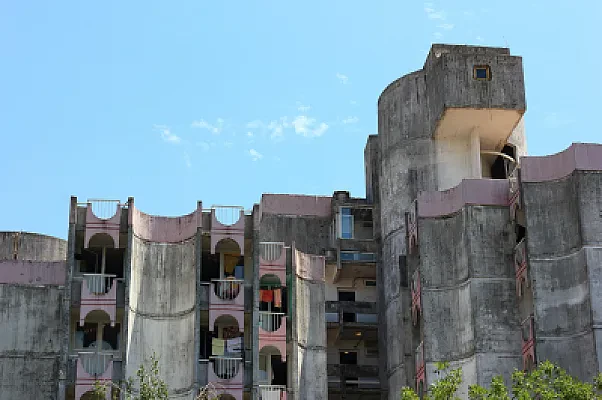
Kauno kolegija Higher Education Institution institutional grounds
1 / 2

Based in Kaunas, Lithuania, Kauno kolegija Higher Education Institution is a college that traces its founding to 2000. It functions as a higher-education provider within Lithuania's higher-education sector.

Programmes at Kauno kolegija Higher Education Institution cover multiple qualification levels, structured through its academic units. The institution administers a broad programme catalogue across its academic units.

Location & Contact

Need to mail, call, or visit Kauno kolegija Higher Education Institution? Address, phone, and digital contact options below. Religious and cultural accommodation queries route through specific student services.

Map:
Phone: 370 600 50 275
Social Media:

Programs Offered

Look through Kauno kolegija Higher Education Institution's programmes by level or filter for keywords. Programme-level scholarships exist alongside institution-wide ones; the programme page typically lists them.

Bachelor's Degree

43 programmes

Browse 43 programmes at Kauno kolegija Higher Education Institution for undergraduate entry. Each combines core theory with the credits needed to progress toward honours or a master's.

Building Engineering Systems Statinių inžinerinės sistemos Engineering & Technology 3 years On-campus
General Description: Objective(s) of a study programme: Train specialists of building engineering systems able to accomplish independently complex work requiring personal responsibility in the fields of installation, maintenance and repairs of modern building engineering systems; to design heating, ventilation and air conditioning and water supply and sewage disposal systems using energy-efficient technologies and alternative energy sources; to carry out a business company’s (division’s) or individual activities by formulating and reasoning the solutions in civil engineering; to develop general abilities for life-long learning, working in a team, creative and critical thinking, analysing and generalizing the results of their work. Learning outcomes: 1. To know the general processes and phenomena of natural sciences that explain the processes of natural and technological environment as well as the regularities and laws of mathematics and engineering sciences necessary to understand the fundamental foundations of the field of civil engineering. 2. Know the most important concepts of the field of civil engineering, their content, legal regulation, design methodologies and the basics of building information modelling, formulating and performing design tasks according to the defined requirements. 3. Apply general knowledge of engineering sciences and civil engineering in analysing and solving modern structural, technological and project-related problems of building engineering systems. 4. Carry out research in the field of building engineering systems using analytical modelling methods, experimental, laboratory and industrial equipment; process testing and laboratory work results necessary for solving problems of building engineering systems design and modernization and provide practical findings of the results using information technology, software and databases as well as other sources of scientific and engineering information. 5. Design heating, ventilation, air-conditioning and water supply and sewerage systems, applying energy efficient technologies and alternative energy resources; assess the impact of engineering equipment on the building construction project and its implementation and prepare project estimate documentation. 6. Plan, organize, perform and assess the work of building engineering system renovation, installation, management as well as maintenance and repairs by selecting independently innovative technological, organizational, safety and structural measures taking into account the principles of occupational safety requirements. 7. Understand organizational principles of construction activities, aspects of project implementation and management in the level of engineering and assess professional decisions of a civil engineer in terms of the ethical, social, economic, environmental and human safety perspective. 8. Apply communication and cooperation skills working in groups and teams; provide construction engineering problems and solutions in writing and orally in standard Lithuanian language and at least one foreign language. 9. Organize and execute business (branch) activities, apply professional knowledge, take responsibility for the quality of personal and subordinate’s performance. 10. Learn independently in the field of professional activity throughout one’s life, to understand the moral responsibility for theimpact of one’s activities and their results on society, to maintain the values of a business company, ensuring a personal and corporate image. Activities of teaching and learning: Lectures, seminars, discussions, ractical work, problem-based learning, project preparation, case analysis, group work, demonstration, information search and analysis, consultations, professional practice, etc. Methods of assessment of learning achievements: A cumulative assessment system is applied. Assessment methods: exams, tests, preparation and presentation of practice reports, preparation and presentation of independent work, preparation and presentation of projects, preparation and presentation of team work, preparation of practical tasks and other methods. Framework: Study subjects (modules), practical training: 1. General Subjects of College Studies – 15 credits (Foreign Language, Applied Research, Environmental and Human Safety, Business Philosophy / Business Communication). 2. Other study subjects – 9 credits (Corporate Economy, Fundamentals of Business Planning). 3. Study Field Subjects – 150 credits, which consists of: Compulsory Subjects – 108 credits (Applied Mathematics, Physics, Information technologies, Engineering Graphics, Computer Engineering Design, Engineering Mechanics, Electrical Engineering and Electronics, Hydraulics and Aerodynamics, Geodesy, Building Law, Structures and materials, Gas Supply Systems, Heating, Ventilation and Air Conditioning Systems, Energy Efficient Buildings, Technology and Organization of Building, Design of Heating Systems, Water Systems, Designing Ventilation and Air Conditioning Systems, Design of Water Supply and Sewage systems, Management of Engineering Systems); Practical Training – 30 credits (Practice on Drawing up Estimates (training), Professional Practice I, Practice on Maintenance of Engineering Systems (training), Professional Practice II, Final Practical Training); Final Thesis (12 credits). 4. Freely Elective Courses – 6 credits. Specialisations: - Optional courses: Students are free to choose elective subjects (6 credits) from the provided list of elective subjects. Distinctive features of a study programme: The study programme is designed to provide the foundational knowledge of the building engineering systems profession and to develop the professional and general skills necessary for independent work and a successful career in the modern labor market. The programme covers the following areas of activity: the design of building engineering systems, their installation, the organization and implementation of maintenance and repair of building engineering systems, and the management of a business enterprise (or unit) operations. Students can study and practice abroad using the various funds, bilateral agreements. Also students can participate in international training. Access to professional activity or further study: Access to professional activity: A specialist of Building Engineering Systems is competent to work in construction companies, public administration enterprises and companies designing and maintaining engineering systems. Access to further study: The graduates are entitled to a credit transfer system for entering level one university study programmes, they can choose Master programmes. The continuation of studies is possible in the Lithuanian and / or foreign universities.
Duration: 3 years
Delivery: On-campus
Law Teisė Law 3 years On-campus
General Description: Objective (s) of a study programme: To train skilled, creative and critically thinking lawyers who have acquired theoretical and practical knowledge of the nature, mission and principles of the law as well as the standards of its different branches; are able to apply them in standard and non-standard situations; and seek continuous personal and professional development while working in public non-governmental or private sectors. Learning outcomes: 1. Knows the principles of the national constitutional and ordinary law, the Lithuanian legal system, the standards of the international public, private, European Union law and is able to apply it in professional activities while dealing with specific legal issues. 2. Knows theory of economics, management, human and environmental protection, legal history, psychology and philosophy and is able to apply it in practice. 3. Able to communicate in a professional foreign language. 4. Able to gather information using modern information technologies and databases and conduct scientific-empirical research using effective methods necessary to solve legal issues of professional performance. 5. Able to analyse various legal documents and assess the principles of their validity, and identify the specific legal rules governing persons’ activities. 6. Able to represent natural and legal entities following professional ethics requirements, adjusting to practical performance innovations, changing conditions and handling confidential information properly. 7. Specializations: 7.1. Able to draft the internal documents and business transactions used by business entities, apply alternative methods of resolving business disputes, comply with international legislation, and have knowledge of the specific tax environment of business entities (Business Law). 7.2. Able to collect and systemise various types of information necessary for detecting criminal offences, qualify criminal offences, and prepare and systemise criminal procedure documents, ensuring a smooth pre-trial investigation process. (Pre-Trial Investigation). 8. Able to critically assess the personal performance and knowledge as well as those of other persons. 9. Able to express personal ideas orally and in writing correctly and fluently, communicate and cooperate in multicultural groups effectively and address the challenges encountered in practice efficiently. 10. Able to improve professional competencies through lifelong learning independently, apply new ideas in practice, and adapt to innovations and changing environments. 11. Able to plan and organise personal performance and follow general ethical requirements. Activities of teaching and learning: Traditional and (or) an interactive lecture, group discussion, individual group projects, brainstorming, case studies, problem solving, learning from experience, problem-based learning, expert method, concept map, individual problems search, information analysis and synthesis, data interpretation, debate, individual and group practical tasks. Methods of assessment of learning achievements: To encourage student motivation and consistent, steady work, the summative assessment system is introduced. Possible knowledge rating methods: exam (orally and in writing), quizes and term papers, final theses, abstracts, oral presentations, project work presentation, practice reports, testing, individual oral interviews, preparation of written reviews on legal matters; written reports on analysis of legal cases. Framework: Study subjects, practical training: General study subjects (15 credits): Foreign Language, Creativity and Entrepreneurship, Basic of Economics, Information Technologies. Study Subjects of Study Field – 156 credits; 1. Study Subjects (99 credits): Legal Language and Document Management, Legal Foreign Language, Theory of Law, Legal System and Law Enforcement Institutions, Constitutional Law, General and Legal Psychology, History of Law, Administrative and Administrative Procedure Law, Fundamentals of Legal Research Methodology, Law Philosophy and Ethics, Labour Law, Internet and Technology Law, Civil Law, Family Law, Criminal Law, Basic Business Law, Intellectual Property Law, Law of Civil Proceedings, Law of Criminal Proceedings, International Law, European Union Law, Alternative Dispute Resolution, Environmental Law. 2. Practical Training (32 credits): Legal Paperwork Internship (I), Professional Internship (II), Professional Internship (III). 3. Final thesis (10 credits). Specialisations: Business Law (35 credits): Company Law, Contract Law, Tax Law, International Trade Law, Course Paper, Professional Internship (III). Pre-trial Investigation (35 credits): Theory and Practice of the Pre-trial Investigation, Forensics, Qualification of Criminal Offences, Law of Sentence Execution, Course Paper, Professional Internship (III). Optional courses: Students can choose: ● one from two specializations (35 credits); ● optional study subjects (9 credits): Management, Career Planning and Leadership, Protection of Human Rights, Protection of Consumer Rights, etc. from the list of optional study subjects as offered by Kaunas University of Applied Sciences. Distinctive features of a study programme: The Law study programme contains the study subjects which develop general and subject-specific student competence contributing in training education, following the concept of life-long learning, and responsible members of society who will apply the knowledge acquired during the process of studies in creation of sustainable, multicultural, and the rule of law country. In addition to the classic legal subjects, Basic Economics, Legal Foreign Language, Management, Career Planning and Leadership, and Information Technologies are taught. The study programme employs legal professionals - practitioners working in various law enforcement institutions and in business, insurance companies, state and municipal institutions. For one semester, students are able to study in various foreign universities and institutions of higher education or take internship abroad (in public or private institutions, companies, and organisations); they may participate in international training programmes; opportunities are provided for active participation in the process of organization and implementation of legal events and activities in science, in preparation of scientific publications and reports at various international student conferences. Access to professional activity or further study: Access to professional activity: Professional Bachelor's lawyers are trained to work in the private sector (in companies: a jurist, Specialist of Legal Department, Personnel Manager or Specialist of Personnel Department; in law firms: a lawyer), as well as to start individual law practice and work in the public sector (in law enforcement institutions: in the courtroom: as a court hearing secretary and a court clerk; as a lawyer and a clerk in a prosecutor's office; as an Assistant Bailiff in a bailiff’s office; as a lawyer in a notary office; as an official in police, customs, military police, special investigation service, financial crime investigation service, state border guard service, reformatory system, public security service, fire protection and rescue services; as a civil servant in state and municipal institutions). Access to further study: The graduates are entitled to a credit transfer system for entering level one of university study programmes; they can choose Master programmes, too. The continuation of studies is possible in the study programmes of the field of law in Lithuanian and/or foreign universities.
Duration: 3 years
Delivery: On-campus
Law and data protection Teisė ir duomenų apsauga Law 3 years On-campus
General Description: Objective(s) of a study programme: to train qualified, creative, and critically thinking lawyers with comprehensive theoretical and practical knowledge of the nature, function and principles of the law, the norms of individual branches of law, who are able to integrate and apply national and international data protection (DP) and cybersecurity legislation in practice to ensure the protection of personal data and the security of digital information in a variety of organizations and business sectors. Learning outcomes: 1. knows the principles of national constitutional and statutory law, the Lithuanian legal system, the norms of public and private international law and the law of the European Union, and applies the knowledge acquired in the professional activity when solving legal problems; 2. knows the theory of economics, management, history of law, psychology and philosophy, and can apply it in practice; 3. is able to communicate in a professional foreign language; 4. is able to collect information using modern information technologies and databases and to conduct scientific-empirical research using effective methods necessary to solve professional problems in the field of legislation; 5. is able to analyse different legal documents and to evaluate their principles of validity, as well as to identify and to apply the national and international legislation in the field of data protection and cyber security; 6. is able to identify, analyse and resolve a wide range of legal issues relating to data protection in accordance with the requirements of legal professional ethics; 7. is able to integrate data protection principles, including minimising data and ensuring both data retention and the rights of data subjects, into the activities of organisations; 8. is able to critically assess others' and their own activities, knowledge and risks related to data protection, as well as to understand the legal implications and responsibilities associated with data protection violations; 9. is able to express own thoughts fluently both orally and in writing; is able to communicate and collaborate effectively in multicultural groups and to solve legal problems efficiently by applying legal analysis and problem-solving strategies; 10. is able to grow independently in the field of data protection in the legal and technological environment and to apply new ideas in practice, considering changes in legislation and technological developments; 11. is able to plan and organise its own activities and apply the principles of ethics and privacy to ensure adequate protection of personal data when processing it. Teaching and learning activities: Traditional and (or) an interactive lecture, group discussion, individual group projects, brainstorming, case studies, problem solving, learning from experience, problem-based learning, expert method, concept map, individual problems search, information analysis and synthesis, data interpretation, debate, individual and group practical tasks. Methods of assessment of learning achievements: The summative assessment system is applied. Assessment methods: a test, exam, review, oral presentation, presentation of the integrated project work, internship report, individual oral interview, preparation and presentation of slides, preparation of a written review, report on a case study and its presentation, preparation of a written review on legal matters, presentation of an individual or group work, final thesis. Framework: Study subjects, practical training: General study subjects – 17 credits: Foreign Language, Information Technology and Digital Literacy, Creativity and Entrepreneurship, Basics of Economics. Study Subjects of Study Field – 149 credits: Study Subjects (106 credits): Legal Rhetoric and Document Management, Legal Framework and Legal Theory, Constitutional Law, Legal Foreign Language, General and Legal Psychology, History of Law, Research Methodology, Law Philosophy and Ethics, Labour Law, Operational basics of the Data Protection Officer, Personal Data Protection Law I, Personal Data Protection Law II, Civil Law, Criminal Law, Business and Corporate Law, Law on Digital Technology and Artificial Intelligence, Cyber Security, Administrative and Administrative Procedure Law, Law of Civil Proceedings, Law of Criminal Proceedings, The Legal Protection of Biometric Data, International Law, European Union Law, Data Security Incident Management, Public Procurement Law. 2. Practical Training (33 credits): Internship I: Preparation of Legal and Data Security Documentation, Professional Internship (II), Professional Internship (III). 3. Final Thesis (10 credits). Specialisations: E-commerce Law and Data Protection/Fintech Law and Data Protection (4 credits). Legal Regulation of Social Networks (Media)/Legal Protection of Health Data (4 credits). Optional courses: A student can choose: ● Two from four subjects in the study field (8 credits); ● Optional study subjects (6 credits): Negotiation Management, Management of Emotional Intelligence and other subjects from the KK List of Free Electives. Distinctive features of a study programme: In addition to developing legal knowledge and skills, the study programme will also provide students with the basic knowledge in economics, psychology, management and IT that is necessary to effectively address the issues of data protection and cyber security. Future professionals will be trained not only in the correct application of the law, but also in the highest ethical principles to ensure data protection. The importance of social responsibility and ethics in the handling of personal data will be emphasised in the programme. The programme will be staffed by professionals from the field of law: practitioners working in various law enforcement agencies, business, state and municipal institutions, and lawyers working in the field of data protection in various organisations. Students will have the opportunity for exchange studies at higher education institutions and for undertaking internships in public or private institutions, companies and organisations abroad; for participation in international projects; for active participation in applied research activities by preparing scientific publications and presentations in various international student conferences. Access to professional activity or further study: Access to professional activity: Lawyers with a Bachelor's degree are trained to work in a wide range of fields such as healthcare, telecommunications, the financial sector where the processing of personal data is an integral part of the organisation's activities, law enforcement institutions, intellectual property, cyber security and other areas. Graduates will be able to pursue careers in private and public sector organisations (particularly in areas related to law) related to IT, intellectual property, commercial and contract law; non-governmental organisations (NGOs); in public institutions; as a lawyer in legal services institutions and law firms; as a lawyer in the field of data protection, data protection officer, data protection lawyer, personal data risk management specialist, etc. Access to further study: The graduates will be entitled to a credit transfer system for entering level one of university study programs, to study for a Master’s degree. The continuation of studies is possible in the study programs of the field of law in Lithuanian and/or foreign universities.
Duration: 3 years
Delivery: On-campus
Tourism and hotel management Turizmo ir viešbučių vadyba Business & Management 3 years Online
General Description: Objective(s) of a study programme: To train a tourism, hospitality, and wellness manager capable of managing the functional activities of tourism, hospitality and wellness sector companies, analysing and assessing the business environment, creating and selling competitive tourism, hospitality and wellness products, applying the knowledge necessary for professional activity, acting independently and creatively in changing market conditions, communicating professionally and responsibly in a multi-cultural business environment. Learning outcomes: 1. Able to apply the basic theories and principles of economics, management, and managing finance and other resources in professional activities. 2. Acts in accordance with the legislation governing company activities in the tourism and hospitality sector. 3. Applies the conceptions and principles of sustainable development and responsible business in professional activities. 4. Able to conduct research on the business environment and service market in the tourism sector applying the methods chosen; systemise and assess research findings. 5. Analyses the business environment, the changes taking place in it, innovations in the methods and technologies of providing tourism and hospitality services and the possibilities of their application. 6. Able to plan the activities of a tourism and hotel sector company and its divisions, anticipating the need for human, financial, and other resources, and their sources. 7. Develops and presents a competitive tourism product. 8. Able to organise the activities of a tourism and hotel sector company and its divisions by defining employees’ functions and responsibilities and anticipating the systems and principles of assessing and monitoring the performance. 9. Communicates responsibly and professionally with the participants in the market, applying the principles and rules of business communication and considering intercultural peculiarities. 10. Independently develops professional and personal skills considering the constantly changing professional environment and market needs and demonstrating responsibility for the impact of the performance and its results. Activities of teaching and learning: Lectures, seminars, discussions, debates, individual and group practical exercises, self-written papers, video views, open to the public the results of presentations, workshops plants, design and research works, case (problem situations) analysis, preparation of articles, integrated tasks, etc. Methods of assessment of learning achievements: The System of Accumulative Assessment is used. Methods of assessment: individual/group integrated projects or/and course/ research papers, tests, reports, report on a case study and its presentation, report on a video situation and its presentation, project report, presentation of individual assignments, portfolio method, individual/group integrated self-study assignment, observation of a task performance, project group presentation, presentation of individual self-study assignments, final thesis. Framework: Study subjects (modules), practical training: General module of Collegial studies – 15 credits: Economics (Microeconomics and Macroeconomics; Business Mathematics and Statistics; Basics of Applied Research); Study field modules - 150 credits: 1. Study modules (105 credits): Business Communication (Communication Psychology and Public Speaking; Basics of IT and AI; Professional English I). Basics of Tourism and Hospitality (Tourism Ecosystem and Infrastructure; Tourism Resources; Travel Geography and Tours); Intercultural Tourism Environment (Intercultural Communication; Tourism Anthropology, Professional English II); Business Management (Management; Marketing; Accounting and Finance); Sustainable Tourism Business (Creativity and Entrepreneurship; Business Law and Ethics; Sustainable Hospitality), study modules in Tourism Management /Hotel Management / Wellness and SPA Management specialisations. 2. Practical training (15 credits): Professional Internship (15 Credits). 3. Final Thesis (Final Internship, Final Project) (30 Credits). Specialisations: Tourism Management (30 credits): Tourism Management I (Service and Value Creation in Tourism; Digital Tourism Marketing; 2nd Foreign Language (Russian/German/French)), Tourism Management II (Tourism Technologies; Smart Destination Management; 2nd Foreign Language (Russian/German/French)). Hotel Management (30 credits): Hotel Management I (Accommodation Operations and Services; Digital Hospitality Marketing; 2nd Foreign Language (Russian/German/French)), Hotel Management II (Sustainable Hotel Operations Management; Hotel Yield Management; 2nd Foreign Language (Russian/German/French)). Wellness and SPA Management (30 credits): Wellness and SPA Services Management I (Wellness and SPA Services; Marketing of Wellness Services; 2nd Foreign Language (Russian/German/French)); Wellness and SPA Services Management II (Processes Management of Wellness Services in the SPA Sector; Organisation of Accommodation and Catering Services in the SPA Sector; 2nd Foreign Language (Russian/German/French)). Optional courses: Students can choose: ● One of the Specialisations (30 credits); ● 2nd Business Foreign Language (Russian, German, French); ● One of free elective modules (15 credits), e.g. Management of Relations with Customers, Wellness and Health Quality, Active Leisure Organisation, French and Spanish Language and Culture, Personality and Career, etc. Distinctive features of a study programme: The study programme is based on the modular principle that allows to ensure the interdisciplinary studies, flexible learning environment, enhance the student’s role in the study process, encourage his/her independence, activeness, responsibility for one’s learning outcomes, integrate the practical and self-study assignments. • Double degree study programme with LAB University of Applied Sciences (Finland); • The teachers working for the study programme have experience in tourism business, participation in international projects, expert and consulting activities. • Innovative study methods as well as the main software packages used in tourism and hospitality business are applied during study process; • Wide possibilities for studying and practical training abroad; • Possibility to choose instruction language (Lithuanian or English). • Students of the programme will study in a higher school or perform practice in a business company abroad for one semester. Access to professional activity or further study: Access to professional activity: Depending on specialization, graduates will be ready to work in hotels and other hospitality companies, travel agencies, tourism information centers and other institutions providing tourism services as well as managers in wellness business companies, state institutions providing wellness services, sanatoriums, spa, wellness and rehabilitation centers, physical therapy clinics, leisure and recreation complexes; they will be able to start and develop their own business. Access to further study: The graduates are entitled to a credit transfer system for entering level one university study programmes, they can choose Master programmes. The continuation of studies is possible in the study programmes in the field of tourism and leisure, management, business in Lithuanian and/or foreign universities.
Duration: 3 years
Delivery: Online
Organization Management Organizacijų vadyba Business & Management 3 years Online
General Description: Objective(s) of a study programme: The aim of the study programme is to enable students to acquire the knowledge and skills necessary to manage the organization’s business processes through the application of modern information technology and sustainable business principles; develop the ability to analyse and solve practical organizational management problems using appropriate applied research methods and tools for independent decision making in a dynamic business environment; be prepared to continually develop through the practical application of acquired skills and lifelong learning. Learning outcomes: 1. Is able to define the basic management concepts and principles and understand the theories and functions of management when applied to the practical operation of a sustainable organization or division. 2. Is able to describe and analyse the internal and external environment of an organization and its divisions, and apply knowledge of economics, marketing, accounting, and human resource management to manage and improve organizational processes. 3. Is able to carry out applied research using both quantitative and qualitative research methods and to use the information gathered in a targeted way to solve management problems and to improve the processes of sustainable organizational performance. 4. Is able to plan, organize, manage and improve the organization’s management processes in accordance with the principles of human resource management and the norms of law and professional ethics. 5. Is able to use modern technology to develop processes and manage office documents in a sustainable organization. 6. Is able to collect, organize and analyse data on the performance of a business/public organization or its divisions and propose socially responsible management solutions. 7.1. Is able assess the environmental, social and economic impacts of an organization's activities and integrate sustainability principles into organizational processes and culture. 7.2. Is able to manage, evaluate, and improve the organization’s business processes through the use of advanced process management techniques and IT tools. 7.3. Is able to manage logistics processes in the supply chain by applying data-driven, innovative solutions that meet the needs of the organization. 8. Is able to work individually and as part of a team, and to communicate and cooperate in a multicultural professional environment. 9. Is able to communicate persuasively and fluently, both orally and in writing, and represent the organization appropriately in Lithuania and internationally. 10. Is able to plan a personal career, to continually develop and learn, to understand one’s place in society, and to build positive relationships with colleagues. 11. Is able to communicate orally and in writing according to the norms and rules of business communication and to apply creativity and critical thinking in analysing and solving problems related to the operational activities of the organization. Activities of teaching and learning: Lectures, seminars, discussions, debates, individual and group practical exercises, self-written papers, video views, open to the public the results of presentations, workshops, plants, design and research works, case (problem situations) analysis, preparation of articles, integrated tasks. Methods of assessment of learning achievements: The System of Accumulative Assessment is used. Methods of assessment: individual/group integrated projects or/and course/research papers, tests, reports, exams, report on a case study and its presentation, report on a video situation and its presentation, project report, presentation of individual assignments, portfolio method, individual/group integrated self-study assignment, observation of a task performance, project group presentation, presentation of individual self-study assignments, final thesis. Framework: Study subjects (modules), practical training: General studies (15 credits): Business Communication (Basics of Document and IT Management, Communication Psychology and Public Speaking, Professional Foreign Language 1). Study field modules - 150 credits. 1. Study modules (60 credits): Economics (Microeconomics and Macroeconomics, Applied Mathematics and Statistics, Basics of Applied Research), Organization and Management (Management, Marketing, Accounting and Taxes); Human Resource Management (Human Resource Management, Law and Personnel Management Process Systems, Organizational Culture and Labour Psychology), Organization Communication (Organization Communication Management, Organization Communication IT Systems Management, Professional Foreign Language 2); Optional modules (45 credits): Business Administration (Enterprise Economics, Business Finances, Business Law)/ Public Sector Administration (Public Service Administration, Public Finances, Fundamentals of Public Procurement); Sustainable Organizational Management (Sustainability Management and Measurement, Sustainability Projects, Change Management); Circular Economy (Basics of the Circular Economy, Law and Environmental Protection, Digital Technologies and Innovations) / Organisational Process Management (Organisational Process Management, Methods of Organisational Processes, Information Management and Document Process Management IT Systems); Customer Management Processes (Customer Process Management, Customer Data Management and Customer Management IT Systems, Conflict Management) / In Alytus: Fundamentals of Logistics Management (Logistics Process Management, Transport Management, Warehouse Operations Management); Strategic Supply Chain Management (Supply Chain Strategy and Data Analysis, Supply Chain Innovation Management, E-Logistics Management). 2. Practical training (30 Credits): Organization Management Internship (Creativity and Entrepreneurship, Internship in a Simulation Company (SC)) - 15 Credits, Final Internship - 15 Credits. 3. Final Thesis (Final Internship, Final Project) – 15 Credits. Specialisations: - Optional courses: Students can choose: ● Three out of the six optional modules in the study field (45 credits). ● One of Free Elective Modules (15 credits), e.g. Personality and Career, Global Economics, French and Spanish Language and Culture. Distinctive features of a study programme: The study programme is based on the modular principle that allows to ensure the interdisciplinarity of studies, flexible learning environment, enhance the student’s role in the study process, encourage his/her independence, activeness, responsibility for one’s learning outcomes, integrate the practical and self-study assignments. Lecturers of the study program are specialists with practical experience in the fields of management, business administration, economics, office procedures, sustainability, and lecturers - practitioners, experts in the management of organizations. The programme reflects the market needs; it is orientated towards problem-based teaching, formation of the systemic approach for the student, socially responsible and ethical business. Access to professional activity or further study: Access to professional activity: The graduates will be prepared for careers in public and private sector organizations as managers in human resources, projects, communications, processes, sustainability, and other areas; and in the private sector; after gaining practical experience, they will be able to manage institutional units and start and run their own organization. Access to further study: The graduates are entitled to a credit transfer system for entering level one university study programmes, they can choose Master programmes. The continuation of studies is possible in the study programmes in the field of Management and Business in Lithuanian and/or foreign universities.
Duration: 3 years
Delivery: Online
Sports Management Sporto vadyba Business & Management 3 years On-campus
General Description: Objective(s) of a study programme: To train a manager for a sports organisation, who is able to analyse the possibilities of the activities of sports organisations applying the principles of leadership and good management in practice, knows the basic methods of organising and managing sports activities, and is able to evaluate and develop the sports business environment and services provided. Learning outcomes: 1. Able to define the basic concepts and principles of management and understands the theories and functions of management, applying the knowledge to the practical operation of a sustainable organisation or its division. 2. Able to define and analyse the internal and external environment of a sports organisation and its divisions and apply knowledge of economics, marketing, accounting and human resources management to monitor and optimise managerial processes. 3. Able to conduct applied research, apply a variety of research methods, collect and analyse data, and make decisions to solve sport management issues. 4. Able to initiate and administer project activities in the sports industry, evaluating the resources and financial sustainability of the organisation and complying with legal requirements. 5. Able to coordinate material, human and financial resources to ensure the effectiveness of the organisation. 6. Able to collect, systematise and analyse data on the performance of a sports organisation or its divisions and, having evaluated the results, propose socially responsible management solutions for the organisation or its divisions. 7. Able to analyse and evaluate the specifics, processes and perspectives of the sports industry. 8. Able to manage relations with customers using relevant information and communication tools and methods. 9. Able to work individually and as part of a team, communicate and cooperate in the national and international professional environment. 10. Able to express themselves persuasively and fluently, both orally and in writing, and represent the organisation appropriately in Lithuania and internationally. 11. Able to manage operational communication processes in compliance with the principles of ethics, sustainable development and social responsibility. 12. Able to plan personal career, analyse problems by applying creativity, critical thinking and building positive relationships with colleagues. 13. Able to integrate knowledge, skills and abilities to propose solutions to the challenges facing the organisation. Activities of teaching and learning: Lectures, seminars, discussions, debates, individual and group assignments, independent written work, video screenings, public presentations, training projects in companies, project work, case (problem situation) analyses, article writing, and etc. Methods of assessment of learning achievements: The System of Accumulative Assessment is used. Methods of assessment: individual/group integrated projects or/and course/ research papers, tests, reports, exams, report on a case study and its presentation, report on a video situation and its presentation, project report, presentation of individual assignments, portfolio method, individual/group integrated self-study assignment, observation of a task performance, project group presentation, presentation of individual self-study assignments, final thesis. Framework: Study subjects (modules), practical training: General Module of Collegial studies – 15 credits: Business Communication (Professional Foreign Language I; Basics of Document and IT Management; Communication Psichology and Public Speaking). Study field modules - 150 credits: 1. Study modules (105 credits): Economics (Microeconomics and Macroeconomics; Applied Mathematics and Statistics; Basics of Applied Research); Basics of Harmonious Personality (Social Responsibility; Sport's History; Healthy Lifestyle; Career Management); Management (Basics of Management; Management of the Quality of a Sports Services; Human Resource Management); Sports Marketing (English) (Marketing; Creativity and Entrepreneurship; Professional Foreign language II); Management Of Sports Organisation (Establishing and Managing Sports Organisation; Sports Law and Ethics; Accounting and Finance); Management Of Sports Media (Communication Crisis Management; Brand Management; E-sports Management), Sports Projects (Management of Sports Partnerships; Volunteering Management; Organisation of Sustainable Sports Events; Professional Foreign Language III). 2. Professional Internship in a Sports Organization (30 Credits). 3. Final Thesis (Final Internship in a Sports organization, Final Project) (15 Credits). Specialisations: - Optional courses: Students can choose: ● One of Free Elective Modules (15 credits), e.g. Active Leisure Organisation, Personality and Career, Global Economics, Business Change Management, Welness and Health Quality, etc. Distinctive features of a study programme: Sport Management study programme distinguishes it from other similar programmes by its modular framework, integrated modules as well as integrated practical and individual tasks. The programme is oriented towards a manager’s targeted activity segment – sports industry. The good practice of the future specialist is guided in accordance with the principles of the Olympic Charter. Access to professional activity or further study: Access to professional activity: The graduates of the Sport Management study programme will be qualified and competent to work as managers in the sports industry: sports clubs, companies involved in producing/selling sports equipment as well as international, branch-specific and general organizations. Furthermore, they will be fully skilled in organizing sports events, representing sports people (acting as agents) as well as establishing and managing sports organizations. Access to further study: The graduates are entitled to a credit transfer system for entering level one university study programmes, they can choose Master programmes. The continuation of studies is possible in the study programmes in the field of management and business in Lithuanian and/or foreign universities.
Duration: 3 years
Delivery: On-campus
Logistics Logistika Business & Management 3 years On-campus
Objective(s) of the study programme: Objective(s) of the study programme: The aim of Logistics study programme is to prepare the specialist able: to conduct the processes of cargo and passenger carriage, effective activity of logistics chain and the information streams of logistics process management; to apply the legal acts regulating the logistics activity; to organize the activity of logistics companies/departments; to work independently and creatively under the changing conditions in business. Learning outcomes: 1. Able to apply the knowledge of economics, statistics, management and business organization in the national and international environment; 2. Able to apply the legal norms of local distributions and international logistics; 3. Able to analyze, systematize and control the information streams of logistics system; 4. Able to assess the environment of logistics business, market tendencies and the opportunities for creating/developing/expanding business; 5. Able to monitor the processes of passenger and cargo carriage, organize its material supply, ensure the quality and control; 6. Able to plan and organize the supply, purchase and sales, warehousing and distribution processes; 7. Able to analyze the logistics networks and systems, perform logistics functions, and apply marketing principles and methods in the local and international logistics; 8. Able to work under the principles of ethics, international communication, and sustainability focusing on the aspects of security, effectiveness, environmental protection; communicate and cooperate in teams; 9. Able to use modern information technologies in professional activity, communicate in native and foreign business languages, demonstrate negotiating and stress management skills; 10. Able to demonstrate independency and creativity by taking managerial decisions, applying and developing innovations; 11. Able to plan directions of self-realization and self-education, realize the responsibility for one’s activity results, independently learn in the constantly changing field of professional activity. Activities of teaching and learning: Lectures, seminars, discussion, practical assignments, problem teaching, preparation of projects, teaching projects in the business companies, case study, group assignments, video situation analysis, situation modelling, role-play, debates, brainstorming, demonstration, case study, information search and analysis, consulting, etc. Methods of assessment of learning achievements: The System of Accumulative Assessment is used. Methods of assessment: individual/group integrated projects or/and course paper, inquiry (written, oral), testing, report on a case study and its presentation, report on a video situation and its presentation, project report, preparation and delivery of presentation, reports, presentation of practical work, presentation of idea mapping, project group presentation, presentation of individual assignments, final thesis etc. Framework: Study subjects (modules), practical training: General studies -15 credits: Economics (Microeconomics and Macroeconomics; Business Mathematics and Statistics; Basics of Applied Researches); Study field modules - 150 credits: 1. Study modules (105 credits): International Business Communication (Business English I; International Communication; Communicational Psychology), Basics of International Business (International Business Environment and Legal Regulation; Business Models and Projects; Entrepreneurship and Innovation; Creativity Techniques and Tools), Basics of Logistics (Chains of Logistics Systems; Transport in Logistics Processes; Basics of Production Logistics; Business English II), Business Management (Management; Marketing; Accounting and Finance), Business Logistics Management (Simulation of Business Logistics Processes; Law of International Carriage; Insurance), Management of Logistics Processes (Supply Chain Management; IT Systems of Logistics; Carriage Organisation; Market Research), Optional modules: Transport Management (Transport Infrastructure; Cargo Carriage Technologies; Negotiation Management)/ Supply Management (Planning and Processes of Supply; E-logistics; Organisation of Cargo Packing Process; Negotiation Management); 2. Practice in Logistics (15 credits); 3. Final Thesis (Final Internship, Final Project) - 30 credits. Specialisations: - Optional courses: ▪ One of the optional modules (15 credits); ▪ One of the free-elective modules (15 credits), e.g. Management of Relations with Customers; Personality and Career; French and Spanish Language and Culture, etc. Distinctive features of a study programme: Study programme is based on the modular principle that allows to ensure the interdisciplinary of studies, flexible learning environment, enhance the student’s role in the study process, encourage his/her independence, activeness, responsibility for one’s learning outcomes, integrate the practical and self-study assignments, anticipates one semester internship in logistics companies; is orientated towards problem-based teaching, formation of the systemic approach for the student, socially responsible and ethical business; is able to offer study and practice opportunities abroad. The study programme teachers are specialists with practical experience in logistics and business activities. Possibility to choose a double degree studies of Kaunas University of Applied Sciences and Thomas More University of Applied Sciences (Belgium). Third year students who choose to study for one year at Thomas More UAS in Belgium will obtain a diploma from these two higher education institutions. Access to professional activity or further study: Access to professional activity: The graduates will be ready to work as logistics managers in the business companies providing production and trade, warehouse and terminal, road, rail, sea, air transport activities and transport expedition services, in post and express service sectors, state institutions and other business companies which have managerial logistics decisions necessary in their activity. Access to further study: The graduates are entitled to a credit transfer system for entering level one university study programmes, they can choose Master programmes. The continuation of studies is possible in the study programmes in the field of business and management in Lithuanian and/or foreign universities.
Duration: 3 years
Delivery: On-campus
International Business Tarptautinis verslas Business & Management 3 years Online
General Description: Objective(s) of a study programme: The aim of the International Business study programme is to train the international business managers able to analyse international business environment, communicate and cooperate with foreign partners and clients, apply the business management principles and provisions of international business regulations by planning and organising international business activities in the company or its department. Learning outcomes: 1. Knows the principles of functioning of global business markets and sustainable development. 2. Able to apply the theories of economics and business management, as well as legal acts that regulate international business in practice. 3. Able to analyse the international business environment, perform applied research for solving specific business problems, and plan the possibilities of international business development. 4. Able to analyse and assess the international activity results of a business company. 5. Able to plan and organise the international trade processes by responsibly managing the company’s resources. 6. Able to choose the right tools for creating the added value of the exported product for the different foreign markets. 7. Able to plan and organise business in the e-environment/ Able to plan the international marketing activities of the business company for the different markets and analyse the changing market trends/ 8. Able to demonstrate the negotiating management skills, work in a team, communicate and cooperate in the multicultural and multilingual business surroundings. 9. Able to understand the moral responsibility for the activity of its own results on the society, follow the value attitudes of the company and provide reasoned solutions for the business problem solving. 10. Able to demonstrate independence and creativity by making managerial decisions, implementing and developing business innovations. 11. Able to plan career and trends of self-education by applying the acquired knowledge and skills for continuous improvement. Activities of teaching and learning: Lectures, seminars, discussion, practical assignments, problem teaching, preparation of projects, teaching projects in the business companies, case study, group assignments, video situation analysis, situation modelling, role-play, debates, brainstorming, demonstration, case study, information search and analysis, consulting, etc. Methods of assessment of learning achievements: The System of Accumulative Assessment is used. Methods of assessment: individual/group integrated projects or/and course paper, inquiry (written, oral), testing, report on a case study and its presentation, report on a video situation and its presentation, project report, preparation and delivery of presentation, reports, presentation of practical work, presentation of idea mapping, project group presentation, presentation of individual assignments, essay, final thesis etc. Framework: Study subjects (modules), practical training: General studies -15 credits: Economics (Microeconomics and Macroeconomics; Business Mathematics and Statistics; Basics of Applied Researches); Study field modules - 150 credits: 1. Study modules (105 credits): Basics of International Business (International Business Environment and Legal Regulation, Basics of Business Organization, Entrepreneurship and Innovation, Creativity Techniques and Tools); International Business Communication (Business English, Intercultural Communication, Communication Psychology), Business Management (Management; Marketing; Business Accounting), Sustainable Enterprise Resource Management (Enterprise Economics, Human Resource Management, Business Management Systems, Finance), Export and Import Management (International Trade; Supply Chain Management; International Business Law, International Negotiation), study modules in E-Business/ International Marketing specialisations. 2. Professional Internship (International Business Process Simulation; Professional Internship in a Business Enterprise) (15 credits); 3. Final Theses (Final Internship, Final Project) - 30 credits. Specialisations: E-business (30 credits): E-business Organization (E-services, E-marketing, E-business Legal Environment, Business Projects), E-business Management (E-business Platforms and Tools, Management of Social Accounts and Websites, Investment and Risk Management, Business Ethics); International Marketing (30 credits): International Marketing Management (Marketing Management and Planning, Brand Management, International Market Research, Business Ethics), Integrated Marketing Communications (Direct and E-marketing, Content and Social Media Marketing, Management of Communication Measures, Consumer Behaviour). Optional courses: Students can choose: ● One of two specializations (30 credits); ● One of free elective modules (15 credits), e.g. French and Spanish Language and Culture; Personality and Career; Business Change Management, etc. Distinctive features of a study programme: The programme reflects the market needs; is based on a module principle that allows ensuring the interdisciplinary of studies, flexible learning environment, enhancing the role of the student in the study process, encouraging his independence, activity, responsibility for the study results, integrating the practical and self-study assignments; performing one semester internship in business companies. The programme is orientated towards problem teaching, formation of the systemic approach for the student, socially responsible and ethical business. The study programme teachers are specialists with business experience. Students of the programme will study in a higher school or perform practice in a business company abroad for one semester. Possibility to choose a double degree studies of Kaunas University of Applied Sciences and Thomas More University of Applied Sciences (Belgium) Access to professional activity or further study: Access to professional activity: The graduates will be competitive in the international labor market; will have the skills and practical experience needed to communicate with business partners and clients; will be able to establish and develop own business; will be prepared for working in the departments of export, supply, customer service, marketing, project management, quality, e. commerce, international relations and communications, product and business development of the international business companies. Access to further study: The graduates are entitled to a credit transfer system for entering level one university study programmes, they can choose Master programmes. The continuation of studies is possible in the study programmes in the field of business, management, marketing in Lithuanian and/or foreign universities.
Duration: 3 years
Delivery: Online
Business Data Analytics Verslo duomenų analitika Business & Management 3 years On-campus
General Description Objective of the study programme To train a business data analyst who is able to collect, organise, manage, analyse, visualise, and communicate the data needed to make informed business decisions, data-driven forecasts, and trend analysis. Learning outcomes 1. Understands the activities and processes of a business organisation, the functioning of markets and principles of sustainable development. 2. Applies knowledge of data analytics to business processes and data flows. 3. Able to organise data and analyse processes in the business environment to identify business problems and provide solution alternatives using quantitative and(or) qualitative research methods. 4. Able to document transactions in an orderly, detailed, and clear manner, ensuring data security and continuity of analysis. 5. Able to convert large amounts of data into useful information for the decision-makers of the organisation. 6. Able to use specialised analytical tools and systems. 7. Able to make innovative decisions based on modern technologies, contributing to data-driven innovation in organisations. 8. Able to deal with routine business management tasks carefully, consistently, and responsibly. 9. Able to express ideas critically and consistently, communicating the results of data analysis considering the principles of data protection and professional ethics orally and in writing. 10. Demonstrates critical, systematic, and logical reasoning skills. 11. Able to work responsibly and diligently both independently and as part of a team. 12. Able to develop independently in the professional field and assumes moral responsibility for personal performance to ensure the sustainable development of the organisation. Activities of teaching and learning Lectures, seminars, discussions, practical assignments, problem-based learning, developing projects, training projects in business enterprises, case studies, group work, simulation, role-playing, debates, brainstorming, demonstration, retrieving and analysing information, consultations, etc. Methods of assessment of learningachievements A cumulative assessment system is applied. Assessment methods: individual/group integrated projects and(or) term papers, questioning (oral, written), tests, case study reports and presentations, project reports, preparation and delivery of presentations, reports, presentations of practical assignments, mind map presentations, presentations of group project, presentations of individual assignment, essays, final thesis, etc. Framework Study courses (modules), internships General module of collegial studies (15 credits): Information and Communication Technologies (Basics of IT, Documentation Management and Communication, Business English). Modules in the field of study (150 credits): 1. Study modules (105 credits): Basics of Business Management (Creativity and Entrepreneurship, Introduction to Information Management and Decision Making, Management), Mathematical Modelling (Logic, Business Mathematics and Modelling, Data Analytics 1), Analysis of Economic Data (Microeconomics and Macroeconomics, Data Analytics 2), Artificial Intelligence, Business, and Society (Digital Innovation, Business Law and Ethics, Artificial Intelligence), Business Process Management (Process Management Techniques, Process Management, Company Finance), Technology, Innovation, and Analytics (Data Management and Visualisation, Basics of Programming, Technology Management and Innovation). Optional modules: Financial Data Management (Data Protection, Methods of Applied Research, Financial Management), Sales Data Management (Data Protection, Methods of Applied Research, Sales Management). 2. Professional Internship (Tools of Business Data Analysis, Professional Internship in a Business Enterprise)(15 credits). 3. Final Thesis (Final Internship, Final Project) (30 credits). Specialisations - Optional courses A student can choose: - One of the optional modules (15 credits); - One of the free elective modules (15 credits), e.g., Customer Relationship Management, Personality and Career, French and Spanish Language and Culture, etc. Distinctive features of the study programme The study programme meets market needs. It has been developed on a modular basis, which allows ensuring interdisciplinarity of studies and a flexible learning environment; reinforcing the students’ role in the study process; encouraging their independence, activity, and responsibility for the results of studies; and integrating practical and self-study assignments. The programme focuses on problem-based learning, the formation of a systematic approach to the student, and socially responsible and ethical business. The programme offers study and internship opportunities abroad and is taught by specialists with experience in business. Access to professional activity or further study Access to professional activity The graduates of this study programme will be able to set up a business and work as business analysts and business consultants in Lithuanian and international companies. Access to further study Graduates will be able to continue their studies at universities in Lithuania and abroad.
Duration: 3 years
Delivery: On-campus
Agribusiness Technologies Agroverslų technologijos Agriculture 3 years On-campus
General Description: Objective(s) of a study programme: The aim of the study programme is to prepare agricultural specialists who are able to implement environmentally sustainable technological and managerial innovations in the chosen farming system, to carry out modern management and organisation of agricultural business in accordance with the current trends in agricultural economics and policy, to use information technologies, to work successfully in a team in agricultural production and infrastructure and landscaping design companies in the public and private sectors, and to adapt creatively to the changes in the labour market. Learning outcomes: 1. Will choose knowledge of the natural sciences, agricultural sciences, business management, financial management, social sciences and engineering to decision-making in professional activity. 2. Will apply the principles of balancing the use and protection of natural resources and organizing the economy and planning processes in production-related activities. 3. Will be able to use information technologies and resources to collect and analyse data in agriculture and other fields to address specific professional and innovation implementation issues. 4. Will conduct scientific research in the field of agriculture, analyse and critically evaluate the results in the context of other research findings, providing conclusions and recommendations. 5. Will carry out agricultural activities by selecting technological, organisational and methodological tools in specific areas of activity. 6. Will evaluate the direction of agribusiness development through the selection and application of a range of complex agricultural technologies, identifying options for their improvement, taking into account legal norms and directives, and analysing the effectiveness of innovation. 7. Will be able to make rational decisions based on knowledge in the field of agricultural sciences and to assess their social consequences, taking responsibility for the quality of their own performance and that of their team, in accordance with professional ethics and civil spirit. 8. Will analyse theoretical and practical innovations in agriculture, justify the conclusions drawn and present them appropriately to interested parties from different backgrounds. 9. Will be able to assess personal needs and career opportunities in agriculture, and apply the principle of lifelong learning for personal and professional development. Activities of teaching and learning: Explanation, seminar, discussion, case study, integrated self-study project, course projects, practical works, professional activity practices, applied research, scientific literature analysis, articles. Methods of assessment of learning achievements: Write an exam, testing with closed and / or open tasks, report and defense of internships and laboratory work, report of self-study or team course paper, written work and oral presentations, professional bachelor thesis and its defense. Framework: Study subjects (modules), practical training: General subjects of study – 15 credits: Creativity and Entrepreneurship, Mathematics and Information Technology, Professional Language. Subjects of the study field – 135 credits: Livestock Technologies, Agroecology and Environmental Protection, Agriculture, Crop Production Technologies, Agricultural Engineering and Safety, Methodology of Applied Research, Basics of Landscape Planning, Agricultural Chemistry, Plants Protection, Apiculture, Smart Farming, Horticultural and Olericultural Technologies, reenhouse Horticultural Technologies, Crop Products Storage and Quality Control, Marketing and Trade of Agricultural and Food Products, Physiology of Plants, Agricultural Economics and Accounting, Plannning and Organisation of Agricultural Business, Basics of Law, Plant Selection and Seed Production, Risk Management in Agrarian Sector. Practical Training – 33 credits: Educational-Introductory Practice of Crop and Livestock Production, Internship of Agricultural Production Mechanization and Automation, Internship of Horticultural and Olericultural Technologies, Complex Internship of Agribusiness Development, Final Professional Internship. Final Thesis – 11 credits. Specialisations: 1. Specialisation. Horticulture and Gardening Marketable Production – 21 credits: Production Management of Garden and Kitchen Garden Products, Garden and Kitchen Garden Plant Protection, Garden and Kitchen Garden Product Quality and Its Control, Mechanisation of Horticultural and Olericultural Works, Specialisation Internship 1. 2. Specialisation. Planting design – 21 credits: Floriculture Technology, Plant Protection, Dendrology Technology, Green Areas Project, Specialisation Internship 2. 3. Specialisation. Agrarian Sector Insurance – 21 credits: Insurance Service Market, Insurance Service and Product Sales, Organisation of Insurance Activities, Insurance Service Management, Specialisation Internship 3. Optional courses: Optional courses subjects – 9 credits: Water Management, Business of Viticulture, Agro-Innovations and Food Technology, From the List of Freely Elective Courses offered by KK. Distinctive features of a study programme: Studies are student – centred, based on specific practical tasks, applying the latest technologies; also based on teamwork, problem solving, basics of actual practical skills and research, promoting professional thinking, and rational application of theoretical knowledge in practice. Access to professional activity or further study: Access to professional activity: The graduates will be able to work in the agribusiness sector, agricultural commodity production and processing enterprises, agricultural related private, state and non-governmental organizations, agricultural advisory institutions, to establish and develop their own farms. Access to further study: Graduates who have completed supplementary studies or requirements set by the higher school of education have the right to study upon the second cycle master's degree programme in Lithuanian or foreign universities.
Duration: 3 years
Delivery: On-campus
Social work Socialinis darbas Social Sciences & Education 4 years Blended
General Description: Objective(s) of a study programme: The aim is to train social work specialists who can solve social problems in a creative and critical way, to empower members of different social strata in a changing multicultural environment to work independently and in collaboration with other professionals to bring about positive social change in the lives of individuals and societies, in accordance with the principles of social justice, ethics and human rights. Learning outcomes: Graduates will be able to: 1. Will assess information on the need for social services and social support for the members of different social strata to achieve positive social change. 2. Will design a model of social protection while selecting appropriate social work methods to achieve a positive change in the recipients of social services and their environment. 3. Will develop a social work action plan to address the social problems of social service recipients, using innovative social work methods to reduce social exclusion. 4. Will apply social work methods on social service recipients to resolve social problems and implement the necessary solutions. 5. Will mobilise material and non-material resources to resolve the social problems of social service recipients to pursue social justice. 6. Will provide social services to social service recipients based on mutual trust, respect, understanding and agreement, in compliance with the principles of the Code of Ethics for Social Service Workers. 7. Will collaborate with social service recipients, their families and social partners to prevent social problems and promote the profession of social work. 8. Will analyse the adequacy, accessibility and effectiveness of the social services and programmes provided for the recipients of social services to achieve the implementation of social welfare policies. 9. Will assess the outcomes of social protection for different social strata by conducting practice-oriented empirical research to address specific social problems. Activities of teaching and learning: Engaging lectures, workshops, discussions, group work, practical tasks, literature review, case work, project development, self-study, presentations reflective thinking. Innovative student-focused teaching and learning methods are applied. Student-oriented lectures, independent work, practical assignments based on tasks and group work focused upon critical thinking. An environment is created where students are provided an opportunity to participate in the process of the study programme, to reflect upon their activities; they are encouraged to reveal their creativity and share innovative ideas. The programme aims to actively involve students in class activities, to encourage discussion in a student-teacher dialogue. Methods of assessment of learning achievements: The evaluation of study outcomes is part of the study process. Assessment of the subject study outcomes is consistently carried out during the semester and the (examination) session. A cumulative assessment is applied. The components of the cumulative assessment include certain study outcomes provided in the subject of the study programme. The final grade includes the components of the cumulative assessment, e.g. mid-sessional reports, practical tasks, self-study, the final reflection and examination. The combination of these components, expressed in a percentage of the cumulative assessment, is provided in the subject description of the course. The student's knowledge and skills, during the examination session, are assessed unless the student meets the requirements of the subject course during the semester. Student's knowledge and skills are assessed in grades from 1 to 10. Framework: Study subjects (modules), practical training: The social work programme consists of the following parts: 1. General subjects of college studies - 16 credits (Information Technologies, Foreign Language, General and Personality Development Psychology, Professional Communication and Document Management); 2. Study field subjects - 134 credits which comprise subjects of study - 96 credits (Basics and History of Social Work, Social Structures and Cultural Diversity, Practical Philosophy and Social Work Values, Law, Organisation of Volunteering Activities in Social Work, Social Work Theories and Methods, Communication and Conflict Management, Quality Management of Social Services, Human Rights and Social Justice, Social Work with Individuals and Groups, Social Work in Health Care, Inter-institutional Cooperation and Teamwork in Social Work, Social Work Supervision, Psychology of Crisis and Trauma, Innovation and Digitalisation in Social Work, Social Work in Communities and Entrepreneurship, Social Work with Families, Rehabilitation and Social Inclusion, Social Research Methods, Administration and Leadership in Social Services, Social Project Development and Management); Professional Internship of - 30 credits – Outpatient Social Work (Professional Internship) (8 credits), Inpatient Social Work (Professional Internship) (10 credits), Final Social Work Practice (Professional Internship) (12 credits); Professional Bachelor Thesis- 9 credits Specialisations: - Optional courses: Courses of Deeper Studies of the Same Study Field - 21 credits (Prevention and Intervention of Deviant Behaviour, Social Assistance for People with Disabilities, Social Gerontology, Child Protection Policy, Counselling of People at Social Risk); optional subjects – 9 credits. Optional subjects in the social work programme consist of 9 credits and include the following subjects: Stress and Self-Regulation, Crisis and Their Management and Basics of Etiquette. In addition, students are free to choose subjects from a list of optional subjects of Kauno kolegija or to choose certain subjects offered by other schools of higher education . Distinctive features of a study programme: The study programme is focused not only on development of professional competences, but also on development of a wide range of general skills and values. Also, the programme is based on student-centered teaching and providing innovative and creative knowledge and developing presentation skills. Students gain the ability to analyze, critically evaluate, and creatively find solutions to problems. Students wishing to upgrade their knowledge in social work abroad, have the opportunity to study in Finland, Holland, Spain, Czech Republic Belgium and in other countries with which cooperative agreements have been signed. Those who desire can conduct practice abroad. Students actively participate in the Erasmus+ or Nord Plus exchange programmers. Students are provided opportunities to volunteer in their selected area of interest. They can become involved in student government structures which organize a variety of student events and in addressing student problems. During the studies, students are encouraged to reveal creativity through various methods. This promotes a deeper self-knowledge. In addition, students are provided opportunities to study in the Erasmus+ exchange programme. Access to professional activity or further study: Access to professional activity: The acquired Social Work Professional Bachelor's degree allows employment in the day care centres for the disabled (adults and children), care homes, boarding houses, children's education institutions, social affair departments of municipalities, children and adults' crisis centres. Access to further study: Graduates may continue their studies in higher education in the second cycle (Master’s programme) in Lithuania and abroad according to the procedure established by the higher education institution. Graduates can upgrade their qualifications and knowledge at conferences, workshops and development related courses organized by Kauno kolegija / Higher Education Institution
Duration: 4 years
Delivery: Blended
Dietetics Dietetika Health Sciences 3 years On-campus
General Description: Objective(s) of a study programme: To train professionals of dietetics who are able to carry out supervision of catering and nutrition at institutional and personal level, to consult and provide appropriate dietary recommendations for groups of various age people with regard to their health condition, social and cultural environment, to ensure the quality of service provided by a dietician in collaboration with other field specialists (of national and international level). Learning outcomes: 1. Will apply professional knowledge in providing dietitian‘s services; 2. Will perform food provision and nutritional care in accordance with the health-care legislation and EU regulations; 3. Will supply food provision and nutrition monitoring and provide recommendations for solving nutrition related problems on an institutional and personal level; 4. Will design a plan based on food provision and nutrition requirements, recommendations regarding healthy nutrition taking into account the vital needs, health state and social-cultural environment of a person, group or community; 5. Will estimate risk factors and critical control points in the food production chain taking into account employees‘ health and safety in accordance with hygiene norms; 6. Will communicate and cooperate with specialists of other fields by teaching and counseling persons or their groups on questions regarding appropriate nutrition and food provision guided by the rules of professional ethics; 7. Will plan the aspects of self-expression and self-development and independent learning, seeking development of professional activities in a changing environment. Activities of teaching and learning: Lectures, seminars, activity and case studies, comparative analysis, discussions, cooperative learning, self-study, practices, laboratory work method, analysis of video situations, problem related conversation, project preparation, role performance, brainstorm, concept map, practical skills demonstration, essay preparation, information retrieval and analysis. Methods of assessment of learning achievements: The cumulative assessment system is applied. Methods of assessment include: testing, oral and written testing, listening and reading of case studies report, listening and reading of a project, listening and reading of practical work, reading of a folder, reading of an individual assignment, reading an essay. The achievement level of the study outcomes in the subject is assessed during the qualification examination, the level of achievement of study outcomes is assessed during the graduation paper defense. Framework: Study subjects (modules), practical training: Volume of the study programme – 180 ECTS credits. General college study subjects (15 ECTS credits): Professional Foreign Language; Information Technologies; Introduction to Dietetics Studies. Professional Ethics; Medical Law; Communication Psychology. Study field subjects include -134 credits: Study subjects (86 credits): Anatomy, Physiology; Human Physical and Mental Development; Food Chemistry, Basics of Nutrition; Employee Safety. Food Quality; Food Preparation Technology; Organizing Catering and Nutrition; Food Microbiology and Parasitology; Pathology; Basics of Clinical Studies; Basics of Clinical Biochemistry and Immunology; Basics of Dietetics; Pharmacology; Genetics; Applied Research Methodology; Nutrition Care; Nutrition of Sports People; First Aid. Practices (38 credits): Professional Internship of Food Supply; Professional Internship of Catering and Nutrition Assessment; Professional Internship of Menu Preparation; Professional Internship of Monitoring Catering and Nutrition; Final Professional Internship. Final Thesis (10 credits). Optional study subjects: 31 credits. Specialisations: - Optional courses: Optional courses include 31 credits: 22 credits are devoted to Courses of Deeper Studies of the Same Study Field / Courses of the Studies of Another Field: Dietary Adjustment; Public Health. Health Educology; Creativity and Entrepreneurship; Nutrination of the Aging and Old People; Nutrition of a Healthy and Sick Child. Freely elective subjects – 9 credits. Students are free to choose subjects which are taught at Kauno kolegija Higher Education Institution study programs from the list of freely elective subjects in the Study management system. Distinctive features of a study programme: The particularity of the Dietetics study programme is that a student will acquire medical and food preparation knowledge, will able to design a nutritional programme applying the special production technologies for individual nutrition cases, will estimate potential risk factors of food safety at the time of the dish production and presentation to the consumer and will select the devices for controlling these risk factors. In the implementation of the study programme will take part highly qualified lecturers having practical experience of medical activities and/or food technologist’s experience. Access to professional activity or further study: Access to professional activity: After successful completion of their studies, graduates will work as dietitians: in primary, secondary and tertiary level health care institutions as well as sanatoriums and hospitals where they can perform health care and rehabilitation for individuals and public, in social care, welfare and educational institutions for persons of various age, both healthy and disabled, in national defense offices, in offices related to home affairs and in similar health care institutions, in centers of physical culture and sports, in private health care and nutrition related catering institutions, in state and private catering institutions. Access to further study: Graduates of the programme will be able to pursue the inclusion of the study outcomes by requesting further studying according to university first (Bachelor) level study programmes, and upon having completed additional university studies, they will be eligible to enroll in the second level studies. The continuation of studies will be possible in Lithuanian and/or foreign universities by choosing bachelor's and master's degree study programmes in the areas of biomedicine, medicine and health.
Duration: 3 years
Delivery: On-campus
General Practice Nursing Bendrosios praktikos slauga Health Sciences 4 years On-campus
General Description: Objective(s) of a study programme: The aim of the study programme: to prepare general practice nurses who provide quality nursing services in personal health care institutions that provide primary, secondary and tertiary level outpatient and inpatient services to healthy, disabled, disabled people of all ages and their caregivers, who must be healthy lifestyle, applying evidence-based practice, adhering to ethics and general principles of health care and nursing, able to work independently and in a team Learning outcomes: 1. Independently diagnose, plan, organize and implement care of patients at all level human health care institutions, on the basis of the acquired theoretical and clinical knowledge and skills of general nursing; 2. analyse the quality of care to improve nursing practice by using national and international references, documents regulating activities of the profession, and by carrying out scientific applied research; 3. empower a patient, family, community towards healthy lifestyle skills and independently give advice to, instruct and support patients in need of care and their attachment figures; 4. ensure and assess the quality of nursing actions, procedures of therapeutic interventions and instrumental investigations by using modern technologies of the nursing care; 5. independently initiate life-preserving immediate measures and apply them in acute conditions, crises and disasters; 6. provide nursing services and make professional decisions applying holistic approach in assessment of an individual, observing principles of safety, environment-friendly impact on the surroundings; 7. communicate and collaborate with patients and their tenders, other health care specialists in accordance with the principles of medical ethics and deontology, disseminate professional experience, participate in vocational training of health care personnel. Activities of teaching and learning: Problem-solving tasks, literature analysis, concept maps, computerized tasks, demonstrations, role-playing, case studies, projects, scientific article reviews, presentations, reports, information search, analysis of scientific literature and online sources, empirical research methods, report preparation and presentation, self-assessment methods such as practice diaries and self-reflection. Methods of assessment of learning achievements: A cumulative assessment method is applied. Assessment methods: tests, preparation and presentation of case analysis reports, video situation reports and presentations, task performance observation, practical work presentations, portfolio method, group project presentations, individual task presentations, and other. Framework: Study subjects (modules), practical training: Subjects of general college studies - 15 credits: Professional Foreign Language. Latin Language; Environmental and Human Safety; Information Systems; Health Sociology; Professional Ethics. Creativity and Entrepreneurship. Study field subjects - 162 credits: Microbiology and Infection Control; First Aid; Nursing Law and Administration; Applied Research in Nursing; Basics of Health Education. Dietetics; Pharmacology; Anatomy, Physiology; Basics of Pathology; Psychology of Communication; Biophysics. Biochemistry. Radiology; General Nursing; Therapeutic and Special Therapeutic Nursing; General and Special Surgical Nursing; Children Healthcare and Nursing. Professional Internship: Professional Internship of General Nursing. Professional Internship of Surgical Nursing. Professional Internship of Maternity Care. Professional Internship of Therapeutic Nursing. Professional Internship of Emergency Care and Intensive Nursing; Professional Internship of Community Nursing; Professional Internship of Geriatric Nursing; Professional Internship of Mental Health Nursing; Professional Internship of Children Nursing; Final Professional Internship. Final Evaluation - 10 credits: Final Examination - 3 credits, Final Thesis - 7 credits. Courses of Deeper Studies of the Same Study Field – 30 credits: Palliative and Oncological Nursing; Geriatric Nursing; Mental Health Nursing and Psychiatry; Emergency Medical Care and Intensive Nursing; Community Nursing; Ergonomics and Rehabilitation in Nursing; Clinical Pharmacology; Maternity Care; Statistical Research Methods. Freely Elective Courses from KK List – 3 credits. Specialisations: - Optional courses: Optional courses subjects can be selected from the Freely Elective Courses from KK list Distinctive features of a study programme: Studies are organized by integrating various clinical disciplines, pre-clinical practical classes take place in simulation classrooms, clinical nursing studies take place in licensed personal healthcare institutions providing primary, secondary and tertiary level inpatient and outpatient personal healthcare services. Students are provided with opportunities to study or undertake internships at institutions in other countries through the Erasmus program. Research skills are developed through conducting independent research work. Access to professional activity or further study: Access to professional activity Graduates can work in licensed personal healthcare institutions providing primary, secondary and tertiary level inpatient and outpatient personal healthcare services, in social care institutions, and in military service. Access to further study: The graduates are entitled to a credit transfer system for entering first cycle university study programmes. After graduating additional first cycle university study programmes graduates can enter second cycle university study programmes.
Duration: 4 years
Delivery: On-campus
Midwifery Akušerija Health Sciences 4 years On-campus
General Description: Objective(s) of a study programme: The aim of Midwifery study programme is to educate an obstetrician who is able to organize and perform the healthcare and training of pregnant women, women in labour as well as a newborns in case of normal and pathological pregnancy and during the labour, to take care of reproductive women’s health during different age stages, to provide obstetric care in licensed personal health care institutions. Learning outcomes: 1. Apply theoretical knowledge of sciences, integrating midwifery, obstetrics and gynecology, natural sciences, biomedicine, social sciences and humanities, legal acts and normative documents, on which activities of midwives are based, in the care of pregnancy, maternity, the newly born and patients with gynecological problems 2. Perform applied research in midwifery, executing evidence-based practice, to disseminate professional experience for midwives and other health personnel 3. Provide care for a woman and foetus in normal and pathological pregnancy, applying modern technologies and information systems, to substantiate decision making in situations of midwifery practice 4. Monitor and manage the antenatal care, to conduct delivery, supervise labor and birth, to provide the postnatal care and neonatal resuscitation independently and in a team 5.Dispense programmes of prevention, oncogynecological diseases detection, parenthood preparation, health education, and counseling on family planning 6. Apply holistic approach in assessment of the fetus, woman and newborn observing the principles of safety, reliability, environment-friendly impact, to provide services in the practice of midwife, developing new ideas, disseminating the science and practice of midwifery 7. Independently make professional decisions, assessing their effect in the practical situations of midwifery, to take responsibility following principles of the ethics of the profession transferring knowledge and practical experience in the training of health personnel. Activities of teaching and learning: Problem-solving tasks, literature analysis, concept maps, case resolution in simulation classrooms, demonstrations, role-playing, case studies, projects, scientific article reviews, presentations, reports, information search, analysis of scientific literature and online sources, empirical research methods, report preparation and presentation, self-assessment methods, including practice diaries and self-reflection. Methods of assessment of learning achievements: A cumulative assessment approach is applied. Assessment methods: tests, case study report preparation and presentation, video case report and presentation, task performance observation, practical work presentation, portfolio method, group project presentation, individual task presentation, and other. Framework: Study subjects (modules), practical training: Subjects of general college studies 19 credits: Professional Foreign Language. Latin Language; Information Systems; Environmental and Human Safety; Health Sociology; Professional Ethics; Creativity and Entrepreneurship. Study field subjects 173 credits: Psychology of Communication; Microbiology. Nutrition and Dietetics; Medical Law and Administration; Pharmacology; Anatomy, Physiology, Basics of Pathology; Biophysics. Biochemistry. Radiology; General Nursing; First Aid; Basics of Clinical Subjects. Therapeutic Nursing; Surgical Nursing; Midwifery Care of Low Risk Pregnancy and Delivery; Midwifery Care of Hight Risk Pregnancy and Delivery; Sexual Education and Family Planning; Applied Research in Midwifery; Newborn Care; Children Diseases and Care. Professional Internship of General Nursing; Professional Internship of Newborn Care; Professional Internship of Delivery and Postpartum Care; Professional Internship of Pregnancy and Antenatal Care; Professional Internship of Midwifery Care; Professional Internship of Postoperative and Gynecological Nursing. Professional Internship of Intensive Nursing; Final Professional Internship. Final Evaluation: Final Examination 3 credits, Final Thesis 7 credits. Courses of Deeper Studies of the Same Study Field 15 credits: Family Health; Critical Conditions in Midwifery and Intensive Nursing; Gynecological Nursing; Genetic Screening during Pregnancy; Statistical Research Methods. Specialisations: - Optional courses: Elective subjects of 3 credits. Optional courses can be selected from the KK list. Distinctive features of a study programme: The studies are organized by integrating different clinical subjects. Pre-clinical practical workshops take place in simulation classrooms, clinical midwifery studies take place in licensed personal healthcare institutions providing primary, secondary and tertiary level outpatient and inpatient personal healthcare services. Students are offered the possibility to go for studies or work experience to the institutions of other countries on the Erasmus programme. Research skills are developed by carrying out individual research work. Access to professional activity or further study: Access to professional activity: Students have the opportunity to go abroad for studies or internships. Having obtained a midwifery qualification, individuals can work as midwives independently and in a team of healthcare professionals, providing personal healthcare services in licensed personal healthcare institutions. Access to further study: The graduates are entitled to a credit transfer system for entering the first cycle university study programmes in accordance with the requirements established by the higher education school.
Duration: 4 years
Delivery: On-campus
Sales and Marketing Pardavimai ir marketingas Business & Management 3 years On-campus
General Description: Objective(s) of the study programme: The aim of the Sales and Marketing study programme is to prepare sales and marketing managers who are able to apply in practice the integrated knowledge, skills and abilities needed to offer and make creative, value-based decisions for consumers in response to a changing business environment. Learning outcomes: Study programme graduates: 1. Knows and understands the main modern theories of economics, management, sales and marketing, and the principles that guide the organisation of traditional and e-business. 2. Able to recognise and apply the fundamental principles of business management and understand the role of marketing in an organisation by analysing practical situations at sales and marketing manager level. 3. Able to collect, analyse, organise and evaluate sales and marketing data through practice-oriented empirical research and secondary data analysis. 4. Able to systemise and summarise research results, formulate conclusions and provide insights. 5. Understands the principles and process of sales and marketing planning, and is able to segment, position, and plan according to consumer behaviour patterns and the organisation's markets. 6. Able to convey a value proposition to target customers by selecting the appropriate integrated marketing communication tools. 7. Able to analyse, plan and manage product assortment and pricing, assessing the impact of product/assortment profitability on the organisation's performance. 8. Able to select and apply marketing technology tools in the activities of the organisation. 9. Able to organise and coordinate supply channels and sales processes, both physical and digital, and maintain relationships with partners and customers. 10. Able to communicate fluently in written and oral on professional matters in at least one foreign language. 11. Able to apply the principles of business ethics, intercultural communication and socially responsible business when communicating and collaborating with stakeholders. 12. Understands responsibility for professional development and the results of his/her decisions and activities, and is able to make independent and creative decisions in a multicultural environment. Activities of teaching and learning: Lectures, seminars, discussions, practical assignments, problem-oriented teaching, brainstorming, demonstrations, case studies, information search and analysis, teaching projects in the business companies, analysis of video situations, situation modelling, role-play, debates, projects, presentations, group-work, etc. Methods of assessment of learning outcomes: The Accumulative Assessment System is applied. Methods of assessment: integrated individual/group projects and/or course papers, assessment (oral, written), presentation of concept maps, essay, test, preparation and presentation of a case study, individual/group project presentation, report on a video situation and its presentation, preparation and delivery of presentations, presentation of individual assignments, final thesis etc. Framework: Study subjects (modules), practical training: General studies - 15 credits: Business Communication and Negotiation (Business English, Business Communication and Image, Communication Psychology and Negotiations). Study field modules - 150 credits: 1. Study modules (105 credits): Entrepreneurship (Business Models and Legal Regulation, Creativity Methods and Tools, Entrepreneurship and Innovation), Economics (Microeconomics and Macroeconomics, Business Mathematics and Statistics, Basics of IT and Applied Research), Organization and Management (Marketing, Management, Accounting and Finance), Marketing Management (Brand and Consumer Experience Management, Marketing Management and Innovations, Market Analysis and Research), Trade and Sales (Trade Management, Supply Chain Solutions, Data Analytics and Pricing), Digital Marketing Communication (Media Channel Management, Visual Communication), optional modules E-Business Organization (E-Sales and E-Business Law, E-Business Platforms and Tools, Sustainable Business and Business Ethics) / Sales in B2B and B2C Markets (Sales Techniques, Relationship Marketing and Sales Communication, Sustainable Business and Business Ethics). 2. Professional Internship (Business Process Simulation and Visual Tools, Professional Internship in a Business Company) (15 credits). 3. Final Thesis (Final Internship, Final Project) (30 credits). Specialisations: - Optional courses: Students can choose: ● one of Optional Modules (15 credits); ● one of Free Elective Modules (15 credits). e.g. Business Change Management, Personality and Career; French and Spanish Language and Culture, Management of Relation with Customers, Communication Impact on Masses, From Idea to Business etc. Distinctive features of a study programme: The study programme combines the development of knowledge, skills and abilities in both marketing and sales management; it emphasises the digitalisation of marketing and sales activities, the practical applicability of the studies, and the development of students' problem-based, creative and socially responsible thinking. Sales and Marketing study programme is based on the modular principle that allows to ensure the interdisciplinary of studies, flexible learning environment, enhance the student’s role in the study process, encourage his/her independence, activeness, responsibility for one’s learning outcomes, integrate the practical and self-study assignments; perform one-semester long internships in the business companies. The study process is oriented towards the development of such competences as complex problem solving, creativity, emotional intellect, critical thinking, decision making, negotiating ability, coordination of actions. The study programme teachers are specialists with the business experience in sales and marketing. Students have opportunities to study or/and perform internship abroad, can choose to study E-Business Organization or Sales in B2B and B2C Markets specifics in more depth by choosing optional modules. Access to professional activity or further study: Access to professional activity: After successful completion of studies, the graduates will be ready to work both in the Lithuanian and international labour markets, in marketing, communications departments of various types of organisations, advertising and creative agencies, will have skills and practical experience necessary for the organisation of sales and marketing activity, will be able to be brand managers, sales managers, marketing specialists in the companies both of public and private sectors as well as setting up and running business. Access to further study: The graduates are entitled to a credit transfer system for entering level one university study programmes, they can choose Master programmes. The continuation of studies is possible in the study programmes in the field of marketing, business, management in Lithuanian and/or foreign universities.
Duration: 3 years
Delivery: On-campus
Physical Therapy Kineziterapija Health Sciences 3 years On-campus
General Description: Objective(s) of a study programme: To educate physical therapy professionals who are able to investigate, assess, and correct an individual's functional state and self-sufficiency, to select appropriate technical aids, to bring back, support and improve health by movement as well as physical and physic factors on individual and public level while communicating and cooperating in a rehabilitation team. Learning outcomes: ● To assess individual‘s functional state and self-sufficiency, to identify impaired performance, using normative documents and legal acts. ● To use information and communication technologies in applied research. ● To design a physical therapy plan for bringing back, supporting and improving the health of an individual. ● To implement and adjust a physical therapy programme by treating with motion, physical and physic factors and to monitor its effectiveness ● To communicate and to cooperate within a rehabilitation team as well as with other specialists in accordance with the principles of medical ethics, supporting and improving health. ● To assess the safety of an environment, to disseminate professional experience by carrying out personal and public health training ● To assess an individual as physical and social whole by developing creative and work skills. Activities of teaching and learning: active lecture, group discussion, seminars, tests, oral and written reflections, group work, case study, watching films, demonstration, analysis of documents, role games, analysis of practical situations, creative methods, project work, graphic imagery, professional practice, reflection, etc. Methods of assessment of learning achievements: Cumulative assessment is used. Assessment methods: testing, written / oral survey, reflection, case studies, documents analysis, preparation and presentation of a topic, project work, poster presentation, and so on. Framework: Study subjects (modules), practical training: 1. Subjects of general college studies 17 credits: Information Technologies, Psychology of Communication, Professional Language (English, Latin), Concept of Physiotherapy and Career Opportunities, Creativity and Entrepreneurship. 2. Study field subjects 89 credits: Anatomy, Physiology, Basics of Public Health, First Aid. Basics of Nursing, Kinesiology. Biomechanics. Ergonomics, Differential Testing, Basics of Physiotherapy, Creative Art Therapies, Exercise Physiology, Physiotherapy for Therapeutic and Geriatric Patients, Classical and Therapeutic Massage, Basics of Pathology, Physiotherapy for Neurological Patients, Wellness programs. Physiotherapy in Water, Physiotherapy for Pregnant Women and Gynecological Patients, Physiotherapy for Children, Physiotherapy for Trauma, Orthopedic Patients 1, Physiotherapy for Trauma, Orthopedic Patients 2, Applied Research. Basics of Statistics, Mobilization of Axial Skeleton. Professional Activity Practices and Final practice– 40 credits (Assessment of the Musculoskeletal System– 5 credits, Physiotherapy for Therapeutic, Geriatric and Neurological Patients – 6 credits, Physiotherapy for Children, Pregnant Women and Gynecological Patients. Massage – 9 credits, Final Internship – 20 credits). Final Thesis (7 credits), Final Examination (3 credits). Optional study subjects – 24 credits. Specialisations: - Optional Courses: Optional courses include 24 credits. 15 credits are devoted to Courses of Deeper Studies of the Same Study Field / Courses of the Studies of Another Field: Physical Medicine and Rehabilitation, Pharmacology, Mobilization of Limb Joints, Complex Testing and Evaluation of Muscle Chains. 9 credits are for freely elective subjects. Students are free to choose other subjects which are taught in Kauno kolegija Higher Education Institution study programs from the list of freely elective subjects in Study management system. Distinctive features of a study programme: Different methods of physical therapy are studied. Practical classes take place at clinical training places, primary health care, orthopedic institutions, sport and rehabilitation centers. Students are offered the possibility to go for studies or work experience to the institutions of other countries on Erasmus programme (in Estonia, Latvia, Malta, Poland, etc.). Students are provided opportunities to volunteer in their selected area of interest. They can become involved in student government structures which organize a variety of student events and in addressing student problems. Research skills are developed by carrying out individual scientific research. Access to professional activity or further study: Access to professional activity: The graduates of physical therapy study programme are employed in the health care institutions of all levels, educational institutions, social rehabilitation institutions; health institutions; social care, foster and nursing institutions. Graduates can set up private practice. Access to further study: After the completion of the college study programme of physical therapy and after some additional studies (not longer than 60 credits) graduates can continue their education in level two university study programmes of the same field.
Duration: 3 years
Delivery: On-campus
Occupational Therapy Ergoterapija Health Sciences 3 years On-campus
General Description: Objective(s) of a study programme: To educate occupational therapy professional who is able to investigate, assess, and correct individual‘s functional state and self-sufficiency, to select appropriate technical devices, to encourage people to achieve self-sufficiency in daily activities through the purposeful activity, to teach healthy living principles, to develop occupational and leisure skills on individual and public level; to communicate and cooperate in a multiprofile team. Learning outcomes: • To assess individual‘s functional state and self-sufficiency, to identify impaired performance, using normative documents and legal acts. • To use information and communication technologies in applied research. • To design occupational therapy programme following a chosen model • To implement a designed programme of occupational therapy and to monitor its effectiveness to assure optimal life quality by applying tools and methods for impaired performance adjustment. • To work in a multiprofile team, in accordance with the principles of medical ethics, and to encourage individuals to achieve self-sufficiency through purposeful activities. • To assess the applicability of environment and personal safety, to disseminate professional experience • To assess an individual as physical and social whole by developing creative and work skills. Activities of teaching and learning: active lecture, group discussion, seminars, tests, oral and written reflections, group work, case study, watching films, demonstration, analysis of documents, role games, analysis of practical situation, creative methods, project work, graphic imagery, professional practice, reflection, etc. Methods of assessment of learning achievements: Cumulative assessment is used. Assessment methods: testing, written / oral survey, reflection, case studies, documents analysis, preparation and presentation of a topic, project work, poster presentation, and so on. Framework: Study subjects (modules), practical training: 1. Subjects of general college studies - 18 credits: Information Technologies, Psychology of Communication, Professional Language (English, Latin), Creativity and Entrepreneurship, Concept of Occupational Therapy and Career Opportunities. 2. Study field subjects - 87 credits: Teaching Methods, Anatomy, Physiology, Basics of Public Health, First Aid. Basics of Nursing, Occupational Therapy Models, Research Methods in Occupational Therapy, Kinesiology. Biomechanics. Ergonomics, Creative Art Therapies I, Adaptation of Assistive Technology and the Environment, Kinematic Modeling, Occupational Therapy for Therapeutic Patients, Occupational Therapy for Psychiatric Patients, Basics of Pathology, Occupational Therapy for Children and Adolescents, Occupational Therapy for Geriatric Patients, Occupational Therapy in Community, Physical Medicine and Rehabilitation, Occupational Therapy for Neurological Patients, Occupational Therapy for Trauma, Orthopedic Patients, Applied Research. Basics of Statistics. Internships - 42 credits: (Occupational Therapy for Psychiatric and Geriatric Patients – 8 credits, Occupational Therapy for Children and Adolescents – 8 credits, Occupational Therapy for Neurological, Trauma Patients – 6 credits, Final Internship – 20 credits). Final Thesis (7 credits) and Final Examination (3 credits). Optional study subjects – 23 credits. Specialisations: - Optional Courses: Optional courses include 27 credits. 18 credits are devoted to Courses of Deeper Studies of the Same Study Field / Courses of the Studies of Another Field: Creative Art Therapies II, Massage, Mobilization of Joints, Health Psychology. 9 credits are for Freely elective subjects. Students are free to choose other subjects which are taught at Kauno kolegija Higher Education Institution study programs from the list of freely elective subjects in the Study management system. Distinctive features of a study programme: Practical classes take place at clinical training places, foster houses, day centers, primary health care, orthopedic institutions, etc. Different therapies of purposeful activities are studied: art, drama, textile, pottery and wood works. Students are offered the possibility to go for studies or work experience to the institutions of other countries on Erasmus programme (in Estonia, Finland, Greece, Malta, etc.). Research skills are developed by carrying out individual scientific research. Access to professional activity or further study: Access to professional activity: The graduates of occupational therapy study programme are employed in the health care institutions that have a license to provide medical rehabilitation services; the institutions of professional rehabilitation, educational institutions for children with disabilities; specific social rehabilitation institutions; foster institutions; boarding houses; independent residential houses; institutions of prosthetic, orthopedic and technical device adaptation; institutions that employ people with disabilities; municipality departments. Graduates can set up private practice. Access to further study: After the completion of the college study programme of occupational therapy and after some additional studies (not longer than 60 credits) graduates can continue their education in level two university study programmes of the same field.
Duration: 3 years
Delivery: On-campus
Software Systems Programų sistemos Computer Sciences 3 years On-campus
General Description: Objective(s) of a study programme: The aim of study programme is to train professionals of software systems who are able to design, develop, and install client/server, cloud computing, machine learning, and the internet of things software systems and software, as well as to analyze, assess, and solve software system tasks and problems in business enterprises, during the implementation of the activities related to design, installation and operation of software systems. Learning outcomes: Knowledge and its application 1. Understanding of conceptual basics of informatics and abilities to apply the above knowledge in designing, developing, and implementing software systems. 2. Taking into account the requirements for the program system abilities to choose and to use the software system designing, developing, quality assurance and testing methods. 3. Abilities to choose corporate information and communication technology systems; operating systems; safety measures and to apply when implementing specific software system tasks and functions as well as the user interface. 4. Mastering knowledge of algorithms and data structures, semantics and carcasses of programming languages, software designing tools and technologies; ability to apply different programming methodologies. 5. Knowledge of software system engineering, planning, methods of organization, legal and regulatory documents governing cyber security and data and information safety, and abilities to ensure software systems safety. Research Abilities 6. Abilities to collect and systematize an information, to apply of research methods - visualization, computer simulation and practice tests, and to develop a model of the system. 7. Will analyze the needs of the software system and its subject field, will propose the best technology for solution, and will prepare the specifications of technical requirements. Special abilities 8. Applying different system design and modelling methods and tools, preparing project documentation for software systems and software. 9. Ability to apply different programming languages, algorithms, and software carcasses; to employ software designing tools and technologies of machine learning and internet of things. 10. Analysis and assessment of software systems, identification of faults and their elimination, ability to develop testing scenarios, test software, assess testing results, and present findings. 11. Will be able to use the technologies of operation, maintenance and improvement of software systems and ensure the safety of software systems. 12. Will know a variety of data structures and algorithms applied for their processing and analysis, and use such knowledge for database and software designing. 13. Will be able to apply the knowledge about internet of things (further IoT) technologies for software design and realization of tasks or functions of the specific control systems. 14. Will analyze the requirements of the subject area and will be able to apply the methods of artificial intelligence (AI) and agent technologies in the development of software systems. Social skills 15. Planning and organisation of activities implementing a software system’s project, using of legislation and regulation documents for making decisions related to the operation, and taking responsibility for the quality of own work and for the one of the subordinated persons. 16. Working individually and in a team or a multicultural environment and following professional ethics. Personal skills 17. Unfolding of professional abilities through self-study and planning of the learning process. 18. Analysing and evaluating their activities and their impact on the results of social and economic well-being. Activities of teaching and learning: Interactive theory lectures: explanation during lectures along with analysis of practical examples, demonstration of method application, discussion, seminar, group-work, brainstorming, and case analysis. Practice in computer classrooms, laboratory and practical works, solving of practical tasks, interactive solving of tasks, analysis of drawings, laboratory works in a virtual laboratory, report of laboratory and practical work, practical test tasks, and application of knowledge about the limits of laboratory equipment application. Project preparation under the teacher’s consultation, self-study, work report, presentation and defence. Self-study: report, presentation, demonstration, self-check tests, self-study of scientific literature. Methods of assessment of learning achievements: Students’ subject learning outcomes are assessed using criteria ten-point assessment scheme. Respectively, one or several assessment criteria for study achievements are formulated. Assessment criteria are the basis for preparation of knowledge evaluation tasks of various forms, because the execution of the latter allows the drawing conclusions about the level of achievement of the learning outcomes. Assessment procedure, assessment system and assessment criteria are based on the principles of consistency, reliability, clarity, usefulness and impartiality. For the assessment of student’s study subject achievement, accumulative (learning outcomes are assessed by means of intermediate knowledge assessments) or collegial (in case of graduation paper, students are examined by a competent commission consisting of scientists, professional practitioners, and representatives of social partners) assessment is used. Framework: Study subjects (modules), practical training: General subjects of college studies - 15 credits: Professional English, Professional Communication, Human Safety. Scope of study field subjects – 125 credits, of them: Scope of study field subjects – 80 credits: Software Systems Engineering, Mathematics, Statistics, Algorithms and Data Structures, Programming Java, Programming Python, Data Management Technology, Object-oriented Programming C#, Responsive Web Design, Programming Technology .NET, Software Testing, NoSQL Databases, Programming of Mobile Devices, Computer Networks, System Oriented Programming, Cloud Computing. Practices – 30 credits: Programming Internship, Final Internship. Professional Bachelor Final Thesis – 15 credits. Specialisations: - Optional courses: Deeper specialization in the Software Systems field - 60 credits, of them: Mandatory subjects – 45 credits: Course Project (Single User System), Course Project (Client-Server System), Course Project (Heterogeneous System), Creativity and Entrepreneurship, Cyber Security, Process Management, Data Visualisation and Analytics, Block Chain Technology, Methodology of Applied Research. Alternative subjects (all subjects of one alternative have to be chosen) - 15 credits: 1 Alternative „Machine Learning Engineering“: Data Engineering, Machine Learning, Course Project (ML system). 2 Alternative „Internet of things (IoT) Systems“: IoT Architecture, IoT Software Programming, Course Project (IoT System). Free elective subjects - 10 credits: ERP system SAP ABAP Programming, Artificial Inteligence Tools. Students can select optional subjects from other study programmes too. Distinctive features of a study programme: Students use teaching materials in global study networks: Cisco Network Academy (CCNA). The study programme provides two alternative subject groups; students have to choose one depending on the topic of the professional bacheelor thesis. Access to professional activity or further study: Access to professional activity: The Software Systems study program is designed for individuals seeking to become software system and software designers and analysts, programmers, testers and software project managers. Increasing digitization and integration of information technology in business processes is increasing the demand for program system professionals. Qualified program system specialists who have acquired systematic knowledge and are able to adapt them to career opportunities are associated with extremely fast developing and global standards companies that are constantly experiencing a shortage of such professionals. These are companies engaged in programming activities; data processing, web server services hosting companies; enterprises for the design and production of electronic and telecommunication equipment; companies in the telecommunications sector. A wide choice will ensure a variety of places for traineeships and the choice of field of activity upon completion of program system studies. Access to further study: Opportunities for further studies at universities are ensured by Master's degree programs in Computer sciences in Lithuania. Continuity is also possible in foreign higher education institutions.
Duration: 3 years
Delivery: On-campus
Pre-school and Pre-primary Education Ikimokyklinis ir priešmokyklinis ugdymas 5 years Blended
General Description: objective(s) of the study programme: The programme aims to prepare an early childhood and pre-primary education teacher who develops a holistic and inclusive educational process grounded in children’s play and experiential learning; balances children’s initiative with purposeful pedagogical guidance; collaborates with the child’s family and the education team; and grounds professional practice in reflection, evidence of children’s learning achievements and progress, and professional ethics. Learning outcomes: On successful completion of the programme, graduates will be able to: 1. Apply theoretical principles of educational philosophy, pedagogy, didactics, developmental psychology and the psychology of learning to justify educational decisions in early childhood and pre-primary education settings. 2. Design a holistic and integrated early childhood and pre-primary educational process, aligning children’s initiative and choices with purposeful pedagogical guidance and ensuring continuity and coherence in learning and development. 3. Create safe, inclusive learning environments and contexts that foster children’s curiosity, play and experiential learning, selecting and applying educational resources and technologies to support children’s holistic development. 4. Individualise educational content, methods and support in response to children’s developmental diversity and current needs, ensuring equitable participation. 5. Assess children’s learning achievements and progress on the basis of evidence of learning, and provide children and families with constructive, respectful feedback. 6. Investigate pedagogical practice by identifying a relevant educational issue, collecting and analysing data, and formulating conclusions and recommendations for improving the educational process. 7. Collaborate with the child’s family and the interprofessional team supporting the child’s education, engage in professional networks, and uphold partnership principles grounded in trust and respect. 8. Communicate professionally in Lithuanian and in at least one foreign language at no lower than B2 level for academic and professional purposes, and present educational or research outcomes to diverse audiences using media and digital technologies. 9. Reflect on children’s learning experiences and one’s pedagogical decisions, assuming professional responsibility for their impact on the child’s well-being. Activities of teaching and learning: The programme employs active, student-centred teaching and learning approaches that support the integration of theory and practice, purposeful planning of learning, and reflective learning. Learning activities include interactive lectures, seminars, practical sessions, individual and team-based work, contextual (situational) learning, case analyses, discussions, project work, role-play, and educational visits. Experiential, project-based, problem-based and collaborative learning approaches are applied throughout, alongside methods fostering critical thinking and creativity. Challenge-based learning is also employed, whereby students, in cooperation with social partners, address real or practice-near educational situations and develop well-grounded solutions. Virtual learning environments and digital tools are used to create interactive tasks; search for and select information; support presentations and visualisation; enable communication and collaboration; and facilitate assessment and self-assessment. Learners’ progress monitoring and self-assessment are supported through reflective methods (structured reflections, journals, mind and concept maps, and visual reflection methods). Methods of assessment of learning achievements: A cumulative assessment system is applied to ensure sustained student engagement throughout the study process. The final grade for a course unit comprises the marks for interim assessments, independent and/or practical assignments, and the examination (or project). These components are weighted by their respective coefficients (percentage contributions) and aggregated. Framework: Study subjects (modules), practical training: Study subjects and placements include: Foreign Language; Foreign Language and Intercultural Communication; Language Culture and Communication; Creativity and Entrepreneurship; Philosophy of Education; General Didactics and the Design of Learning Environments; Developmental Psychology; Educational Psychology; Inclusive Education; Research in Pedagogical Practice; Pedagogical Observation Internship; Teaching Assistantship Internship; Collaborative Teaching Internship; Teaching Internship; Final Thesis in Pedagogical Studies; Early Childhood and Pre-primary Pedagogy; Child Language Development; Science and Mathematics Education; Arts Education (Visual Arts, Music, Theatre, Dance); ST(R)EAM Education; Child Social Education; Physical Education and Child Health; Family Pedagogy; Education Policy and Management; Final Thesis. Specializations: - Optional courses: Educational Contexts and Teacher Leadership; Ethnic Culture and Interculturalism; Reading Culture and Storytelling in Children’s Literature and Folklore; Professional Ethics; Freely Elective Courses from KK List (e.g., sign language, French, German, Italian, Spanish, Swedish, Norwegian, Japanese and other languages; Human Rights Protection; Artificial Intelligence Tools; Career Planning and Leadership; Nutrition; Integrative Health Promotion; Creative Photography, etc.). Distinctive features of the study programme: From the first year, students undertake a pedagogical observation placement and learn to reflect on professional experience, becoming familiar with teachers’ work and real-life educational situations involving the child. The programme is underpinned by a broad network of social partners, enabling students to learn and practise in different types of institutions. During their studies, students systematically observe, discuss and compare how educational activities are planned; how learning environments and contexts are created; how respectful, dialogue-based interaction with the child is maintained; how the growth of learning achievements is monitored and documented; and how collaboration with the child’s family and an interprofessional education team is developed. Access to professional activity or further studies: Graduates may work as early childhood and pre-primary teachers in all types of public and private educational institutions. Access to further studies: Graduates may continue studies in higher education institutions in Lithuania and abroad.
Duration: 5 years
Delivery: Blended
Object Conservation and Restoration Objektų konservavimas ir restauravimas 3 years On-campus
General Description: Objective(s) of a study programme: The aim of the study programme Objects Conservation and Restoration - is to train specialists in restoration of objects, who are able to conserve and restore by selecting and directly applying various measures that ensure the preservation of objects and its accessibility to present and future generations; and perform all actions aimed at facilitating the comprehension of objects, their acknowledgement and usage by preserving authentic materials. Learning outcomes: 1. Knowledge of the national and international heritage protection legislation and being able to apply it in the process of conservation and restoration of cultural valuables. 2. Ability to define the material, technique and state of movable cultural valuables using necessary physical, biological and chemical tests. 3. Being able to prepare relevant information to assess the authenticity as well as the historical, artistic, scientific value of the movable cultural valuables to be restored. 4. Being able to assess the environment for the storage and display of movable cultural valuables and develop a maintenance plan. 5. Being able to prepare movable cultural valuables for transportation, display and prepare documents for archiving. 6. Being able to develop a programme for the conservation of movable cultural valuables. 7. Being able disinfect / disinsect movable cultural valuables. 8. Being able to consolidate the material structure and/or design of the cultural valuables to be conserved. 9. Being able to perform the cleaning of the cultural valuables conserved. 10. Being able to stabilize the material decomposition processes of the cultural valuables conserved. 11. Being able to develop a programme of the restoration of movable cultural valuables. 12. Being able to remove the consequences of previous low-quality restoration and unjustified changes made to the cultural valuables restored. 13. Being able to reconstruct the fragments of the cultural valuables that were destroyed. 14. Being able to prepare the description of the state of movable cultural valuables and illustrative materials. 15. Being able to prepare the documentation for the conservation and restoration of movable cultural valuables. 16. Ability to communicate in foreign and Lithuanian professional language. 17. Being able to visualise and present the results of personal performance using information technologies. 18. Mastery of the principles of management; ability to make decisions and plan personal performance; knowledge of the requirements of human safety and being able to apply them in professional activities. 19. Perception of the importance of continuous personal development and being able to independently and methodically improve cognitive competencies Activities of teaching and learning: Lectures, presentations, discussions, seminars, demonstrations, practical assignments, group work, literature study, project preparation, etc. Methods of assessment of learning achievements: Learning achievements are assessed using accumulative assessment system. Knowledge and skills are assessed by ten grades scale. The final score may consist of several components, collected in the study process (interim reports, self-study papers, examination or project). Study subject teacher determines accumulative assessment of the subject components and their values of the coefficients depending on the complexity of the subject. Study subject teacher determines and informs the students at the beginning of the term about the impact (percent) of each component (task, work) for final assessment and formulates assessment criteria for each intermediate assignment. Framework: Study subjects (modules), practical training: Volume of general subjects of collegial studies consists of 15 credits: Foreign Language 1 (English) Level I / Foreign Language 1 (English) Level II, Foreign Language 2 (English) Level I / Foreign Language 2 (English) Level II, Philosophy, Oral and Written Communication, Creativity and Entrepreneurship. Volume of subjects of the basic study field consists of 135 credits: Applied Computer Software, Photo Documentation, Painting 1, Heritage Protection, Basics of Conservation and Restoration, Basics of Mastery, Ethnoculture and Lithuania Art History, Conservation and Restoration Works, Drawing 1, Painting 2, Material Science, Basics of Composition, General and Applied Art History, Drawing 2, Materials Science, Restoration of Upholstered Furniture 1, Technologies of Painting Restoration, Painting 3, Basics of Restoration Chemistry, Restoration of Upholstered Furniture 2, Conservation and Restoration of Contemporary Painting, Basics of Gilding Restoration, Basics of Applied Research, Preventive Conservation, Designing Drawings of Objects, Basics of Restoration Documentation, Human Safety, History of Interior Design. volume of professional practices consists of 30 credits (Skills Development and Orentation Internship, Conservation Work Internship, Restoration Work Internship, Technological Internship, Final Internship) and the Professional Bachelor Thesis consists of 15 credits Specialisations: Volume of specialisation subjects consists of 21 credits Furniture Conservation and Restoration. The following subjects are studied: Conservation and Restoration of Wooden Etnographic Items, Conservation and Restoration of Wooden Polychromic Items, Conservation and Restoration of Classic Furniture. Restoration of Easel Paintings: Conservation and Restoration of Easel Paintings, Copying of Historical Paintings: Painting Techniques and Technologies,Conservation and Restoration of Classical Painting. Optional courses: Knowledge can be deepened by choosing subjects from the general list of elective courses available in the Study Management System (SMS). The subjects chosen by the student amount to 9 credits. Students have the right to choose from the entire list of elective courses offered by Kauno kolegija. Distinctive features of a study programme: The study programme is unique and helps to preserve endangered cultural heritage objects and to improve the image of the state in the context of European Union. Art restorers are trained only at Academy of Arts of Kauno kolegija Higher Education Institution. Access to professional activity or further study: Access to professional activity: After completing the study programme of Objects Conservation and Restoration, a graduate will be able to work in state and private museums, libraries, archives, to establish private business, to perform preservation and restoration of art works, work on a freelance basis or perform as an independent artist. Access to further study: After completion of this study programme, further studies can be continued in any Lithuanian or European higher education institution with academic credits transfer.
Duration: 3 years
Delivery: On-campus
Photography Fotografija 3 years On-campus
General Description: Objective(s) of a study programme: The photography study programme aims to develop the humanistic orientation, aesthetic perception, critical and creative thinking, civic activity, freedom of communication and responsibility of the individual; to develop the professional skills of a photography specialist based on traditional, alternative and digital photography and the innovations of professional activity in the various fields of application of the art of photography; and to develop the abilities necessary for the organisation of a photographer's action in response to changes in the environment and the awareness of the importance of lifelong learning. Learning outcomes: 1. Knows the philosophical, psychological aspects of the history of photography, cinema/video art, art, architecture, and visual expression that are necessary for aesthetic perception while seeking functional harmony in personal creative activities. 2. Knows how to apply alternative processes used in traditional photography. 3. Knows traditional and digital techniques of editing photographs. 4. Able to apply different techniques of printing photographs. 5. Perceives the processes of video production (preproduction, production and postproduction) and is able to manage them. 6. Able to photograph a reportage following the mass media laws and ethics/ Able to photograph fashion choosing an appropriate personal behaviour strategy/ Able to photograph architecture, three-dimensional art objects and reproduce two-dimensional works of art. 7. Able to analyse and determine the need of photography in the field of activity. 8. Able to reasonably design a creative strategy in the chosen field of professional performance. 9. Able to analyse, assess, interpret style, aesthetics, creative objects, and has an individual artistic approach. 10. Able to choose and manage traditional and digital photography technique considering the situation and demand. 11. Perceives management principles, system, legal regulations on work environment, able to expand personal creative performance. 12. Able to communicate in a correct foreign and Lithuanian language expressing personal ideas in written and orally and visualise the outcomes of personal performance by compiling a Portfolio. 13. Able to work independently and in a team dealing with the issues of professional activities and fostering lifelong learning values. Activities of teaching and learning: Lectures, presentations, discussions, seminars, demonstrations, practical assignments, group work, literature study, project preparation, etc. Methods of assessment of learning achievements: Learning achievements are assessed using accumulative assessment system. Knowledge and skills are assessed by ten grades scale. The final score may consist of several components, collected in the study process (interim reports, self-study papers, examination or project). Study subject teacher determines accumulative assessment of the subject components and their values of the coefficients depending on the complexity of the subject. Study subject teacher determines and informs the students at the beginning of the term about the impact (percent) of each component (task, work) for final assessment and formulates assessment criteria for each intermediate assignment. Framework: Study subjects (modules), practical training: Volume of general subjects of collegial studies consists of 15 credits: Foreign Language 1 (English) Level B2 / Foreign Language 1 (English) Level C1, Philosophy, Applied Computer Software, Oral and Written Communication. Volume of subjects of the basic study field consists of 156 credits: Photography History, Basics of Photography 1, Creative Project in Photography, Creative Writing, Drawing 1, Basics of Composition, Basics of Architecture Photography, Creativity Development Project 1, Basics of Using Photographic Equipment, Alternative Processes in Photography, Drawing 2, Basics of Photography 2, Theory and Practice of Photojournalism, Basics of Video Art, Painting, Video Art Project, General History of Art and Architecture, Commercial Photography, Creativity Development Project 2, Philosophy of Aesthetics and Art, Management of Artistic Projects and Entrepreneurship, Project in Photography, Art Research, History of Lithuanian Art and Architecture, Communication Psychology, Reproduction of Two Dimensional Artworks and Photography of Three Dimensional Artworks, Preparation of Achievement Portfolio, Human Safety, volume of professional practices consists of 30 credits (Creative Photography Internship 1, Creative Photography Internship 2, Theory and Internship of Video Production, Creative Photography Internship 3, Final Internship) and the Professional Bachelor Thesis of 9 credits. Specialisations: - Optional courses: Knowledge can be deepened by choosing subjects from the general list of elective courses available in the Study Management System (SMS). The subjects chosen by the student amount to 9 credits. Students have the right to choose from the entire list of elective courses offered by Kauno kolegija. Distinctive features of a study programme: The Photography study programme is promising and innovative, integrating the photographer's technical activities. After acquiring the basics of photography, students will have the opportunity to choose one of three specialisations presented in the programme: "Reportage photography", "Fashion photography", "Photography of pieces of architecture as well as three-dimensional works of art and reproduction of works of art". Access to professional activity or further study: Access to professional activity: After completing the Photography study programme, a graduate will be able to work independently and in a team in newspapers, magazines, fashion and commercial agencies, TV studios, museums, and photography services companies to establish a photography business and develop a creative activity. Access to further study: After completion of this study programme, further studies can be continued in any Lithuanian or European higher education institution with academic credits transfer.
Duration: 3 years
Delivery: On-campus
Emergency Medical Aid Skubioji medicinos pagalba Health Sciences 3 years On-campus
General Description: Objective(s) of a study programme: To educate an emergency medical aid paramedic who is able to work independently and in a team, provide necessary medical aid by applying medical technologies for different age group individuals, assess a patient‘s condition in acute situations and traumatic injuries, recognize impaired vital signs and maintain them, make decisions, recommend and participate in organising preventive measures of diseases and health disorders, ensure quality of the provided health care services. Learning outcomes: 1. Apply the knowledge about human anatomy, fundamentals of physiology, pathological processes in human organism, basic knowledge of medical sciences, biology, social sciences in using modern medical and information technologies. 2. Independently and in a team determine, plan, organise and implement health care services for individuals in accordance to legal documents, acquired theoretical knowledge and clinical skills. 3. Analyse the quality of health care aiming to improve emergency medical aid practice by using national and international documents regulating activities of the profession. 4. Independently and in a team control acute and extreme situations on site of the accident by using available human and material resources, information technologies/communication means, organise additional help providers. 5. Provide emergency medical aid directly on site or remotely for patients of different age groups, cultures, with special needs; within the limits of competences give medical preparations and make professional decisions, prepare patients for medical examinations and procedures, choose appropriate measures, apply the principles of work safety. 6. Communicate and collaborate with patients of different age, cultures, with special needs and their relatives, other specialists of health care sector and additional help providers in solving issues of professional activity in accordance with the principles of professional ethics and citizenship, disseminate professional experience, participate in vocational training of health care personnel, consult within the limits of professional competences. 7. Critically assess one‘s professional activity by reflecting professional development, being aware of the importance of lifelong learning. Activities of teaching and learning: Problem-solving assignments, literature analysis, mind mapping, computerised assignments, demonstrations, role playing games, case studies, projects, overview of scientific articles, presentations, reports, information search, analysis of scientific literature and internet resources, methods of empirical research, self-assessment of performance. Methods of assessment of learning outcomes: Cumulative assessment system is applied. Tests, clinical case studies, preparation and presentation, task performance monitoring, presentation of practical work, group work, group project presentation, individual task presentation, etc. Framework: Study subjects (modules), practical training: Study subjects (modules), practical training: Subjects of general college studies - 15 credits: Professional Foreign Language (English, German); Human Safety; Information Systems; Sign Language. Creativity and Entrepreneurship. Basics and Medical Law. Study field subjects - 137 credits: Microbiology. Hygiene; Health Sociology; First Aid, Professional Ethics; Applied Research and Methodology; Basics of Training; Electrocardiography; Pharmacology. Clinical Pharmacology. Anatomy, Physiology, Basics of Pathology. Psychology of Communication. Biochemistry and Radiology. Introduction to Studies. General Nursing; Eye and Ear, Nose; Throat Diseases. Infectious, Skin and Venereal Diseases; Internal Diseases; Diseases of the Nervous System; Mental Diseases; Surgical Diseases; Children Diseases. Professional internships: Professional Internship of General Nursing; Professional Internship of Emergency Medical Care; Final Professional Internship. Final evaluation - 12 credits: Final Examination – 3 credits, Final Thesis – 9 credits. Subjects of deeper specialization in the study field: Specialized Care for Adults; Specialized Care for Children; Specialized Care in Cases of Injuries for Children and Adults; Ergonomics. Special Pharmacology; Acute Obstetric and Gynecological Diseases Freely Elective courses - 3 credits: Freely Elective Courses from KK list. Specialisations: - Optional courses for students: Knowledge and skills can be improved by choosing freely elective courses from the list in the Moodle system. Distinctive features of a study programme: Studies are organized by integrating various clinical disciplines, pre-clinical practical classes take place in practice rooms, simulation classes, clinical studies take place in personal health care institutions that provide primary, secondary and tertiary level personal health care services, and in the emergency medical service. Students are provided with opportunities to study or practice in institutions in other countries under the Erasmus programme. Research skills are formed by conducting independent research work. Perspectives to professional activity or further study: Access to professional activity: The acquired professional bachelor of health sciences gives the right to work in the emergency medical service and in the admission and emergency departments of personal health care institutions. Access to further study: The graduates may pursue the study results to be accredited, if they want to continue in the university undergraduate first cycle study programmes. After completion of additional studies or fulfilling other regulations established by the higher school, they are entitled to enroll in post-graduate studies for Master's Degree in Universities of Lithuania or abroad.
Duration: 3 years
Delivery: On-campus
Radiology Radiologija Health Sciences 3 years On-campus
General Description: Objective(s) of a study programme: To prepare radiologic technologists who are able to perform radiological procedures, assess the acceptability and quality of diagnostic images, solve practical-scientific problems, disseminate their professional activities, cooperate in a multidisciplinary team, continuously learn and improve in their professional field. Learning outcomes: Knowledge and its application: 1. Students are familiar with human anatomy, physiological and pathological processes in the body, have knowledge of medicine and health, natural and social sciences, are able to apply it when solving theoretical and practical tasks. 2. Students are familiar with the technologies used for radiological procedures, the principles of operations and use of equipment, the technology of obtaining radiological images related to diagnostic acceptability and quality. 3. Students understand the essence and principles of radiological procedures, the effects of ionizing and non-ionizing radiation on the human body and the principles of radiation safety. 4. Students are familiar with the basics of document preparation, management, accountance and medical statistics in healthcare institutions and apply this knowledge in professional activities. Research skills: 1. Students are able to use information technologies and resources, search for professional information, perform applied research, analyze and apply results when solving scientific and practical problems. Special abilities: 1. Students are able to prepare the patient for a radiological procedure, to select appropriate means for their performance according to diagnostic and treatment protocols. 2. Students are able to prepare the workplace and medical equipment; students understand the principles of its operation and maintenance, apply the requirements of quality control and the principles of occupational and radiation safety. 3. Students are able to perform radiological procedures and other actions requiring medical technology and / or nursing knowledge in accordance with approved protocols, following the appointment of a radiologist. 4. Students are able to analyze the impact of various factors on work results, apply the principles of correction and prevention of non-conformities, ensuring the safety of workers, patients and society. Social skills: 1. Students are able to cooperate with health care professionals and others, work individually and in a team, take responsibility for solving professional tasks, follow professional and citizenship ethics. 2. Students are able to disseminate their professional practice to the public, promote a healthy lifestyle, assess the environment and human safety, consult health care professionals and patients in accordance with their professional competence. Personal skills: 1. Students are able to rationally plan their time and work, make decisions; students realize the moral responsibility for the impact of their activities and results on the well-being of society. 2. Students are able to critically assess their professional practice, reflect on their professional development; students realize the importance of lifelong learning. Activities of teaching and learning: Innovative teaching and learning methods are used: traditional and interactive lectures, lectures by visiting lecturers (practitioners), study tours and working visits, seminars, laboratory works, information retrieval and summarization tasks, case studies, problem analyses, work with simulation models, individual and group projects, discussions. The student's independent work is based on tasks and teamwork, in which critical thinking is very important. The programme aims at the active participation of students in the study process and to find ways to solve problems. Methods of assessment of learning achievements: Knowledge and skills are assessed applying a cumulative ten-point rating system. Study results are evaluated during the interim scoring (assessment of tests, individual and group assignments and their presentations, defending projects, practical and self-study works, etc.). The final evaluation (mark) includes scoring of the interim assessments and examination. Framework: Study subjects (modules), practical training: Volume of the study programme – 180 ECTS credits. General college study subjects – 15 credits: Professional Latin; Basics of Psychology; Professional Foreign Language;Creativity and Entrepreneurship; Information Technology. Study field subjects include -135 credits: Study subjects (84 credits): Anatomy, Physiology; Introduction to Radiology Studies. Professional Ethics; Pathology; Microbiology; Chemistry and Biochemistry; First Aid. Basics of Nursing and Medical Procedures; Basics of Clinical Subjects; Physics, Biophysics; Anatomy of Radiology; Radiological Safety. Radiobiology; Radiography; Basics of Public Health; Medical Law; Applied Research in Radiology; Computed Tomography; Nuclear Medicine and Radionuclide Research. Practices (41 credits): Professional Internship of Patient Care and Nursing; Professional Internship of X-ray Diagnostics; Professional Internship of Computed Tomography and Magnetic Resonance Imaging; Final Professional Internship. Final Thesis - 10 credits. Optional study subjects - 30 credits. Specialisations: - Optional courses: Optional courses include 30 credits: 21 credits are devoted to Courses of Deeper Studies of the Same Study Field / Courses of the Studies of Another Field: Genetics; Fundamentals of Pharmacology, Radiological Pharmacology; Magnetic Resonance Imaging; Radiotherapy. Oncological Diseases; Interventional Radiology. Freely elective subjects – 9 credits. Students are free to choose other subjects which are taught at Kauno kolegija Higher Education Institution study programs from the list of freely elective subjects in the Study management system. Distinctive features of a study programme: Professional training practices will be carried out in various departments of radiology, after appropriate theoretical and practical clinical works under the guidance of the practice supervisor (mentor) and consulting of the teacher - practice instructor. Access to professional activity or further study: Access to professional activity: The graduate, having completed the Radiology studies, will be ready for the professional activities – to work independently at the X-ray, Magnetic Resonance, Angiography, Ultrasound, Densitometry, Nuclear Medicine (Gamma Cameras), Radiation Therapy, Interventional Radiology, Interventional Cardiology, Tomography and other radiological departments as a radiology technologist. Access to further study: The graduates may pursue the study results to be accredited, if they want to continue in the university undergraduate first cycle study programmes. After completion of additional studies or fulfilling other regulations established by the higher school, they are entitled to enroll in post-graduate studies for Master's Degree in universities of Lithuania or abroad.
Duration: 3 years
Delivery: On-campus
Biomedical Diagnostics Biomedicinos diagnostika Health Sciences 3 years On-campus
General Description: Objective(s) of a study programme: To prepare biomedical technologists who are able to perform laboratory research, evaluate its results, reliability and quality, solve practical-scientific problems, disseminate professional activities, cooperate in a multidisciplinary team, constantly learn and to improve in their professional field Learning outcomes: Knowledge and its application: 1. Students are familiar with the human anatomy, physiological and pathological processes in the body, have knowledge of medicine and health, natural and social sciences, are able to apply this knowledge in solving theoretical and practical tasks. 2. Students are familiar with the methods of performing laboratory tests and the principles of operation of the equipment, the importance of the pre-analytical stage, quality control of the results of laboratory tests. 3. Students are familiar with the basics of document preparation, management, accountance and medical statistics in healthcare institutions and apply this knowledge in professional activities. Research skills: 1. Students are able to use information technologies and resources, search for professional information, perform applied research, analyze and apply its results when solving scientific-practical problems. Special abilities: 1. Students are able to inform patients about the preparation for laboratory tests, prepare the workplace, select appropriate equipment and work with laboratory equipment, apply the principles of occupational safety and health. 2. Students are able to perform laboratory tests in accordance with approved test methodologies, protocols and international standards. 3. Students are able to evaluate the results of laboratory tests according to their compliance with the recommended values or reference biological values, to correct non-conformities and to present the results of the work performed in accordance with the established procedure. 4. Students are able to apply the principles of quality control, ensure the reliability of tests, to analyze the influence of various factors on the results of laboratory tests. Social skills: 1. Students are able to cooperate with health care professionals, work individually and in a team, take responsibility for the quality of their professional activities, follow the principles of professional and citizenship ethics. 2. Students are able to consult health care professionals, patients and others in accordance with their professional competence, to promote a healthy lifestyle, apply measures for disease prevention, health protection and promotion. Personal skills: 1. Students are able to rationally plan their time and work, make decisions, realize the moral responsibility for the impact of their activities and results on the well-being of society. 2. Students are able to critically evaluate their professional practice, reflect on their professional development, realize the importance of lifelong learning. Activities of teaching and learning: innovative teaching and learning methods are used: traditional and interactive lectures, lectures by visiting lecturers (practitioners), study tours and working visits, seminars, laboratory works, information retrieval and summarization tasks, case studies, problem analyses, work with simulation models, individual and group projects, discussions. The student's independent work is based on tasks and teamwork, in which critical thinking is very important. The programme aims at the active participation of students in the study process and to find ways to solve problems Methods of assessment of learning achievements: Student’s knowledge and skills are assessed by the cumulative, proportional ten-point assessment system. Learning achievements of the subjects in the study programme are evaluated through mid-term assignments (tests, individual and group assignments and their presentation, projects, defense of practical and self-study works, etc.) The final evaluation (grade) combines the grades of mid-term assignments, self-study projects and examination. Framework: Study subjects (modules), practical training: Volume of the study programme – 180 ECTS credits. General college study subjects – 15 credits: Professional Latin; Creativity and Entrepreneurship; Basics of Psychology; Professional Foreign Language; Information Technology. Study field subjects include -135 credits: Study subjects (87 credits): Anatomy, Physiology; Pathological; Introduction to Biomedical Diagnostics Studies. Professional Ethics; General and Analytical Chemistry; General and Biomedical Physics; Cytology and Histological Technique; Basics of Pharmacology; First Aid and Medical Procedures; Basics of Clinical Subject; Microbiology and Microbiological Research, Clinical Hematological Research; Applied Research in Biomedical Diagnostics; Biochemistry and Biochemical Research; Research of Physical, Chemical and Microbial Pollution of the Environment; Basics of Public Health; Medical Law. Practices (38 credits): Professional Internship of Morphological Investigation of Pathological Substance; Professional Internship of Hematological, Microbiological and Biochemical Investigations of Clinical Substance; Final Professional Internship. Final Thesis (10 credits). Optional study subjects - 30 credits. Specialisations: - Optional courses: Optional courses include 30 credits: 21 credits are devoted to Courses of Deeper Studies of the Same Study Field / Courses of the Studies of Another Field: Immunology. Immunological Research; Genetics; Genetic Engineering; Parasitology; Epidemiology and Infectology; Basics of Toxicology. Freely elective subjects – 9 credits. Students are free to choose other subjects which are taught at Kauno kolegija/ University of Applied Sciences study programs from the list of freely elective subjects in SVS system. Distinctive features of a study programme: Professional activity practices are carried out in the clinical, microbiological, public healthcare, pathological anatomy laboratories of different health care institutions depending on the nature of professional activity practice. The practice is carried out following the theoretical and practical clinical work under the guidance of the practice tutor (mentor) and consultation of the teacher - practice tutor. Access to professional activity or further study: Access to professional activity: Upon the graduation of studies the graduates will be prepared for practical activity – independent work in the laboratories of biomedical diagnostics technology clinical microbiology, biochemistry, hematology, genetics, cytology, forensic medicine, serology laboratories, environmental physical and chemical laboratories, biomedical research laboratories. Access to further study: The graduates are entitled to a credit transfer system for entering level one university study programmes, and upon completion of complementary university studies exercise the right to enter level two university Master study programmes in Lithuanian (LUHS –laboratory medical biology, veterinarian food safety; VMU – molecular biology and biotechnology, biochemical analysis, VU - biochemistry) or foreign universities.
Duration: 3 years
Delivery: On-campus
Geodesy Geodezija Engineering & Technology 3 years On-campus
General Description: Objective(s) of a study programme: To develop a creatively thinking, responsible surveying specialist who is able to manage geodetic framework, to draw topographic plans, stake out reference points and markers that will guide the construction of new structures, verify the location of structures during construction, make the control geodetic measurements, to identify and clarify cadastral data of real objects, use, organize and update public spatial data sets, know how to set up a business enterprise, make independent decisions and seek for professional development. Learning outcomes: Upon completion of the study programme the graduate will: 1. Knows and applies general mathematical, physical, and engineering methods to comprehend the fundamentals of measurement engineering. 2. Knows basic geodesy, cartography, spatial information infrastructure, cadastre, and territorial planning relevant to practice. 3. Able to perform geodetic works applying the principles, methodologies, legal provisions, technical regulations of geodesy, cartography, and construction. 4. Able to solve the tasks of geodesy, cartography, real estate cadastre, territorial planning and construction, applying the principles of engineering analysis. 5 Able to apply the knowledge of engineering and economics to formulate and perform design tasks following defined requirements 6. Able to apply the methodologies of project and plan development used in measurement engineering following regulatory legal documents. 7. Able to apply professional information to develop practical geodesy projects, cartography, real estate cadastre and territorial planning, task solving, and presenting results. 8. Able to apply specialized hardware and software to solve measurement engineering issues. 9. Applies geodetic and mapping methods to solve applied engineering tasks and develop various plans and maps following regulatory legislation. 10. Able to make solutions for site-level spatial planning documents following legal documents and specifications. 11. Knows how to prepare real estate cadastre data files for legal registration of real estate. 12. Develops geospatial data sets using geodetic and remote sensing technologies. 13. Able to present team and individual projects and ideas assessing the impact of engineering decisions on society and the environment, demonstrating independence and adhering to professional ethics. 14. Plans personal professional development by constantly updating engineering and general skills. Activities of teaching and learning: Explanation, seminar, discussion, case study, integrated self-study project, course projects, practical works, professional activity practices, applied research, scientific literature analysis, articles. Methods of assessment of learning achievements: Written exam, testing with closed and / or open questions, report and defense of internships and laboratory work, report of self-study or team course paper, written work and oral presentations, professional bachelor thesis and its defense. Framework: Study subjects (modules), practical training: General subjects of study – 15 credits: English Language, Basics of Law, Social Psychology, Language Culture and Document Management. Subjects of the study field – 95 credits: Mathematics and Statistics, Physic, Geology, Information Technologies, Engineering Graphics, Basics of Economics, Creativity and Entrepreneurship, Human Safety, Basics of Geodesy, Topography, Geodesy, Survey Result Processing, Cadastral Measurements, Geodetic Equipment, Engineering Geodesy 1, Spatial Data, Basics of Construction and Underground Communications, Photogrammetry and Remote Sensing Methods, Basics of Land Management, Cartography, Land Management Planning Documents, Real Estate Law, Real Estate Cadastre. Practical Training – 31 credits: Training Internship of Geodetic Measurements, Training Internship of Digital Planning and Determining of Cadastral Data, Training Internship of Engineering Geodesy, specialization Internship: Training Internship of Precision Geodetic Measurements / Training Internship of Real Estate administration, Final Professional Internship. Final Thesis – 12 credits. Specialisations: Applied Geodesy – 18 credits: Higher Geodesy, Engineering Geodesy 2, Engineering Geodetic Research, Intelligent Engineering Solutions, Management and Analysis of Spatial Data in Engineering Infrastructure, Specialization Coursework. Real Estate Cadastre – 18 credits: Real Estate Evaluation, Real Estate Formation and Restructuring, Cadastral and Engineering Plan-Making Technologies, Analysis of Environmental Geographic Information, Territory Planning, Specialisation Coursework. Optional courses: Optional courses subjects – 9 credits: Applied Research Methodology, Mobility Application for Data Collection and Visualization, Career Planning, from the List of Freely Elective Courses offered by KK. Distinctive features of a study programme: Studies are student – centred, based on specific practical tasks, usage of latest technologies of geodetic instruments and specialized computer software; also based on teamwork, problem solving, basics of actual practical skills and research, promoting professional thinking, and rational application of theoretical knowledge in practice. Access to professional activity or further study: Access to professional activity: After the acquisition of the qualification of geodesy engineer graduates can work as surveyors, geodesists, in various state institutions, land planning departments, State Land Fund departments, municipal urban planning departments, real estate agencies, individual enterprises, private limited companies, the activity area and nature of which are related with territory planning, geodetic, cadastral measurements, real estate formation, registration and evaluation, engineering, preparation of cartographic material for the implementation of different tasks, they can also set up their own business and workplaces for other people. Work in education, training and design public and private organisations, which are related to various forms of cartography work. Access to further study: Graduates who have completed supplementary studies or requirements set by the higher school of education have the right to study upon the second cycle master's degree programme in Lithuanian or foreign universities.
Duration: 3 years
Delivery: On-campus
Gastronomy and Entrepreneurship Gastronomija ir antreprenerystė 3 years On-campus
Objective(s) of a study programme: To train professionals capable of working in the dynamic gastronomy industry, developing innovative products, and building competitive, sustainable, and financially successful food businesses. Learning outcomes: 1. Students understand the principles of business creation, management, and sustainable development, and are able to apply it in practice. 2. They are familiar with the main processes and tools of food production technologies and comply with food safety standards and hygiene requirements in professional practice. 3. They are able to collect and systematize data and analyse processes in the food business environment in order to propose alternative solutions using quantitative and/or qualitative research methods. 4. They conduct experiments and model food production processes using scientific knowledge in gastronomy and laboratory equipment. 5. They are able to propose evidence-based decisions for business development and to create and develop food brands. 6. They create esthetical food and beverages based on advanced gastronomic technologies. 7. They organize gastronomic activities in accordance with ethical, legal, and environmental regulations. 8. They creatively and innovatively prepare food and beverages of various technological complexity, applying principles of sustainable production. 9. They demonstrate negotiation and teamwork skills, and the ability to communicate and collaborate in multicultural and multilingual business environments. 10. They recognize their moral responsibility for the societal impact of their professional activities and follow ethical business principles. 11. They demonstrate psychological resilience when solving professional challenges, both independently and in a team. 12. They are able to plan career development and self-improvement paths by applying knowledge and skills in gastronomy and entrepreneurship to ensure continuous professional growth. Activities of teaching and learning: Lectures, practical exercises, seminars, case analyses, demonstrations of practical skills, interpretation of food pairing and presentation, discussions, debates, problem analysis and decision-making, brainstorming, role-playing, use of specialized software for skill development, individual and team-based integrated projects, presentations, report writing, laboratory work, and other methods focused on active student learning. Methods of assessment of learning achievements: A cumulative assessment system is applied. Assessment methods include various types of tests, presentations, case analyses and their presentations, team project reports, research papers, practical task solutions, presentations of individual assignments, internship reports, self-assessment, as well as the presentation and defence of the final thesis. Framework: Study subjects (modules), practical training: General subjects – 15 ECTS: History of Gastronomy and Food Culture, Professional Foreign Language, Economics. Core study field subjects – 115 ECTS: Creativity and Entrepreneurship, Food Science, Business Mathematics and Statistics, Management and Leadership, Communication Psychology and Public Speaking, Business Models and Projects, Food Chemistry, Fundamentals of Applied Research, Fundamentals of Food Microbiology and Hygiene, Gastronomy Market, Marketing and Innovation, Food Branding and Consumer Experience Management, Catering Equipment and Occupational Safety, Fundamentals of Healthy Nutrition, Hot Dish Preparation Technologies and Esthetics, Cold Dish Preparation Technologies and Esthetics, Accounting and Finance, Confectionery, Beverage Production Technologies and Consumption Culture, Food Quality and Safety Management, Molecular Gastronomy and Advanced Food Production Technologies, Intercultural Communication and Etiquette, Catering Process Design, Business Law. Internships – 30 ECTS: Professional Internship, Final Internship. Final Thesis – 10 ECTS Specializations: - Optional courses: The students may choose one elective subject (5 credits) and one freely elective subject (5 credits). Distinctive features of a study programme: Interdisciplinarity is becoming increasingly important in today’s labour market, as graduates of this programme are equipped to integrate technological, creative, and managerial competencies. With growing consumer demand for sustainable, high-quality, and authentic food products and services, the programme prepares professionals who not only adapt to market dynamics but also contribute to shaping the future of gastronomy. It provides a unique opportunity to develop interdisciplinary skills for creating competitive and innovative gastronomic products and businesses both locally and internationally. Access to professional activity or further study: Access to professional activity: Graduates may work as production process managers or food technology innovation specialists in food industry companies, or start and grow their own food business. Access to further study: Graduates may continue their studies at universities in Lithuania and abroad.
Duration: 3 years
Delivery: On-campus
Cosmetology Kosmetologija Health Sciences 3 years On-campus
General Description: Objective(s) of a study programme: To prepare a beauty therapy specialist with a holistic approach to human health, able to apply modern cosmetology tools and equipment, providing high-quality and safe cosmetology services; to work independently and in a team in cooperation with specialists in the fields of health and wellness; to organize a cosmetology business, and to strive for continuous personal and professional development. Learning outcomes: Graduates will be able to: 1. To explain the structure of the human body, physiological and pathological processes, identify possible health risk factors and apply this knowledge in solving professional problems and determining the need for consultations with other health and wellness specialists. 2. To analyze and evaluate the composition of cosmetic products, the mechanisms of action of cosmetology equipment, their effects and properly apply them in professional activities. 3. To collect, systematize and analyze data to identify and solve professional problems, assess the quality of activities and implement innovations and justify the planning of cosmetology services and business organization. 4. To determine and assess the client's aesthetic needs, select appropriate assessment methods and equipment, taking into account physiological and pathological changes, cosmetology anamnesis data. 5. To independently create an individualized short-term and long-term cosmetic procedure plan, select tools, equipment and consult the client. 6. To perform cosmetic procedures in specialized and non-specialized environments, ensuring safety and compliance with hygiene standards, in cooperation with other specialists in the fields of health and wellness. 7. To plan, organize and carry out consulting activities and a cosmetology services business. 8. To communicate effectively with clients of various socio-demographic and cultural groups, applying the principles of professional ethics. 9. To carry out educational activities by conveying knowledge in the field of cosmetology to various audiences in professional and social environments. 10. To reflect on their professional practice, apply the principles of lifelong learning, make responsible decisions and creatively solve professional challenges. Activities of teaching and learning: To achieve the intended results of the study subjects, traditional and innovative teaching/learning methods are applied: traditional and interactive lectures; lectures by guest lecturers (practitioners); seminars, practical work, practice in real workplaces, information search and generalization tasks, case studies, analysis of visual material, discussions, activities in various projects, events, TV, etc.), presentation of reports, completion of individual tasks, description, solution and presentation of situations in real workplaces, blended learning when the learning process is carried out by combining contact learning and distance learning, using digital learning technologies. Methods of assessing learning outcomes: The assessment of study achievements is based on cumulative assessment, the components of which are as follows: theoretical classes, practical classes, independent work, and an exam. The description of each study subject provides detailed information on the components of cumulative assessment and their value in points. Intermediate assessments are used to verify the knowledge acquired during theoretical and practical classes. A ten-point student assessment system is applied, linked to the levels of achievement of study results. In order to assess the study outcomes and acquired competencies achieved during the study process, various assessment methods are used. Framework: Study subjects (modules), practical training: Subjects of general collegial studies –15 credits: Informational Technologies, Foreign Language: English, German, French, Applied research methodology, Basics of Psychology, Introduction into studies and Basics of Law. Subjects of the study field comprise 136 credits: Anatomy, physiology, pathology, Environment and health. Microbiology, Cytology and genetic, Cosmetic chemistry and material science, Body massages and procedures, General cosmetology and cosmetic diagnostics, Manicure and pedicure, Clinical fundamentals in Cosmetology and first aid, Cosmetics and technology, Ergonomics and human safety, Woman’s health. Skin diseases, Methodology of cosmetic procedures, Professional ethics, Biophysics, Pharmacology, Devices and equipment in cosmetology, Clinical cosmetology and cosmetic surgery, Basic of sales management and customer service, Business economics and basics of advertising. Practices of professional activities, performed during studies, comprise 30 credits: Professional Internship of body massages and hands, feet care; Professional Internship of consulting on cosmetic products (Pharmacies, Cosmetics shops); Professional Internship of cosmetic services to customers I; Professional Internship of cosmetic services to customers II; Final Professional Internship. Professional Internships are organized in the practical training room of the Department of Cosmetology, where students not do cosmetology treatments, but also perform administrative and managerial functions, as well as in various beauty clinics, health centers, spas, cosmetology rooms, etc. Students have an opportunity to do internships in different countries of the European Union under the Erasmus exchange program, mostly students go to Greece, Malta, Cyprus and other countries. Professional bachelor Thesis and Final Examination - 12 credits. Optional courses: Elective subjects – 29 credits, comprising courses of Deeper Studies of the Same Study Field: Decorative cosmetics, SPA technologies in cosmetology, Drawing and colouristics, Aromatherapy, Basic of fregnances and perfumes, Mobile cosmetological services, Ayurveda cosmetology. Students may also choose subjects from the List of Freely Elective Courses offered by Kauno kolegija. Specialisations: - Distinctive features of a study programme: Cosmetology curriculum is a constantly updated assessment of the labor market changes and new technology. Basic study subjects are integrated with special subjects applying knowledge and science-based practice. Study subjects: Aesthetic Surgery, Ergonomics, Biophysics, Cosmetic Appliances and Technology, Clinic Cosmetology, Cosmetic tools and Equipments, Customer Service and Management Cosmetic Surgery and other that are relevant in nowadays cosmetology. Subject block of Cosmetic Chemistry and Material Science, Cosmetic Appliances and Technology, Basics of Fragrance and Perfume provide the students with the knowledge not only about the ingredients but also practical skills about manufacturing of cosmetic products and technical documentation. The graduates will be able to work in companies manufacturing cosmetic products. Students work with materials and tools of well-known foreign companies during practical classes, the latest cosmetological mechanical techniques (skin diagnostic apparatus with microcameras, microcurrent therapy, vacuum body massage, ultrasound, photothermolysis (IPL), microdermabrasion, electroporation (non-invasive mesotherapy), etc.). Students are integrated into the research activities of the department by conducting commissioned research. In cooperation with business representatives, they participate in contracted research, where the impact of different cosmetic products and technologies is tested. Students and graduates have the opportunity to continuously improve their professional skills in the presence of skills competitions in Lithuania and abroad. Students participate in a variety of projects. Access to professional activity or further study: Access to professional activity: Graduates are usually employed in cosmetic surgeries, wellness and spa centers, beauty and aesthetic medicine clinics, cosmetics-trading firms, etc., they are engaged in individual activities, developing their own business. The respective specialty employs about 75% of the graduates, some of them working in their profession abroad. Access to further study: Graduates of the Cosmetology study program can continue their studies in accordance with the procedure established by the Law on Higher Education of the Republic of Lithuania by studying at Lithuanian universities: VMU Natural Sciences (master's studies); LSMU Public Health (master's studies, after completing additional studies in the relevant field of study); KU Public Health (bachelor's or master's studies, after completing additional studies in the relevant field of study), etc. and at foreign educational institutions in accordance with the procedure established by those higher education institutions: in Finland, Poland and other countries where university bachelor's or master's study programs in Cosmetology are implemented. The college organizes courses and seminars for graduates, which deepen professional knowledge and introduce them to new technologies.
Duration: 3 years
Delivery: On-campus
Automation and Robotics Automatika ir robotika Engineering & Technology 3 years On-campus
General Description: Objective(s) of a study programme: The aim is to prepare qualified automation and robotics engineering specialists who are able to design, implement and operate automation and robotics systems, able to work in a team and independently, integrating legal, social and economic aspects. Learning outcomes: Knowledge and its application 1. Describe the conceptual foundations of engineering and analyze an automated/roboticized object by applying the results and methods of fundamental and applied scientific research. 2. Be familiar with modern information and communication systems and be able to select and adapt them for the analysis of automation and robotics objects. 3. Apply the principles of functioning of programmable control systems when developing control programs. Ability to conduct research 4. Conduct research on the efficiency of automated and robotic objects by analyzing physical performance characteristics and conceptual systems. 5. Economically and financially substantiate an automation or robotics project, assessing its impact on the well-being of society and sustainable development. Special abilities 6. Plan and organize the design, installation, commissioning and operation of automation and robotics systems. 7. Prepare automation and robotics systems for operation in accordance with the requirements of technical specifications. 8. Design automation and robotics systems using specialized software. 9. Visualize an automatic control process or system using visualization software. 10. Create databases of operating parameters of automation and robotics systems. Social skills 11. Works and communicates in a diverse team in accordance with the requirements of professional ethics. 12. Plans and organizes engineering activities in accordance with legal acts and normative documents, making decisions on the implementation of activities and taking responsibility for the quality of personal activities and those of the subordinates. Personal abilities 13. Independently plans professional development activities in the context of lifelong learning. Activities of teaching and learning: Interactive theory lectures – explanation during lectures along with analysis of practical examples, demonstration of method application, discussion, seminar, group-work, brainstorming, and case analysis. Practical in computer classrooms, laboratory and practical works, solving of practical tasks, interactive solving of tasks, analysis of drawings, laboratory works in a virtual laboratory, report of laboratory and practical work, practical test tasks, application of knowledge about the limits of laboratory equipment application. Execution of project – consultation, self-study, work report, presentation and defence. Self-study – report, presentation, demonstration, self-check tests, self-study of scientific literature. Methods of assessment of learning achievements: Students’ subject learning outcomes are assessed using a criteria ten-point assessment scheme. Respectively, one or several assessment criteria for study achievements are formulated. Assessment criteria are the basis for preparation of knowledge evaluation tasks of various forms, because the execution of the latter allows drawing conclusions about the level of achievement of the learning outcomes. Assessment procedure, assessment system and assessment criteria are based on the principles of consistency, reliability, clarity, usefulness and impartiality. For the assessment of student’s study subject achievement, accumulative (learning outcomes are assessed by means of intermediate knowledge assessments) or collegial (in case of graduation paper, students are examined by a competent commission consisting of scientists, professional practicians, and representatives of social partners) assessment is used. Framework: Study subjects (modules), practical training: General subjects of college studies - 19 credits: Professional English, Professional Communication, Creativity and Entrepreneurship, Basics of Law, Ergonomics and Occupational Safety. Scope of study field subjects – 115 credits, of them: Study field subjects – 73 credits: Mathematics, Physics, Information Technologies, Engineering Graphics, Mechanics, Automatic Control Theory, Electrical Engineering, 3D Technologies, Electric Drives and their Control, Electronics, Devices of Control Systems, Basics of Programming and AI, Data Management Technology, Programmable Logic Control Systems, Applied Research Methdology and Statistic. Practices – 30 credits: Introductory Internship, Industrial Internship, Design Internship, Final Internship. Final Thesis – 12 credits. Specialisations: - Deeper specialization within the electrical engineering study field – 46 credits: Mandatory subjects – 37 credits: Robotic Systems, Basics of Digital Electronics, Process Visualization in Industry, Economics and Project Management, Automation of Technological Processes and Technical Systems, Control of Renewable Energy Systems, Programming of Industrial Robots. Free elective subjects – 9 credits: Electrical Safety, Sustainable Technologies in Industry and Power Engineering, Internet of Things. Students can select the studies of free elective subjects from different study programmes. The list of Kauno kolegija optional subjects is published in the online learning platform Moodle. Distinctive features of a study programme: Students acquire additional skills in digital electronics, programming technologies, renewable energy and project management that provide a competitive advantage in the job market. Access to professional activity or further study: Access to professional activity: Having acquired the qualification of Professional Bachelor of Engineering Sciences the person is competent to perform the work as automation and robotics or control engineer or maintenance technician at various manufacturing and automation engineering companies. Graduates are able to work as sale representative or business development managers too. Access to further study: Graduates of Automation and Robotics study programme can continue studies at master degree level based on Engineering study field programmes. Student’s admission is underway in accordance with the procedure established by higher education institutions.
Duration: 3 years
Delivery: On-campus
Green Energy Engineering Žaliosios energetikos inžinerija Engineering & Technology 3 years On-campus
General Description: Objective(s) of a study programme: To prepare qualified renewable energy engineering specialists who are able to design, install and operate renewable energy systems, able to work in a team and independently, integrating legal, social and economic aspects. Learning outcomes: Knowledge and its application 1. Describe the conceptual foundations of engineering and analyze renewable energy sources by applying the results and methods of fundamental and applied scientific research. 2. Be familiar with modern information and communication systems and be able to select and apply them to the analysis of renewable energy source objects. 3. Apply the principles of operation of renewable energy sources when developing hybrid renewable energy source systems. Research skills 4. Conduct research on the efficiency of renewable energy sources by analyzing physical performance characteristics and conceptual systems. 5. Economically and financially substantiate the project of renewable energy sources, assessing the impact of their activities and their results on the welfare of society and sustainable development. Special skills 6. Plan and organize the design, installation, adjustment and operation of renewable energy sources. 7. Prepare renewable energy source systems for operation in accordance with the requirements of technical specifications. 8. Design electricity generation and storage systems using process visualization software. 9. Assess the operational condition of renewable energy sources, identify and eliminate faults and provide maintenance recommendations. 10. Create databases for storing data on the operating parameters of renewable energy sources. Social skills 11. Communicate and work in a diverse team, guided by the principles of professional ethics. Personal skills 12. Plan and organize engineering activities in accordance with legal acts, making decisions on the implementation of activities and taking responsibility for the quality of activities. 13. Independently plan professional development activities in the context of lifelong learning. Activities of teaching and learning: Interactive theory lectures – explanation during lectures along with analysis of practical examples, demonstration of method application, discussion, seminar, group-work, brainstorming, and case analysis. Practical in computer classrooms, laboratory and practical works, solving of practical tasks, interactive solving of tasks, analysis of drawings, laboratory works in a virtual environment, report of laboratory and practical work, practical test tasks, application of knowledge about the limits of laboratory equipment application. Execution of project – consultation, self-study, work report, presentation and defence. Self-study – report, presentation, demonstration, self-check tests, self-study of scientific literature. Methods of assessment of learning achievements: Students’ subject learning outcomes are assessed using a criteria ten-point assessment scheme. Respectively, one or several assessment criteria for study achievements are formulated. Assessment criteria are the basis for preparation of knowledge evaluation tasks of various forms, because the execution of the latter allows drawing conclusions about the level of achievement of the learning outcomes. Assessment procedure, assessment system and assessment criteria are based on the principles of consistency, reliability, clarity, usefulness and impartiality. For the assessment of student’s study subject achievement, accumulative (learning outcomes are assessed by means of intermediate knowledge assessments) or collegial (in case of graduation paper, students are examined by a competent commission consisting of scientists, professional practicians, and representatives of social partners) assessment is used. Framework: Study subjects (modules), practical training: General subjects of college studies - 15 credits: Professional English, Professional Communication, Creativity and Entrepreneurship, Ergonomics and Work Safety. Scope of study field subjects – 121 credits, of them: Scope of study field subjects – 79 credits: Mathematics, Engineering Physics, Information Technology, RES Designing, Basics of Programming, Statistics and Data Processing, Electrical Energy, Basics of Automatic Control, Electrical Engineering, Business Systems and Basics of Law, Geothermal Energy, Solar Energy, Electronics and Power Control, Wind Energy, Waste Conversion Technologies, Hybrid RES Systems, Energy Storage, Energy Transfer and Transformations. Practices – 30 credits: Introduction Internship, Industrial Internship, Design Internship, Final Internship. Final Thesis – 12 credits. Specialisations: - Optional courses: Deeper specialization within the study field – 35 credits: Hydrogen Energy, RES Functional Materials, Production and Storage of Synthetic Gas, Bioenergetics, Hydropower, Smart Networks, Robotic Systems, Power Electronics. Free elective courses – 9 credits: Sustainable Technologies in Industry and Energy, IoT Internet of Things, Innovations in Energy. Students can select the studies of free elective subjects from different study programmes. The list of Kauno kolegija optional subjects is published in the online learning platform Moodle. Distinctive features of a study programme: Green Energy Engineering is a study program that stands out for its interdisciplinary approach, covering both fundamental sciences and specialized subjects dedicated to renewable energy systems. The study program covers such areas as geothermal energy, solar energy, wind energy, bioenergy, hydrogen energy, etc., therefore providing a unique combination of knowledge and practical skills. In addition, attention is paid to advanced technologies, such as hybrid NPP systems, energy storage, and smart grids, which are extremely relevant in today's modern energy industries. This program also stands out for its emphasis on waste conversion technologies and synthetic gas production and storage, emphasizing the principles of the circular economy and sustainability. Compared to other programs, this study program provides a very wide range of knowledge in renewable energy technologies and trains specialists who are able to solve both technical issues in this area and the challenges of sustainability and the circular economy on a global scale. Access to professional activity or further study: Access to professional activity: Green Energy Engineering specialists will be able to successfully integrate into the labor market in companies involved in electricity, electronics, energy, renewable energy (RE) system design and implementation, and other similar activities. Specialists in this field will be able to integrate into the areas of RE material and digital product development, project creation, and production. They will be able to develop existing RE projects, carry out and plan work on the renovation and efficiency improvement of RE systems. They will be able to work as RE system design and implementation engineers and work managers, as well as in companies engaged in the trade of RE systems and components. They will also be able to successfully work in electricity generation and supply companies. Access to further study: Graduates of Green Energy Engineering study programme can continue studies at master degree level based on Engineering study field programmes. Student’s admission is underway in accordance with the procedure established by higher education institutions.
Duration: 3 years
Delivery: On-campus
Finance Finansai Business & Management 3 years On-campus
General Description: Objective(s) of a study programme: To train professional in finance, who understand the functioning of the financial system, are able to manage the finances of an entity by using information and communication technologies, capable of collecting, classifying and analysing information for financial decision-making, communicating on professional issues in the state and foreign languages, seeking for constant self-improvement in changing environment. Learning outcomes: 1. Understands and knows the basic peculiarities of application of economics, management, finance and accounting sciences in the practical field of finance. 2. Knows and understands the functioning of the financial system, applies the principles and methods of financial management in the activities of the organization. 3. Able to collect, analyse and summarize the economic and financial information of the organization. 4. Able to apply modern information and communication technologies and solutions to professional activities. 5. Able to analyse and assess the financial state of the organisation, its performance and risks. 6. Able to draft the financial documents of the organization and ensure financial control of its activities. 7. Able to make proposals on funding, investment and cash flow management issues. 8. Able to provide financial information to internal and external users using modern technologies 9. Able to communicate in a professional environment in Lithuanian and foreign languages with colleagues, business partners and clients. 10. Able to express thoughts responsibly and critically, identify and solve problems. 11. Realizes the moral and professional responsibility for the impact of personal performance on the organization, society and environment. 12. Gains new knowledge in professional advancement; works independently and creatively. Activities of teaching and learning: Lectures, seminars, discussions, debates, individual and group practical exercises, self-written papers, video views, open to the public the results of presentations, workshops, plants, design and research works, case (problem situations) analysis, preparation of articles, integrated tasks. Methods of assessment of learning achievements: Promoting student motivation, coherent, continuous work during their studies the System of Accumulative Assessment. Methods of assessment: individual/group integrated projects or/and course paper, control works, report on a case study and its presentation reports, preparation and delivery of presentation reports, presentation of practical work, project group presentation, presentation of individual assignments, final thesis. Framework: Study subjects (modules), practical training: General study module - 15 credits: Economics (Applied Mathematics, Economic Statistics, Microeconomics and Macroeconomics). Study field modules - 150 credits: 1. Study modules (107 credits): Applied Communication (Professional Foreign Language I, Professional Communication, Information and Communication Technologies), Basics of Speciality (Basics of Applied Research, Basics of Finances, Basics of Accounting), Finance (Personal Finance, Public Finance, International Finance), Areas of Financial Performance (Taxes, Financial Information Systems, Financial Accounting ), Analysis and Investment (Financial Markets and Institutions Economic Analysis of Company Performance, Investment Management), Company Finance Management (Company Finance, Finance Planning and Forecasting, Management Accounting, Professional Foreign Language II); Optional Modules: Financial Technologies and Analytics (Data Analytics, Financial Technologies Decisions, Business Financing)/ Business Organization (Creativity and Entrepreneurship, Marketing, Management). 3. Practical Training (36 credits): Business Creation and Financial Decision Making Practice (15 credits), Final Professional Internship (21 credits). 4. Final Theses (Final Project) (9 credits). Specialisations: - Optional courses: Students can choose: ● One of the Optional Modules (15 credits): Financial Technologies and Analytics, Business Organization. ● One of free elective modules (15 credits), e.g. From Idea to Business, Global Economics, Personality and Career, Business Change Management, French and Spanish Language and Culture, etc. Distinctive features of a study programme: The programme reflects the market needs; is based on a module principle that allows ensuring the interdisciplinary of studies, flexible learning environment, enhancing the role of the student in the study process, encouraging his independence, activity, responsibility for the study results, integrating the practical and self-study assignments; performing one semester internship in companies and organizations. The programme is orientated towards problem teaching, formation of the systemic approach for the student, socially responsible and ethical business. The study programme teachers are specialists with practical experience. Students can study and practice abroad using the various funds, bilateral agreements; Also students can participate in international training intensive programs (IP). Access to professional activity or further study: Access to professional activity: A graduate can work as financier, accountant, financial manager in companies or organisations, financial institutions, financial departments of public institutions, tax inspectorate. After gaining some experience, they can work as financial analysts and managers of financial departments, and will be able to establish and develop their own business. Access to further study: The graduates are entitled to a credit transfer system for entering level one university study programmes, they can choose Master programmes. The continuation of studies is possible in the study programmes in the field of management, business, economics, finance and accounting in Lithuanian and/or foreign universities.
Duration: 3 years
Delivery: On-campus
Furniture Engineering Baldų inžinerija Engineering & Technology 3 years On-campus
General Description: Objective(s) of a study programme: The aim of the study program is to prepare creatively thinking professional bachelor with knowledge of furniture production technologies and practical skills, able to apply this knowledge independently and in a team in solving new product development, design and production planning tasks, organize and plan engineering activities, adapting to changing professional environment and market requirements. Learning outcomes: 1. Knowledge of the theoretical essentials of furniture manufacturing technologies and ability to explain their relation to knowledge of general subjects. 2. Ability to name new materials and technological equipment used in furniture production and apply this knowledge in creating furniture manufacturing technologies. 3. Ability to collect, analyse and systematise scientific and professional information, perform various experiments and evaluate their results in a qualified manner. 4. Ability to analyse the technological processes and qualitative indicators of production, to identify the problem with the help of research, and to apply the appropriate equipment, techniques and methodology to achieve sustainable results. 5. Ability to select the technological processes of furniture manufacture and determine the costs of resources used in production (i.e. materials, production blanks, energy, working time, etc.). 6. Ability to check and evaluate the state of the technological process and the quality of the manufactured products. 7. Understanding of different methodologies and ability to apply the latest digital programmes when designing new furniture and managing production processes. 8. Ability to organise the work process, identify and solve furniture-manufacturing problems, understand the impact of specific production engineering solutions on society and the environment. 9. Ability to calculate and evaluate the impact of specific production engineering solutions on the company's economic indicators. 10. Ability to work effectively as an individual, so in a team, understand the importance of lifelong learning; understand the impact of specific production engineering solutions on society and the environment. Activities of teaching and learning: Teaching themes, case study, discussions, seminars, work in groups, brainstorming, and preparation of course papers, self-study papers and practice reports, as well as their presentation and defense. Practice is provided in the computer classrooms, simulation laboratories, wood shops, and real production base. Internships are carried out in the woodworking training workshops and laboratories of Kaunas College, in the Kaunas-based Wood Technology and Furniture Manufacturing Innovation Centre, and in the most advanced companies of furniture and woodworking industry of Lithuania. Methods of assessment of learning achievements: The evaluation is performed using the individual accumulative assessment system, ten point grading system. The quality of course papers, practical and self-study works, reports and presentations is assessed together with the active participation in seminars or the level of the works prepared for the reviews (portfolio method). Framework: Study subjects (modules), practical training: General subjects of collegial studies – 15 credits: Language Culture and Document Management, Professional English, Creativity and Entrepreneurship, Social Psychology. Scope of study field – 138 credits Study field subjects – 97 credits: Basic of Automation Control Systems, Engineering Graphics, Applied Research, Statistics and Data Processing, Mathematics, Physics, Mechanics, Structural Materials, Wood Drying, Electrical Engineering, Transportation Systems, Human Safety, Materials Science, Computer Aided Design of Furniture Assemblies, Primary Wood Process, Parametric Furniture Design, Wood Cutting Theory and Tools, Production Equipment, Glued Materials Production Technology, Standardization and Quality Control, Design of Automation Systems, Basics of Law, Business Economics and Management. Practices – 30 credits: Introductory Internship, Qualification Internship, Technology Internship, Final Internship. Final Thesis – 11 credits. Specialisations: - Deeper specialization within the study field – 27 credits: Mandatory subjects – 18 credits: Furniture Production Technology, Enterprise Engineering, Finishing and Packaging Technology. Free elective subjects – 9 credits: Technologies and Human, Basics of Design, Special Design, Rational Production Projects, Innovation and Design of New Products. Students can select the studies of free elective subjects from different study programmes. The list of Kaunas University of Applied Sciences optional subjects is published in the online learning platform Moodle. Distinctive features of a study programme: - The study programme of Furniture Manufacturing Technologies is the only programme of this field in Lithuanian colleges. - The practical work is organized in the best Lithuanian and foreign companies. - Students have the opportunity to present their professional skills in international specialized exhibitions, participate in workshops, etc. Access to professional activity or further study: Access to professional activity: Upon completion of this study programme student graduates are able to work as operators of technology lines, technologists, and head of production in various size companies. The graduates know the technological processes, devices, construction of products and the materials used for their manufacturing. Access to further study: Graduates of this study programme can continue studies at master degree level at Lithuania (Kaunas University of Technology) or foreign higher education institutions in accordance with the procedure established by the institutions.
Duration: 3 years
Delivery: On-campus
Industrial Design Engineering Pramoninio dizaino inžinerija Engineering & Technology 3 years On-campus
General Description: Objective(s) of a study programme: To train a manufacturing engineer, who has acquired knowledge about material technologies and management of manufacturing processes as well as gained practical skills; is able to design/model industrial products using digital software; is ready to solve manufacturing engineering problems as well as select the tools and equipment for the implementation of engineering solutions. Learning outcomes: 1. Ability to apply general laws as well as the laws and regularities of natural and engineering sciences and mathematics, which are necessary for mastering the fundamental foundations of the field of manufacturing engineering. 2. Ability to accumulate and apply the basic knowledge of engineering, material sciences, manufacturing engineering as well as social, economic and management sciences that are relevant to practical work in manufacturing. 3. Acquisition of the basic knowledge of communication, digital technology, product design, engineering graphics, materials science, engineering mechanics, entrepreneurship and personality development, and cognition of the socio-economic environment. 4. Ability to conduct the experiments necessary to perform engineering tasks using typical laboratory equipment, process the data obtained and draw conclusions. 5. Being able to link personal knowledge and understanding while analysing engineering tasks, and select appropriate methods, experimental as well as manufacturing equipment to perform them. 6. Being able to determine the main means/methods of project management and implementation in the field of professional manufacturing engineering while designing, manufacturing and marketing products. 7. Ability to organize the work of a division following the principles of engineering performance, taking into account the basic requirements of work and fire safety. 8. Being able to perform engineering tasks independently and in a team, in collaboration with industrial organizations and society. 9. Ability to evaluate the impact of specific manufacturing engineering solutions on the society and the environment; follow the norms of professional ethics and engineering activities, and comprehend the responsibility for the results of personal activities. 10. Being able to independently plan the personal professional development in the context of lifelong learning. Activities of teaching and learning: Lectures, seminars, discussions, practical assignments, problem-based learning, brainstorming, demonstration, case study, searching and analysing information, watching and analysing videos, projects demonstration, individual work, group work, lectures given by guest speakers (practitioners), cognitive tours, presentations of reviews, individual and team projects, oral presentations, real manufacturing processes simulated by software, etc. Methods of assessment of learning achievements: Two evaluation principles are used to assess the learning outcomes, i.e. cumulative when the assessment takes place periodically after students have completed intermediate tasks, and collegial, which is used for the evaluation of the graduation theses (performed by a competent board of scientists and professional practitioners). For the cumulative assessment, the academic staff use methods such as integrated individual/group projects and/or term papers, oral and written interrogation, tests, reports of individual and group projects, reports on and presentations of the analysis of video materials, presentation of individual assignments, professional bachelor thesis, etc. Framework: Study subjects (modules), practical training: The courses of the general subjects of collegial studies - 15 credits: English, Creativity and Entrepreneurship, Business Economics & Management. The courses of the study field comprise 110 credits: Basics of Automatic Control Theory, Engineering Graphics, Mathematics, Sketching and Drawing Graphics, Statistics and Data Processing, Physics, Mechanics, Structural Materials, Composition, Theory and Practice of Measurement, Graphic Design, Material Research, Creative Design Workshop, Product Design, 3D Design, Wood Processing Technology, Metal Processing Technology, Parametric Design, Finishing & Adhesive Technologies, Quality Management Standards & Work Safety, Applied Research, Semester Project . Internships are assigned 30 credits: Creative-Manufacturing Internship, Manufacturing Technological Internship and Final Internship. 15 credits are allocated for the preparation and defence of the Final Thesis of the study field. In total, 155 credits are allocated for the courses of the study field. Specialisations: - Optional courses: Freely elective courses are assigned 10 credits. Students may choose from the courses on Ecodesign and Circular Economy, Fundamentals of 3D Visualization or courses from the list offered by KK. Distinctive features of a study programme: The content of the study programme will provide opportunities to acquire complex knowledge and skills in the areas such as spatial design, manufacturing technologies, management, engineering solutions, and assess the social and environmental impact of an industrial design product. The study programme of Industrial Design Engineering (IDE) is purposefully focused on training professional manufacturing engineers who comprehend the key processes in manufacturing companies and have mastered and apply the latest technological developments in the design stage of a new product. Access to professional activity or further study: Access to professional activity: Graduates of this study programme will work in the divisions of designing and developing new products and their manufacture in industrial enterprises as the specialists of designing and manufacturing metal, glass, plastic products, furniture and interior elements; and technical consultants in sales companies. In Lithuania, the engineers designing industrial products and production technologists are in great demand, especially in the companies that manufacture metal and plastic products, furniture and wood products. Access to further study: Upon completion of the study programme of Industrial Design Engineering (IDE), studies may be continued at master degree level in Lithuanian universities. Kaunas University of Technology (KTU) implements master degree study programmes “Production Engineering” and “Industrial Engineering and Management”. Vilnius TECH implements the master degree programme “Industrial Engineering and Innovation Management”. Vilnius Academy of Arts (VDA) implements the master degree programme “Design”. The completion of the study programme of Industrial Design Engineering (IDE) provides a possibility to continue studies in foreign higher education institutions (Delft University of Technology in Holland, Porto Polytechnic Institute in Portugal, Poznań University of Technology in Poland, Žilina University in Slovakia, etc.).
Duration: 3 years
Delivery: On-campus
Cyber Systems and Security Kibernetinės sistemos ir sauga Computer Sciences 3 years On-campus
General Description: Objective(s) of a study programme: The objective of the Cyber Systems and Security study programme – to train the graduates that acquire professional higher education in the field of informatics engineering. They are competitive on the labour market and acquire professional competencies to design, install and administer cyber systems (further referred to as CS), to maintain hardware and software of the systems, to administer services and serve the users in order to ensure the quality of the services, to plan, coordinate, and implement information security measures, to supervise a group of persons during the implementation of the activities related to design, installation and operation of cyber security technology, and to assess engineering solutions with respect to ethic, legal, social, economic, and safety aspects. Graduates are able to apply professional knowledge for solving engineering tasks and problems, and to work individually and in a team or in a multicultural environment. The aim of the specialization „ Cyber physical Systems“ is to train the person competent to perform the work as an administrator of systems, capable of organizing and executing smooth, continuous and secure work of computer network physical systems (further cyber-physical systems) and internet of things (further IoT), application servers and databases. The aim of the specialization „Cyber Security“ is to train the person competent to perform the work as an administrator of systems and specialist of cyber-security, capable of installing, developing, maintaining the cyber security technologies of information systems and computer networks. Learning outcomes: Knowledge and its application 1. To understand the conceptual basics of informatics engineering and to be able to apply this knowledge in designing and implementing institutional cyber systems. 2. Knowledge about the particularities of information and communication technologies (further ICT) and abilities of installation, adjustment, and configuration of equipment of ICT systems taking into account the requirements given in specifications. 2.1. To know about technologies of cyber-physical systems and IoT and be able to apply this knowledge for realization of the tasks or functions of the specific control systems. 2.2. To know about the newest technologies of cybersecurity, their structure and assessment methodology of security and be able to apply this knowledge. 3. Knowledge of engineering planning, methods of organization, legal and regulatory documents governing human and occupational safety and cyber security. Research Abilities 4. Application of research methods – analysis of sources of information and documentation, visualization, computer simulation and practice tests, and to analyse the functional and technical organization of cyber systems requirements and interpret data and formulate conclusions. 5. Choosing the appropriate research methods to analyse the needs of an organization's ICT system and installation conditions and to create the specifications of technical requirements. 5.1. To analyse and evaluate the structure, processes and technical requirements for cyber-physical systems and IoT systems, and to design the requirements specification. 5.2. To analyse and evaluate the requirements for cybersecurity, and to design the requirements specification. 6. Economical and financial substantiation of the cyber system project, responsibility for the impact of one’s own activities and their impact on the society, economic prosperity and environment. Special abilities 7. Self-dependent selection of information and communication technologies and services, their combination and preparation of project description and drawings. 8. Planning and organisation of installation works of services and various equipment of cyber systems, decision making and correction of activities with respect to activity analysis and recommendations of specialists. 9. Analysis and state assessment of hardware and software of cyber systems. 9.1. To administer the performance of cyber-physical systems and IoT, to identify operational and safety problems and develop proposals for their solution. 9.2. To recognize information systems and computer networks cybersecurity problems and develop proposals for their solution. 10. Assurance of stable operation of cyber system equipment, identification of faults and their elimination. 11. Administration of services and serving the users in order to ensure the quality of services. Social skills 12. Planning and organisation of engineering activities, usage of legislation and regulation documents for making decisions related to the operation, and responsibility for the quality of one’s own work and for the one of the subordinated persons. 13. Working individually and in a team or a multicultural environment collegially and following professional ethics. Personal skills 14. Unfolding of professional knowledge and improvement of professional abilities through self-study and planning of the learning process. 15. Be responsible for their activities and their impact on the results of social and economic well-being. Activities of teaching and learning: Interactive theory lectures – explanation during lectures along with analysis of practical examples, demonstration of method application, discussion, seminar, group-work, problem-based learning, and case analysis. Practices in computer classrooms, laboratory and practical works, solving of practical tasks, interactive solving of tasks, analysis of drawings, laboratory works in a virtual laboratory, report of laboratory and practical work, practical test tasks, application of knowledge about the limits of laboratory equipment application. Execution of project – consultation, self-study, work report, presentation and defence. Self-study – report, presentation, demonstration, self-check tests, self-study of scientific literature. Methods of assessment of learning achievements: Students’ subject learning outcomes are assessed using a criteria ten-point assessment scheme. Assessment procedure, assessment system and assessment criteria are based on the principles of consistency, reliability, clarity, usefulness and impartiality. For the assessment of student’s study subject achievement, accumulative (learning outcomes are assessed by means of intermediate knowledge assessments) or collegial (in case of graduation paper, students are examined by a competent commission consisting of scientists, professional trainees, and representatives of social partners) assessment is used. Framework: Study subjects (modules), practical training: General subjects of college studies - 15 credits: Professional English, Professional Communication, Human Safety. Scope of study field subjects – 123 credits, of them: Scope of study field subjects – 83 credits: Mathematics, Discrete Structures and Logic, Engineering Physics, Electrical Engineering, Electronics, Programming Python, Object-Oriented Programming, Data Management Technology, Statistics, Programming Technologies .NET, Computer and Network Hardware, Linux Systems, Computer Networks 1, Computer Networks 2, Computer Networks 3, MS Windows Systems, Cryptography and Blockchain, Cloud Computing. Practices – 30 credits: ICT Internship, Final Internship. Professional Bachelor Final Thesis – 10 credits. Deeper specialization within the Informatics Engineering field /study subjects of another field- 42 credits (Mandatory subjects, Specialisations, Free elective subjects). Mandatory subjects – 10 credits: Creativity and Entrepreneurship, Methodology of Applied Research. Specialisations: 1. Specialisation. „Cyberphysical Systems“ - 23 credits: Big Data Infastructure; IoT Architecture, Protocols, and Security; Machine Learning Engineering; Data centres; Course Project. 2. Specialisation. „Cyber Security“ - 23 credits: Penetration Testing and Ethical Hacking; Security Systems IDS/IPS/SIEM/SOAR; AI and ML in Cybersecurity; Cyber Security Management; Course Project. Optional courses: Free elective subjects - 9 credits: ERP system SAP ABAP Programming; Basics of JavaScript; Artificial Inteligence Tools. Students can select the studies of free elective subjects from different study programmes. Distinctive features of a study programme: Computer Networks are given in the English language. Information Technology Double Degree study program at XAMK - South-Eastern Finland University of Applied Sciences, Mikkeli, Finland. Cyber Security Double degree study program at THOMAS MORE University of Applied Sciences, Belgium. Access to professional activity or further study: Access to professional activity: Graduate from Cyber Systems and Security having acquired the qualification of Professional Bachelor of Informatics Sciences is competent to perform the work as a system administrator, and as a ICT system administrator, computer system administrator, cyber security specialist at various businesses companies, enterprises and organizations. Access to further study: Opportunities for further studies at universities are ensured by Master’s degree programs in Informatics sciences in Lithuania. Continuity is also possible in foreign higher education institutions according to statutes.
Duration: 3 years
Delivery: On-campus
Multimedia technology Multimedijos technologija Computer Sciences 3 years On-campus
General Description: Objective(s) of a study programme: The objective of the study programme is to prepare qualified specialists who are able to assess multimedia product and digital communication demand in the market as well as opportunities for business, design and justify new product concepts, design and develop products and systems that would meet competitive market needs. The study programme is designed to prepare professional Bachelors in Multimedia Technologies who would be able to work as engineers in various advertising and marketing, telecommunication, publishing, tourism, trade enterprises, education institutions, e-publishing enterprises or subdivisions, organize and manage multimedia product development. Learning outcomes: 1. To survey and analyse the IT, multimedia and digital communication market. 2. To analyse, master and apply multimedia product design technologies. 3. To generate and implement creative solution ideas. 4. To prepare a technical task for a multimedia product/system. 5. To prepare and process textual, graphical, video and audio information required for multimedia product development. 6. To design and create multimedia products; install product development systems. 7. To test out products, analyse their adherence to standards, compatibility and relevance, and optimize them. 8. To introduce and deliver products for customers to publish in various media. 9. To plan, organize and manage Multimedia product development processes. 10. To communicate with market participants and work in a team. Activities of teaching and learning: Lectures, seminars, practical assignments, laboratory work, individual/group work, presentation, discussions, practice, course projects, graduation project, self-study. Methods of assessment of learning achievements: A cumulative assessment system is applied to assess student’s learning outcomes. A grading system based on a ten-point scale is used to evaluate student’s knowledge and skills. Cumulative assessment system comprises intermediate achievements, self-study/ individual work and examination or project. The cumulative assessment system is subject to change regarding the study subject. Assessment order, system and criteria are based on principles of validity, credibility, clarity, usefulness and impartiality. Framework: Study subjects (modules), practical training: General study subjects – 15 ECTS (Communication Philosophy, Specialty Language Culture, English Language). Main study field subjects – 114 ECTS (Mathematics, Information Communication Technology, Graphic Design, Physics, Electronics, Statistics and Data Processing, Cybersecurity, Computer Graphics, Database Management Systems, Copyright Protection, Electronic Publishing, Programming, Video and Audio Technology, Media Business Management, Creativity and Entrepreneurship, Applied Research Methodology, 2D Animation, 3D Modelling and Animation, Digital Printing Technology, Media Communication, Human Safety). Practice - 30 ECTS credits: Information Communication Technology (6 ECTS credits); Multimedia Product Design 1 (9 ECTS credits); Multimedia Product Design 2 (6 ECTS credits); Final Internship (9 ECTS credits). Final Thesis - 12 ECTS credits. Specialisations: - Optional courses: Elective course units 9 ECTS credits. Students may choose subjects from the Multimedia technology study programme or other study programmes are carried out in Kauno kolegija. Distinctive features of a study programme: The Multimedia technology study programme at Kauno Kolegija is the first programme of its kind with the largest study experience in Lithuania. Created together with academic partners from Denmark, this programme began to be implemented in Kauno Kolegija in 2005 and has been successfully implemented so far. Access to professional activity or further study: Access to professional activity: Graduates work in various Lithuanian and foreign business enterprises and state institutions: design, advertising, tourism, architecture media, publishing, IT enterprises, e-management, tax and social insurance institutions, national television studios, production companies, etc. Graduates successfully design various advertising production, websites, process and product visualisations, e-publications; program various management processes, prepare, film and edit television shows, concerts, cultural and sports events. Some graduates successfully start and develop their own business. Access to further study: Upon completion of the study programme, the graduates exercise the right to enrol in Master’s degree study programmes in other national and foreign higher education institutions.
Duration: 3 years
Delivery: On-campus
English for Public Relations Anglų kalba ryšiams su visuomene Humanities & Cultural Studies 3 years On-campus
General Description: Objective(s) of a study programme: The aim of the study programme English for Public Relations is to train socially responsible professionals who are able to communicate correctly in written and spoken professional English, creatively solve linguistic problems in public relations activities, independently and/or in cooperation with other representatives of the professional field coordinate internal and external communication of an organisation, as well as develop and maintain intercultural communication and cooperation. Learning outcomes: 1) understands the English language as a system and appropriately uses professional terminology; 2) knows the countries of the target language and their linguistic, social and/or cultural environment; 3) effectively uses the professional English language (C1 level) and a second foreign language (A2-B2 levels) in writing and orally; 4) understands, produces, summarises and/or edits texts in the professional field of the target language; 5) identifies and analyses linguistic phenomena in the context of public relations; 6) uses modern information and communication technology to coordinate internal and external communication of an organisation; 7) able to identify and constructively solve problems in professional activities, using necessary resources and appropriate methods; 8) able to collect, analyse and organise material from a variety of sources, using a range of information technology and bibliographic references; 9) able to describe, present in public and defend the results of the conducted research; 10) applies the principles of professional ethics and citizenship when communicating with stakeholders and resolving problems of the field of professional activity; 11) works constructively as part of a team when performing the tasks of professional activity and is accountable for the quality of their work; 12) maintains and develops intercultural communication and cooperation; 13) able to independently and responsibly carry out professional activities in accordance with the principles of ethics and sustainable development; 14) strives for continuous professional and personal development. Activities of teaching and learning: Innovative teaching and learning methods are applied, and the study process is virtualised. Student-oriented self-study is based on tasks and group activities that encourage problematic and critical thinking. Educational environment is created to enable students to self-control their study process, reflect on their activities and encourage creativity and innovation. The programme strives for students’ active participation in the study process. During lectures, attempts are made to create an environment for discussions; and a dialogue between the teacher and the student is encouraged. Methods of assessment of learning achievements: A ten-score cumulative assessment system for assessing knowledge and skills is used. During a semester, learning outcomes are assessed during interim accountings (translations, tests, individual and group tasks and their presentations, projects, presentations of practical and self-study tasks, etc.). The final score consists of interim and examination evaluation scores. Framework: Study subjects (modules), practical training: Subjects of general collegial studies (15 ECTS): Social Psychology, Sustainable Development, Creativity and Entrepreneurship, Professional Lithuanian. Subjects of the main study field (126 ECTS): ● Subjects (87 ECTS): Contemporary English, English Grammar, English Phonetics, Basics of Linguistics, Intercultural Communication, Business English, Organisational Communication, Sociolinguistics, English Lexicology and Stylistics, Localisation and Adaptation of Content, Methodology of Applied Research, Research Paper, English for Public Relations and Communication, Methodology of Writing Texts and Summarizing; ● Internships (30 ECTS): Internship of Information and Communication Management, Professional Internship I, Professional Internship II; ● Professional Bachelor Thesis (9 ECTS). Elective Courses (30 ECTS): 2nd Foreign Language, Information and Media Technologies, Public Relations, Professional Ethics and Law, Management of Informative Texts. Freely Elective Subjects (9 ECTS). Specialisations: - Optional courses: Students have a right to choose elective courses from the list offered by Kauno kolegija. Students can choose to study foreign languages from the list offered by the Language Centre of the Faculty of Arts and Education of Kauno kolegija (16 languages). Distinctive features of a study programme: Students have the option of a double degree at Kauno kolegija and the University of Tirana (Albania). Third-year students who choose to study for one year at the University of Tirana, Albania, will obtain diplomas from these two higher education institutions. Students in the program shall study for one semester at foreign higher education institutions or complete at least 15 ECTS credits of internship at European and/or other international business enterprises. The study programme is oriented towards studies of professional English, which provides favourable conditions for becoming a specialist of a particular linguistic area. Students have their internships in different types of companies: media channels; communication and information divisions of the centres providing cultural and social services as well as manufacturing companies. Access to professional activity or further study: Access to professional activity: Graduates can produce information and communication products in their mother tongue and the English language, know the principles of management, therefore they can work in the divisions of public relations and marketing services of Lithuanian and foreign companies. Access to further study: Graduates have the right to continue their postgraduate studies following the terms and conditions set by any higher education institution.
Duration: 3 years
Delivery: On-campus
Digital and Creative Communication Skaitmeninė ir kūrybinė komunikacija Social Sciences & Education 3 years On-campus
General Description: Objective(s) of a study programme: To train technology application-oriented and market-driven, socially responsible and creative communication specialists, who will initiate and create market analysis-based multi-format (text, video, audio, interactive) communication products and services, apply modern digital and artificial intelligence technologies to create, visualise and disseminate them in traditional and interactive public environments; apply the acquired knowledge to strengthen the image and reputation of the organisation, manage internal communication, perform communication analysis and evaluation, and adhere to the principles of ethics and sustainability. Learning outcomes: 1. Able to apply communication and public relations theories and strategies to ensure the consistency of the communicative activities and technological applicability. 2. Able to apply the principles of integrated activities using innovative technologies while creating and disseminating information and communication products. 3. Able to conduct the market research related to communication activities in order to improve the efficiency of the organisation management. 4. Able to develop verbal and written information and communication products using creative methods in a clear and fluent professional (native and foreign) language adjusted for their presentation through contemporary socially acceptable and attractive information dissemination channels. 5. Able to operate modern equipment and technologies of managing information and communication content while developing and processing textual, audio, video and other products. 6. Able to disseminate the products of information and communication in traditional and interactive public environments using information technologies. 7. Able to manage internal and external communication of an organisation taking into account constant changes of the market, the target audiences and information technologies. 8. Able to shape the image of a modern organisation and its elements while ensuring the efficiency of the processes of public communication. 9. Able to apply the principles of autonomous and team work taking into consideration different job positions and competencies of the specialists who create and disseminate information and communication products for various interest groups. 10. Able to initiate, support and expand cross-cultural communication and cooperation in order to achieve the goals set by the organisation. 11. Able to ensure the compliance with the principles of social responsibility and progress to be a full-fledged member of the professional world, who initiates and maintains public communication. 12. Able to anticipate and develop the ways of self-expression and self-education necessary to develop at personal and professional levels. Activities of teaching and learning: Innovative teaching and learning methods are applied. The teaching is student-centred and includes discussions, group activities, analysis of scientific references, case studies, practical activities, self-study, study of video cases, simulation, role-play, debates, brainstorming, presentations, design thinking, integrated tasks. Students' self-study is based on practical individual assignments, team work, with problem solving and critical thinking being the most important types of cognitive activities. The program aims to encourage active student participation in the learning process and focuses on developing problem-solving skills. Methods of assessment of learning achievements: The System of Accumulative Assessment is used. Methods of assessment: individual/ group integrated projects or/and course/ research papers, tests, reports, exams, report on a case study and its presentation, report on a video situation and its presentation, project report, presentation of individual assignments, portfolio method, individual/group integrated self-study assignment, presentation of idea mapping, project group presentation, presentation of individual self-study assignments, essay, final thesis. Framework: Study subjects (modules), practical training: General studies - 15 credits: Society and Communication (Communication Theory and AI, Sociology, Professional Lithuanian, Professional English I), Study field modules - 135 Credits. 1. Study modules (90 Credits): Communication and Cooperation (Basics of Management and Economics, Psychology of Communication, Intercultural Communication (in Lithuanian and English), Public Speaking), Expressions of Creativity (Creative and Impactful Writing, Creativity and Entrepreneurship, Pitch Tactics, Professional English II), Responsible Business Communication (Socially Responsible Communication, Intellectual Property and Copyright, Principles of Text Editing, Creation of Public Relations), Management of Information and Communication I (Management of Communication Projects (in Lithuanian and English), Organizational Communication and Image Building (in Lithuanian and English), Digital Marketing and Advertising (Lithuanian / English), Risk and Crisis Communication (in Lithuanian and English)), Management of Information and Communication II (Media and Technologies, Social Media Communication, Applied Researches, Journalism). 2. Professional Internship in Organization (15 Credits). 3. Final Thesis (Final Internship, Final Project) (30 Credits). Specialisations: Personal Communication (30 Credits): Personal Communication Management (Personal Brand Communication, Creative Industries, Specifics of Freelance Activities, Professional English III); Visualization and Technologies for Personal Communication (Digital Photography, Audiovisual Communication and Developing Scenarios, Visual Composition and Layout, Coordination of Content Management Systems). Corporate Communication (30 Credits): Corporate Communication Management (Internal Communication and Leadership, Event Management, Professional English III); Visualization and Technologies for Corporate Communication (Visual Content Creation, Graphic Design of Communication Product, Technical and Visual Management of Information Content, Data Analysis and Protection). Optional courses: Students can choose: ● One of two specializations (30 credits); ● One of Free Elective Modules (15 credits), e.g. Communication Impact on Masses, Personality and Career, French and Spanish Language and Culture, Wellness and Health Quality, Active Leisure Organisation, Business Change Management, From Idea to Business etc. Distinctive features of a study programme: The study programme emphasises the practical applicability of communication activities and projects; it develops students’ problem-based, creative and socially responsible thinking; and creates a balance between soft communication skills, creativity development and the development of technical and digital skills as well as visual content management skills in the context of communication activities; the study programme is designed on a modular basis, which allows for interdisciplinary studies, a flexible learning environment, strengthening the student's role in the study process, promoting both autonomy and ability to work in a team and activity; students have the possibility to personalize their studies by studying the peculiarities of Personal Communication or Corporate Communication in a choice of specialisations. Access to professional activity or further study: Access to professional activity: The graduates will be able to work in information, communications, public relations, marketing offices of the enterprises in the public or non-governmental sectors, in public communication agencies, media channels in Lithuania and foreign countries; to work in the position of a coordinator of the internal and external communication of an organisation; as well as a representative of public relations. They will also be able to create products of oral and written communication; work as managers of the information content as well as maintainers of web sites and social networking accounts. to engage in individual counselling and project activities, establish and develop their own business. Access to further study: The graduates are entitled to a credit transfer system for entering level one university study programmes, they can choose Master programmes attributable to the study fields of social science communication, public relations or journalism. The continuation of studies is possible in the study programmes in the field of communication, marketing and management in Lithuanian and/or foreign universities.
Duration: 3 years
Delivery: On-campus
Accounting Apskaita Business & Management 3 years On-campus
General Description: Objective(s) of a study programme: To prepare a highly qualified accounting specialist capable of planning, organising and carrying out activities in the field of accounting, properly applying legislation regulating accounting and tax calculation, continuously improving in professional activities and conducting accounting research, taking into account environmental needs and changes. Learning outcomes: 1. Will understand the fundamental theories that enable comprehension of the essence, accounting, analysis and evaluation of external (economic, social, legal and other) and internal (human, technological, financial and other) factors in the subject's environment. 2. Will possess knowledge of accounting, taxation, information systems, law, finance, economics and management sciences and will be able to apply them practically in professional activities. 3. Will be able to effectively collect, systematise and analyse financial information intended for making economic decisions and examining accounting issues. 4. Will be able to conduct empirical research using effective research methods and models in the field of accounting. 5. Will be able to independently plan, organise and carry out practical activities in the field of accounting, employing appropriate technological, organisational and methodological tools. 6. Will be able to manage accounting in accordance with regulatory legislation and accounting standards, utilising relevant achievements in information technology. 7. Will be able to select and apply appropriate accounting policies when managing the accounting of specific economic entities, preparing financial, tax and other reports. 8. Will be able to summarise, analyse and systematise financial data, assess financial position and operational results, participate in preparing budgets, business plans or projects, and provide suggestions on management, financing and other issues. 9. Will be able to communicate fluently in the national language and at least one foreign language in the field of professional activities, guided by professional ethics and citizenship. 10. Will be able to carry out creative and innovative professional activities, continuously improve professional knowledge and understand responsibility for the results of their activities. Activities of teaching and learning: Lectures, seminars, discussions, self-reflection, individual and group practical tasks, project and research work, situation analysis, search and analysis of information in educational and scientific literature, periodicals and other sources, integrated tasks and more. Methods of assessment of learning achievements: A cumulative assessment system is applied. Assessment methods: written assessment (during control work, colloquium or examination), evaluation of seminar tasks and their presentation, case analysis reports and presentation, individual and group work reports, self-assessment, computer testing, final thesis and more. Framework: Study subjects (modules), practical training: General Study Subjects - 15 credits: Professional English Language, Basics of Applied Research, Information Technologies. Study Subjects of Study Field - 156 credits; 1. Study Subjects of Study Field (108 credits): Creativity and Entrepreneurship, Basics of Law, Microeconomics and Macroeconomics, Basics of Accounting, Applied Mathematics, Basics of Finance, Economic Statistics, Financial Accounting I/III, Financial Accounting II/III, Financial Accounting III/III Document Management, Economics of Enterprises, Taxes I/II, Taxes II/II Financial Analysis, Course Paper; Audit, Financial Accounting Information Systems I/II, Financial Accounting Information Systems II/II, Management of Enterprise Finances, Management Accounting, Financial Accounting and Taxes, Course Paper, International Accounting Standards (English), Accounting in Public Sector. 2. Optional Study Subjects (6 credits): comprise two groups of subjects from which students must choose one subject: 2.1. Marketing / Public Procurement; 2.2. Management / Business Law. 3. Practical Training (33 credits): Introductory Internship of Accounting, Internship of Business Organisation and Accounting, Final Professional Internship. 4. Final Thesis (9 credits). Specialisations: - Optional courses: Students can choose: ● one subject from two groups of alternative subjects of study field (optional study subjects); free elective study subjects (9 credits): Personal Finance; International Economics; Project Development or from the list of free elective study subjects, proposed by Kauno kolegija. Distinctive features of a study programme: The programme is oriented towards preparing highly qualified accounting specialists capable of integrating into the modern labour market. During studies, not only professional and special competencies are developed, but also broad general abilities and value attitudes. Graduates acquire knowledge and skills to apply national and international legislation, use specialised accounting programmes and analyse financial data. Access to professional activity or further study: Access to professional activity: Graduates can work as accounting specialists in the accounting departments of companies, institutions and organisations, establish an accounting services company and provide financial accounting services in other fields. Access to further study: Programme graduates will be able to seek recognition of study results when wishing to study university first-cycle study programmes. Study continuity is possible in second-cycle master's studies at universities in Lithuania and/or foreign countries.
Duration: 3 years
Delivery: On-campus
Oral Hygiene Burnos higiena Health Sciences 3 years On-campus
General Description: Objective(s) of a study programme: Prepare a dental hygienist with a higher professional education providing dental hygiene services to patients and participating in other dental health promotion activities and working in institution. On completion of the study program the graduate will: 1. Know about international and national normative documents regulating oral hygienist‘s professional practice and apply them in oral hygienistꞌs professional practice. 2. Integrate knowledge of biomedical sciences determining causes and factors of dental diseases occurrence in oral hygienist‘s practice. 3. Carry our applied research within oral hygiene practice interpreting epidemiological data and research results in order to find out solutions for oral care problems. 4. Work with diagnostic dental equipment, devices, instruments and materials applying measures of infection control and methods for completing oral care procedures. 5. Complete professional documentation assessing patientꞌs general and oral health condition, risk of diseases, formulating diagnosis and making a plan for intended prevention procedures. 6. Recognize life threatening conditions and react to them appropriately providing emergency medical aid. 7. Work in a team, communicate and cooperate within patient-oriented oral hygiene practice introducing innovations. 8. Consult patients on questions of oral and dental diseasesꞌ prevention and healthy living preparing prevention programs for improving health maintenance factors. 9. Perform procedures respecting professional ethics and citizenship as well as ensuring quality of oral hygiene clinical practice. 10. Critically assess solutions made by oral hygienists respecting ethics and confidentiality principles and applying modern technologies and information systems. Activities of teaching and learning: Lectures, seminars, discussions, individual and group tasks, presentation of results, practical tasks and written independent work. Innovative teaching and learning methods are applied, as well as virtualization of the study process. A student-centered self study based on tasks and group work where critical thinking is very important. An educational environment is created, which provides the opportunity to control their own learning process, through reflection, student creativity and innovation. The programme encourages active student participation in the study process: a lecture is expected to create an evironment that promotes discussion and dialogue between teacher and student, thus avoiding mere monologue teaching. Methods of assessment of learning achievements: The evaluation of study results is part of the study process. Assessment of subject studies is carried out both during the semester and in the examination session. A cumulative assessment is applied to evaluate study outcomes through mid-sessional reports.A mid-sessional assessment is conducted by evaluating student tasks accomplished, or their knowledge and skills acquired upon completion of certain parts of the subject studies (colloquiums, tests, practical tasks, written works, etc). During the examination session, all the knowledge and skills of students are evaluated. The knowledge and skills of students are evaluated during the examination session only when they meet the requirements for mid-sessional evaluation provided in the subject description. During the examination session, an examination or presentation of work is applied as an assessment form. Student's knowledge and skills are evaluated in grades from 1 to 10. The final grade combines the grades of mid-sessional reports and examination. The composition of the final grade is calculated by the proportions provided in the subject description. Student knowledge and skills are assessed by the ten point cumulative rating system (cumulative assessment). Learning outcomes, of the study programme and module, are evaluated during the semester through the mid-sessional reports (written essays, studies, tests, projects, laboratory work, that has been described and orally defended, etc.). The final evaluation consists of grades from mid-sessional assessments and examinations. Framework: Study subjects (modules), practical training: The Dental hygiene study programme consists of the following parts: 1. General subjects of higher college studies - 15 credits (Introduction to Oral Hygiene Studies. Human Safety, Professional Foreign Language, Specialty Language (Latin, Lithuanian), Basics of Psychology for Dental Hygienist, Information Technologies). 2. Study field subjects consist of 126 credits. These include study subjects – 87 credits (Infection Control in Dentistry, Facial Jaw Anatomy, Physiology and Pathology, Education and Learning, Dental Hygienist Work Ergonomics, Materials in Dentistry, Preclinical Work with Phantoms, Pharmacology. Phytotherapy, Medical Law, First Aid,Principles of Professional Ethics and Philosophy, Creativity and Entrepreneurship, Biochemistry. Genetics, Prophylaxis of Dental Diseases and Epidemiology, Procedures Performed by the Dental Hygienist, Basics of Clinical Subjects, Basics of Public Health, Methodology of Applied Research, Orthopaedic Dentistry, Patient's Comprehensive Assessment and Oral Care), Professional Internship - 39 credits (Professional Internship of Teaching Oral Hygiene 9 cr., Professional Internship of the Procedures Performed by the Dental Hygienist 15 cr, Professional Internship of Dental Hygienist's Work with a Patient 9 cr.), Final Thesis/ Examination - 15 credits (Professional Bachelor Thesis – 12 credits, Final Examination – 3 credits). 3. Optional subjects -24 credits, which consist of: subjects of deeper studies in the same direction - 15 (Clinical Odontology and Anaesthesia, Dental Radiology, Children's Dentistry, Basics of Orthodontics, Periodontology. Oral Mucosal Diseases) and 9 credits of freely chosen subjects. Specialisations: - Optional courses: There are 9 credits for students' optional courses in the Dental Hygiene programme. These include: Individual and Professional Oral Hygiene, Tooth and Mouth Pain Relief, Basics of Aesthetic Dentistry. In addition, students can freely choose from the list of optional subjects offered by Kauno kolegija or certain subjects offered in other schools of higher education. Distinctive features of a study programme: Assessment of student knowledge and skills in the learning process of dental hygiene studies is especially important. Regular testing of the students' knowledge and skills encourages students to work systematically in acquiring new knowledge and developing skills. Assessment and appropriate feedback encourage students‘ learning and promote their learning motivation. By evaluating students‘ achievements, teachers seek students' further development. The students of the Dental Hygiene study programme are encouraged to develop their capacity to interpret the information obtained, to critically assess the information and to adapt it in addressing real problems, e.g. practical training provides conditions for students to work with real patients and simulated clinical situations, to provide oral care to various individuals. Proper feedback encourages the improvement of student academic achievements and personal development (development of independence and creativity, as well as communication and career management skills) and preparation for professional activities. Tripartite agreements were signed for student and teacher exchange, according to EU Lifelong Learning / Erasmus programme with the following institutions of higher education: Riga Stradins University (Riga, Latvija), Stevenson College (Edinburgh, Škotija), Medical university of Lodz (Lodz, Lenkija), Savonia University of Applied Sciences (Kuopio, Suomija). Relationships have been established and contracts negotiated as regards student and teacher exchange, professional practices and professional upgrading under the Erasmus programme with Coatbridge College, (Glasgow, Scotland), Haaga University of Applied Sciences (the Netherlands), University of Applied Sciences Utrecht (the Netherlands). Students are provided opportunities to participate in volunteer activities according to their selected area of interest. Students can become involved in student government structures, where various events and student holidays are organized. Access to professional activity or further study: Access to professional activity: Students can conduct practice in public and private institutions and organizations. During these practices, students learn to apply the acquired theoretical knowledge and improve their general and professional skills. Those students who desire have the opportunity to practice abroad. The character of professional activities is compatible with the purpose of the study programme: the graduates are usually employed in the field of their speciality in dental clinics or offices, private clinics and dental offices, kindergartens and schools of Lithuania and throughout the EU. Nearly 80 % of graduates work in the field of their profession. Access to further study: Graduates may continue their studies in the Lithuanian University of Health Sciences and abroad. Graduates may qualify and update their knowledge at conferences, seminars, various upgrading courses.
Duration: 3 years
Delivery: On-campus
Dental Technology Dantų technologija Health Sciences 3 years On-campus
General Description: Objective(s) of a study programme: To prepare a professional who is able to independently produce removable, fixed, arch dental prostheses and orthodontic appliances, perform complex tasks by applying new denture manufacturing technologies and who is capable of organizing dental prostheses manufacturing laboratories. The graduates will communicate with the dentists and other health care professionals. Learning outcomes: The graduates of the program will be able to: 1. know the legal acts regulating the activity of a dental technician, normative documents regulating the workplace, environment and work safety, national and international health care policy, principles of professional ethics, ability to analyze them and directly apply them in practice. 2. integrate the knowledge of biomedical sciences that form the perception of human growth, development and health in the professional performance of a dental technician 3. conduct applied scientific research focused on the practice of a dental technician, in accordance with the principles of research ethics, and apply the results into professional activities, ensuring the quality of evidence-based activities. 4. ensure infection control and work safety with equipment and materials requirements in accordance with regulatory requirements. 5. identify oral pathological changes and occlusal abnormalities 6. work with dental, jaw and facial equipment, orthodontic appliances, instruments and materials used in the manufacturing of dental prosthesis as it is intended. 7. design and construct dentures, jaws and facial prostheses, applying appropriate manufacturing technologies, in cooperation with a dentist to assess the possibilities of design and colour suitability for teeth, jaws and facial prostheses for a specific patient. 8. identify and correct inaccuracies or deviations of dentures, jaws and facial prostheses by selecting the necessary materials, orthodontic appliances, equipment and digital technologies to eliminate the deficiencies 9. identify and respond quickly to life-threatening conditions, provide first aid in the case of acute conditions. 10. plan, coordinate and control the organizational processes of the dental technician laboratory (records of activities, coordination, management of office and medical documentation, promotion, equipment supply etc.) applying modern information technology resources. 11. communicate and collaborate in a team performing oral care services; communicate in Lithuanian and other foreign languages in the professional environment. 12. generate new ideas in the professional practice activities, adapt to new situations, contributing to a positive image of the profession of dental technician. 13. critically evaluate one’s professional practice, solve problems, make decisions and evaluate their impact independently, and act in a defined situation, developing professional skills and qualities. 14. collect and systematize information, use modern technologies and information systems in the professional practice of a dental technician, handle confidential information responsibly. Activities of teaching and learning: Innovative teaching and learning methods are applied. A self study is oriented toward the student. Lectures, laboratory work, individual assignments, professional literature analysis, seminars, clinical case studies, examinations, final work preparation and defense are conducted. Methods of assessment of learning achievements: The evaluation of study results is part of the study process. Assessment of subject studies is carried out both during the semester and in the examination session. Students' knowledge and skills are assessed by the cumulative, proportional ten-point assessment system, i.e. cumulative assessment. Learning achievements of the subjects in the study programme are evaluated through mid-sessional reports, written work and tests. Laboratory work is described and defended orally. The final evaluation (grade) combines the grades of mid-sessional reports, self-study projects and examination. Framework: Study subjects (modules), practical training: Subjects in the study programme consist of: 1. General college study subjects – 15 credits. (Professional Foreign Language, Introduction to Dental Technology Studies. Human safety, Specialty Language (Terminology), Basics of Psychology, Information Technologies). 2. Study field subjects consist of -135 credits: These include study subjects – 90 credits (Facial Jaw Anatomy, Physiology and Pathology, , Infection Prevention and Control, Teeth Aesthetics, Drawing and Designing, Dental Technology Materials, Basics of Making Removable Dental Prostheses, First Aid, Basics of Making Fixed Dental Prostheses, Basics of Making Arch Dental Prostheses, Medical Law, Technique of Making Removable Dental Prostheses, Technique of Making Fixed Dental Prostheses, Technique of Making Arch Dental Prostheses, Basics of orthodontics, Entrepreneurship and Creativity, Methodology of Applied Research). Professional Internship – 33 credits (Professional Internship of Dental Prostheses Making Technique (15 cr.), Final Practice (18 cr.)). Final Thesis/ Examination - 12 credits (Professional Bachelor Thesis). Specialisations: - Optional courses: Optional courses: 30 credits. Subjects of deeper specialization in the same field - 21 credits (Plate Dental Prostheses and Modern Technologies, Fabrication Techniques of Fixed Dental Prostheses with Ceramic Materials, Fabrication Techniques of Combined Arch Dental Prostheses, Basics of implantology) There are 9 credits for students' optional courses in the Dental technology programme. These include: Heredity Research Methods, Oral and Dental Diseases, Facial and Dental Aesthetics. In addition, students can freely choose from the list of optional subjects offered by Kauno kolegija. Distinctive features of a study programme: Students must learn a foreign language. They also have the opportunity to conduct professional and final practice in various foreign countries (Germany, Norway, the U.S.A, Estonia and Latvia). The Erasmus exchange programme allows students to conduct practice in dental prostheses producing laboratories in Germany, Malta, Norway, Estonia and Latvia. Students are motivated by the Alumni Club, which is an organization of graduates. Access to professional activity or further study: Access to professional activity: The graduates will be able to work in dental prosthetic production laboratories and in prosthetic dentistry clinics. The dental technician‘s qualification will allow them to produce medical devices (dental and maxillo-facial prostheses, orthodontic appliances and splints). Access to further study: Upon completion of the programme, the graduates will be able to continue their studies toward a Master’s degree programme (that is related to medical technology) in Lithuania‘s universities.
Duration: 3 years
Delivery: On-campus
Odontological Care Odontologinė priežiūra Health Sciences 3 years On-campus
General Description: Objective(s) of a study programme: Prepare a dental assistant with a higher professional education assisting a dentist and participating in other dental health promotion activities and working in an institution. Learning outcomes: On completion of the study program the graduate will: 1. Know about legal documents regulating oral care specialistꞌs activity and apply this knowledge in determining consultation needs and professional activity problem solving. 2. Know the structure of the human body, physiology, pathological changes and will apply this knowledge in dental assisstantꞌs professional activity. 3. Analyze epidemiological research data in order to solve professional practice problems respecting research ethics principles. 4. Work independently with odontological diagnostic equipment, devices, instruments and materials ensuring infection control and complying with requirements of normative documents. 5. Assist odontology doctors of various specializations, oral hygienists performing various odontological treatment procedures, recognizing oral and dental diseases for various patient groups. 6. Recognize life-threatening conditions and react to them appropriately providing emergency medical aid. 7. Plan, coordinate organization processes of the institution providing dental care service applying modern information technology for patientsꞌ education on healthy living. 8. Work and cooperate with health care specialists respecting professional ethics and citizenship principles as well as ensuring odontological care quality based on practice. 9. Generate new ideas in dental assistantꞌs practice, adapt to new situations strengthening professionꞌs image, taking care of its value and importance in society and communicating in Lithuanian as well as foreign language within professional environment. 10. Foster general human values understanding the importance of life-long learning provisions. 11. Collect and systemize information, use modern technologies and information systems in dental assistantꞌs practice behaving appropriately with confidential information, taking care of professional self-consciousness and development of character features relevant to the profession. Activities of teaching and learning: Lectures, seminars, discussions, individual and group tasks, presentation of results, practical tasks and written independent work. Innovative teaching and learning methods are applied, as well as virtualization of the study process. A student-centered self study based on tasks and group work where critical thinking is very important. An educational environment is created, which provides the opportunity to control their own learning process, through reflection, student creativity and innovation. The programme encourages active student participation in the study process: a lecture is expected to create an environment that promotes discussion and dialogue between teacher and student, thus avoiding mere monologue teaching. Methods of assessment of learning achievements: The evaluation of study results is part of the study process. Assessment of subject studies is carried out both during the semester and in the examination session. A cumulative assessment is applied to evaluate study outcomes through mid-sessional reports.A mid-sessional assessment is conducted by evaluating student tasks accomplished, or their knowledge and skills acquired upon completion of certain parts of the subject studies (colloquiums, tests, practical tasks, written works, etc). During the examination session, all the knowledge and skills of students are evaluated. The knowledge and skills of students are evaluated during the examination session only when they meet the requirements for mid-sessional evaluation provided in the subject description. During the examination session, an examination or presentation of work is applied as an assessment form. Student's knowledge and skills are evaluated in grades from 1 to 10. The final grade combines the grades of mid-sessional reports and examination. The composition of the final grade is calculated by the proportions provided in the subject description. Student knowledge and skills are assessed by the ten point cumulative rating system (cumulative assessment). Learning outcomes, of the study programme and module, are evaluated during the semester through the mid-sessional reports (written essays, studies, tests, projects, laboratory work, that has been described and orally defended, etc.). The final evaluation consists of grades from mid-sessional assessments and examinations. Framework: Study subjects (modules), practical training: The Odontological Care study programme consists of the following parts: 1. General subjects of higher college studies - 15 credits (Introduction to Odontological Care Studies. Human Safety, Information Technologies, Professional Foreign Language, Basics of Psychology in Odontological Care, Specialty Language (Latin, Lithuanian)). 2. Study field subjects consist of 135 credits. These include study subjects – 81 credits (Principles of Professional Ethics and Philosophy, Facial Jaw Anatomy, Physiology and Pathology, Education and Learning, Clinical Dentistry, Ergonomics in The Work of a Dental Assistant, Infections Control in Dentistry, Medical law, Pharmacology. Phytotherapy, Dental Materials, First Aid, Biochemistry. Genetics, Creativity and Entrepreneurship, Basics of Clinical Subjects, Geriatrics. Healthcare for Patients with Special Needs (Basics of Nursing, Geriatrics, Oral Care), Dental Radiology, Methodology of Applied Research, Prosthetic Dentistry), Professional Internship- 39 credits (Professional Internship of Infection Control in Dentistry 6 cr., Professional Internship of Assisting the Dentist 18 cr, Final Practice 15 cr.), Final Thesis/ Examination - 15 credits (Professional Bachelor Thesis – 12 credits, Final Examination – 3 credits). 3. Optional subjects -21 credits (Prevention of Dental Diseases and Epidemiology, Basics of Orthodontics, Basics of Community Health, Endodontics, Oral Surgery and Basics of Periodontology). Specialisations: - Optional courses: There are 9 credits for students' optional courses in the Odontology Care programme. These include: Water paradigm, Peculiarities of Work Treating Patients with Special Needs. In addition, students can freely choose from the list of optional subjects offered by Kaunas College or certain subjects offered in other schools of higher education. Distinctive features of a study programme: Assessment of student knowledge and skills in the learning process is especially important. Regular testing of the students' knowledge and skills encourages students to work systematically in acquiring new knowledge and developing skills. Assessment and appropriate feedback encourage students‘ learning and promote their learning motivation. By evaluating students‘ achievements, teachers seek students' further development. The students of the Odontological Care study programme are encouraged to develop their capacity to interpret the information obtained, to critically assess the information and to adapt it in addressing real problems, e.g. practical training provides conditions for students to work with real patients and simulated clinical situations, to provide oral care to various individuals. Proper feedback encourages the improvement of student academic achievements and personal development (development of independence and creativity, as well as communication and career management skills) and preparation for professional activities. Tripartite agreements were signed for student and teacher exchange, according to EU Lifelong Learning / Erasmus programme with the following institutions of higher education: Riga Stradins University (Riga, Latvia), Stevenson College (Edinburgh, Scotland), Medical University of Lodz (Lodz, Poland), Savona University of Applied Sciences (Kuopio, Finland). Relationships have been established and contracts negotiated as regards student and teacher exchange, professional practices and professional upgrading under the Erasmus programme with Coatbridge College (Glasgow, Scotland); Haaga University of Applied Sciences (the Netherlands), University of Applied Sciences Utrecht (the Netherlands). Students are provided opportunities to participate in volunteer activities according to their selected area of interest. Students can become involved in student government structures, where various events and student holidays are organized. Access to professional activity or further study: Access to professional activity: Students can conduct practice in public and private institutions and organizations. During these practices, students learn to apply the acquired theoretical knowledge and improve their general and professional skills. Those students who desire have the opportunity to practice abroad. The character of professional activities is compatible with the purpose of the study programme: the graduates are usually employed in the field of their speciality in dental clinics or offices, private clinics and dental offices, kindergartens and schools of Lithuania and throughout the EU. Nearly 95% of graduates work in the field of their profession. Access to further study: Graduates may continue their studies in the second cycle (Master‘s Degree) of higher education in Lithuania and abroad. Graduates may qualify and update their knowledge at conferences, seminars, and various upgrading courses.
Duration: 3 years
Delivery: On-campus
Design Dizainas 3 years On-campus
General Description: Objective(s) of a study programme: Design study programme aim – educate design specialists able to plan designing activity, prepare and realize design projects, organise professional performance, react to business environment and market tendencies refering to Life Long Learning principles. Learning outcomes: 1. Knows basic concepts, historical and contemporary evolution of design, its peculiarities and links with the other art areas. 2. Able to analyse, assess critically and generalise the information necessary to solve design issues. 3. Able to conduct research on design demand. 4. Able to create and visualize design ideas. 5. Able to plan the stages of designing objects and(or) their systems and project activities. 6. Able to sketch design objects and(or) their systems applying theoretical knowledge and innovations in the creative process using tools of graphic expression, innovative technologies, IT software. 7. Experiments when creating design objects and(or) their systems using personal creative experience or generalising the results of other designers’ creativity. 8. Drafts design projects. 9. Models and(or) implements the designed objects and(or) their systems following project requirements. 10. Able to study independently, make solutions, plan personal performance perceiving the importance of lifelong learning and understanding moral responsibility for the results of creative activity. 11. Knows management principles, able to work in a team, knows safety requirements related to professional activities. 12. Able to communicate orally and in written in the state and foreign languages publicly presenting design ideas and projects, the portfolio of creative works. Activities of teaching and learning: Lectures, presentations, discussions, seminars, demonstrations, graphic exercises, creative exercises, practical exercises, group work, brainstorming, case studies, literature analysis, project development, etc. Methods of assessment of learning achievements: Learning outcomes are highlighted through a system of cumulative assessment of learning achievements. Knowledge and skills are assessed by ten grades scale. The final score may consist of several components, collected in the study process (interim reports, self-study papers, examination or project). Study subject teacher determines accumulative assessment of the subject components and their values of the coefficients depending on the complexity of the subject. Study subject teacher determines and informs the students at the beginning of the term about the impact (percent) of each component (task, work) for final assessment and formulates assessment criteria for each intermediate assignment. Framework: Study subjects (modules), practical training: Volume of general subjects of collegial studies consists of 15 credits: Foreign Language 1 (English) Level B2 / Foreign Language 1 (English) Level C1, Foreign Language 2 (English) Level B2 / Foreign Language 2 (English) Level C1, Philosophy, Oral and Written Communication, Business Law. Volume of subjects of the basic study field consists of 135 credits: General History of Art, Drawing 1, Applied Computer Programes 1 / Applied Computer Programes 2, Two-dimesional Composition, Basics of Design, Methods of Creativity Development, Drawing 2, History of Architecture and Design, Basics of Photography, Three-dimensional Composition, Methods of Interior and Furniture Design / Basics of Graphic Design and 2D Animation, Drawing 3, Psychology, Interior and Furniture Project / Visual Style Design and Computer Graphics, Font, Design Experiments, Design Research, Painting, Human Safety, Creativity and Entrepreneurship, Experimental Drawing and Painting; volume of professional practices consists of 30 credits (Exploatory Internship - Interpretation of Forms of Nature, Educational Internship, Professional Internship, Pre-graduate Internship, Creative Final Internship) and the Final Thesis consists of 15 credits. Specialisations: Volume of specialisation subjects consists of 21 credits. Graphic Design. The following subjects are studied: Lay-out and Technologies of Publication, Advertising Objects Design, Website Design and Technologies, E-portfolio Design, Visual Communication Design. Interior and Furniture Design. The following subjects are studied: Materials and Technologies of Interior Objects and Furniture, Office Interior Project, Project of Interior and Furniture System Design for a Multifunctional Space, Technical Project, Research on the Direction of the Final Project. Optional courses: Volume of optional courses consists of 9 credits for free elective study subjects. Students have the right to choose from the entire list of elective courses offered by Kauno kolegija. Distinctive features of a study programme: The Design study programme is the only collegiate study programme in the Kaunas region that educates professional bachelors in Graphic Design and Interior and Furniture Design specialisations. The programme is flexible, modern, meets students' expectations, and is aimed at developing creative and critically thinking personalities. The programme's structure is based on a general introductory course in design studies, which provides the foundation for a comprehensive understanding of design principles required by designers in all fields. The specialisation studies enable students to work with fundamental tasks and relevant problems in a natural context and apply various information technologies during the design process of design objects. They have unique opportunities to experiment with materials and technologies in the glass, ceramics, textile, leather art, woodworking and restoration studios established at the Academy of Arts. Access to professional activity or further study: Access to professional activity: Upon graduation, the graduate will be able to work in firms, private limited liability companies, and industrial enterprises, establish legal entities and/or engage in the individual creative activity by the procedure set by the legislation. Access to further study: After completion of this study programme, further studies can be continued in any Lithuanian or European higher education institution with academic credits transfer.
Duration: 3 years
Delivery: On-campus
Image Design Įvaizdžio dizainas 3 years On-campus
General Description: Objective(s) of a study programme: Image design study programme aim is to educate Image design specialists who can analyse and respond to the needs of market; to form the customer’s image; to create, realize and present image project to an individual person or group; to organize the activities of an image designer in cooperation with specialists from other fields and to take into account the latest technological achievements. Learning outcomes: 1. Knows the main concepts of image design, its historical and contemporary evolution, peculiarities and links with other art areas. 2. Knows the principles of management, accounting, law, and requirements for human safety related to professional activities. 3. Able to analyse, critically assess and generalise information for implementing creative ideas. 4. Able to conduct research on image design demand assessing market needs. 5. Able to create and visualise image design ideas, experiment considering customer’s need. 6. Able to plan the stages of image design project anticipating the directions of the activities and resources. 7. Able to design an image for an individual or group of individuals as a harmonious whole. 8. Communicates in correct state and foreign languages when presenting creative ideas and(or) projects using visual communication and digital technologies, presenting the portfolio of creative works. 9. Able to work in a team, undertaking the responsibility for one’s personal performance as well as for the performance of the subordinates. 10. Able to implement image design project cooperating with the specialists of other fields, perceiving moral responsibility for creative activities. 11. Able to study independently, make decisions, plan, and reflect personal activities perceiving the importance of lifelong learning. Activities of teaching and learning: Lectures, presentations, discussions, seminars, demonstrations, practical assignments, group work, literature study, project preparation, studies and/or internships at foreign universities or international organizations, remote and blended activity formats, reflections, etc. Methods of assessment of learning achievements: Learning achievements are assessed using accumulative assessment system. Knowledge and skills are assessed by ten grades scale. The final score may consist of several components, collected in the study process (interim reports, self-study papers, examination or project). Study subject teacher determines accumulative assessment of the subject components and their values of the coefficients depending on the complexity of the subject. Study subject teacher determines and informs the students at the beginning of the term about the impact (percent) of each component (task, work) for final assessment and formulates assessment criteria for each intermediate assignment. Framework: Study subjects (modules), practical training: Volume of general subjects of collegial studies consists of 15 credits: Foreign Language 1 (English) Level B2 / Foreign Language 1 (English) Level C1, Foreign Language 2 (English) Level B2 / Foreign Language 2 (English) Level C1, Social Psichology, Oral and Written Communication. Volume of subjects of the basic study field consists of 141 credits: History of Art and Antropology of Costume, Basics of Associative Composition and Design, Speciality Drawing 1, Materials Science and Basics of Sewing Constructions, Applied Software 1, Applied Software 2, Aestetics, Image Composition 1, Speciality Drawing 2, Colour Theory, Fashion History, Image Composition 2, Painting, Hairstyle and Make – up Composition and Techniques 1, Fashion Photography Development, Basics of Artworks Analysis, Image Psychology, Wardrobe Formation, Hairstyle and Make – up Composition and Techniques 2, Visual Communication and Research, Image Design Directions, Human Safety. Volume of professional practices consists of 30 credits (Creative Photography Project and Innovation, Speciality Project, Management of Artistic Projects and Basics of Practical Research Methodology, Final Internship) and the Final Thesis consists of 12 credits. Mobility Window: The Image Design study programme includes a mobility window that provides students with the opportunity to complete part of their studies at another higher education institution in Lithuania or abroad through academic mobility programmes such as Erasmus+. The scope of the mobility window may comprise up to 30 credits. During the mobility period, students may choose study subjects, internships, or project-based activities that, in terms of content and scope, correspond to the learning outcomes of the Image Design study programme. Learning outcomes achieved at a foreign or another higher education institution are recognised and credited in accordance with the procedure for the recognition of study results in force at Kauno Kolegija. Specialisations: - Optional courses: One can deepen the knowledge in a chosen field of studies by selecting specialized subjects of the study field and choose subjects from the general list of free elective study subjects suggested in the college Study Management System (STS). Volume of other study courses consists of 18 credits. Creativity and Entrepreneurship, Business Law, Fashion Communication, Creative Image Design Project. Volume of free elective study subjects consists of 6 credits. Students have the right to choose from the entire list of elective courses offered by Kauno kolegija. Distinctive features of a study programme: Study programme of Image Design is oriented towards systematic, holistic education of the specialist by linking the theoretical knowledge of design subjects and the knowledge about arts and management with its practical application as well as developing artistic and aesthetical taste. This is ensured by the unique study environment, such as Arts Academy of Kauno kolegija: Higher Education Institution where students study subtleties of arts and exhibitions, workshops, symposiums, competitions, international conferences, artistic educational projects are organized, etc. Access to professional activity or further study: Access to professional activity: After completing Image Design study programme, a graduate will be able to work individually or in a team, with individual people, in artistic projects, in presentations of fashion designers collections, for concert organizations, theaters, TV and film studios, advertising agencies, beauty salons and studios, establish their own service company. Access to further study: After completion of this study programme, further studies can be continued in any Lithuanian or European higher education institution with academic credits transfer.
Duration: 3 years
Delivery: On-campus
Fashion Design Mados dizainas 4 years On-campus
General Description: Objective(s) of a study programme: Fashion design study programme aims to educate fashion design professionals who are able to respond to market needs; design clothing collections individually and in a team; practically implement creative ideas for industrial and unique/unitary production in the fashion industry; who are familiar with the basic principles of fashion marketing; who are able to assess the business environment in the fashion industry, and who are able to organise the activities of fashion designers. Learning outcomes: 1. Knows the main concepts of fashion design, its historical and contemporary evolution by analysing design phenomena and tendencies. 2. Applies the knowledge and abilities of fashion design when creating projects using various means of visual expression. 3. Knows the main sewing technologies and fabrication methods and applies them when implementing creative ideas. 4. Knows management principles, legal environment, health and safety requirements prelate to professional activities. 5. Able to analyse, assess and generalise the information for implementing creative ideas. 6. Able to analyse and assess the specifics, processes, and business prospects of the fashion industry. 7. Able to conduct research on customers’ needs and use its findings to implement creative ideas. 8. Perceives the peculiarities of fashion design and applies knowledge when creating ideasfor design projects. 9. Able to create design projects for industrial production using personal creativity and teamwork experience. 10. Able to experiment while creating collections of unique designs. 11. Able to apply means of artistic expression, advanced technologies, innovations when designing textile. 12. Able to apply practically the innovations of fashion industry and advanced technologies. 13. Able to perform and experiment with model constructions when designing clothing collections. 14. Able to present creative projects using digital visual communication information technologies. 15. Able to work in a team following professional ethics, social and moral responsibility, communicate in the state and foreign languages. 16. Able to study independently, make decisions, plan personal activities perceiving the importance of lifelong learning. 17. Perceives customer’s needs, analyses customers’ behaviour, and presents personal idea through a unique story telling. Activities of teaching and learning: Lectures, presentations, discussions, seminars, demonstrations, creative practical assignments, group work, literature study, project preparation, etc. Methods of assessment of learning achievements: Learning achievements are assessed using accumulative assessment system. Knowledge and skills are assessed by ten grades scale. The final score may consist of several components, collected in the study process (interim reports, self-study papers, examination or project). Study subject teacher determines accumulative assessment of the subject components and their values of the coefficients depending on the complexity of the subject. Study subject teacher determines and informs the students at the beginning of the term about the impact (percent) of each component (task, work) for final assessment and formulates assessment criteria for each intermediate assignment. Framework: Study subjects (modules), practical training: Volume of general subjects of collegial studies consists of 15 credits: Foreign Language 1 (English) Level B2 / Foreign Language 1 (English) Level C1, Foreign Language 2 (English) Level B2 / Foreign Language 2 (English) Level C1, Philosophy, Oral and Written Communication, Social Psychology. Volume of subjects of the basic study field consists of 186 credits: Drawing 1, Painting, Computer Graphics 1, Basics of Clothing Composition, Sewing Technology and Materials Sciences, History of Art and Costume, Drawing 2, Fashion Illustration, Clothing Design 1, Construction and Sewing 1, History of Fashion, Drawing 3, Fabric Design, Clothing Design 2, Construction and Sewing 2, Basics of Design, Clothing Design in Clo3D, Clothing Design 3, Construction and Sewing 3, Contemporary Fashion, Fashion Photography, Clothing Design 4, Special Textile Technology, Computer Graphics 2, Basics of Fashion Marketing, Creativity and Brand Management, Construction and Sewing 4, Business Law, Creativity and Entrepreneurship, Human Safety, Sales Planning, Market Research. Volume of professional practices consists of 30 credits (Creative Project 1, 2, 3 (Internship), Industrial Internship, Final Internship) and the Professional Bachelor Thesis consists of 15 credits. Specialisations: - Optional courses: Volume of optional courses consists of 9 credits for free elective study subjects.Students have the right to choose from the entire list of elective courses offered by Kauno kolegija. Distinctive features of a study programme: Fashion design study programme is different from the other similar programmes because students learn to design fabric with the help of software and other innovative technologies, to produce the designed fabric. They are taught traditional and non-traditional methods of decorating fabric. Students use the unique fabric when designing collections. Lecturers and students of the study programme organises the annual student international fashion event "Gossip". Access to professional activity or further study: Access to professional activity: Upon graduation, the graduate will be able to work in the fashion industry, occupy managerial positions, establish legal entities and/or engage in individual creative activity by the procedure set by legislation. Access to further study: After completion of this study programme, further studies can be continued in any Lithuanian or European higher education institution with academic credits transfer.
Duration: 4 years
Delivery: On-campus

Associate, Certificate & Other Qualifications

1 programme

Kauno kolegija Higher Education Institution also offers 1 programme across associate, certificate, diploma, and foundation routes — shorter or vocational qualifications that build practical skills or bridge into a full degree.

Food Technology Maisto technologija

How to apply to Kauno kolegija Higher Education Institution

A short guide to applying to Kauno kolegija Higher Education Institution — five steps covering the path from programme selection to confirmation of receipt.

  1. 1
    Identify the right programme

    Begin by reviewing the programmes section above. Kauno kolegija Higher Education Institution offers 44 programmes grouped by qualification level. Decide on a target tier (bachelor's, master's, or doctoral) before narrowing by subject.

  2. 2
    Check entry requirements

    Each programme at Kauno kolegija Higher Education Institution has its own entry requirements — academic minimums, language proficiency, supporting documents, and sometimes interviews or portfolios. Check the programme-specific page or contact admissions to confirm eligibility.

  3. 3
    Prepare your application documents

    Most applications require certified academic records, identification documents, language test certificates (IELTS, TOEFL, or equivalent for English-medium programmes), CV/résumé, and a statement of purpose. Allow extra time for document authentication.

  4. 4
    Submit via the institution

    Apply directly via Kauno kolegija Higher Education Institution's online portal at www.kaunokolegija.lt. Complete the application form, upload supporting documents, and pay any application fee. Confirmation emails typically arrive within a few business days.

  5. 5
    Get in touch with admissions

    After submitting, confirm receipt with the admissions office and track your application status through the portal. Reach the institution by phone at 370 600 50 275. Set reminders for any interview requests, additional document submissions, or admission decision deadlines.

Frequently Asked Questions about Kauno kolegija Higher Education Institution

Frequently asked questions about Kauno kolegija Higher Education Institution, covering the institutional basics most prospective applicants want to confirm first.

When was Kauno kolegija Higher Education Institution founded?

Kauno kolegija Higher Education Institution was established in 2000 (approximately 26 years ago).

Where can I find Kauno kolegija Higher Education Institution?

The institution is located in Kaunas, Lithuania.

Where can I learn more about Kauno kolegija Higher Education Institution?

The institution's website is www.kaunokolegija.lt.

Top-Ranked Universities in Lithuania

Top Lithuania universities often run international branch campuses. Kauno kolegija Higher Education Institution's international footprint compared to this benchmark signals global engagement scale.

Faculties at Nearby Universities

Geographic neighbours to Kauno kolegija Higher Education Institution appear below — each worth considering if location is part of your decision. Nearby institutions tend to share academic calendars, making cross-applications less complex.

Where Else to Study Health Sciences

Beyond Kauno kolegija Higher Education Institution, several other universities in Lithuania deliver focused Health Sciences programmes worth exploring before you commit to a single application. Programme depth and elective range vary significantly between institutions.

Universities Often Compared with Kauno kolegija Higher Education Institution

Below: institutions that students typically weigh against Kauno kolegija Higher Education Institution when finalising their shortlist. The comparison set reflects scale and prestige; specific programme fit still needs separate verification.

Explore More Universities in Lithuania

Free calculators and converters to plan your study-abroad journey.

Latest Articles

Fresh guides and advice for studying abroad.

View all →
System Share
Copy Link
More Share Options