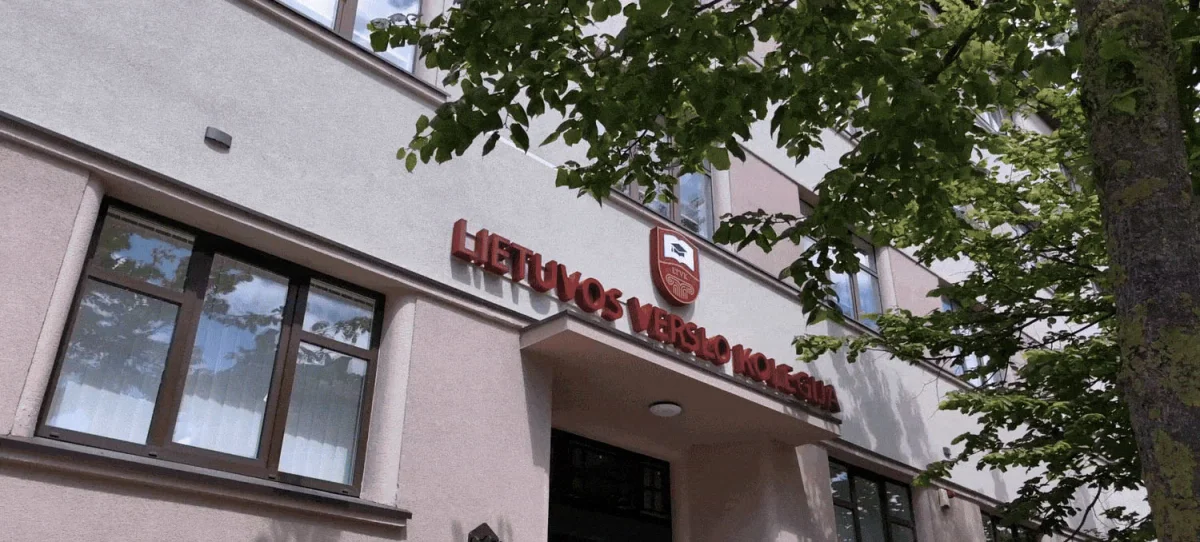
Lithuania Business University of Applied Science brand identity

Lithuania Business University of Applied Science

Klaipėda, Lithuania Founded 1994

Overview

English Name: Lithuania Business University of Applied Science
Acronyms: LBUAS, LTVK
Founded: 1994
Lithuania Business University of Applied Science community on campus
1 / 4

Lithuania Business University of Applied Science, a university founded in 1994, is based in Klaipėda, Lithuania. The institution operates as a higher-education provider and contributes to higher-education provision in Lithuania.

Lithuania Business University of Applied Science runs a focused programme catalogue across multiple qualification levels, with teaching organised under its academic units. The breadth of its catalogue serves a varied applicant profile.

Location & Contact

Location pin, postal address, phone, email, website, and social profiles for Lithuania Business University of Applied Science. Always verify channels through the official domain to avoid third-party impersonators.

Map:
Social Media:

Programs Offered

The programmes you can apply for at Lithuania Business University of Applied Science are grouped by degree level. Programme-level accreditation (separate from institutional) matters for regulated professions like law, medicine, and engineering.

Bachelor's Degree

12 programmes

At undergraduate level, Lithuania Business University of Applied Science offers 12 programmes. These bachelor's degrees typically open both direct employment pathways and routes into postgraduate specialisation.

Economics of Business Enterprises 3 years On-campus
General Description: Objective(s) of a study programme: To prepare competent and qualified professionals to work in the economy in businesses enterprises who are able to apply the latest knowledge, based on research results and information for self-employment and further training, in order to analyze, evaluate and predict the company's business activities, develop strategies and perform business enterprises activity monitoring. Learning outcomes: 1. Knows the social, humanitarian and other scientific principles and understands the peculiarities of their application in the analysis of business enterprises issues and decision-making. 2. Has the latest knowledge of economic theory and analysis methods and is able to apply them in practice of the economist and applied researches. 3. Able to using primary and secondary data sources to collect, analyze and interpret economic data, applying modern information technologies and their capabilities. 4. Able to select and apply effective methods of research during the analysis of economic phenomena and solving specific economic problems, and to perform the practice-oriented research. 5. Able to plan and organize the entity's economic, financial and investment activities, guided by the entity in regulating standards and acts, manage the economic information, self-organizing information for collecting primary and secondary data and applying the modern economic information processing methods, techniques and tools. 6. Able to prepare performance management (internal) and statistical reports, taking into account the specificity of consumers of economic information. 7. Able to analyze and evaluate the economic activity of business enterprises in national and international markets, economic, financial and investment performance indicators and submit proposals to the economic entity's performance improvement. 8. Able to predict the business enteprises's economic, financial and investment activities to control entity action plans and the availability of material, labor and financial resources efficiency. Specialization: Marine Business Economics (alternative) 9. Able to assess the marine business activities, analysing economic indicators, according to the latest economic analysis methods, applied maritime regulatory principles, evaluate the activity aspects of port organization, logistics and agency. Specialization: Finance of Business Enterprise (option) 10. Ability to apply principles of corporate financial management on activities of the companies, analyzing the sources of financial resources formation efficiency and optimal financial structure, to evaluate the risk of international financial transactions, to determine the impact of public finances on business activities, to evaluate performance of financial market instruments. 11. Able to smoothly and suggestively express themselves orally and in writing, to communicate effectively and tolerant in the professional environment in Lithuanian and foreign language. 12. Able to work in a team, solving professional tasks, efficiently and effectively communicate and collaborate. 13. Able to solve independently and reasonably the problems in practice, applying analytical and logical skills, be creative, entrepreneurial and proactive. 14. Able to organize own work and self-improvement of qualifications, think logical and critical, to be responsible and develop a professional attitude to business. Activities of teaching and learning: It is used both traditional and innovative teaching and learning methods: lectures, seminars, discussions, individual and group tasks, the presentation of results, case analysis, design and other works. Methods of assessment of learning achievements: Evaluation of study and practice results of the course is performed during whole semester and during exam session by using the accumulative assessment and individual cumulative index. Framework: Study subjects (modules), practical training: Microeconomics, Macroeconomics, Research Methodology and Data Analysis, Business Ethics and Social Responsibility, Technologies of informatics, Fundamentals of management, Economics of Business Enterprises, Economy of Investments, Financial Basics, Marketing Basics, Business Law, Entrepreneurship, Course Paper, Logistics, Regional Economics, Banking, Personnel Health and Safety, Accounting, Planning of Enterprise Activity, Pricing, Business Taxation, Econometrics. Students selecting the specialization of Marine Business economics are studying Marine business enterprises economics, Marine business legal regulation, organization of port labor, logistics and forwarding. And those selecting the specialization of Finance of business enterprises are studying Business financial management, Public finance, International financial settlement, Financial markets and institutions. There are three stages of practice: cognitive practice, professional practice, the final professional practice. Specialisations: Marine Business economics Finance of business enterprises Optional courses: Optional courses: 9 credits are given for optional courses. Students can choose courses from other study programs in Lithuania Business College. Distinctive features of a study programme: Distinctive features of the study program: The program emphasizes practical training. The College established SIMULITH centre gives the opportunity for students to practice in a professional business training firm Biurometa. During the training in this firm students work in different company’s departments (finance - accounting, purchasing, sales - marketing, and personnel) and simulate the actual business - financial performance of the enterprise. Students have access to actual documents, implement their own ideas and plans, and get to experience the real company business practices, collaborate with other Lithuanian and foreign practical training companies. During the studies students learn about the modelling of economic processes ECOSYS. These simulation activities are aimed to make students aware of inter-working principles among the government, businesses, households and media; and to learn to make short-term and long-term strategic decisions that affect the sustainable development of the state; also give understanding and knowledge of the calculation and assessment of key economic indicators; develop students' abilities to work in a team, discuss and present ideas convincingly. Studies in the college help to strengthen personal qualities necessary for successful work of the economist: logical-analytical thinking, responsibility, creativity, entrepreneurship and other characteristics. Access to professional activity or further study: Access to professional activity: Graduates will have the opportunity to work as an economist, analyst, accountant, project manager or other competencies requiring economist positions in businesses, government and economic and financial institutions, to develop their own business. Graduates will be able to evaluate the business, national, regional, global economic trends, provide appropriate strategies. Access to further study: Access to the second cycle studies upon meeting requirements set by the accepting higher education institution.
Duration: 3 years
Delivery: On-campus
Law 3 years On-campus
General Description: Objective(s) of a study programme: The aim is to train qualified lawyers who are able to clearly formulate and convey their conclusion, critically evaluate different opinions and positions, correctly apply legal norms in non-standard situations, do legal work, occupy certain legal positions or engage in certain legal activities. Learning outcomes: 1. Know the essential concepts of the studied subjects, legal theories, basics of legal history development and application possibilities. 2. Understand the development of the theory and practice of law and its interaction with other sciences, the fundamentals of international public and private law and EU law. 3. Know the principles of national constitutional and statutory law and the most important content of institutions. 4. Be able to collect and analyse legal information from a variety of sources, to systematise research data and to assess its validity in terms of time, territory and validity for individuals when preparing reports. 5. Be able to conduct applied legal research, apply legal theories and research methods, analyse, interpret and use information relevant to their professional activities, formulate research conclusions, and identify factors influencing legal issues. 6. Be able to apply knowledge of legal theory in practice and to think critically and understand different arguments when analysing problems in practice and making decisions. 7. Be able to provide legal assistance to natural and legal persons, identifying their problems, analysing case law, preparing critical analysis, representing the legitimate interests of the subjects. 8. Know how to handle confidential information appropriately, using internal and environmental resources. 9. Be able to use information technology to search for and present information using legal databases. 10. Be able to work as part of a team, to take responsibility for the quality of own performance or that of subordinate staff, to act in a professional capacity in accordance with the principles of social justice, sustainable development, environmental protection and social responsibility, professional ethics and citizenship. 11. Be able to express himself/herself fluently and persuasively in oral and written form, to communicate effectively in a professional environment in at least one foreign language, to discuss relevant professional issues, and to develop and strengthen his/her professional legal skills. 12. Be able to critically evaluate and reflect on their professional activities and understand the importance of lifelong learning. 13. Understand responsibility for the impact of his/her activities and their results on society, economic and cultural development, well-being and the environment, and observes the principles of legal ethics. Activities of teaching and learning: Innovative teaching and learning methods are used, distance learning is possible. Students’ creativity and innovativeness is encouraged. During the lectures forum environment is created that promotes dialogue between student and teacher in order to avoid teachers monologues. During workshops each student has opportunity to combine theoretical knowledge with practical skills; students are taught to accept reasonable legal decisions. Methods of assessment of learning achievements: Study results are evaluated during the semester (exercises, control tasks, independent tasks) and during the final exam. Framework: The volume of subjects in the field of study is 162 credits. Language culture and communication; Professional foreign language; Research methodology; Legal philosophy; Application of smart technologies; Modern economic theory; Logic and scientific methodology; Employees safety and Health; Document management; Political science; European Union law; International public law; Criminal Law; Criminal Procedure Law; Civil law I, II d.; Civil Procedure Law; Labor law; Roman law; Theory of the state and law, Civil Service Law, System of Law Enforcement Institutions; Business Law; Law of obligations; Advocacy law; Organization of court hearings; Administrative law and administrative process; the constitutional law of the Republic of Lithuania. Three professional internships are planned: Legal document preparation internship; Teaching practice; Final specialty practice. Specialisations: - Optional courses: Students are given the opportunity to improve their knowledge and abilities in the field of study by choosing one of two specializations. The study program includes 3 optional subjects (9 credits), the students can choose 3 subjects at their own discretion from the subjects taught at the college, based on their interests and personal motivation. During the course of the study semester, students can choose the location of the practice. Students can study according to several study programs including the same or very similar subjects. Subjects taken at other higher education institutions and their evaluations are credited to students, in accordance with the valid laws of the Republic of Lithuania and the internal procedures of the higher education institution. Students have the opportunity to study according to an individual plan, when the academic load is made taking into account the student's wishes. Competences acquired informally and independently can also be recognized for students. Distinctive features of a study programme: The program emphasizes practical training. Students perform their practical training in lawyer’s offices, bailiffs’ offices, court registry offices, in successful Lithuanian companies. Students have an opportunity to study and perform their practical training in companies abroad using students exchange program. Access to professional activity or further study: Access to professional activity: College graduates will be able to work in lawyer’s offices, bailiffs’ offices, court registry offices, etc. Access to further study: Access to the second cycle studies upon meeting requirements set by the accepting higher education institution.
Duration: 3 years
Delivery: On-campus
Law and Law Enforcement Authorities 3 years On-campus
General Description: Objective(s) of a study programme: The aim is to train qualified lawyers who are able to work in law enforcement agencies, to formulate and communicate their conclusions clearly, to critically evaluate different opinions and positions, and to apply legal norms correctly in non-standard situations. Learning outcomes: 1.1. Understand the development of legal theory and practice and its interaction with other sciences, the fundamentals of international, public and private law, and EU law. 1.2. Understand the science of law in judicial and quasi-judicial proceedings, the law as it applies, and interpret and apply the law on the basis of knowledge of economics, psychology, sociology and other sciences. 1.3. Knowledge of the principles of national constitutional and statutory law and the essential content of law enforcement institutions. 2.1. Able to analyse emerging legal issues. 2.2. Able to carry out applied research of law enforcement institutions, to apply the theories of law and research methods, to analyse, interpret and use the information necessary for professional activities, to formulate research conclusions and to identify the factors influencing legal problems. 2.3. Be able to collect and analyse legal information from a variety of sources, to systematise research data and to assess its validity in terms of time, territory and validity for individuals when preparing reports. 3.1. Able to organise a court hearing, record its course, analyse and evaluate the activities of law enforcement institutions from a legal point of view, interpret and analyse significant data of institutions. 3.2. Handle confidential information of law enforcement authorities, ensure compliance with the requirements for the recording and management of documents, classified documents and the protection of personal data. 3.3a. Able to advise and represent customers' rights, analyse various types of information and draft legal documents, both in private law firms and before judicial authorities, as well as to provide legal services in private. 3.3b. Able to identify specific legal rules, carry out pre-trial investigations for the purpose of preventing, detecting and investigating criminal offences, examine requests, complaints and reports from natural and legal persons, provide them with information, clarification and procedural decisions, and, in the cases provided for by the Law on Criminal Proceedings, execute instructions from prosecutors, judges and courts. 4.1. Be able to work as part of a team, to take responsibility for the quality of own performance or that of subordinate staff, to act in a professional capacity in accordance with the principles of social justice, sustainable development, environmental protection and social responsibility, professional ethics and citizenship, and to foster ethno-cultural and intercultural relations. 4.2. Able to express himself/herself fluently and persuasively in oral and written form, to communicate effectively in a professional environment in at least one foreign language, to debate relevant professional issues, and to develop and strengthen his/her professional skills as a specialist lawyer. 5.1. Be able to critically evaluate and reflect on their professional activities and understand the importance of lifelong learning. 5.2. Understand social responsibility for the impact of their activities and their outcomes on society, economic and cultural development, well-being and the environment, and adheres to the principles of legal ethics. Activities of teaching and learning: Oriented towards the development of general and subject competences, fostering creativity: lectures, seminars, individual and group project work, case analysis, public presentation and defence of works, discussions, preparation of scientific articles, information search and systematization, etc. Methods of assessment of learning achievements: Study results are evaluated during the semester (exercises, control tasks, independent tasks) and during the final exam. Framework: Roman Civil Law, Theory of State and Law, Law enforcement authorities, Administrative and Administrative Procedure Law, Criminal Law, Criminal Procedure Law, Civil Law, Civil Procedure Law, Labor and Social Security Law, Constitutional Law of Republic of Lithuania, European Union Law, International Law etc. The study programme includes three professional activity internships. Optional courses: 9 credits are given for optional courses. Students can choose courses from other study programs in Lithuania Business College. Specialisations: Judicial institutions Pre-judicial institutions Optional courses: Students are given the opportunity to improve their knowledge and abilities in the field of study by choosing one of two specializations. The study program includes 3 optional subjects (9 credits), the students can choose 3 subjects at their own discretion from the subjects taught at the college, based on their interests and personal motivation. During the course of the study semester, students can choose the location of the practice. Students can study according to several study programs including the same or very similar subjects. Subjects taken at other higher education institutions and their evaluations are credited to students, in accordance with the valid laws of the Republic of Lithuania and the internal procedures of the higher education institution. Students have the opportunity to study according to an individual plan, when the academic load is made taking into account the student's wishes. Competences acquired informally and independently can also be recognized for students. Distinctive features of a study programme: The program emphasizes practical training. Students perform their practical training in lawyer’s offices, bailiffs’ offices, court registry offices, in successful Lithuanian companies. Students have an opportunity to study and perform their practical training in companies abroad using students exchange program. Access to professional activity or further study: Access to professional activity: College graduates will be able to work in lawyer’s offices, bailiffs’ offices, court registry offices, etc. Access to further study: Access to the second cycle studies upon meeting requirements set by the accepting higher education institution.
Duration: 3 years
Delivery: On-campus
Digital Economy 3 years On-campus
General Description: Objective(s) of a study programme: The main objective is to prepare qualified economists who understand the importance of lifelong learning, are proficient in modern information - digital technologies, and are able to analyse, evaluate, plan and apply digital information in a dynamic economic entities’ environment in order to resolve business problems and to optimize the efficiency and effectiveness of business processes. Learning outcomes: 1. knows the general principles of social sciences, information technologies and other sciences, understands their links, peculiarities of application and possibilities in analysing economic processes, and applying digitalization methods in decisions- making. 2. has the latest theoretical knowledge about economics and modern digital technologies, is able to interrelate them and apply them in practical work of an economist. 3. is able to use modern information technologies to gather economic data from various sources, to analyse, systemize, evaluate and interpret economic data. 4. is able to use digital technologies to solve specific economic problems occurring at the national and international level and – having chosen effective research methods – to conduct practice-oriented empirical research and formulate research findings. 5. is able to select economic, financial, investment and other company-relevant information, to systemize it, summarize and provide to information consumers in an acceptable form. 6. is able to plan and organize economic, financial, investment activity of companies operating in the national and international markets, to handle the gathered economic information and by applying advanced methods, techniques and instruments of economic information processing – to analyse and evaluate the obtained results. 7. understands the processes of digitalization of economic information, consistency of their implementation and the scope of their application in planning and organising the economic operations of companies. 8. is able to generate management reports of a company making use of various databases. 9. is able to fluently and convincingly express his/her thoughts in a verbal and written form, to communicate in an effective and tolerant way in the professional environment in Lithuanian and foreign language. 10. is able to work both individually and in a team, to collaborate productively with specialists of various fields when solving tasks in their professional line of work. 11. is able to independently plan and organize his/her work and to assume responsibility for the effect of his/her own activities and that of his/her subordinates on the economic entities’ performance and the society. 12. is able to apply critical thinking and analysing skills and to make logical and effective decisions capitalising on the competencies acquired through formal and non-formal learning (self-learning). Methods of assessment of learning achievements: Evaluation of study and practice results of the course is performed during whole semester and during exam session by using the accumulative assessment and individual cumulative index. Framework: Study subjects (modules), practical training: Psychology of Communication; Smart Mathematical Solutions; Research Methodology and Data Analysis; Professional Foreign Language in English; Microeconomics, Application of Smart Technologies in Economics; Fundamentals of Smart Management; Digital Industries and Culture of Internet; Macroeconomics; Fundamentals of Accounting and Computerizing Systems; Principles of Finance; Digital Marketing Fundamentals; Electronic Commerce; International Law; Fundamentals of Big Data Processing and Management; Digital processes and technologies; Regional Economics; Processes of Digital Banking; Economics of Business Enterprises; Economics of Investment; Solutions of Sustainable Economy; Pricing; IT Risk Management and Data Protection; Analysis of Enterprises Activity and Digital Visualization; International Economics; Econometrics; International Finance; Business Finance and Risk Management; Course Paper. There are three stages of practice: Cognitive Practice; Professional Practice; Final Professional Practice. Specialisations: – Optional courses: Optional courses: 9 credits are given for optional courses. Students can choose courses from other study programs in Lithuania Business University of Applied Sciences. Distinctive features of a study programme: Digital economy study programme focuses on the needs of the future economy, and as such, aims at preparation of highly qualified economists able to readily adapt to dynamic business needs and successfully apply the knowledge acquired in the University whether in national or international companies; therefore, special emphasis is made on the development of the required competencies of students as well as on the employability of graduates and their career opportunities. The study programme will introduce students to the latest business models of the Fintech sector; students will learn to apply digital tools to process and visualise relevant economic-financial data, will analyse the advantages provided by digital economy and the opportunities for business development in the context of economic transformation. Students will have an opportunity to study abroad under exchange programmes and to go to foreign higher education institutions for a practice placement. The University’s SIMULITH centre provides students with a possibility to perform professional practice in the practical training firm Biurometa – an accredited member of practical business training network and holder of the internationally recognised EUROPEN-PEN International certificate, which confirms the high level of quality requirements for the competences to be acquired by students. During their practice in this training firm students work in its various departments (finance-accounting, sales and procurement, marketing and human resources) and simulate economic-financial operations of a real-life company. This practice allows students to familiarize themselves with real-life documents, to propose and implement their own ideas and plans, to acquire practical work skills in a business company, to collaborate and maintain relations with other practical training centres both in Lithuania and abroad. Having performed the practice in the firm, students may be issued a EUROPEN – PEN International certificate, which validates students’ competences acquired during the practice in line with the EU- established lifelong learning framework. Access to professional activity or further study: Access to professional activity: Having successfully graduated the studies, graduates will be able to work as an economist, analyst, financier, project manager and in other positions that require the competencies of an economist whether in national or international companies and financial institutions that successfully apply digital technologies in their operations or are going to introduce them in future. Graduates will also acquire knowledge required for establishing and running their own business. Access to further study: Access to the second cycle studies upon meeting requirements set by the accepting higher education institution.
Duration: 3 years
Delivery: On-campus
Organizational Administration 3 years On-campus
General Description: Objective(s) of a study programme: The aim is to train qualified administration specialists capable of administering and managing the work of an institution, company or its unit, coordinating the activities of employees, preparing documents, working with a document management system, using information technology tools, applying the principles of social responsibility, continuously improving their competences, working in a team, and acting independently and creatively in the changing economic conditions. Learning outcomes: 1.They have the ability to explain, comprehend, and implement in real-world settings in the public, private, and corporate sectors the fundamental ideas and principles of management of public and private organisations as well as enterprises. 2. Apply management and administrative knowledge to the planning, organisation, management, improvement, and analysis of the economic, political, legal, technical, social, and cultural environment of a company or organisation in public, state, public sector, and corporate organisations. 3. They are skilled at applying quantitative and qualitative research techniques, conducting applied empirical research, and gathering, organising, and analysing data. 4. Able to organise and analyse the data collected, draw conclusions, and solve management challenges. 5. Graduates are able to use modern information technologies to gather, organise, and analyse data on the operations of institutions and commercial companies, and to utilise that data for the management and administration of both public and private institutions and commercial organisations. 6. Graduates are able to use modern information technologies to gather, organise, and analyse data on the operations of institutions and commercial companies, and to utilise that data for the management and administration of both public and private institutions and commercial organisations. 7. They are able to assess the performance of management functions and make proposals to solve management improvement problems in state and public institutions and business enterprises. 8.A. They are able to explain the goals of state and municipal institutions, state and public organisations, the unique aspects of their operations, the development of industries, reforms and their applicability, and pinpoint issues with state and public institution operations. 8.B. They have the ability to run all kinds of businesses, compete, plan, organise, analyse, and assess events and processes inside and around businesses, and manage company while taking into account market trends. 9. Able to express themselves fluently and persuasively, both orally and in writing, to communicate effectively in a professional environment in at least one foreign language, to debate relevant professional issues, and to develop and enhance their professional skills as an administrator in a multicultural working environment. 10. Able to create leadership and cooperation in real-world and online workgroups, exchange outcomes, and interact and cooperate with a variety of experts. 11. Able to analyse problems and make decisions. 12. Able to learn independently in the field of their professional activity, continuous professional development, understand the importance of lifelong learning, moral responsibility for the impact o society. Activities of teaching and learning: Oriented towards the development of general and subject competences, fostering creativity: lectures, seminars, individual and group project work, case analysis, public presentation and defence of works, discussions, preparation of scientific articles, information search and systematization, etc. Methods of assessment of learning achievement Study results are evaluated during the semester (exercises, control tasks, independent tasks) and during the final exam. Framework: Study subjects (modules), practical training The main subjects of the field of study are 147 cr.: organizational communication and ethics, formal English, research methodology, information and document management systems, intelligent mathematical solutions, customer relationship management CRM, practical law, public procurement basics, leadership, accounting basics, management basics, project administration, marketing basics, human resource management, occupational safety and health, economic theory, corporate economics, social responsibility of organizations, organizational behavior. 3 internships are carried out: Cognitive, Document Management Computer Practice and Professional Practice, which make up 30 credits. Specialization subjects make up 15 credits. A coursework is prepared. Specialisations: Administration of State and Public Institutions. Administration of Business Enterprises. Optional courses: Students are given the opportunity to improve their knowledge and abilities in the field of study by choosing one of two specializations (4 different subjects are taught in each specialization, total in 15 credits). The study program consists of 3 optional subjects (9 credits), students can choose 3 subjects from the subjects taught at the college at their own discretion, based on their interests and personal motivation. During the course of the study semester, students can choose the location of the Introductory and Final professional activity practice. Students can study according to several study programs including the same or very similar subjects. Subjects taken at other higher education institutions and their evaluations are credited to students, in accordance with the valid laws of the Republic of Lithuania and the internal procedures of the higher education institution. Students have the opportunity to study according to an individual plan, when the academic load is made taking into account the student's wishes. Competences acquired informally and independently can also be recognized for students. Distinctive features of a study programme: The study programme focuses not only on the development of special professional skills, but also on the development of a wide range of general skills and competencies which are necessary for the modern administrator. A Leadership Laboratory has been established. Two different specializations are available. The study program is also conducted distance. Access to professional activity or further study: Access to professional activity: Graduates can work in business enterprises of various sizes (small, medium, large) and nature (services, trade, production) or in state and public institutions, other organizations. They will have enough competences to perform high-quality work as an administrator or a job close to this professional activity, to establish their own business, to successfully integrate into the international labour market as a specialist in this field. Graduates of this study program will reasonably be able to apply to work as middle or higher level managers of an organization, its department. Access to further study: Graduates can continue to study according to university first-cycle study programs, and after completing additional studies or fulfilling other requirements set by a specific higher education institution, they have opportunity to enrol in a master's program and study according to second-cycle study programs. Graduates have opportunity to continue their studies in both Lithuanian and foreign higher education institutions.
Duration: 3 years
Delivery: On-campus
Sales and Logistics Management 3 years On-campus
General Description: Objective(s) of a study programme: The aim is to train qualified management professionals with knowledge of business development processes, can independently plan, organise, manage, and control the business, can set up investment projects, conduct market research, implementing a digital advertising campaign, take care of business development, possess the skills necessary to deal with contemporary information technology, to develop a creative, entrepreneurial and socially responsible personality, continually adapting to the changing business environment and modern labour market requirements. Learning outcomes: 1. Able to describe the concepts and principles of the studied subjects, understand the evolution of sales and logistics management practice and its interaction with other sciences, use smart technologies. 2. Know and applies management knowledge to plan, organise, manage, improve and analyse the economic, political, legal, technological, social and cultural environment of a company or organisation in the fields of sales and logistics. 3. They are able to carry out applied empirical research independently, using quantitative and qualitative research methods, collect, organise and analyse data 4. Able to critically evaluate information and formulate conclusions using smart technologies in sales and logistics business. 5. Able to collect, organise and analyse data on sales and logistics activities in order to provide strategic orientations and measures. 6. Graduates are able to evaluate logistics processes, apply logistics technological solutions and improve modern technologies of material flow movement. 7. They are able to identify and make socially responsible decisions in the areas of sales and logistics in accordance with the principles of professional ethics. 8.1. Able to control the technological process of maritime transport, use information systems to ensure the smooth movement of material flows, in accordance with international legal standards. 8.2. Able to choose the strategy and tactics for the distribution of goods, to use forms and methods of distributing goods, organise logistical customer service. 8.3. They are able to apply advertising measures, implementing sales promotion strategies, conducting e-sales, taking into account the rights of consumers. 9. Able to communicate effectively in writing and orally in Lithuanian and foreign languages, analyse the problems of the sales and logistics business, make decisions independently. 10. Able to express oneself in a reasoned and fluent manner, both orally and in writing, in the correct Lithuanian language, and to work in a multicultural work environment. 11. Able to communicate and collaborate, think critically, work independently, creatively and as part of a team, take responsibility for their own performance and that of other staff. 12. Able to learn independently in the field of their professional activity, continuous professional development, understand the importance of lifelong learning, moral responsibility for the impact of their activities and their results on society Activities of teaching and learning: Oriented towards the development of general and subject competences, fostering creativity: lectures, seminars, individual and group project work, case analysis, public presentation and defence of works, discussions, preparation of scientific articles, information search and systematization, etc. Methods of assessment of learning achievements: Study results are evaluated during the semester (exercises, control tasks, independent tasks) and during the final exam. Assessment also takes place in a virtual learning environment. Framework: Study subjects (modules), practical training. The main study subjects are 145 cr.: Theory of modern economy, Customs and insurance of goods, Coding and identification systems of goods, Fundamentals of international economy, Integrated logistics, Organization and work of special terminals, Transport logistics and administration, Sales logistics, Practical law, Employee safety and health, Business Law, Basics of Accounting, etc. The subjects of each specialization consist of 15 cr. Coursework is being prepared. 3 internships are carried out: Introduction internship, Professional activity internship and Final professional activity internship, 30 cr. is allocated for internships. Specialisations: Marine Transport Logistics. Subjects taught: Marine Business Legal regulation, Marine Transport Technologies and Management, Port organization and agency. Product Distribution Logistics. Subjects taught: Sales Organization, Food and Non-Food Products, Warehouse Logistics, Wholesale and Retail Trade. Sales Management. Subjects taught: Principles or Advertising, Sales Organization, E-sales, Protection of the Consumer Rights. Optional courses: Students are given the opportunity to improve their knowledge and abilities in the field of study by choosing one of three specializations. (in each specialization, different subjects are taught, with a volume of 15 credits). The study program includes 3 optional subjects (9 credits), students can choose 3 subjects from the subjects taught at the college or other higher education institutions at their own discretion, based on their interests and personal motivation: During the course of the study semester, students can choose the place where they will carry out the Introductory and Final professional activity practices. Students can study according to several study programs including the same or very similar subjects. Subjects taken at other higher education institutions and their evaluations are credited to students, in accordance with the valid laws of the Republic of Lithuania and the internal procedures of the higher education institution. Students have the opportunity to study according to an individual plan, when the academic load is made taking into account the student's wishes. Competences acquired informally and independently can also be recognized for students. Distinctive features of a study programme: The study program focuses not only on the education of professional special competences, but also on the education of a wide range of general skills and values, which provides necessary competences for a current manager, is based on knowledge transfer and reception, analysis, critical thinking and problem solutions. A Leadership Laboratory has been established. Professional practicums are conducted in a business training firm ”Biurometa“ which simulates the activities of real trading/manufacturing companies and reflects all the processes taking place in a real company when communicating with the same simulated companies in Lithuania and foreign countries. The program has three possible specializations: Marine Transport Logistics; Product Distribution Logistics; Sales Management. Access to professional activity or further study: Access to professional activity: Graduates can work in business enterprises of various sizes (small, medium, large) and nature (services, trade, production) or in state and public institutions, other organizations. They will have enough competences to perform high-quality work as an administrator or a job close to this professional activity, to establish their own business, to successfully integrate into the international labor market as a specialist in this field. Graduates of this study program will reasonably be able to apply to work as middle or higher level managers of an organization, its department. Access to further study: Graduates can continue to study according to university first-cycle study programs, and after completing additional studies or fulfilling other requirements set by a specific higher education institution, they have opportunity to enrol in a master's program and study according to second-cycle study programs. Graduates have opportunity to continue their studies in both Lithuanian and foreign higher education institutions.
Duration: 3 years
Delivery: On-campus
Smart management 3 years On-campus
General Description: Objective(s) of a study programme: The aim is to train qualified management professionals with knowledge of business development processes, can independently plan, organise, manage, and control the business, can set up investment projects, conduct market research, implementing a digital advertising campaign, take care of business development, possess the skills necessary to deal with contemporary information technology, to develop a creative, entrepreneurial and socially responsible personality, continually adapting to the changing business environment and modern labour market requirements. Learning outcomes: 1. Can describe the key concepts and principles of smart management, understand the fundamentals of finance, marketing, accounting, human resources management, occupational safety and other process management, are able to apply them in practice. 2. Able to describe and analyse the factors of the economic, political, legal, technological, social, cultural environment of the company / organisation, apply knowledge of smart management to plan, organise, manage and improve management processes. 3. Able to carry out applied empirical research, apply quantitative and qualitative research methods collect, organise and analyse data 4. Able to critically evaluate information, analyse business resources and elements of the external competitive environment and interpret them using smart technologies and visual tools when making business decisions and are able to formulate and present conclusions. 5. They are able to use modern information technologies to collect, structure and analyse company performance data in the design and marketing activities of companies. 6. Able to identify and make socially responsible corporate/organisational decisions in the areas of sustainable project management and marketing, in line with professional ethics. 7. Graduates are able to evaluate the performance of management functions, implementing individual and group projects and digital marketing processes. 8.1. Able to independently master and apply new digital marketing tools, brand management and search engine optimisation, social networks, mobile media and to create electronic content based on marketing strategies. 8.2. B. Able to identify the relevance and distinctiveness of the results of sustainable, green and blue growth projects, organise creative processes and apply them in project management, analyse the financial and quality management issues of projects, critically evaluate them, use business information systems, provide them with solution options. 9. Able to promote leadership and teamwork both directly and in individual and work groups remotely, communicate and collaborate in a multicultural working environment. 10. Graduates are able to express their thoughts orally and in writing in correct Lithuanian language, communicate effectively and fluently in a professional environment. 11. Able to communicate effectively in written and oral Lithuanian and at least one foreign language. 12. Able to think critically, evaluate and draw on competences acquired through formal and informal learning, able to analyse business problems, make logical and effective decisions, understand oneself in a social context. Activities of teaching and learning: Oriented towards the development of general and subject competences, fostering creativity: lectures, seminars, individual and group project work, case analysis, public presentation and defence of works, discussions, preparation of scientific articles, information search and systematization, etc. Methods of assessment of learning achievements: Study results are evaluated during the semester (exercises, control tasks, independent tasks) and during the final exam. Framework: Study subjects (modules), practical training: The main study subjects amount to 147 cr. Application of smart technologies, Document management systems, Research methodology and data analysis, Organizational behaviour, Practical law in management, Culture of business relations, Human resource management, Basics of smart management, Basics of marketing, Entrepreneurship in the digital field, Business solutions and analysis, Systematic quality management, etc. 3 internships are carried out: Cognitive internship, Professional activity internship and Final professional activity internship, course work is prepared and 4 specialization subjects are taken, which amount is 15 cr. Specialisations: Digital Marketing. Subjects taught: Digital Marketing Tools, Social Networking and Media Marketing Processes, Digitalization of marketing, Intelligent neuro-Marketing. Sustainable Project Management. Subjects taught: Creative Processes in Project Management, Financial and Quality Management of Project, International Project Management, Management Green and Blue Project Optional courses: Students are given the opportunity to improve their knowledge and abilities in the field of study by choosing one of two specializations (4 different subjects are taught in each specialization, 15 credits in total). The study program includes 3 optional subjects (9 credits), the students can choose 3 subjects at their own discretion from the subjects taught at the college, based on their interests and personal motivation. During the course of the study semester, students can choose the location of the Introductory and Final professional activity practice. Students can study according to several study programs including the same or very similar subjects. Subjects taken at other higher education institutions and their evaluations are credited to students, in accordance with the valid laws of the Republic of Lithuania and the internal procedures of the higher education institution. Students have the opportunity to study according to an individual plan, when the academic load is made taking into account the student's wishes. Competences acquired informally and independently can also be recognized for students. Distinctive features of a study programme: The study programme focuses not only on the development of special professional skills, but also on the development of a wide range of general skills and competencies which are necessary for a modern manager applying analytical, critical evaluation and problem solving skills. A Leadership Laboratory has been established. Professional practicum is carried out in a business training firm "Biurometa" which simulates the activities of real trading/manufacturing companies and reflects all the processes taking place in a real company when communicating with the same simulated companies in Lithuania and foreign countries. Access to professional activity or further study: Access to professional activity: Graduates are able to work in Lithuanian and foreign business establishments as various types of managers, to develop their business and / or manage it. They get employed and continue their career in various Lithuanian business organizations, offices of foreign companies and public institutions which shows that the acquisition of universal studies and specific knowledge helps to integrate successfully into the competitive business world. Access to further study: Graduates can continue to study according to university first-cycle study programs, and after completing additional studies or fulfilling other requirements set by a specific higher education institution, they have opportunity to enroll in a master's program and study according to second-cycle study programs. Graduates have opportunity to continue their studies in both Lithuanian and foreign higher education institutions.
Duration: 3 years
Delivery: On-campus
Tourism and Entertainment Business Management 3 years On-campus
General Description: Objective(s) of a study program: Objective of the Tourism and Entertainment Business Management study program is to prepare qualified tourism and entertainment business managers, who are able to research and analyze market of tourism and entertainment, business environment and trend of changes, to create service packages and organize their selling, to establish and manage a company which provides recreation, entertainment, beauty and wellness services. Learning outcomes: 1. To apply basic fundamentals of business necessary for tourism and entertainment business activities, the latest theoretical knowledge in the field of tourism, hotel, entertainment and tour activities, based on new fundamental and applied research, as well as concepts and principles. 2. To set up a tourism or entertainment company, to plan its activities according to the objectives, to adjust the activity according to the analysis of the results obtained. 3. To create a tourism and entertainment products and manage their sales, carry out trips, excursions and events. 4. To use of information technology, to collect and analyze data that allows to know the business environment and its processes. 5. To communicate professionally and responsibly with customers, business partners, company employees, in accordance with the principles and rules of communication in the business environment. 6. To develop professional and personal skills, demonstrating responsibility for their activities and their impact on the results. Activities of teaching and learning: Lectures, seminars, debates, group work, practical tasks, analysis of the case, and preparation of projects. Methods of assessment of learning achievements: Cumulative grading is applied. Cumulative grading final evaluation consists of results of course program assignments. Each subject or module is completed by the final examination or estimation of student‘s independent work (project). Final estimation consists of parts of cumulative estimation (attendance, participation, tests, independent works, and examination) percentage of each of them in final estimation is indicated in program of study subject. Framework: Study subjects (modules), practical training: The Fundamentals of Tourism, Hotel Administration, Management, Law, Marketing, Corporate Finance and Accounting, Information Technology, the Fundamentals of Business of Entertainment, Environment of Event Organization, Excursion Preparation and Conducting technique, etc. Four professional activity intership: tourizm cognitive internship, internship of events organization, hotel management internship, final internship of professional activity. Specializations: Beauty and Wellness Services; Entertainment and Sport Events Organization; Trips and Excursions Organization; Optional courses: 9 credits are given for optional courses. Students can choose courses from other study programs in Lithuania Business College. Distinctive features of the study program: The study program focuses on entrepreneurship, leadership and critical thinking education. The program emphasizes practical training. Students perform their practical training in successful Lithuanian companies. Students have an opportunity to study and perform their practical training in companies abroad using students exchange program. Access to professional activity or further study: Access to professional activity: College graduates will be able to work as specialists in tourism information centers, organizers and guides of educational programs in museums, managers-consultants in travel agencies, managers in accommodation and catering companies, organizers of entertainment events in entertainment companies, specialists in shopping and entertainment centers, rural tourism homesteads, SPA and wellness service providing companies, specialists in the departments of international relations, business developments and tourism as well as to establish their own tourism and entertainment companies. Access to further study: College graduates can achieve study results to be counted in further studies if they want to study according to the first cycle university study programs. After completion of additional studies or meeting other requirements in Higher Education institution, they are able to enter second cycle Master’s studies.
Duration: 3 years
Delivery: On-campus
Applied Informatics and Programming 3 years On-campus
General Description: Objective(s) of a study programme: The aim is to train qualified Informatic field specialists capable to compete in a fast - changing technology, product, and services market, taking into account the needs of the consumer needs, develop and create various WEB projects, applied programs, data bases, applications, developing and applying safe programming equipment, searching for new computer system apply methods, interacting the graphic and design works, searching for effective data and information processing solutions. Learning outcomes: 1.1.Applies knowledge of main facts, concepts, theories and method of mathematics, discrete mathematics, theoretic informatics, data structure and algorithm knowledge, technical and network development operational principles, protocols and standards developing and analysing computer systems, at the given moment and possible changes and tendencies in the future. 1.2. Is able to explain the algorithm development and analyses principles, programming paradigms, languages and technologies, human and computer interaction principles, programming equipment development and surveillance methods. 1.3. Applies knowledge of structured and object-oriented programming, for development safe and other actual criteria to ensure the professional activity problem solving. 1.4. Understand the overall digitalization and computer calculation processes and the Informatic field evolution. 2.1. Is able to gather, analyse, process data and interpret the obtained results required for solving specific professional problems and arguments solutions with a reasonable solution. 2.2. Applies theoretical knowledge in practice selecting appropriate methods, technical and software tools, programming languages, frameworks, and modern programming environments for realization of specific problem resolution. 3.1. Applies agile methods in software development, according to customer requirements specify the process, component, or software product by applying modern design tools and following the standards that prevail in the market. 3.2. Performs graphical and design work, creates databases, websites, and other simple software. 3.3. Applies knowledge of computerized hardware and architecture, hardware technical standards; install operating systems and other applied and special software. Is able to program smart equipment management software (program microcontrollers) or other special software. 3.4. Applies the acquired knowledge on cloud computing, computer networks, information transmission models, protocols and standards when configuring and testing networks, and is able to apply data protection tools. Spec. Web Development (alternative) 3.5.A Creates new web projects, web services or maintains and develops the existing ones by applying the selected programming languages, platforms or frameworks. Spec. Mobile Application Development (alternative) 3.5. B Creates local and hybrid mobile applications, web services or maintains and develops the existing ones by applying the selected programming languages, platforms or frameworks; understand the Internet of Things technologies. Spec. Computer Network Administration (alternative) 3.5.C Diagnoses and eliminates software and technical computer networking equipment failures, administers servers and other network equipment and ensure safe data transmission through information system and uninterrupted operation of network services. 4.1. Fluently and suggestively expresses his/her ideas in spoken and written language, communicates effectively and tolerantly with professionals and other persons when solving tasks related to professional activity in Lithuanian and a foreign language. 4.2. Works in a team implementing projects, solving professional activity tasks, assumes responsibility for the quality of his/her and subordinate employees’ activity. 5.1. Plans, organises his/her work and individually develops his/her skills understanding the importance of life-long learning and professional development. Activities of teaching and learning: Focused on the development of general and subject-specific competences, fostering creativity: lectures, seminars, individual and group project work, laboratory work, case studies, portfolio/folder method, public presentation and defence of work, debates, drafting of scientific papers, information retrieval and systematisation, etc. Focused on the development of general and subject competences through creativity: lectures, seminars, individual and group project work, laboratory work, case studies, portfolio/folder method, public presentation and defence of work, debates, preparation of scientific papers, information retrieval and systematisation, etc. Methods of assessment of learning achievements: Project defence, portfolio presentation, coursework defence, trapezoidal knowledge test, exam. Project thesis defence, portfolio presentation, coursework defence, trapezoidal knowledge test, exam. Framework: The volume of subjects in the field of study in terms of study credits is 93 credits, specialisation subjects - 18 credits, internships - 30 credits. The volume of subjects in the field of study in terms of study credits shall be 93 credits, specialisation subjects - 18 credits, internships - 30 credits. Foreign Language I; Foreign Language II; Communication Psychology; Practical Law; Occupational Health and Safety; Smart Mathematical Solutions; Programming C/C++; Computer Graphics and Design (Photoshop CC, InDesign CC); Human and Computer Interactions; Website Programming (HTML5, CSS3, principles of JavaScript, WordPress); Object-oriented Programming; Basics of Logic and Discrete Mathematic; Data Structures and Algorithms; Computer Architecture and Operation systems; Computer Network and IS Security; Programming php; Databases; Research Methodology and Data Analyses; Classic program engineering; 3D Design and Animation (3ds Max); Cybersecurity;Resilient program system development (Agile methodics); Embedded Systems. There are three professional practices: the Cognitive Practice (at the college in the practical training firm "Biurometa"); the Educational Practice (in the company, 6 weeks); the Professional Practice (in the company, 10 weeks). Specialisations: 1. Web Project Development 2. Computer Network Administration 3. Mobile App Development Optional courses: Students are given the opportunity to improve their knowledge and abilities in the field of study by choosing one of two specializations. The study program includes 3 optional subjects (9 credits), the students can choose 3 subjects at their own discretion from the subjects taught at the college, based on their interests and personal motivation. During the course of the study semester, students can choose the location of the practice. Students can study according to several study programs including the same or very similar subjects. Subjects taken at other higher education institutions and their evaluations are credited to students, in accordance with the valid laws of the Republic of Lithuania and the internal procedures of the higher education institution. Students have the opportunity to study according to an individual plan, when the academic load is made taking into account the student's wishes. Competences acquired informally and independently can also be recognized for students. Distinctive features of a study programme: The study programme focuses on graduates' employability and career prospects, by introducing students to career opportunities, providing information, methodological and advisory support on labour market readiness and employment. In 2021 June Lithuania Business College study program of Applied Informatics and Programming has been awarded with the “Investor’s Spotlight“ quality sign. International and Lithuanian capital investors were participating in the study program review, and they have decided that Lithuania Business College study program Applied Informatics and Programming study program representatives are able to communicate with the business effectively and the recommendation that were given changes will be implemented into study process changes. Access to professional activity or further study: Access to professional activity: After the studies they can works as: programmers, IT specialists in various companies (banks, labor office, computer and program equipment firms, publishing centers, Ministries of Internal affairs, other Ministries, culture, science, education institutions, Lithuanian and external companies, graphical designers, IT service administrators, project managers or their assistants. Also, they can create their own business and work as a free-lancer. Access to further study: Possibility to continue the studies in master studies or in equalize studies for bachelor qualification.
Duration: 3 years
Delivery: On-campus
Digital Design Technologies 3 years On-campus
General Description: Objective(s) of a study programme: The aim is to train a high - quality IT graphic (digital) design specialists, working individually or in the team in the design field, applying knowledge and aware of safety manner in the context of digital design and able to create a visual information using effective data and information applying methods, according to the customer needs and compute design principles. Learning outcomes: 1.1. Applies knowledge of visual expression principles, main graphic communication design object elements and their composition types, fundamental graphic principles, animation principles, and is able to use them in creating original characters and surroundings. 1.2. Applies knowledge of composition, art and design stylistic, and artistic tendencies and is able to use them reasonably by creating various purpose digital projects and obtaining safety aspects. 1.3. Applies knowledge of computer technical equipment, computer network, sound, and image system main components, is able to choose them and use them in solutions. 1.4. Understands, integrates, and practically uses different science fields (physical, technological, social, humanitarian) knowledge by solving professional field problems. 2.1. Collects, compares, analyses, systemizes, necessary information for creative project and interprets the results. 2.2. Applies theoretic knowledge in practice, chooses right methods, technical and programing measures, digital design solutions for specific solutions or project realization. 3.1. Creates 2D and 3D computer graphic in various solutions (web projects, prints and, etc.) and is able to animate it if there is a need. 3.2. Is able to work with photo, video, sound equipment, digital sound and image creation and processing programs. 3.3. Prepares and processes the necessary text, graphic, image, sound, information for creating a digital design and multimedia product. 3.4. Applies the acquired knowledge in a digital project development sequence, project and manufacture process in the development and fulfilment of creative idea. 4.1. Fluently and suggestively expresses his/her ideas in spoken and written language, communicates effectively and tolerantly in interdisciplinary teams in Lithuanian and a foreign language 4.2. Works in a team implementing projects, solving digital and graphical design tasks, assumes responsibility for the quality of his/her and subordinate employees’ activity. 5.1. Plans, organises his/her work and individually develops his/her skills understanding the importance of life-long learning and professional development. Activities of teaching and learning: Focused on the development of general and subject-specific competences, fostering creativity: lectures, seminars, individual and group project work, laboratory work, case studies, portfolio/folder method, public presentation and defence of work, debates, drafting of scientific papers, information retrieval and systematisation, etc. Focused on the development of general and subject competences through creativity: lectures, seminars, individual and group project work, laboratory work, case studies, portfolio/folder method, public presentation and defence of work, debates, preparation of scientific papers, information retrieval and systematisation, etc. Methods of assessment of learning achievements: Project defence, portfolio presentation, coursework defence, trapezoidal knowledge test, exam. Project thesis defence, portfolio presentation, coursework defence, trapezoidal knowledge test, exam. Framework: The volume of subjects in the field of study in terms of study credits is 105 credits, internships - 36 credits. The volume of subjects in the field of study in terms of study credits shall be 93 credits, specialisation subjects - 18 credits, internships - 30 credits. Foreign Language I; Foreign Language II; Communication Psychology; Business Enterprise Economics; Smart Mathematical Solutions; Digital Photography; Composition and Computer Graphics; 2D Point Graphics (Adobe Photoshop); Website Programming (HTML5, CSS3, WordPress); Font and Typography; Vector 2D Graphics (Adobe Illustrator); Visual Communications; Digital Design Technologies; 2D animation (Adobe Animate); UI/UX Design; Visual Brandmark; Research Methodology and Data Analyses; Graphic Effect Creation and Postproduction (Adobe After Effects); 3D Graphics (3ds Max); Sound and Image Technologies; GIS; Game Programming; Spatial 3D Modelling; Critical Thinking and Visual Work Analyses; Portfolio and Career Planning; Specialization Course Work; Final Thesis. There are four professional practices: the Cognitive Practice (carried out in the college at the practical training company "Biurometa"); the Educational Practice (carried out in the company, duration 6 weeks); the Multimedia Product Development (carried out in the company, duration 4 weeks); (the Professional Practice (carried out in the company, duration 10 weeks). Specialisations: 1. Web Project Development 2. Computer Network Administration 3. Mobile App Development Optional courses: Students are given the opportunity to improve their knowledge and abilities in the field of study by choosing one of two specializations. The study program includes 3 optional subjects (9 credits), the students can choose 3 subjects at their own discretion from the subjects taught at the college, based on their interests and personal motivation. During the course of the study semester, students can choose the location of the practice. Students can study according to several study programs including the same or very similar subjects. Subjects taken at other higher education institutions and their evaluations are credited to students, in accordance with the valid laws of the Republic of Lithuania and the internal procedures of the higher education institution. Students have the opportunity to study according to an individual plan, when the academic load is made taking into account the student's wishes. Competences acquired informally and independently can also be recognized for students. Distinctive features of a study programme: The study programme focuses on graduates' employability and career prospects, by introducing students to career opportunities, providing information, methodological and advisory support on labour market readiness and employment. Digital design technology is also attractive and practical because of its versatility: every designer can realize his or her skills in the field that is most suitable and close to his or her heart, because there are so many specializations: from print to mobile apps, from interactive design to illustration, from game design to typography, from branding to infographics, from publishing to packaging - the list goes on and on. It should also be mentioned that a designer can also become a freelancer, which is not a job that many young people would prefer. Most importantly, it is possible to create designs without leaving home - and not only for the Lithuanian market, but also for foreign countries. Access to professional activity or further study: Access to professional activity: After graduation, you will be able to work as a graphic designer in a variety of companies, set up your own business, work as a freelance graphic designer, or as a graphic project manager or assistant. After graduation, you will be able to work as a graphic designer in a variety of companies, set up your own business, or work as a freelance graphic designer or as a freelance graphic project manager or assistant. Access to further study: Possibility to continue the studies in master studies or in equalize studies for bachelor qualification.
Duration: 3 years
Delivery: On-campus
Accounting and Financial Technologies 3 years On-campus
General Description: Objective(s) of a study programme: Prepare a specialist (accountant) who is able to apply the latest knowledge and information for self-employment and further learning, based on results of fundamental and applied research necessary in complex, changing, multicultural professional environment in order to solve the problems related to these activities effectively; plan and organize activities, manage accounting, manage and control financial processes in enterprises, institutions and organizations; adjust thinking skills and attitudes that provide the opportunity to act creatively in new situation, communicate in Lithuanian and foreign languages, to convey information to specialist and non-specialist audiences, work individually and in teams, develop his professionalism and general education continually. Learning outcomes: The graduate of this program: 1. Knows the general philosophy, psychology, economics, finance, management, and other scientific principles and understand of the peculiarities of their application in the analysis of an entity issues and decision-making. 2. Knows essential concepts of the studied subjects and able to maintain existing accounting professional theoretical knowledge, which is necessary to collect, interpret and manage accounting data in practice. 3. Able to using primary and secondary data sources to collect, analyze and interpret accounting data, using modern information technologies and their capabilities. 4. Able to apply effective study methods, purposefully garnering accounting issues, and perform to the practice-oriented researches. 5. Able to organize the entity's accounting services work ,to develop and implement accounting policies, managing entity accounting, in accordance with the acts of the international and national accounting standards for the preparation of financial, tax and other accountability and assess, compare and use of accounting information in accordance with an accountant job description. 6. Able to prepare tax declarations and advise the tax accounting issues, to predict and form the financial statements plans, to prepare the budgets of legal entity. 7. Able to evaluate the entity's internal and external situation, to apply the entity's operations indicators and evaluate the results of the entity indicators. 8. In accordance with the principles of professional ethics in practice, is able to control the transactions and events justification accounting documents and normative acts, provide accounting policies for the control of the forms and procedures, to ensure the effective enforcement of accounting policies and perform the audit of accounting and financial statements. 9. Able to smoothly and suggestively express themselves orally and in writing, to communicate effectively and tolerant in the professional environment in Lithuanian and foreign language. 10. Able to work in a team, solving professional tasks, assuming responsibility for their subordinates and the quality of operations in accordance with the professional work of social justice, professional ethics and citizenship. 11. Able to solve the problems independently and reasonably in practice, applying analytical and logical skills. to deal properly with confidential information. 12. Able to organize own work and self-improvement of qualifications, applying theoretical knowledge in practice and taking moral responsibility for the tasks and the impact of the results to the public, economic and cultural development, prosperity and the environment. Activities of teaching and learning: Oriented to the students: lectures, seminars, case analysis, creating the controversial environment between teacher and students; practices, self-employment and presentation of results, based on scientific researches, solution of problems, tasks, individual and group work, in which critical thinking, creativity, innovation are very important; the reflection of practical activity, the project preparation of semester and final paper, etc. Methods of assessment of learning achievements: Outcomes of the study are assessed during the semester (using the cumulative proportion of ten rating system), practice performance, the final exam and final paper (the project) during the defence. The study results provided in some specific course program are valued as cumulative assessment of components. The studies of each subject are completed by the assessment of the exam or student work (project) done independently. The final grade consists of cumulative assessment components (for example, oral and written examinations, case analyses, presentations, reports, colleagues and self-evaluation, activity, etc.) which the percentage is determined in the description of the subject. Framework: Study subjects (modules), practical training: The main scope of study subjects are 141 credits. Students study the subjects of the main studies: Higher mathematics, Micro-macroeconomics, Principles of management, Technologies of Informatics, Economic statistics, Fundamentals of law, Tax accounting, Basics of finance, Investment, Financial assessment, Audit, Financial institution accounting, Labour law, Basics of accounting, Employee safety and health, Financial accounting according to the national and international standards, Budgetary institutions accounting, Information systems of accounting, Management accounting, specialization subjects, educational, professional activity and final professional activity practices. Specialisations: 1. Internal audit 2. Business evaluation Optional courses: Student can choose specialization. It is possible to choose three optional subjects from other programs of study subjects in the college. Distinctive features of a study programme: The study program focuses not only on development of professional special skills, but also a wide range of general skills, education of values , the grant of necessary skills for today's accountant based on knowledge transfer and adoption, their analysis, critical evaluation, search of problem solutions. Access to professional activity or further study: Access to professional activity: Having the accountant qualification graduates can work in accounting services of enterprises, institutions and organizations, set up the accountable company and provide a management of accounting services in other spheres. Access to further study: Graduates can continue their studies under the Social sciences of Accounting university programs in Lithuania and abroad after finishing accounting program.
Duration: 3 years
Delivery: On-campus
Construction business management 3 years On-campus
General Description: Objective(s) of a study programme: The aim is to train qualified construction business management professionals who are able to plan, organise, manage and control construction business processes, and generate estimates, employing contemporary technology to evaluate the performance of construction materials and goods, continuously improving their competences, teamwork, acting independently and creatively in changing economic conditions Learning outcomes: 1. Know and understands the concepts and principles of construction business, are able to apply management knowledge to plan, organise and manage construction business processes. 2. Able to describe and analyse the factors of the economic, political, legal, technological, social and cultural environment of the construction business. 3. Able to carry out applied empirical research, to apply quantitative and qualitative research methods in the construction business. 4.They are able to critically evaluate information and formulate conclusions using smart technologies in the construction business. 5. Able to organise the installation of building structures, engineering systems according to the specifics of the technology and the assessment of the condition of the structures. 6. Able to identify suitable materials for the construction and renovation (renewal) of buildings and structures, to assess the technical requirements of the construction regulations and to organise the construction work process. 7. Know how to identify and use sustainable natural resources in construction processes 8.1. Able to determine the market value of real estate using the Asset and Business Valuation Methodology, collect and analyse real estate market data, and organise the real estate sales process. 8.2. They are able to perform the functions of a construction manager, organising the construction of a building and other related works. 9. Able to communicate effectively in writing and orally, analyse construction business issues, make decisions independently. 10. Able to express ideas in a reasoned and fluent manner, both orally and in writing, in correct Lithuanian, and to work in a multicultural work environment. 11. Able to communicate and collaborate, think critically, work independently and in a team, take responsibility for their own performance and that of other staff. 12. Able to learn independently in the field of their professional activity, continuous professional development, understand the importance of lifelong learning, moral responsibility for the impact of their activities and their results on society. Activities of teaching and learning: Oriented towards the development of general and subject competences, fostering creativity: lectures, seminars, individual and group project work, case analysis, public presentation and defence of works, discussions, preparation of scientific articles, information search and systematization, etc. Methods of assessment of learning achievements Study results are evaluated during the semester (exercises, control tasks, independent tasks) and during the final exam. Assessment also takes place in a virtual learning environment. Framework: Study subjects (modules), practical training: The main subjects of the field of study consist of 145 cr.: Safety and health at work, Construction materials, Business law, Management basics, Technology and organization of construction work, Basics of making estimates, Architecture of buildings and structures, Renovation of buildings, Engineering systems of buildings, Structures of buildings and etc. A coursework is also prepared. The subjects of each specialization consist of 15 cr. Coursework is being prepared. 3 internships are carried out: Introduction internship, Professional activity internship and Final professional activity internship, 30 cr. is allocated for internships. Specialisations: Real Estate Management. Subjects taught: Real Estate Management, Basics of Building Evaluation, Market Research, Real Estate Trade. Management of Construction Materials. Subjects taught: Building Engineering Systems and Products, Market Research, Logistics, Finishing Materials for Constructions Optional courses: Students are given the opportunity to improve their knowledge and abilities in the field of study by choosing one of three specializations (in each specialization, different subjects are taught, with a volume of 15 credits). The study program includes 3 optional subjects (9 credits), students can choose 3 subjects from the subjects taught at the college or other higher education institutions at their own discretion, based on their interests and personal motivation. During the course of the study semester, students can choose the place where they will carry out the Introductory and Final professional activity practices. Students can study according to several study programs including the same or very similar subjects. Subjects taken at other higher education institutions and their evaluations are credited to students, in accordance with the valid laws of the Republic of Lithuania and the internal procedures of the higher education institution. Students have the opportunity to study according to an individual plan, when the academic load is made taking into account the student's wishes. Competences acquired informally and independently can also be recognized for students. Distinctive features of a study programme: During the studies, estimates of construction works are calculated using specialized computer programs. The study program also provides distance learning. A Laboratory of Construction Materials has been established. The practice of professional activities is carried out in the simulated company "Biurometa", which simulates the activities of real trading/manufacturing companies and reflects all the processes taking place in a real company when communicating with the same simulated companies in Lithuania and foreign countries. Students can choose two different specializations. Access to professional activity or further study: Access to professional activity: Graduates will be able to establish construction business and real estate trading companies, work as managers in construction and construction finishing works, building materials production and trading companies, real estate trading agencies. Access to further study: Graduates can continue to study according to university first-cycle study programs, and after completing additional studies or fulfilling other requirements set by a specific higher education institution, they have opportunity to enrol in a master's program and study according to second-cycle study programs. Graduates have opportunity to continue their studies in both Lithuanian and foreign higher education institutions.
Duration: 3 years
Delivery: On-campus

Associate, Certificate & Other Qualifications

1 programme

These 1 programme group Lithuania Business University of Applied Science's shorter and preparatory qualifications together: associate degrees, diplomas, certificates, and foundation courses that suit focused or transitional study.

MICE Tourism Administration 2 years Blended
General Description: Objective(s) of a study programme: To prepare qualified specialists in the administration of hospitality services, well versed in the operating principles of accommodation and catering organizations, aware of the specifics of organizing MICE tourism events and understanding the importance of lifelong learning. Learning outcomes: 1.1. Able to identify and understand the main elements and principles of hospitality and MICE tourism based on the basic theories of management sciences and able to apply them in practical activities. 1.2. Understands the general principles of hospitality service administration and personnel training and is able to apply them to ensure the development of MICE tourism. 2.1. Able to prepare a hospitality and MICE tourism applied research plan, using different research methods to forecast development trends and directions and formulate research conclusions. 2.2. Able to identify problem areas of hospitality and MICE tourism market entities, collect, classify and interpret data, based on them, offer alternative solutions. 3.1. Able to plan, organize and coordinate the activities of MICE tourism events. 3.2. Able to determine the specifics of hospitality tourism marketing and prepare a communication plan for MICE tourism events. 4.1. Able to effectively communicate with participants of the hospitality and MICE tourism ecosystem, creating organizational partnership links. 4.2. Able to evaluate and compare the information flow of the professional space; aims to develop and strengthen the professional skills of MICE and hospitality services tourism administrator. 5.1. Able to formulate priority operational goals, draw up a consistent implementation plan and independently and responsibly implement and critically evaluate it. 5.2. Able to understand the meaning and importance of continuous improvement and lifelong learning in the professional field. Activities of teaching and learning: Lectures, seminars, discussions, group work, practical tasks, case analysis, problem-based learning, project preparation. Methods of assessment of learning achievements: Cumulative assessment applies. The components of the cumulative assessment assess certain study results provided in the program of the study subject. The studies of each subject or module are concluded with an exam or evaluation of the work (project) performed independently by the student. The final grade consists of the components of the cumulative assessment determined in the subject program (eg: activity, interim assessments, independent work, exam), the percentage expression of which is determined in the study subject program. Framework: Study subjects (modules), practical training: Application of smart technologies; Professional English; Professional ethics and intercultural communication; Travel business planning; Hospitality business marketing; Basics of organizing events; Cognitive practice of MICE tourism I; Personnel organization; Technical service of events; Organization of hospitality services; Organization of conferences and business events; Organization of sports events; Hospitality business competence development practice II; Hospitality and MICE tourism business research; Hospitality and MICE tourism service administration final practice III; Applied project Specialisations: - Optional courses: - Distinctive features of a study programme: The study program pays a lot of attention to the knowledge and understanding of the general principles of MICE and hospitality tourism, and the development of critical thinking. The program is dominated by practical training. Internships are carried out in MICE and hospitality organizations. Students have the opportunity to study and do internships in institutions of foreign countries under exchange programs. Access to professional activity or further study: Access to professional activity: Graduates of this program can work as qualified specialists in the field of hospitality in accommodation and catering establishments, event organizers - in companies engaged in organizing events, leisure and entertainment centers, accommodation establishments, and enterprising and entrepreneurial graduates can also found a company and engage in this activity themselves. Access to further study: Graduates have the opportunity to continue in the first-cycle study program Tourism and Entertainment Business Industry at the Lithuanian Business College and obtain a professional bachelor's degree in a shorter period of time.
Duration: 2 years
Delivery: Blended

How to apply to Lithuania Business University of Applied Science

A practical five-step guide to applying to Lithuania Business University of Applied Science, from programme research through submission and follow-up.

  1. 1
    Find a programme that fits your goals

    Use the programme finder to browse Lithuania Business University of Applied Science's 13 active programmes. Filter by keyword or scan by degree level. Read curriculum details on each programme's dedicated page if available.

  2. 2
    Confirm you meet the requirements

    Programme-level requirements at Lithuania Business University of Applied Science typically include academic transcripts, language proficiency proof, identity documents, and a personal statement or interview. Confirm specific requirements with the admissions office.

  3. 3
    Assemble your application package

    Prepare academic transcripts, ID/passport copies, language proficiency proof, a personal statement, and reference letters. International candidates may need apostilled or notarised translations — start early to avoid deadline pressure.

  4. 4
    Submit your application

    Lithuania Business University of Applied Science processes applications through www.ltvk.lt. Create an account, fill out the application form, and submit your documents. Note application deadlines, which vary by intake and programme.

  5. 5
    Contact admissions and follow up

    Confirm receipt of your application with the admissions office and keep an eye on your portal for status changes. Quick responses to any follow-up requests keep your application moving smoothly through the review process.

Frequently Asked Questions about Lithuania Business University of Applied Science

Common questions about Lithuania Business University of Applied Science answered concisely, with each answer grounded in the institution's published data.

In what year was Lithuania Business University of Applied Science established?

Lithuania Business University of Applied Science was founded in 1994 (approximately 32 years ago).

Where is Lithuania Business University of Applied Science located?

Lithuania Business University of Applied Science is located in Klaipėda, Lithuania.

Where can I learn more about Lithuania Business University of Applied Science?

You can find Lithuania Business University of Applied Science online at www.ltvk.lt.

Top-Ranked Universities in Lithuania

Faculty awards and national-leader status concentrate at the top Lithuania universities. Lithuania Business University of Applied Science's faculty distinctions compared to leaders signal where the institution sits in academic networks.
Faculties at Nearby Universities

If you're weighing Lithuania Business University of Applied Science against other institutions in the area, these neighbouring universities offer overlapping faculties and similar admissions cycles. They are useful for shortlisting based on travel distance or campus environment.

Universities Often Compared with Lithuania Business University of Applied Science

Cross-peer scholarship reciprocity exists in some systems where peer institutions accept each other's scholarship students. Worth checking for Lithuania Business University of Applied Science if location flexibility matters.

Explore More Universities in Lithuania

Free calculators and converters to plan your study-abroad journey.

Latest Articles

Fresh guides and advice for studying abroad.

View all →
System Share
Copy Link
More Share Options